Unlocking Franchising with Leslie Kuban: From Diverse Opportunities to Business Success
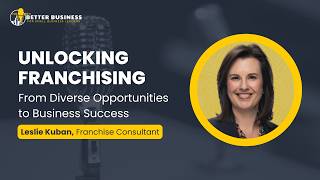
Interview with Leslie Kuban (franchise advisor and owner) about franchising as a route to entrepreneurship. Kuban explains why people buy franchises (proven models, lower idea/risk burden) and why entrepreneurs franchise their businesses (to scale), clarifies common misconceptions (not just fast food; not passive), and outlines key practical considerations: self-inventory of skills/time/finances, a recommended ~25 hours/week in the first year, the importance of franchisor training plus peer learning, and financing realities tied to a borrower’s personal balance sheet. The conversation also includes North American franchise scale statistics and a personal productivity tip from Kuban (sleep schedule change).
Questions this video answers
About 3,800.
About 6%.
About 25%.
About 50%.
About 25 hours per week.
Chapters
I have learned so much from my fellow franchisees. So that's actually part of the magic of being a part of a franchise system is not just what you learn from the brand, which should be very robust, very thorough, very methodical. Good franchises offer a very detailed, step by step, layered way of learning this new business.
Today we're talking to a small business owner that also helps other small business owners discover and determine if they should be small business owners and how to buy a franchise. So today is Leslie Cuban and I am so excited to talk to you, Leslie.
Chrissy, thanks so much for having me.
Oh, absolutely. So in 30 seconds or less, can you tell me what you do and how you got started doing what you do?
I would love to. Thank you. So I help people who want to be entrepreneurs. Usually they've had a career in corporate America, but now don't want to work for the man anymore. They want to work for the. I helped them figure out if One of the 3,800 opportunities in franchising could work for them. Wow.
So how did you find franchising?
Through my family, actually. It's been in my blood since I was 8 years old. My dad, like a lot of the people I'm working with now, he had a great corporate career. Internal division mergers impacted his career path in a way that didn't suit him. So that had him look for what can I do on my own. And that led to franchising. So I grew up in small business, family business, and different industries in franchising. And for about the past 20 years, I now still own a franchise in franchise advisory. There's a franchise business window in a window, other people to franchise. And so that's why I got started.
Okay, so having grown up in a family business environment, how has your experience shaped your approach to working with other family businesses? I would assume that a lot of franchisors, franchisees start as family businesses too, right?
Most are family businesses and that may mean couples, you know, partners working together. It could be like my situation, parent, child relationship in a business, you know, and it's a double edged sword. Like on the one hand, you know, family, you know, fam, blood is thicker than water. So there's a loyalty factor, there can be a trust factor there. But especially in a parent, child business relationship, sometimes the parent still acts like the parent and the child still acts like the child or vice versa. So there can be some weird family dynamic stuff. But in my experience, the pros have definitely outweighed the cons.
Nice. So can you talk to Me a little bit why people would buy a franchise or create a franchise, either one.
So we'll start with the first one there.
Why would they buy?
For a lot of people, they want to be an entrepreneur, but they've never done it before. And they don't necessarily. They may not have the idea, have the burning passion to go out and start a business in XYZ industry, so they need somebody else's idea. Or they may not have the risk tolerance to start their own endeavor from the ground up. With good franchise systems, and not all of them are. But with good franchise systems, there's a lot there. There's a business model, there's proven marketing strategies, there's proven hiring strategies, things that someone doesn't have to learn completely on their own.
Okay. And why would someone become a franchise or create a franchise?
So there's good reasons and not such good reasons to do that. A lot of. So entrepreneurs will consider, how do I scale my business? And one avenue is franchising. Becoming the franchisor, selling licenses to other aspiring entrepreneurs and growing the brand and spreading the mission of the business. You know, some do it to raise capital, and that's not a good reason to. An entrepreneur should not be reliant on the franchise fees, the initial fees that franchisees pay. But some people, some people will do that. They look at franchising as this capital growth strategy. I think for a lot of entrepreneurs, they do see it as an effective way of growing beyond their own means, beyond their own talent, beyond their own time, beyond their own capital. But they still have to be well capitalized to do it well, to be the franchisor and to do that well. So I think the motive is this is a way to grow. It's a way to spread, you know, spread our story, bring our products and services that we love to other communities. So there usually is a passion for delivering their product or service and a passion for helping other people to be entrepreneurs. But it has to be done responsibly for it to work well. Wow.
So in the time I've spent with you, you've educated me a fair amount on franchises, and you've talked about some different misconceptions that, you know, it's not all fast food and it's not a passive investment. So can you elaborate more on those points and kind of give the listeners some opportunity to learn about how you help business owners determine if owning a franchise is their next business venture is a great step if leaving corporate America and becoming a small business owner is.
The right step for Lots to unpack there. On the food topic, this is a conversation I have every single day in my business that when most people, if they haven't really looked at this yet at all, if they hear franchise, they're thinking we're going to be talking about French fries or Subway sandwiches. Which I understand that perception because those are the big stories, those are the big visible, iconic examples. When you think of franchise and in the world, I'll speak to just North America franchises born in North America, there's about 3,800 of them and about half of them are in some kind of food restaurant or food retail kind of space, which leads the other half largely in service industries. So, you know, food is not for everybody. In fact, food is not for a lot of people. Yeah. So what people are typically surprised by is how many other categories, such as a slew of home services, franchises, all kinds of business services, franchises catering to the needs of other businesses. There's a lot of what I would call consumer services or personal services would be things like pet care or fitness or education or even some healthcare types of businesses. So you don't have to be into food to be a good candidate to consider franchises.
So as you have thought about, or all of the experience that you have with 3,800 franchises, and I know Fran net does a lot of those different franchises, is there ever a category that you're like, wow, I never thought that would be a franchise.
Yes. I recently learned of a. Well, I shouldn't say recently, but one of the ones that really surprised me was there's a roll off dumpster port, a potty combination type of business model.
I've seen that. So that's a franchise.
That is a franchise. Yes. There are franchises in cost business, cost analysis and reduction, all kinds of professional services that you wouldn't necessarily think, well, that's a franchise. So really the only kinds of industries where I don't see franchising being an appropriate model are industries that change so rapidly. So software, you know, high tech type stuff, it change, you know, it changes every day.
Okay.
And they may use these technologies in a franchise business model, but the service itself just doesn't make sense. So there's all kinds of good stuff. Wow.
So let's go back to that other misconception that a franchise is an absolute. Like you start as a passive investment. Can you give us some education on that?
I get lots of calls that I think people think, well, it's a system, it's a process, it's already baked. So that must mean that it doesn't, I don't have to do much as the owner. And the truth, this is education conversations I have all the time with people. So there are opportunities that are structured for people who perhaps have a full time career or they own other businesses and the franchise is not going to be their only or primary gig even. But you still have to have the guidance I give people in that first year of launching that business. You need to have 25 hours a week that you can dedicate to the business. That doesn't mean you have to be physically on site.
Okay.
In fact, there are a lot of these models where if the owner is physically there too much, they're in the way and disempowering their employees. So. But it does mean one has to have enough flexibility in their day job schedule to take the calls from your manager. I mean especially in that first year of business where you're probably going to have some hiring misfires, it takes some time to get that, that rock star team in place and there's going to be fires that you're putting out on a day to day basis for any new business, including the most well tooled franchise model. So people just have to be realistic that there is a level of time commitment that they have to be able to give their new business if it's going to succeed. So it's not passive.
No. So is there a little bit of misconception between business owners that brick and mortar started their business? It is not a franchise. And individuals that own a franchise, have you noticed that? Do you see any of that between like do they, do they speak the same language or they have misconceptions about each other?
Do you mean independent owners versus franchise owners? Yes.
You know the terms.
I don't.
Thank you for the education.
So I mean, yeah, so yeah. There's different dynamics in owning a business that's part of a franchise system. You definitely have to be a team player because you immediately have a business partner which is the franchise company from whom you bought the franchise license and.
They expect you to follow rules, right? Yes.
Yes. The short answer is yes. But I think another misperception is that being a franchise owner is just like being an employee. It's not. You are making the decisions, running your business every day. There's actually quite a lot of creativity even in franchise system. Tell me more how that works, particularly around community marketing, community involvement, things that would be considered marketing or lead generation. Business evolves. Franchises have to evolve. They have to have new ways of addressing their markets. So you actually See quite a lot of collaborative creativity between franchisees and franchisors on how to offer new services to their customer base or reach their customers in new and different ways. There is a lot of creative muscle that can get flexed.
You're telling me that it's not a completely solid box and a fence. So you have the ability to be creative, ability to have new ideas you can collaborate potentially with.
There are exceptions, but I would say the rule is all businesses have to evolve to stay competitive, including franchises. And so that is an ongoing collaborative effort between all the stakeholders involved.
So one of the things that you talked about earlier around franchising is education. The ability, the training that a franchisor gives the franchisee. Did I say that right? Franchise or franchisee? Okay, can you speak a little bit more to that and kind of what makes a good franchisee in that education space and kind of makes it a good relationship, how that can work together.
It goes back to being collaborative. You have to play nice in the sandbox with everybody else. You'll probably have other franchise owners in your market as well. So you've got to. And there's a great education, learning opportunity from all the parties. I have learned so much from my fellow franchisees. So that's actually part of the magic of being a part of a franchise system is not just what you learn from the brand, which should be very robust, very thorough, very methodical. Good franchises offer a very detailed, step by step, layered way of learning this new business. Most people entering into a franchise, they're choosing something that is new.
Yeah.
It's not a type of business that they worked in in their prior career. And that's usually part of the appeal. Actually, a lot of people have the desire to spread their wings and do something new, but they don't know how to do it. So that's what they're buying into. The franchise system for is a robust initial and ongoing way of learning this new business to get up and running and be proficient with it quickly enough to be successful. But I really want to underscore that one of the biggest benefits, yes, it comes from the franchise company from whom you bought the license. But equally, learning from your fellow franchisees is a huge benefit. I can certainly speak to that from my own experience.
Tell me more.
We troubleshoot things together, we brainstorm things together, we try new marketing initiatives together, we vent to each other. So we go on vacation together. So the relationship aspect and how one can really round out their skill sets. So people come into franchises from different backgrounds. So John May bring a great finance background, whereas Joan has a sales and marketing background and they're in each other's training cohorts and they are working together. And you find that franchisees can really round out their skill sets by osmosis from working collaboratively with their. Collaboratively with their fellow franchise owners.
Nice. So let's pivot from working with the franchise owners. Let's talk about that initial step into purchasing a franchise. A lot of times with small business owners that are independent, sometimes we create a business plan, we go to the sba, we get money. Other times we bootstrap it, or we get financing from different areas, friends and family. Can you talk a little bit about the financing and some of the qualifications that happen through franchising? Because it is a much more structured process then I'm just going to hang a shingle.
Yes. So I would say it's actually largely similar to a non franchised route of getting financing, with the exception of if we're talking about really large franchise brands, the franchisor is not the bank, but they very well may have relationships with banks, banking systems that know their brand, know their business plan. But it's really only about 6% of franchise systems that have over 500 open operating units.
Wow.
It's only about 25% of franchise brands that have 100 or more open and operating units.
So what's the average?
So 25.
Okay.
50% of franchise companies have 25 or less open units. So when we're talking about franchises, we are still mostly talking about so small companies.
I had no idea.
Yes, that's a comment. That's a comm. You know, people think franchise, they think big global brand. But you can count on your fingers and toes, really, the number of big global Dunkin Donuts, McDonald's types brands. So with businesses like that, and even, even when a brand has, I'd even say 50 to 100 units open, there's enough of a pathway there that there may be a preferred banking relationship. However, getting the loan still largely depends on the borrower's capability. You still have to have credit, you still have to have liquidity, you still have to have income. There's a credit box that the bank is looking for from anybody who's borrowing money to start a business, whether it's a franchise or not. So it's still, I think the appropriate way to look at this is a good franchise system. The business plan can be helpful. It might expedite things, but it's still going to come back to the borrower's personal Balance sheet.
Okay. So there's a lot of lessons that we can tie. Whether we're independent small business owners or we're in the franchise world that are very similar. There's a lot of parallels.
There are.
Thank you for highlighting some of those. I've got another question. So with franchising, you're dealing kind of with the relationship of franchisor franchisee as you're trying to figure things out to decide if you like certain franchises. It can almost be like dating. So you're kind of that matchmaker. So tell us a little bit more about what you do, how you lead individuals through the process and kind of how you can you matchmake them together and how they work through that Anticipation of do I like this franchise? Do I not? Do they like me? How does that all work?
Yes, it can be kind of like the Bachelor and there's a final rose. There's no rose ceremony though.
No. Oh, there should be. You should add that.
So you know, it can be. When someone is just first starting to think about this and start looking at it, it can be extremely overwhelming. Like I said, There's 3,800 possibilities and you go out on the Internet and they all say they're the best one. So a methodical process, it actually doesn't start with any one industry or category. It really starts with the person. And I think whether someone's getting help from a broker like myself or, or they're doing this on their own. The first step is to take a real self inventory. First of all of your skills, your talents, what you're good at. When you envision yourself running a business, what do you envision yourself actually doing? Is it leading employees? Is it sales? Is it project management? So kind of giving some thought to skills that you have that you believe could transfer into running a business. Think about that. It's important to do a financial inventory, getting a real handle on what is your family's cost of living, where are your assets? Updating a personal balance sheet for the, not only going to the bank and the financing reasons, but the franchise is looking at that too. A good franchise really wants to carefully qualify any candidate to make sure that they're poised to succeed in their business. The last thing any brand or anybody wants is to come into this under capitalized. So good brands are really looking at that. And then what is your time availability? Like we talked about, it's not passive. So is this something that can you see yourself stepping into full time day one? Can you afford that? Can you afford to do that if this is a side gig, again, do you have the capital to hire a general manager? Do you have the capital to sustain the added overhead by doing this semi actively, as we might say? So these are the sort of, these are the sort of questions that I am asking of people up front. And we're building kind of a model or a criteria list of what elements need to exist in any business for it to be a possibility. And then that serves as the compass for what kinds of businesses that I'm going to recommend to people. Like if someone's like, you know, I'm only going to do this part time, there are certain franchises that immediately come off the table because they cannot be started and operated part time. If someone, most people are a geographic specific candidate, you know, they, you know, they don't want to drive two hours to this business. They want something that is reasonably close, close to where they live or where they want to be. So that is also a filter for what a person's options are going to be. If the closest open territory for your franchise of choice is 300 miles away, that's really not going to help you. So these are the sort of things that someone like myself knows what to ask. I know what the different variables are that people have to look at and what they have to look at together. And it's got all these pieces of a puzzle have to all fit together in order for an opportunity to be the right one. So that's how I am helping people to lay the groundwork. So we know what to look for. And then when we go look for it, we know that it's gonna check these boxes up front.
So one of the things as business owners we sometimes have to do is tell people, no, no, you're not a fit. How do you, I'm sure it's come up in your career that you've had someone that's come in and said, I wanna buy a franchise and you're just like, no. How do you tell someone no in that way?
So I've become skilled at helping people select themselves out. They self select out. And a lot of it is just telling people the realities of what kind of money it's going to take, what kind of time it's going to take, what challenges you should expect. And some people, if they're honest with themselves, will look in the mirror. And again, it's about being professional and polite. But sometimes you just have to tell people like, look, I'm going to back out of this process because I don't think I can help you be successful. Wow.
So as we wrap up, Leslie, I love that we give our listeners one thing, like one usable skill, one usable nugget, something from your profession and what you're doing. So is there anything that you would like to tell the listeners? As the one last thing?
You know, about six months ago, I changed my personal schedule a little bit. I go to bed an hour earlier and I get up an hour earlier.
Okay.
So I go to bed at 9 and I get up at 5. Not all the time, but most of the time. And that extra hour in the morning is like having three extra hours in the morning. So that sounds simple, but it's actually been kind of a big game changer for me as a business leader, as a person.
Well, thank you. I appreciate you sharing that. And thank you for sharing all your wisdom around franchising, how to work with franchisees, franchisors, and how to make that decision to become potentially a different business owner.
Thanks a lot. Thank you so much for having me. Ram.










