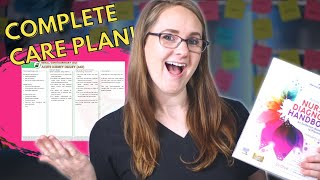
In this instructional video, the presenter guides nursing students through the complete development of a care plan for Acute Kidney Injury (AKI). The video begins by reviewing the three essential components of a nursing diagnosis— the standardized NANDA diagnosis, the "related to" pathophysiology section, and the "as evidenced by" (AEB) clinical data section. It then demonstrates how to select appropriate NANDA diagnoses for AKI (e.g., excess fluid volume, risk for infection, risk for decreased cardiac output) and stresses the importance of using standardized lists rather than creating diagnoses. The presenter explains how to construct the "related to" portion by linking AKI pathophysiology (ischemia, obstruction, infection) to factors such as ineffective fluid regulation, fluid overload, fluid shifts, and electrolyte imbalances. Next, the AEB section is built by identifying patient signs and lab findings—variations in urine output, blood pressure changes, peripheral edema, abnormal BUN/creatinine/electrolytes, and fever. The video then outlines patient-centered goals phrased as "the patient will..." and nurse-focused interventions phrased as "the nurse will..." (e.g., monitor vitals, I&O, labs, infection signs, provide education). Finally, the evaluation component is described, showing how to assess goal attainment, document progress, and revise the plan. Throughout, the presenter references resources such as the Nursing Diagnosis Handbook by Eileen Ludwig, the Nursing SOS membership care‑plan database, and downloadable example care plans, encouraging viewers to use these tools to master care‑plan writing and critical thinking for nursing exams.
Chapters
In this video, I'm going to go through a care plan for acute kidney injury. We'll walk through a full care plan so you know how to pick a nursing diagnosis and complete your nursing care plan for AKI or acute kidney injury. Let's dive in. Now, before we start, let's quickly review the three major parts to a nursing diagnosis. You have the actual nursing diagnosis, the related to factor and the as evidenced by portion. This is really important. So the first part is the nursing diagnosis. This is a NANDA approved diagnosis. It is standardized, my friend. You don't have to create it yourself. They are already created for you. You just pull it from a list. So we'll talk more about that in a minute. Now the second part is the related two factor. This related two section is the pathophysiology. Think of it that way. Essentially what is happening with the patient with whatever disorder that they have and then the patho behind it. The third portion, your nursing care plan is the as evidenced by or the AEB section. This is where you start to really apply it to your specific patient and the signs and the symptoms that you are seeing in them. So that is the nursing diagnosis section in a nutshell, which is the first part of your nursing care plan. And I actually just did a whole video on how to pick the best NANDA nursing diagnosis for your patient. So be sure to check out that video after you watch this video. Alright, so now that we have gone through the three major components of a nursing diagnosis, now let's really start to dive in to a care plan for acute kidney injury and what it might consist of. And I'll actually be pulling this from the acute kidney injury care plan that we have for you inside the nursing SOS membership community. We have a full care plan database for you. So if you are struggling with care plans at all, it is fantastic, my friend. Be sure to join the next time enrollment is open. I'm going to put a link to that down below in the description with all the details. So three nursing diagnoses for acute kidney injury could be things like excess fluid volume, risk for infection or risk for decreased cardiac output. Now remember, you don't come up with these on your own, okay? They are standardized and they come from the list of NANDA approved nursing diagnoses. So you don't have to come up with these on your own and you shouldn't. You can't. You just have to make sure that you are picking the ones that are most applicable to your patient into their current condition. Condition. Okay? These Three would fit for a ki. And we'll talk about why in a minute. So that's how you would come up with that first portion of your nursing care plan. Pick the most applicable nursing diagnosis from that standardized list. Make sure that it applies, of course, to your patient in their current condition and in this case, acute kidney injury. Now, here's a helpful tip. There is a super fantastic book. It's called the Nursing Diagnosis Handbook by Eileen Ludwig. And it has all of the nursing diagnoses laid out for you here on just, well, really the first page. It has everything you need to write your care plans. This book is a fantastic resource, my friend. I highly recommend that you snag it. Because remember, the nursing diagnoses are standardized. You can't just make them up. Okay? All you need to do is just pull from that list. You are good to go. So then next you will move on to the second part of your nursing diagnosis of your nursing care plan. And this section, it tends to be super helpful. And when it's done correctly, it will help you really critically think and connect the dots. Okay? The second part is the related to section of your nursing diagnosis. It's where you dive into what is actually happening with your patient. Now, the key here is the pathophysiology. What is going on inside your patient's body and why? So with acute kidney injury, basically all that's happening is the kidneys are unhappy about something. It could be that they weren't getting enough blood or there was a blockage or an infection or something, and then they suddenly just stop working. Now, if the problem is fixed pretty quickly, then the kidneys can recover and go back to being healthy again. But if they don't, it can progress to chronic kidney disease. And with that information, we have a better understanding now of what is happening inside the kidneys, right inside the body. And from there we can come up with the related to section for our acute kidney injury nursing care plan. Right. Three possible options for the related to suction could be things like ineffective fluid regulation, fluid overload, or fluid shifts, or fluid deficits and electrolyte imbalances. All three of those things are directly impacted by the function of the kidneys. And when the kidneys are unhappy. So think back to the patho, these things can go wrong pretty fast. So again, the key portion with the related to section of your nursing care plan is to make sure that you are applying it to the pathophysiology of the disorder and that it applies to the nursing diagnosis that you choose. So you need to really know your patient right? And the pathophysiology of what is going on with their particular situation. Now, this section is usually the hardest to do, so I have a few example care plans for you that you can download to really help you with this process. I'm going to put the link to those down below in the description for you to snag it. Now onto our third portion of the nursing diagnosis for your care plan. This is the as evidenced by portion, the AEV section. This is where you will pull together the signs and symptoms that you are seeing in your patient. So you've already connected your nursing diagnosis to the patho and now we're going to take it one step further and connect that patho to what your patient might clinically look like, what they're presenting as. What are you as the nurse seeing clinically with this patient? So in the case of acute kidney injury, some examples of some symptoms that you might see see that you could use in your as evidenced by section are variations in output blood pressure changes, peripheral edema, abnormal lab values like bun, creatinine and electrolyte levels, and a fever. These all have to do directly with what we understand is happening in the body when there is an acute kidney injury, right? The patho behind it. The kidneys aren't functioning properly. Their main job is to filter fluid and waste products out. So when that process isn't working as it should, there can be symptoms that directly impact that fluid and electrolyte status of your patient. It can be easy to think of nursing care plans as just another assignment to get through. But if you really take the time to dive into the symptoms that your patient is experiencing and then really connecting them back to that pathophysiology, you really will be fostering those critical thinking skills that are essential to passing your nursing school exams. This is so important to fully understanding what is happening with your patient and why, my friend. So not to mention the it will help you when you feel like you're doing a nursing school care plan if it's just a bunch of busy work, but a chance to really deepen and dive into what is happening with your patient. So don't think of it as busy work. Think of it as an opportunity to foster that critical thinking. So now that we've got the nursing diagnosis down, let's walk through some possible patient goals and some nursing interventions too that you might do. That way you'll have a complete acute kidney injury care plan to use as an example for when you study and when you Write your own. So I'm going to show you how this works. So again, I'm taking these from the acute kidney injury care plan that we have for you inside the Nursing SOS Membership community. So if you're a member, be sure to download it. And if you want tons of care plans or study guides, videos and cheat sheets to help you pass nursing school and you're not a member yet, be sure to check the community out. You're going to love it, my friend. I'll put a link down below in the description for you to check out the details and learn more about it. So some possible patient goals that you might use for your care plan for acute kidney injury could be things like the patient will have an appropriate intake and output the patient will maintain adequate cardiac output through a stable heart rate and blood pressure the patient will have improved kidney function and electrolyte levels, the patient will maintain an adequate level of hydration with adequate output and the patient understands the importance of adhering to intake and output monitoring. Now, a key thing to know about patient goals is that they should be written as the patient will. These are all focused on goals for the patient. Now in the next section we'll walk through the things that you as a nurse need to do to help the patient to meet those goals. But for now, this section is specifically focused on things that the patient will be doing. Which now brings us to the next section of the nursing care plan, the Nursing interventions. Okay, so some possible nursing interventions that you could use for your acute kidney injury care plan could be things like the nurse will monitor vital signs closely the nurse will continue to monitor intake and output closely. The nurse will continue to monitor kidney function, labs and electrolytes. The nurse will monitor for signs of infection, the nurse will educate the patient on the importance of maintaining adequate hydration and nutrition and you will want to include evidence based rationales for each nursing intervention using your textbook. Okay, so this section is all about the things that you will be doing as a nurse to help your patient. So these are all written as the nurse will and then the last part of your nursing care plan is the evaluation section, which is basically just the nursing assessment all over again. You'll state whether or not the goal was met and if the goal wasn't met, you'll write out what progress they did make and what changes you need to do to their care plan to help them reach their goal next time. And you'll give your recommendations for changing their nursing care plan to improve the patient's outcomes. And if you want more tips for passing all of your nursing care plans and writing them easier. Be sure to check out this video right here where I break it all down for you step by step. And if you love this video and want more care plan videos like this one, write love in the comments below. And as always my friend, go become the nurse that God created only you to be and I will see you over there in that next video.