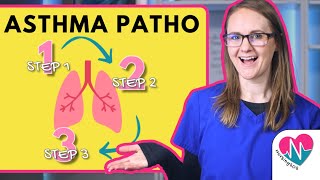
Christina Rafano explains asthma pathophysiology for nursing students, focusing on what happens when airways get triggered. Inflammation causes three main problems: increased mucus, swelling, and bronchospasm, remembered by the mnemonic SO MUCH BAD. This leads to the classic signs: wheezing, shortness of breath, and cough.
Chapters
Hey there my friend. My name is Christina Rafano from nursingsos.com and today in this video we are walking through the pathophysiology of asthma plus the key nclex points that you need to know about it to pass your nursing school exams. So hit that subscribe button and click the notification bell and let's dive in. So asthma is a respiratory condition where there is an inflammatory response and in the lungs. So basically what's happening during asthma is that the airways in the lungs are becoming inflamed, they're constricting and they're swelling, making it harder and harder to breathe. So let's walk through what's happening here and break it down into simple steps for you to follow. You know that I always love to put pathophysiology into simple step by step processes for you to follow because I think it just really helps so you can really see how everything fits together. And they actually have a a free pack of study guides, a pack of 10 study guides for you to help make learning pathophysiology and med surg easier for you as well. I'll put the link to that in the description below for you to check it out. So here we go. Let's dive into the pathophysiology for asthma. The first step during asthma is that there's a trigger. These can be things like pollen or poor air quality, pet damder, cigarette smoke, perfume, many other things, sickness. Each person may have different triggers because everyone is different and everyone asthma will respond in a different way to different triggers. But those are some common triggers. So once the asthma is triggered, it starts off this immune response. And here's where things get sticky, like literally sticky. There are three things that happen when the lungs become inflamed. Increase mucus production, edema and airway constriction, which is also called bronchospasm. So this is step number two. There's an increase in mucus production, there's edema happening, and that broncho. Now this is a key critical thinking point for you to know. When the lungs get inflamed, these three things usually happen. That swelling, that mucus buildup and that constriction of the airway. So those three key things we've got to keep in mind. When you think about the respiratory system, when the lungs are inflamed, those three things are going to happen. And here's a memory trick to help you out with this thinking. Inflammation causes so much bad swelling, mucus and bronchospasm. So remember, so much bad because it is so bad. Swelling, mucus and bronchospasm. So normally during the body's immune response, the blood vessels will dilate and leak to try to get more white blood cells to fight off whatever infection there is, like pathogens or such, something like that. But here, during asthma, since there's no real pathogen to fight off, it's just an oversensitivity to initial trigger. The inflammation causes a lot of problems. So there's more mucus buildup in the airway and this can be, this can really decrease the size of the airways. There's that fluid buildup that does the same thing, decreasing the size of the airways and then the airways become constricted. That's that bronchospasm. Now in the case of asthma, this bronchospasm is actually a form of what we call bronchial hyper responsiveness. So this means that the airways are really sensitive to that initial trigger, they are hyper responsive, they quickly become constricted and then this leads into step number three of asthma, where less airflow can get into and out of the lungs. Now this leads to the signs and symptoms of asthma such as expiratory wheezing, difficulty breathing, coughing. I actually have a whole video on those signs and symptoms of asthma inside the nursing SOS membership community. So be sure to check that out. If you're interested, the link is down below in the description with all the details for you. Now if you're struggling with pathophysiology in nursing school, definitely check out this video here where I walk you through how to make it way easier and my top tips for learning patho and passing your exams. And be sure to grab my free study guide pack. The link is down below for that. And if you like this video, hit that like button. Write love in the comments below because that is what we do around here, my friend. And as always, go become the nurse that God created only you to be. And I will see you over there in that next video.