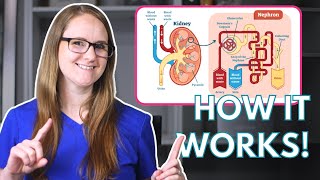
In this Nursing SOS tutorial, the presenter answers a member’s question about thiazide diuretics by explaining their pharmacologic action and resulting electrolyte effects. Thiazides block the Na⁺‑Cl⁻ symporter in the distal convoluted tubule (DCT), preventing sodium and chloride reabsorption and promoting their excretion. The blockade also enhances sodium‑calcium exchange, leading to increased calcium reabsorption and higher serum calcium levels. In the collecting duct, reduced sodium delivery triggers a sodium‑potassium exchange via the Na⁺/K⁺‑ATPase, causing potassium loss. Thiazides also increase magnesium excretion, lowering serum magnesium. Overall, thiazide therapy produces decreased serum sodium, potassium, chloride, and magnesium, while increasing calcium. The video concludes with a call to view additional pharmacology exam‑prep content and a motivational sign‑off for nursing students.
Chapters
In this video, we're going to walk through how thiazide diuretics work and how they affect electrolytes in the body. This was actually a question that I got from a member a few weeks ago for our tutor call inside the Nursing SOS Membership community. And I thought it was such a great question that I wanted to post about it here on YouTube to really, hopefully help my more students, too. So here's one of the tutor videos I did last month inside the Nursing SOS membership community. I hope this video helps.
All right, let's talk for a minute about thiazide diuretics and how they work. So here in the distal convoluted tubule or the DCT of the Nephron, what's going to happen is thiazide diuretics are going to block the sodium and chloride from being reabsorbed in the body. So it blocks the sodium chloride symporter, the CO transporter, that allows them to get through and be reabsorbed back here into the blood. So what thiazide diuretics are going to do is it's going to block that symporter. So sodium and chloride can't get back as much into the blend, so they can't be reabsorbed into the body. So they are then excreted out into the urine. So that is in the dct, the distal convoluted tubule. Now, another interesting thing that can happen here is that sodium is also traded for calcium. So sodium is traded for calcium, Ca2 plus. And forgive my, forgive my penmanship here on my laptop, I'm drawing with my finger. So sodium is going to be pulled out of the blood and traded for calcium. So with thiazide diuretics, you will have a more calcium retention in the body. So there's going to be more calcium pulled out of the urine and be reabsorbed into the blood. And sodium is going to be pulled out of the blood and put into the urine. So it's kind of an interesting thing that happens. So we're trading sodium in the blood for calcium in the urine. So ultimately, calcium in the body is going to go up, sodium is going to go down. All right. And so now let's move down here to the collecting duct. So the collecting ducts around there, what's going to happen is there's now a lot of sodium and chloride that's about to be excreted into the urine. Right. But now later on in the collecting duct, more sodium is traded for potassium through the sodium potassium pump. So now what we're doing is we're trading sodium for potassium. Okay? So there's a little more sodium that's going back into the blood and but it's being treated for potassium. So now sodium is going a little bit into the blood. Calcium now is going out, right? So I'm going to put an arrow down here for calcium or potassium. Potassium is going to go down because it's going to be more excreted into the urine. So I'm not going to put an arrow here with this sodium here because sodium ultimately at the end of the day is going to go down in the body. We're losing a lot of sodium into the blood, we're losing a lot of potassium in the blood and calcium is being more retained in the blood. So the last one that we need to talk about is magnesium. With thiazide diuretics, they tend to cause more magnesium to be excreted, which causes a lower magnesium level in the body. Now, this is thought to be caused by just passive reabsorption. So only a small percentage of magnesium and is being retained into the body, but most of it is going to do be passed into the urine. So ultimately, what we have with thiazide diuretics is a decrease in sodium, a decrease in potassium, decrease in chloride and magnesium, but it retains more calcium because it's going to be switching. It's going to be replacing that sodium with calcium. So calcium, remember, is going to stay in the blood and sodium is going to be lost.
I hope that walkthrough helped you out. And if you're taking pharmacology in nursing school and you're worried about passing, definitely click on this video here and I will walk you through my top tips to help you rock your pharm exams. And of course, be sure to show your support by liking this video subscribing to my channel. And as always, my friend, go become the nurse that God created only you to be. And I'll see you in that next video.