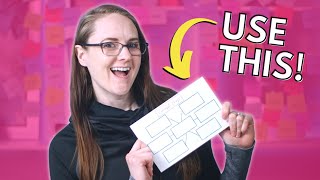
Concept maps are visual webs of connected boxes that help nursing students link symptoms, causes, and treatments instead of memorizing isolated facts. They work because nursing exams test critical thinking, not rote recall. The video shows how to build them, use the DRC critical-thinking model, and apply them to conditions like stroke and heart failure.
Chapters
In this video, we are going to talk about concept maps. This is such a highly requested topic. I did one video on it years ago, probably six years ago. I think it was one of our first videos ever on this channel and it is super popular. So let's do it again. Let's walk through what a concept map is, how it can help you pass nursing school, especially if you are a visual learner. If you are really good at seeing, seeing pictures and learning things that way, if you're good at writing things out and learning things that way, concept maps are going to help you. Let's talk about it and walk through how to do it. So if you haven't seen a concept map before, they look something like this where you've got a bubble in the middle and then lots of bubbles around the outside. Now you don't have to do boxes, you don't have to do bubbles. It can all just be text or it can be pictures. Whatever you want to do. You can structure it really any way that you want. But the general idea is that you are connecting concepts together. It's a map of concepts. I know, super fancy concept maps are just such a great way to connect concepts and topics together so that you're not learning things in isolation. And my friend, how often do you get to nursing school lecture class, or you read something in the textbook, or you watch a random YouTube video and all they want you to do is memorize a list of things like list of signs, symptoms, or a list of nursing assessments that you have to do. Not helpful, right? That is so not helpful. Because your nursing exam is not going to test you on how well you memorize a list of stuff. Your nursing exam is going to test you on how well you critically think about what you are learning about. That's what they want. That is what they're testing you on. That is what nursing is, is critical thinking. So concept maps are a fabulous way to really dig deeper and critically think about what you learning about. Because you're not just going to write down a list of signs and symptoms or a list of nursing assessments or what have you. You're going to be connecting the different concepts together. How do the signs and symptoms relate to, say, the pathophysiology? How do the nursing assessments relate to the signs and symptoms? That is what a concept map will do for you. So here's some ideas for how to use a concept map. What you put in the middle can really be anything. Let's say you're in fundamentals and you're studying Intake and output. You can put intake and output and then anything that you're learning in class about intake and output, you would put around in these boxes here. And then you would connect intake and output to, say, like a clinical skill. How are you going to measure intake and output at clinical? Well, you would write it in another box. How does intake and output affect a patient's perfusion? Let's say you could put perfusion here. If that's something you're learning about a nursing school. The key really for concept maps and basically anything in nursing school is that you're not learning things in isolation. I think that's probably one of the biggest mistakes nursing students make is that so often we try to study the old way, kind of like we learned in anatomy and physiology or in microbiology, or even how we learned in elementary school and high school. That is not helpful for you. When you get to nursing school, you cannot learn things in isolation. You have to start connecting the dots between things that you are learning. That is the beauty of a concept map. So if you're learning about any topic like we said, and take an output, connect it to all of the other things that you're learning about, how do these concepts connect together? What medications would impact a patient's intake and output? What are you learning about in your fundamentals class? If you're in a med surg class, any disorder that you are learning about, let's say you're learning about stroke or diabetes or heart failure, you would put that in the middle and then you would want to walk through the pathophysiology, the signs and symptoms, the nursing assessment, the nursing interventions. Connect them all together and really start, start to ask yourself those key critical thinking questions that we talk about in this free cheat sheet for you. Actually check that out. It's going to help you so so much as you structure your concept maps and as you write them out, it will help you critically think, walk through those nine key critical thinking questions as you are outlining your concept maps. Connect everything together so you're not learning things in isolation. That's the key. Any topic you're learning about for mental health, for pediatrics, for ob, for critical care. Anything that you are learning in nursing school, you can use a concept map for because it's just such a great way to see visually how things connect together. Now the really cool thing is, is that you can actually create a concept map for a topic and then do, do, do, do do another concept map for another topic and then you can really compare and contrast between the two of them, if something is super similar, but in some ways they're different. You like, what are the similarities and what are the differences between two topics? Let's say you're studying hyperthyroidism and hypothyroidism, okay? So those both have to do with a patient's metabolism and their thyroid hormones, but they differ in very significant ways. So let's say you do a concept map on hyperthyroidism and a concept map on hypothyroidism. So how do those two things, how are they similar and how are they different? And really, concept maps are just such a fabulous way to see how those two things are similar, how they compare and then how they contrast, how they are different. Now, another really fabulous way to use concept maps is to walk through our DRC critical thinking model along with it. So if you remember from this video here, where I walked through the DRC critical thinking model, that is going to change everything for you in nursing school. As far as critical thinking. Like I said, you do not want to learn things in isolation. You have to learn things together. So if you want to use concept maps as the DRC critical thinking model, go for it. That is a fabulous thing to do. So write the topic here. Write drc. What is the description or definition of what you're learning about? What is the reason or rationale? What's the pathophysiology behind it? What is actually happening, and how does it connect to all of the other things? Concept maps are such a great way, like I said, just to see it visually, to put pictures to it. You can draw pictures, you can write, you can just compare, contrast different topics. That is such a better way to learn things in nursing school, because you are not learning things alone. Because like I said, your test is not going to test you on how well you memorize the list of signs and symptoms. They're not. What they're going to do is give you a case scenario question, a priority question, a case study. They're going to give you a patient situation, and they're going to ask you, okay, based on this patient situation, what is your first priority? What signs and symptoms might you see? What would be your initial action, or what would you assess for? These are all critical thinking questions, my friend. If you just simply memorize a list of signs and symptoms, you are going to have a really hard time on your nursing school exams. That is not what we want to do around here, okay? So use concept maps, use the DRC critical thinking model, and you will be golden. All right? If you have any questions questions about it. We walk through all of this inside the nursing SOS Membership community where we walk you through, step by step how to critically think and do all of this. All right, so check that out. You do not want to miss joining that community where we can hold your hand through nursing school and help you the entire way through. My friend, you are 100% capable of passing nursing school and I am here to help you make it happen. Now click on this video here and I will walk you through how to critically think in nursing school. I will see you over there, my friend, and go become the nurse that God created only you to be. I'll catch you over there in that next video.










