How to rock SPECIALTIES in Nursing School!
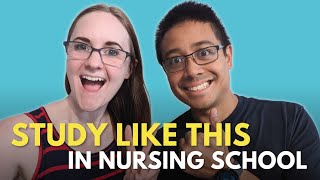
In this live YouTube session, hosts Matthew and Christina Rafano answer real‑time questions from nursing students worldwide about mastering specialty areas such as critical care, pediatrics, OB, mental health, and med‑surg. They introduce a universal four‑part study framework—pathophysiology, signs & symptoms, nursing assessment, and nursing interventions—emphasizing that mastering these pillars works for any specialty. They then present the DRC critical‑thinking model (Description/Definition, Reason/Rationale, Connection) as a way to link concepts, especially when integrating pathophysiology with pharmacology and clinical assessments. The duo promotes their Nursing SOS membership, which includes specialty courses, flashcards, dose‑calculation boxes, and a coupon code ("nursing10"). They also share practical confidence‑building advice for IV placement, urging students to practice hands‑on in clinical settings. The session ends with scheduling details for the next live (dose‑calculation focus) and reminders to follow their Instagram and YouTube channels for supplemental resources.
Chapters
Okay.
Hello.
Hello, everyone. Welcome. Happy Monday. Beginning of the week, beginning of the work week. Hi guys. Welcome to the Nursing School show. I am Matthew.
I'm Christina.
And we are here to answer your questions.
Nursing school questions.
Specifically nursing school questions. But I guess you can throw out whatever questions we'll see.
Like, how are the chickens?
We do have chickens. For those that do not know, I.
Haven'T shared a picture on Instagram of our chickens for a while, but I should.
We have nine of them.
By the way, we are married. We get that question basically every time we do.
So if you're joining us for the first time, go ahead and hit the like button, subscribe button. I don't know what other buttons there are, but hit them all. The bell button. We are going to be talking about nursing school sports. Specialties in nursing school. Nursing specialties in nursing school. So how do you study for things like critical care, maternity, ob, mental health?
On that note, Pediatrics. We just released the brand new pediatrics course inside the nursing SS membership community. So if you are a member, check it out because it's awesome. Yes, study guides.
Yes. Everything is up for pediatrics, the pediatrics course. All the new members go ahead and check that out. We just had our membership opening last week. It is currently closed, but you can always join the VIP list. NurseSchoolOfSFest.com join will get you there. But all the new members out there shout out to all you guys. Hello, thank you for joining and be sure to check out the people for sure.
Yes.
Yes.
All right, first timer and a new nurse.
Hi, Shanna.
Oh, okay. While I jam on some things. Where are you guys tuning in from? Where are you in the world? And now I have two things that I really want to talk about when it comes to specialties for how to study for specialty topics in nursing school. Okay, all right. So while I am talking about that, go ahead in the chat, tell us where you are in the world.
Yes. Seriously five. Hi, first time nursing student here. So Shanna, seriously five, where are you guys from? Felipe, I just passed my med surg one in pharmacology. Two guys, thanks all for the study tips. Hooray. Hooray. Hooray.
California. Florida. Florida to Florida.
Oh, Jamal, that's a good question. So we're going to jam on nursing school specialties. So stick around and then I will probably jam on your question a little bit. How to study on a short period of time, which is pretty much nursing school. So stick around for sure. Josel, Philippines.
Wow. Filipino watching here on Instagram as well. Look at all my people.
All you Pinoys. Nice. I am brown too. What?
Four. Four people from the Philippines. Are you serious? Why do we have so many people? You are just your rope and everyone is.
Yeah, there you go.
From the Philippines.
We can sense each other, my friend. Seriously. Five great questions. Jamel. Yes. Stick around. Jamel from California. Massachusetts. Ashley. Hello. Hello. Baltimore, Maryland, of the US of A.
Okay.
All right. Nursing school specialties.
How to study us. Like the snow. I love the snow, Nancy. Love it. Ontario. That is fantastic. Yes. So, Nancy, we're basically neighbors. We are snow people.
We are snow people. I saw someone from Boston. I was born in Boston. So east coast snow. Shout out.
East coast snow.
It is wetter than where we currently are at.
Yeah.
Oh, Trinidad.
Nice.
Nice.
Okay. Hey, what changes are being made to the nclex? We did an entire live on that a couple of weeks ago. So go back on our YouTube channel if you want to know about the NGN. Yes, that's.
That was a really good. Really good live. All our lives are posted up on YouTube after our lives, so they're all there for you to go check out. So what?
YouTube.com nursingsos YouTube.com nursingsos we talked about the NGN. Nancy says live off grid. Come on by, Nancy. That's our jam, my friend. We've got our chickens out back.
All nine of them.
We do. We actually have nine chickens, if you guys have any homesteading questions. Yes, that's what we do on the side. Actually, I did an Instagram story on that. It was like a two truths and a lie, and no one thought we were homesteaders.
Do we look like homesteaders?
We don't look like homesteaders.
City slickers.
Do we look like city. Do we look like city slickers? You know, Nancy, I want a hundred chickens.
I want all of them.
Give me all of them.
They are a lot more fun to.
Watch than I thought they would be, but they're fantastic. I love them.
All right. Nursing school specialty. Critical care. Peds. Mental health. Well, so ob.
You said critical care.
Yes.
Mental health.
How to study these topics. We get a lot of questions on that, and people think it's. It's different because it's specialties, so.
Oh, it's special.
All right, so Christina's gonna jam on that in three, two. Oh, by the way, this is Coca Cola dream world. I don't know. I'm kind of into their new, like, creations things and testing flavors. This is supposed to taste like a dream.
Oh, you guys.
So gross.
I go through Toil and labor to cook this guy good, solid food with actual nutrients in it. And then he comes back from the grocery store with that.
You know what? I was looking at the ingredients. Sorry, sidebar. I was looking at the ingredients, and all of the ingredients, no matter what, the flavor is the same. So how do they do that? Coca Cola. Except, I mean, like, they just. They just bunch it all up into natural flavors.
Gross.
But I guess. Which natural flavors? Natural high fructose corn syrup.
That is just nasty.
So all the same, but magically, it's different.
Magically. Coca Cola. Oh, man. All right, two things I want to talk about. When it comes to specialties, there are two study strategies that you absolutely have to use. So first one is. Well, it's always the four things that you need to focus on. Pathophysiology, signs and symptoms, nursing assessment, and nursing interventions. So it doesn't matter if you're studying pediatrics. It doesn't matter if you're studying ob, labor and delivery. Right. It does. Surge, med surge. It's all the same fundamentals, critical care advancement surge does not matter. Focus on the pathophysiology. And then the other three stem from that. So pathophysiology, signs and symptoms, nursing assessment, and nursing interventions for basically any of your nursing school classes, that is what you have to focus on. Okay? Now, the really great thing about that, we just got a comment on YouTube a little while ago, is how do you study when your exam is due to this? You know, how do you study with a short period of time? Which Matthew so, you know, correctly pointed out that that is basically nursing school. Right. We just always have a test to study for. There's always. There's so much in nursing school.
Right. So specifically, Jamal. Jamal. Sorry if I'm saying your name wrong. You have an exam on September 7th.
Yep.
So, yeah.
What do you focus on in a short amount of time?
That seems pretty normal. So, yeah. How do you. What do you study? What do you. What do you do? What do you do?
What do you do? Help.
Okay?
We're here to help. That is what you do, my friend. Pathophysiology, signs and symptoms, nursing assessment, and nursing interventions. Your instructor is going to go over like, I got this really great question on Instagram. A nursing student was like, no, Christine, you're wrong. Because I was tested on diagnostic tests on my exam. And I asked her, I said, okay, what was the specific question? Like, what was the question actually asking you? And it was a nursing interventions question. You guys focus on those four things. So Even if your instructor says you have to know all of these things about, you know, etiology and all this stuff, and you know all these diagnosis, the intricacies of TENS unit. No, you don't. You just need to know the nursing interventions, like, what is it for? Okay, what are we trying to help with a TENS unit? Okay, example. So pathophysiology, signs and symptoms, nursing assessment and nursing interventions. Okay? That is what you need to focus on. So when you have a short amount of time to study, you have to be able to condense the information, right? Like that is the name of the game. How are you going to condense the information and pass your exams? Because you, you just genuinely don't have time to read everything in your textbook. Come on. That's not how it works. So focusing on those four things is really, really going to help you bring it all together. Focus your study time on the things that actually matter. And this is exactly why we break our videos down the way we do inside the nursing SOS membership community. We break them down into those four main categories. We give you the answers to all of that inside the membership community. So who's a nursing SOS member? I know we got a lot of you guys on. Oh, look at that. Hey, look, all y' all on Instagram.
Instagram has these cool emoji things. YouTube. I'll throw up some emojis if you're a nursing SOS member. And thank you. I think that is, that is really it the name of the game. Another way of putting it is, and you might have heard this, it's really concept based learning. You want to learn the concepts of everything. And that's what those four sections, or the way that we divide up how you learn about these things is really getting your mind around thinking conceptually, critically thinking about those topics. So you're not just stuck memorizing lists of lists of signs or list of things, list of things for every specific disorder because there's just too many and there's just a lot. And just memorizing lists won't get you very far.
It's not helpful because. Well, great segue, babe. Good job. The next thing we're going to talk about is critical thinking. So the DRC critical thinking model. We have a whole video on this on our YouTube channel. We talked about this last week. So if you go to YouTube, type in critical thinking and it'll come up. We have a whole like video on the DRC critical thinking model and how to use it in nursing school. So this is how to Critically. Thank you, guys. So when we're talking about, like, what Matthew was saying, memorization is not going to get you far in nursing school. You can't just expect to memorize a list of signs and symptoms or a list of nursing interventions and then expect to pass your exam. That's not how nursing school works. So let's quickly go over the DRC Critical thinking model. This is what you can use to help bring it all together. Connect the dots with everything that you're learning. So D stands for description or definition. High level. Like, what is the description of the definition of what you were learning about? Our reason or rationale? Why is this happening? Why does this matter? So dig deep here. Pathophysiology is most often the answer, depending.
On what you're studying.
So think of those two questions. Why is this happening? Why does this matter? And then C stands for connection. So connecting the dots with everything else that you're learning. So let's say you're learning about, you know, heart failure. Well, in the connection stage, you know, the connection section, the C, you would connect it to other things that you're learning. Let's say you're learning about pneumonia or hypertension or diabetes. Okay, well, how does heart failure now connect with hypertension, diabetes, pneumonia, stroke? If you're learning about that, what are the medications you would give? What are the nursing assessments? How do all these things fit together? That is the beauty of the DRC Critical thinking model because it really helps you connect the dots between all the pieces of all the different things that you're learning and bring it all together. Which is exactly what they're going to test you on in nursing school. Christina, Good night.
I know. I was reading your comments as Christina was talking. It is pretty late over there. So like we said over on YouTube, Our lives are there. So if you want to catch up with us there. YouTube.com NursingSoS yeah, subscribe like etc. Etc. Let's see. I was also shout out to Ms. Monty. Monty XO. Today was my very first day of nursing school. We watched some of your videos in our bootcamp class over summer.
Oh, that's so funny.
That is.
You know, this happens all the time that nursing. Nursing instructors literally play our videos in class. We've, I. We get emails about that all the time saying like, hey, we've. Which is cool, I guess, as long as they're actually teaching you things and answering questions about it. Let's see. Oh, that's a good question.
So, Jocelyn, do you think. Yeah. Do you think if I understand the path of anaphysiology. Pathophysiology. Is it easy to understand the medical surgical too?
Well, the pathophysiology, everything stems from that. So when you know the pathophysiology, you will much, much, much be. Be a lot more capable of critically thinking about everything, doing the DRC critical thinking model like we just talked about and connecting the dots. You have to be able to bring it all together because the pathophysiology is the foundation, friends, for everything else that you need to know about in nursing school. Signs and symptoms, the nursing assessment and the nursing interventions. It all starts with that patho. So, Joselyn. Yes, absolutely. If you understand the patho, it's going to be so much easier to understand everything else that you have to know in med surg. Yep, yep.
What exactly is the difference between what we learn in patho vs med surge? Isn't it basically the same thing? So pathos the starting point, right?
Yeah. So I mean med. So the term med surge is kind of this like wishy washy term in nursing. It's kind of a catch all. On a med surge floor, you will get anything from a trauma, like acute trauma, like a car accident, someone recovering from that, to, you know, congestive heart failure to stroke. I guess unless your hospital has a neural floor. It kind of depends on the hospital setting, obviously, but by and large, like med surg floor is kind of a catch all of like medical surgical issues. You see how this gets wishy washy. So it could really be anything. But the patho is the foundation for all of that. You've got to know what is going on in the body. You have to understand, you know, your anatomy and physiology and the pathophysiology. You have to understand what's happening in the body in order to help this patient go home. Yeah, obviously, you know, get better. That's what we do. Nancy, you are so nice. Just discovered your channel and you're now hired as my academic advisor via the Internet until I graduate. Yes. I'm glad to be here, my friend.
Oh, that's a really good question, Sarah. So is it common to get pathetic related questions on a med surg exam?
This is a fantastic question, Sarah. The answer is no. And this is a very interesting answer. But it's kind of like. Well, it's kind of yes and no. Okay, I'm going to say yes and no to that because no, you are not going to get direct questions about pathophysiology on your exams. But, and this is a major but you have to, absolutely have to understand the pathophysiology in order to understand and critically think about the other three categories, the signs and symptoms, the nursing assessment and the nursing intervention. So Sarah, here's how you do this, okay? I'm just going to do a breakdown for you, all right? Now when you know the pathophysiology, the signs and symptoms, you have to connect them back to the patho. So, so here's, you know, your nursing lecture is going to give you a list of signs and symptoms and you have to be able to connect those back to the patho. Why are those signs and symptoms happening as they relate to the patho? Same thing with the nursing assessments. Here are the nursing assessments we do. Why do we do them as they relate to the pathophysiology? Because we want to fix the problem. Right? The problem this patient is having is that patho. Right. The pathophysiology, what is happening in the body? Nursing intervention, same thing. Why do we do those things? It all goes back to the pathophysiology. So Sarah, it's a yes and no answer, which is. I think that was helpful though. Hopefully that helped.
Let us know, let us know if that helped, if you have additional comments or questions about that. But yeah, I think that's really good. Like, like we said, I think it was a previous live. That's really the base. Yeah, that's the base is knowing the pathophysiology, knowing what's wrong and then being able to again, concept based learning critically think about that in order to deduce what are the signs, symptoms, assessments and interventions off that. But kind of the expectation is that you know the patho already. So they're not going to test you just on those, those things.
No, you were tested on that in like anatomy and physiology.
Right.
They're not going to test you just on that. But just like you said, Sarah, just now, basically everything is linked together. And that's exactly right. That's exactly right. Everything is linked together. In nursing school, the knee bones connected.
What's that song connected to the I don't know, I don't know, blah, blah, blah. It's a song. It's a song. I promise it is.
Well done. That's great.
I'm taking both pathopharmacology and med search together, wondering how I can link everything together.
And that's great. I mean you have to. Well, I mean if you're taking pharmacology and med surg, I mean that's a pretty great pairing because you will know the medications and the medsurg, because your medications are going to be a lot of the nursing interventions.
Right?
Nursing interventions includes medications. So it does really go hand in hand. So, Sarah, when you are studying pharmacology along with med surg or a lot of you guys, often very standard for nursing schools to do fundamentals or nursing foundations with pharmacology, when you link those together, it's. It's actually quite a bit easier for it to kind of come together because you're learning about the disorders and then you're learning about the medications. So that's exactly what you're going to want to be doing. Sarah, you need to connect the dots between all of those things. Okay, why are we giving this medication for this disorder? What is it doing in the body? What is this disorder doing in the body? So that's your patho and then the medication. What's the mechanism of action? What is it doing in the body? That's kind of like the patho of the medication. It's the mechanism of action. And then you just link these things together and it's this beautiful process. Sarah, I really, really like that you're taking them both at the same time because that will actually really benefit you in a lot of ways. And so you guys, we have two videos that I want you to watch on our YouTube channel. We have a video on critical thinking. So if you go to our YouTube channel, YouTube.com nursingsos you can just search. Search critical thinking and you'll see the critical thinking videos. Then also search pharmacology and we have a great video on farm to help you learn farm faster. And then also, of course we have our flashcards as well too in our shop. So if you guys are confused about pharmacology at all, definitely snag these because they are awesome.
So I would just. You were just showing this critical thinking model and so that's what you really were talking about. The last part is that, that see, the connection is just connecting everything together.
Connecting it all together.
Critically think. And that's really going to help you out later on because in your test or just talking in lecture or whatever, if a disorder that comes up that you've never heard of before pops up, but you start to learn a little bit about the pathophysiology, all of a sudden now that you're used to thinking in this critical thinking way, that you're able to quickly figure out what this disorder is all about just from the patho and figure out signs, symptoms, assessments and interventions.
Yes. Yep. Nancy's, asking about the flashcards. Hey, can you give that? Can you give that?
What can.
I'm advocating for you guys.
Can you give.
Can we give a coupon code?
Interesting. All right, let's see. Since you guys are here, since you're awesome on our live. Go ahead. And on our store during checkout or whatever, there's a coupon code or whatever. If you put in nursing 10. Yes, nursing 10. We'll just knock off 10 off your whole. Or dare.
Or dare hors d'. Oeuvre. So as they say in France, I.
Don'T know, maybe, maybe not. So nursing 10. All one word. Nursing 1 0.
Nursing 1 0.
So there you go.
Nursing 10. And then you get 10 off the flashcards, 10 off your entire order. So if you want both.
We also have a dose box. V boxes, if you want some handy. Handy practice questions and workbooks and all this fun stuff for doses calculations.
Nudge, nudge.
So, yep, there we go. Let's see.
No, it's not.
I'm gonna scroll up, because on Instagram, there was that one about the IV that.
Yeah, I was trying to remember what that was about.
I'm scrolling up.
We did have a question come through on Instagram about IVs. I think it was about how to be confident. Oh, it went back down. See, it's hard to scroll up. I think it was about confidence in.
Yeah. So basically what they're saying is how. How do you feel confident doing IVs? Because all the practicing is done on mannequins and they're kind of scared to do it on a real person.
Oh, yeah, that's what it was. So, so confident. Dude, you just gotta do it. You're not gonna be. That's. That's really the thing. I think that's such a fallacy, is that you have to be confident. Confident. That's not true. It's just like a fallacy that you have to be motivated. There is no such thing as feeling motivated, you guys. It's just. Come on. Like, just do the thing. Same thing with confidence. Just do it. You know, you've got to. Movement forward movement will help you develop the confidence. Okay? So you can't just stay on the sidelines and not do anything because you were scared. You have to actually do it, and then the confidence will follow. The confidence does not come first. The confidence comes after. So make sure that you are raising your hand at clinical. Always doing anything that. Doing anything any nurse has, you know, like, oh, blood transfusion. Yeah, I'm in. Oh, Ivy, start Oh, I'm in. Like, oh, catheter. Oh, I'm in. You know, just always be that person going in all the rooms. Like, all the nurses know you. Okay. Like, tag me if something cool comes up. Okay.
Yeah.
You know, raise your hand. Be there. Be that person.
Practice, practice, practice.
Confidence will come.
Yep.
Hey, what are we talking about next on Wednesday?
Yes. So we are live for those that don't know on Monday and Wednesday evenings.
Yep.
This time. Same time, same place. So we are going to be live again on Wednesday.
What do you guys want to talk about on Wednesday?
Let's throw it out there. What do you guys want to talk about on Wednesday?
Didn't we say dose calc last week?
Yeah, I think we were. I think we were going to do dose calc. How does that sound for everyone? You guys want to talk dosage calculation? On that note, how did everyone's dose calc exams go? Or. Or are they still coming up?
A lot of our members are coming up. Some of our members have them. Well, this week and like tomorrow or the next day, we can talk about dose calc on Wednesday. Yep.
Okay. Yep. I think. I think we will do that.
Oh, Cammie, thanks.
I'm so glad that Sarah passed with 96 and 100. Hooray.
All right, congratulations, Melissa.
Melissa. Tomorrow.
Okay, fantastic. Yes. For dose calc on Wednesday. All right, let's talk about dose Coke on Wednesday.
Let's talk about dosage calculations on. Not tomorrow. Wednesday.
Wednesday.
So.
Yep. Cool, friends. Okay, so we will see you on Wednesday. Let's talk about dose calc. I also on Wednesday, follow my Instagram stories. Actually, I'm gonna post a dose calc cheat sheet. I will probably post that tomorrow on my Instagram story. So YouTube everyone come over to Instagram at Nursingsos. Follow me there. I will post all my stories tomorrow. A dose cow cheat sheet for. For you. Okay, Solid plan. If I forget someone DM me and I will post it. Cool. All right, you guys, we will see you Wednesday at Wednesday at 6:30 Pacific Time.
9.
9:30 Eastern Time. Yep. And all the ones.
And all the other ones. People in Philippines.
Yep. There you go.
I don't know what time that is. That's like. Can I do math? 6.
I don't even know what the time difference is.
That's like nine in the morning, right? 9:30 in the morning. 10 Morning. Something like that.
In the future.
So.
In the future.
Cool.
Bye.
All right, guys, take care and we'll see you on Wednesday.
I should start signing off. Bye, guys.
See you guys. Bye.
Bye. Bye.










