How to STUDY FOR FINALS in Nursing School
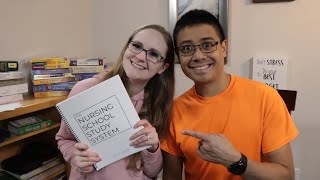
Matthew and Christina Rafano break down a system for nursing finals: gather all coursework, sort into subject packets, highlight unknown concepts, rewrite them, then repeat until the material shrinks. Start two weeks before exams and supplement with flashcards, practice questions, and case studies.
Chapters
Everyone, Happy Monday. It's Monday, right?
Happy Monday.
Happy Monday, everyone. Welcome to November and welcome to the nursing school show.
Yes, Ask me anything. Slash ask finals.
Nursing stuff.
How to study for final exams in nursing school.
Exactly.
Let's jam.
It's Christina, by the way. That's Christina. I'm not Christina. Christina. Matthew. Christina is the nurse by the way. She will be the one that will guide you through this finals taking studying experience.
He is.
Join us.
Comedic value.
Join us for the experience how to study for finals in nursing school.
You're here for all the life questions.
Yes, all the life ish questions, sure. So go ahead and pop in the comments below. Any questions specifically about finals for nursing school, broader about nursing school in general or even broader than that, Just any other questions? We will try and get to some of those right after we talk about general skills on how to study for finals in nursing school.
Perfect.
But we want you to comment below. This is an interactive experience and we want to definitely answer some questions and interact. So there you go.
Good morning, Charlotte.
Good morning, everyone.
All right. Okay.
All right. How do we. How do I. Not a nursing school, but how do I study for finals in nursing school?
So we have a step by step process for studying for final exams in nursing school. So I'm going to jam on it with you. So we have a lot of students who are heading into finals coming up. Happy November. This is the season tis the season to be jolly and study for final exams. Right. So the first thing you're going to want to do is go all around your house, your car, your locker at school, if you have one, and still use it somehow.
Interesting.
I did have a locker at school that was a thing in college. So if you have one of those. There you go. Definitely your car, bedroom, office, wherever your notes are, kitchen table, your kitchen. Find all your notes, like collect it all out there in the world. Because you know, we know that those notes, they just end up everywhere. Like how many? Raise your hand. Raise your hand.
Emoji, favorite emoji time.
Favorite emoji time. Raise your hand, put your favorite emoji down. If you have notes right now for nursing school, in your car, on your front porch, in your backyard, on your table, in your bedroom, on your bed, in where all in your kids toys area.
Bonus points if you want to comment below on where was the strangest place you found your notes?
A good question.
Where is the strangest place you found your notes
for me? Maybe the bathroom. Like you put like as you're like putting your makeup on and stuff. You got, like, flashcards in the shower.
Thank you.
Yeah. I'm not the only one. Bathroom mirror.
I'm telling you, that's still on my bathroom mirror.
So, like, as you're doing your makeup or something, you got flashcards. Like, that was me. It's like flashcards and, like, my notes there. So it's like, you know, I don't know how to do makeup. Don't judge me. But I got notes there. You know, that's the most important thing in the bathroom.
We spend a lot of time in there. It's fine. It's fine. That's the reality of things. The bathroom is a shower.
Like, they actually. I heard they actually make, like, these, like, shower whiteboards. Have you heard of this?
It's either shower whiteboards or there. There's actual waterproof notes. Stick, sticky notes or something that you can use in the shower. A lot of people that I know highly recommend those, because the shower is a good place to let your brain kind of unwind. And then suddenly that's when you think of something.
You have the best ideas.
So that's why you need something like that. So you can go ahead and search on Amazon or something. It's like waterproof notes or something. They're there and they work great.
Block bags. Perfect. Charlotte, Nicole. Hello. I couldn't. I keep all of mine in a binder and folder for what I'm currently studying. I'd go crazy if it was disorganized. Very well done. Very well done. We should all be like, Nicole. I love it.
And do not be like me, by the way, which is the other side of the spectrum. And I say, notes? What notes?
What notes?
What notes?
I don't have any notes.
So don't do that.
Be disorganized if you don't have any to be disorganized with.
Can't lose them if you've never had them.
So that is the first step, my friends, and the only reason I make it a step. It's so simple, right? Just go around your house, go around your world and collect your notes. But the thing is, is I went to a nursing exam one time. Christine is raising her hand. I went to a nursing exam on time. I felt so prepared. I get to the exam, and I'm like, I did not study any of this. I didn't study any of this. You're, like, scrolling through the questions like, wait a second, Wait a minute. I'm taking the wrong test. They gave me the wrong exam because I didn't have my notes. Like the notes for that topic were somewhere else in the world and I did not study them. Has that ever happened to you when you get to your exam and you're like, wait a minute, they gave me the wrong test because I did not study any of this. That totally happened to me, by the way. Collect all of your notes. My friends put them in one central place. So Christina has. What do you call these, like, demonstrating? I have, like, demonstration. Like, what is the thing where you like. Props. Props.
Oh, props. Today Christina has props, you know.
Okay, so then the next thing you're gonna do is what I want you to do for all of your notes for your term. Break them up into smaller packets by topic, by week of the term, if you want. Like, if your instructors, you know, if you, if your instructors gave you cardiac for week one, respiratory for week two, you could do it that way. But, you know, subject divided up into subject. So let's say this, these were all of my notes for. What is this? I think this is like. This is a whole bunch of stuff. This was probably. Oh, endocrine. There you go, endocrine, binder, Clip them all together, please. So collect all of your notes for each subject and you're going to have like, random sheets of paper, like notes and stuff. If you do, or, I mean, if you follow our study tips, then you know how to take notes in class. So you don't have random pieces of paper around. There you go. But if you do, collect them all together and binder, clip them together. So what's your first step? Collect all of your notes for the term. Then you're going to break them up into individual packets by subjects like this. And then binder, clip those together. So this would be a packet of like endocrine. And then you would have a packet of cardiac. Then you would have a packet of respiratory. Or if you're studying fundamentals, your head to toe assessment and then fluid and electrolytes and then ABGs medications, you know, make smaller individual packets based on subject.
Now, quick question. So what we're talking about right now specifically are finals. And what you're talking about with multiple subjects, I'm guessing it's. It's more for cumulative finals. But this also is. This, this is applicable. This works for just any kind of final as well. Just obviously for a cumulative, there will be more subjects, so you'll probably have more different packets. But for any other final, breaking it up into the packets, maybe you won't have that many different packets. Or maybe it's just one packet of One subject, but just want to clarify that. Is that correct?
Absolutely. So whether your final is cumulative or not, this works. You could even use this to study if you want. But we use it for finals because this is how I did it for finals. So once you have all of your packets and you're going to have multiple. You'll have multiple packets for your term, all binder clipped together. Now, the next step is to take a highlighter and highlight each individual packet. Go through each packet one at a time, and highlight the things that you do not know or can't remember. Okay, friends, now here's where you're gonna get stuck. Here's where you're gonna get stuck. So listen up. The first time you do this, you are not gonna know anything.
You'll be highlighting a lot.
That's okay. You will be highlighting a lot. Don't freak out. It's totally fine. Because by the end of this process, you will know it. Don't freak out on me. Okay, Keep going. Don't freak out. Go through each individual packet and highlight the things that you do not yet know or can't remember. There will be a lot of things highlighted. Now, after you've done that, you will take a fresh sheet of paper, notebook paper. This is computer paper, what have you. And then you will write, rewrite all of your highlighted notes onto a new sheet of paper. Following. Are you following with me so far? Everything here to a new sheet of paper, everything that you do not yet know that has been highlighted in your packet. Rewrite it onto a fresh sheet of paper, and then study that. Flashcards, whiteboards, make visual aids, watch videos. If you're a nursing SOS member. Watch videos.
Yeah.
Do the things, practice questions, all the stuff. Study it. And then you're going to repeat the process.
So breaking in here again for another question. So when you first go through this, you highlighted everything that you did not know, Then you copied those things onto your fresh sheet of paper. That means the things that you did know are not on this paper, correct?
Correct.
All right, so this is. The new paper was just everything that you couldn't really remember.
Everything that you do not know, did not know, or cannot remember. Because here's what I find nursing students doing. Here's the problem. When you study for an exam or study for finals, do you strictly focus on the things that you don't know yet? No, because that would be mentally exhausting. You oftentimes focus on studying the things that you already know because it makes you feel better and you already know it. So it's faster. Right? But it's a huge waste of time to keep studying the things that you already know. So that's why we get rid of it, basically. So you're highlighting, highlight everything on your lecture, on your notes, all the things that you do not know, and then you're only going to take those things, write it on your new piece of paper and study that. You're only going to study that because those are the things that you don't. Don't yet know. So that's what you have to study. Make sense?
Okay. And then rinse and repeat.
Rinse and repeat.
Okay.
After you have studied this, you will go back and. And highlight. Highlight the things that you still do not yet know or can't remember. And then do it again and again and again and again and again until you know it all. It's exactly how I studied it for final.
So how long does this process take?
I recommend two weeks before your final exams. Start this process two weeks before your finals. So when are your finals? Can you comment? Let me know when your finals are. Do it. Do it. Do it.
Comment below. When are your finals?
Do, do, do.
And should you have already started doing this?
Maybe depending on when your finals are.
So around two weeks before.
Two weeks before.
Okay.
December 2nd.
Hey, there you go.
There you go. Yep. I know most people's finals are usually like the first or second week of December, but last week, the reason we're doing this video now is a. Because I want you to do it two weeks before. Before you study for finals. Two weeks before your finals. And then last week we had a lot of students that were saying, like my finals before Thanksgiving. So that's. Nicole, I do this. It really works well. We do modules and have four exams each. Type notes in a packet for each subject and study off of them. Currently studying for my exam on Thursday. Congratulations. Yay. Hi, Juliet. Pray for me. I just finished second exam and fundamentals. I hope you did fantastic. I'm sure you did. I am sure about it. Juliet, I thought you said something. Oh, Nicole, you're literally saying everything I do. Perfect. I go through with a different color after reading over it a few times. Perfect.
So let's see. Yeah. So that's why Christina has you take your notes and recopy them onto a separate one, the ones that you don't know. And I think this also works in what we've been talking about a lot on other. Other videos is the repetition of things. So just simply taking the stuff that you do not know from your Old notes, copying it onto a fresh sheet of paper, that's you studying. That's you kind of getting in your brain another way. So that's why Christina has you kind of rinse and repeat and do it over and over again. And don't worry, because as you keep going through it, the theory is that your packets will get smaller and smaller as you know more things.
As long as you're studying the right way.
As long as you're studying that way. Studying the right way, yeah. Last week we had a couple questions. Jaylen, any tips for studying for the cumulative final? That's why you decided to go through that this week? It's so much information. It gets overwhelming. So, yeah, especially with cumulative. It's over a long, long period of time. So, yes, breaking up into the subject packets and then doing it this way, getting rid of the things in your notes that you already know and focusing on just on the things you do not know will help you. You not get as overwhelmed. Also, again, starting two weeks prior so that you can just keep ramping up. That. That is definitely better than procrastinating.
The thing about the reason I have you break it up into smaller packets is exactly like what Matthew said. It can be very overwhelming when you're sending everything for an entire term for your finals. Right. You stare at all these papers and all these notes and all these books. You just don't know what to do. You don't know where to start. It's too much. Right. So we break it up into smaller sections and you do one at a time. Do one and do the other and do the other. And that's why it takes a full two weeks. Charlotte, what happens if you don't have anything highlighted? That means you're a rock star and probably shouldn't be here. Charlotte, you should be here teaching it.
So Tawny asked last week also, best way. Best way to study for finals. That's why we're going through that right now. So, yeah, lots of questions popping up on how to study for finals. Kenny on YouTube just said that. Or YouTube. Nope. On Facebook. My fundamentals professors decided not to give us a cumulative final. So that's cool. I need to study how. I need study tips on how to study for patho a pathofinal and for the HESI fundamentals specialty exam. So I guess the first one, how to study path of pathophysiology final, does this work or is there differences or the same or any more?
I mean, the hessi. It's this. The HESI would be the Same thing. Because depending on what kind of HESI you're taking, but usually the HESI specialty exam would be like, the one at the end of the term. Like, least that's how it was in high school.
Yeah.
And then it's like, over everything, so it's kind of the same thing. So do this process with your hussy stuff and then patho, like we always do. Patho, step by step. Break, patho down, step by step. Nicole, your Last test is November 17th. Charlotte, December 15th. I think I may have already said that one. A. Fisher, December 9th. Okay, so it's mostly like, yeah.
Erica, have HESI, December 7th. Three finals. I have three finals, though. Mental Health, December 4th, then a HESI, December 7th. So second, fourth, and seventh. There we go. Might as well just read it in the right order.
Fourth and seventh. Okay, so like, everyone's like, the first week of December. Oh, interesting. Yeah. Okay, cool.
See, everything's starting early. So we got through Halloween this past weekend, and now it's Christmas time. Right. So we just jumped into. So everything is starting early, and it looks like finals are that way too.
Yep, here we go.
So happy Christmas, everyone.
Merry Christmas. Yep. Critical care final tomorrow. My teacher per purposefully tries to trick you. Let's see. He'll give you inches. Yeah, no, they do that. Totally. So here's the thing with, like, your teachers tricking you. When you take the N clutch, you might feel the same way. So I would say they're just preparing you.
Yeah. So we talk about mindset a lot. There are really two ways of looking at that. There is one way of looking at it and saying, oh, man, they're tricking us again. And there's the other way of looking at it. It's like, okay, they are preparing us to change the units of measurement from metric to the right way. So it's. It's like, so you can really look at it two different ways. And maybe it doesn't.
I love the metric system. It's way easier. I don't know what we're doing here.
So multiple ways of looking at things. You can say that the metric system is right or wrong. Doesn't matter.
We don't use it here.
We don't use it here. So anyway, yeah, just think about it on a more positive aspect of things, and I think it will just help you. I think it helps you retain things if you think about it more positively as well.
For sure. If you are, like, super worried about your finals, super worried about your exam, super worried that you're going to fail. We talk about it all the time, right? You're not going to study if you're super upset or, like, you know, emotional about something. You're not, like, focused. Right? So funny. Nicole, nursing school during COVID is getting frustrating. My clinical. Clinical or week got canceled. I'm so upset about it. So, yeah, be upset about it, but then move it right along, friend, because I want you to do well and everything else, and I don't want you to get stuck. Stuck. Don't get stuck. You go. So, yeah, make sure that you are, you know, following these steps two weeks before your final. Please give yourself time. That's the thing. That's why we always say you have to manage your brain. You have to manage your emotions. Right. In nursing school, if you are exhausted and stressed and anxious and overwhelmed and burned out and all of those things, you're not going to be focused on studying. Right? And so if you are believing and telling yourself that you're not going to pass your final, then you're not going to study for your final. Right? Right. Like, if you don't think you're going to pass, you're going to procrastinate and put it off. And procrastinate and put it off. Become a professional procrastinator. That's not what we want to do.
Definitely not what we want to do.
I want you to study two weeks before your final exam. Two weeks. And then definitely two weeks to do this process and learn it all. You can do it. You can do it. You got this.
Erica. I'm sorry if I'm saying your name wrong, but I need a really good grade on this final. And I'm trying everything I can to pass this class. I literally have only one semester to go, but this semester has been difficult. I'm doing it day every every day. So. You got it.
Hey, thank you, Nick. You two are the perfect combination of perfect and cute.
Nick Cage. Is this Nicholas Cage? I would be so, so hyped up. This would be Nicholas Cage.
Hi, Nicholas Cage. Saying that we're perfect and cute. Now, which one's perfect and which one's cute? Yes. I think we're both just kidding. All right, what do you do if your professor doesn't review her slides? If your professor doesn't review her slides and tells you to read your textbook for patho. Doesn't review her slides. Okay, so what are you doing in class, Juliet? Can you tell me?
And then while you're telling, while you're telling, while you're providing more info, Lisa mentioned Something from last week. Something that we talk about a lot about finals and just studying in general. You mentioned that you liked flashcards. Yes, Christina likes flashcards. Everyone, we all know this. You might. You mentioned flashcards. I'm wanting to make up flashcards of the different disease processes, but I seem to have put too much on my card. How do you judge on how much to put on a flashcard and if there's enough space? Or do you just write really small or what do you do?
So you could do it a couple of different ways. For starters, if you want to condense the information, really what you're going to want to do is do the most, like, common things, most common assessments, common signs and symptoms. Did she say it was med surg
Flashcards of the different disease processes. Okay, so, yeah, specifically is what Lisa was talking about.
But, yeah, med surge, I would imagine med surg or something fundamentals, like disorders. Right. Diseases. So make sure that you list out, like, the most common signs and symptoms. Nursing assessment, nursing interventions. List out the pathos step by step, focus on the most common things. And then if you want not to have to write all of that on one flashcard, that's fine. Break it up. Four different flashcards, Pathos, signs and symptoms, Nursing assessment, nursing interventions.
Okay, easy. So break it up. How we break things up.
I would break it up, to be honest with you, because then it's kind of like. Then it's all mixed together. If you like, if you're one of those and go through your flashcards again. I do not go through my flashcards again because the act of writing them helps me retain it. So it's really just me, like, writing things over and over again. But if you want to go through them, I would write the patho on one. Signs and symptoms on a different flashcard. Nursing assessment, nursing interventions, all on separate flashcards. And then that way you have them all mixed with the pathos, signs and symptoms, assessment and interventions for other disorders. You mix them all up. Then you have to, like, test yourself on it multiple times throughout that flashcard stack. Does that make sense? I love it.
Yeah.
Okay.
Yeah, that works well.
Play a matching game with them. Charlotte, this is why you should be up here teaching, my friend. Coming for you.
Julia did get back to us. Case studies.
Oh, okay.
We do case studies.
Oh, in class. That's right. I need to go back to your original question. Julia, what do you do if your professor doesn't review her slides and tells you to read the textbook for pathophysiology? I had this Happen I had an instructor that did it this way. And so we would have like, this is kind of how this class ran. We would have the like, learning outcomes or learning objectives. You guys have learning objectives, modules, PowerPoints, study kind of things, like something. But then we wouldn't go through it during class. We would go through case studies. Exactly like what you're saying, Juliet. We would go through case studies and then afterwards we would have to study for the exam. And all of us were like, kind of confused, like, how are we going to study for the exam? But here's what happened on the exam were very, very like the questions were about the disorders that were in the case studies. So your instructor and like, think back to your last exam. Have you taken an exam about this? Juliet, have you taken an exam with this instructor yet? Think back. My guess is that they are preparing you case studies, might be focusing on the things that are going to be covered on the exam. Then you're also going to want to look at your learning objectives and the modules and things and make sure that you're focusing on the sections of the book that you talked about in class and in those modules and the study aids and all those things. Okay? So you don't have to read the entire textbook, but focus on the sections of the book that relate to those case studies that relate to the learning objectives or anything else that they give you. Does that make sense? And now, Julia, I would like to know if that is true for you. If your exam kind of loosely mirrors the case studies in class. Like, do they at least cover your exam questions? Do they cover the disorders that you talked about in class through those case studies? If that's the case, great. If not, it's totally fine. Because I know a lot of us taking HESI or ati, which is a test bank, you don't know what they're going to talk about. So if you are in an ATI or a HESI program and then your instructor does case studies during class, and then your examination is a test bank where they can throw anything at you. That's fine, the same thing. Focus on studying the sections of the book that you talked about in class, the learning objectives, the syllabus, what have you. And then also I want you to remember that case studies are a very good way of studying. I think we forget that. We forget what case studies purpose is. Are.
Is case study is r. What the
purpose of case studies are.
Yes.
Is.
Are.
Something like that. We forget. Case studies are here to help you critically think case studies help you Critically think. And then when you get to your exam, hesi, ati, lecture exam, what have you, what is it going to test you on? Your ability to critically think and apply the information, which is what the case studies did. So don't forget that. Don't get caught up saying, oh my, my instructor doesn't teach. We don't know what to do. I don't know what to study, I don't know what it's going to be on the exams. Remember, you're learning critical thinking through those case studies and that's what you're going to be tested on in those exams. So Juliet, yes, her exams are different. So that's what you need to remember. Case studies are critical thinking. Your exam is going to be critical thinking. So don't get too caught up in that. Don't get too caught up. I actually have a whole YouTube video on how to study using case studies. So if you go to YouTube, type in nursing SOS case studies, it'll come up for you.
Yeah, so I think that's a really good point, is that this is all preparing you guys to be the best nurses you can be. And that is getting you used to case studies or in real word is just studies or just seeing your patients.
Right. Patient situation.
Patient situations. And then, yeah, just critical thinking. So how to synthesize all this information from a textbook, grabbing it out of there and how to apply it to specific situations. So yeah, this, this is all getting you ready for being great nurses. So yeah, just kind of trust the process a little bit and yeah, study up and realize that that's really where it's coming from. They're not trying to trick you. They're not just trying to make things really, really hard for you in obscure ways. It's really to get you practicing that critical thinking. So I think that's.
Some instructors might be like, yeah, this is gonna get them.
Well, like I said, if I was a teacher and I had a multiple choice question test, I would make it all a. Just to freak everyone out. But most people, most people are probably
like, you spell out words.
Yeah, you spell out words or make like little designs.
That only works if it's Scantron. And who's on Scantrons? I know some students are still on Scantrons, but that's just not really a thing anymore. Especially not now. I mean, like now, you know, we're all at home. So taking your Scantron, nailing it in. Oh, I went to get my nursing school. I'd Today. Oh, id. Oh, id. Okay. Thank you Scared about navigating in clinical.
Actually that is something that you had. And. And whenever I go to a new place, I have that feeling too of just, oh, I have no idea where to go. I think it actually did come from. Well, I'll finish this. But yeah, so I think I remember you. You went before.
Yeah.
A couple days before and scoped out the place like a creeper. And look around so that you know exactly where to go. So that's definitely something where Chris. What Christina did.
Yeah, like, yeah, before you go anywhere, right? Not anywhere, but like before you go to clinicals, it's like really important that you show up on time. Right. So make sure that you know how to get there, where to go for pre conference and where things are. What we did in nursing school, they would have us go like the first day would be a scavenger hunt. That was really fun.
Yeah.
So anyway, we had to find like, you know, the garage car and all the things and like the med room and you know where everything is. Just how to navigate the place. Like, I don't know, the cafeteria. I don't know. Actually, we have to find the cafeteria. But like, you know, you have to know where things are. Gotta get your bearings. So that could help. But definitely go before. So you know what you're doing, where you're going. At least you know where's the bathroom. Make sure you know where the bathroom is. Make sure you know where your pyxis is. Make sure you know where the crash cart is. Know where all the things are
before
you get there, before you start your clinical.
So when I was younger, for both middle school and high school, which were different, build different schools, middle school and high school, but for both of those, I was not there for the first week of class. So I was on vacation or something. Like. Yeah, I just. Every year, no, for my first week of middle school and the first week of high school, basically, whatever, I switched schools the first week. I was just gone for so long. I was not.
Like every year of middle school, I'm just always going to miss the first week.
So the first. So middle school, so sixth grade, I was not there the first week. So yeah, I think I have not anxiety. I wouldn't say anxiety, but that's where my fear. Fear of it comes from is that, yeah, I came the second week and everyone knew where to go and they just all went around and I was just kind of wandering around the hall. I don't know where I'm going. Just kind of chilling. And the same thing happened in High school too. I was not there for the first week of high school and then came in and just was wandering around until it's usually. What are you doing? I'm just here, I'm just around. So, yeah, definitely scoping out the place a little bit beforehand will help reduce the stress, reduce some of those nerves. So whatever you can do to reduce those nerves, that's definitely good. I know I took my, what, my PMP or some certification and that is actually kind of stressful when you have to go to a proctored exam center or something and you've never been there and same thing. Don't know where I'm going, don't know where I'm looking. And that's just undue stress on top of already taking a test. So anything you can do to decrease those kind of external things will help you as well.
Yeah. So who just saw me spill water all over myself? There you go. Raise your hand.
Welcome. By the way, this is a good time to say welcome to the nursing school show.
I'm Christina.
Christina Matthew. We are currently talking about how to study for finals in nursing school.
Dry off my papers.
Christina just got all of her final process all wet, but she went through.
Water all over myself.
She went through our process of studying for finals.
There you go.
Really quickly. Really, really, really quickly. What are the steps? So you take all your notes, take
all of your notes from everywhere. Everywhere. Car, check your car, check your kitchen table, check your dining room. Like I said, I got to an exam one time where half of the information on the exam I didn't study because I didn't have the. Couldn't find them. So that's why I say that. Make sure that you have all of your notes for your entire term. Collect it all, then divide it up into smaller packets by subject. So if you had a week on cardiac, cardiac, all your notes, divide it up. Cardiac, then binder, clip it together. Respiratory, binder, clip it together, all your different topics. Binder, clip all those subjects together individually. Then go through one packet at a time, one packet at a time. And you are going to highlight in that packet the information that you do not know or can't remember, highlight it and then don't worry, you're going to highlight a lot of things. No big deal. It's totally fine, totally normal. You're going to take the things that you highlighted and rewrite them on a separate sheet of paper. These are the things that you are going to study because these are the things that you don't yet know. Then you're going to repeat the process. Highlight everything on this paper that you don't know or can't remember and then rewrite it onto a new sheet. Do it again and again and again until you know it all.
As you keep doing this process, the the new stack of papers of the things that you don't know. As long as you're studying well and kind of retaining that information, those that stack will get shorter and shorter, smaller and smaller and smaller as you retain more and more information until you know it. You know it.
Congratulations. Now if you have the nursing school study system. Nursing school study system nursingschoolofsuccess.com forward slash study system. That's where you want to go. This final exam step process is on page 55. 55 of the Nursing school study system. In this bad boy, we also cover pretty much all of the questions you would have about studying in nursing school. How many hours do I study? What do I do if my instructor doesn't teach me anything? What do I do if I fail an exam? That's on page 56. How do I study for online classes? How do I critically think? Critical thinking is on page 17 of the nursing school study system. How do I study for pharmacology? Let's find it. Pharmacology is on page 22 of the Nursing school study system. And then dose Calc Med surge. It's all the things how to prioritize, answer priority nursing school questions, SATA questions. Literally all the questions you have about studying in nursing school in this thing.
So that is our step by step guide on getting through nursing school. It's kind of the DIY approach packet that we have for you. We do sell it as a PDF downloadable. You can PDF on your computer or print it out, get it bound like that as well. I popped the link there in comments in YouTube so go ahead and check it out.
Nursing School of Success.com forward/study system is
our step by step guide. The stuff that we were talking about with studying for finals, that's all in there as well. So studying for finals, that whole system that works for again cumulative and, and just tests or finals in general. It works. You mentioned really briefly that in our study system we do have pharmacology, but there are some people that are talking about okay, how do you, how do I know what's important in textbook for pharmacology? How do I study for pharmacology? Those kind of things. Your final studying process still works for pharmacology. It's just the actual material in there.
Is pharmacology is different than, you know, fundamentals or med surge would be. Yes. So in pharmacology, your cumulative final will be, you know, it could be over a bunch of different things. Half life, pharmacodynamics, pharmacokinetics, all the things and medications. So process still applies. Same process. Just make sure that you give yourself a full two weeks to study before your final exam so that you can do this process thoroughly. I don't want you to leave anything out. Like, I did get to your exam and like, wonder, hang on, this exam is wrong. They're giving us like, I was literally looking around the room like, they gave us the wrong exam. This is the wrong test. I didn't study any of this. Ah, it happens. No big deal.
And then another topic, how to study for a med search final. Same thing. Same thing, same steps, same process.
Yes, absolutely.
Same process. Works for bed surge, works for pretty much any kind of final, whether it's cumulative or not. Just like if it's not, you might have different subject packets or not that many or just one packet, but the same idea of essentially what we've been talking about, about studying in general, lots of repetition, lots of use of flashcards and or whiteboards to kind of write it out, recognizing that it's really getting critical thinking skills up and running. So really up and running. Up and running. So practicing your critical thinking skills. So how to apply that kind of information to case studies or patient. Would you call them patients? Situation. Situation. So yeah, just. Just thinking about that. And I think the main thing that's a little bit different about studying in general and what you were saying about the finals is really copying the things that you do not know from your packet onto fresh sheet of paper and then study that and then do it again and do it again. So you're only focusing on the things that you do not know, because the things that you do know already, you don't need to study more.
But it makes you feel good, you know, that's why we focus. Who is guilty of this? I am. Throw up your favorite emoji. If you find yourself studying the things that you already know. If you're spending your time focused on studying the things that you already know, it's a waste of time. Right. Because you already know it. That's not studying efficiently or effectively. So we want to make sure that you are studying the things that you don't yet know. I know my hand is raised right with you, Charlotte.
Yeah.
Right with you.
Definitely.
It does makes you feel Better.
It does make you feel good, but it is not helpful.
That is not helpful.
So we want, we want you to be efficient with your studying. That's one of our main goals here is to help you feel confident in what you're studying and to be efficient so that you can get what you're studying done so you can actually do everything.
Have a life in nursing school. So Charlotte, I'm glad you like the nursing school study system. Charlotte says it's gold and I agree it's pretty awesome. Nursingschoolofsuccess.com study system and this is new friends. Like we just released this a few what weeks ago, two months ago, maybe a month and a half, something like that. It's new because we noticed that students were asking us the same questions over and over and over again. So here it is. We wanted to make a step by step process for you to help you
in nursing school that is the same exact step by step process that you we walk you through in the membership community. The membership community is more hands on we walk you through it. This is the same process but it's more in a packet for you. Diy if you are a member in our membership community, do not buy this because it is provided for you in the membership community.
For free.
For free. There you go.
So if you're a nursing essos member, it's in there for you. Let's if you want to get on the wait list for the nursing ethos, membership community nursingschoolofsuccess.com forward/join is where you go.
J O I N where you head. Let me see
you guys. We have a lot of questions, we
have a lot of other questions. If there are no more questions regarding finals, if there are still questions regarding final specifically, go ahead and pop them in the chat below. We do have a couple questions from last week that I did want to circle back around. Let's do this. Because someone asked about this just now. Who was it
somewhere as you find it? I'm gonna answer Charlotte's question. There were actually a couple questions that I wanted to answer. Yes, Charlotte, side question. What coffee do you drink to kick your brain into gear? So this is okay, I've kind of like three times if I am doing a whole intermittent fasting thing which I do sometimes where I stop eating at 7 o' clock at night and then I start eating at 11am So I fast for however long that is 7 o' clock to 11am 7pm to 11am I will drink black coffee. So I do that often If I am not doing that right now, I'm not. This is just espresso and milk.
Milk.
Milk, as our toddler used to call it. Milk. And so it's milk and espresso and a little bit of gingerbread.
Merry Christmas.
Because it's Christmas. Disclaimer. I started gingerbread in, like, September, because September for me is Christmas time. Obviously.
Our tree is up already, guys. Our tree is up.
Our Christmas tree has been up since the last week of August.
Yep. We couldn't say that.
Here we are. But yes, love it. So that is that also. Oh, I'm not wearing it today, but people have been asking what my sweatshirts are. They're Hollister, so the next time I wear one, I will show you they're from.
They're from, like, vintage Hollister, too.
Vintage. They're from, like, high school. Not really. Actually. I think I bought them in college all those years ago, like, my first round of college. But the thing is, for me, my arms are super long, and Hollister sweatshirts fit so well because the arms are long. Now, I'm not a super fan of how short it is, but the arms are long, which I can get along with. Like, I can. I'm cool with that trade off. Now, if you want to start a clothing brand company that has long torso and long arms, let me know because I will buy it from you. It's very hard to find. So Hollister is the sweatshirts. This one is motherhood Maternity. Because it's a maternity clothes. This one. There you go.
I don't know where that came from. That was clothing, but. All right.
That was the question, by the way
I have been meaning to answer is an orange shirt. Orange. Orange. It's actually like a three dollar shirt from Michael, the craft store. I really like bright colors, and that's where I get bright colors. So they're really for the ones that, like, you print stuff on, but I just didn't put stuff on it, so. So we have, like, two of every color. It's cool.
It's great. Anyway, he's known for the bright colors, and anytime our toddler wears a bright color, color doesn't matter what color it is. He says, I'm gonna look like daddy. Yes, you are.
So bright colors. That's me.
That's the best. There you go.
All right.
Did you find it?
I did find it. So, Alex, I'm gonna read your things, and then I'm going to actually segue into these other questions because they are very closely related. Alex. So here we go. Hey, guys. Just entered a chat. I'm taking my first semester. Currently, our exams are based directly from the textbook books, but the books are obviously extremely long and some of the material is based on the smallest information. When we ask how to study, we are told to just study everything, which is obviously not helpful. Yes, that is obviously not helpful. I'm guessing that you are a little newer to our channel, so welcome. We do have some study tips and what to read in the textbooks that we'll get to. But just put a pin in that because I'm going to jump over to these other questions that are very closely related that we've had from like last week and even earlier today. These questions are specifically for people that have not quite started nursing school yet. What tips strategies do you give to prepare for nursing school while you're waiting to start? I'm not in nursing school yet. How do you. And then this is closer related to what Alex was saying. How do you read a nursing textbook? Or how do you read effectively and retain the most important info considering all the readings they assign to you to read in nursing school? So there's a lot of reading in nursing school, which Alex just mentioned and the other person that just commented a little bit ago, starting in January. So again, not in nursing school yet. Congrats. And starting in January, how do you recommend I study and useful things or books to buy to be prepared. So it's really two things that I'm breaking it down into. One, people that have not started yet, what to do. And then to Alex's point, there's a lot of reading. They tell you to read everything. What to what do I study, which is a topic that we talk about a lot. So I'll leave it up to you, Christine, on which one you want to.
First off, if you are a nursing instructor, Matthew and I had a fantastic idea for you for how to teach.
Did we?
Yesterday when we were talking about it, do you remember? It was your idea and it was brilliant.
I do not remember.
If you are a nursing instructor, we have a fantastic idea for you. Email us and I'll talk to you about it. I'll help you teach your students because it's gold number two. That was a side note. If you have not started nursing school yet, I never recommend that you read the textbook because it will be a waste of time. You don't know what you don't know. And if you are just reading a textbook, reading for the sake of reading, that's never a good idea. It's a waste of time. What I Do want you to focus on is dosage calculations. So when you get accepted into nursing school, you need to start studying dosage calculations, knowing how to do med math. Med math. Do scalc, because the first week of the term you are going to have a dose calc exam that you have to get 100% on. Now that's going to freak you out if you don't know how to do it. And you, you want to give yourself months to learn it rather than a week. So make sure if you have not started nursing school yet, you need to know dose calc. That is your top priority now. Alex, if you like everyone else, if your instructor assigns you every single thing in the book to read, like you said, not a good idea, right? If you are just spending all of your time reading for the sake of reading, you're not going to give yourself enough time to apply it and actually critically think about it and know it, like understand it, be able to apply it on your exam. Now that's not how we study, obviously. Alex, I feel like you're new kind of like Matthew said, we do have a bunch of study tips for you that I want to throw at you. The one that I'm going to tell you to go find on YouTube. You're on YouTube. Go on YouTube. Type in nursing SOS. What to do if my professor doesn't teach. That's the title of the video. What to do if my professor doesn't teach or what to do if your professor doesn't teach. Something like that, you will find it. It's on our channel. Nursing sos. What to do if my instructor doesn't teach. What to do if my professor doesn't teach. And also I talk about it in the nursing school study system. So again, Nursing School of Success.com forward/study system system. It is on page if I can find it. What should I read in the textbook? What do I do if my professor wants me to read everything in a textbook? Literally in the study system. What to do if my professor doesn't teach? So high level, let's go through it. Make sure that you spend your time focusing your reading on the sections of the book that your professors talk about in class or in their modules, in their outlines, in their study guides, in their study aids, in their learning objectives, whatever they give you. Case studies like we talked about earlier, focus on reading the sections of the book that your professors talk about in class or in their material. That is going to be the best way for you to study. Here's the thing, friends, you Will, Alex, you will. When you get to your nursing exam, there will be one or two questions that are pulled out of page 1136 of your textbook in the footnote. It's gonna happen. It's gonna happen, but it's not gonna be the majority of the questions. So here's the. Here's the choice that we have as nursing students. You can either read every single thing in the textbook and try to memorize it all, but you're not actually giving yourself time to apply the information. And then you get to your exam and you're going to know a lot, a little bit about a lot of things, but you're not going to know enough about what they test you on. That's the problem with that now. Or you can read the sections of the book that you talk about in class and that is most important for you to study, and then learn how to critically think and apply it. So when you're on your exam, you know how to critically think. You're used to the case scenario questions. You know how to apply the information on your exam, which is what they're going to test you on. And then you are going to come to a few questions that, like I said, are pulled out of page 754 from the footnote, that you have no idea what the answer is because you don't remember the footnote from page 754 like the rest of us. But just do your best on those couple of questions, but you will do better on the other ones. You will do better on the vast majority of the test questions because you know how to apply the information and critically think about it. Does that make sense?
Yeah. So I'm a big fan of this dude. His name was Pareto. I'm not sure if you've heard of
him, but 80 or Pareto.
Pareto. I don't know. One of the two 8020 rule. So. Yes, Alex, exactly. Stick to the PowerPoints and notes for the topics. And if you need to study a little bit more, study the books, but just on those topics you stick to in PowerPoints and the notes.
Welcome, by the way, Alex, we're glad you're here.
Yeah. So definitely it's the 8020 rule. 80% or whatever, rough numbers or whatever. The vast majority of things that your professor wants you to know and that you should learn is the things that they're going to be talking about in class. There are those outliers here and there that might be just kind of out of left field, but that's fine. The main things the main things that they want you to know and the things that you should learn are the things that they're talking about in class. So there you go. Elizabeth, if you're a member, paying each month to be a member, why do you need to pay extra for a study system? You do not. Do not buy the study system. If you are a member, it is in the membership community for free for you. Go to watch this first. The course watches first. And it is in there.
So we were hoping that you would watch it first.
My bad. There. So it is in there too. Grab that.
It's for free. Four members. So, Elizabeth, you're talking about the nursing school study system. If you are a nursing member, it is in the community for you for free. Do not go buy it because it's in there for free.
For free for you.
Nicole, you said, have you ever thought of being an instructor? I thought about it. I mean, like, at a university. Like, I've thought about it, but I can. Here's the thing. Here is how I run my life. I run my life constantly asking myself the question, how can I help the most amount of people? So literally, friends, literally. When I started nursing sos, this was in nursing school. I started this company in nursing school. Crazy, right? Like, I was in nursing school when I started this. And I did the math. If I were to work, you know, full time as a nurse for 40 years, I think I. The numbers were like, I would impact 14,000 people. Patients. I would have 14,000 patients. And then I did the math on if I could have. If we could have. What did I say? Like, if we had like 1,000 YouTube subscribers or 1,000 members or 1,000 people. That we've helped Students, right? That we've helped. It was in the millions of patients. Millions. And that was based on, like, 1,000 YouTube subscribers. That was based on 1,000 members. And we are well past those numbers. It's insane. Like, we have 50,000. How many YouTube subscribers do I have?
I think we just broke 50,000. So thank you all.
That's crazy.
If you're not one of those, though. Hit subscribe. Hit subscribe and become part of the 50 to 60 crowd.
Yeah, 50 to 60.
That's where we're at. Yeah. I think the. The main thing that you wanted to see is how can we help the most people?
We want to help the most amount of people. And if I were to go to a nursing university or college and teach, like, how many students are in a class? You know, I would probably have, like, a couple hundred every Year. And that's just not the best use of my time. That's the thing. It's just not the best use of my time. So that's why we do here. That's why we have a YouTube channel. That's why we have this company. Because we can help so many more students. So many more students. Like, did you guys know that we have a team of nurses here at nursing sos? Like it's not just me, like the medication database that we just put inside the nursing house membership community that was written primarily by Nicole and a nurse practitioner on our team, two other nurses and me. So three of us. So we have Nicole, she's a pediatric nurse. I say Nicole because I assume you know who she is if you have ever emailed us or actually that's not true now because now we have Marilyn too. Like our team is expanding rapidly. We have Nicole, she's our community manager and she, if you're a nursing SOS member, she helps tutor inside there. And then we have a nurse practitioner, we've got Marilyn now who is helping out us out with email. So if you email us, you're probably going to hear from Marilyn. So you know, what's I. We're constantly asking ourselves what's the best use of our time to help the most amount of people. And so although I would love to go teach at a university or college, I think that would be so fun, to be honest with you. That's not what we are going to do now. I do serve and will be serving at a clinic one day a week. Probably one day a week. I mean, you know, yeah, I'll be serving at a clinic and then that we have nursing students pretty much every day, which is so fun. So that's super cool. But the thing with, you know, just like go like at a university, I'm not gonna do a full time job there because this is what we do here.
Yeah, so we like helping you guys in this method. We can reach touch a lot of people. So yeah, Christina, that, that's really what you like doing. Even before becoming a nurse, she was teaching Zumba.
I taught Zumba. Do you guys know Fun fact?
Fun fact there?
Fun tidbit.
So Christina has always been a teacher and she just wanted to apply it to nursing. Nursing. Yeah, nursing.
I used to teach Zumba. That was so fun. Who loves Zumba as much as I do?
Is Zumba still a thing? Zumba's still a thing.
It's totally a thing. Yeah, I love Zumba. Okay, come on.
So anyway, there we Go. Are we. Are you? Let's see. Yeah, Just a couple questions. Yes, we're always looking. Nursing SOS is helping a lot of people and we want to continue helping a lot and more people. People. So we are looking at different things to do and yes, we are currently looking. Expanding maybe here and there. So yep, that is it. Yeah, pretty much.
Always.
Always. We want to find the best way to help everyone out. Yep. So there you go, Elizabeth. Yeah, sorry, my bad. I put it in a place that probably is not as intuitive, but it is in there already. So sorry about that.
Sorry, Elizabeth.
I'll probably put a note actually also on the sales pages to let members know that it is there. So. Yes, I will do that.
If you have any questions, Elizabeth, just email us. We're always here. Always.
Let's see. Alex had one more question and I think this, this kind of ties back into our talk about finals is how to study for the HESI exam at the end of this semester. So just. Yeah, yeah. So the HESI exam at the end of the semester, what are we. What are.
What is he looking really is the same thing, Alex. So we said it's the cumulative final style. I had the HESI exam too in nursing school and it's exactly how I studied you like HESI and ati. You can go through the online slides if you have access to that do practice questions. Those things are what we recommend. Like what we always recommend. Make sure that you are following the finals step by step process for how to study final exams.
So since you joined a little late, maybe go, go to the beginning of this live and we talk through the step by step process on how to study for finals and do the exact same thing for your hesi. And it will work out.
Yep, absolutely. All right, my friends, we will be back with you. Boom. On Wednesday.
Yes. Today's Monday.
Thank you so much for hanging out with us again. Thank you for 50,000 YouTube subscribers.
If you're not on the bandwagon yet, subscribe. What? Hit the notification bell so you are notified whenever we go live and post videos. Lately we've been doing lives every Monday and Wednesday at 9 Pacific.
Yep, 9am Pacific. Yes, 12 Eastern. Noon Eastern. So we're right here with you. Thank you YouTube, Instagram and Facebook.
Take care guys.
We will see you on Wednesday, Wed day. See you later.
Thank you. Bye bye.
Bye.










