How to study NURSING FUNDAMENTALS | ASK ME ANYTHING!
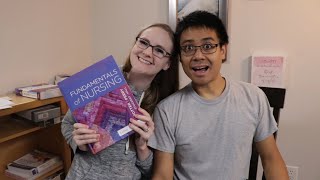
Christina Rafano teaches nursing students how to study fundamentals effectively. Focus on what professors highlight, not entire textbooks. Use flashcards, spaced repetition, and teaching others, and master four pillars: pathophysiology, signs and symptoms, assessment, and interventions.
Chapters
Hello, hello, hello.
Good morning, everyone. Good morning. Afternoon, evening, nighttime, depending on where you're watching from. Hi. Welcome to the Nursing School show.
Ask Me Anything.
Ask Me anything. This is Christina and Matthew, where we answer your nursing school questions.
And by we, he means me.
Yes. By we, definitely.
Not we definitely Jess. Christina.
Just Christina. But if you're willing to ask questions about anything else, I probably won't know the answer to those either. But. But I can give you an answer.
An answer you might not want to go with. Yes.
So anyway, welcome. Thank you for joining. Today's main topic of the day is nursing fundamentals. So Christina will talk a little bit about that. Before that we did want to check to make sure we do get questions even before your lives so that we can answer some of the questions that you guys have. Also shoot your questions into the comments on Instagram, Facebook, YouTube, all the places and we will get to those after we talk about some other things.
First, however, we should clarify, if you are on Instagram, pop them on Instagram. If you're on Facebook, pop them in Facebook. If you're on YouTube, pop them in YouTube. We don't mean like go to Facebook, Instagram and YouTube and put your comment in all the places because that happens sometimes. That happens sometimes too.
So we try to get to as many questions as would be beneficial to everyone because we want you to feel all confident about passing nursing school. So we definitely want to do that. So by doing that, we want to definitely answer the questions that will help the most people. Congrats, Kelly, on getting 76 on your exam today. This is perfect. First fundamental exam. So, yes, we'll be talking a little bit more about fundamentals of nursing.
Yes. Yep.
I might talk about fundamentals of everything else. Fundamentals of life. I don't know, maybe. We'll see. Anyway, so, yes, definitely pop your questions below and we will. I have another spreadsheet open, open, so I capture them. And if we can't get to them today, we do these lives every Monday and Wednesday. So be sure to hit the subscribe button, hit the little notification bell, make it ding or whatever it does so you guys can be notified whenever we go live.
Let's do it.
Awesome. Let me see. So some questions from our members that was asked. Just really quick questions in the membership site. Where can I find the Renal GU workbook? I have a test next Thursday.
We get questions about this a lot. So we used to. Inside the membership community, if you're a nursing SMS member, hopefully you know this. We've talked about this A lot. We used to, back in the day we used to do workbooks. And so it was like all the study guides all together. And so what we've done now is we separate them out because sometimes you're only studying one disorder over another disorder. So it just makes it easier for you. You don't have to print out an entire workbook. You can just print out the individual study guides based on whatever disorder you're learning. So this is what this question is. Where can I find the Renal GU workbook? It is not there because we've broken it up for you into study guides.
Yes.
So that is the answer to that
and that is my fault. I apologize for that. So some of our older videos do call out, hey, look at workbook. But in that lecture section there's going to be a study guide which is basically the, the broken up version of it.
So it's all the same stuff, it's just, it's just in more easily printable fashion. Yes, for you. If that's the correct phrase, more easily printable.
So that's how we want to work within our membership is we just want you to feel very confident knowing what you're going to get and also get to the things that you want to know quickly and easily. So we won't don't want you to be digging a bunch of stuff that you don't need for the specific information that you need at that point in time. So we want to make it as easy as possible to get to that. So in that vein, we just put information in little consumable bites or PDFs. So that's why they're all broken up now. So a little confusing, but they're definitely not very confusing. Yes.
So if you are a nursingss member, go into your dashboard under each of the courses you will find study guides. Yes, study guides. Not workbook, study guide. It's just easier. Easier for you. Study guides. All right.
And since we're on the note of memberships, membership is now closed. So go ahead and go to nursingschoolsuccess.com join to join the wait list and you will be the first to know when it opens back up. I'll shoot the link down in the comments of YouTube. I only have control over the youtubes as far as writing things in, but go to nursing school.com join and you can definitely go there.
All right. Can I ask the second question?
Yes.
Okay, so this is a second member question and then we will dive into fundamentals. So we always just answer our members questions first. Here on the left, how to interpret ABG practice problems and autosomal recessive disorders and Punnett Squares. So Punnett Squares. So actually if you are. So this was asked by a member, we just talked about Punnett Squares inside the private Facebook group. So if you go to the private Facebook group, We just talked about Punnett Squares, like last week, I'm saying I think it was last week or the week before. So go into there, you know, go in the Facebook group and just search Punnett Squares.
You will find it.
And then ABGs we do have. Because Matthew's amazing. What did you just do last week with all our YouTube?
I'm amazing, but I have no idea what I did. No idea.
She took all the YouTube videos and put them inside the membership community for you. So if you are a nursing SS member, you don't have to go to our YouTube channel and search through all this stuff. It's like all, like all the videos are categorized there for you, like itemized. What do you call that? Itemized?
Yeah. So all this, it's under bonuses. There's just a YouTube database is what I called it. And it's all the titles, all the episodes of YouTube just so that you can easily search for it. If you go there and hit control f or command f or whatever. If you're on Mac, you can search by titles. And we like to title our videos, our YouTube videos with what topics we're covering. So hopefully that will get you started on finding the right YouTube video. So it just makes it a little easier if you're a member or you're already in the membership site to go ahead and go there and search for the specific, specific topic that you're looking for. Little bonus if you scroll all the way below that, you'll even get to the blogs that we did even pre YouTube. So there's some nice gems in there if you'd like to find some there. So that's fun. Bobby on YouTube is mentioning joining light Facebook group. So if you join the membership community, we do have a private Facebook group where everyone chimes in. It's a very uplifting, supportive community where everyone pitches in, gives encouragement and some helps, tips, tricks. Christina jumps in there for some Facebook, private Facebook lives and just some tips and tricks there. So that's what Facebook group we're talking
about for our nursing members. So membership is closed for enrollment right now, Bobbi. So go to nursing school of success.com forward/join. It opens a few times a year. So we are so focused on our members. Like we are constantly giving new stuff to our members. So that's why we close it. We. I do not want to be in a position ever where I am constantly trying to get new members in the door and take care of our current members. Like that's. We do it in the reverse. So we are. We close enrollment so that we, our team, me and our team can focus on our members. So when you're a member of like man, that's that.
Yeah, that is like. So definitely join the wait list. Once you get on the waitlist too, you'll still be added to our email list so that you'll still get the tips and tricks through email form until the membership opens.
And let's just be honest, Christina writes the best emails. Kind of my jam. So if you want to be an insider with that, good fun times all around, let's dive into fundamentals. Can we do it?
Nursing fundamentals. Is that all? Everything else, Yes. I think we're good to go. Nursing fundamental guys, let's go.
How to study nursing fundamentals. Let's jam.
You do write good emails.
Thanks Jasmine. You do. Thanks Jasmine for that is all Christina.
That is zero percent me.
I write good emails. All right, so fundamentals, you probably have this nursing fundamentals. Let me just walk through some of the books that are helpful for you before we get into the tips. So this book might, may or may not be your textbook for fundamentals. For a lot of you, it is now on top of this textbook which you don't have to read the whole thing. I will get into that, don't worry. You also might want to consider purchasing the assessment made incredibly easy text. Like made incredibly easy series assessment. This is pathophysiology. I think they have a fundamentals one. And this was actually, I don't want to say required, maybe it was required for my nursing school, but I really like this book. This is the head to toe assessment. Jasmine, you're asking what edition? Oh, for patho. This is the fifth edition. I don't, I, I think that probably an older edition of these two are fine. You don't always have to get the updated textbooks because like nursing content is nursing content is nursing content.
Right.
It doesn't change. It does. Okay. Medicine changes. But like is it really going to change that much? I don't know. If you have like the previous edition, I think it's fine. The only caveat to that is with the Davis drug. All my textbooks here with the Davis drug guide, Davis's drug guide. You will want the updated version. Just because medications do change fast. So, and I was actually just talking about this last week when we were on live. Like, look at how different that is. I don't know, maybe you can't really tell. But this is the older edition and it is so much smaller than the new one. Like really, do they come out with that many medications each year? Like, that's crazy to me. Okay, so anyway, I do recommend that you get the updated version of the David's Drunk Guide. This isn't even the updated one. I think they just released another one in June or July that I need to get. So there's that. So I do always recommend that you have two types of textbooks. You should have a, what I call a deep dive textbook. And that for fundamentals would be your fundamentals book. So this would be your deep dive textbook. This walks you through really what are the deeper ideas you like? It's really comprehensive, like a comprehensive textbook. Now the other, the second textbook that I recommend that you get are the higher level ones. Now this would be my favorite resource, to be honest, is the Made Incredibly Easy series because it really walks you through these concepts so well in such a clear way that you just can really understand a lot easier. So this is going to be very comprehensive for you. Either this one or, I mean, there's other fundamentals textbooks, but whatever fundamentals textbooks your school uses, it's going to be pretty comprehensive. And then if you go to these books, they're more high level, more easy to understand. Does that make sense? Can you guys like post in the chat and tell me that you're with me and I'm not like, you know, confusing anybody? I recommend you have those two kinds of textbooks. One that's more comprehensive and one that's more higher level and easier to understand. Now here's the thing. If you are a nursing SOS member, this higher level stuff, like you don't need this because that's what I do for you. Like in our nursing SOS membership community, I break it down for you step by step. Literally. Like we have a whole fundamentals course. We break fundamentals med surg. I mean we've got everything for you there. I break it down for you step by step. So you do not need, you can just, you know, you, I mean, you don't even really have to read all of your nursing textbook if you don't want to if you're in the membership community because you could just watch a video of me teaching it to you. So much more helpful. So I just want to caveat that for Nursing SOS members, you don't really need these, but if you are not a nursing SOS member, totally fine. This is what I recommend. Two types of books. One that's comprehensive, which would be just your normal fundamentals book. And then a higher level one, which would be this series. Now I see a lot of questions coming in. What's your Tips on studying 15 plus chapters for an exam? How do I get better grade in fundamentals? I feel like I'm reading and reading and reading. I'm scared that I'm just filling my nursing brain with extra fluff. What are the most important things to focus on?
So we're getting questions on YouTube too. I just can't get past 75% or just can't. We can't get past that level. So just. Yeah, what to study, what to focus on, things like that. Also, just a little caveat too. We do have our Amazon nursing store. Nursing west store.
Yeah.
Do you want to throw that up there or not?
I don't have a link for it.
I do have the link here.
Okay. Yeah.
On YouTube there is. We actually compile all the resources that we like. It has both books and supplies.
There you go.
There as well. Caveat. We do a little. Get a little commission out of that. But all of the things that Christina recommended, the books that she recommended is there. So just go ahead and click on that link, hit the book section and
then we're all there. I think we definitely have the incredibly easy series on there. I don't know if we have this one, but you would probably have it in school. Like, don't go and buy this book. Just use whatever fundamentals book you have for your school.
Okay. And before going any further, sorry, tangent one, Someone actually bought the nursing SOS planner and wondering when we're going to be shipping it out. That is a digital only product. So it's actually just emailed to you. It's a PDF downloading download. Check your email, go ahead. And we recommend probably printing it out month by month. But it is a digital product. If you did not get that email, go ahead and shoot us an email and we'll get that to you.
Yep, absolutely. We absolutely hear. So there will also be printing instructions in that email too. So make sure that you check your email, even your spam folder, because you know those emails, they just slip into all the other folders. Check your spam, check your junk folder, check your promotions, what have you. I promise you it is there somewhere.
And the study guide system now. Hooray. Jasmine.
All right. So love our nursing as those members. You guys rock. Yes. Go print out all the study guides we have for you and all the everything. All the everything everywhere. Okay, so let's dive into fundamentals now. Okay, friends? Okay, so if you are taking nursing fundamentals, which I'm assuming that most of you, can you please tell me what your biggest struggle is like, Let me know in the chat. What is your biggest struggle with nursing fundamentals right now? So my guess is I'm not going to put words in your.
This is the interactive point of the live. So we like to be interactive. We want to talk to you. We want you guys to talk to us. We want you to let us know what you need so that we can
help you talk back to us. Is that like. Is that. No, that's usually that negative connotation, right?
Yeah, yeah.
Overthinking the questions.
Application reading.
Reading application. For sure. Like, Santa questions. Can we get an amen?
The teacher is not going over the PowerPoints.
Yes. Okay. Studying. Applying the information. Yes. Awesome, Santa. Everyone's like, santa, question. Dissecting questions. Man, is this a rough time. Okay, here's the thing. Here's what I want to start with. Here's the lie of nursing school. When you get accepted into nursing school, here's what you think should happen and what the world thinks should happen is that when you walk out to your mailbox and get that acceptance letter, all of a sudden you are blessed with the knowledge of critical thinking. You are just. It just showers down. You just know everything already.
That's not what happens.
You just know everything.
As soon as you get your acceptance, you're like, oh, and now I know everything.
It rains down, you know, like, that's what expectation is, right? Like, that's what we expect from ourselves. We go out to our mailbox, we get the acceptance letter, and all of a sudden we are blessed with the knowledge of critical thinking. That is not what happens. That is not real life. Real life is like, you go out to your mailbox, you come in, you have this moment of, holy moly, I just got accepted into nursing school. And then you have a sense of panic that now you got exception to nursing school. And it's like, what do I do now? What now? What do I do? So because you don't know how to critically think, you don't know how to study, you don't know what you don't know. You don't know what to expect, it's just all these. You just don't know. It's all these unknowns so please, friends, please, if you are in fundamentals, if you're just starting your nursing school journey, give yourself a break. Do not expect yourself to be able to critically think because you just started. Of course you do not know how to critically think. Of course you don't. You just started nursing school. That's totally fine. Give yourself grace, give yourself a break and just do your best. Learn the content as you go and I promise you it will get better. I promise you, you will eventually get to a point in nursing school a few terms down. It does typically take a few terms. Like for me, things really started clicking term four, my fourth term of nursing school, things really started, started to come together. So when you are in fundamentals, yes, you can try your best to critically think, put answer case scenario questions, of course, and we can help you do that. But you're not expected to know every single thing about putting everything together. See what I'm saying? You're not expected to know how to tie in fundamentals with advanced med surge stuff. With all these things. You are not expected to know how to do that. You are expected to understand fundamentals information. So that's what we're going to go over. Let's do it. So give yourself a break, friends. Now, to all my friends out there who are asking, what are the most important things to study? I will tell you right now. There are only four. There are only four main things that you need to study in fundamentals of Nursing. The first one is pathophysiology. The second one, signs and symptoms. The third one is nursing assessment, and the fourth one is nursing intervention. Now you may or may not have heard us talk about this a lot, because I talk about it a lot. So you might have. I talk about this a lot specifically with med surg, but it also applies to pediatrics, OB and fundamentals as well. So here's how we use this. With fundamentals, you focus on these four main categories. Pathophysiology, signs and symptoms, nursing assessment and nursing intervention. So here's what this looks like. When you go to your fundamentals textbook or go to a lecture class in fundamentals, you're going to talk about a lot of different things like intake and output fluids and electrolytes, pharmacology. I mean, you're probably going to pull out your drug guide, learn some medications, you're going to learn some high level disorders, things like stroke, diabetes, heart failure, stuff like that. You are going to learn ABGs, you're going to, yeah, ABGs, fluid electrolytes, those really go Hand in hand. Those are really the topics you're going to cover in your fundamentals class. Now, when you think back, if you were studying, can you tell me if you're studying these topics and tell me what topic you're studying now? Tell me what it is. My guess is it's one of those. So these are kind of these regular fundamentals topics. So what are you studying now? Fluids and electrolytes. Let's use this as an example. Fluid and electrolytes. When you are answering or studying answering a question on fluid electrolytes or studying fluids and electrolytes, it follows these four main categories. Pathophysiology. What is happening in the body? What is happening when a patient has hyperkalemia? What is happening in the body? Signs and symptoms. What are the signs and symptoms you are going to see? Nursing assessment. What are you going to assess for? Nursing interventions. What are you going to do about it? Those are the four main categories. Same thing with ABGs. Metabolic acidosis, pathophysiology. Signs, symptoms. Nursing assessment. Nursing interventions. Intake and output. You're learning. Intake and output. What is happening with the patient? Why do you have to assess their intake and output? What are you going to assess? How are you going to assess it? And then what do you need to do about it? If it's too much, too little. However, lab values, nursing process, nursing theories. Perfect. Let's talk. I'll jam on nursing theories in just a minute. That's slightly different. Knowing the ABGs are very important. Yes, they are. Yes, they are. Yes. Medications, IV maintenance, infection prevention, control. Yes. With infections. Friends, this is perfect example because you would think that a fundamentals topic like thermoregulation, perfusion, oxygenation and fluid and electrolytes and infection. Wait, Christina, those don't follow those four main categories. Yes, they do. Yes, they do. What is the pathophysiology of an infection? Friends? What are the signs and symptoms that you're going to see? What are you going to assess for and what are you going to do about it? Yes, it does. Perfusion and oxygenation. What goes wrong? What's the pathophysiology of that? If you want to go a step further, what's the physiology of it? What is just normal oxygenation and perfusion? Fundamentals, physiology, pathophysiology. What are the signs and symptoms that you're going to see? Right. What are the nursing assessments you're going to assess for and what are the nursing interventions for it? What are you going to do about it? You see how all these four things Come together for fundamentals. Is this making sense? Can you guys give me a thumbs up? Give me hearts, tell me that this is making sense. Perfect. Yeah. IV antimicrobial drugs, Perfect. So those are the four main categories. I love it. Like all of these.
Hygiene, range of motion, skin assessment.
All of these skin assessment. What are you going to assess for? What are you going to do about it if a patient has a wound? Like, I love all these comments coming in because it's just, I feel like oftentimes when we go through nursing school, we think, oh, this whole, this stuff doesn't apply to me. My school does it differently. You know, my school is harder than.
Especially now, we hear that a lot. Oh, it's different now than other years. Or, oh, we're studying this way and everyone else is studying differently. Or, oh, we're, we're online or we're in person or whatever. But it, the concepts are there. Everything is there.
And can you say the Same?
Say the 4 again.
Say the 4 again.
Say the four again.
Pathophysiology, signs and symptoms, nursing assessment and nursing interventions. That's it. That's it. Pathophysiology, signs and symptoms, nursing assessment and nursing interventions. That's nursing school for you. From fundamentals to pediatrics to OB to critical care to med surg to mental health, even. Come on, you guys. Pathophysiology, sciences, nursing assessment and nursing interventions. That's what it is. And I know we have a lot of students who are saying nursing process and studying the nursing process, the physical assessment, the nursing process. That is the nursing process, right? Assessment, diagnosis, planning, implementation and evaluation. What are you doing with the nursing process? You're assessing your patient, you are planning their care. What are you going to do about it then? You're going to actually do the thing, right? You're going to implement it.
Don't forget to do the thing.
You're going to do the thing. You're going to do the intervention and implement your plan to help. And then you're going to evaluate them, which is the assessment again, four main categories. Patho signs and symptoms, nursing assessment and nursing intervention. Something I do want to point out if you are studying the nursing assessment, because I can totally see how this can be like, well, Christina, the nursing assessment doesn't follow these four main categories. Oh, but friend. Oh, but friend. It does. It does. If you walk into, let's say, where are you guys at for clinical? Can you tell me? I want to make this more specific to you. For my fundamentals class, I was for clinical I was at a long term care facility. Now, I know that a lot of you guys are doing your clinicals online. That's totally fine. Tell me in the comments, where are you doing your clinicals? Are you doing them online? Are you doing them at a facility? Because I know we have a lot of students too, who are doing them at a facility.
Yeah, yeah, there's a lot of people that are on site now.
So online. Kelly. Yep.
And while people are at a hospital, while people are jamming on that, just backing up, one thing that you said and one thing that I do want to hammer home is. Yes. Give yourself. Give you guys grace. People just starting out, you start out not knowing anything. The whole point is learning as you go. So give yourself grace. You do not know critical thinking, but you will learn. That is what nursing school is for. You will learn. Like Christina said, it didn't start clicking until fourth term. Someone asked, well, what's in fourth term? It's not really what specifically was in fourth term. It's just the amount of time. So it didn't take until fourth term. So people are in different programs, different lengths of time. It doesn't matter. Just, just give yourself grace. That it does take time, but eventually you'll, you'll wake up and start thinking, hey, I'm actually thinking a little bit differently. Or, oh, I'm actually connecting these. And I wouldn't have a year ago or a month ago or a day ago. That's you learning. So it doesn't really matter how long it takes. Just know that it will take time, but it will start clicking.
Bye. Beans and popcorn. Oh, bean and popcorn. Bean and popcorn. Zoom. Class starts in five minutes. Have to catch the replay.
All right, bye.
All right. Yeah. So everyone, a lot of you guys are saying hospitals, you're in a hospital online simulation in class. Work online with digital program life. Yeah. Like video games. Awesome. Sim labs is what that is. Campus lab. And then at the hospital.
At the hospital. Great.
Physical assessment documentation. Perfect. Hello, Florida. All right. Yes. So it seems like a mix. I love you guys. You make my day so much better. Thanks.
Thanks for joining too. You guys all make our days better.
Oh, yes, for sure. So online at the hospital, that's kind of what I'm seeing. So for me, we have long term care facility. Now, when you go to your online simulation, clinical, in person, clinical, what have you, they're going to give you patient scenarios, right? Like either you get a real life patient situation or you get an online patient situation. But it's going to be the Same thing. So when you get a patient situation, like let's say you get a patient with let's say diabetes, because diabetes is a very fundamental. You'll learn diabetes and fundamentals, like a lot of your patients are going to have diabetes. Right. It's so prevalent. So diabetes. What are the things you have to know for diabetes? Well, friends, it goes back to the four main categories. Pathophysiology, what is happening in the body. What's happening in the body? Pathophysiology, signs and symptoms. What are the signs and symptoms that patient is going to present with? Nursing assessment. What do you need to assess for? And the nursing interventions. What are you going to do about it? What are you going to do about it? Those are those four main categories. It really is that easy. It really is that easy. Now. So for the nursing assessment, would you go and assess a patient, whether it be an online clinical or in class clinical, you will still follow those four main categories. I really like this book, like I talked about in the beginning, because this walks you through the nursing assessment. Oh, look, it's even like highlighted. I highlighted some parts. Look at me being such a good student back in the day. So it walks you through the nursing process, what to assess and what could go wrong. It walks you through some. Some things. Let me see if I can find an example. Yeah. Okay, so cardiac problems. It's talking about cardiac problems here. What could you do? What do you need to ask for if they have some cardiac issues, things like that. So it's the same thing. Pathophysiology. You have to understand what is happening in the patient's body, what is going on with the patient. Pathophysiology, signs and symptoms. What is that patient going to present with? Nursing assessment. What are you going to assess for? And nursing interventions. What are you going to do about it? What are you going to do about it?
And do the things.
Do the things. Do the things. Yes, do the things within your scope of practice. Perfect. Does that make sense? Is that making sense? Okay, now I told somebody on Instagram you're studying nursing theory. So I want to circle back to that. Now, that is all well and good for the vast majority of things that you are going to study in fundamentals. Now, sometimes in your nursing program you will get things that you just have to straight up memorize. Straight up memorize. These things would be things like the nursing theories. Nursing theories. The vaccination schedule for pediatrics, that's a big one. You know, ob, like hit positions for ob, like labor and delivery. You Know the. The. The structure of the pelvis. If you're an ob, you know what I'm talking about. Some things you just have to straight up memorize. So if that is the case for some of the things that you're studying, like I said, I'm going to caveat this, because most of it does follow those four main categories. But other things that you just have to straight up memorize. Flashcards, friends and whiteboards.
And another example of this, some people actually are pre nursing. And so the main common ones there is chemistry, A and P. Those kind of things.
Microbiology.
Microbiology. A lot of that is rote memorization. So that goes back to the good old whiteboard. Flashcards. Repetition.
Yep. Repetition, repetition, repetition. Word of the day, repetition. I think I saw a question.
What book is it that you were showing? It's backwards for you guys. So sorry, but made the. Made Incredible Easy series, right?
Made incredible.
Made incredibly easy series.
So this is the fifth edition of the patho. What edition is that? Oh, oh, fifth edition. You can. I don't know what edition they're on. Someone tell me. Yeah, what edition are they on?
Be sure to get the. The latest edition. But yeah, so that's the series Incredible Easy. There's a bunch of them.
Yep.
That I hear are fun.
Pretty.
Not a nurse. I didn't go through this, but, you know, they're nice, light reading. I heard, I hear, I hear.
Oh, flashcards don't do it for me. Repetition does. Here's what I want to say about that. Okay.
Do you want to go, oh, can I tell my story?
Can I tell my story that. By the way, actually, before we do hashtag storytime with Matthew time. Sorry, Instagram, I forgot to charge my phone last night. It looks like you might die pretty soon.
Oh, no. All right.
Sorry about that.
So this story is.
Let's go back.
Yes, it's for Instagram, but everyone else, feel free to join along.
Story time with Matthew.
Story time with Matthew Time. So when Christina was going through nursing school a couple years back, she's like, she's all about the flashcards. She's all about the flashcards. So when I, who got through college, got through college. Squeaked through college, so this was a new concept for me, Flashcards.
So she was studying.
Yeah, this. This studying was new to me, but she's like, all right, flashcards, here we go. And my common understanding for flashcards is, okay, I'm gonna. You're gonna write down a term, and on the back you're gonna write the definitions and You'll. You'll get this nice little stack of your 20 terms or 50 terms or whatever, and you'll go through it. You'll say, oh, okay, this says, I don't know, whatever, diabetes. And then, oh, what is it? Okay. And then I turn it over. Okay, I got it. And put it aside. Right? That's what everyone thinks flashcards are.
For some reason. That is not what flashcards are.
For some reason, Christina has, like, mountains of these cards everywhere. Not only that, but a lot of them say the same thing. It's like, why? Why? And she's using flashcards for that. Repetition. It is really the act of writing it down on one side, turning it around, writing it down, and doing it over and over again. Half the time, she didn't even use it as flashcards. Flashcards. It's like, why are you spending all this time writing it all out? And you're not gonna go through it? You're not going to look at it. You're going to turn it over and say, okay, I'm good with that one, and move on. She didn't even do that. She just made piles, made mountains in various rooms of the house. So you could probably, like, open doors or prop up windows and things with them. So, yeah, so I didn't know what was going on. But really, that is it. Repetition and flashcards are the same thing. So she just wrote them. A lot of times it is the act of writing it and rewriting it. Don't feel bad if you don't even go through it. As long as you're getting that information and retaining that information. If you need to go through them as flashcards, definitely you can do that too. But a lot of times that's not really even the point. Same with the whiteboards. Big whiteboards, so that you can write them over and over again. Whiteboards, because you can erase. You could technically do it on a wall, but you'll run out of walls eventually unless you paint over them again. But that's why we say whiteboards. But really, repetition, in addition to repetition, teaching is another big one. So once you understand the concepts enough to teach it, then teaching it really gets it ingrained in you, because you have to. The one step beyond that is you need to reiterate things in your own words. And that really solidifies it, too.
In your own words and also, like simple words. Yes, right. If you can take. Okay, so here's a great example. When I use the word pathophysiology, do you guys notice that I do this when I Use the word pathophysiology. I don't just end there. I say what happens in the body. Pathophysiology. For some people, they might not know what that means. So I always say what happens in the body. Pathophysiology means what is going on in the body. So I took this big word, pathophysiology, and I broke it down for you to be able to understand it. What does that big word mean? What does pathophysiology mean? Pathophysiology means what is happening in the body. So when you can get to that place where you can teach somebody else. Hey, hey, babe. Like, I'm studying pathophysiology. I'm studying pathophysiology in nursing school.
Okay.
Can I teach you what that means? So pathophysiology means, like, what is actually happening in the patient's body. There is something wrong that is going on in the patient's body, and now we need to understand exactly how that is affecting them. That's pathophysiology. Right. Do you understand that?
I do.
There you go.
I do.
So when you get to the place, when you know the content well enough that you can teach it to someone else who. What do they call that? Like lay. Lay people. Lay person. I don't really like that phrase.
Find a Matthew and teach it to a math.
Find a Matthew or Matthew with two T's.
Yes.
Don't get him started. Yeah, the one T thing.
Not feeling it.
Get him started. Oh, man. So teach it to somebody. Teach it to somebody else who is not a nurse or not in healthcare who does not have a concept of this. It will help. It will help ingrain it in your mind. Because once you can simplify it enough for someone else and teach it to them in a way that they understand, you are well prepared for your exam. Yeah, I've seen some really good questions coming through.
All right, real quick. First on Facebook, Tanya just logged in late. Hello, welcome.
Hi, Tanya.
Thank you for joining. Yeah, definitely after the lives, you can go back in and watch it from the beginning, from the middle. You can kind of hop around through it. So, yes, definitely. Every. I think on all platforms you can do that. I'm not quite sure with Instagram.
Instagram's not on, but it'll be on it.
So you can either re. Watch it on. On Facebook, or you can jump on our YouTube channel, subscribe, hit the bell and do it there. I haven't done it for last week yet, but I plan on doing that today. Usually after the YouTube videos. I timestamp things so that the main topics are in the description. So you can just jump to what, whatever main topic you want to listen.
We highly recommend.
Because we're awesome and we're entertaining.
There you go. So are we.
Are we. Are we entertaining? I am.
You're entertaining. Maybe not me.
No, you're entertaining, too.
So we really recommend that you do watch this back on. On YouTube, because for that reason, Matthew just said he timestamps the video so you don't have to dig through the whole video. Like, if you're watching on Instagram, like, you don't know what questions we answered and asked and all the things. But on YouTube, you can see in the description, we do put it there. Like, hey, we talked about this. Like, we talked about fundamentals textbooks at, you know, 9, 10, or whatever. We talked, you know, talked about this at this time and this. And so you can. You don't have to dig the vulgar.
Also, all the links that I do say that we post, it's. It's on the YouTube one too. So it's all there.
Perfect.
All right.
Okay. I want to jam on because we have a lot of students asking us about fundamentals exam questions.
Yeah, exams. There's a lot of people that they're. I guess maybe. Maybe even the first exams or one of their. One of their first exams is coming up. And just so the. The reiterating question. The point is so much information is what I. What I've been seeing so much information. Calling out chapters, calling out pages, calling out all these things about all this information. And just what do I do about synthesizing all of that? And also just how to find. I think one here that I. I saw here that's really good is how to find the most correct answer, which is a funny. Yeah, right. Funny nursing school question thing that I've never had to experience.
But yes, yes, what is the most correct answer?
So a lot of people.
And just choose the correct ones. Yes, gotta be the most correct one.
A lot of people talking about that. So you can jam on that. Anxiety, stress. So definitely we want to make sure that you feel confident going into it. So tips, tricks, other things.
Let's do it.
All the things.
So the first thing I want to say is that we actually talked about this a lot on Monday. If you go back on YouTube, please, please go to our YouTube channel. YouTube channel. Nursing SOS on YouTube on Monday, we talked about how to answer case scenario questions. Now, I don't want to freak you out, so please don't Freak out when I say this. Please don't freak out when I say this because it's really not a big deal. It's really not a big deal. But I know nursing students freak out. The NCLEX is changing. The NCSBN has recently come out and cited that they are changing the nclex, which is fine. Don't freak out. It's fine. It's totally fine. It's totally fine. Let's just have a moment for that, you guys. It's going to be okay. You got me, you've got our team. It's going to be okay. So the NCSBM just came out and said we're changing the nclex. So here's what that means. Here's what we know so far. We know that it's going to take a few years, it's going to take them a few years to roll it out. So they have now given nursing schools a few, few years to catch up and prepare you. So that's good. You will be prepared. Don't worry about it. Now here's what the biggest change is. We're moving now away from how the NCLEX was structured and I'm not even going to talk about that because that's not how it's going to be structured for you. We're now moving to case studies. It's going to be heavily case study based case study format which is what you're seeing in nursing school now. So like I said, your nursing schools are going to get caught up with this. You're going to have more and more case studies showing up on your exams to prepare you then for when you take the nclex, for when you take your boards to become a licensed nurse, lpn, rn, what have you. So don't freak out. It's gonna be fine. Now with case studies, here's what these are. Case studies really is just a big fancy term for they're going to give you a patient situation. They're going to tell you like, here's the patient that came in on Monday. Here are the vital signs for this patient. Here's kind of what she presented with. Here's you know how, here's what's going on with her, here's maybe some medications she's on and all these things are going to give you like a background story and all the information. Now what are you going to do? The question might be like, what's your initial nursing action? What are you going to do about it? What are you going to assess for things like that. Now when you answer nursing school exam questions, there are three main principles that you must follow. Now, I'm going to do a general overview of these right now, but I really want you to go back on YouTube and please watch the video from Monday. What was the title, Matthew? How to Answer Case Study Questions or How to Answer Case Studies in Nursing School.
In Nursing School?
Yeah, something like that. It was like how to Answer Case Studies in Nursing School. Now, I'm going to jam on it a little bit now, but I really want you to go back to that video because it's super comprehensive and we talk through exactly what to do. But there are really only three main principles that you need to follow when you answer case studies in nursing school. The first one, and the most important One is the ABC. ABCs, airway, breathing, and circulation. When you get a patient situation on your. On your exam, you have to be thinking, ABCs. Is my patient's airway clear? Are they breathing, and is their blood circulating? If one of those three things isn't happening, that is what you need to fix. Bells should be going off in your mind when you get to that question. ABCs. Now, the second principle is Maslow's Hierarchy of Needs. Now, Maslow's hierarchy of needs is a little bit different because it's very tightly integrated with the ABCs. Maslow's hierarchy of needs, if you've seen it, it's a pyramid. It's like a hierarchy. The phrase Maslow's hierarchy of needs, There you go. It's a pyramid. The foundation of that pyramid is physiological needs. You need to solve your patient's physiological needs first before you move on to anything else. Because here's why. If your patient isn't breathing, do you think they care about, I don't know how they're interacting with their kids? If your patient's not breathing, are they thinking about anything else? No, they are just thinking about, hey, I want to breathe right now. You know? So physiological needs, you have to solve those first.
Ac. See ya. Thanks for joining.
Bye.
We'll see you next Monday, Live.
So, yes, I have labs soon. Good luck in your lab, class.
Yeah, good lab. Good luck.
Good lab.
Good luck. Labs, Good luck.
Labs. Yes. You'll do amazing. So physiological needs, solve those first and then we'll move up the hierarchy. Then we'll get to, you know, safety, needs, level belonging needs, self esteem, needs, self actualization, all those things. But physiological needs are first with Maslow's hierarchy of needs. Now, the third principle is the nursing process, which we talked about a little bit earlier in this video. Assessment, diagnosis, planning, Implementation and evaluation. Adpy Assessment, diagnosis, planning, implementation, evaluation.
You might hear ADD O PI, but.
Oh, ADD O PI is another one if your school uses that. So ADD OPIE would be Assessment, diagnosis, outcome. You're. You're planning what the outcome will be and then planning the plan for that outcome. So with outcome identification, identifying a goal for your patient, planning is planning what the plan is for achieving that goal for your patient, the outcome, and then implementation, implementing it, and then evaluation, which is basically another assessment. So if you are at all confused about that, go to YouTube, type in Nursing SOS ADPIE, a D, P, I, E or Nursing SOS nursing process. Whatever. It'll come up for you. You will see. I have a whole video on the nursing process walking you through. By the way, my hair is super short and cute in that video.
Is it?
No, like three years ago.
Yeah.
That was one of our first videos we've ever posted.
One of the first ones. It was a little bit after our firstborn and you want to chop off all your hair. So he's not grabbing it.
Yep, that's why. And then I'm considering it again because I was literally just talking to Nicole about this. If you guys are a nursing SOS member or if you've ever emailed us Nicole, she's also a nurse. She's our community manager. You probably talk to her, especially if you're a nursing SOS member. You know who Nicole is. I was just talking to her last week and she doesn't want to whack all your hair off because they are pulling, man. Like the second. Really?
The second one.
Now our second. Our second child really gets. Oh, man.
At that stage, that's.
I'm not going to do it. I'm not going to do it. But it is tempting. So go back to that video and you can see my. My short hair. It's super cute. I love it. Anyway, I'm not doing it again, so there you go.
All right.
So that was ABCs Mouse's hierarchy of needs. Nursing process. Boom. Like I said, go back on our YouTube channel, Nursing SOS. You will see the video for Monday. I think it's titled how to use Case Studies in Nursing School.
Something like that.
Case Scenarios in Nursing School. Something like that. It's from Monday. It's like 20 minutes, right? It's like the 20 minute AMA.
Yes.
Yeah, it was. Ask me.
Anyway, it was the abridged version. So, yeah, anyway. Yes, that was about tests, I guess, kind of in general. Do you want to just hit on our main things on what to study since a lot of people are talking about just overwhelming amount of information.
Yeah.
So I just want to hit really quickly on how to study. That will answer a lot of hopefully answer a lot of questions that we see popping up on Facebook, Instagram and YouTube today.
Yep.
Sounds like there's tests coming up and people are just feeling a little overwhelmed. Overwhelmed, which is understandable, but we'll get you through it.
Don't be overwhelmed.
It's going to be fine.
You've got us.
For those just joining, welcome to Nursing School show where if you haven't figured out by now, we are answering nursing school questions. So, Christina, Matthew, Matthew, what can we do when there is just an overwhelming amount of information that they tell us that we need to learn and we need to get that all done by test time tomorrow?
Here's the lie. Lie number one of nursing school, Christina, Soapbox. Here's the lie. The lie is when you enter nursing school, you now have to read every single thing in the book. Because when you enter nursing school, your instructors will send you a list. It'll be a syllabus, most likely, and it will literally list every single chapter in your textbook. Now tell me, tell me, are you going to read everything in this textbook in 8 weeks, 10 weeks, 12 weeks, 16 weeks? However long your term is, are you going to read every single thing in this book? Now, your answer might be yes. Your answer might very well be yes. Christina. I'm on it. I'm going to read all of this. Now, my second question to you. Are you going to retain all of that information? And your answer is most likely going to be no. Unless you have an eidetic memory or whatever they call it.
Sheldon, Big bang theory. Anyone out there?
Not any of us here in this room.
In this room, this room, Congrats to you. If you're one of those.
Yeah, by the way, you can read all of this, by the way, and retain it. You do that. But that is not me. That is not our students. That is not what we teach. Because that would be bananas. So here's what you want to do. Focus on reading the sections of the book that your professors talk about in class.
There you go.
Mic drop. Now, this is one of the most controversial things I've ever apparently said in my life because every time I mention this, someone's like, whoa, wait a minute, Christina. But you don't know. But you don't know what my teacher says. You don't know how my class is structured. You just don't know. And I've been doing this many years, friends. Trust me. Promise you. I do now. Promise you. Oh, man. Focus on reading the sections of the book that your professors talk about, about in class. That's it. The end period, the end of story. Now, if your professors do not teach, that's the biggest caveat. If your professors do not teach. Especially in this online world, we've seen a lot of times instructors trying to figure out how to move online and not entirely sure how to do that right. In the best way possible. So what we've seen a lot is instructors just putting their PowerPoints online and then that's it. If that is you. If your instructors literally do not teach in class or they just read from a PowerPoint, read from study guides, read from stuff word for word, literally word for word. If they just read from things, that's okay. The advice still stands. Focus on reading the sections of the book that are talked about in that PowerPoint, in those study aids, in your modules, in your study guides. Kelly's like, yes, that's me. Instructors don't teach. I know, I know. It happens. And it's okay. It's totally fine. Here's the reality, though. You cannot read and retain everything in that textbook unless you have an idiotic memory. I mean, I mean, seriously. Seriously. What if you have objectives they give you in the syllabus? Can you just read those sections? Objections? Objections. Objectives in the syllabus is a perfect place to start. What your objectives are are the core concepts that your school wants you to know. It is actually an accreditation thing. Your school has to present the accrediting body that be right with. These are the things our students are learning. That is a fantastic place to start. However, you cannot stop at those objectives. You have to go a step further. Make sure you are focusing. Reading the sections of the book that your professors talk about in class or on their PowerPoints in the study aids, in the study guides, things like that. Because what you're going to find is those objectives that they give you are not going to encompass everything that is going to be on your. Does that make sense? So there you go.
Yeah, No, I think that's really great. So, yeah, focus on what they talk about or what the PowerPoints are over.
Sarah? Yes.
Amy's talking about uploading recorded lectures.
I still love.
Those are still lectures. So they're still talking about things in the book. So definitely focus on those things in the book. Circling all the way back around to what Kelly was saying a little earlier today about filling her brain with fluff. That's exactly right. You don't want to fill your brain with fluff. So what is the important parts? The important parts are the things that your structures talk about or write PowerPoints about in class. That is, those are the important parts because they want you to become good nurses. At the end of the day, they're teachers and they want you to succeed as well. They want you to become great nurses. And, and what they believe is the best parts that will make you a great nurse is the things that they're going to talk about. Not only that, but those are going to be things that they test on.
Absolutely.
So that will be the vast majority of the things. Now, don't be discouraged or be depressed or anything. If you do come. Just made. If you do come across a question in the test that is totally out of left field, that is some obscure fact, don't do that. It may happen. It probably will happen. But what we're, what we're trying to do is get you to be more efficient, be confident, and also to, to not waste time. So very, very important that you get the vast majority of what they're going to be testing on. Are we going to run into those ones that are just totally out of left field? Yes, but 100%, that's totally fine. That is all right. That is, don't. Don't let that drag you down. That is all right.
So here's the thing with nursing exams. Oftentimes there will be a test bank so we can get very, very close to what you're going to be tested on in that test bank. However. However, the same thing with the nclex. When you go and take boards, they can literally throw anything at you. It's okay. Do your best. Study the content that you learn in class. Study the content you learn in class. And yes, when you get to your exam, will you get one, two, maybe three questions totally out of left field? Yes. Yes, you will. However, you have two options when you study. Option number one, read everything in the textbook. Try to retain it. Try to critically think about it like that's. I mean, that's option number one. You can try to cover all of your bases for the nursing school exam. Try to read everything in the book. Try to retain everything in the book, and then you might know a little bit about a lot of things. However, when you get to that exam, you're going to know a little bit about a lot of things, but you're not going to know enough about the things that they test you on. So what we teach always is focus on reading the sections of the book that your professors talk about in class. Those are the core concepts they want you to know. And yes, you might get questions on your nursing school exam that are from the footnote on page 1032. That's fine. Do your best, move it right along. Because the vast majority of questions you're going to get on your exam are going to be based on things that you studied. But you have to give yourself time to read it, to retain it and critically think about it. How often on nursing school exams do they just test you on rote memorization, things and facts? They don't. Your nursing school exams are going to test you on case studies. And how can you critically think and apply what you read and what you learned in class to now this patient situation? That's what they're going to test you on.
So.
So you must give yourself enough time to actually practice that before you take your nursing school exam.
Does this apply to midterms as well?
Yes.
How can you study for midterms? It's exactly the same. Right?
And if you are taking midterms, I actually have a step by step study process for you. If you go to YouTube, type in the search bar Nursing SOS Final Exams.
There you go.
Go to that, Go to those videos. I have a whole video there for you. The step by step process on how to study for finals. And it works for midterms too. That is what you're going to want to look for, is that video there.
So I think just, just two more kind of points about that. So basically the, the principle that we're talking about with, okay, studying the vast majority of the things that professors talk about in class, that's what they're going to be testing on. What we're really getting you to do is focus, focus on the things that are important. It's Pareto's rule is you want to get 80% and really every, all the chunk is there. So all the, all the things off to the side, the footnotes, whatever, the other 20%, don't worry about that. Will that happen? Yes, but you're going to get the important things, the main topics, the main questions will be in what your instructors talk about. So that's really what we want you to be focusing on and beyond that too. Again, like I keep saying, don't let those outliers get you down. Because if you do encounter that, just brush it off and say, you know what, I studied the best I can. I know all the information I Know, and as long as you're trying and doing your best and you can look yourself in the mirror and say, I studied as hard as I could and I did the best I could and that's it. I'll leave the rest up to God. Leave the rest up to how it goes. But really, the end of the day is just being confident in yourself and knowing, you know what, I did the best I can and that is it.
Amen to that. Love it. I just want to answer this question really quick. What about before class readings? We get this question all the time. What do I do if my instructor wants me to read everything before class? Same thing applies. You have to look at their. So we actually, I actually asked, was it in an AMA or was it in our membership community? I forget it's an ama.
Yep.
We actually asked students, how long before class do your instructors give you your PowerPoints? And very few people said anything within a week. So it was, it was. For the vast majority of students, it was at least like a few days before class. So at. At least, I'm guessing for you, Andy, at least a few days before class, your instructors are going to give you syllabus, PowerPoint something. They're going to give you something that is what you're going to want to focus on in the book. Don't read everything in the book, but focus on those PowerPoints that they give you, the study guides, the modules. Read the sections of the book that pertain to those modules, PowerPoints, what have you.
So, Shakira, Instagram, Sorry, we're going to
lose you in just a second. Come on over to you. Take care.
Bye, Shakira. Like you said, you mentioned. Yes. It's hard to. It's hard to study when we're just online and the teacher only teachers from PowerPoints and tell us to read the book. How do you read five chapters in one week and practice questions. That's what we're talking about.
So that was exactly my program in nursing school before COVID and before online school. Yeah, like that. I mean, I feel like this is a huge mindset thing. Everyone is thinking that it changed. It didn't change. That was exactly my school. For nursing school. That was exactly what we did, except it was just in class. So I went to class physically. The Instructor had a PowerPoint read from the PowerPoint that was it. Read the sections of the book. This is exactly what I did in Friends. I got straight A's through nursing school and I took every Saturday off.
So just follow. Just follow what Christina's been saying. So if they're literally just reading off the PowerPoint and telling you to read the book, you can see still deduce based on the PowerPoint and what's on the PowerPoint, what sections to read in the book. Just read the sections of the book that are talked about in the PowerPoint.
Yep, absolutely.
There you go.
Period. End of story.
Okay.
The simple fact is that you cannot have time to read the book because like you said, like you. Shakira. Shakira. Amira. Shakira. Like you said, it's a week. You have a week to do all this. So are you going to spend a week reading 15 chapters? Literally? Would you say five chapters? Someone said 15 earlier on YouTube. 15 chapters. Are you kidding me? Are you going to spend a week reading 15 chapters and memorizing everything in there? You could, but then you wouldn't have enough time to critically think about it and apply it. And that is what your schools are going to test you on. They're going to test you on how you apply the information. So that is what you have to focus your study time on. So that's why we say read the sections of the book that your professors talk about in class or on their PowerPoints or on their study guides or on their modules or on their objectives, objections or other objections, objectives. So that is what you want to focus on. And then you can actually spend your time putting the pieces together, connecting the dots, applying the information, critically, thinking about it. And if you need help with critical thinking, we didn't mention this yet. Go to nursingschoolofsuccess.com forward slash, critical thinking. There you go.
Can I get it?
Free cheat sheet for you. Nursing schoolofsuccess.com forward slash, critical thinking.
Where is it?
There's a whole cheat sheet there for you.
I'm gonna throw it in YouTube really quick. Hold on. There he goes. Yep.
All right, so there we go.
Hopefully that helps. Hopefully that gives you a little bit of encouragement. Talking about fundamentals, talking about taking exams, talking about what to study.
Yep.
I think that will wrap it up for today for our live. Thank you all for joining us.
Make sure you subscribe to our YouTube channel and hit the bell so you know when we go live next time. We have a lot of great topics coming up for you. A lot of great things to give to you guys. Seriously, don't miss it. Subscribe, hit the bell so you get notified. We'll see you next time. Every Monday and Wednesday and Wednesday, 9 Pacific, 9am Pacific Standard Time, which is 12pm Eastern. Because I can do a three hour time conversion.
I can't.
So 9am Pacific, 12pm Eastern. We'll see you guys on Monday.
Thank you, guys. Take care.
Thanks. Bye.










