How to use a DRUG GUIDE in NURSING SCHOOL
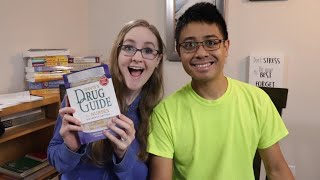
Christina Rafano and Matthew show nursing students how to use Davis's Drug Guide by grouping medications by class and learning mechanism of action instead of memorizing drug facts in isolation. They use furosemide to show how understanding why a drug works helps you predict side effects and know what to assess for.
Chapters
Good morning.
Good morning, everyone. Happy Monday. Welcome to the nursery school show.
Christina, do you see anything?
Matthew? Good morning. It's a Monday. For those that do not know, it is a Monday this morning. So thank you all for joining us. Welcome. We are here to answer nursing school related questions.
We are here. And that should be we are here celebration.
In and of us, we get points for being here.
All right, we'll tell you about it.
Happy October as well. It is October. We've made it.
Tomorrow is our anniversary.
Tomorrow is our anniversary. Happy anniversary. Today's topic, how to use a drug guide. Drug guide.
Specifically, I'm going to talk about the Davis.
Davis's drug guide. Davis drug guide. Davis's drug guide.
Oh, you guys.
His name is Davis and he has a drug guide.
Yep. There you go.
Hey,
hey. Hi, Anna. Good morning. All right, everybody, I gotta tell you, I gotta tell you, we are not fully here. It has been a weekend and we're gonna tell you all about it in just a few minutes.
Like my hair.
Oh, yeah, check it out.
Yeah, yeah, pretty cool.
Check it out. That's like literally just woke up. Get on live video. I was literally answering emails and like six minutes ago and I look at the clock like, oh, man, gotta get down here. Okay, so you've been.
Yeah, it's been a crazy couple of days. So we'll probably tell you about it as we go through this live right now. The topic though is how to use a drug guide in nursing school. Specifically Davis's drug guide.
This is my favorite one.
The purple one.
Yeah. Actually, you know what? So funny, I think they came out with another edition in.
Yes, they actually do. It is the 17th edition.
Okay, so this one's the 16th edition with the drug guide. You really need to make sure that you have the correct edition, the updated one because meds changed. It was crazy. Like I have my old one that I actually. I think it's somewhere else. I don't know where it is. When I used a nursing school and it was a lot smaller than this. Like, comparing the two is crazy because they come up with so many drug new, like new medications and stuff, you know, every year, it sucks.
So if you have any questions related to using a drug guide or pharmacology or nursing school in general or life in general, go ahead and pop them in the comments below.
We're here to answer your life questions.
Exactly. The answer is 42. So anyway, Christina will go over how to use Davis's drug guide and anyone that has a question will try and get as Many of those answered help you guys out.
So let us get through it. All right? Davis's drug guide. This is the one I recommend. I haven't had a lot of experience using other drug guides. This is the one I started with. This is the one I still use and have, have so good though what I love about this one. And you guys can tell me, do you, can you tell me in the chat, in the comments, do you guys have any other. Different kinds? I think there's like, there's different kinds of there. You tell me which one you use. If it's not this one, can you tell me if it is this one, you can tell me. But what I really love about this one is it has, in the front section here, you can kind of see on the binding. Do you see this like red tab section there? Red tab. You see what I'm saying? Red tabs, red tab section. This is your drug classes, your classifications. And so this is a mix of between pharmacologic class and therapeutic drug classes, medication classes. And so it gives you a nice high level overview of what the medication class is and does. So if you've been around for a while and if you have the nursing school study system, you know our pharmacology tips, how we teach you pharmacology. So it's on page 22 of the nursing school study system, if you have it. So how to study pharmacology in nursing school, we always recommend that you study the mechanism of action of the drug class, the mechanism of action of the classification of the medication. Because the medications that are within a single pharmacologic class, they will act the same way in the body. So when you take like all these different medications individually, sure, you can memorize them individually, but that is not going to be as efficient as it is to just group them all together and memorize one thing for the drug class, right? Which will then be attributed to all the other medications. So instead of learning like 11 different meds, right, you can just group them all into drug class. If they, if they are part of the same pharmacologic class, you can just group them all together and learn the mechanism of action for the one drug class. And then that goes for all the meds in that drug class. So it's like why memorize 11 things when you can just memorize one way better, right? So that's what this red tab section here does for you, breaks it up into medication class, therapeutic and pharmacologic. Jones and Barl. I have heard of that one. 19th edition yeah. Is that, that's your drug guide, Charlotte? Good morning. Crystal. Yes. Nuri. Hello. And Robina. Good morning. Okay, sweet. I like to wave at people on Instagram.
Hello, everyone.
Hello, everyone. So that is that. So when you're going through this red tab section, let me find one here. Anti ulcer agent, beta blockers. There you go. So like general use, what you're going to want to look at here in the. If you're using the Davis and Star guys. So Charlotte, with yours, I'm not sure. Can you tell me, Charlotte, do you have like something like this? You guys use a different drug guide. Can you tell me if you have something like this in, you know, somewhere in your drug aid that breaks it down by medication class? Can you tell me? Yeah. Okay. Charlotte, you say, yeah, you have something like this. So general action and information is what you're going to want to look for. General action and information, which is will. That will be the mechanism of action of the medication class. So that's what you want to look for, general action and information. And then when you've done that, group your medication by drug class. Look to the drug class in that red top section there. Then you're going to want to flip through the white pages. So all the white pages in the middle, all that white, all white pages there in the middle. These are all your just individual medications. So has the corticosteroids. There you go. So they have the action. The action there is the mechanism of action for the medications. And then you'll want to then move on to side effects and nursing. So side effects, nursing assessment and the nursing considerations for the medication. But here's the thing, you guys, if you don't know the mechanism of action of the drug class or the individual medication, if you don't understand the mechanism of action for the drug class or the medication, it will be very, very hard to learn from the side effects. Very hard to learn the nursing assessment or interventions, considerations that go with that medication. Because it's like if you don't know what the drug is doing in the body, if you don't know what the medication is doing in the body, how can you expect yourself to be able to critically think through what you need to assess for or the side effects that it can cause, all of those things. So that's why we always teach it that way. We don't want you to have to memorize a list of side effects. Like that doesn't make sense. There's a gazillion of them. Like memorize like you could sure, you can do it. You can pop them all on a flashcard and attempt to memorize every side effect for every medication ever. But what I would rather you do is know how the medication acts in the body and then, you know, critically think through how does that make sense with those side effects, with the side effects of the medication. You know, I always use furosemide as an example because most students are familiar with it. Even if you're in like fundamentals or your first term in nursing school of your core nursing classes, you most likely have heard of verosamide. It is a diuretic. Diuretics. Let's just, let me just go to it here. So diuretics. What furose might is going to do is it is going to kick out water and electrolytes, water and fluid, like no one's business out of the body. Just going to kick it out like nobody's business. So. So if you understand the mechanism of action of furosemide, it's also called Lasix, maybe you've heard it called Lasix. So furosemide, it's going to kick out water and fluid, water and fluid, fluid and electrolytes from the body like gangbusters. Nobody's business. So if that's the case, you understand that that's the mechanism of action at ferrosimide, then what are the side effects going to be? And then we come over here to side effects and I can actually read them to you. But, you know, they all make sense. Let's say dehydration. Dehydration. If we're getting rid of so much fluid from the body, you would imagine that the patient could become dehydrated, right? Then all the low electrolytes, hypokalemia, hypomagnesemia, hyponatremia, hypocalcemia, hypochlorenia, all the things, all the hypos. All the hypos. And then hypovolemia, which, you know, decreased fluid, so decreased fluid, decreased electrolytes. But you could try to memorize a list of those side effects if you wanted to. You could try. You could try to memorize a list of the side effects. But then when you get to your exam, they might throw something else at you. Right. That you didn't memorize. And so you're going to have to critically think through it. So if you are spending your time studying in nursing school by just memorizing a whole list of things, it's not going to get you anywhere. You might know a little bit. But then when you get to your exam. It's going to be very, very difficult for you to critically think through that stuff. So that's why we practice it before the exam.
Yeah. So we had this discussion a little bit last week about critical thinking versus memorization. And we were talking about, really, there is a. There is definitely a benefit or a place for memorization, but really, nursing school, getting out into real world. As nurses, you want to develop that critical thinking skill. And this is just another example of why it is important and how you can use critical thinking to your benefit. So memorization can only take you so far if you're memorizing things in a vacuum. Okay, this equals this, this equals this. It only works if you're asked that question specifically. Back to you on that test. Oh, what is the. What are five side effects of. Blah, blah, blah, of furosemide? Right. What are the. What are. Oh, great. I memorized that. I can get to it. But that is very much just test taking. And that's not real life. That's not real world. And nursing school is to get you prepared for that. And with case studies, etcetera, they're not going to just ask you, okay, what are you. What are three signs and symptoms with furosemide that start with the letter H? They're not going to do that. That's just memorization. But that's not practical. That's not showing that, you know, critical thinking, that you're going to be a good nurse.
They're going to give you a whole case study and be like, here's your patient scenario. And you know, here are the medications that your patient's on. You know, what are. What side effects would you expect to see something like that?
So you want to be able to know enough about nursing. Nursing that when you look at that case scenario, you can critically think through that and say, oh, because they have this, then I need to give them this medication, and then this will happen. So it's this and this. It's really putting all that information together. Now, memorization is okay in the beginning when you're just learning things, but once you start synthesizing it, you need to start critically thinking. And we're here to make things more efficient for you to do that. And that's where the drug guide comes in. That's where looking at the class of medication comes in. Instead of all the individual medications, you'll have to look at the individual medications eventually. But getting it as a class, you can now group things together and realize, okay, medications of classes, for the vast majority, they all act the same. So if I can understand how they act as a group, then when I have a specific one now, I can just dig in and see what the nuances there are. But it's, it's just a easier way of starting big and then diving deeper in instead of just having all of these 130, 500, whatever, how many meditations overwhelmed. It's overwhelming. So we want to make sure that you are studying efficiently and also really understanding it to be the best nurses that you can be. So look at the drug class first and then look at each individual drug, medication and see what the mechanism of action is. Because again what Christina was saying, the mechanism of action, once you understand that, then you can quickly think through what that will lead to naturally. So. And that will lead to everything else down the line, the signs and symptoms and the nursing assessment, etc.
Yep, absolutely. I want to clarify one thing though that you said just so nobody is confused out there. And you know what have you, at some point you mentioned like you would need to choose a drug when you are taking your case scenario questions in nursing school. Like out if that would be outside of the nursing scope of practice to choose what medication to give. So that is not something that you would most likely see. If you do see something like that on your exam, I would be a little bit confused about it. So just so you know, choosing a medication to give would be outside of the nurses scope of practice. Well, I mean in for the general situations like you will have some, you would on the floor like you would have to critically think sometimes, but it would always be like prescribed medication. Charlotte, I just took my first exam in nursing school and the questions seem to be memorization based questions, very little case scenarios. Yeah, Charlotte. So first semester nursing school, first exam, I would, that's pretty nice. That's pretty nice of them. And I would not, I would flip that frown right upside down, my friend. It's going to come.
And I'd say that that's, that's it. Learning how to, how to solve things through a case scenario will help you again in the long run in real life too. And I'd say that even works in reverse so you can quickly think and backtrack into what the signs and symptoms are, but you can't take memorization and move it forward into what you actually need. So it works.
You can, but you just have to practice it beforehand. Like it's very hard if you just memorize a list of side effects or signs and symptoms before your examination and then expect yourself to critically think through that exam. Like, what I would rather you do is, you know, start critically thinking before your exam so you're prepared on how to do it during your exam. Does that make sense? If that makes sense. I passed though. Woohoo. Good job, Charlotte. Yes. So fundamentals in nursing school. If your school is nice, which it sounds like yours is, mine was too. We had they. Some of the. Well, I can't really say that because the tests before, they were tough. Even if it was just like memorization stuff, they're kind of. Most likely what they're doing is kind of easing you into nursing school, which is nice. So it will come. Stay tuned. You know, keep me updated on how it kind of progresses because here's what happens. The more you learn during nursing school, the more concepts start to come together for you, the more in depth it just becomes like things become entangled together and you learn this thing and this thing and this thing, and you have to be able to apply them together, all that stuff. So that's what you're going to be moving toward. And the nclex itself is for sure going to test you on case scenarios, just how it is. So nursing school is going to prepare you for that. So that works. All right. Does it? Drug guide.
Drug guide.
So this is my favorite one. Davis's drug guide.
Medication class. Then mechanism, action, signs and symptoms and
yeah, the side effects. Yeah, the nursing assessment and nursing considerations. Oh, sorry, I missed some people on Instagram. I want to wave to you on Instagram. All right, friends, any questions, comments about
using a drug guide, Davis's or otherwise? Or maybe just pharmacology in general or nursing school in general? Any other questions that you have for us today, go ahead and pop them in.
Sorry, Instagram. I almost just like, like shut you down. Sorry, friends. But you're still here. Hopefully you're still here. Instagram.
All right, let's see.
Okay. For starters.
Yeah, dude, did you want to talk a little bit?
How Christine are so tired. Oh, friends. Okay. So if you were with us. I don't even know where to begin. If you were with us last week and I said, hey, you guys, I'm sorry. So excited. Because the nursing SOS membership community is opening for enrollment next week, which would have been yesterday.
That would have been yesterday.
It would have been yesterday.
For those keeping track, it is not open.
It is not open.
So.
And I will tell you why. It has been quite a weekend. We became aware of an issue with our emails. The email software thing that we use was having server issues last week. And so basically, we can't email anybody is basically what it comes down to. Like, I can talk to you here, but I can't. I can't email anybody about anything. So we can't even let you into the membership community because we have to email you stuff right when you join. Like, we can't. We're just. We're just waiting.
So, long story short, the membership community is not open yet. It will be soon, though. So make sure that you still join the wait list at Nursing school of success. Dot no, wait.
Nursingschoolofsuccess.com forward slash waitlist or slash join
will get you there.
Oh, forward slash join.
That's right. So nursingschoolofsuccess join will get you on the waitlist. You will be the first to know when it does open. It is opening asap.
Yep.
So once we get these things resolved, we will open that up. When we do open up, we open up for, like, five days or something like that. So be sure to get on that waitlist.
But now, here's the weird thing. If you get on that wait list, you might not get an email from me because I cannot email you. Right.
But we will have you, but you
will be on the waitlist. So still join that waitlist. NurseSchoolOfSuccess.com forward/join and get on the waitlist. You might not get an email confirming that, but you will be on the wait list.
So we've been putting out fires and
we have been putting out fires constantly this weekend.
It's looking pretty good, though. So thank you all for joining and staying tuned and we will get that open for you and kind of having
our backs, like, you know, the whole, you know, when you have issues like this. And let's just be like, this is a big issue. This was like, a big issue because we have people, you know, that, that, I mean, you guys want your cheat sheets and you want your study system, people who purchase the study system and the planner and all that stuff. So it's so nice to have such a supportive community here that even though, you know, we're having these technical issues on our end, that you guys are just awesome about it. Like, I don't, you know, everyone's been, like, so super understanding, like, with emails. Like, we're constantly. So here's the thing. Like, we can't send you, like, regular emails through that provider, but we can, like, we're. We're individually emailing people, so we can still email you from, like, our personal email addresses, which is Fantastic. But, you know, just the other one, we cannot. So kind of a bummer, but we're getting it worked out, so thank you so much for your understanding.
Yeah. So, yeah, so we've been a little busy. A little busy this past weekend. But yeah, thank you for being here, being with us. And we will get that open for you. Yep. And get back on track. So it's looking. It's looking good. So we will be opening soon.
Yes, yes. Stay tuned. But I gotta be honest, I'm totally tired. Are you tired? Are you like.
Yeah, a little bit.
Yeah, I'm super dire.
So we. We had a really good question that just popped in about. Yeah. Diana.
Hey, Diana. Good morning. How would you explain the duration of a drug? That was one of my test questions on pharm. I know it's really silly, but these questions really throw me off. Oh, wait. How would you explain the duration of a drug? You said that was your test question. Okay, so can just, can you clarify? Yeah, because. Are you talking about therapeutic effect? Are you talking about peak and trough? Are you talking about the half life? I just need a little bit more clarification. Or like, was that just your test question? Like, explain the duration of a drug. So explaining the duration of a medication, I mean, how long does it stay in the body? How long does it act in the body? So when you look at your drug guide. Let's just do. I'm gonna go back to first, my four. An example. There's a couple things when you, when you use that term. Ooh, fentanyl might be. We'll just stick with one. When you're talking about duration of a medication, really what you're talking about, what I think is either the therapeutic effects, like, how long is it. Is it therapeutically active? How long is the patient going to get relief from that medication? Or, you know, how long is it going to be? What's a good way to say it? Acting in the body. Yeah, Active, where the patient.
How long will they feel the effects.
Yeah, the effects of the medication. Now you're in here in the drug guide. Pharmacokinetics. Pharmacokinetics. So absorption, distribution, metabolism and excretion and half life. So that's what you're going to want to look for. Yes, the therapeutic effect. So. So that is it. Like the therapeutic effect is just, you know, how long will the patient feel the effect of the medication. That's it, really. Now, Charlotte, what is a half life?
Yeah. Slightly above. What does half life mean?
Half life? Yeah, Half life is the Time that it takes to get rid of half of the medication in the body. So how long does it take for the medication to decrease in the body by half? So let's say you give, just as an example, you give 20 milligrams of a medication. The half life is how long it takes to get to 10. Does that make sense? I mean, that's a very high level of review, but that's. That's it. So like here they give. Okay, so here's the thing. They give you the half life. Like, we are not in pharmacy school. Like, we are not going to school to become fart. Like, that's what they call, like pharmacists or what's another, like farm pharmacy techs or anything pharmacology related. If there's anything fancier than that. Like, we are not doing that. So what we do as nurses, you can see the half life, 30 to 60 minutes for the half life. Now, why half life is important, particularly for, you know, what we look at as nurses primarily, the half life is important because you want to know especially who was that was that day. Yep. Diana. Yeah. Therapeutic effect. You want to know that how long does it take for the drug to be excreted by the body? Because if you're giving another dose, you don't want it to compound in each other and become toxic to the patient. So like for this here, for verosamine, the half life is 30 to 60 minutes. And it says in parentheses, increase renal impairment. So we do not want to keep compounding, keep compounding, keep compounding that medication if the patient is not excreting it. If the patient has renal impairment, primarily for pretty much all medications, because medications are excreted by the kidneys and a lot of them metabolized by the liver. So if the patient has liver issues or kidney issues, it can increase their risk of toxicity of that medication. And so we want to make sure that we're watching that therapeutic range. Is Diana, another way of saying that? What's the therapeutic range? How long is it going to stay effective in the body or what's the half life of it? We want to make sure that we are not giving the patient too much. Does that all make sense? I hope that makes sense. So that's example for Ferocious Mind. Charlotte. Okay, thank you. I'm glad that that solved that.
We just got a comment d someone in Instagram even responded. So thanks for that. Wondering. They were expecting an email because the membership community was going to open. We just were talking about that. Unfortunately we were having some technical Difficulties.
Some technical difficulties.
Some technical difficulties.
Meaning, like all of the technical difficulties.
So stay tuned. We were not able to open. So the membership community is not open yet, but it will be as soon as these issues are resolved.
I am so sorry, you guys. I gotta tell you, I am so sorry. Because we did everything. Like, it's just one of those situations that's completely out of your control. Like, there's nothing we could have done. Like there's nothing we could have done differently. There was nothing that we could have, you know, know, we could have done to stop it. It was just completely out of our control. And so basically that, like, you know, it just. This just happens.
It happens. It happens sometimes, guys.
Gotta go with it. Gotta roll. Rock and roll with it.
Yeah,
yesterday. But I didn't get an email. Yeah, I can't email you. I'm sorry. That is why. Yep. So stay tuned. Stay tuned, my friends. Enrollment will be opening soon. When we, you know, can. When I can email you again. Right. All right.
All right. Not drug guide related. If there are any more drug guide questions, go ahead and pop them in. But I did have a couple other questions from other lives.
You have a couple of.
I have a couple questions. I have a couple personal questions that are nursing school related. So let's go ahead and get through them. This one I found interesting. I don't know the background to these. I'm not sure if you guys are on right now, if you guys are on or if you have these same kind of questions anyway. And you can kind of flesh it out a little bit. But someone was struggling to find or use NANDA info and applying it to nursing diagnoses.
Oh, do you mean like, okay, here.
So unfortunately, that is all I know.
So the NANDA nursing diagnosis diagnoses, it's like they're standardized. It's a list that you get all your NANDA nursing diagnoses here in the front of the book. This is the Nursing Diagnosis Handbook by Aklian Ludwig.
This is another book that you.
It's another book that I recommend.
Enjoy reading on your off time.
Some screenshot it. Screenshot it because it's so helpful. Basically writes your complaints for you. So I'm not entirely sure what this question is asking. Struggling to find or use NANDA info and applying it to nursing diagnosis, diagnosis diagnoses. So I'm just assuming that you're having a hard time finding these nursing diagnoses, am I right? Because oftentimes is what we hear for students. Christina, I don't know where to find the List. Okay, so where's the list in this book? Nursing Diagnosis Handbook by Ackley and Ludwig.
And you said that these are standardized.
These are standardized. You cannot make them up.
You cannot make.
Do not make them up yourself.
No. Are there anywhere else or would nursing schools like give this to you?
Some nursing schools might there. They will be sporadic throughout your textbooks. So if you are in Med Surg Fundamentals, your nursing diagnoses are going to be kind of scattered throughout there. I don't know of any place that has the full list except for this book. That's all I know. There will be most likely other nursing diagnoses books, so if you don't want this one and you just want another one, hopefully it'll have it in there. This is the one I know of. I highly recommend this one. But I'm sure there's other nursing diagnoses books out there in the world that you could get that have the list.
Okay. And.
And then. Yeah, go ahead.
Yeah. No, no. So NANDA or I. I remember me saying NANDA I. What does that stand for?
Oh, International NANDA I. So what does NANDA I? North American North American Nursing Diagnosis Association International. I believe I got that right. Someone please tell me if I am wrong on that, but that is what I am remembering. North American North American Nursing Diagnostic Association Association.
Okay.
And then the I is optional. International. I am looking here, flipping through this really quick. NANDA International. I just always says NANDA International. NANDA I NANDA International.
But yeah, so since it's standardized, everyone in nursing community will know this. Do not try and make up your own. Especially if questions are revolving around that applying it to nursing diagnoses.
Do you recommend the Carpento book? I don't know what that is, so no, I can't recommend anything that I don't use that don't know about. Yep. So that is. That's the nursing guy. I just love this book.
It's so bad.
Okay, sweet. Oh, man. Guys, I have a lot of books.
Okay, next up. This is a fun one. Any tips on studying fluid and electrolyte imbalances? I can't seem to retain this information. I know that we were talking about furosemide that had some stuff revolving fluid and electrolytes. So segue into this question.
Perfect. This is gonna sound terrible, you guys, but my first step is to join the membership community because we have, I think, the best fluid electrolyte course in the world. It's so helpful. So here's the thing. When you study anything in nursing school, fluid and electrolytes as well. You have to understand the pathophysiology first. If you understand the pathophysiology, what is happening in the body, how do fluid and electrolyte imbalances happen? Like what causes it and then what happens with them in the body? Then you can move on to the other aspects, signs and symptoms, nursing assessment and nursing intervention. But you have to start with the patho. That's it. Have to start with the patho. So that's really it. When you are studying fluid and electrolytes, you have to understand what is causing hypokalemia, what is causing hyperkalemia, what is causing hyponatremia, hypomagnesemia, hyper magnesiumia, what is causing all of these things, what is happening in the body. And then you can move on to the signs and symptoms, the nursing assessment and the nursing interventions. That's it. It's really that simple. But the thing, the problem, and where nursing students go wrong is you try to memorize a list. You try to memorize a list of signs and symptoms, things to assess for nursing interventions to fix it, right? We try to memorize a list. And that's not helpful for you when you get to your exam or when you're out in the real world? I cannot tell you. I cannot tell you. When I started nursing school. When I started nursing school. When I started nursing school, I was all over confused, and I fixed it by starting nursing sos. So when I started nursing sos, I started this company because I was so frustrated with textbooks and YouTube videos and everything out there that didn't explain things well enough for me. You know, I. When I was reading a textbook or when I was watching a YouTube video, like, they would go over, like, here are the signs and symptoms that you want to look for. And I was like, great, okay, but why? Like, I don't understand, why do I need to look for those names? Why do I need to assess for those things? Why do we do those interventions that we do? And so that was just. That's why we teach it this way. When you jump into our fluid and electrolytes course inside the Nursing Association's membership community, we walk you through. Here's the pathophysiology of hyperkalemia. Here's the pathophysiology of hypokalemia, all of them. Now, here's the signs and symptoms. And why, why did the signs and symptoms happen as it relates back to the patho? So you don't have to memorize an entire list. All you have to do is understand the pathophysiology and then we help you quickly think through it. Why do those signs and symptoms happen? Why do you need to assess for the things you need to assess for? Why do we do the nursing interventions like we do? You know, so it's, it's really that it starts with the path of what is happening in the body. It's as easy as that.
Yeah. So, so, so backing up a little bit and tying this into our previous discussion about drug guide and studying medications, really it comes down to that critical thinking, learning how to critically think, learning the basis of the patho or in the medication perspective, the medic, the mechanism of action.
Yep.
So start with that base understanding of what it does, how it affects the body and then you can tease out from that, you can critically think out of that. What are the signs and symptoms and because of the signs and symptoms, what are the assessments and interventions you have to do. But it all starts from there. So that's where we really focus on getting your understanding up in the medications, the mechanism, action in everything else. Pollutant, electrolytes or any other disorders. What is happening in the body?
What is a patho? Yep, absolutely. It has to start with a patho. You've got to know. You've got to know what's happening in the body. If this makes sense to you guys, can you like hit the like button or throw up some hearts on Instagram, wherever you're at, Facebook, Instagram, thumbs up if that makes sense to you. If this is helpful for you, can
you please like this, you know, some kind of emoji. And if you're on YouTube, be sure to hit subscribe and hit the notification bell so that you are notified whenever we go live. Yes, it happens every Monday and Wednesday,
9pm 9am 9pm 9 a?m. I meant 9am 9am Pacific. Yeah.
Noon Eastern, etc. Etc. Etc.
Oh, good Charlotte. I'm glad. I like the chapter in the study. So study system. I'm assuming you're talking about what's scamming that real quick. What did you say? I like the chapter in the study system on critical thinking. It really explains it. Well. Yeah, I again, that was actually the, the first thing that I did for nursing SOS was these was this critical thinking section. It's crazy. So if you have got the study system already, page 15 through, I think it's 21, we talk about critical thinking and we go over the nine key critical thinking questions and then the DRC critical thinking model. Now if you do not have the study system. That's totally fine. You can go to nursingschoolofsuccess.com critical thinking and then you can download it. Now you will get the cheat sheet sent to you. So we did get that fixed in one email.
You will get the cheat sheet.
You will get the cheat sheet but you will not get any other emails after that. So for now, until we get it fixed, then I will start emailing you and pestering you because let's be honest, who is on our email list? Can you raise your hand if you are on our email list? Because I send some seriously amazing emails. I cannot. So we sent an email a couple of weeks ago and we literally got like five. I think it was over 500 students replied. Yeah, we had our team in the inbox and they're like, oh man. You know, like we're just comment, you know. We love talking with you guys. Like 500 responses in a day. My. A lot. I'm glad you guys like our emails so much that you reply to them and say thank you. There you go. So good.
Christina likes emailing.
I love emailing. I talk all the time but you know, there you go. There you go. Oh, I'm glad. Thank you YouTube. I'm glad that it's helpful for you, Charlotte. I'm glad you like our emails. I gotta tell you guys. Fun stuff, Fun stuff.
Oh, love your videos and advice but these lives are too long and a bit difficult to watch.
I know.
Doing your short videos too. Thanks. Love you. Great advice.
I know. Tell me about it. Ashley, I am fading on a Monday. I gotta tell you. It's been a rough weekend and I am scattered and so let us know
what kind of topics you guys want on these lives as well. Go ahead and shoot them in the comments or go ahead and email us. We'd like to be improved in previous segments. So if you think they are too long, let us know that too. And we will try and see what changes we can make so that we can keep improving and making them content that you'd like to watch and learn from.
Absolutely. So hey, Ashley too. Did you know that you don't have to watch the live videos if you don't want to but Matthew, because he's a rock star afterwards goes back and he timestamps. Timestamps the videos.
Yes, I do. I need to catch up on that a little bit and we're actually going to be changing some stuff around on how to do that. So we are looking at some improvements on this. So yeah, I do.
Improvements Always improving.
I do a timestamp, so if you go back and look at some of the earlier ones, especially when we did more question and answers. All the questions are in the description with links to the exact timestamp of that specific one.
So you don't have to dig through the whole hour video if you don't want to.
Yes. So definitely though topics that you guys would want to listen to watch on these lives. Would you like more lives, less lives, shorter lives, longer lives.
Get off. Get off Live video. Yeah.
You don't want any more me just Christina. I'd understand that too.
So if you don't want any more of me and just want him, I get that. Totally. I'll go take a nap. It's fine. What's the name of the study book again? This is the Nursing School Study System. It's on our website. Nursing SchoolofSuccess.com study system. Nursing SchoolofSuccess.com Study System.
There you go.
Yep, yep. That's how it is.
So a lot of the main topics that we talk about is in there. It is our condensed step by step guide to getting through nursing school in the membership community. We walk through that step by step guide and it's more handhold guide through Nursing School. But if you want kind of the diy, all the condensed step by step, it's in that study system.
Yeah. Hey Maria, go to nursing school of success.com forward/doc. Matthew, can you throw that in the chat please For Maria on YouTube? Yep. NurseSchoolOfSuccess.com forward/do Scalc will get you there and then. Oh, hopefully maybe we don't have the link. I'm not seeing it. But let's do.
I'll just. It's Dose calc, right?
Yeah. And then we also have a full dose calc Playlist up on YouTube for you as well. Dose Calc. So Matthew's gonna throw that link in the chat. So if you guys have any issues or questions on Dose calculator and then what I am, yeah, I'm gonna put more Dose Calc videos together just because they're, it's, you know, what people have been asking for. So stay tuned for that because I love Dose Calc and I think it's great.
So like we said, these lives are very interactive. We like talking Christina more so than I do, but we are very interactive and participation based. So yeah, we have heard a lot about dose drug calculations. So definitely keep us informed at what else you guys need and that will inform us on what we need to help you guys with.
So, Katherine, I'm great. I'm so glad you love the live videos and that you like to do chores and listen to us gabble. That's not right. Gab, Gab, Gab. The gift of gab.
The gift of gab.
I'm glad that you like us. We're happy to be here always. Okay. Something that I. Okay, first off, can you guys please post in the comments what you want the topic to be in the future for these live youtubes? But I have some thoughts. I have talked a lot with our membership, community members or nursing SS members a lot about mindset stuff the past couple weeks. Like, a lot. Particularly if you. If your class is online and you just don't know what to do or you don't do as well on an exam as you would like to, or you're just overwhelmed and confused with studying. So I think we're gonna do. We've had students ask us, what about a time management one? They wanted a time management one discussion from us.
Yeah, time management. We did ask if you guys do like the mindset discussions. It seems like people do like mindset motivation, how to deal with failure. Yeah, those kind of topics as well. Kind of not necessarily having to do with nursing school topics per se, but just like the mindsets on entering nursing school and how to get through it. So we have had some comments about that. If whoever's on like that idea of kind of generalizing it, go ahead and let us know. Yeah, so I think those are.
Yeah, that'll be good. So time management. Yeah, for sure. All the motivation stuff. I want to talk about what to do if you fail an exam. Who wants that one? What to do if you fail an exam. And then surprise, surprise, if you have the nursing school studies system, it's already. What to do if you fail an exam is on how to study for finals. It's on page 56. Page 56 of the study system. I also want to talk about how to study for final exams because, man friends, it's October
and October, guys, coming
up in November, December for all you guys. So can you even believe? Can you believe, man friends, I gotta tell you.
So we gave you guys a lot of action items there. So go ahead and think about it.
Yeah.
Comment below. Any additional thoughts, questions. We will be posting up our next live, which will be on Wednesday, that we will go live again on 9am Pacific. We'll post that up right after this one. So if you want to comment or add any more ideas, you can just go to our YouTube and you'll be able to go right on there and comment. So be sure to do that so we'll see it when we, when we look at it. And yeah, we just want to keep improving this.
Oh absolutely. So Christine's gonna go take a nap right now. Just kidding. I'm gonna go work and fix all the things right now. Yeah. We will be back with you on Wednesday at 9. Let us know what topics you want for our future. Live videos or just YouTube videos in general. You can post in YouTube comments, Instagram where what have you, Facebook all over the place and we will be reading your comments.
Okay.
Taking stock.
Exactly.
Take stock. Don't get into any notes. All right, bye. Take care guys. See you all Wednesday at 9am thanks for hanging out with us. Bye bye. Bye bye bye bye.










