Hypertension Concept Map | PLUS The Must Know NCLEX® Points
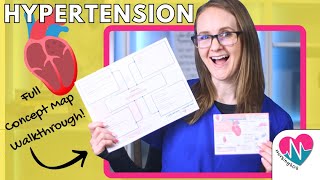
Christina Rafano maps hypertension using pathophysiology, assessment, and interventions. Hypertension is often silent but can cause headaches, nosebleeds, or in crisis, chest pain and vision changes. Key nursing moves: monitor blood pressure and potassium, restrict fluids, teach diet and medication adherence.
Chapters
Hey there, my friend. My name is Christina Rafano from nursingsos.com and today in this video, we are doing something quite exciting. We are walking through a whole concept map for hypertension. Now, concept maps in nursing school are so awesome and important to help you study. They can be really, really great to help you learn things faster. So we're going to walk through a concept map. I'll walk you through kind of how they go and what you might include in yours as you're studying in nursing school. So hit that subscribe button and click notification bell and let's dive in. So I get questions all the time from nursing students about concept maps and how they look, what you need to include on them and all the things. So I'm actually pulling from this concept map that I have for you inside the nursing SOS membership community. I've also got a flashcard for you inside the nursing SOS membership community. So we're going to be walking through kind of both of these things as we go through this hypertension concept map to help you study easier in nursing school. So if you're interested in joining the nursing SOS membership community, I hope you are. You're going to love it. There are so many awesome resources in there for you. Tons of lecture videos. I've got, I think over a thousand lecture videos, study guides, all my study guides, all my cheat sheets. We're releasing brand new flashcards like it's awesome. So I'll put the link down below in the description for you to check out all the details, but I know you're going to love it. So typically when you're studying med surge in nursing school, or really any class in nursing school, when you're studying disorders, going to want to focus on four main things. We call this the four core method. That's how I teach med surge in the nursing SOS membership community. We call it the four core method because it's really the four main things that you've got to focus on when you're studying. You've got your pathophysiology, you've got signs and symptoms, you've got nursing assessment and nursing interventions. Those are the four main things that you want to focus on when you are studying now. And as you're writing your concept map, you can use those four main categories as a base to write out your concept map and connect certain topics together. So let's walk through the pathophysiology first for hypertension. So basically what's happening here in hypertension is there is an increased pressure in the blood vessels. So hypertension means that the blood vessels are, have that increased pressure. They could be vasoconstricted, there could just be an increase in fluid volume, could be any, any number of things. But ultimately what's happening is there's an increase in blood pressure in the body. This makes it difficult for the heart to function, for those blood vessels really to function, and for blood to move and circulate through the body in a more optimal way. So we'll see. There's a lot of issues that can come from hypertension. So anytime you're writing a concept map or studying in nursing school, you always want to start with the pathophysiology. You always want to know why things are happening like what is actually happening with this disorder. So like we said, with hypertension, there's just those blood vessels constricting, There could be increased fluid volume. There's just this increase in pressure in the blood vessels. So now that we know that there's increase in pressure in the blood vessels, now it's so, so important to go on to the signs and symptoms and to connect them to the patho. As always, I always, always teach this inside the nursing SOS membership community. This way, the signs and symptoms, we've got to connect them back to the pathophysiology. This is why I teach it this way. It's because it's all about critical thinking. You cannot just memorize a list of signs and symptoms and try to get away with it on your exam, my friend, it does not work that way in nursing school. Nursing school is not about memorization. Nursing school is about critical thinking. Right? They want you to actually understand what you're talking about, understand what you're learning and be able to apply it to your nursing school exam. Exam. That's all about critical thinking. So we always want to connect things back to the path of physiology. The signs, symptoms, the nursing assessment, the nursing interventions. We've got to do critical thinking about all of those things and connect it back to the patho. That way you actually understand it and you're not just memorizing a list because that's not going to help you on your exams. So for hypertension, what we've got here is hypertension. Remember, there's that increase in blood pressure in the blood vessels. It's causing the heart to work harder to pump. So signs and symptoms that you could see, things like a headache or nosebleed. Now, a key thing I want to say about hypertension is there's oftentimes no signs and symptoms. At all. A patient could be hypertensive, not have any signs and symptoms, that they have an increased blood pressure. That's very common. But if they do have signs and symptoms, things like headache or nosebleed, they are related to that increase in pressure in the blood vessels. Right. If there's nosebleeds. So that would be because the blood vessels are so constricted and then they burst. Right. If they have a headache, that's because the literally the blood vessels in the brain are constricted. The brain's not getting the blood flow that it needs to function. Now, a key thing from our flashcard inside the nursing office membership community, I want to make sure that you know the signs and symptoms of a high hypertensive crisis. Okay? This is a medical emergency, must be treated immediately. Your patient could have things like shortness of breath, chest pain, numbness and weakness, dizziness and vision changes. All right? So those are really key things to watch out for with a hypertensive crisis, and that is a medical emergency. So there's two different things that we're dealing with here for our hypertension concept map that you can connect together. We've got just regular hypertension. So that's a increase in blood pressure. Then you've also got your hypertensive crisis, and that's a medical emergency where we've got to bring that blood pressure down or the patient's at risk for something like a stroke. Now, the next part of your concept map is the nursing assessment. So we know the pathophysiology, we know the signs and symptoms. Now we move on to the nursing assessment. So what are you going to assess for as the nurse for a patient with hypertension? So this would be things like, of course, blood pressure. So why would we assess blood pressure? Right. Well, hypertension is all about blood pressure. It's an increase in blood pressure. So we have to watch their blood pressure. You're going to want to do a cardiac assessment, listen to their heart sounds, maybe get them on an ekg, make sure that their heart is functioning as optimally as possible. We want to assess their cardiac function, lifestyle. You might want to assess diet, exercise, their stress level. That can also increase blood pressure. Any of these things are just because of that increase in pressure in those blood vessels. Diet can definitely impact hypertension. You will hear a lot in nursing school about salt and excess fluid leading to hypertension because water likes to follow salt. So if a patient has a very high salt diet, they're more at risk for hypertension and high blood pressure just because there's more fluid in those blood vessels leading to a higher blood pressure and hypertension. Then you'll want to assess for those signs and symptoms. Headaches, nosebleed, vision changes. Definitely watch for those signs and symptoms of a hypertensive crisis because that is a medical emergency. We want to fix that as soon as possible and then assess for complications. You're going to want to watch for things like stroke because a patient with hypertension, especially a hypertensive crisis, higher risk of stroke, kidney damage, heart failure, and pulmonary edema. Those are big ones. And here's why. Let's do some critical thinking about this concept. Maps are all about critical thinking, right? We need to be able to connect the dots between all of these topics. So with hypertension, the blood vessels are constricted or there's just more pressure in them. So there's an increase in blood pressure in the blood vessels. So when you think about things like pulmonary edema, pull or pulmonary edema and even pulmonary hypertension, that's when you have that edema or that hypertension in the lungs, which can lead to the lungs not functioning as well as they should. So that is a big problem. Stroke, again, a big problem. Especially with a hypertensive crisis, the patient is at more at risk for a stroke simply because those blood vessels are constricted. The brain is not getting the blood flow that it needs to. Same thing with the kidneys. The kidneys, if there's hypertension in the body, then the kidneys have a reduced blood flow, so there's less, less blood going to the kidneys, so they can't function as well as they should. So kidney damage is possible as well. So again, with our concept map, we're going to be connecting the dots to different topics as you're learning them, to do critical thinking about it and understand it on a deeper level. That's what your nursing the school exams are going to test you on. Not on memorization, but on that critical thinking. Now, the fourth part of our four core method for concept maps is the nursing intervention. So what are you going to do to fix hypertension? All right, so these would be things like monitoring your blood pressure. Make sure you're. You're continuing to monitor to see how things are going. Medication management is huge. Anti hypertensives and diuretics, you'll see those all the time. So diuretics, we're trying to offload that fluid, get more fluid out of the body to bring that blood pressure down. Antihypertensives, same thing. We want to bring that blood Pressure down, you'll want to monitor their intake and their output and electrolytes, especially if they're on diuretics, something like furosemide. If your patient is on furosemide or Lasix, they are at a very high, much higher risk of developing hypokalemia. So their bodies, like their kidneys, are getting rid of potassium. They're at a higher risk of hypokalemia. So you're going to want to be watching that potassium level. So that's another key critical thinking point for you. We've got to watch that potassium, potassium level. If your patient's on furosemide, monitor for complications. Again, that was the similar things, watching for a stroke, watching for pulmonary edema, we're watching for kidney damage, we're watching for heart failure, things like that. And then as part of your nursing interventions is patient education. We want to educate your patient on diet, reducing that sodium intake, maybe being on a fluid restriction, if that's prescribed, following their prescribed medications, prescribed diet plans, and then their activity level, making sure that they are getting as much activity as they can, but balancing that, of course, with rest. We don't want them to overdo it either. So a lot of patient education, specifically around medications, watching for complications, those kinds of things that all goes into your nursing interventions. So all of that goes back to the pathophysiology. You're going to be watching that intake and output. You're going to, because they're receiving all those medications that are going to really mess up how their body is retaining water and offloading water. So we want to be watching their intake and output. We want to be making sure that they are set up optimally for their lifestyle when they go home, that they can do the ADL's properly and as independently as possible. When they go home, we want them to be as independent as possible. So as you're walking through your hypertension concept map, connect the dots between these things. Think of the critical thinking points that connect it back to the pathophysiology so that you're not just memorizing a list of signs and symptoms, or nursing assessments or nursing interventions, but you are also critically thinking about it. And because critical thinking is such a big deal for your nursing school exams, you'll definitely want to check out this video that I have here for you on how to choose the best answer on your nursing school exams. It's going to walk you through some strategies to use how to critically think on your exams and think through the questions on your exams so that you can choose the most correct answer. And if you like this video, hit that like button. Write love in the comments below because that is what we do around here on my channel. And as always, my friend, go become the nurse that God created only you to be. And I will see you over there in that next video.










