MAY 24 LIVE SHOW | The Nursing School Show | ASK US ANYTHING!
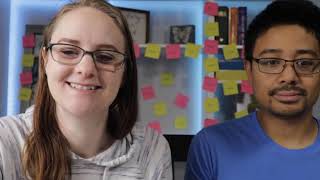
Matthew and Christina Rafano answer nursing students' real-time questions about studying, stress, and school challenges. They introduce their Four Core Method, a study framework for any topic, and walk through their six-step dose-calculation process. Most student fears are shared, they say, and understanding concepts beats memorizing everything.
Chapters
Hello. Hi, everyone. Welcome to another Wednesday and nursing school show. We are here to answer nursing school related questions. Nursing school questions.
He's all about the housekeeping things.
Yes.
I don't say those things.
Let us know.
Should we say who we are while we're at it?
Hi. Hi. That is Christina.
Hello.
I am Matthew. Let us know if this is your first time joining us and why you have joined.
Good morning.
Let us know. I don't think I've ever asked that question before, but let us know if this is your first time and what you are looking for.
Yes.
Why are you joining? Where are you joining from? We do ask that a lot.
Yes.
So where are you joining from? And if this is your first time or if you're returning, let us know. Say, hey, this is my second time or say, hey, this is my seventh time or what have you. Hey.
Hello. Thought I could learn something new today. Hello, Kathleen.
Hello, Kathleen. I'm hoping that I can learn something new today too. So let me know because that'll be good.
Tennessee. Hi, Tamara. Second time. Nice. Hello. First time. Hi, Donald.
First time. All right, great.
Okay. What's in our notes from Monday? I think we were going to talk about that.
Got everything? Yeah, we can. I mean I. We touched on it on Monday. So for those that are new. First time, we do. We answer nursing school related questions and I try and type them down also. So sometimes we want to flesh out some stuff that were asked in previous lives. So thank you for joining. Let's see, last week we. Or last time.
Monday.
Monday. Let's see. We talked about comorbidities, pediatrics.
Yeah. Fluids, electrolytes, nclex. We did it all, actually.
We did do it all.
That's funny. Hey, did you guys see our YouTube video that we posted on Monday? It was all about the nclex and it's fabulous.
Oh yeah. I think we're probably going to talk about NCLEX more. Do you guys want to talk more about the nclex or what do you guys want to talk about?
Yes.
Since we are all caught up with.
The questions, probably Med surge and pharmacology did come up several times too. So do you want to talk about pharmacology? Would that be helpful for you? Okay.
Yeah.
I really, I really liked the NCLEX video that we posted on Monday because it's just a really good breakdown of, you know, strategy, how to take NCLEX exam, nursing school exam, how to answer NCLEX style questions. I mean, those are big deals in nursing school for sure.
I Like that question, how do I.
Deal with professors that clearly show favoritism and picks on students? Okay.
I'm just writing it down.
Yep, Matthew is writing it down. If you can tell us a little more about that situation, that would be helpful.
Oh, okay.
Just so we have more context, I suppose.
Yes. Yeah.
But there's a lot of ways that I could go with that.
I guess the general high level thing is how to deal with professors, but.
How to deal with people. How to deal with people, that is how to deal with people who are sinners and because we all are. That's just how it is.
Yeah. How to deal with people, I think is a overarching topic.
Seven, my friends. Perfect. 70 times seven.
Addie, hi. Oh, yes, yes, Addy. We talked about community health and pediatrics on Monday.
Yes. Was that actually your question?
Yeah, that was actually Addie's question.
Oh, we talked about it on Monday, Addie. I'm sorry, but we can, yeah, we'll.
Talk about that more, for sure.
You know that community health is my favorite thing. That is my, that's my thing. I actually talked about that a little bit on Monday because community health, it's, it's so nice when you actually get to seemingly more help people. I, I, it's, it's a different, it's a different face, Addie. Probably like, you know, community health, you are very much helping them actually continue to be healthy or like get healthy, continue on that journey rather than, you know, when you're in a hospital setting or something. It's, it's very reactive. It's probably a good way to put it. Like hospitals, anything like more acute care is very reactive. This person's already sick, needs more help, whereas community, community health is more proactive. And so that's a big, big difference. Addie, when you go to take your nursing school exams, that is the key difference between community health versus something that's more acute. Anything you would really see in a hospital that's not outpatient, really, even things that are outpatient, like radiology and stuff. I mean, if you, when you are in community health nursing, when you're, when you're taking your community health classes, you just have to keep in mind in nursing school that it is very proactive. We are trying to catch things early and then help the patient overcome those before it becomes a problem. Okay, so when you're answering your nursing school questions about community health, that is what you have to keep in mind is that this is not a patient who already has, you know, a ton of stuff going on like it's just. And they're not like critical or anything. It's just like we're trying to get them to, to optimize their health might be a better word for it. I actually talked about this a little bit on the stories yesterday because that was a question that we got last week in our Q A on my stories. And then Addie, pediatrics lecture because inside the community, Addy for you check out the pediatrics course for sure. And then also what you want to look at is the four core method. We talked about this on Monday. But the four core method, you guys, how, how we structure studying in nursing school. The four core method is our step by step study framework for how to study in nursing school. What to focus your time on not wasting time studying things that don't matter. Right. So follow our four core methods. So adding that videos inside the community for you, it's under step three for making your study plan. Find that four core method. Because it's, I think we get really caught up in like we talked about this a little bit on Monday. We get caught up when we start a new term in nursing school. Whether it's pediatrics or OB or mental health or Med Surge. It's like our brains freak out and tell us that it's totally different. We have to study a totally different way. It's not true. It's not true. So Addie, when you're in pediatrics lecture, clinicals especially, I mean especially if it's at a hospital setting that you've been at before, it's basically going to be the same way that you studied for Med surge or even studied for fundamentals. It really like there is more critical thinking that goes on with it. It's much more similar to like med surg but the pediatric disorders, you're going to study for those the exact same way that you would study for any med surg disorder. See what I'm saying? So it really is very similar. Don't think that it's totally different and you know, don't let your brain freak you out about that.
Yeah. So when as we were kind of building out the membership community and trying to find the best ways of getting this nursing content to you and so that you can efficiently study and prepare for your nursing classes. Really the thing that you're finding is what Christina is saying is that you do tend to or people tend to want to think that everything is a unique case and everything requires its own unique thing. But if that's the case again, it takes up more time but what we want to do is give you a framework that applies to more things at once so that you don't have to have that overhead of learning a new way of learning just to learn something. Right. So we have our four core method, and that works for fluid electrolytes, that works for any adult disorders. That works for Pediatrics as well. Right. So that's the reason why we wanted to try and find a framework that will work across for all of a lot of things so that you can look at it and be confident that you can study for Pediatrics the same exact way that you don't need to learn a new way to learn. Just to learn.
Yes.
Right.
It's very important. You guys got to go to my stories on Instagram, okay? Because right now they're currently up. I put a Q and A sticker up last week, and then so I answered a lot of questions. So go back to our stories on Instagram because there's a lot of really good nuggets in there for you about this that we. We do tend to, like, think that everything's different. I like how you said, like, we all kind of default to, like, okay, here's the general principles, but my situation is different, you know, And. And it's just not true. Okay? It's. It's just not true. It reminds me of the, you know, the verse, like, no temptation has overtaken you at the time that is not common to man. Like, there is, like, nothing is. Like, you know, ecclesiastes. Like, there is nothing new under the sun, my friend. It is just. That's just how it is. We are all people, and it's basically the same. So how you are feeling in nursing school, your experience in nursing school is. Is, you know, it's like, of course we're all unique, but your experience in nursing school is, by and large, not super different than anyone else's. But we do tend to, like, make it a big deal, right? Like, we tend to, like, we tend to tell ourselves, well, everyone else in my class gets it, but I don't. And that's. This is not the case. Right. You would be flabbergasted at how many emails we get, how many DMS we get, how many messages we get from students who. Everyone just feels like, I don't get this, and everyone else in my class gets it. Like, people tell us that all the time. And so everyone's feeling that way. I promise you. Promise you. Everyone's feeling that way.
Yeah. I think. I think that it's safe to say that you are not alone. And even that is a unique thing, is that I am the only one going through this. And chances are probability says, no, that that is not true. That everyone's feeling the same way. And everyone is going through nursing school.
Right?
Everyone in your class is going through nursing school.
The dose calc exam is a fabulous example. Because what happens is, like, nursing students get accepted into nursing school and then they get an email from their saying, hey, by the way, you have to take this math test, this dose calc test, and you have to get 100% on it. And then what happens is they email us and say, oh, my gosh, Christina, you will not even believe. My school requires this dose calc exam and we have to get 100% on it in order to stay in the program. And our response back is, yes, welcome to nursing school. Because that is everyone, my friend. Like, every. Every single school requires this. It is an accreditation thing. It is not it. Like, nothing has gone wrong. There's nothing wrong. Okay. I think we tend, like, our brains tend to freak out. Like, this is not right. This is like, this is the worst thing that could happen. And it's just, I mean, yeah, dose calc is not super fun, sure. But like, that's just nursing school. So let's just stop freaking out about it and let's figure out a way to deal with it.
Here's an interesting idea. If your school does not do that and if you do not have to take a dose top test.
Oh, red flag.
Yeah. That is something to be concerned about. All right, Red flag.
Yes. And. And we have. I mean, yes, you guys have. You. You know. Okay, so, yes, make sure your school is accredited. Okay. Yeah, red flag. So some nursing Programs allow a 90% to pass, but that is. That is really generous. Okay, but by and large, it is. You have to pass with 100%. It's just how it is.
So, yes, your specific situation, of course, you as an individual are unique. You have your own special differences, which again we call out, like, for example, when you're studying, you need to know yourself, know the best way to study, so you can study your way instead of someone else's way. That's a great example of being unique and finding out what your personal study method is so that you can really study the best way possible. But as far as general situations that you're going through the dose calc exam and like, all this quote unquote, special ways that you need to learn these nursing topics, that's. Everyone's going through that everyone's going through nursing school, everyone's learning the same thing. Everyone's feeling the same things that you're feeling. So you are not alone in that way.
A hundred percent. And it just doesn't help you. It doesn't help you to, like, freak out and say that, like, my situation is different. Right. Than others. Because then you also don't seek help for it. Like, you say, like, nobody can help me. That's basically kind of the. That's the trap you fall into. Right. Like, if you think that you are so different and that nothing can ever change that you can't change all of those things. Like, that really undermines God's authority, God's power, the ability of him to work in whatever situation you have. You know, that's just. That's not. That's not helpful.
Right?
That's not helpful. So go ahead.
Yeah. So backing up all the way to Addie's original question about pediatrics. Pediatrics. We have our framework, the four core method. That works for pediatrics. It works for flu electrolytes. It works for adult disorders as well. Yeah. It works for mental health. It works across the board for fluids.
And electrolytes for those things.
And the reason why that is is because, like we're saying, it is generally all the same. You're learning the same kinds of content. You're critically thinking about all the same kinds of content, all the same kinds of ways. And that will make it more efficient for you to study.
Yes, absolutely. That is what we're here to do, my friends, is help you to study better, study more efficiently and faster so you can have a life.
Yes.
In nursing school. Like, you don't have to, like, you know, you don't have to go to nursing school totally stressed and burned out all the time. The Bible does not say do not worry unless you're in nursing school. No, no, no, no, no. The Bible says do not worry, period. Okay? So we are not. We do not want to be overwhelmed. We do not want to be worried. We do not want to be stressed out all the time. Nursing school is not an excuse to feel that way, okay? You can go to nursing school without sacrificing your life and your sanity at the same time.
Yep. Yeah. Nursing school. What's. What's her tagline that we've been saying lately is nursing school is not as hard as you.
Don't make it complicated.
Don't make it complicated. Don't make it harder than it needs to be.
Don't make it harder than it needs to be.
Granted we know it is challenging and it is hard.
Yes.
So don't make it harder than it needs to be.
Don't make it harder than it needs to be.
So, Jaslyn, good morning. I wanted to touch on your question. We did talk about this a little bit in a previous live, but it is a really good topic. I'm going to final semester, so final semester, congratulations. In the fall. Any tips on what I should be doing over the summer? So what we're answered kind of in general a couple weeks ago on our live shout out to our previous lives as well. They're all up on YouTube if you want to go back and take a look. All our, all our lives are on YouTube. So if you're not yet, also subscribe and hit the bell so you will know when we go live.
Did we just passed 130,000 YouTube subscribers?
I did see that.
That's crazy.
Hooray. Thank you everyone and thank you guys.
Pretty 140.
Sure, let's go for 140. Let's go for 150, something like that. You can be number 130,033 if you subscribe right now.
Pretty crazy. Oh wait, can you see that somewhere? No, I can't see that.
That is, that is a guess. But it's right around there. Right around there. So anyway, so any tips on what I should be doing over the summer? So we have talked about what you should be doing prepping for your next semester. Whether you're the first time, first time new nursing student or whether you're coming back in a returning semester or even Jaslyn, for you for your final semester. So let's, let's definitely discuss what you should be doing specifically as your final semester. But we'll probably touch around those other things peoples out there in the comment land of Instagram and YouTube. Let us know whether, well, what semester you're coming into in the fall, whether it is your first or you are returning.
Yes.
Let us know.
Are you coming into your first term in the fall or are you coming back from a another term if you like in the middle of your program.
Yes.
So Jaslyn, when you are returning to nursing school. So you've already done other terms. Here's my advice for all of you. All that are coming back into nursing school. Say you've, you know, done a med search term and now you're coming into med search 2 or you did fundamentals and now you're coming into med surg Brenda, final semester. Yay. This applies to you too. So when you are returning to nursing school, you want to get with an upperclassman, someone who is, you know. Well, now, actually, Joslyn, this is kind of interesting. Someone who's graduating, right? You want to find someone in the term above you. So someone who is just graduating or just graduated. I'm sure you know them. I'm sure you, you know, I'm sure you've met somebody and ask them, how does that term go? What do you learn? What clinicals are there? How does it work? You want to know everything about the term. Okay, so here's what I did when I was in nursing school, even final semester, like, literally asking the. The. An upperclassman, someone who, who is one term ahead of you. Get their syllabus, get the class calendar, get everything I asked them, okay, what do we do? What papers do we write? What care plans do I need? Like, what does clinical look like? What days are clinicals on? All of the. Everything. Ask them all the questions. Okay? And what I did several times before the term started, I would knock out an entire research paper because it didn't require, like, clinical or anything. Like, you know, get the things done. Like, get the things done that you can do ahead of time. Like, I remember one term we did, I think it was our second term, where we had to write this, like, about me paper. Like, why do you want to be a nurse? Who are you? Why are you here? Kind of stuff. You know, I just. I just did that before the term started, so I didn't have to do it when I was in that term, you see. So, like, during your break, during summer break, during spring break, whatever, when you have that downtime, you might as well get a head start, as long as.
It'S the things that you know will happen. Which is why talking to an upperclassman is very important.
Yes.
You want to make sure that you are not doing busy work or work that you might not have to do.
Or even a professor.
Like, talk to a professor or a professor. Yeah, that's a great idea. Yeah. So I think the. The general overarching thing is try and get a handle on what to expect. Because we've talked about this, not specifically about coming back to class, but more in general. The things that you get stressed out about, things that you worry about the most are things that you do not know. The things that you. Is the black box, right?
Black box. The unknown box.
So the best thing to do is to be more comfortable going into your. Your next semester, your final semester, your first semester. Right. And one of the best ways to do that is talk to professors, talk to people that have gone through it before and get a handle on what's actually going to happen so that you're, you're not, you're not exaggerating in your own mind what's going to happen.
Right, right.
So, yeah, definitely get advice. I think I like this part too. Also, not necessarily prepping for your, your final semester, but also talking to people ahead of you is that sometimes the books that the school says that you need, they've never opened it, they never will open it and they said just don't, you don't need to buy it. Right. So that might happen, that might not happen. But again, it's good to know and it's good to get a handle on what to expect.
Yes, 100%. Yeah, Brenda, I got all my class maths and already studying for the first test which is fluids and electrolytes. And have you checked out the fluids and electrolytes course? Ins, Nursing, SS membership community? Because it is, I mean above and beyond fabulous. That fluid and electrolytes course that we have in the community is just stellar, you guys. If you are confused about fluids or electrolytes at all, like there is just no one that teaches fluids and electrolytes like we do. We just, it's just, it's so much easier to learn when you go through those videos we hear all the time from students. There's also the study guides that go with it too. So yeah, it's just so helpful. So helpful.
And then, well also just I guess a shout out that since we have launched our new membership site, our new fancy membership site, all the study guides are fancy and I haven't even talked about that. So. Yeah, definitely.
Yes, the study guides are completely new. Yes. Brenda, did you see the new study guides for fluids and electrolytes? Did you see it all? It's so great. Love it.
Oh, talking about things in the membership community and also what to prepare for for your next semester, whether it is your final or first. We touched on this a little earlier. This live is definitely study up on your dose calc. Yes, we'll have on the maths, as you would say, it's not, I mean it's really simple math but just the structure of how to do it. Again, we have a very structured way of doing dos tell questions which will make things so much easier for you. So again that's in the membership community, our dose calc course and practice questions. If you have not gone through those. Yes, those are in there as well.
Yeah, lots of workbooks inside the community. So you guys, like, you will be tested on dose calc pretty much every exam that you take in nursing school. So we have a very defined six step process to help you learn it faster and get every single one of those problems correct. Like, if you follow our six step process, you will get your questions correct on your exam.
And I know, I know if it's your final semester, you've done this already, right? You've gone through the dose calc exam a couple times already, so it shouldn't be too new to you. But yeah, would be probably a good idea just to brush up on that, make sure that you're confident and that you're ready for that. Because it's going to happen again.
It's going to happen again and every term it builds. Oftentimes some schools front load it. Sure. But a lot of schools build. So you have like, you know, your tablet, you know, PO meds, oral meds, dose calc exam, and then you have your IV dose calc exam. And then later on in the program you get to like pitocin calculations and heparin calculations and titrations and all that stuff. It builds on each other. So. So that dose calc course inside the community is going to save your life. Okay. If you do not understand those, calc cannot recommend that enough. Who was it? How do I remember everything? Deandra. Yeah, how do I remember everything? Deandra? At the beginning of this live, we kind of talked about our four core method. That's what you want to follow. So it's inside the community for you. We have a whole breakdown of what. This is our step by step study framework for how to study in nursing school. It's like it is over the moon. Amazing. So this is literally like what you need to focus on. It's our four core method. We walk you through step by step, how to study, what to focus your study time on. And here's the key, Deondra. When you are studying in nursing school, you have to be critically thinking. You have to connect everything back to the pathophysiology. You cannot learn things in isolation. All right, this goes back to Addie, right? It was you with pediatrics or community health. Like community health is a little bit different, but like pediatrics, with the disorders that you're learning, obviously, med surge, mental health, psychiatric ob, all the things, any disorder, you have to understand what is actually happening in the body. You have to understand how does this stuff work. And then you can then build off of that. What are the Signs and symptoms. What's the nursing assessment you need? What's the nursing interventions? All of that. But it all starts with the patho. Okay. So we walk you through this in our four core method inside the community. It's just a really nice step by step process to follow. So you know what to study, which is so important.
And I'm gonna throw something out there, let me know if it's controversial or not. But I want to anyway. So your question specifically, how do I remember any everything? And my direct answer to that is you do not need to remember everything.
Yeah. 100%.
You do not need to remember everything. That is. That is a false narrative and it will stress you out if you need to remember everything. You need to remember the important things.
Yeah.
Right. You need to remember the important things. Right. And how do you know what the important things are? I think is a bigger question. And again, that's the four core method. That's studying the correct way. That's getting your critical thinking down so that you can remember the important things. But no, you don't have to remember everything. Okay. So you need to remember the important things.
100.
We can help you with that. And don't sweat over the small stuff.
I mean that's what the four core method does. Like we tell you what the important things.
Yes. Yep.
We tell you what to study. Nursing school, like you guys, like we have a lot of members on. Obviously you guys know, like we walk you through exactly what you need to know to pass your exams. That is what we do. So, man, I just cannot stress that enough. Like, that is a huge point that Matthew just made is like, you do not need to know everything in nursing school. Like we said just a few minutes ago. Don't make it complicated.
Don't make it harder than it needs to be. Don't make it seem like you need to remember every single little detail.
Yes.
Right. Yeah. The. The goal is for you to become a great nurse.
Yes.
And you can do that without remembering everything also. So that is. That is perfectly fine. Also. Jasmine and Brenda, I did want to talk about one more thing about the fine, especially the final semester. But also just returning or. Or any time once you get everything done, once you've talked to upperclassmen and everything. Something that we mentioned in our YouTube video that the NCLEX video is also just. Is it, Is it the NCLEX video? I think it actually might have been the one before that. How to study for finals. Actually. Yeah. Is the idea of that you do know more than you think you do. Right. So take some time to step back into pause. Sometimes you just need to press that pause button. Especially over the summer, right?
Yes.
Yes. There's one more semester for you, so you need to buckle down and get it done.
That's.
Sure. But take a second to pause and to realize how far you've come to and that you do know more than you think you do, and it is your last semester and that you're gonna get through it. So congratulations for that too.
Yay. Yeah. And Kathleen, you said the four core method is helpful. Yay. So glad you love it. Yes, it is. We hear it all the time.
Brenda. That was my problem. Trying to remember everything. Yeah, that's.
Yes.
That's really great. Yep. So important things are important.
Yes.
Not important things are not important.
I get 100%.
Yeah.
Yep. Okay, friends, on Monday, we'll talk about dealing with professors.
Yeah, I didn't see any additional information on that.
I didn't either, but we could talk.
But we. We can talk about that. But again, dealing with people in general, the only person that you can control is yourself. So determine what's the best way to approach that and approach everything with grace.
Yep. 100, my friends. Okay, we'll see you on Monday.
Yes, Monday. Monday, Monday. Subscribe, hit bell, follow. Etc. Etc.
Etc. Etc. All right, we'll see you later. I will be on Stories, hopefully today and, you know, later.
Yes.
See you on my Instagram story.
See you, everyone. Take care.
Bye. Bye.
Bye.










