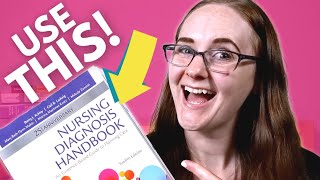
In this instructional video, Christina Rafano addresses a common nursing‑student question: where to locate the standardized NANDA nursing diagnoses needed for care‑plan assignments. She recommends a single, comprehensive resource—the Nursing and Diagnosis Handbook by Akali and Loudwick—and walks viewers through the entire care‑plan process using the book. The video outlines the five columns of the nursing process (assessment, diagnosis, planning, implementation, evaluation) and explains how each section of the handbook provides the necessary components: definition, defining characteristics (signs/symptoms), related factors (pathophysiology), client outcomes (patient goals), nursing interventions, and rationales. Rafano demonstrates a detailed example with the diagnosis “Ineffective Coping,” showing how to select the diagnosis, list evidence, identify related factors, set short‑ and long‑term goals, and choose interventions with their evidence‑based rationales. She also highlights the green‑tabbed disorder section that groups diagnoses by common clinical problems (e.g., chest pain) for quick reference. Throughout, she emphasizes that NANDA diagnoses are standardized and must not be invented, encourages students to rely on the handbook to save time, and promises a follow‑up video with step‑by‑step care‑plan writing. The tone is conversational yet instructional, aiming to empower nursing students to efficiently produce accurate, evidence‑based care plans.
Chapters
Have you ever wondered where to find the NANDA nursing diagnoses to write your care plans in nursing school? Me too. So in this video I'm going to show you exactly where to find them, how to write your care plans the easy way. Let's talk about it. Alright, so I get emails all the time from nursing students asking Christina, where in the world do I find all of these NANDA nursing diagnoses and friends is a lot easier than you probably are thinking, okay? You do not have to go searching around Google or the interwebs all over the place trying to find these nursing diagnoses, okay? You only need one resource and that is this book right here, Gold. Okay? This is the Nursing and Diagnosis Handbook by Akali and Loudwick. So right there, so you can see all the authors there, so you can find it online. This is exactly what I use. Well it's an older edition, this is what I used in nursing school. And it literally here on this front page has all of the nursing diagnoses there for you. Okay? So they're all listed there, that page and then the next one. Woohoo. And then this whole book has what those nursing diagnoses are and then the. So you know, each page goes through what the nursing diagnosis is, the definition of it, so you know which one applies the best to your patient, so you know exactly what it's talking about. They also walk you through the defining characteristics which are the signs and symptoms that you might see. Then the related two factors which is obviously what you have to write in your care plane too, which is the pathophysiology. And then it also will walk you through patient goals, so it's called client outcomes here and then interventions as well. So this book literally writes your care plans for you, my friend. It is such a handy resource to have in nursing school. So you're not, you know, spending hours searching on Google trying to find the, you know, a care plan example or trying to find a nursing diagnosis that matches your patient. No, no, no, you just come to this book and it makes it so much better, I promise you. So let's go through real quick how to use it to write your care plan. Even if you don't have this book, if you really do want to go to Google and find it yourself, that's fine. I'm going to walk you through how to write a care plan in this video too so that you know exactly how to do it. No resources, you what, what resource you use. I just really recommend this book because we get that question all the time from nursing students. Christina, where in the world do I find all the NANDA nursing diagnoses? Right here, my friend. This is it. This is your handbook. So your care plan, when you start nursing school, it's gonna look something like this. You're gonna see this a lot, okay? In nursing school, it's got like a bunch of columns and it's really the nursing process. Care plans. In nursing school, I just want you to think, okay? Nursing process, okay? Assessment, diagnosis, planning, implementation and evaluation columns there, all right, five columns. Assessment, diagnosis, planning, implementation and evaluation. That's what we've got. So that is your care plan. You're going to assess your patient. You are going to make a nursing diagnosis, which is exactly what this book helps you to do, right? Helps you figure out the nursing diagnosis, which is how does. How is your patient responding to their. What's going on with them, to their situation, to their disorder, what have you, you know, it's not a medical diagnosis, it's a nursing diagnosis. How is your patient responding? What is their response to their situation? Okay? That's the nursing diagnosis. Then you will get that straight from this textbook. You do not need to make it up or anything. This is your handbook, okay? You need this in nursing school, my friends. So you don't make up your nursing diagnoses or anything like that. It is that. Don't make it complicated, okay? You just go to this book and you find the one that fits your patient the best, all right? They are actually standardized, so you can't make them up yourselves, okay? So the nursing diagnoses, they are standardized. You just pick from the list. Easy peasy. So that is the. What your care plan will look like. And then when it's finalized, we'll walk through this. This is what it's going to look like when you're done, okay? So you'll have your patient assessment done. You know, you go to clinical, you assess your patient, and then oftentimes, you know, your clinical instructor or your lecture instructor is going to have you write probably a thousand care plans on your patient. That's a bit of an exaggeration. Maybe like three to five. Okay? You're gonna have to write care plans for your patient and starts with the nursing diagnosis. So the nursing diagnosis, whatever diagnosis you choose from that book, okay? And then the related two factors. Called the related two factors. So why is this happening? And that is where the pathophysiology comes in. Okay? I want you to dive deep, like figure out what is actually happening with your patient for this to be happening with them. Okay, pathophysiology, then you'll have, you can have a secondary to medical disorder if you wanted to. Some clinical instructors, that's optional, some of them might really want you to include that. So just check with your instructor if they want you to have an actual medical diagnosis listed here. Next. And then the as evidence to buy would be next. So what are the signs and symptoms that your patient is experiencing that relate to that nursing diagnosis? Okay, now let's go back to the book and I will show you exactly how, how this works with this textbook. Okay. I kind of did a high level overview before, but let's do a deep dive right now. So. Ooh, ineffective coping. Let's do it. So ineffective coping, all right, you've got the definition. So you can see. Does ineffective coping apply to my patient? Yes or no? You know, if it does, then you can use it. Defining characteristics, okay? That is the as evidenced by. So that's like the signs and symptoms, right? So ineffective coping, alteration in concentration, alteration in sleep pattern, change in communication pattern. So these are all things, if they apply to your patient, that you can list right here in the as evidenced by on your care plan. Okay. And then the related factors. So that would be your related to like the patho rate, like why is this happening? But it's all right here in the book. Like it's all listed out here for you. It makes it so, so easy. And then as we go through our care plan, you're going to next make some patient goals here. I'm sorry, I think the camera's kind of going in and out. You're going to make some patient goals. And so those can be either short or long term. Of course, your clinical instructor might have some guidance for you with that. Maybe your instructor would want more short term goals or more long term goals or a mix or match, you know, so check with your instructor to see what they want. And then so you'll do patient goals and the nursing interventions, which includes the rationale. Okay, Those are the next steps, which of course again you'll come to the book and they list out client outcomes. It's here under client outcomes. Those are the patient goals. Client outcomes. And so for ineffective coping, you know, use effective coping strategies, use behaviors to decrease stress, remain free of destructive behavior towards self or others, things like that. So client outcomes, those are the client goals, the patient goals that you could use, you know, if they applied to your patient, put it in your care plan. And then nursing interventions and the rationales. Now this is where it gets super cool. So in your care plans for nursing school, you are absolutely going to have to include not only the nursing interventions that you're going to do to help your patient achieve their care plan goals, right? Achieve, you know, their optimal health. So that's what our care plans for. You're not only going to have to include those nursing interventions, but you're also going to have to include why, why do they matter? What is the rationale for them? And this book has both of those things for you. Amazing. So nursing interventions and rationales. So they're all listed there and there's pages and pages of them. If some of these do not apply to your patient, totally cool, don't use them. But if some of them do, great, write them down, Use them for your patient. Okay. Because they're awesome. So it just makes it so easy to go through these interventions, get ideas for your pat to help, how to help them the best. Like, it's just really, really nice. Then they also include the rationale as well. You can see, actually, let me zoom in here a bit. You can see the intervention is kind of in like normal text, I guess you would say. And then the, you know, the evidence based nursing rationale, it's in like italics, italics. You saying that? Right? So normal text is with nursing intervention. And then under it in italics is the rationale for it. So there, it's all there for you. It just makes it, I mean, there's pages and pages for each one. Makes it so easy to write your care plans. Like I say, this book literally writes your care plans for you. And then the last part of your care plan is evaluation. So evaluation really just means that you're reassessing your patient. Okay, so this would be where you would list out, okay, did they meet their care plan goals, the goals you set, or did they not? And if they did, great. If they didn't, what are you going to tweak or change to help them more next time? Okay, not next time. They're they're in the hospital. But like, you know, today, tomorrow, you know, when they're there. So how, how are you going to change up your patient's care plan to help them reach their goals? All right, so that is the evaluation. It's just another. Think of it as another reassessment. Okay, that's exactly what it means. That's exactly what it is, is a reassessment. I should have said this from the beginning. I'm not an affiliate for this book by any stretch of the imagination. Like they do not pay me for this. I'm just saying all this because I used this in nursing school, and it was gold. I wish I had known about this book from day one, and I didn't. I actually didn't know about this book. Well, we had it like it was required textbook for us, but I hadn't. I never used it. I had no idea what it actually was until, like, halfway through med surge. And then it's just. It changed everything. It will seriously write your care plans for you. I know I keep saying that, but I hope you believe me because it's amazing. The other thing I want to point out with this book is when you go take care of a patient at clinical, they are going to have a bunch of disorders, a bunch of things that they're dealing with and things like that. So what is very, very cool, in the front of this book, you see this little green tabbed section here? Right there, that is where you'll see disorders and stuff. So if you have maybe a pregnant patient or your patient has Addison's disease or acute confusion or back pain, you can actually just come here and sign them by category. So let's see. Let's find another. Let's find a good one that might apply to lots of people. I always kind of look for. Oh, chest pain. That's a good one. Chest pain. So you're probably gonna have a lot of patients at clinical that present with chest pain. Okay. So if your patient has chest pain, well, fear might be a nursing diagnosis. Acute pain, of course, risk for decreased cardiac tissue perfusion. Love it. So these might be things that you didn't think about. These might be nursing diagnoses that you, you know, you had. Didn't have in your mind before. But you can just come here to this green tab section, and it lists it based on the issue that your patient might be having. Then you can just check, you know what? They're kind of recommended. Maybe nursing diagnosis or possible nursing diagnoses are for your patient with that particular issue. So do you see how this book is just a huge time saver in nursing school? I hope you see it now. Of course, you're going to have to write a ton of care plans in nursing school. Like you've got probably already done already if you haven't started nursing school, you know, just be prepared for it. Okay? You're going to have to write a ton of them. So I really, really, really want you to watch this video where I'm going to walk you through examples of how to write them, okay? So I'm going to come alongside you, write them with you, so you know, step by step, exactly how to do it. So I will see you in the next video? Of course. Go become the nurse that God created only you to be. I'll see you over there.