Nursing School - ASK ME ANYTHING!
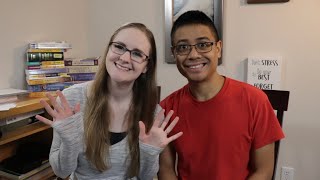
Christina Rafano and Matthew answer rapid-fire questions about nursing school: study tactics for different learners, critical thinking over memorization, gear like stethoscopes, time management, and mindset work including interrupting negative self-talk. They challenge the work-life balance myth, frame life as seasonal, and push back on the "nurses eat their young" culture.
Chapters
Good morning.
Good morning, everyone.
Good morning.
Welcome to Monday. It's Monday today, right? It's Monday today. Hello. Welcome to the Nursing School Show.
I'm Christina.
I am Matthew, where we answer nursing school questions.
And by we, he means me.
Yes.
Because I am a nurse.
I am not a nurse.
Here for the general life questions.
Yes, there you go. So feel free to ask general life questions. We are here for you. So last Monday of October, right? I think I'm. I think I'm right there.
That sounds right.
Wow. Just about there.
Almost November.
Happy almost Halloween as well. So how exciting. Welcome to Nursing School show. We are going to do an Ask Me Christina Anything episode today. So go ahead and pop down in the comments any questions you have related to nursing school getting through nursing school. Nursing school questions. Questions you wish you could have asked your teachers or could ask your teachers, but you want to ask us instead? Go ahead and pop that down below and we will see what we can get to. I will try my best to capture as many questions as we can. We want to make sure we answer questions that will help as many people as possible as well. So again, feel free to pop those down below. We do have a couple questions that we were not able to get to last ama. That was last Wednesday. So we will go ahead and answer a couple of those and we will ask them. We will start with a kind of general question, general studying question. I am a visual learner. Any advice on how to study for visual learners?
You know, that's a really good one. Oftentimes we get like, what's the advice for auditory, kinesthetic. So visual is a good one. Honestly, this helped me. I'm a visual learner too, and this helped me. Just writing things out. And here's the thing, okay. Writing things out word for word. You guys have heard me say this a bunch of times. If you've been around for a while. Whiteboards and flashcards. If you are a visual learner, I really think just writing the words out helps you see it visually. And when you see it visually, even if it's just words rather than pictures, it can help. But then on the other side, if you want to draw pictures, totally great. Love it. Draw pictures to your heart's content. Whiteboards and flashcards. I really like whiteboards. For this I have two big Costco whiteboards. And then it just got one of those big, like packs of expo markers, right. Of the different colors. And there you go. I would like draw out the heart and lungs and, you know, just draw arrows. And where is Everything going, you know, draw it out. Really, really helpful.
Make tables, charts and concept maps.
Concept maps, perfect. Tables and charts, absolutely. Thanks Charlotte. Always on point. You know, anything really. I think I don't want you to get stuck thinking that it has to be in pictures or it has to be something like super fancy. If you're a visual learner, it can really just be like writing things out, seeing it in a book, seeing the words on the page. I don't know, that really helped me. Charts, like Charlotte said, pictures, concept maps, tables, any of that. Auditory learner, let's just hit them all. Why don't we? Auditory learner, teaching someone else or talking it out to yourself or listening to it. So if you can record lecture, if you. Some textbooks actually have a audio component to it where it's like, didn't we have a student say that, that they like listen to their text?
Yeah. Some textbooks like have the chapters in audio format so you can go ahead and listen to that. That's the first time that I heard.
About it, but I didn't know that.
Sure. To check to make sure. Maybe your book does that.
Yeah. If you're an auditory learner, you know, if your textbook has like a read, they call it like little kids, like a read outlet. Read to me.
A read to me. You know, follow along book.
Follow along book. Like little music to go with it. Or if you can record lecture, that's great. Make sure to ask your instructors first what their. What the school's policy is around recording lecture. Our school, we were not allowed to record lecture for hipaa. You know, for hipaa, because of hipaa, we were not allowed to record lecture. But your school might allow that. So I would definitely check with that because that would be a great way to learn, you know, what you need to learn. But definitely as an auditory learner, recording lecture and re listening to it, listening to the textbook, read aloud kind of thing and just listening to yourself talk. Right. If you can talk it out by yourself, even like go into a room, you know, what have you study in your office, study wherever. Talk it out to yourself and then you can hear yourself talking, that helps. And then if you can talk it out to someone else. So that teaching component is super great for a couple of reasons. Like I said, like you can hear yourself talk if you're an auditory learner. But then also if, if you have the ability to break down these tough nursing school concepts and make it easy for someone else to understand, that's when you know you're ready to take your exam.
If you can definitely rope in someone that is not in nursing school or not inclined to medical terminology, things like that. And if they're willing to listen to you, or even if they're not willing to listen to you, just go ahead and talk to them.
Quarantined with you in your house, talk through them.
And then yeah, the really, the teaching does hit a lot of those different sensor, Sensei. Senses. Senses, Sensory, sensory methodologies or whatever. Except for taste, I still have not figured out the taste bit. But auditory, visual, those things like that you can, you can really tactile if you need to do some, some of that as well.
Practicing kinesthetic? Yeah, like actually doing it. So the kinesthetic part would be like practicing at home. Right. Head to toe, assess again, audience held captive. Find somebody, do the head to toe assessment. Or like if we have Bruno the Bear at our house.
Bruno the Bear.
The bear is a huge. How tall is he?
He's probably four feet.
That sounds.
He's. He's a four foot stuffed bear.
Big, big stuffed bear.
He came from Circus Circus down in Nevada. For those that know Circus Circus, it's basically what a casino for kids. So that was fun when I was a kid.
Never been so. But we have run of the bear. So, you know, stuffed animal. You have a dog, kitty cat. Probably not as helpful as a dog, but something, you know, head to toe assessment, deer skills, you know, if you have to like, you know, like the whole ape to man mnemonic. If you're, you know, doing your stethoscope placements, you can even do it on yourself. You know, do it, you know, find something, find somebody, find a stuffed animal, what have you. Most of us have a stuffed bear around. Yeah. Somewhere in our house we also have.
Like a four foot Barney as well. So any, anything for the kinesthetic, you have to get the practice in. But yeah, as many senses as possible.
Visual kinesthetic. Am I missing any paste? We're not gonna go there. Word to the wise, don't try the medications. I'm not, I'm not gonna make jokes because I don't want anybody to think that I'm not joking.
So yeah, I think that that's really good. Like you said for visual. Specifically going back to visual whiteboards and flashcards and then writing things out and then. Yes, talking through. For auditory, acting things out. For practice. Yeah, I think that all works. I think the main thing is practice and repetition. Repetition, repetition, repetition. Get it in your muscle memory just so that you, you know it second nature. That's really what all of this is about is getting it ingrained into your long term memory to make it really second nature to you so you're not thinking about it, having to think about it when you're in the moment. So all of this practice is getting it to that part. So.
Absolutely. Which is such a great point and actually great segue into something else. Critical thinking where a lot of students get caught up on, like we always say, friends, like we always say, if you are spending all of your time reading things in the book or just memorizing or all of these things and not giving yourself enough time to connect the dots and put things together critically, think about it. Then you are going to really set yourself up for failure on your exam. Right? Because we want to just like Matthew said, it's that muscle memory kind of thing. So you want to get to the point for your skills check offs where it's like muscle memory, it's second nature like Matthew said. Same thing with your exams. If you are just studying and memorizing things for your exams. You know, if you've taken a nursing school exam, you know that it's not memorization, right? They're going to give you a case scenario question. They're going to test you on critical thinking and how you would respond to that patient situation or that case study or scenario, right? It's critical thinking. It's how do you apply the information that you're learning. And so you have to give yourself enough time to practice that, right? Muscle memory. Apply it, actually learn it and learn how to apply it. So it's the same thing with, you know, skills and clinical as it is in lecture. You have to give yourself enough time to make it muscle memory. You don't want to get to your exam and have to all of a sudden learn how to critically think through things. You want to practice that before for your exam. Does that make sense? So go to nursingschoolofsuccess.com forward/critical thinking, the free critical thinking cheat sheet for you. Nursingschoolofsuccess.com forward/critical thinking. Do it. Do it now. Right now.
I can probably go ahead and find it for you. Pop it in the chat critical thinking really quick.
And also do that in the nursing school study system, which I know a lot of you guys have. It's on page. Hey, how to study and critically think. It's on page 15, 15 through 21. I walk you through how to critically think in nursing school. So this is nursingschoolofsuccess.com study system.
Boom.
So you can do that, too.
Awesome.
All right, let's go.
All right, next one. So we've been getting this question numerous times from Dre from YouTube. Thanks for joining. And Ant asking this every single time. We haven't asked anything. And someone else asked as well on Facebook. Not sure if you're the same person, but we're going to answer anyway today, right now. What stethoscope do you use? Hey, what do you pay attention to when listening? And someone else asked from Facebook, for health assessment, we need a stethoscope. Right. So. So you can.
Well, I mean, it depends on what part of the health assessment, but yes.
Yes, you do need a stethoscope. So do you have any recommendations or what kind of stethoscopes do you use? I have a question that. Or I have an answer for that, but it is an answer that is not very useful. She uses a pink stethoscope. So this is the pink stethoscope. If you want to succeed in nursing school, it needs to be pink.
That's not true. So, you know.
No, that is not true.
Yep. Barbara says mdf. So, okay, here's the. Do you guys want to screenshot this? I guess this is the label. Screenshot that. See if you can pull the numbers off.
There you go.
On YouTube. I don't know. It might be a little blurry. Let me back up Instagram and Facebook. You probably have a little better luck. There's the label. It looks like this MDF screenshot that.
So that's the actual one that you use.
The actual one that I use.
See? And it's the pink one right there. That's the color.
It says. It says, think pink is the. Is the color you're looking for. I also have a littman that I never use. Okay, so there you go.
So there you go. So you have an mdf.
I use an mdf.
I was jesting. It can be any color that you're nursing, a school or hospital or whatnot.
Clinical.
Clinical facility allows. They might have some. Do they? Do they have.
I don't know. I actually have never heard that. Does your school regulate what color your stethoscope has to be? That would be so lame. That would be so lame if you can't get a pink stethoscope. I mean, really, what are you doing with your.
Barbara says yes. What?
What? They regulate that. That's crazy. Barbara.
Unfortunate.
I'm sorry about that. Deeply in my heart, I am very, very sorry about that. I am nothing without my pink stethoscope. My favorite thing.
So I did go.
Other than our coffee maker, I did.
Go to, what, a checkup or whatever. A checkup sometime ago, I don't know. And the. The doctor that looked at me had the cool new. Or cool new. I don't know. It's a stethoscope, but, like, was, like, attached to his headphones.
Oh, yeah, you were talking about that. It's like a Bluetooth.
Yeah, it was like a Bluetooth thing. It was just something that, like, plugged into his headset that he already had on. So kind of cool, too. But yes, Christine used an mdf.
Blue or black? Barbara? Really? They regulate that? That is terrible. That is terrible. We have to have the brand the school recommends. Charlotte, I am sorry. All right, man.
The more you know. So maybe that's the first place. If you're asking what kind of stethoscope we use, probably look to see if your nursing school is recommending or requiring one and make sure that you get the color that they.
They want, apparently.
So there you go.
I'm sorry about that, Barbara and Charlotte, that sounds like a bummer.
Barbara, you were just talking a little bit that you had a couple of questions that meet your grades, suffer, and what was it? Questions that were marked wrong but were right.
Go back and yes, always talk to your instructors. That's why we say part of the reason why we say, always go back through your exam with your instructors friends. Always, always, always do it after your exam. Go back through your exam with your instructors so that you can, you know, make sure that you understand why you got questions right, why you got questions wrong, what you can do better next time. And maybe they made a mistake.
Actually, it was nace.
Nace? Nursing assessment, clinical evaluation. What is nace?
Nice.
Nice. Nice is all not to be confused with me.
All right?
Different schools call different things different things. Like, students email us all the time. They're like, christina, I need help with nursing 403.
Oh, the entrance exam.
And I'm like, I don't know what nursing 403 means at your school. Can you tell me what you're studying, what topics you have questions about? Those kind of things. So anyway, anyway. Okay. From the nln. Okay, it was a entrance exam. So what was on your entrance exam? Because I'm not familiar with it.
Nice.
I like that one. I'm familiar with the nln, of course, but not the N. So tell me. I know the hessi. Ati Entrance things. There's all these, like, entrance exams. There's. So it's like your fundament. I'm assuming it's your fundamentals exam, to be honest.
So are you able to go and check up on those questions and get those kind of worked out or how. How does. Yeah, how did that work out for you? I guess is my. My main question.
We have to have a Litman. Well, there you go. That's the one I have, but I don't use it.
There you go.
But there's a littman for you.
All right, next up. So talking about how we. We have a really wide audience nowadays from everywhere around the US and beyond. Worldwide. As in worldwide. We're still on Earth, as far as we know. But, yes, we do have Face gets us to Mars. Yeah. Elon Musk gets us to Mars. But, yeah, we do have a large audience. And because of that, yeah, different schools have different terminology use different things. So we give the best answers that we know for general questions. One of these questions that you guys just asked, do you think it would help when studying to answer the objective questions or statements off the PowerPoints? Well, I'm not sure. This is me just kind of going off a tangent. Maybe. Maybe you have a better answer than that. But PowerPoints, depending on who makes the PowerPoints, if they're standardized PowerPoints or PowerPoints that your teachers make, I don't know the answer to that. On what would be better objective questions or statements off of the PowerPoints?
Is it your instructors? Is it your instructor making the PowerPoints? Because then that would fall under the whole class thing. You know, make sure that you're studying what you were talking about in class, which would be the PowerPoints. If your instructor gives you objectives and, like, class objectives. Yes, definitely. Definitely know those things, the answers to those things.
So that. That just goes back to our general recommendation that you want to study what the teacher teaches.
Yes.
Right.
What you talk about in class, what.
You talk about in class.
Focus on reading the sections of the book that your professors talk about in class.
Yep. Okay. All right. Yes, Head.
We've got lots of questions, you guys.
All right.
Some of your questions are long, so we need to read them.
Yes. All right. Are we ready for another one?
Prima Bella, you are my favorite person of all time. Other than that.
There you go.
And. Jesus.
Oh, there was. There was a question, though, on. Regarding that. On where are the Dose Calc workbooks? So I want.
Okay, yeah, Inside the membership. Yeah, we've got a lot of members on.
Hello, members. Welcome. Where is it?
So the Dose Calc workbooks inside the nursing SOS membership. Community are under the bonuses section. So when you log into your dashboard click on bonuses and you will see a couple dose calc workbooks for you. Also we just released a brand new tutoring form so if you have any questions at all as a nursing SOS member if you have any questions at all log into your dashboard click on bonuses. Up at the top you will see submit a tutor form tutoring form there submit that and we will respond to you and answer a question via video within 24 hours.
It was Samantha that asked where is the workbook for dosage and calculation. So yeah if if you are a.
Member nursing as those members inside the.
Membership Inside the membership.
Do it so cool and submitted tutor form Starting nursing school in November after a 10 year career in tech. Congratulations. Super excited but nervous. How soon should I start studying for the nclex? Nursing school is studying for the nclex. I do not think those two things are mutually exclusive. I honestly didn't have to study for the NCLEX very much because I was so prepared.
As long as you're. Yeah, yeah. As long as you're doing material and getting used to studying and getting used to the questions and learning how to critically think and learning how to answer NCLEX style questions, then look at.
I would highly recommend looking at your school's NCLEX pass rate. Those should be published somewhere for you to look at. So your schools maybe depending on your state, I don't know our state requires it of schools I'd imagine possibly yours does too. But look see what your school's NCLEX pass rate is and I honestly wouldn't worry if your school's NCLEX pass rate is pretty, pretty good and when I say pretty good I mean, I mean like 80 pass the first time. I would consider pretty good. Like if you have an 80 chance of passing NCLEX. I mean first time. Yeah I would and then I mean I just don't think. I think that'd be great honestly. Yeah what was my schools probably like 85 something was there like NCLEX pass rate first time for the whole school and I wasn't worried. I passed. There you go. All right, there you go.
Next.
There you go.
Up. Oh yeah, I like this one. Do it how to manage time when you have class Mondays to Thursdays from 8am to 7:30pm so that's a very specific one I think just generally open it up. How do you manage time in nursing school?
By using a planner and planning your time. So here's the thing. When you Plan your time. Not only do you have to make a to do list, which is not entirely helpful for you, you have to make a to do list and then tell yourself when you are going to do it. Because if you just make a to do list, right, I've got thousand things on this to do list. When are you going to get those things done? How many of you have had things like have things right now on your to do list that have been there for three years, two years, a year and a half? Hand raise, raise your hand, raise your hand. I know. If you're like me, I have had things on my to do list for at least a year and a half. They're still on my to do list. It happens. And raise. Thank you. So if you have things on your to do list, here's. That's the problem, right? We have things on our to do list that we don't actually make time for. So when you are planning a nursing school, not only do you have to make a list of things to do, but you also have to plan when you are going to do them. Which is why we use an hour by hour schedule. So we plan our time hour by hour. Adjusted it this morning. My planner's out there. I should have brought it in here, but it is out there. I have my whole week planned. I know what I'm doing and when I'm doing it. That's what I got going on. So that's what we recommend, honestly, planning your time hour by hour. Now, here's the thing. I want you to go back, especially if you're a mom right now. You're trying to homeschool your kids, you are trying to work. You have a family that is quarantined at home. Go back on YouTube, find the video titled I was wrong. I was wrong. Google, search it. YouTube. Nursing. SOS. I was wrong. Go find that video. Because I have some thoughts for you mamas out there right now trying to homeschool your kids and talking about time management. There you go.
Okay.
What's up? Video.
Yeah, talking about a little bit about a work life balance or that phrase which we've talked about at length on other AMAs and yeah, on other videos that we have on work life balance and how I believe that that's kind of a myth, that there's. There's no, oh, I need to spend exactly 50% of my time doing work and exactly 50% of my life doing other things. The balance part, whatever.
Third sleeping, a third playing with my kids.
I really think that we're more. It's better as a seasonal thing that we're really in seasons. Our life is seasonal. So you may feel a little bit off balance. As long as in general, throughout X amount of years, if you kind of zoom out a little bit, that overall you're kind of balancing it out. But you're never going to say, okay, this day, 12 hours, I'm going to do this. 12 hours, I'm going to do this, and it's going to be 50 and everything's going to be happy and dandy. No, we're in season. So a lot of you are in nursing school, so that is in your season. So if you feel like you're more into nursing school, maybe that's just the season you're in. But definitely check out Christina's YouTube video. I was wrong. On YouTube, you can just search nursing. SOS. I was wrong. And that should pop up. Yeah, Just talking a little bit about work, life balance and priorities. That's the other big thing that I talk about is that technically when priority was a word, when it first started, it was not plural. Not have multiple priorities. By definition, priority is your one most important thing. So just remember that as well. So really good information. But a planner, hour by hour schedule will help. It will go a long way.
There you go.
Boom. Very good. For those just joining, welcome to the nursing school. So by the way, Christina, Matthew, we are talking about nursing school topics and topics that relate to nursing school. Like we said, just planning, planning your day, things like that. It's adjacent. So that's why I started talking. Is it's nursing adjacent?
Absolutely. So and if you want someone to help you plan your time, he's the guy. Yeah, he's the guy for it. It's pretty good. It's pretty good. All right, what's next for me?
Friends.
Post your questions in the chat because Matthew writes them all out. Like we copy them over from YouTube and then he copies questions, questions from these.
I am looking for a good one right here. Do we want to go? Okay, let's go with more studying tips or just tips in general? Any general tips for college, Going through college with small children. Again, that kind of goes to what we were just talking about. Planning and work, life balance. So definitely check out that video. I like the second part of your question. Any input, you're. You're thinking about different specialties of nursing and you are interested in travel nursing.
Super fun. I would talk to your family first. Make sure everyone's on the same page because travel, nursing, you travel around, which is super cool. You know, just make sure you're in line with your family.
So we were talking about that, I think on Wednesday. Was it Wednesday that we were talking about different nursing specialties. Just being open to nursing specialties. You will be placed in. In different clinical. Clinical things. Again, non technical clinical things. You'll be placed in different buildings, doing.
Different things, different clinical placements and various specialties.
Just be open to it. And even if your. Your heart right now is set on I want to do this, I need to do this, and you get placed somewhere else. Be open to it and use that as a learning experience. You might end up really liking that specialty instead of.
Mm. Yep. Dr. Gill, hello on Instagram. Any way I can pull off an A for my fundamentals exam tomorrow? I've been procrastinating. Okay, you tell me. Tell me on Instagram. Tell me, Dr. Gill, how can you pull off an A tomorrow on your fundamentals exam? You already. You already have the answer. Tell me, how can you pull off an A? And this goes for everyone out there. I'm gonna get life coaching.
Yes. Christina's gonna pull the whole life coach thing on. You had to answer.
How are you going to get an A on your exam?
David? You can definitely ask questions in YouTube.
By the way, how can you pull off an A on your next exam? Everyone out there, give me something. Give me something.
Oh, are we. We're going into full group mode. All right.
Full group life.
We are interactive right now. So go ahead and answer below. What are some things if you had an exam tomorrow.
And.
How to pull off a date?
Study a lot. Pray. No sleep. I disagree with the no sleep one. Friends as possible. Study. Thank you. Pray. Everyone's like, pray. This is fantastic. Okay, here's the thing, my friend. Wing and prayer.
I'm just gonna. Before you dive into the answers, I'm just gonna say it's everyone that follows us. Nursing sos. You're.
You're sit beside a genius. You guys are hilarious. Okay, don't cheat on your. Yeah, but that's funny.
You're only cheating on yourself if you do that. That's what people would say.
Okay.
No, I'm just saying that it's fun for people that are regulars on nursing sos. Hello, welcome. And you know that we are religious.
Religious. Are we religious?
Religious. Are we religious? I don't know what the term is, but I just. I'm just throwing out there that it's funny how religious people get when there's an exam in tomorrow, we're like, pray.
About it, like, all right, that's so funny. Okay, totally. Always be praying. Never stop praying. You know, that's it. That. And I'm not saying, like, never stop praying because you can't pass. I'm saying, like, never stop praying because that's what the Bible says. Never stop praying. Literally, a scripture in the Bible. So here's the thing, friends, and I love it. I'm going to actually repeat the question again. The question was. Let me scroll up. Any way I can pull off an A for my fundamentals exam tomorrow? I've been procrastinating. That's the problem in nursing school, my friends. What happens? What happens when we don't think we're going to pass? What happens if we think we're going to fail out of nursing school? What happens if we don't think we can pass the exam tomorrow? What do you do? Are you motivated to study? Are you studying efficiently? Are you studying at all? Most likely not. You're procrastinating, right? Because you don't think you can pass. You don't think you can get an A. You don't think you can pass nursing school. You think you're gonna fail out, right? So you're not gonna study. You're not gonna be productive. You're not gonna study effectively or efficiently, or you're not even gonna study. You're just gonna be procrastinating. Right, Charlotte? Thank you. We doubt ourselves. It's exactly what happens. I don't even do anything to do with nursing. That's awesome. Yes. So we just don't do anything, right? We don't do anything. We don't study. We don't focus. We just spin in that, like, oh, man, I am going to fail my exam tomorrow. I am not going to pass nursing school. That is not an effective place to be. You have to believe in yourself. It starts there, 100%. It starts with your mindset. You have to get that right. If you don't get that right, friends, to be honest, that's. I mean, if you're not going to work on that, there's very little that I can do to help you, right? Because if you're just going to keep procrastinating and keep doubting yourself and not studying and not following the advice and, you know, not all those things, then, you know, what can you do? What can you do? I want you to pass nursing school with my whole heart. I honestly don't think that there's anyone out there that cares about your success as much as I do. But it starts with your mindset. Right. You have to believe in yourself. I believe in you 1000%. I know you can do it. I know you can do it. So go do it, man. Go make it happen. There you go. There you go. What do we got?
All right, next up.
Nice.
All right, Gabby. I have so much fun at clinicals, but. But you know the phrase nurses eat their young? Why do you think it's a problem in the medical field? I have had rude but also very nice experiences. So you've had a mix of experiences as well. And just where is that phrase? Where does it come from? Why? Etc.
Where it comes from? I don't know. People's experiences. I don't know. I don't know where that phrase. Like, where the origin of that phrase comes from. Anyone know?
I don't know.
Nurses eat, they're young. But. Yeah, no, you hear that all the time.
You do hear that all the time.
I agree with you. I've had rude experiences and very nice experiences, too. Same Z. I don't think it's. I. I wanted to change. I think that. Yeah. So for example, we took down. So we run. We do Facebook ads. If you guys found us through a Facebook ad, raise your hand. We had a Facebook ad up, and Nicole messaged me, and she's like, we are getting. There are a lot of nurses on here that are not being very nice. We ended up taking the ad down because I was tired of hiding people's comments. And they were not comments from nursing students. They were comments from nurses who were being rude to nursing students. I'm like, this has got to stop. Goodbye. Like, Facebook got down and like, I don't understand. I don't. I don't understand it. I feel like if you just be nice to people. Right? Like, that's what we're supposed to do. Right? Be nice to people. Just be nice. Remember what it was like in nursing school. Remember how you're feeling right now being a nursing school. And then when you're a nurse 10 years from now, don't get jaded. Don't get upset. Just be nice to your nursing students.
Yeah. So I think really be nice. That's where it starts, is it starts with you. And it was the previous talk that we're just talking about. It starts with your mindset. And really, it starts with who you can control. And the only person you can control control is yourself. Right. So getting all coachy again. Self talk. Coaching. Self coaching.
Really good at that.
Yeah. Just. Just see what you can do with those experiences. I'm glad that you did. Notice that you have some very nice experiences too. And definitely don't let the negative experience drown out all the good experiences we like to hang on to and really meditate on the negative things. But yeah, it's good that you, you also notice the nice experiences. So just notice that and notice how you feel and how you interact with both of those experiences just so you can control yourself. And when you become a nurse, what is it? What's the, what's a pay it forward or whatnot. So remember that and remember this. And also as a nursing student, from that perspective too, just we talked about this last Wednesday. I believe too that just realize where they're coming from too that it's been a while since they were in nursing school. They have a totally different perspective. They're coming at it from maybe years being removed from that and they don't remember. So give people that benefit of the doubt, all that good things as well. And yeah, pay it forward. Remember it when you're there too.
Yep.
And remember your feelings too.
Give everyone grace. So, you know, give everyone grace.
Yeah, I think that goes into the next topic that I have for you. Give everyone grace. That includes yourself. How do you avoid constant negative self talk as a student?
So good. Okay. The thing is you have to catch it and know what's happening in order to change it. And I think that that's really, really hard card. So for example, you. When. Okay, so for example, for my own life a couple of weeks ago, we haven't talked about this yet, but you've noticed, I'm sure, when, when I am like you guys have know if you've been around for a while, you know my struggle with anxiety, you know, the years and years and years that I dealt with this like my whole life. Right. Raise your hand if you're with me. Anxiety and stress and worry, like they're really just, you know, anxiety. Right. You know how it is if you live with it day in and day out, you know what anxiety looks like. And so for me, it was very, very difficult to try to catch those thoughts because they were so ingrained. Such a habit so ingrained. Like all the worry, all the stress, all the anxiety and you have to catch it first. For example, in my own life, I realized this a few weeks ago. We haven't talked about this yet, but I meant to talk about it. Okay. I wanted to ask if you had noticed that there were like things going on in my life that was just like, you know, I was getting anxious about and I Noticed that I would get anxious. And then what did I do? I went and ate. Get anxious, eat. Get anxious, eat. Get anxious, eat. Get anxious, eat. I was like, what in the world is happening? Because I never associated myself with an emotional eater, But I was noticing a few weeks ago, wait, I feel anxious because I know what anxiety feels like in my body. And then I would eat. So all I saw was the feeling and the action. Feeling, action, feeling, action. I'm like, okay, what thoughts are causing this anxiety? Because we know that our feelings come from our thoughts, right? Everything stems from your thoughts, feeling. What thoughts am I having? And a lot of it's just like, you know, I can't do this. I'm gonna fail. Like, it's. I'm not good enough. It's all these things. Like, the world is ending. Everything's wrong. It's like all of these thoughts, and then I am instantly going to the kitchen to eat. Thought, feeling, eat. Thought, feeling, eat. Thought, feeling, eat. Anxiety, eat. Anxiety, eat. Anxiety, eat. So the thing is, is that I didn't know that was happening. I had no idea. I had no idea I was doing that until just a couple weeks ago when I started to notice it. So you have to notice those thoughts. You have to notice those feelings in order to change it. So if you guys see in your life, what actions are you doing that are not helping you? What actions are you doing that are not. That are not moving your life forward? What are those actions? What is the feeling driving it? What are the thoughts driving those feelings? Thoughts, feelings, actions, thoughts, feelings, actions. If you are doing actions that you don't want to be doing, what are the feelings behind that? And then what is the thought behind that? It all starts there, right? It all starts there. I hope that was helpful. I don't even remember the question.
Negative self talk. And just there you go.
It starts with your thoughts.
Yeah.
If you find yourself thinking to yourself that you can't do it, what are your actions that are coming from that? Like, what are the actions that you're actually doing? Go back to the feeling that it's creating for you that is driving those actions. And then the thought behind it. You've got to change those thoughts. But in order to change those thoughts, like I said, you have to notice it first. Like, for me, I didn't even notice it was happening. I've probably friends been doing this for years. Years. I'm sure I'm 100% positive. 100% positive. But why did I never see that before? I literally had never seen before Anxiety. Eat anxiety. Eat anxiety. Did you notice that?
I think so. A little bit.
Yeah. Yeah, yeah, yeah, yeah. And I just noticed it a few weeks ago. There you go. But you can't change something. You don't notice. So you've got to catch it. You've got to catch it. And so part of this, part of the work that I've been doing, so I'm in Brooke Castillo's life coach school. It's called self coaching scholars. Brooke Castile, look up, she's amazing. So she's my life coach. And so what she has, it's called a thought download. And you just, you just literally write down everything you're thinking, everything. And then you know, you do work around those thoughts. So I gotta tell you, friends, life giving, life changing. It's amazing. So struggling with anxiety my whole life. There you go. Yeah, it really, really helps.
I, I think.
Catching thoughts.
Yeah, catching thoughts. And so with negative talks, negative self talk, that, that goes a lot into it. That goes a lot into another topic that is closely related to that with nursing school. A lot is stress. And how do you reduce stress? How do you reduce anxiety? And it goes back to what we've been talking about a lot is, is this idea of catching yourself and having a good mindset. So catching, catching yourself, knowing what you're thinking. And once you know what you're thinking, then you can decide whether it's a good thought to have or not or, and alter that. So but the first thing is definitely it's, it's a little meta, but understanding, understanding that. So.
Yep, absolutely.
It was, it was good.
Yeah.
So it's good that you noticed that. And we'll probably talk about that a little bit more.
Oh yes, for sure.
Yeah. So. So it really closely goes in line. Negative thoughts, stress, anxiety, all of that has to do with being in the right mindset, understanding your mindset and being aware of yourself, which is, which is really tough to do. So yeah, that is really good. Going back to a little bit more nursing school related question. Someone was asking, what are your thoughts on med surg placement immediately following nursing school? Is it necessary? So I don't, I don't, I'm not sure if we need more clarification on that or if you had any, any thoughts on that. It's, it sounds like med surg placement immediately following nursing school. So are you done with nursing school already and, or is it.
Yeah, you can go. We've talked about this last Wednesday and I think the best thing, one of the best things about nursing school and Nursing in general is that you can do anything. It's the best, right? Any. There are so many specialties in nursing school. I would. Nursing, not nursing school, but, yeah, nursing. It's like. I think it's the best profession because, like, you don't find this with, like, engineering or, like, tax accounting or, you know, things like. Nursing is the best. It really is because you can go to so many different specialties. You know, health education, community clinic, med surg, icu, travel, nursing.
Like we answered before, Kristen was asking if there's any experience with pediatric nursing.
Pediatric nursing?
Yeah. Just so many specialties out there.
So many. And it's just. It's so, so great. So when you graduate nursing school, or if you're thinking, you know, like Matthew was saying earlier, if you're, like, set on, I want to do this type of nursing, just. Just realize that there's so many specialties out there and be open to the possibilities. Just be open to the possibilities. Yeah. Med surg, Nursing is a great place to start after nursing school. Absolutely do that. But, you know, just, you know, maybe that's not where your heart is. That's fine. Go do something else. You know, it's just. It's the best. I love it. Obviously, I love nursing. It seems to be something being preached by my instructors that if you don't do med surg, you'll not solidify your skills, and that will set yourself up for failure. Oh, Brittany, my heart to you. I really. I honestly, I disagree. I think that you can do anything you want. I. That's just a core belief of mine, that you can do anything you want, which includes med search or not. Clinic, nursing, anything you want. I love it. You know, whatever you want to do. So when I was in school, I knew. We've talked about this before, my whole ICU experience, I. That's not the kind of nurse that I want to be. Icu, you know, it's just. It didn't jive with me. There's a lot of reasons for it, but, you know, you will find different avenues and what fits well for you. I honestly think that. Again, Again, Brittany, It's a mindset thing, to be honest. I think that, honestly, you can do whatever you want, find whatever. And I think the beauty of it, too, is, like, you can always try new things, jump around, you know, like I said last. Last week, I think that I will probably do so many different nursing specialties in my lifetime because, man, there are so many beautiful ones out there. Be confident. Amen. Instagram. Do you have A. Do you have to have a teaching degree to go back and teach in nursing school once you have graduated? It's a really good question. I think it probably depends on the school and their requirements. I can totally see some schools requiring that. I don't think all of them do, though. So, you know, I think that depends on the school. It totally depends. So, Charlotte, are you thinking about teaching? That would be so. I'd be so excited for you. Please let me know how that works out.
Christopher had a good question.
Yeah. Did I miss it?
Yeah, it was a little bit. Yeah. So he's I'm pretty shy guy. Since nursing school involves a lot of communication, what should I do and definitely be confident? I think someone was pitching in. So thank you all on the comments for pitching in. So what are some things that he can do since nursing school involves a lot of communication?
Yep, absolutely. I. I think that we've had a lot of students, like in nursing school when I was there, that didn't have that patient interaction beforehand. It's totally fine if you are shy and you are and that other people have used. It's just, it's really important that you keep pushing yourself. Pushing yourself, pushing yourself outside the box, outside your comfort zone.
Right.
Like, keep going, keep pushing yourself, and you will get better and better and better and more confident and, you know, confident talking to people and, you know, confident with skills and all the things. So it's just really, really important that you don't, you know, don't just stay where you know, don't just stay where you are. Keep going, keep growing, keep getting better. Always, always, always.
So I think it's great that you're. You notice this about yourself again. Goes back to mindset, which we've been talking a lot about today. Goes back to mindset. So noticing that you are shy, that is great. And yeah, it's a skill like any other skill. It takes a lot of practice and just getting out there and being a little uncomfortable with what you're doing, and that's fine. To kind of ease things into it. You don't want to go out and start in public speeches all of a sudden. Right. So you want to ease into it a little bit, tackle it one bite at a time so you get a little bit more confident at a time. Don't just jump into it, but definitely know that that's your weak point and to. To practice beyond that. Start a YouTube channel. I'm from. From Christina and me, between us two, you can probably notice that I am the shy one. I'M the introvert one, so definitely practice putting yourself in a little bit of uncomfortable situations just so that you get used to it.
Yeah, absolutely. Who was around three years ago when it started nursing? I almost don't want you to go back, but if you go back on our Facebook page, you can find some of the Facebook lives that I did very early on in the beginning. And on YouTube, too. There's, like, YouTube lives, like, go back. Just. If you just want a confidence boost for yourself, just go back to our original YouTube videos that are pretty great. There you go. Because you gotta start somewhere, right? Like, we would not be here today if we didn't do those things three years ago. So keep trying, keep going. Just don't give up.
Yeah, definitely.
Just don't give up.
You are in nursing school for a.
Reason, to become an amazing nurse.
We're here to help with that. And yeah, you're definitely there for a reason, and you can definitely do it. So just keep pushing through.
Absolutely. Brittany, thank you. It's freeing to hear that. What you've said because naturally, being a student, I'm inclined to take my instructor's word for gold. You're wonderful. You are wonderful, Brittany. I'm glad that that helped. Kristen, you said there's a class called Speech Communication. I took that course in college. Really great for public speaking. That makes sense. I would. Yeah, totally. If I would totally. Look if there's, like, speech classes or, like, debate class I never took, but I hear. I heard that that was like, a good.
Yeah.
Debate is like learning how to communicate and get your point across. You know, kind of those skills might.
Be helpful if you want to look for something extracurricular in addition to nursing school, if you have time. Not sure if you do. Toastmasters is something that was recommended to me a lot. Never did it myself, but yeah, definitely. Toastmasters will. Will help with getting you more comfortable talking to crowds in public speaking, but in a roundabout way, it will just help with your communication in general as well.
Absolutely.
Definitely a good program there.
Yeah.
You're looking for it.
Sweet.
On Facebook, we had a comment a little while ago that I do want to go back around because, Hannah, you mentioned a Yelp review of your school, which I didn't realize that schools were on Yelp, so I wanted to circle back around on this. A Yelp review of my school says warning, it's teams, so I'm guessing that this comes from another student or someone that's reviewing. It's not from an official. I don't know, whatever. An official Person is. But warning. It's team centered learning. You don't have one instructor. It's at a large metropolitan teaching hospital. Do you have any suggestions on how to approach this? So you don't have one instructor. It's team centered learning and you don't have one instructor.
Hannah, are you still on on Facebook? Can you comment and let us know that you were still on or on YouTube?
Did you switch to YouTube? Whichever.
Switch to you. Hey, by the way, everyone trolling us on YouTube right now. A, we will hide your comments and I'm not sorry about it. And B, why don't you hit that like button? Because if you're gonna troll us, might as well hit that like. Don't you worry. Welcome.
Welcome to all the new viewers. By the way, it would appear that YouTube is pushing us out. Maybe the people that don't want watch us. So. Hello. There you go, Hannah. You're still here. You've switched YouTube.
Thank you, Hannah. Okay. What? What are you the same Hannah on on Facebook that asked the question? Because we do have a couple Hannah's on. We have some on Instagram too. Hello, all the Hannah's out there. Wait, Hannah, where'd your question go on?
I lost it.
It's up. It's like way up.
Yep, there it is.
Start in January. Congratulations. A Yelp review. Okay. Oh, there was a second part. I start in January. I just bought your study system. Looks good. So happy about that. What should I be reviewing now to help me out in first semester? And then she went on with the Yelp with the Yelp thing. So starting starting in January. That is awesome. Congratulations. First off, you definitely want to be doing dose calculating. That is where I would start. So you bought the study system. In the nursing school study System, on page 22, we talk about how to study fundamentals. You'll want to read through that and then start with dose calc on page 24. You absolutely have to be able to answer dose calculated calc questions. And actually, Barbara, on YouTube, Barbara, you were talking about the nace. The only reason I remembered that was because it rhymes with mace. And I made a joke about it and so I remembered it. There you go. Make jokes about things, friends. That's another way to do things better.
That's another way to remember things. That's for sure.
And that from what I was reading from you, Barbara, that that was dose cal based. So you guys know if you've been in nursing school for like two seconds, you know how heavily weighted it is on dose calc. You have to know dose calc, how to calculate dosages correctly when giving medications because they're always going to show up on your exams. So many of the exams that you take, including the nclex, they are going to show up on your exams. Those dose calc questions, you have to know it. And when you get accepted in nursing school or start a new term, oftentimes your nurse nursing schools will have you take a dose calc exam that you have to get 100% on in order to stay in the program. What? So you have to know it. But not only that, I mean we get caught up on that like oh, you have to get 100% but you guys think about the real world, right? Are you going to go into the real world and say I'll just get my patients medications right 90% of the time?
Yeah, that probably not. Not going to fly too well.
Don't get your patients medications right only 90% of the time. Get them right 100% of the time. That's the point, right? So when you go take a dose calc in school, a dose calc exam, get your questions right 100% of the time, please. And then the study System on page 24 through forever, it's a long chapter. I walk you through exactly how to do that with example problems. And if you're a nursing SOS member, like we said before, inside the membership community, we have a dose calc workbook for you. Actually two, two dose calc workbooks for you under the bonuses section. So log into your dashboard. If you're a nursing SOS member, click on bonuses. There's two dose calc workbooks for you to go through with practice problems. Helps so much.
So Hannah says that looked, she looked up the term team centered learning. It says that you're broken into mixed level groups, learn from each other and you supposedly learn better that way compared to traditional ways. So that's, that's interesting. And I can see that probably working a lot if, if it's definitely remote. So I'm not sure. Are you also remote learning, virtual learning, whatnot? Because kind of that Hannah and then just kind of a bigger, bigger topic. We hear this a lot that people aren't learning well, virtual learning or not really. They're not really teaching me. This is, it's an ongoing topic of just how your, how your nursing school classes are structured and how am I supposed to learn in this kind of environment, whether it be new or old especially we've been getting these questions a lot in 2020 and I think kind of Our go to answer has been lately is like nursing school is nursing school. You're going to learn the material. You're all learning the same material. How you're learning is a little bit different. Like you said, your program seems to be broken up into small groups and kind of working through it that way. Other people are just completely online. Some people are on site or in class, which is great. So it's all different ways of learning. But you're still want to learn that same material. So I wouldn't get too hung up on the methodology of doing it and just focus on the actual material that you are learning. That mixed with how, how do you study and. And again, our mindset thing that we've been talking about a lot. Knowing yourself, know thyself and then just understand how, what is the best way that you learn and what is the best way that you can absorb the content and knowing yourself. Then you'll be able to supplement it or find a different program maybe if it comes to that. Instagram. Three seconds, two seconds. Bye.
See you later. Instagram.
We only have an hour with Instagram. But to continue talking about that. Yeah, it's really the most important thing is knowing the best way that you study and that you can learn the material and then either supplementing it like I said, or. Or using it to the best of your advantages, what curriculum you are in.
It's live on site for clinicals only lecturers online. That's so common. That's so common, Hannah. Yeah. Right now that's really what we're seeing is that like a lot of schools, their clinical is at a facility and then their lecture classes online. So that's what we've been saying a lot. And the whole team nursing thing, I'm going to have to look at that. Or team. Team centered learning.
That's the first time that. I think that's the first time we've been brought up. Yeah, I mean the general terms, I.
Mean, sounds like group study or something.
Study small groups.
Hannah, you start in January. Can you please come back and tell us how it is and what it's like? Because I've actually genuinely never heard of that before. Sounds really fun. Let's see. How to study for psych Chiatry. Do you mean mental health or. I mean psychiatry would be medical school.
Yeah. You're a third year student and I.
Cannot help medical school because I am not a doctor. So, you know, there you go. All right, friends, we will see you on today.
Monday, right?
I keep thinking it's Wednesday.
Oh yeah. So today's Monday, so we will see you again on Wednesday. We. We do this every Monday and Wednesday at 9. Pacific?
Yep. 12 Eastern. Noon Eastern. So we will see you on Wednesday at 9:00am Pacific Standard Time for another nursing school. Ask me anything.
Take care, guys.
Take care, friends. All right, we'll see you then.
Bye.










