Nursing School ASK ME ANYTHING
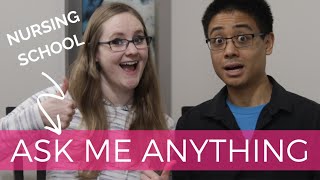
Nurse educator Christina Rafano and Matthew answer nursing school questions live, covering study methods, dose calculations, and career paths. They recommend a four-pillar study framework using whiteboards and flashcards, and explain why dimensional analysis beats formula-based dosing. New recurring live sessions start Mondays and Wednesdays at 9 am Pacific.
Chapters
Hello, everybody. Good morning. Christina here. Matthew there.
Hi, Matthew.
We belong together.
Hello.
I am a nurse here to teach you how to pass nursing school. And he's here for comedic value.
Hi. I'm the comedian.
All the things.
I guess I'm the comedian. I don't know. You guys tell me in the comments whether I am funny or not.
I think you're hilarious. I love it. I constantly just. And our marriage is so fun. Marriage is the best. Good morning, everyone. Happy hump day. Wednesday. It's Wednesday. Is that going to say Tuesday?
I'm not allowed to say that.
Oh, no, that's actually a really good question. I'm not sure. Good morning, everyone. So we've got some really great questions from our members, which we have, so.
Oh, yes. You need that. All right.
Yay. Yeah, let me do that. People think you're funny on Instagram.
Oh, good.
Good morning.
Just on Instagram. Everywhere else.
Not on YouTube. Nobody thinks you're funny on YouTube. Apparently.
That's all right.
Hi. Good morning, Instagram. I see all of you there. Oh, I haven't, like, waved at people. I'm gonna wave at some. I'm gonna wave at you guys, and
I'm gonna wave at YouTube. And since there's no wave button, I'll
just go like this. Good morning, Instagram. Good. Good morning. All right. Hi, Diana. All right, so the first question from our nursing SMS members that I'm going to go through and then leave your questions in the comments, and we will get to those after we go through these few from our members. We, of course, want to prioritize our nursing SMS members, so we give them the option to submit their questions ahead of time. And I'll go ahead and answer those.
All right, so, hello, members. Thanks for joining and thanks for filling out the question. So we've set up a form, I think that's new for this time around. So we set up a little questionnaire form thing and sent it out, and apparently it worked. Because we got your questions.
Because we got your questions.
So Christina will go through those first. And then also we had someone ask a couple questions before we even went live at YouTube. So we'll answer those and then be sure to write in the comments any more questions. And we'll get to those, too.
Bam.
All right.
Not only comedic value, but he keeps me on track. Perfect.
I try.
Good team.
All right.
Kind of hard. Reel me in. Come on, Christina. Happy Wednesday. All right, the first question, we've got Mental health. Okay. So this is actually. It's more of a list of topics. So let's go through them. Mental health, icp, neurodisorders, seizures, assessment, patho and study tips. So because you are a nursing SOS member, I know you are a nursing SOS member because you submitted it through the member only form. So great news for you. If you are a nursing SS member. We have videos, a whole video series on seizures, whole video series on icp. We have a entire neuro course inside of the nursing SOS membership community for you. So when you log into your dashboard, scroll down, it's like it's more at the bottom. I think the neuro course click on. You'll just see it, it's like a little box says neuro course. Click on the neuro course. Those are all in there for you. Now. My top tips for mental health. Mental health is so fun. I love mental health. I love psych nursing. I think it's just so fun. I went to psychology first. I was going to be a psychologist before I was going to be a nurse.
That's funny. I went, I went to, I got my degree in psychology as well. Yay. Human resources, which I don't do.
Slightly different.
So but yeah, still psychology.
So you know, I love psych. I love psych nursing. I love mental health. I think it's great. So my top tips for mental health. So the thing is with mental health, it's the disorders. The mental health conditions, however you want to call them, can be very, very similar to each other but. But yet still have very significant differences. Which is tough. Well, it's easy because a lot of them are very similar and you can just remember one thing. But then they're also tough because you have to be able to tell them apart. Right. So what I did, I've got two ginormous whiteboards over there that I used in nursing school.
They're right there.
Costco, Costco sized whiteboards, two of them. And so I would seriously, you guys just use those whiteboards do compare and contrast lists, compare contrast charts on all the mental health disorders helped so much. So like how is this related to this? What is the same? What is different? You can even, I mean I've got a whole bag of whiteboard markers, different colors. Really, really helpful to see, you know, what is the same, what is different. You know, do things that are similar in one color and things that are different in another color. It just helps so, so much. So that is my number one tip for mental health. It is still the same way that you can study as we recommend for med search. You can study the pathophysiology if we know what it is for a lot of mental health things. We have an idea, a theory, but it's not a solid patho. But you can get, you know, you can see what, you know, how we think what is kind of going on, the signs and symptoms of that disorder, kind of like what we're talking about. Make sure that you're compare contrast with signs and symptoms for each of those mental health disorders. Then nursing assessment. What are you going to assess for? Kind of similar to the signs and symptoms for this for mental health. So what are you going to assess for? What are you going to look for? How will a patient present and then nursing interventions you going to do about it? A lot of mental health is medications. Now if you are a nursing SOS member, make sure that every single week you are logging into your dashboard, the nursing SOS membership community, because we are releasing medications, medications inside our new med database. So super fun. If you are a nursing SOS member, which you are because you asked this question via the member only form, log in there every single week and check out the new meds that we have for you. We're rolling those out every single week. So excited for that. So mental health, a lot of the interventions are, you know, we do, you know, a lot of talk therapy, really a lot of help in that way, but a lot of it is medications, medications. So that's that. And then the last part of this question was study tips. So, so, but just study tips. So I might kind of leave it at that. Med surg, if you're in med surg fundamentals, if you guys have been around for a while, you know that we always, always teach that you have to focus on those four main categories. Pathophysiology or physiology, signs and symptoms, nursing assessment and then the nursing interventions. So those are the four key areas that you've got to study for your nursing school exams. Because if you look back and if you think back at your nursing school exams guarantee you, guarantee you. Of course there will be some differences, but for the most part, the vast majority of your test questions on your exams are going to come from one of those four main things. Pathophysiology, signs and symptoms, nursing assessment and nursing interventions. Now here's where some students get confused. The pathophysiology you're hardly ever tested on, right? Like never in nursing school. In anatomy and physiology, when you take amp microbiology, like you'll be tested on pathophysiology. What's happening those things in nursing School, you're not really tested on that, but you have to understand it in order to know the other three, the signs and symptoms, the nursing assessment and nursing interventions. You should not learn those other three things until you know the patho. The patho is so, so important. You have to know what's actually happening with that disorder first, and then we're going to try to fix it. Right. Can't fix something or assess something that you don't know, like, what's actually going on, you know, like, if it's in mind. Well, of course, like you can assess. Right. We're trying to figure out what's going on. But like you, the, the nursing assessment and the nursing interventions and the signs and symptoms will stem from that underlying patho. So once you know the patho, makes it so much easier to then remember all of the other things from the other three categories.
Awesome.
Makes sense.
Makes sense to me.
Good.
As much as nursing Kim. Makes sense to me. So I am not a nurse, nor have been or will be in, in nursing school.
Never a nurse in the future, huh?
Never. Never a nurse in the future.
Nope.
So, yeah, it's really kind of funny too. I like the comment from, from Liz on YouTube that she didn't know that she'd like psych, but ended up liking psych. That's just something to keep in mind while you're going through nursing school is just be open to learning. Just be open to learning the different types of nursing because you never know, you might end up liking it more than you thought you would and I don't know, maybe find a future in that specific part of nursing.
So, yeah, like me, I wanted to be. I really, I really want to be a lactation nurse. Really? Really. I want to help mommies feed their babies. I think that would be so fun. So that will happen eventually. I think it'd be so great. But you're totally right, Matthew. That was something we were told a lot in nursing school. Especially with your. When you go on to do your precepting with preceptor or whatever your. Some people call it a capstone or like like your exit clinical, something like that. Like the last clinical that you have in nursing school is typically where you're kind of on your own and you have just a preceptor with you and you're doing a lot of it on your own. And usually it's something that schools try to pair you with what you want to do as a nurse when you graduate. Right. That doesn't always happen that way. Right. A lot of nurses want to be in the er, the icu. Those are really the two. I would say the two most common med surg, obviously another one. So that is, you know, that is probably what most nursing students want to go into. So there's not oftentimes enough space for that. Right. So schools have to place you in other places. For me, I was in psych. Well, I wanted to do psych, so. Psych. I did psych. I chose that. And I had a friend, though, she really wanted to do med surg and. And she was placed in hospice. Guys, guess where she ended up? Hospice. You never know. You never know until you try something and try different things. I mean, you never know where you're gonna fit. Like, you might think that you want to be in the icu. I did an ICU rotation in nursing school. And what happened? Do you remember?
I do not.
I thought it would be so much fun. And friends, I came home crying like, all the time because I could not. I just.
I cannot. Yeah.
I cannot handle having to make the decision of. I don't think I've ever talked about this before. I know. Then I get emotional about it. I. I just can't. I cannot handle having to make the decision of life or death for a patient. I just. I. That's not. That's not me. That's not my. I. I just. I couldn't be a part of that. And I. It was very emotionally draining for. For me, and I will never do it again. So there you go. So, I mean, that's my thing about the icu. We talk about great ICU nurses out there. Like, like, props to you guys for being able to hack that. That is not me. I want to help moms feed their babies.
So it. Like I said, we. We talk about this a lot on our channel or in the nursing community and everything is that a lot of it is about mindset. So be open about it. Absolutely. Try out things. Just be willing to learn and who knows what will happen once you go in there? So.
Absolutely 100%. And I think hospice is a great example and long term care, because nurses, you know, when we go to nursing school, oftentimes like, oh, we don't want to end up in long term care. Don't want to end up in hospice. But I tell you what, I have seen so many nurses, so many nursing students flip from, oh, I don't want to work med surge anymore. I want to work in hospice or long term care. You know, you never know. Dzny, love. Hello, Lactation nurses often love their jobs. I agree. I agree. Because I have met several of them and worked with several of them. Oh, I just think would be the best. I just think would be the best. That makes me so happy just thinking about it. I love it. Okay, let me. I got some really good questions on Instagram. I'm sure you have some good ones on YouTube. Let me run through the another one from our members.
So. All right.
This is another one that was pre submitted from one of our nursing members. So if you're a nursing SOS member, you can pre submit your questions beforehand using the form that I will email you on Monday. All right. Or you can check your email from last Monday because it's there in your same link. Same link. I just bought the membership for nursing sos. Well, I don't start school for another month. What do you suggest I do first in the way of preparing over the material within the membership? I want to be ahead and prepared while I can. If that's even possible. I love you friends. That's great. So we have so many members inside our community who have not started nursing school yet, which is fantastic. Please, please do it that way. If you have the option, join before you start school ideally. So there are really four key things and I might add more, but no, I think it's four. The first one, I want you to get comfortable within the membership community because you will be there for a while. You know, I want to help you through your entire nursing school. Right. So get comfortable with it. Get comfortable in the Facebook group, meet some people. We're all fantastic. Seriously. I posted on my Instagram stories a couple of days ago. I don't know if you saw this, but some. One of our members inside the community posted about where she could find the a workbook that we had like a study guide that we had. And There were literally 52 comments to help her find this workbook. And I posted that on my stories and I was thinking what in the world? Like if you are wondering how supportive this community is, like Supportive enough for 52 comments to help you find something inside the community that just. I just blew my mind. So get comfortable with the community, the Facebook group, meet some people. Like I said, they're all fantastic. Super supportive. Like the most supportive place you can ever be in nursing school, in my opinion. Get comfortable in the Facebook group and meet some people and get comfortable with where things are at inside the community. It's really easy to navigate, but we want you to get comfortable with finding things and where things are at now the next thing you're going to want to do. And this even goes not only for nursing SOS members but also for anyone. Before you start school school, focus on learning how to study in nursing school. We have inside the community a full nursing study course. Like how to study a nursing school course. It's called the study success course. Go and watch all those videos. I walk you through step by step how to study in nursing school. If you're not a member, go to YouTube Nursing SOS study tips or something. You know, Matthew will put a link. We actually have a whole playlist on how to study which will help you out so so much.
I found it.
Found it. It's right there. Yeah, there's a whole playlist on how to study. My best study tips for you. So if you are not a member, go to that on YouTube. It will help you so, so much. And then time management is another thing. Learn how to manage your time. So getting a planner. Going to target. Getting a really pretty planner. I love. We do have a planner for you inside the nursing membership community. I don't have it over here to show you but it's really, really great. You just print it off downloadable, just use it again and again and again. So nice. And then the last thing you're going to want to do is learn how to rock NCLEX style questions. Nclex style questions. Nursing school questions are worded slightly different. You really have to figure out some hacks on how to answer them correctly. So there are some really great hacks to help you with that. On YouTube we do have some videos nursing SOS test taking strategies. Or you can, you can just search Nursing SOS test taking and you'll find them inside the membership community. If you click on bonuses, the bonus course. There's a whole video there for you of on test taking strategy. So you'll see that it's how to pass nursing exam questions. So my answer for that, so that those are the four things. I think that was actually four things. Where's Jessica this morning when we need her?
Yeah, she helps keep track of how many things. I think it is four.
I think that was four. I did good. Look at me go this morning you guys. Right on.
Awesome.
I love it. All right, do you have any questions from YouTube for me?
Yeah, definitely. So someone actually added question before and you said Jonathan already answered. But we'll, we'll.
I love it. Good morning Brittany and Johnny.
But wondering if you would recommend taking microbiology while in nursing school or before
starting nursing school I recommend taking as. Bless you as much. As much as possible before you start nursing school. Like, the more classes that you can take before you start, the better off you're going to be in nursing school. Like the lighter your load. Like the lighter you can make your load in nursing school, the better, I would imagine. If you agree with me, Instagram and YouTube. Can you throw up some thumbs up or throw up some hearts? If you totally agree with me on, you should definitely not take a bunch of classes all at once when you're in nursing school and just focus on your core nursing school classes. Can I get an amen? Like the lighter you can make your load in nursing school, the better off you will be. Thank you for the hearts, Instagram. Love you guys. Okay.
All right. I actually have another one if you're.
Yeah, go for it.
I like this one and I don't know the answer to it. I don't know a lot of these answers, by the way, but that's okay. That's why we have you. So there you go. See? Where is it? Oh, how can I study and understand nursing research?
How can I understand. I don't think I've ever gotten this question before. I think I might need some clarifying answers from you. How can I study and understand nursing research? So can you tell me in what context? Because are you trying to be a nurse researcher, which is a specialty in and of itself, like, are you trying to actually do clinical trials and things like that, or are you trying to find research for your research papers in school? I'm assuming that it's the latter. So that's what I'm going to go with because that is primarily what I think that would be the most helpful for people.
I think that's what the conclusion I jumped to. But okay, yeah, if you guys are still here and can add some clarifying
points, yeah, that would be really helpful. I lost your name though, so. But it was about research and yeah, clarifying points. So. But with that, like, where do you find research articles? Right. That's probably a big, big thing. Where do you find research articles? Now, where I would start is actually your school library. So I don't know if you did this when you were in college.
Go to the library. Did I go to the library, actually?
He's laughing at me.
Funny story.
I love this.
The library is a great place to
sleep because it's so quiet and comfy.
Yeah, the chairs were pretty comfy. So, yes, I'd go there for nap time, but.
Oh, man, I tell you what, I
Didn't know they had books. What are these books you speak of?
So, not necessarily books, but if you go to the library, you can talk to the librarian there. And they usually. At least all the schools that I've been to have had like a database of research like, you know, looking for. If you want to get something from the National Institute of Health, nih. If you want to, you know, get something from, from. Oh, there's a gazillion out there, journals out there, you know, research journals that you can access through your school. I don't know how many. I would literally say thousands. There's tons. So definitely check that out. That's the number one resource that you really should be using to find research for your papers and to write your papers more efficiently. Now, you guys know, I think it was, I talked about it a couple weeks ago. When you sit down to write a paper or a care plan or whatever, make sure that you have everything set up before you sit down to do that. So definitely do your research beforehand. Make sure you have, well, as many articles as you can, journals, things like that before you sit down to write your paper. That way you're all prepared and you're not like going back and forth, you know, we don't want to waste time writing a paper, going back and forth between textbooks and things like that to trying to figure out where things are. No, you want to be prepared when you sit down and do it. Same thing with your care plans. If you're writing a care plan, you want to have all your patient data, everything from clinical and, you know, ready with you, and then you can sit down and rent a care plan. It's just going to make it go a whole lot easier, whole lot simpler. You know what? Something I did not mention before when we were talking about how to study. I kind of digress a little bit when we talk about how to study. Make sure that you guys download our study checklist. We have a whole checklist on step by step. Walks you through step by step how to study in nursing school. So Matthew will put that link on YouTube if you're on Instagram. It's in my bio. So go to my bio and check that out. So helpful. That'll be so helpful for you. Literally walks you through step by step, how to study. I just looked at it yesterday. Oh, so good. So good. It's like a gazillion pages and amazing. So you will love it. It's not a gazillion. I think it's like four pages.
Colleges or something.
But it's like literally step by step how to study in nursing school. So helpful. Oh, I did forget when we did get a question on YouTube a couple days ago on the last live that I wanted to answer how. Hi, can you please create a video about safe dose calculation for pediatrics? Yes I can. That was my gonna be my answer. Yes, I can. We will have a. I added it to our list. Save more dose calc questions and more dose calc videos for you guys. So if you want more dose calc videos, can you let me know in the chat? And if you have a topic for dose calc that you want help with, post it in the chat and then I can, you know, we'll add it to the list and do that in the fall or something. I think that would be super fun. All righty. Can I do one from Instagram?
Yeah, definitely.
Do radiology students learn the body systems too? I would imagine so, but I've never been in radiology. Best website to learn dosage calculations. Best website to learn dosage calculations.
I don't know. I don't think we've ever talked about that.
I don't think I've ever. I don't know my. Okay, I'm going to have to check that out. I'm wondering Khan Academy maybe. Do you know, maybe.
I don't know.
I don't know. I really love Khan Academy for all things, you know, everything. Really. No, I don't have a resource for you for dose calc. The one thing that I want you to be cautious of though is when you learn dose calc, make sure you're learning dimensional analysis and not the formula method. Two very different things. Make sure you learn dimensional analysis or the railroad track method it could also be called. That's the way we teach. If you do, if you do your dose calf problems and solve them via dimensional analysis, you will get it right every single time. Every single time. It is foolproof. As long as you set it up correctly, you will get the answer correct. With the formula method, it's very, very difficult to kind of figure out where these go go like what you know, what is happening, what formula to use for what question. There's none of that with dimensional analysis. Once you learn how dimensional analysis is set up and how to set up all the units and stuff, once you know that, you can solve any problem in the world. Beautiful recommendation.
It's actually really funny. I was thinking resources. So before we were doing YouTube videos, you did start out with blogs and actual written blogs and. And I keep going back to one of the best ones that I've seen that we've actually done is dosage calculation and showing the dimensional analysis. And there's a lot of pictures and really step by step process on how to do that. So that's really a good one. I can try and find a link if you go to nursingsos.com and then go to videos. It's way at the beginning.
Yeah. I would actually search on Google Nursing SOS Dose Counsel calc. Search on Google Nursing SOS Dose calc and our YouTube might even pop up there too. You could do it on YouTube as well. Nursing SOS dose calc. I have several videos and like Matthew said, blogs back in the day, back in the day when blogs were cool. I have several articles walking me through step by step, how to do dimensional analysis. So there is that. Yeah, perfect. Is there. Do you want to do one from. Okay, so that was from Instagram, right? Do you want to do.
From YouTube? Yes, sure.
Good morning, everybody. I see lots of hearts on Instagram. Thank you.
Is it easy to become a sane nurse?
Is it easy to become a sane nurse? My favorite question ever in the world. Is it easy? Yeah. Go into a specialty that you love, I think. Okay, so here is one of the biggest fallacies and possibly mistakes that nursing nurses make. And I only say this because I know so many nurses and just being in the world of nursing, I just see this all the time. When nursing students graduate, what are you told, right? You're told that you should start in med surg. Do med surg for a year, maybe two, and then go do what you want. Because med surg is going to give you all the experience that you need. Need. I think that is the biggest load of. I'm not even gonna say it. I. I just. I just don't agree. I mean, go do what you want to do, man. Why would you spend a year or two in med surge and be miserable if you hate it? This does not make logical sense to me. I don't know. Like, does this make sense to you? I don't know. It might make sense to you. It does not make sense to me. I don't want to be a miserable med surge nurse or a miserable anything nurse. So. So go do what you want to do, man. Don't let. Don't let. Don't let the world tell you that you have to do whatever you have to do.
There you go.
That's. I mean, it's just. Don't let the world tell you don't do it.
Don't be put into a box. Just do what you want.
Don't tell me what to do. Yeah, yeah. That's my opinion on that. I think if you want to be a sane nurse, go do what you love and. And do it well. You know, like me. I want to be a lactation nurse. Come on. Nobody. I've very rarely met someone that says, yes, I want to be a lactation nurse except me. Best way to study nursing textbooks, I feel like I'm reading but not retaining, so good. Don't. Just kidding. It's not a full stop, though. When you read your nursing school textbooks, we have some very, very specific advice for this. Focus on reading the sections of the book that your professors talk about in class. So you are not just reading your entire textbook. Because, you guys know the thing is, like, ginormous, ginormous. You are not gonna. You are not going to be able to read that. First off, all of it in nursing school. There's just not enough time. You are not going to be able to retain it.
So.
So it doesn't surprise me at all that you're not retaining it, because I wouldn't either. Come on. The thing is massive. So focus on reading the sections of the book that your professors talk about in class. Then when you take notes in class, I'm going to do my thing again. Okay, here's how I study. Here it is, friends. Here it is. If you're doing something else right now, stop doing it for a second. I'm just going to walk through this process with you, so I hope this helps. When you are in school, when you are preparing for your lecture class, print off your PowerPoint slides with your professors. Give you slides ahead of time. Print them off 1, 2, 3 slides on 1 note, section on the other. I think this is called notes, slides or something in PowerPoint. Whatever. You can figure it out. When you print, it's under printer settings. Make sure you change your settings to be three slides, three of your instructors, PowerPoint slides, and the notes on the side. So when I was in class, this is what I did. And then I would take notes in one color from class and write on the lines. And then when I got home, here's where the textbooks come in. When I got home, I focused on reading the sections of the book that related to what was on this page, what we talked about in class. If you read other things in the textbook, you're going to go down rabbit hole after rabbit hole after rabbit hole, and it's not what your professors identified as being important. And it's less likely to show up on your exams because it's not what they think is important. Right. Focus on reading the sections of the book that are on your notes. Paper. Now one, use one color of pen when you are in class. And I like just to write on the note section. Now when I went home, I would take notes from the textbook in a different color and write along the edges and write on the back. So that is how I literally how I studied and took notes in school. Such an efficient system kept everything all in one place. I was really. I. I mean, it is. We're gonna go back to don't do what the world tells you to deal with. Don't do what the world tells you to do. Everyone is telling you to read every single thing in the book. You guys know that is impossible. That is not possible.
I saw the size of some of your books.
I mean, I just thought, there are a gazillion nursing books that you are going to have by the time you graduate nursing school. Are you really going to read all of them? No. So respect your instructors. Nod and be polite. But then don't take their advice. That's terrible.
As far as reading the textbooks go.
As far as reading the textbooks, you
do want to take their advice for something.
Yes, but not like read every. If they tell you to read every single thing in the book, they are. They are lying to you. That's just not. I'm exhausted just talking about it. Textbooks. So, you know, just don't do it. Focus on reading the section of the book that your professors talk about in class. That is the way to go. That is what we recommend. That's what we've always recommended. That's what's helped our nursing students that are in our program. That's what I did in nursing school. I got straight A's, you know, that's what I got. That's what. Yeah, okay.
Awesome.
That's what I got for you. Instagram.
Jay, congratulations. Just through my last nursing exam lecture. I have my final on the 27th, which. Wish me luck. Thanks for all your information. You are welcome.
You are welcome. Thank you for being here. Jay, congratulations. Don't go into Med Surg if you don't want to go into med Surg. Go into Med Surg if you want to go into med Surg. Don't let the world tell you what to do. So, like on Monday, our theme was don't be a quitter. And today's theme, don't do what everyone else tells you to do. Do you man, is that still a
phrase you do you.
Yeah, that's still a thing.
I think that's a thing.
Okay. It'll probably. It'll go away eventually. People will stop saying that eventually. What do we got? YouTube. What do we got?
Critical care nursing tips.
Okay.
That's about it.
It's the same thing we have if you're a nursing member. If you are a nursing SOS member, you have access to a full critical care course that we have inside there for you. But it's the same thing. I mean, focus on, like, our studies. Tips still stand. Pathophysiology. What is going on? Like, why is the patient on a test tube? Why is the patient on a ventilator? Signs and symptoms. What led to that? Nursing assessment. How do you assess a patient on a ventilator? You know, got to know those things for critical care, nursing interventions. What are you gonna do about it? Right. So the advice still stands. Whether you are in fundamentals and studying metabolic acidosis and fluid electrolytes, whether you're in med surg and studying a heart failure or whether you're in critical care and studying, you know, all the, you know, all. All really. All the really deep, intense nursing interventions that you got to do in critical care, the advice still stands. Four main things. Patho signs and symptoms. Nursing assessment, Nursing interventions.
Boom. Awesome.
Was that helpful?
Hopefully. Yousef, go ahead and comment below if that was helpful.
That was helpful. All right. Instagram. Amy Sand. Hello. Good morning. It's still morning, right?
Somewhere in some other places we got someone from. It's 10 o' clock at night where they're from.
Wow.
So thanks for joining us.
Thank you for being here. I'm drinking coffee. It is not.
You may be too. Who knows?
But yeah, I also saw someone respond from Boston. I don't know if I saw that on Instagram or YouTube, but Boston, hello. Hey. That's where you were.
That's where I was born. And good afternoon to Boston and everyone else on the East Coast.
Yes, good afternoon, East Coast. All right. Do you recommend studying with index cards? Okay, so I recommend studying with two things. If you have to memorize index cards. Like flashcards. Index cards, Flashcards and whiteboards. So, like we talked about a little bit earlier, I've got two, like mega, mega, Costco, Costco whiteboards over there. Two of them. I didn't just do one, I went all in two. And that is what I use. So whiteboards and flashcards is what I use to memorize things. So in nursing school, there's kind of Two parts that you have to do in nursing school. There are things that you will just have to memorize and then there's things that you have to actually critically think about. So for the former, first one.
Former the first.
He's my. He's my Grammarly. He's my grammar check. Because I don't know English. Apparently when you're studying something that you just have to just rote memorize again. Rote memorize, memorize, Rote memorization. I don't know, whatever. If you just have to just remember it. You talk, I'm done. I'm out. I'm out. I can't talk.
Okay. Just for memory. If you're going to just dump it in your brain and you just have to memorize and not really critically think about it. Just get in my brain kind of thing that is really repetition. That is index cards, flashcards, and whiteboards
write things out again and again and again.
And I think I mentioned this last time a lot of times, index cards, it's really just the process of writing. Yes, you can use them as flashcards and actually do it, but just number of times that you're going to repeat writing it over and over and over again. It will. It will eventually get in there. So it might take me a little longer than some of the other people, but just repeat if I ever did that. But I never did that. So don't do what I did.
You do. You write.
Write them out on index cards, cards, whiteboards, and just repetition and. Yes. So I'd say that you do recommend it to write in index cards, judging from how many index cards we had by the time you're done with nursing schools, I think we could probably.
We killed a couple Horsts with those index cards.
Sorry, world.
Yeah. Oh, man. So index cards, flashcards and whiteboards, just write it out again and again and again. And what Matthew said said is exactly right. You know, just the act of writing it out will help you commit it to memory. You don't necessarily. I very rarely. I very rarely actually went through my flashcards after I wrote them, like I hardly ever did because just the act of writing it out is what helped,
which was really confusing to me because now we ended up with all these index cards that you never looked at. So I was. I was confused. But you know what? If it works, it works. Works.
So it works.
Awesome.
Is that the. Is it. Is that the. The usb? I don't know. I always think if it fits, it ships. That's my postal service call out today. We've Got lots of hearts and smiley faces and hellos on Instagram. Good morning, Instagram. Love. You guys are seriously the best. Like our YouTube community. Instagram community. Girls are the best. What would I do without you? Okay. How can we study anatomy and physiology again? Flashcards and whiteboards, my friend. Flashcards and whiteboards. Now, if you are in your core nursing school classes. I know we've talked a little bit about now A and P and microbiology. Some people have questions on if you are taking your core nursing school classes. Fundamentals, Med surg. Critical care. We talked about critical care a little earlier. Things like that. If you're in your core nursing school classes, you. You have to download our study checklist. Nursing school study checklist. Matthew will put it in the chat on YouTube. Instagram. My friends over there. It's in my bio. So check it out. There's a link there. You can download it. You guys have to get this. Have to get it. So, so good. So study checklist. Do it. Download it. The link is down there for you. Yes, they do. Oh, I saw that on YouTube. Yes, they do wear flashcards and whiteboards. Selena. Good morning, Selena. Or good afternoon perhaps where you are.
Or yeah, all right. Somewhere.
Let's do YouTube. Barbara. Hi, Barbara. Love you, friend. You say sane nursing. Ha. That's funny. No, we could totally be saying. It's just. It just depends on, you know, where you want to go into. Just don't let the world tell you what to do.
Guys, seriously, you do you within boundaries. So let's see here. This is interesting. How do you form a med table for clinical med table.
Oh yes. I love literally just thinking about this the other day. Okay.
And that comes from a bunch of numbers and swimmer. So bunch of numbers. Swimmer. This one for you.
I have something coming. What do I say? How can I like I have a surprise for. If you are on our email list, I have a surprise coming for you over the next couple of weeks. I just finished it yesterday. Do you know what I'm talking about? The.
Yes.
Yeah, I just finished it yesterday. And it has something to do with pharmacology to really, really, really, really help you with that. So if you're not on our email list, you've got to get on it. Click the link in our bio on Instagram for that Checklist or on YouTube. Click that link. So for a med like creating a med table, I talk about it in what I what I'm referring to the surprise that you're going to get if you're on your email list. In a couple of weeks. Let me briefly dive into it.
Now.
When you are studying medications, here's what they mean. When you are studying medications in nursing school, I really, really recommend that. Let me pull out my paper again.
All right?
Paper that you create a medication table, medication database, something like that. Where when you have a patient and have their whole list of meds, you're writing out what meds you're learning and studying and then you keep it. Right? So it's like you can either write it out physically. I recommend using an Excel spreadsheet. That way it's actually a table, so you'll have like all your med names in one column and then the generic name, trade name, the pharmacologic class, the therapeutic class. Like all the information that you need to know for your medications, all on one Excel, Excel spreadsheet. And then what? Why this is so key and so important is because you're going to have patients all through nursing school and as your time as a nurse, they're like, they're all taking the same medications, right? So if you're on a med surgical, you're going to see the same medications over and over and over again. Critical care over and over and over again. So it doesn't make sense to reinvent the wheel every time, right? So when you get a new patient with, with their list of meds, it doesn't make sense to have to rewrite everything again and again and again, right? So just have one medication database. Like what they said it was a table, right?
Yes.
Yeah, a med table. And I'm just. Yeah, a med table to refer back to. So if you write it out, just write it out one time. Keep it with you. You know, if it's an Excel spreadsheet, I really recommend Excel because, I mean, you've shown me all the Excel tricks and I don't know, it's amazing. I wish I had known that Excel could do those things three years ago. Use a spreadsheet, write your couple of columns. What's the generic name of the medication? What's the trade name? Pharmacologic class, therapeutic class, the side effects, mechanism of action, indications, which is what it's used for. Contraindications. I think I said side effects already. Nursing assessment, nursing considerations, any antidotes for it? Did I miss something? If I missed something, let me know in the chat. But I think that's pretty much yeah. So write out everything that you need to know for your medications on that table. And then when you get a new patient with a new list of Meds, you can either add any medications to your table that are not on that table, or you can just refer back to it. You don't have to rewrite it again. Amazing. So I can't believe I've never talked about that before.
Yeah. So basically, med table, table of medications, and all the associated things that you need to know about each medication, right?
Yep.
Okay.
Yep.
All right. When I hear med table, I literally think about a table with a lot of medications on it. So I guess that's. That's not it. So.
Yep.
All right. Okay. Sounds good. So med table is really helpful for adding to it. And also almost like a reference sheet.
Exactly. It's like a reference sheet. It really is. Yep.
All right. And then how about just pharmacology in general and just like learning your meds and.
Yeah, learning your meds. Learn the mechanism of action first. You've got to learn the mechanism of action first. Same thing with pathophysiology and med surg. If you learn the pathophysiology first, everything is so much easier. The signs and symptoms, assessment and interventions. In the same way. Learning the mechanism of action of your medication first. The mechanism of action is how does it act in the body. Once you know that, the side effects. So much easier to remember. The nursing assessment. So much easier to remember. My example the other day was beta blockers, Lasix, furosemide is another good example. It's a diuretic. It's gonna kick out. So when you give a patient Lasix or furosemide, it kicks out water and water electrolytes like nobody's business. So obviously, with that being the mechanism of action, that's what it does. It kicks out water, fluid and electrolytes from the body. What do you think is going to happen? Dehydration perhaps, which is a side effect of the medication. Low electrolyte levels. You've got hypokalemia, low potassium, hyponatremia, low sodium. All the low electrolytes, you know, all these things follow from that mechanism of action. So it's very important that you learn that first because it's going to help you so, so much. Awesome. All right, let's see. That was YouTube, right?
That was YouTube. Yeah, definitely. So why don't you go ahead and do something?
Okay. So we talked about. Yeah, I just wanted to say the dosage calculations, helping with my med math competency exam. I passed with an A.
Woo.
I am so glad that our nose cow tips helped you. Wise owl. I love that Instagram handle.
Wise owl.
That's Great. How did you study neuro? It's so hard. Four main things. Pathos, signs and symptoms, nursing assessment, nursing interventions. That's how it is. If you're in our nursing SOS membership community. I don't know if you are. I don't know if you are. If you are, we have a whole neuro course in there for you. You can check out so you don't have to learn it yourself. Let me teach it to you. Cool. Yep. Alrighty. Let's do some YouTubes.
All right. Actually, let me go ahead and go back through here.
You guys have a lot of questions this morning. I love it.
While I'm doing this, since you did mention about the membership, why don't you talk a little bit about the membership community? Kind of was in there a little bit.
Yeah. So friends, I seriously. So two things. Please, please, please get on our email list because seriously, I totally forgot and I was not actually planning on mentioning this today, but I wrote something amazing for you yesterday and it's a surprise for all of the students on our email list. You're going to get access to it first and it's totally free. So once I'm like totally finalized with it, I will be sending that out to you over the next couple of weeks. I think maybe next week or the week after, I don't know whenever it'll get done. But it is amazing, totally free resource guide for you to have a nursing school. So make sure you get on our email list, download the Med Surg Study checklist or Nursing School Study Checklist, the link Matthew has put several times in the YouTube chat and it's in my bio on Instagram. So definitely check that out. That will get you on our email list if you put in your email there. And then stay tuned over the next week or two because I have a free nursing school thing coming for you over the next couple weeks. So, so excited. So, yeah, there's that. And then, yeah, the membership community for Dose Couple. We've gotten a lot of questions on those Calc this morning. Definitely go to YouTube, nursing SOS dose calc. Type that into the search and I walk you through, literally, step by step, how to succeed in Dose Calc. How to pass your Dose Calc exam. Like I said before, dimensional analysis is your best friend. And if you are a nursing SOS member, we have two workbooks inside the community for you. So go to your dashboard, click on Bonuses, there's a bonus section there. And then in that bonus section is where you will find those workbooks. If You're a nursing member for Dose Calc.
Awesome.
Good.
Any questions From Good on YouTube? Any Instagram questions out there?
Any Instagram questions? Any feeling about being easier or harder to get hired post corona as a new grad? You know what so funny. I was just looking at this yesterday. I have a theory. I don't know if it's true, but my theory is that you are very, very, very much needed more now than we you were maybe even five months ago. So if you are getting hired as a nurse right now, like if you just graduated, there are some really, really, really good positives. Positive aspects of being in nursing school right now. A shorter NCLEX is one of them. So the nclex right now is shorter or at least it was like a week ago when I checked. Hopefully it still is. But with everything going on in the world, like they don't want you sitting there for hours and hours and hours. So with a shorter. Amazing. So if you graduated does that and then. Then if you are trying to get a job now through the summer. My. I was just looking the other day yesterday actually and there's just so many. You know, I was. You know, I just think that now is a great time because you are so, so needed right now. So that is your answer to that take. Oh, oh, Instagram. You guys are so nice. Everything that was assigned time friend. Don't do it. Don't read everything you do.
You just don't read the book.
You do you. But listen to us. No, no, no. You figure out what you. I'm just some girl on the Internet. You don't even have to listen to me if you don't want to. But I do think it'll help if you do. So you know, but focus. Anatomy and physiology. Okay. We've got a lot of like anatomy and physiology. Oh, Jason still assured a test. Sorry. Oh, hi. Gabrielle from Chicago. Chicago. Okay, so what time is it in Chicago? Two hours ahead of us. We're Pacific Standard Time. We are on the west coast.
The best coast.
I try to be. Some people say I don't know the best coast.
West coast is the best coast. Anyone else hear that? No.
All right. We're like North Waco. We're in Washington, so we don't have the sunny beaches of the California. Please suggest how to me how. How do I read Nursing fundamentals is what I gathered from that comment. The same way we read everything else. You know, fun. Focus on what your professors talk about in class. Is nursing SOS going to be taking members soon? No, I Don't know.
So, so we do open just a few times a year so that we can focus on our members while, while the membership is closed. So if you do want to get in, please join the wait list. I added a link not too long ago in YouTube. Join the wait list and you'll get updated as soon as it does open. We do open a couple times. We just opened a couple weeks ago, so it might be a little while. But still get on that wait list so that you will get notified once we do open it.
Yeah. So the thing is that we always want to make sure that our members are taken care of. We never ever, ever want our members to feel like when you join you're alone. You know, we really hand hold you through nursing school as a nursing SOS member with is great, pretty great. We really like it. So we really take really good care of our members and with that we keep it closed for the vast majority of the year because it, it would just, it's, it's so much backend work for us to open it up and constantly enroll people. I do not want to focus my time getting new students in constantly. Like that's not my main focus. My main focus is on our current members and keeping them like helping them succeed in nursing school. So that's why we keep it closed for the majority of the year. It's just, it's so much easier for us to devote all of our attention to our members, which is what we do and how I think it should be anyway. So when you get in, you get so much of our time and so much of our energy, you know, so you know that, you know, we're really going to help you out as much as we can, which is pretty great. But with that then we also have like a lot of projects and things. So enrollment has to come kind of ebb and flow based on what we have going on and what we're releasing for our members. Because like I said, we're going to prioritize our members. So we've got, you know, new courses and things coming and then we just have to kind of keep that balance of enrollment and you know, because enrollment manage, it takes so much time to open it up. It's crazy.
It does. And by closing it also we allow Christina the opportunity to do other things like the suppress that she has coming up for everyone. So join the checklist, join our, our mailing list and then you'll be notified about that stuff too. So yeah, we, we limit the amount of time it opens so that we can provide you guys these lives and answer some questions and do other things too.
Yeah. So absolutely. We like to take care of you. Do you have anything?
No, I think we're good. And we're actually coming up on the one hour mark, so let's see.
I. Let's see. And you're like, oh, no. Oh, no. So many hearts on Instagram. So many hearts on Instagram. I love you guys. Okay, so I did want to point out on YouTube, Jay, you said still a shorter test, however, get your paperwork. Okay, so we're talking about the nclex. So if you are taking the NCLEX right now, Jay says it's still a shorter test, which is great. However, get your paperwork in quickly. I guess the wait list on the east coast can be up to months for your att. Now, the ATT is your authorization to test. ATT authorization to test. So you have to get approved in order to take the nclex. So yeah, get your paperwork in immediately. But you guys also the thing, another thing of like what the world tells you to do. So there's like two camps, what the world tells you to do and what Chris. Tina tells you to do there. They tend to be very different things. So the world tells you to take the NCLEX immediately and, you know, go work as a nurse immediately. I waited. I had a baby. Yeah, you.
It was out of necessity more than anything that you waited. I mean, there was a baby coming,
but I feel like I would have waited anyway. I mean, it's just, it's just, it's you, you just got out of nursing school, friend. Like, take, take your time. Take your time. I'm getting a lot of hearts on Instagram. So apparently my opinion is, is people agree with it. So, you know, just, just do you, you know, you don't have, you don't have to take the inquiry right away if you don't want to. Definitely get your paperwork in. Because when you get your authorization to test, I think you have a certain time frame to test, if I remember right. Or maybe you can just test anytime, but get your paperwork in early and then you can choose, you know, when you want to go take your nclex. But you don't have to take it right away if you don't want to. You don't have to do anything you don't want to do if you don't want to read everything in the textbook. You don't have to read everything in the textbook if you don't want to take the nclex right away. You don't have to take the nclex right away. If you don't want to go work in the icu, you don't have to work in the icu. You don't have to do it. Friends, That's. That's the theme of the day. Oh, Instagram, you are the best. YouTube. Thank you so much, friends.
All right.
Thank you, guys. Yeah, that was like. Was that really an hour? Yep, that's.
We're coming up on the end of it.
And any last thing, checklist. Make sure that you download the study checklist that we have for you. Oh, man. You guys, I can't even talk about it enough. Especially not only because the checklist is amazing, but then also on our email. If you have to get on our email list, because that's the only way you're going to get it is to, you know, only way you're going to get it first over the next couple weeks. I know. It's just so good. It's like it's a secret resource I have coming for it. I don't even know how to say it. I don't even. Yeah, it's a secret resource coming. Coming for you.
Keep asking about it on these lives. Our next one is on Monday and maybe just keep putting it in comments and prodding and maybe, maybe Christina will give it up, what it is. But we'll see only if you guys keep asking about it. So.
Yep, yep.
So, Barbara, be sure to come back to more lives and say, hey, by the way, what were you going to be releasing? When is it coming? Just. Just keep asking that.
Keep asking.
Maybe if you pester her enough, maybe she'll spill the beans.
Maybe I'll spill the beans. So I love how excited you are. I know Instagram. You guys really like my, like, excitement. YouTube. Do you guys like my excitement? We have a lot of people on YouTube that are like, Christina, whoa, settle down.
But the YouTube videos, all the arm waving, people get so mad.
A lot of gestures. My. My hands.
If you guys like it, you obviously like it. So you're here. So thank you for joining. Our next live is on Monad Monday,
Monday. And so we're going to try to do this Monday and Wednesday every single week at 9:00am Pacific Standard Time. How fun is that? Like, seriously, how fun. So if you want to submit a question, here's what I want to try. I hope this works. Because people, before the YouTube lives and before the. Not Instagram, this does not go for Instagram. But before the YouTube lives, you can, like, we're gonna schedule it on YouTube so you can see it on our channel. You can see like the next live that's upcoming. So that for the next time, if you have a question you want me to answer, make sure that you put it in the chat even before we go live because it'll be there. It's totally fine. So definitely, you know, do that beforehand. We're gonna try to schedule out at least, you know, the next one after, you know, so, so like I'm going to like today I'm going to schedule the one for Monday. So starting this afternoon you'll be able to submit your questions for next Monday. So get those in. Super exciting 12. All right, you guys, I hope you have a fantastic rest of the day. Take care, guys. Bye. We'll chat with you on Monday, 9am
all right, see you guys.
Bye.










