Nursing School ASK ME ANYTHING
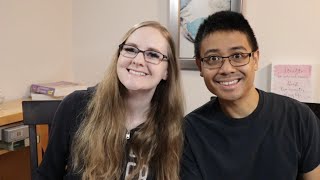
Christina Rafano and Matthew answer nursing students' questions live, covering insulin administration, discerning a calling to nursing, a four-step study framework for pathophysiology, pharmacology tips for ATI/HESI exams, dosage calculations using dimensional analysis, and wound-care practice strategies.
Chapters
You are now live. I really like how.
Oh, well, Instagram's so nice.
Instagram and YouTube does it too. You are now live. Hi, guys.
Facebook's like, peace, you're live.
Yes.
Just don't embarrass yourself. Don't embarrass yourself on live video. Matthew and Christina.
Why not?
Good morning.
You should. That should be it. You should embarrass yourself even a little bit.
This is. Anything can happen.
Anything can happen.
Anything can happen. Live video.
Happy Monday.
Hi, Brittany.
Welcome.
Jazz. Lachey.
Lachey. Welcome to the nursing school show. Ask Christina anything.
Ask him anything.
This is Christina. This is him.
And we will do this.
Let's do this.
His name is Matthew.
My name is Matthew.
Good morning.
Good morning.
You're like, wait a minute, friends. Two days in a row.
Two days in a row, right?
Yes.
We were just here 24 hours ago. Does it feel like 24 hours ago, guys?
It feels a lot longer. I don't know about you guys, but.
Yeah. How is everyone's weekend?
I feel like things just. It's still March. Still March.
Time. Time is a little funny nowadays. What?
We have Facebook comments.
Look at that. Hi, Facebook.
Hi, Facebook. Hey, Stephanie.
Pharmacology.
So here's the thing with Facebook. I have gone Facebook live a lot and it always hides the comments, apparently. Until now. So comment on Facebook.
Yes.
Hey, Jill.
I can still pull it up on my phone.
So I'll do that real quick.
Quick. While everyone's joining.
Good morning.
Hello. Hello.
Can I jam on some things while you are?
Yes, you can go ahead and jam.
So we always answer questions from our nursing SOS members beforehand. We had a member submit a question about insulin. So talking about insulin, I don't know. Do you see that?
I did not even see that.
It was on the. We have a members only form. Form F O R M form. So if you are a nursing SOS member, you can log into your dashboard and click on bonuses. You will see a tutoring call subm form and you can submit that to have your question answered either on our Tuesday tutoring call, that's members only. Or here on the ama, which is super cool. So you get preferences. Basically getting three tutoring calls a week. So amazing. So we're going to talk about insulin. The question was really. It was really high level generic. It's just that I need help with insulin and so that could go a lot of different ways. The first thing I want to say is that I just recorded. So if you guys know, inside our nursing membership, we're releasing a Medication database. I just finished the insulin. So that will be up this week. So all the insulins there will be up for you. So all of them to go through. So you do not have to remember your medications from like a textbook or anything. If you're a nursing assessment member, just log into your dashboard. You can click on the how to study pharmacology course and then we have the whole medication database. We're releasing it for you. So insulins will be up this week. So just so you know. So insulin, the biggest thing to remember is that insulin is a hormone that we make anyway. So we are just supplementing it with some people who either are resistant to it or don't make enough. So insulin, what insulin does, it's like a little key. Insulin is the key that unlocks the body cells and allows it to use glucose for energy. So insulin allows glucose to be used by body cells. Without. It can't use glucose for energy. It just stays in the blood, which is where you get hyperglycemia, things like that. You know, the, you know, a lot of sugar inside the blood just staying there. So insulin allows glucose to move inside cells to be used as energy. So that's, that's basically what insulin is. Now with that, because insulin pulls glucose, moves it into the cells. The one thing you absolutely must check before you give insulin is their blood glucose level. Always if you give insulin and a patient's blood glucose level is low already, you could drop them even farther because it's going to pull even more glucose into the cells. You, you always need to have a baseline level of glucose in the blood outside of the cells. If that doesn't happen, hypoglycemia. My nursing instructor always, I don't know where she got this, but she always had a phrase. She said, hypoglycemia, lethargy, coma, death. Those are three Lethargy, coma, death, lethargy, coma, deaths. So she would just say that constantly, like for a bunch of things like, well, if anything, if anything goes wrong, really in the body, it's lethargicoma death. That's kind of what happens. So when you think hypoglycemia, lethargy, coma, death. So that is what we want to prevent. Always, always, always before you give insulin, you have to check their blood glucose level. So, but nursing SOS members, like I said, you've got the whole medication database. So we are currently releasing it for you. We will have insulin up for you this week. We'll let you know when that is.
All right?
And our tutoring call is also tomorrow at 2pm Pacific.
And for those that are not in the membership community, membership is open now, so.
And. Okay, go ahead. Sorry.
Oh, okay.
So join now.
Join now. We are open till Friday and then we close, and we will not open after that. The minute after we close, we always get comments saying, hey, open up. We missed out.
Yeah.
So if you want to join or if you're interested in joining, go to
nursingschoolofsuccess.com join, like, go literally right now so you don't take a look, take
a gander at the goose, see if you like it.
Is that a phrase?
I don't know. It's a phrase.
Now story time.
Go ahead, take. Take a look and go ahead and join up. And all the things that Christina was talking about is in the membership community. More insulin information and the upcoming tutoring Call tomorrow if you have any more questions about it.
Yep, there you go. We do have a insulin cheat sheet, however. It's. If you go to nursingschoolofsuccess.com forward/sign up, S I, G, N, U P. I'm
not sure if we have that.
I can spell nursingschoolofsuccess.com signup, so do that and then you will be able to check out. Well, we've got a lot of sheets in there for you. But then there's insulin. There's an insulin one there, too.
Awesome.
I'm gonna wave at Instagram. Everybody else.
All right.
Good morning.
Go ahead and wave at Instagram, by the way.
Instagram. Have you seen my reels the past couple of days?
You did some.
They're so fun. I was telling Matthew I'm basically obsessed. Did you know, fun fact. Did you know that I used to be a Zumba instructor?
Yes, yes, I did know that.
You did know that. I don't think anybody else did. I used to teach Zumba, which is so cool. And so basically, I feel like reels is like Zumba. Just 15 seconds. I don't know. It's like putting creativity to a routine, which I think is so cool. So go check out the reels, because I think they're so fun. I hope you love them. Shout outs. Brittany's like, yes, I love your reel. I just posted another one. Brittany, did you.
Did you post that one?
I did post it, yeah.
All right.
Yep. It's hilarious.
All right, let's do some shout outs. It's a long, long list. So we won't be able to get through all of them.
These are all the new members.
Some of them From. From yesterday.
From. From. Yeah.
Wow.
Okay.
Do you want to go ahead, do some shout outs?
Okay.
So welcome to all the new members.
We're for our nursing SOS membership community. Yeah. So like Matthew said earlier, I know we got a lot of people joining us. Our nursing associates membership community just opened for enrollment, so it's open until Friday, so make sure that you join. So we just want to shout out all of the new members that joined since. This is from. Since yesterday.
Yeah, since yesterday. And I don't think we'll be able to get through everyone. But if you join, congrats.
Yay. Olu, Shannon. Welcome. Ashikai, Mary, Susanna, Antoinette. Favrelin. Hello, lush. Okay, you guys, I'm, like, blind. I cannot read. Did you know this? We talked about this. Oh, man, I'm, like, squinting without my glasses. I am useless. Lashonda, Carly, Ashlyn, Deanna, Casey. Sarah, Jessica, Yvette, Danielle, Janaba, Nelly, Natasha, Caitlin, Alexis. Matthew's like, I'm going. Brian. Hi. Sarah, Lisa, Lynette, Amber, Erica, Diana, Angelique, Deborah, Gabrielle, Micah, Sherry. Okay, we can.
There you go.
So we'll do. We'll do the other half.
Yeah, we'll do the other half later.
Welcome to the new nursing SOS Members.
I did have a thing to ask because you were asking about this. And as you guys know, we just started lives not that long ago. A month ago. And before then, I've been kind of behind the scenes. Right. More than now.
Yeah.
Since I am technically in front of the scenes now.
You are in front of the scene, yes.
So we have noticed an uptick in guys.
This. When we've been open enrollment this time, there have been so many guys that
have joined, so we are curious whether there's a correlation there. So if you're joining and you're a guy, and you're a guy, and it's because for some odd reason, you think that it's a good idea to join because I'm here.
I just think it's so fun because nothing else changed.
Let us know in the comments or when you sign up to join the Facebook group or whatever. There's, like, a little questionnaire that we do. Just go ahead and pop that in there because I am curious.
Super fun. Hey, by the way, do you guys think you should go to nursing school?
No. That is a negative, sir.
That is a negative, sir. Oh, that's great.
All right, so can we go ahead and hit up some questions?
Let's do it.
Oh, actually, serious topic.
Oh, yeah. Because we were gonna start with that one.
Yes, we were gonna start with that one. Where to go, where to go. Oh, here it is. April. April, if you're here. Hey, April, where are you? April asked this question from yesterday and we had a lot of talk yesterday about God's calling. And so we want to circle back around and go ahead and discuss this a little bit more. Right. How do you. I know for sure if God is calling me to do this, this meaning nursing school? I'm assuming. I'm very doubtful, I'm a very doubtful person working on not being it that way. So my mind messes with me when it comes to whether I'm cut out for this or not. So specifically cut out for this, but kind of more generally, how do we know God's calling and specifically God's calling
for nursing school, how do you know God's calling on your life?
Yes.
That is like a full on discussion and something that I think a lot of people, including myself, struggle with. Oftentimes really, I think it comes down to three things, right? So you, I guess I'm gonna say four things. So talents that God gives you and gifts. You know, obviously all of us have different talents, different spiritual giftings, things like that. Things that, you know, someone else does, you might not do something you do, someone else is not able to do, things like that. So we all have different spiritual gifts that we try to make the most of and should be making the most of. Right. So whatever it's that, you know, whatever you do, work at it with all your heart as working for the Lord and not men. So, you know, make sure that you are using your gifts to serve God always, regardless of what those gifts are. And whatever you feel is on your heart in tandem with things that are biblical and that the Bible says, you know, if you, you know, want to go, if, if you say like something's on my heart and I want to go do it and. But it's like not a biblical thing to do, right? Probably not God's will if it's not biblical. Definitely not God's will if it's not physical, then talking to other people, right? Talking to other people who are in line. In line, that's not really good phrase. Who are, I guess, in line with God, right? Like who are walking in the faith. So talk to people who are Christian, talk to people who, you know, have a good relationship, connection with God, who can give and speak wisdom into you. That's really important. Pray about it, you know, make sure that it is in line with what you feel is right. What, you know, your Conscious says is right. Your, your conscience says is right. I think that's really, that's really it.
Three or four.
Yeah, four. So now I'm gonna forget them. Where's Jessica? I need Jessica to write down my points. So make sure that is with. Within your spiritual gifting. Make sure that you, that it's biblical. Make sure that you talk to people who are Christian and that have, you know, have those values and have, and can speak wisdom to you. So I think that's a really, we've talked about that a lot. Making sure that you have the right people around you. It's a different story when you, when you have a certain value set that is a Christian worldview. And then if you want advice from someone, you would need to be careful about who you talk to because someone else who is, does not come from that faith based worldview might have an opinion about it, but might not be biblical, you know, so you need to be careful about who you talk to to make sure that they are, you know, actually following that biblical blueprint themselves and then can speak that into you in your life. Is that. And then I missed the fourth thing. Was it three? Three or four?
I was not counting.
Okay.
But yeah.
Okay, well, people appreciate it because I got some hearts for that one.
Yeah, I, I agree. If this is something that people always ask like, yeah, what is God's will? How do I find out God's will? And I think that those are, those are really in line with what the Bible teaches is definitely talk to your mentors, talk to your pastor, talk to people of the faith that you trust in to give their opinion. And then yes, definitely, if it's within your, within your talent, set within your calling. Yeah, definitely pray about it. I like a quote. I don't remember where it's from.
Adventures in Odyssey.
Yeah, well, it didn't originate from Adventures in Odyssey, but I heard it from Adventures in Odyssey of love God and then do as you please. I don't remember who originally said that, but really it's that it's getting in the same mind, the same heart of God. So love God. That means follow what God says. So following the Bible, following his calling, but love God and then do as you please. It's boundaries. Like people say, oh, I don't like boundaries. It constrains me. I can't do anything with these boundaries. But really what those boundaries are, are really guideposts. So you can have the freedom to really do whatever you like within those boundaries. So those boundaries are, you're a Christian being Christian, living Christian life, loving God within that boundary, loving God, do as you please, and then God will honor that. So.
Right. My personal opinion is that as long as we are working hard consistently for his glory, not to glorify ourselves, but if we are consistently working hard for his glory, then he'll multiply that and that, that will be, you know, then he will bless that, you know, bless our endeavors for whatever you have set, you know, before you in your life. So that's. Yeah, I think that that's. It's a tough one. It is for sure a tough one. And I can say that because I've definitely struggled with this. Like, what is, you know, what is my calling? You guys know my story. I didn't start off as. No one starts off as a nurse. I didn't want to go to nursing school. I didn't want to be a nurse until I had all these, like, medical issues. And so nursing was actually kind of a later thing for me. Later in life is like my third college degree super fun. So, you know, I definitely struggled with that. Like, what is my. Like, what does God want me to do? You know, and so we're always trying to walk in that, you know, always trying to walk in that.
So the next part of this, I'm a very doubtful person. Working and not being so. Yeah, that is a struggle too. Is like second guessing or once I make this, this decision moving forward, or is this really. Is this really what God wants for me, is this really the right choice? And I get that. I get that it is doubtful. I think that that is just a lot of training to be in line with who you are. It's mindset work. Back to mindset work. Being confident with your choice and just moving forward, knowing that God will. Will help you through it, whichever way it is. Yeah, we're not saying one way or the other, but yeah, that confidence. Another synonymous word for confidence is faith. Do you have faith in your decision?
Yeah.
And as long as you're seeking God, seeking God's heart again, then you can be confident in that and work on that confidence, work on that faith. So really that's another synonymous word for confidence is faith.
And another thing, too. I think that it's very important. This is such a good question conversation. It's very important that we don't do what the world tells us to do, but that we are always asking the right question. And the right question is always, what does God want? That is always the right question. Always, always, always. So for me, as an example, so I never Wanted to be a med surg nurse. Like I went to nursing school and I was like, oh yeah, it'd be great to be, you know, in the ICU or something. And then I had those clinical experiences. I was like that, I mean that's a conversation for another day. But it was absolutely like almost a traumatizing experience for me. And it's like absolutely just not my spiritual gifting. And so now it's like I do like for my nursing school journey. And then where I thought I would end up is totally different than where I actually ended up because I followed God's call and a lot of people could tell me, oh yeah, Christine, you should go be a med surg nurse. But that's not God's calling for me. And, but now, I mean we've talked about this. Now I am really starting to feel it on my heart that I want to go like volunteer. We have some free clinics around and I really am wanting to do that. And I think that that is God's leaning, you know, God's leading on my life. So you have to follow that. You know, you have to lean into your own gifting, ignore what the world has, ignore what everyone else says and make sure that you are following his will for you. And that, but that only comes when you actually have a spiritual connection with Him. Which also I think is where a lot of people get tripped up is like, we're not, we're not talking to God, we're not praying, we're not reading our Bible, but yet we want to know his will for us. And that, you know, we can't force that. You know, you can't force, you can't force a relationship when you're not trying to, when you're not putting in the work, I guess for that relationship. So you know, you have to be in a relationship with someone to know what, what they, you know, that they have their best interests for you or like that they, you know, they want what's best for you and you have that connection. Does that make sense?
Yeah, no, I, I, I completely agree. And that just reminds me of just like another example and just to exemplify that it really is a relationship. We, we talk about it like it's a one way street, but it's, it's really not, it's a, it's a two way street with God and it is a relationship and you have to foster this relationship and it's, the more you spend time, I was going to say practice, but yeah, it's more, more relationship rather Than practicing. But yeah, it's really a relationship. The more you spend time getting to know each other, then the more that kind of which their way they're leaning as well. The example again, shout out to Adventures in Odyssey, a major part of my life. If you guys have littles or old that like little people, things like me.
Yeah.
Go ahead and check it out. It's an audio drama that just teaches biblical values in. In a very entertaining way. So Adventures in Odyssey is great. But the example from there on, what is God's will? The two characters are just talking about, well, if I have a birthday party, what kind of cake would you get me? And like, well, the other character, well, it's carrot cake or whatever because they know them. They spend enough time, enough hint dropping or whatever and they just know each other that you didn't have to come out and say, I'm having a birthday party and I want carrot cake. You just know that, okay, that's your favorite cake. So it's a special day for you. So that would be a nice. Free to get in. The same way that the more you spend time with God and seeking his heart and being in this relationship, you'll kind of understand and get that leaning. And yeah, to an extent it is kind of practice. The more you lean on God and kind of trust that and the confidence, the faith that you're going to be stepping out in what you believe is his will and that you're following to the best of your ability what you think his will is. I think that you're going to get better at it too.
Absolutely. Absolutely. And more confident that that is what he wants for your life.
Yeah.
Alyssa says, I love your videos. They help me out so much. I'm glad. But here's the thing, like what I really. If I didn't follow God's call for my life, those videos wouldn't be there. You know, if I just decided to write out a nursing school, go be like, well, what I was originally wanting to do was icu because that sounded fun. But I know in my core that God gave me those experiences in nursing school that totally put me off to that and led me somewhere else. That was not something that happened by accident. That was not a coincidence. There are no coincidences.
Yeah, that's the other thing. No, no such things as coincidence. There's.
Yep. Yeah. No such thing as coincidences. So this happens a lot actually with your clinicals, when you guys are going to clinical, especially with your preceptorship by the end of your nursing school. Journey. Oftentimes you'll be like placed somewhere for a preceptorship, mentorship kind of thing. This carries a lot of weight in nursing school because everyone wants to end up like in med surg or ICU or like, you know, the error wherever, like those, you know, the really popular places like pediatrics or labor and delivery, you know, the big ones. And oftentimes that's not the case. Oftentimes you can end up, you know, at a, at a hospice facility, long term care facility. But I tell you what, the nursing students who were in that like clinical placement in my school, he came back and like I said, love this. I did not think I would like it, but I love this. And you wouldn't know. You wouldn't know unless you did it. You wouldn't know unless you did it. And there are no coincidences. Do you think it's a coincidence that they ended up in hospice or long term care? I don't think so. I don't think so. So take it what you will. I really, I really believe in that. I really believe that God puts these things in our life that lead us. Lead us.
Yeah.
Really guide us for sure.
And it's just like listening out for that voice, that still small voice or that still small push in one direction or another. And the last part of this. So my mind messes with me when it comes on whether I'm cut out for this or not. So that just goes back to walking in faith and confidence in that. And God gives you the ability.
Yep. God gives you the ability.
Is it going to be easy? Is it going to be a walk in the park? No, no. Oh, it's not easy. God must not have meant it. For me, easy is not necessarily a good barometer. Sometimes things are tough, but if it's what's on your heart, then stick through it and God will give you the ability to handle it and to get through it.
Absolutely. So absolutely awesome. I hope that was a good conversation.
That was a hashtag series talk or serious conversation? Serious conversation.
Answer that question.
Yes, definitely.
Yesterday someone had asked it.
We had a lot of other. It was Sunday, so it was kind of robbery. We were, we were having some spiritual talks yesterday. So if you're interested in more of that, you can go ahead and check out that ama.
Yeah.
Speaking of which, if you guys are just joining us, welcome to the nursing school show. Ask me Anything. Thank you for joining.
Hello.
We're trying to answer questions.
Christina. That's Matthew.
It's Matthew. This is Matthew.
That's Christina, put your questions in the comments. Go ahead and put your questions fire answer them.
Yeah, well, we'll answer some more. Nursing related. A little on the lighter side of things. I'm trying to wrap my mind around the process you described. So when learning patho, go through pathos, signs and symptoms, assessment and interventions. How do I make this work? So can you just give us an overview of your method?
So we always, always, I know students get really stuck on studying and it's tough to study, especially when your instructors want you to read everything in the book and it's not possible. It's just not possible, friends. So here's what we always say. Focus on four key things. The four key things, pathophysiology, signs and symptoms, nursing assessment and nursing interventions. When you look back on your nursing school exams, those are the four main things that you are going to be tested on. If you think back to them, you will find that those are the things that you are tested on. Now you're primarily tested on signs and symptoms, nursing assessment and nursing interventions. However, the pathophysiology is the foundation of learning all of those things. Until you understand the pathophysiology, you will really, really struggle with learning signs and symptoms, nursing assessment and nursing interventions. Because how can you fix something or assess for something when you don't actually know what's happening in the body? Right. So that's where the pathophysiology comes in. So let's just say, for example, left sided heart failure, Left sided heart failure. If you were to just say, okay, left sided heart failure, I need to remember all of these signs and symptoms for left sided heart failure. There are gazillion that would be very, very difficult. Right? So heart failure, instead of remembering all of the signs and symptoms for it, you can just know and learn and understand the pathophysiology of what's happening. So what's happening with heart failure? Well, the heart cannot push blood forward in the body. The heart, the heart is right now hurt, not capable of pushing blood forward to the body. And in left sided heart failure, the blood would be going forward into the body. So if it can't push forward, where's it going to go instead? Tamarie, you got it. Instead of going forward into the body, it's going to go backwards into the lungs. So what might you see, see what might you hear in the lungs? If blood cannot go forward in the body, it's going backwards in the lungs, you're going to hear crack, crackles in the lungs because all that fluid Buildup into the lungs. So instead of like memorizing a list of signs and symptoms of nursing assessment, shortness of breath. Perfect. Nursing assessment, and the nursing interventions to fix it. Instead of doing that, you. Once you understand the pathophysiology, you really can start to critically think. Okay, so the heart can't put pump blood forward, so it's going to start moving back. So, like what you guys said, Alyssa, crackles in the lungs. Tamari, shortness of breath, perfect. That's exactly right. So when fluid is going to move backwards in the lungs. All right, so instead of remembering all of those things, you can just critically think through it because you already know the pathophysiology. Does that make sense? So it's so important that you focus on the spirit. Four key things. Patho, signs and symptoms, nursing assessment, and nursing interventions. But it all starts with that patho. So we can't skip that. Can't skip the patho.
All right, and just because you say this all the time, and you mentioned it briefly at the beginning of that related question, do I really need to read every one of my assigned readings for my classes? I know you love answering this.
Everyone tells you to. It's so annoying. Okay, so I really need to look into this further because I think it's an accreditation thing. That's my personal opinion. It's my assumption. Nursing schools. And I actually, I did hear. I did hear this in nursing school. So I am not totally blowing smoke right now. I think it's an accreditation thing. I'm going to check in on it. So your instructors are going to tell you to read everything in the textbook? They have to. They have to. I. I mean, just to that expense, like a liability thing. Right. Like you need to know everything in the textbook. Right, Right. So they're going to tell you to read everything, however. Is that possible? I mean, this is volume two. This is doubled for fundamentals. Doubled, my friends. This is like. How many pages is this, man? Thousand pages? Over a thousand pages times two. Are you gonna read that in a span of 10 or 16 weeks? No. That would be crazy. And even if you did, you would not be able to remember all of it, and you wouldn't have time to critically think about it or think through things and actually remember it or. And apply it on your exam. Like, that's just common sense. Right. But yet here I am, first term in nursing school, trying to read everything when all the upperclassmen told me not to. That's exactly what I did. And I know it's what you're doing too. So stop it. Just tell myself to stop it too.
Well, what if the reading has to be done before lecture?
Oh, if the reading has to be done before lecture, don't do it. That's even more of a waste of time because you have no idea what they're going to cover. Here's what happens. This is so funny. It's terrible, but it's funny. Your instructors will tell you to read everything before class, and they assign, like, literally a quarter of the book. So if we assign you a quarter of the textbook, read all of this right here before class. They're gonna cover this page. Maybe this page. Maybe this page. Oh, yeah, Maybe this page, too. And that's it in lecture. And then what's your test gonna be on? It's gonna be on the pages that they covered. And you spent 50 hours reading all of this. It's a waste of time. Soapbox.
There you go. So I just have to throw that in because someone else asked if you
want Christina to go on a soapbox rant. That's the question you ask? That's the correct one. So funny. Yeah. All right, what else you got for me?
Next one. Help with pharmacology. Help.
Oh, is that the question? Yeah, that's help with pharmacology.
That is a question.
Help with pharmacology. Okay, so same thing with the pathophysiology. Signs and symptoms, assessment and interventions. Those are the four key things you have to focus on. Same thing with. Hey, Tabari, any tips on studying? Yes, Pharmacology. Let's do it.
Drugs.
Same thing with pharmacology. You have to learn the mechanism of action. Then you have to learn the side effects. Then you have to learn the nursing assessment. Then you have to learn the nursing considerations. Interventions and how to give it. It's literally the same thing, which is so great. So instead of pathophysiology for a disorder, you're learning the mechanism of action of the drug, which is what it does in the body. So it's like the same thing, which is great. So you only have to do four things. Again, focus on these four things. Mechanism of action, side effects, which is kind of like signs and symptoms. Assessment and then interventions. Nursing considerations, how to give it. There you go.
Another question kind of related to pharmacology. The biggest tip for pharmacology, ati. I'm not sure if there's anything different there or anything to add to that.
Yeah. So the thing with ati. Two things, ATI and hesi. Raise your hand if you're in an ATI or HESI program. My school used hesi. So if you're in an ATI or Hussey program, please raise your hand so I know who you are and that this is applies to you.
Just kidding. I'm not.
So ati. The good news. Let's start with the bad news. The bad news is that they can literally throw anything at you. The ata. So when this person asked about ATI pharmacology, what they mean is that there's nothing to say study, because there's literally nothing to study. Because they don't give you a list of medications and neither does the ncsbn, who puts out the nclex. So everyone's raising their hands.
Yeah.
Raising hands. Thank you.
I like the little emoji.
Little emoji in the hand. Hello. So ATI and hesi, they can literally throw anything at you. There is no list of medications that they can test you on. They reserve the right to test you on anything. Anything and everything. Take a gander. How many medications do you think are in the world? I have no idea. I just imagine a lot.
There's. There's a lot.
We should totally look it up. Because you look that up. That sounds like such a fun.
Tell me. Pretty much everything. Can't everything be.
Yeah, like caffeine can be. Like, is that technically a medication?
Well, I mean, what is your.
Yeah, this goes back to our definition.
Yeah. What is it? What defines a medication?
So they can throw anything at you with an ATI Hussey program. Now, the good news, however, is, is that it will set you up to be way successful on your nclex, which is great. So when you go take your nclex, if you were in an ATI or a husband program, you are going to be so prepared. Just believe in yourself, friends. You can do it. I promise you. Do you prefer Kaplan over ati? Amira? Kaplan, from my understanding, is not a nursing school program. Kaplan is a supplemental nursing school program where you can. Actually, it's not even a supplemental nursing school program. It's a supplemental NCLEX prep program. So they're two very different things. ATI is what you will do in nursing school, whereas Kaplan is something that you could do well. Okay, actually, I take that back because I have seen some schools use it as NCLEX prep during their program. But the difference is, is that ATI and husi, you use the whole time, whereas Kaplan, from my understanding, you use it like the last term to prepare for your nclex. Someone tell me If I'm wrong, if you are in a nursing school program that uses Kaplan the whole way through, can you tell me? Because I'm not aware of a program like that. So let me know, Let me know in the chat. But ATI and Hussey. Yep, that's what it is. So really, the biggest thing with that is you must, must, must know the generic name of the drug, because they will test you on that. They will not test you. They might include the trade name, but they will always include the generic name. You have to be able to critically think through things really well. And like we said, the mechanism of action, side effects, nursing assessment, nursing interventions, focus on those four main things. Now, when you look at the generic name of a medication, a lot of them are grouped similarly based on their ending or prefix or what have you. A lot of medications within one drug class sound the same. The medication names sound the same. So when you see medication names that sound the same, oftentimes they belong to the same pharmacologic class, which means that their mechanism of action, side effect, nursing assessment and nursing interventions are similar. So that would be my best advice for ATI or hesi. Even though they can throw anything at you. Read the generic name on that examination. Think back. What other medications do you know who that look the same, sound the same, have a similar ending or beginning to that word, that generic name, for example, Atenolol. Atenolol is a beta blocker. Could also be Metoprolol, Olol. Similar endings, same pharmacologic class, beta blocker. They act the same way in the body. So that is what you would need to do on an ATR HESIT program.
And they always use a generic.
They always use the generic name. They might include the trade name, but you will not see the trade name without the generic name. They will always include the generic name.
Okay.
My program uses Kaplan throughout the course. I believe I just started and I already have assignments I on Kaplan. Interesting. So that might be a new thing, because I don't think that was a thing when I was in nursing school. Yeah. I would love more information. A loop and a hook. Awesome. I would love more information from you, friend. Yeah. Can you let me know what you're doing with Kaplan? Yeah. Elsevier textbooks. That's another big one. Yeah, My school used the Elsevier all like, all of them, which was Hussy. I believe that. Same people. Same people. Yep.
Okay, cool.
Yep. There you go.
Good.
I hope that was helpful.
Next.
Go for it. All right, let's do it.
I am really struggling studying wounds.
Memorization. A lot of memorization. Like wound. Really struggling studying wounds. So, like, where are you getting stuck? Who is this? This is Tracy.
Tracy. Tracy on YouTube. Still around. Go ahead and add a little bit more.
Like, because there's a. And the reason I asked, there's a couple different things. Like, you could be struggling with dressings. Dressings. Okay, so what is the skill? I was thinking, like, is it the skill or is it the actual.
I actually have a cut right here and I need to.
Yeah. Or like, trying to fast. Don't do that. So, yeah, wound dressing. And then there's like, dry or wet dressings. It's all the things. So with skills, you just gotta practice until it's muscle memory. Man, I remember this. Wounds were totally not my thing. Skills were totally not my thing. You guys know. You know me. Wounds, man. I remember being at clinical. Oh, I just knew day one, I did not want to be a wound nurse. I apparently don't want to be any type of nurse. That's what I've learned today on this live. Oh, man. Just the smell. You just don't even. I know some wound nurses. They are amazing. That is not my spiritual gifting, if you were wondering. Practice until it's muscle memory, to be honest with you. Practice, practice. I got some hearts for that. Practice, practice, Practice for anything that you just need to do for your skills, you know, you just have to practice until it's muscle memory. That's it. I never packed a wound in nursing school. Just kidding. I may have. I don't remember. I removed staples and stuff, but I did. I don't know if I. Like, I. I didn't. I don't think I packed a wound. Definitely, like, wrapped wounds and things, but I don't remember ever packing a wound in nursing school. If you can on a clinical floor. I know we're all, like, online now, but if you get the chance to do that, totally do that. You know, anything skills. Anything skills. Make sure that you do it at clinical. Like, raise your hand if, like, there's a nurse is, like, who wants to start an iv. Be the person to raise your hand first. Do it even if you're scared.
I like your. Your advice the other day that I'm assuming. I assume that this will work here is. Yeah. Practice. If you can go in and practice in front of another teacher. Yeah.
See, you can run these lives. You could totally. You could totally do it.
No. Oh, yeah. See, I start out. I start out with that information, and then I go off the deep End and just go to something totally different. Oh, yeah, just open it up a little bit more and kind of prod around in there.
Fine, whatever.
Just.
That's great. Yeah, yeah, don't do that.
Rub some dirt on it. Isn't that a thing?
That's amazing. Oh, man. Yeah, no, definitely with skills. When you're in the skills lab, if you have the opportunity is the word I'm looking for. Opportunity. Now, I know everything's online, but if you have the opportunity now to go in and practice your skills in school, do it in front of an instructor to practice. Because it is just. That's a hurdle just to get past. When you are checking off on your skill in nursing school and you have someone standing over you with a clipboard marking off everything you're doing wrong. So if you can actually practice under that pressure and that situation, like as you're practicing your skill, just have another instructor that's in the lab. Just watch you give you feedback.
I'm willing to bet that that's probably
like half the battle. Oh, yeah.
I would force, sir. That's it. It's just the. The pressure of that. So if you can. If you can remove that pressure or at least get used to that pressure, then I think that that will go a long way.
For sure. For sure.
And then like. Like what you said too. It's really muscle memory. So lots and lots of practice. Can you. I don't. Again, I don't know when. When practicing with wounds. Can you practice with someone without wounds, like a spouse or someone else?
Yeah. So it depends on the wound. It depends on the wound. If you were just like wrapping it, that's fine. If. But like, I'm imagining what. Oh, it says dressings so well. Okay. Yeah, that could be a couple different things. But like, wounds. When I think of wounds, I think of packing. So you would need something that's like a crevice and then you pack it with all the stuff that you gotta pack it with. Sterile stuff. So I'm trying to like, think like, what would you use? Don't pack a wood with dart. Take that on your Monday. I'm trying to think like, I don't know, like a coffee cup even. Or like, you know, you just have to practice, like, what goes in first, what goes in next. All the things. Hey, I forgot. Before we forget, can we finish those member shout outs?
Yes.
Because there were a lot.
All right, so guys.
And I don't want to miss anybody.
Yeah. And just to let everyone know that is new joining us, our membership is open right now. So people that are waiting to get in or wanting to know a little bit more about the membership, go ahead and go to nursingschoolofsuccess.com join. Yep, read all about it.
Genoba. There was one that.
And we're going. So let's see. We were doing our AMA yesterday. So since yesterday we have a whole list of people. We're trying to do a couple shout outs. If we don't catch you, sorry, but welcome to all the new members. Call out.
Christina, call me out.
If you joined.
And I.
Just kidding.
But if you joined on Sunday, we already shouted you out Sunday. Like yesterday we did our shout outs. But if you joined between like AMA yesterday and AMA this morning, that's the list we're going through now. I already did half of it.
Where did you stop? I do.
Sherry. So, Helena. Hello. Veronica, Karina, Rusty, Tenea, Tanea, Latasha, Catherine. Hello. Bethany. Hi. Linda, deangela, Hope, Valerie, Miriam, Michelle, Jessica, Camille and Jamie. Welcome to the Nursing answers.
A round of applause.
A round of applause. So excited to have all you guys in the membership community. I'll be speaking with you very soon.
Yes, definitely.
Because we take care of our members.
Wink, wink.
We're like the same person. I love it.
So anyway, glad everyone can join us. Let's see, moving on. We've been getting a lot of questions about dose health. I was just gonna say help with math dosage calc. Oh, yes. Do you have a third doses calc workbook? Meaning that we do have two.
We do have two. We have. Okay, so if you're a nursing SOS member, we do have two dos calc workbooks for you. They're inside the membership community. If you want the free one. We have a free cheat sheet for dose calc. If you go to nursingschoolofsuccess.com forward/dose calc. And I believe that is one word. I'm pretty sure I just made it dose calc.
I don't see it here.
I don't see it here.
Bummer.
Okay, well, nursing. Try that. Nursingschoolofsuccess.com forward/dose calc. D O, N, C A, L C. And that should work. I'm just wondering if it's dose slash calc, but I'm pretty sure it's one word. Okay, so nursing school of6s.com forward/dose calc. I really like this one. Prima, does your six step method for dosage calculations work for all types of problems? And all is in cats. I have never met A math problem of which it does not work.
There you go.
So there you go. Some of them get complex. Yes. Some of them look like they will not work, but they do. So I've never like, I've never met a math problem that doesn't do dose calc. Well, okay. Math problem I've never met like a dose calc problem that you can't use dimensional analysis for. The only thing that I don't really use dimensional analysis for is if I'm doing pediatric dose calculations, meaning safe ranges and weight based stuff. However, I use dimensional analysis for it. I use that six step process for that. I use dimensional analysis for it, but I just don't. It makes more sense in my mind to break it up into three separate parts. So I do weight first and then I solve the problem for dose and then I look at safe range. So it's kind of a three parter, but it's all using dimensional analysis, all using that six step process. So the answer is yes, it works every time. But sometimes you could have it all in one dimensional analysis if you want to do. I prefer to break it up. So. Hey you guys, by the way, I want to put out more dose calc videos up on YouTube. So can you guys let me know please in the chat what does calc problems you're having struggle with? My assumption is that you would like pediatric walkthrough video, am I correct? Let me know if that's right because we get a lot of questions on that pediatric dosages. Now we help out with it in the nursing house membership community. We do help out with pediatric dose calc a lot in there, but I don't have a video on it on YouTube. So yeah, definitely I wanted to do that. I was also thinking. What else was I thinking?
I don't know. This person's just asking for another video on just dimensional analysis.
Oh, another video on just dimensional analysis. Absolutely. I can do that for sure. Yeah. Just have a walkthrough of what dimensional analysis is, how to use it and the six step process. There you go. Did you by the way, do you guys like my Hollister sweatshirt? I'm comfy today. This is my favorite sweatshirt.
You had that for a little while almost.
I feel like 15 years I've had it since I was probably in high school. Slash closely out of high school.
Did you want to go really quickly through the six steps or where other than that Dose Calc link, YouTube videos that we can go to that have those six steps or what do you
want to do with That I can. The thing is, is that it's better like visually.
Okay. Yeah. So which YouTube video?
Definitely. Can you post the YouTube link, the playlist or you just go to nursing schoolofsuccess.com doscalc it does have just the six steps there for you to go through, Mina, to look at. Just make sure that you're starting. The biggest step that you want to follow is step number one, which is starting with the end in mind.
I want to start with step number one.
This is where you don't want to get so confused. I don't know why, like, I know I get that a lot. Always start with step number one. Start with the end in mind. You have to figure out what you need to end up with and then work backwards from there. Yeah, don't skip step one, my friends. Don't skip step one. You know, I have steps for everything. I think it's so helpful though, who is so super, super like Christina, thank you for all the steps because that's me. I like step by step processes. So that's how I think and that's how I teach is step by step.
Yeah, I think it's very helpful.
I think so too.
And so to recap, you have not found a problem that dimensional analysis going through the six steps, one through six doesn't work for.
Yeah, I never.
So like you said, it could get long. It could. Like what's one of the terms? It's a railroad method. So the railroad could be a pretty beefy railroad. Yeah, but it always works.
So proof.
Yeah.
And if it does get really long, you can just break it up like I was just talking about. I like. So the good, really good example is pediatrics. So weight based. I do the weight first and then I solve for the dose and then I look at if it's a safe range. That's kind of my three steps for that. But I follow the dimensional analysis six step process in there too. So, yeah. Emmy, we answered your question about dose calc. Do we have a third dose calc workbook? We have two of them inside the membership community. And I have secrets that we're not going to talk about on a live.
So there's two in the membership community. There's that free one outside of the membership community that you can.
Yep.
You can do as well if you
are a nursing SOS member. Post your dose calc question in the Facebook group. Private Facebook group. Because that is a super. Like we do dose calc all day, every day in there.
Yeah, definitely. And that's. That's another benefit of being part of the membership community is our Facebook group. Group. It's a very uplifting and wholesome and it's the best. It's a really fun group to see what people post in there and people do ask questions. We do want you guys to work on your critical thinking and trying to figure it out. So definitely we want you to post what your thought process is, how you're trying to do it. And then anyone in there, or Christina or Nicole, our community manager. Our community manager, will definitely pop in there and give you a helping hand. But it is nice to know what your thought process is and we can better help you that way.
Yeah, like, I can't go in there and help you through something when I don't know what. Where you're getting stuck. So with dose calc, if you're a nursing member and you're getting stuck on a. That way I can see. And we can see where you're getting stuck and then we can help you. Yeah, that makes sense. And that goes for everything. Basically, we just want to see where you're getting stuck so that we can help you the most.
Yeah. The other thing that you could do is we do have membership specific tutoring calls on Tuesdays.
Yep.
And sometimes you go through actual dose calc problems there as well. Actually have the whiteboard up, go through it. So if there's a kind of problem that you're. You're thinking that you want an expanded explanation on, go ahead and. And go ahead and ask that to be included in the tutoring call.
For sure. Yep. Love it.
There we go. Okay, we had a couple of these, so we'll. We'll just hit these up really quick. Tips for microbiology or A and P Kind of anything.
Any prereq? Yeah, prereqs. Anything that's just rote memorization, which is a lot of microbiology and A and P. Anything in nursing school fundamentals has a lot of memorization. Labor and delivery has a lot of memorization. Memorization. Pediatrics, like infectious diseases and the immune. Immune schedule, like the vaccination immunity schedule. Vaccination schedule. Christina, Happy Monday. You need a little more copy. The vaccination schedule. You just have to memorize. So anything that is just like rote memorization. Whiteboards and flashcards. So really I like to write concepts out on a whiteboard again and again and again and again and again and again until I get it. Then you can also write out flashcards. You don't necessarily have to go through the flashcards when you Write them out. It's the best thing ever.
Again, I've mentioned this before, but it really, really confused me when she was going through nursing school and she was writing all these flashcards. And it was funny because on one hand, there's like stacks and stacks of flashcards that she's writing, and it's like, why are you writing? That is a lot of unneeded writing. And I'm also a minimalist. And I try and throw everything in my phone and nothing on paper. I know that that's the better way to study is writing on paper. And we're going to say that every single time is write on paper. But I don't listen to myself, so I like to throw everything, like, throwing everything on my phone. So seeing, like, flashcards literally everywhere around our house was a little disconcerting for me. And on top of that, she didn't even go through them again because, like, flashcards, you know, you write them out and then you go through them and look at both sides or do whatever you want. I don't know. I don't study. But anyway, so you wrote them, you put them everywhere in our house, all over the place. It's like they were growing out of random areas and she'd never go through them again. But apparently that's not the point. The point is actually walking through, writing it down. It's a rote memorization. So whatever. Whatever you can do to rote memory. Repeat things over and over again, write it down, talk it out loud, talk to other people, Just repetition.
Day and night, day and night.
No matter what anyone else, no matter what your spouse says about you leaving flashcards everywhere, just don't worry about it.
Keep leaving them everywhere. Hey, Instagram. Sorry about this, but we only got an hour and they shut us down, so six.
All right, see you guys. Instagram.
YouTube, if you would like.
Or Facebook.
Or Facebook. Or Instagram. Yeah, so YouTube and Facebook. We're still on. Don't you worry. We're still here. It's just Instagram, for some reason has, like, this time limit for us. An hour. You can't go live on Instagram for more than an hour, apparently.
So I don't know.
See you later, Instagram. So, yeah, so flashcards, if you are a visual learner, it helps you because you can actually see yourself writing it out. If you are a kinesthetic learner, do they call it kinetic learner? I always learned kinesthetic.
Kinesthetic, tactile. What? I heard.
I've heard that one.
That seems a little Easier to say.
Then you write it out. So you write it out. If you can actually like the physical act of writing things out, that's. I mean, that's helpful, right? The physical act of writing things out will help someone who. Tactile or kinesthetic learner. Kinetic.
Auditory.
Auditory.
Teach it to other people.
Teach it to other people. Or talk it out while you write your flashcards.
Again, don't worry if people look at you funny because you're talking to yourself out loud about nursing terms and microbiology and amp.
Whatever. We don't care what the world thinks, right?
Yeah, don't worry about it.
We don't care about the world. So do it to it.
If you're really, really, really worried about that. If you're really self conscious, throw in some headphones or some earbuds or so it looks like you're talking to someone on the phone and have at it.
You'll be fine. We got a question via email that I wanted to address real quick, but not really address it because the question was, what do I do since my mother does not support me through nursing school.
That's similar to the one from yesterday
and it's almost exactly what we talked about yesterday on our ama. So if you are struggling with a family member, friend, someone in your life whom you care about, that is really important to you. Not supporting your journey through nursing school or your, you know, your dream to be a nurse. We talked about that yesterday. So definitely check it out.
Hey, Joe, bummer that you're in class. I would not suggest going and watching us while you're in class. Do not do that.
But we do study in class.
But these are available on YouTube after we go live.
Yes.
So go ahead and check that out and when it becomes available to us, I think it's usually 24 hours after we go live. I go back through and timestamp everything with some of the main topics that we talk about. So you can definitely go to our YouTube. Just go to the latest AMA and just do a quick run through of the topics that you want to catch. So the one that we talked about yesterday, that we talked about people not being supportive, it is up on YouTube right now, right now. It's not timestamped. I plan on doing that sometime today, but it is there.
Yeah, check it out. Yeah. So Matthew's amazing, as you guys know.
But Joe, thanks for joining us when you can. I just, I mean, you could join us while in class. I'll leave it up to you, but I would not suggest it. I just it's all right.
Focus and study in class, then come back and listen to do what I
do, what I say, not as I do. Just leave it at that.
So, yeah, Matthew does go back through and timestamp it. YouTube is kind of interesting because after you go live, you. They don't like. Like they post your video, but they don't, like, let you edit it or things until 24 hours later, which is kind of odd. So Matthew goes back 24 hours after when we can edit it, and then he puts in the description and everything. So the description will have the timestamps. So you can always go back on any of our AMAs and look at the, like, the questions that we. We talked about and the questions that we answered. So you don't have to dig through the whole hour. Over an hour. Because we hang out a lot.
Yeah, we do. You shoot the breeze.
You know, we're just kind of here all the time.
But yeah.
Yep.
Thank you guys for joining us.
Thanks for joining for another successful Monday. Are we going to be back tomorrow?
Yes. Should we just say that?
Well, I have a call tomorrow.
Tomorrow. Okay.
Okay. We might be back tomorrow, but it might be a different time.
We'll see.
So we'll just see. We'll see. We'll let you guys know and we'll. We'll see. What else?
Joe, when are you nodding, Class?
Hey, Joe, when are you nodding? Yeah, you know what would be really fun? If we go live, like, in the evening. Is that even possible? Could we even do that? Maybe we can do that with two kids.
Yeah, you might hear some beeping in the background of the monitor, but we can give it a go. That might be fun.
Yeah, like an evening something. So we'll see. We'll let you guys know. Well, what's going on? But definitely Wednesday. We'll be back 9:00am Pacific.
All right.
Noon Eastern.
Thank you guys for joining again. Membership is open, so if you're interested, go ahead and go to that nursingschoolofsuccess.com join.
And if you want a good laugh, I'm having a lot of fun with Instagram.
Right.
Reels.
Oh, yes, the reels.
So if you want something fun to look at, that's not like, class. See, apparently we tell them not to go, not to, like, watch our lives in class. But you can watch my reels.
Do that. Do that.
All right, friends, we'll see you guys.
Thanks for joining and we'll see you on Wednesday.
Bye.
Bye. Oh, no, wait, we're not ending.










