Nursing School ASK ME ANYTHING!!
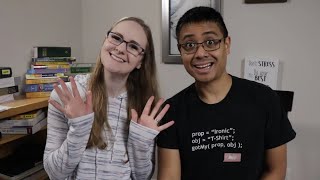
Matthew and Christina Rafano answer nursing school questions live. They recommend the railroad-track method for dosage calculations over traditional formulas, break down their study system for finals, and explain how to learn pharmacology by drug class rather than individual drugs.
Chapters
There we go. Good morning.
We're back.
Good morning. Good morning. There we go. That's all the things. Welcome everyone, to the Nursing school show. It's been a second.
It's been about two weeks to be exact.
Just a second.
We took a break.
We did Thanksgiving. So happy, happy Thanksgiving.
Thanksgiving, everybody.
Happy holidays. It is now Christmas. You can now do all your Christmas things and not feel bad about it.
Merry Christmas. If you didn't see my Instagram reel, I highly recommend checking it out. By the way, our Christmas tree went up in September.
Yeah. But we didn't really tell anyone cuz,
you know, not sure if that was socially acceptable.
Now you can. Until now you can do all the holiday things. So it was funny. In our neighborhood, we were one of three houses with Christmas lights pre Thanksgiving. But now like weeks before now everyone are catching up. They're catching on. So everyone is.
It's good. So funny.
Good morning, everyone.
Do you have your Christmas lights up?
Tell me thumbs up if you do or. I think there's probably like Christmas light emojis or whatever.
Are there Christmas lights emojis?
Show us the Christmas lights.
Emojis are there. So this is fun. Feels good to be back.
It's been a while. Yeah, two weeks. So a lot has happened in two weeks. Oh, friends, a lot has happened.
If you are a nursing SOS member, stay tuned. We've got things coming for you.
A lot has happened.
Next little while.
Yes.
We're not gonna announce it today, but we will tell you.
I don't even know what she's talking about.
So fun.
She'll let me know. I'll let you know. It'll be a thing.
Fun thing.
It'll be a thing. So, nursing school show. What do we do on the show? We ask us anything. Ask Christina. Nursing school related things.
Here we go.
Yes.
If I know the answers.
And I'm sure everyone knows this already because it's been all over the news, but when we were doing our ask me anythings for a while, someone kept popping in and asking when the PS5 is coming out. Well, it's out. By the way, in case you guys didn't realize, it is. It is out for the holidays. It is out. If you're watching, go ahead and you can try and find one. I heard that shorter supply is.
This is not a nursing school question.
Not a nursing school question. But sometimes. Sometimes I ask answer those. Sometimes I answer those non nursing school questions.
I don't know the answers. But I don't know anything about the PS5.
We are here five.
Okay, five. Yes, I know that it's a five.
Hello, Sally.
Good morning everybody.
And hello everyone. So we are here to answer nursing school questions.
Do it.
All the questions that you have had over the past two weeks, nursing school related, that you did not hear from us, go ahead and post them in the comments and we will get to ones that will help everyone. Lots of, lots of people.
Where's Charlotte? So.
Oh, is Charlotte here yet?
I don't know yet.
We'll wait.
But I meant to message you. Charlotte.
Hi Brittany.
Good morning.
We will just jump on into this.
Hi Brittany.
We do have some questions that were asked weeks ago. I keep a nice little catalog of them. So let me see. What should we get started with?
I'll ask one from Instagram.
Wow.
Now we got a lot of questions coming in.
Okay.
When studying dose calc dosage math and you still don't do well, what do you suggest of other routes? Okay, we just got a really good question about this in our membership community too. Hey, by the way, the nursing SS membership community is open.
Oh yeah.
For enrollment.
Oh yeah.
Nursing schoolofsuccess.com forward/join. I want to say that before I forget.
Yes.
Okay, so you can join now. I highly recommend it. So we were just talking about this in our membership community, which is why I mentioned it. Dose calc. When you get a nursing school, you will have dose a dose calc exam right at the beginning of your term. You have to pass it. Like, and passing is like 100% like, you have to get 100% on it or you cannot continue in the program. Can be a lot of pressure. But don't worry, you've got this. You can do it. Promise friend. You can do it. You got it. So that's that then. Those health questions will also show up on your exams as you go through nursing school. And so you really have to know this. Not only that, but giving medications at clinical, you've got to be right 100% of the time. Right? Like, we always want to be correct in the dosage that we get. So that is why it is so important. Now when you are doing dosage calculation, the 1, 3 thing that we really see nursing students getting tripped up on is the formula method. We do not recommend the formula method ever. I know that this is a very hot topic and some people get really mad at me about this. I don't know why, but if you're really attached to the formula method, maybe you'll get really mad at me. I don't recommend the Formula, method. I recommend dimensional analysis. Railroad track method, whatever you want to call it. What other names are there? Railroad tracks.
I think those, those are the main ones that you, that you call it. Yeah. It's dimensional analysis.
Yep. Dimensional analysis. Yes. Your professor taught you? Da. That means dimensional analysis, right? D slash A. I'm assuming that that's what that means. Dimensional analysis. I highly recommend that you know and understand dimensional analysis. That is the only way that I see to do just calculate and get it correct 100% of the time. So if you need help with dimensional analysis, we have a fantastic video series for you up on YouTube. YouTube.com search nursing sos. Dimensional analysis. Nursing sos. What is it? It's going to be dimensional analysis. Something that'll pop up. Dose calc.
Dose calc. Yeah. Playlist. Hey.
Hey. Matthew will post it. I found one the YouTube chat. Brandy, good morning. We are back. So are you. I am so, so excited to have you back.
Yes. Welcome everyone. Thanks for jumping back on with us. This is great.
DA is the way to go. Yes. Everyone's saying yes. I always use dimensional analysis. Yes. Yeah, there you go.
So just quick thing that I, I, I talk about about dimensional analysis and why it works better, quote unquote better than the formula method.
Charlotte, you're here. Hello Charlotte. I was just talking about you earlier. Not nothing. I was just saying that I missed you and I was hoping that you would come today. Hello Charlotte. Good morning.
I always use a dimensional analysis. Yeah. So dimensional analysis versus formula. I think it's kind of a misnomer because it's not really verses. It's just that dimensional analysis will allow you to get to the answer without really understanding or having to memorize all the formulas. It's the same that we talk about with our other nursing school topics that it's really about critical thinking and it's getting beyond just simple memorization and understanding the why behind it so that you can critically think about the answer that's really the basis between the two, the two methodologies. Formula versus dimensional analysis. So formula, you'll just have to memorize all these formulas. Just raw rote memorization, which will work for all the ones that you're able to memorize and keep in your mind while taking a test and know which
one to use when.
Know which one to use when. So it's, it's all just really rote memorization. This is what I use for this and I just plug and play and that works great for some things for dosage calc. It doesn't Work as well, because there are a lot of variations that you'll need to know on the fly and more critically, think about it. So that's why dimensional analysis works better, because all you need are the different pieces, the general idea of how to use dimensional analysis, and then you'll be able to use it critically. Think about any of the questions and then get to the correct answer, even though you don't know exactly the formula. So I think that that's why it's better if you are a nerd like me. If you actually write out the dimensional analysis of a problem and compare that to the formula method, you'll find that the formulas are actually in dimensional analysis, broken up into the railroad or whatever. So it's just a way of you getting to the same place. And it's more dynamic than just rote memorization, right?
Absolutely. And you have to know which formula to use, when and how it works, and you have to memorize all of them. And that's just too much information. The really big issue with the formula method, here's my personal opinion. It works better on the floor in real life than it does on a nursing school exam. On a nursing school exam, your instructors might go crazy with those questions like they might give you. In order to solve it, you might need to use two or three different conversion factors. That does not work with the formula method. With the formula method, you just can only have one and you just plug it in. You know, you just plug it in. But if your instructors give you a question on your dose calc exam, it requires you to use multiple different conversion like conversions. Right? You are not going to be able to put all those into a formula. It's not going to work. So that is why we always recommend dimensional analysis for everything. For dose calc, just for everything in life, always use dimensional analysis for everything you do.
Everything you do. No, I don't think that's quite right. Use the right tool for the right situation. So, yes, for dosage calc, definitely take a look at using dimensional analysis. I posted the playlist for our YouTube videos in YouTube. If you're on Facebook or Instagram, just search Nursing SOS Doscalc in YouTube and that will pop up. Also within our membership community, there's workbooks and things like that too. So just want to throw that out there again. Membership is open this week till Friday, so go ahead and take a look. There is dosage calc stuff. There's a lot of things there. Go ahead and go to nursing schoolofsuccess.com join to learn more. Right, what's up?
Let's see, my friends.
So there's this question that leads to another question. So we'll start with this. How Brittany is asking how to manage finals anxiety. I have trouble sleeping. And related to that, more boots on the ground. Practical things beyond mental mindset. So we talk a lot about mindset, so we'll definitely cover that mindset part. But Amy was also asking what's the best way to break down? Review, breakdown. Review within one week before an exam. So reviewing exams, finals and then how to manage anxiety. Let's hit those up.
Having trouble sleeping. I have trouble sleeping too, because we have an eight month old.
Different reason right there. Different reason.
So studying for finals. I'm gonna go to the nursing school study system and let's find what page is on so I can tell you how to study for final exams. It's on page 55 of the nursing school study system. If you do not have this, I highly recommend getting it. If you are a nursing SOS member, please don't go buy this because it is already inside of the nursing SOS membership community for you.
There you go for free. So memberships open. If you grab the membership, you can go ahead and pick that up or it's available in the membership community community.
Yeah, page 55. All right, so really, I highly recommend. She said what, one week.
One week, yeah. So for the reviewing an exam, it's review within one week.
Review within one week of your final exam. So really the key is to study as early as you can. When, if you want to reduce your stress, if you want to reduce your anxiety, the best strategy is to study as early as possible and to give yourself as much time as you can. And if you only have a week, then we have to work within that time constraint, right? So start studying now, right now, right this minute for your final. And so in the study system, we walk you through a few steps to do this. I also talk about how to study for finals on some YouTube videos if that's helpful for you. So go to YouTube, Nursing SOS Finals or Nursing SOS Final exams. Just go to YouTube and search Nursing SOS Finals or Nursing SOS Final Exams, something like that. So when you are studying for final exams, the key, the key that you are going to want to make sure that you follow is that you a collect all of your notes in one place and then divide them up into many packets, many packets for you to focus on one at a time. So what I did when I was in nursing school, foreign let's say we've got like all these notes, right? We've got all these, like, all my PowerPoint notes, all, you know, leaflet notes, just random pages of notes. And then you will like, binder, clip them together in smaller packets by like subject. So if you studied renal and cardiac this term in med surge, you probably studied a lot more different topics. But let's just simplify it to two, renal and cardiac. Then you would put cardiac in one pile, renal in another. So you binder, clip those notes together and then what you're going to do is you're going to go through your notes one packet at a time. We don't want to do all of them at once. That's not helpful for you. One packet at a time. And highlight all the information that you don't know or can't remember. Highlight all the information. So make sure that you have a highlighter. Highlight all the information that you do not yet know or can't remember. Then you're going to rewrite that onto a blank sheet of paper and then you are going to study that. Answer NCLEX questions, write it out again and again and again. Make flashcards. Teach somebody else. Use all the study strategies that we recommend. Make sure that you are focusing your studying on the things that you do not yet know. Here's where nursing students get stuck. Oftentimes when you are studying for finals or just an exam in general, it's very easy to get distracted with studying the things that you already know. Because it's easy.
I'll say that that's not just related to nursing school students. I think students everywhere, students. That's just a general concept, is that we gravitate towards things that we know and we want to feel good about ourselves. And so we study the things that we know, which makes us feel good. And it's like, oh, yeah, I really know that, but it's not really helpful, right?
It's going to waste your time if you're studying the things that you already know, right? So you do. We want to focus on the things that you don't yet know or can't remember. So make sure to rewrite everything that you highlighted. So remember you're going to highlight everything on in your notes packet that you don't yet know or can't remember. Then you're going to transfer only the things you're going to rewrite the things that you highlighted onto a separate sheet of paper and you are going to study that. Then you're just going to do that again and Again and again. After you've studied it for a while, highlight and then transfer it again, highlight and transfer it again until you know it all. That's exactly how I studied in nursing school for finals. So easy. It's the way to do it to help constrain yourself to focusing the things that you don't yet know. Yep.
Yeah, I like that. If you want a deeper dive in that, it's in the study system, it's in the membership community. But yeah, I think definitely bite sized pieces.
Yes.
Study the things that you do not know. Once you know it, move on so that you can cover everything that you know most, most nursing school exams or especially finals or whatever. Cumulative. So yeah, yeah, people keep talking about, oh, how do I get through all of this information? And how do you eat an elephant? One bite at a time, Is that a saying? I think that's a saying from somewhere. So yes, just bite size elephants, little mini elephants. Yeah. So definitely you for that question. It was within one week, but definitely as early as possible to get going. What were you saying? As early as possible. Two weeks.
I say two weeks. Two weeks, yeah, two weeks. I highly recommend to start studying for a final exams at least two weeks before your exam. Now there was a question on the mindset piece, right?
Yes.
So the mindset, yeah.
How do you, how do you manage finals? Anxiety. I'm having trouble sleeping, so Anxiety, Stress. I'm not prone to anxiety but definitely stress. So I experience that too. But yeah, manage.
So I think a lot of like, you know, we do talk about mindset a lot but a lot of things that can reduce just your stress or anxiety is preparation. Right. And giving yourself time. We get so caught up in this cycle of self sabotage. Right. It's if you are stressed about an upcoming exam and you're stressed, you're anxious about it, are you more likely to study or not? No, we're less likely to study if we're stressed or anxious. And so you put it off and you put it off and you put it off and you put it off because you're feeling stressed about it. Right. So if you have an exam coming up and you're stressed about that exam and you just keep putting off studying, putting off studying, putting off studying, you're just going to get more stressed and anxious. Right. Because you're not studying and now it's only within a few days of the exam and you have all these things to know that's not helpful for you. The most helpful thing to do is know your exams coming and start Studying early, right? Focus your study time. That's really going to help you reduce that stress and anxieties. When you have a plan and can prepare ahead of time.
Yeah, definitely having a plan of action and being able to know what your plan is and knowing what you're doing. A lot of the anxiety or stress comes from the unknown. So, oh, I don't know what's on the test. I don't know how to study, I don't know how to do this. It's, it's all that unknown that builds up. And yeah, we run away from things that we're uncomfortable from so we just ignore it or not study. So definitely having a plan will get you over that hump. Just even though it's uncomfortable, just study anyway. The more you study, the more comfortable you'll get and then the, the stress and anxiety will go down. So yes, preparation is a big thing. I think the other big thing is put a hundred percent of yourself into that studying.
Absolutely.
Put 100% of your time and effort into that. And then be confident that you've put 100% of your time and effort into studying. So that whatever the outcome, you know that you did the best you can and that that's also another weight off your shoulders knowing that you did everything you can, you've tried your best, your, your honest best. And so you can only do your absolute best. But you need to do that, do your absolute best. Because the stress and anxiety comes from also that fact of, oh, I could have done this better or I could have done this differently. But as long as you are confident that you've put everything that you have into it, then leave everything else up to God and that's about it. But you have to put in that work. So I think 100%, I think that's, that's the other thing.
All of that. Anything that we do in life, we have to give 100%. Right? Anything, anything we do.
Story time with Matthew Time.
Story time with Matthew Time. Who's ready for it?
About running away from things because of stress or anxiety. Anxiety. Not really anxiety, but little known fact. I did not get my driver's license until I was 18 years old. Yes, I know, you can laugh at me all you want. I was nervous about driving. That's part of it. Part of it was comfort. I didn't feel the need to drive. All my friends drove and they just drove me around. I felt like I had chauffeurs everywhere.
So in your defense, you were in
a small town, I was in a small Town.
Pretty walkable.
Yes. Well, I never walked. No, you never walked.
You had people drive you everywhere.
Yeah, I just had people drive me. It's cool.
That's hilarious.
But, yeah, so I, I didn't drive until I was 18. Part of that is because of the comfort. So again, I'm more comfortable doing this than going through all the stress of driving. Are you kidding me? And so I just didn't do it until 18. It's like, okay, fine, I'll. I'll learn how to drive and get in. And I want everyone that's driving now, I guess, to think back on when you started driving and how, quote, unquote, stressful that was. Oh, how you couldn't pay attention to the road and listen to radio. Isn't that crazy that, like, listening and then it just, it takes up. Can't do two things at once, take up mental energy. So just think about that. Just the stress of really first time driving and now look at yourself now. And driving comes second nature. Right. So you're no longer stressed about that because you've had practice, you had a plan. You have a plan of attack on that. So it's the same thing when studying hours. Oh, so that says the exact same way with studying. So just kind of think about that and think that, yeah, even though at one point in time it was stressful, you'll get over that hump and then it will become second nature, which is what nursing school is all about. And nursing school tests and things is to get you ready for practicing nursing.
Absolutely. And I love that. I think that it's such a good mental exercise to think back to where you were a year ago, three years ago, five years ago, 10, 20 years ago, 40 years ago, where were you, you know, and what were you thinking? For a lot of us, five years ago, we were saying, oh, life would be so much better when I get into nursing school. Is it better? You tell me. Think back six months ago and you're like, oh, life will be so much better in December when all this goes away. Is it better, my friends? Is it? Here's the thing about life. It doesn't matter what's happening, doesn't matter where you are, doesn't matter what's going on. It doesn't matter, basically, what you're doing. You can be better now. Time or when you get there will not make you happier. That whole thing, I'll be happy when. Right. I will do better. I will be happier when I can drive. I will be happier when I pass my exam. I will Be happier or I will, you know, be more fulfilled or more content or what have you when this happens. When I do this. When I do this. So it's a good practice to think back like 5 years, 3 years, 10 years, where were you and are you really happier now? My guess is no. So why can't you be happy now? Because I bet a lot of you are having the thought, I will be happier when I am a nurse. Licensed, registered, what have you certified? I don't know, depending on what country you're in, if you are a, you know, a nurse, you will be happier when you pass your boards. It's a lie. I want you to be happy now.
Enjoy the journey.
Enjoy the journey.
Journey before destination. That's the book that I'm in, the book I'm reading a lot, so.
Oh, really?
Yes. Yeah.
So yes, I know you're really enjoying it.
Yes, I am really enjoying it. Brandon Sanderson's new book came out. He's super popular. If you guys know what we do in our free time, that's one of the things that I read in my free time.
What do Matthew and Christina do in their free time?
We do not have free time.
Depends on what month it is and how many good Hallmark movies there are.
Yes.
Because lately it's been homework.
Brittany is asking up a follow up question. Different Brittany. So there's a Brittany in Instagram, Brittany on YouTube. Hello, guys, Brittany's follow up question. Is there such a thing as studying too early?
You know? Yes. I mean, would you have been studying for nursing school 10 years ago? No. So I'm gonna say yes, there is such a thing as studying too early. But when you're in nursing school. No, I don't. So I think that you are, by studying for your weekly lecture exams or ATI exams or what have you, you are by default studying for your final exam. Does that make sense? The more that you study throughout your term, the more you're going to have things come together and learn things and, you know, know everything. And then you're going to be more prepared for your final the more you studied throughout the term. But if you didn't study a ton throughout the term, finals, it's gonna be a little harder, Right? I don't think there's such thing as studying too early.
Yeah, I think that that's a healthy way of looking at it is. Nursing school, nursing classes, everything is technically studying. Even you doing clinicals or labs or whatever. It's all to get you better at nursing. So it's all studying So I think that's a, that's a healthier way of looking at it rather than kind of, oh, okay. So I have all my classes and I have to study. Well, it's all studying. Just how much you need to study to get prepped for that on Instagram. Exam prep tip. Get a whiteboard and study as though you are teaching. And practice test questions. Yes, of course.
Yeah. To improve.
Christina loves her whiteboards. Definitely whiteboards are really good for two
big ones over there.
Memorizations. Rote memorization is repetition, writing over and over again. So you could do that all over your walls, but you'll run out of wall space. So whiteboards you can erase. So whiteboards, big whiteboards, flashcards too, for rote memorization. That's really great. And then yes, definitely teaching. Once you get the concepts, teaching to another person or teaching out loud, just getting all your senses involved, listen to yourself. Teaching it to someone else in a way that they understand it will just help you reword things differently. And definitely it will get into your mind a little bit better.
By the way, I love your Instagram. Nurse Boss.
Nurse Boss. Centrals Boss essentials. Jessica on YouTube, you're just asking, you'll. Will you need some prerequisites? Biology lab during this time? I say for any kind of prerequisites, the best place to go is to your school and just ask them.
I don't know if you need to take your lab because like some nursing schools are in person, some are not. You know, it's. It can go either way. Like some schools are. Are like having you go to skills lab one day a week. We've heard of. Some are just fully online. It depends. Talk to your school, ask your instructor. Yep, yep.
So on that methodology, back to whiteboards and flashcards and things like that, Cindy on YouTube was. Was asking just study methods to retain more info. My brain is fried.
Yeah, I, I really think there is definitely a point to where you need to just take a nap. That's something that maybe we don't talk about enough. I definitely have those now. I definitely have that in nursing school. Like there's just some times where you, your brain is fried and you just need to go take a nap. So know the difference. You need to know the difference between you are just too tired, too exhausted to study versus, you know, you are too stressed to study. Does that make sense? Tell me if that makes sense to you or if I need to clarify that more. If you are stressed and not studying, it's very different than you. If you were just exhausted and just need to take a nap. But understand that if you are just stressed, like just, you know, like high level stress or something, that you can push past through that. Like push past that by knowing what you're doing to yourself. Because oftentimes you kind of just need a reset, like, oh, I'm feeling stressed, but if I'm stressed and not studying, I'm just going to get even more stressed and even more stressed and I'm going to self sabotage myself. But if I rein this in and actually study and focus, then I can lessen my stress because I'll be more prepared. Maybe that's the name of the game today. Just make sure that you are prepared. I feel like I keep reiterating.
Yeah, yeah. I think that's kind of a common thing.
Yeah.
Just be prepared.
Be prepared.
Yeah. So definitely the. The idea of your brain is fried. Yeah. Why, why is it something else that we commonly say is just know thyself or know yourself? I keep saying know thyself because of the matrix, which I've seen.
I've seen it. I don't know.
Yeah, just understanding yourself, understanding what you need. Are you just angry? You just need a snickers.
That is a thing now. Like that's. People actually use that word. That's so funny.
Do you, are, are you sleepy? Are you tired? Do you just need a little bit of a break? Or do you just need better study methods? So again, study methods, we were talking about whiteboards. Okay, so there's really two camps, right? Two, two buckets that we put studying in. Studying for rote memorization and studying for. For critical thinking or. Yeah, critical thinking. I think that would probably be.
Yeah, yeah.
So those are the two camps. So for rote memorization, really? Oh, it's what we were talking about. Whiteboards, repetition, flashcards. I keep talking about how Christina went through nursing school and she had mountains and mountains of flashcards because she really likes flashcards. But then she never used them as flashcards, which got me really confused. I was really confused about that because my mind, the whole point of flashcards is to write it down and then you use them later. You look them up. What's this term? What's the definition? I turn around. Oh, good, good, goody me. I got it right. And then put it aside.
Goody me, goody me.
But really, it's really that repetition. So writing it over and over again. Whiteboards, you can erase. Flashcards you can use if you want to use them. A lot of times it's just Writing it down to get it into your brain. So that's rote memorization, whiteboards, flashcards, what we mentioned earlier, teaching other people, rewording things in your own words so that you can kind of understand the nuances there and also explain it to someone that's not in the nursing field. So, yeah, that, that helps. As for critical thinking studying, you want to go into that a little?
Download our cheat sheet. Nursing schoolofsuccess.com forward slash, critical thinking. Matthew can put it in the chat
on YouTube, I suppose.
And that is going to walk you through how to critically think in nursing school. There's nine key critical thinking questions that you're going to want to ask yourself as you study. It's so helpful, friends, I can't even tell you. So helpful. Now, I want to mention first off, because we keep talking about whiteboards, and I just found this the other day. Target now has big, big, big whiteboards. At least the Target in our area. So I'm assuming that you can buy it online or if your Target is open. Target, we always used to say Costco, because that's where we got ours was at Costco, which is great, too. I think they still have them. But Target, I saw them there, too. Target might be more accessible to you. So they're at Target. I have two big, two big whiteboards that. Yeah, just write and rewrite and rewrite and rewrite. That's it. Charlotte, I kept saying all I want is to be accepted into nursing school. I now think, be careful what you wish for. Yeah. So it's so funny that we do that to ourselves. Right. So it's really, really important to look back to see how far you've come, you know, and then when you feel, like, stressed, anxious, the world is ending, everything's wrong and terrible and all these things. I can name 10 dozen times in my life where I felt that same way. And it was fine, you know, Like, I remember thinking back, what now? Probably seven years ago now, thinking, oh, man, it's going to be so great when I'm in nurse. It's not true. You could be happy now. You can be happy in nursing school.
Yeah, that's a. That's the trouble with staking happiness or feelings or whatever on. On distinct goals, because there's always something beyond that. Once you reach the top of that mountain, you'll just find out that there's another mountain beyond that. So it's, it's really. And then you feel kind of deflated because once I get here. So that, that's Something kind of a rabbit hole not to. Not to go down. Right. So it's really. Yes. The journey, the from here to here. What am I going to do to make this experience the best? To get to this point and then keep building on that as well. It's, it's a. It's growth and that's what everyone here is doing, is just growing, growing to become nurses. But a lot of the things that you're doing here will also impact the rest of your lives too. So 100. Just keep growing and keep moving. Keep swimming, as they say.
So funny. Yeah, absolutely. I know, it's so true.
What should you do, Alina? Alina. Sorry, I'm bad with names. What should you do while waiting to be accepted to nursing or to the nursing program?
Dose Calc. I always recommend if you are just starting nursing school, have not taken any nursing school classes yet, Dose Calc. That's where you're going to want to start. Dose Calc. You have to understand dosage calculations. So go to YouTube, type in nursing SOS, dose calc, nursing SOS, dose calc. You will find our whole series on those calculations there. Matthew, I know you've put it in the chat already.
I did put it in the chat.
Put it in the chat again for kicks and giggles also.
Oh, yeah, go ahead.
Okay, that's what I recommend.
Yes, definitely Dose Calc.
Yep.
Now that I'm thinking about it, I was going to say something, but doesn't really apply to you too much. Definitely go to look up that Dose calc course on YouTube for people that are in nursing school. Just want to let you all know, all y', all, all y' all know that the membership community is open this week, so definitely take a look at that. All the dose calc stuff is in there as well as workbooks to study up on Dose Calc and other courses. All our, all our courses are available there. The study system that we have available for sale is also included within the membership community. So definitely take a look at that. We're open till Friday, so all that to say, Alina, depending on when you do start nursing school. We don't want you to join too early into the membership.
Yeah, I recommend like one to two months before you start nursing school. So when you get accepted, make sure to join the nursing SOS membership community about one to two months before you
start your program and then you can go through those Dose Calc. Basically it's enough time to go through those workbooks and feel more confident about dose Calc. But if you're waiting for longer than that. Yeah, don't worry about joining, just keep joining us here. So check out that dose playlist.
For example, if you start nursing school in January, you will want to join now. The Nursing SOS Membership Community Nursing School of success.com forward/join. Nursing School of success.com forward slash join is the link to use to join. It is open now. Super stoked. And nursing house members, we have exciting things coming your way. Stay tuned. It's going to be awesome.
Yes.
Yeah, definitely. Cool.
Yeah.
And like we said, the study system is included for nursing SS members. So members please do not go buy the study system unless you're buying it for a friend, which we have had happen. You are so nice. This is included for you for free inside the Nursing SOS membership community. There you go.
For those just joining, welcome to the Nursing school show.
Hello.
It's been like 2ish weeks since we've been here, so it's been a while. So thank you all for joining.
Hello, we are here. Christina.
Oh yeah, that's Christina, that's Matthew. We are here answering nursing and school related questions.
Yes.
If you have not noticed, if you have noticed, thumbs up.
That's what we're here next.
Are you ready for next one? Yes, we have a couple more.
Let's do it.
We can go through.
Let's do it.
Let's see. Med surge. Okay, what advice do you have to organize yourself For Med Surg 1 or Med Surg and I think specifically maternity looks like. And then on the back end of that, someone mentioned Victoria mentioned that I have to, I may have to Repeat Med surge 1 sad face. So there's something that we can address about retake.
You know, it happens sometimes if you, you know, I very rarely do you see a student who retakes the and then doesn't pass, you know, like the second time, even the third time, some students have to take three times. It's fine. Here's the thing that I most often hear from students. If you have to retake because oftentimes what happens is we inside our nursing membership community, we often get members who have already failed their Med surge and then they join our membership community and then they pass. So that's what often happens. So if you didn't do well in Med Surg, who is this? This was Victoria. Right. Victoria, if you did not do well in Med Surg highly recommend that you check out either the study system or you join our nursing houseless membership community. Because we have all the Med Surg courses in there for you.
We do have maternity in there and
tutoring, so make sure. Yes. Yeah, we have. We have that there. So maternity, med surg, we've got it all. And we have our new tutor form, so you can submit questions. If you ever have any questions as a nursing as well as member, just submit a question and a nurse on our team will answer it within 24 hours. Amazing, right? So we're always here for you. Now with med surg, particularly, I don't want you to think that because you failed before that now you can't pass. That's not the case. What I want you to do is take everything that you learned already and apply it again. You know, it's basically starting again with half the knowledge. Or like, you know, so you need to learn a hundred percent of the stuff in med surg, but now maybe you already know 60% of it already, so you only need to learn 40%. That's it. You know, it's. You're already halfway there. So that's how I would highly recommend thinking about it. Not like, oh, I failed and now I have to start over. No, think of it as, okay, I'm gonna do this again. And I have all this knowledge now already. I know how the class runs. I know how the instructor teaches. I know how they test. I've studied all this already. Then you just go in and you rock it. Right?
You know, I really like that. I'm not sure if we talked about that too much, but yeah, definitely. It's not starting from ground zero. It's not. And even it's not about failing. It's just about learning more and being more confident in that subject. So you'll be the best nurse you can be. I think that that might be just another mindset shift there. Is that. Yeah, we're just refining your skills. You're not starting at zero. You're most of the way there. Just refine your skills and get better and become the best nurse ever.
Absolutely.
I think I like that too. So.
Yep, absolutely. Refine, refine, refine. Yeah, there you go. And then how to organize yourself. Okay, so we have. We'll walk through the study system again because we have a very defined way of taking notes, organizing your notes, and studying. Like the whole study process is what we. We go through in the study system. So if you're having trouble with learning how to study, not sure where to start in med surg or nursing school in general, or just don't know how to get organized, my friend. Please, please get the study system. Nursing school study system. So nursingschoolofsuccess.com study system, it's there for you. This is your step by step guide for how to study in nursing school. Now, if you need more, if you want me, our team, to walk you through, hold your hand through nursing school, teach you more of the in depth content. You know, what you need to know about hypertension, what you need to know about dk, what you need to know about diabetes, you know, heart failure, glomerulonephritis, all those things. Maternity topics, critical care topics. If you need help learning the actual content, the Nursing SOS membership community is where you want to be. So nursingschoolofsuccess.com forward/join for the membership community. So two options for you. If you're just having trouble studying in nursing school, just want a step by step process for how to study, then the nursing school study system is what you want to do. And then if you need more, if you want our team to hold your hand through nursing school and teach you everything you need to know, that's the membership community. There you go.
All right, great.
Yep.
Not really a follow up question, but other question that just popped up on Instagram and it, I guess technically it's a question. It was two words and a question mark, so.
Oh, okay.
Favorite planner, question mark.
Oh, favorite planner.
So what is our favorite planner? And I'll say that the favorite planner that we have is the nursing SOS planner is ours. The nursing school planner that we put
out because we made it.
Yes.
Great.
It's been off our website. I just put it back up. So it is back, friends, it is back up. Nursingschoolofsuccess.com planner if you want to take a look at that. It is a PDF digital download, so you can either keep it on your computer or you can find a place to print it out. So it is a hefty, hefty planner that has a lot of really cool features in it that make planning for nursing specifically, but just planning in general really, really useful. Yeah. So definitely take a look at that and do it. Yeah. NurseSchoolOfSystem.com planner. That is our favorite planner.
Yes.
There you go. Also, if you join the membership, there's an undated planner in there. Or you can, you can take a look at the planner there. There's a special discount for members only.
Yep.
In the membership.
So there you go.
Yes.
You got hearts for that one.
Hooray. I like hearts.
Hearts are awesome.
Ready for another one?
Let's do it.
Jumping into Another pretty hefty topic. Okay, Michelle, I have pharmacology next quarter. Any study tips?
Yes, all the study tips.
Guess where it is.
Guess where the study tips are. By the way, friends, inside the nursing school study tips system where we have on page 22 through 24 of the Nursing school study system, we walk you through how to study pharmacology. Now, the key for studying pharm and learning all your meds is really making sure that you are spending your time efficiently. Which means that you are learning the mechanism of action of the drug class, not for the individual drugs. Here's how this works. When you are learning medications in nursing school, they will be grouped by a pharmacologic class. A lot of them, some of them will not, but a lot of them will be. They will be grouped by a pharmacologic class and every medication within that pharmacologic class will have the same mechanism of action. So it doesn't make sense for you to memorize the mechanism of action of each individual drug in that pharmacologic class. No, that's like learning 11 things when you just need to know 1. Learn the mechanism of action of the pharmacologic class first and then you will automatically know the mechanism of action for all of the medications within that drug class. Does that make sense? Now this can extend to therapeutic class, but it depends. The pharmacologic class is the best way to go. Now we do have a pharmacology cheat sheet for you that walks you through medication classes and how to group them. There is a link for that. What is it? I think we have it for the class. The medication classes. Med cards, I think is that it could be it Medication classes. There it is. Medication classes. Nursingschoolofsuccess.com forward/medication classes. Nursing schoolofsuccess.com forward slash medication classes. That will get you a free cheat sheet that walks you through the, you know, the pharmacologic classes and how medications are grouped inside them. And it'll give you some some nice hacks to know what class is which based on the name of it. So that's pretty cool. So snag that cheat sheet my friends. Nursing schoolofsuccess.com forward/medication classes with an S on the end.
Great.
Yep.
Chioma on YouTube I ask and where I can can I get the PDF? Which PDF are you talking about?
Assuming it's the study system.
Study system. Nursing School of Success.com study system all one word. If you want to take a look at the study system, it's there? Yep. There you go. All right, Lakisha, we were talking about dosage calc, and Lakisha had a follow up on this one. So let me see. I start classes in January for dosage calculation and an amp. And I've been studying now because I'm not great with math. I've been practicing basic math. Any other things you would. Y'. All. Y' all would recommend I should do? If I pass those classes, I shall all start LPN school in May.
Hooray. So, yeah, you know, dose calc is really what you're gonna want to do. Dose calc is where you want to be, and here's why. I mean, the thing about nursing school is you don't know what you don't know. And trying to study all of these things before you start your program may or may not be a waste of time, because we always recommend that you focus your studying on the things that your instructors talk about in class. And if you don't know what that is, then you, by default, you can't study. I don't want you to spend the three months before nursing school studying and reading the entire book when only this amount of information is going to be on the exam. You know, like, it doesn't make sense. Take a break before nursing school. Learn dose calc. That's what you need to focus on. You're doing great.
Yes.
By even asking the question, Lakeisha. By even asking the question tells me that you're going to do fantastic in nursing school.
Yeah. So, yeah, definitely focus on the dose calc. Like you said, not might not be good at math. So, yeah, basic math, definitely. Look at the dimensional analysis is the way we study dimensional analysis pretty much. As long as you know how to set things up. It's just a lot of multiplication.
So easy.
So multiplication, division, that's. That's basically your bread and butter there. So it's fine if you're not not good at math. It doesn't take all that much math, even though it's called med math or just as calc.
Yep.
Could scare you away. Don't let it scare you away. Yeah, Dimensional analysis is the way to go.
Yep. Absolutely. Absolutely. All right, my friends, what's next?
All right, we have a question from Cindy.
Hi, Cindy.
I'm feeling hopeless. I'm in my semester before the last hooray, and I'm at a 75% or 75 not percent 75 average. And I need an 80 to pass with only two exams left.
Okay.
Okay. So it's. So, yeah, it's coming up at the end of the semester before the last and need to bump it up a little bit.
So this goes back to what we were talking about before is that if you feel hopeless, if you feel like you can't pass, if you feel like you can't do it, if you're stressed, if you're overwhelmed, if you're confused, all of those things, what are you going to do? My friends, we are not going to study. If you're feeling hopeless, you're not going to be as efficient. If you're feeling hopeless, you're not going to be as productive. And if you're not as efficient or productive or studying, then you're just going to sabotage your own success on that exam, Right? So you've got to make sure that you are staying focused and you're still studying and not getting trapped in this thought or idea that you cannot pass. Because even if you're toeing that line, right, even if you're on that line, pass, maybe you'll pass. Maybe you're, you won't pass. Even if you're writing that line, you can still pass. Absolutely. Just because you're on that line doesn't mean you're not going to pass nursing school, just means that you got to study like everybody else, right. To pass your next exams. I know you can do it. I know you can do it.
Yeah. So definitely I see this in our membership community too and just out there too that like people do get up, get caught up in the numbers and oh, I need this and I need this. And I think probably for some people it helps. Probably for some people it doesn't help. So knowing yourself and what really motivates you, just make sure that it's. Yes, make sure that it's a motivating part that, that's pushing you to study and find out new things, which it sounds like you are because you're reaching out. So just make sure that it doesn't become a place, a rabbit hole that you just run away like we were talking about earlier. Run away from it and not feel comfortable. So I'm not going to study because that's just not going to help you. Now your follow up question that you just posted up. If I join the membership, how fast can I start with the tutor services? And if I don't pass this semester, can I unenroll in the membership? So the first part for tutoring we have our tutor forms. So as soon as you join the membership, you can ask very ask questions and then our team will answer we ask that you be pretty specific and give as much information as possible in your questions so that we can give you the best guided answers. But, yeah, that would probably be very helpful.
Absolutely.
For everyone. If you join the membership, definitely you can unroll at any time. There's no. There's no lock or anything on that,
so we feel no cancellation fees. Like, there's no. Nothing. Like, you can. You can. You can cancel anytime.
Yeah, yeah. So, yeah, I think that, that that's probably, like I said, reaching out and finding new resources just to get that little bump. Yeah. That. That's definitely someplace that we recommend you start. Absolutely. But, yeah, as far as the mindset, don't let that get you down. You're there. You're really. You're. You're. You're really close to be. To being a nurse. So there you go.
Good.
Anything else on that part?
No, I think that's good. Yeah. No, jump. Jump into the membership community because tutoring is really, really helpful. That tutor form is awesome.
Yeah.
So, so helpful for you.
And we. We respond within 24 hours, Monday through Friday. Yeah.
Yep.
And by we, I mean the nurses. You. You do not want answers from me. I'll just tell you that my answer is not helpful.
Charlotte says the tutoring section is amazing. Highly recommend using it. Charlotte, I know you. You're awesome.
All right, Oella, how to select the best answer when the nurse is assigning a job to a uap? I think you asked that question up above. Sorry, I didn't catch that. Assignment to a CNA or a uap. I only put that down because I know what CNA is. I do not know what a UAP is.
Unlicensed Assisted Assistive Personnel.
That's me. I'm a uap. So I'm an up.
I'm an up. Yeah. So cna, depending on, like, what state you're in or, you know, it could also be. What's the other one? Nac. Nac. Nursing Assisted Certified Nursing Assistant. Certified nac. Nac, yeah. Cna. So it depends on what state you're in. Yeah. So basically, if you are trying to delegate something to anyone else, I'm specifically thinking. Oh, well, can you clarify. Are you an elp? Are you in an LPN program or an RN program? Because it's going to be different. Okay. The difference. The differences between the three. The three, you know, rn, lpn, CNA or ua, whatever you want to call it. Uap, nac. They're very, very different. They're also very, very different, depending on the state. But here's the general thing also, before I get into this, I want to mention that we talked about this two and a half weeks ago when we were here before. So there's one video that we did on this. And actually we should put throw up a video on this because it's such a good topic. But basically what it comes down to is a CNA can do things like bedside care, like what we would call total care, showers, you know, bathing, teeth brushing, toileting a patient, things like that. But a nurse, a registered nurse is the one who is doing patient teaching and patient assessments. Those are the two really big ones. Anything that you need to assess your patient for or anything that you need to teach the patient must come from an rn. So that's kind of the difference. An LPN is kind of in the middle there. An LPN give medications sometimes in some states, CNAs can give medications, but it has to be under the direction of a nurse. LPNs can collect data, but the RNs can interpret that data. So three tiers, like we're talking about three tiers. An RN can interpret data, an LPN can collect data, and then the CNA can again, depends on the state, sometime collect data, you know, like measure urine output. A CNA could do, depending on your state. But for the most part, a CNA will do the patient bedside care, total care, showering, you know, bath, like I said, toileting your patient, things like that. But let's say if you have, for example, if you have a patient who just had a hip surgery, the CNA is not going to be the first person to get that patient out of bed the first time. Time after their surgery. No, no, no. A nurse needs to assess that patient while they are, you know, while they're doing that. So if you get a nursing school exam question that says like, hey, your patient just had surgery, their post op day one and post op day three, whatever, and they're trying to ambulate for the first time after a hip surgery. Are you going to delegate that to a cna? No, that is going to be the nurse, because the nurse needs to assess that patient, see how they're doing after their surgery, Things like that. They're going to be looking for a lot more than a CNA is qualified to look for. A CNA cannot assess a patient. A CNA cannot teach a patient. Those are the, those are the things. Yeah. At our hospital, the physical therapist will assess the patient first. Absolutely. Absolutely. Yep. It depends on, depends on your facility, depends on your state, depends on all the things but that's what you're looking for in a nursing school exam. Question assessments and teaching.
So Ovella added a little bit. So I, from my understanding, just though these one words here is that you are LPN and the test is how you delegate to cnas or uaps.
So that will mostly be that. Total care. It will mostly be total care.
And Charlotte, take care. If you haven't left already, but.
Oh, bye, Charlotte, Take care.
I like what Charlotte said. To make sure it's that basically what you were saying, what's their scope of practice? So each one of those levels. What is their scope of practice? And make sure that you delegate only into that scope of practice.
Exactly. That's exactly what we're saying. The scope of practice is different between those three. So rn, lpn, cna, the scope of practice is going to be very different depending on those three. You need to know the scope of practice for your state for each of those. There you go. Sweet.
Very cool. All right, my friend, that's a wrap for Monday. Welcome back to us. Welcome. Welcome back. Welcome back. We go Lives on month. Go Lives.
Go lives.
Go live Monday, Wednesdays at 9. 00am Pacific. Pacific, yeah.
Which is noon Eastern time.
It. It is.
There you go.
It is. We'll be here on Wednesday. Same time, same place. Yep, all of those things. So come with more questions.
Come as you are.
Come as you are. There you go.
We'll be here on Wednesday.
Take care, everyone.
Bye bye, bye. Oh, where's the end button on Instagram now?
There you go.
Hey, Instagram, you moved my end button.
I don't know.
Cancel.
Yeah, I think.
And what happens if I click this?
All right.
Okay, Instagram. I'm just gonna.










