Nursing School ASK ME ANYTHING!!
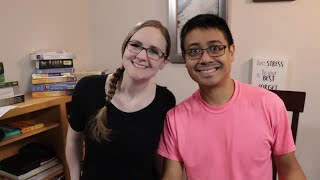
Christina Rafano and Matthew answer nursing school questions from prospective and current students. They recommend joining their Nursing SOS membership 1-2 months before your program starts, and stress active learning habits like talking through skills and teaching others rather than passive studying.
Chapters
Good morning.
Good morning. Happy Monday the 11th of January, 2021.
It's cloudy outside. Change the rain, sunshine.
If you're depending on where you are, let us know where are you and what the weather's like today.
And big news, it's Monday.
Oh, just kidding. Is that the big news?
The Nursing SOS Membership Community is open.
The Nursing SOS Membership Community is open.
Join now.
You can go right now and join@nursingschoolofsuccess.com join. Join.
We'll get you right now.
So we are doing this. We are doing this. Welcome to the Nursing School Show. For those that are joining, Christina, Matthew. We are here to answer nursing school related questions. All of the questions. Go ahead, pop the questions in the comments below. It is a nice Monday to be doing this.
It's cold in Massachusetts.
It's cold in Massachusetts.
Hey, I saw yesterday that Texas got snow.
Texas got snow and hail and all sorts of weathery things. Wow, fun stuff.
I hope everyone's all right. It's probably like shut down the whole state.
Anyone in Texas, how is the weather down there? How is it?
All right, friends, can we do names? Who has joined the nursery?
Let's do names.
SOS Membership Community. Type in your questions. Yes, I'm gonna call out not all the names because there are way too many.
We'll probably do divide them in sections because we opened the Membership Community yesterday. Yesterday? Yes, yesterday we opened up Membership Community. So people have been joining. We will do some shout outs. So welcome to all the new members that are joining us today as well here on our live. We will go ahead and do shout outs and in the meantime, go ahead and post your questions down below and we will get to those.
All right, shout outs, let's go.
They're right there.
Wow, that is a lot of people. Welcome to the Nursing SOS Membership Community. Maria, Tatiana. Colanda. Melissa. Latrice. D. Dane. And Nancy. Janice. Stephanie. Brooke. Diana, Angela. It's funny with like the A's and the E's and the eyes and the L's, especially when an I and an L are close together. You're like, I don't know which one comes or first or. Angela Kellington. Melinda. Amanda. Danielle. Amina. Chanel. Lakena. Nina, Maria. Emily. Nikon. Daniella. Stephanie. Ludell. Tricia. Jessica. Morgan. And we need to scroll. Morgan, Julia. Kathleen. Sanji. Chloe. Gabriella. Joy. Takia. Jenny. Janine. Jenny. Odine. Jennifer. Badeep. Monica. Rethread. Bridget. Latasha. Shoshanda. Vena. Dorinda. Angela. Heather. Philomena. Alexis, Regina. I know there's, like, a lot of E's and A's. Janice, Tara, Renlena, Norma, Stacy, Elizabeth, Terry, Adriana, Misty, Deanna, Jasmine. We need to scroll again.
All right, we'll do.
Okay, should we pause there?
We'll pause right there at.
Okay. Jasmine. I said Jasmine.
There we go. So. So we. Mark. All right. Welcome to all the new members so far that have joined the nursing SOS membership community.
That was the first chunk. We will do another shout out in a few minutes, but let's answer some of your questions.
Yep, we will answer some questions a.
Lot of people answer.
Addie first.
Super stoked.
I'm finishing up my prereqs and I hope to get into a nursing program in the fall of 2021. Do you recommend I sign up for the nursing membership or wait, wait?
Yep, we recommend that you join the nursing SSLS membership community one to two months before you start your nursing program. So if you are in your prereqs now, we can totally help you to try to get ready for nursing school and then kickstart nursing school. Like, you definitely want to join, like, one to two months before you start your program. So that for you, if you start in the fall, depending on when you start, you might start, like, August or you might start September. You know, you'll want to join, like, June or July around there.
All right, There you go, Addie. So not right now. Continue watching us here on YouTube. Go ahead and hit subscribe. Join. That's for everyone, not just Addy.
Subscribe. Hit the bell.
Hit the bell so that you can keep joining us and you can go ahead and keep asking us questions.
Yep.
All right, shall we continue on? I want to do a couple questions about skills, actually, because we. We've had a couple questions coming about skills and doing skills and whatnot. Let me see. What do I want to start with? Okay, let's just start with this. What are some good ways to practice nursing skills while on break? I know that most people are probably coming off of break right now, but good ways, I guess it just doesn't have to be on break. Just what are some good ways to practice nursing skills? I find it. I just finished my first semester, but find it hard to practice skills, especially with all this distance stuff going on.
Yeah, that's a really great question. When we were in nursing school, it was interesting because our nursing school. When I was in nursing school, we had a certain number of hours that we had to practice in the lab and then a certain number of hours that we could practice at home. It was like 15 hours in the lab and five at home or something. Or 10 and 10. I think it was 15 and five. So we did come up with creative ways to practice skills at home. And really it's going to be like, do you have somebody at home who you can practice your assessments on or, you know, a teddy bear or, you know, whoever you can assess. Right. You just have to get the motions down. Like, where do I put my stethoscope? All those things. Like, you know, talk to yourself. What am I listening for? I. I think talking to yourself is a really good tip, actually. Make sure that you're talking it out as you're doing it. Because when you go in for your skills test, like your check off, your skills check off, they're going to want to hear your thought process. And, you know, you have to be talking to your patient, your mannequin. Like talk to them as a real patient. Right. So do that at home. Like, try to mimic it as much as possible. Like, you don't just like when you're talking to a patient. Right. Or when you're. When you're assessing a patient in real life, you're not just gonna be like that silent. So don't be quiet.
So I like that because I think that probably comes a little more natural to you because you are more talkative.
But am I?
Just a little bit. But for me, and again, nurse, not a nurse. I have not gone through nursing school or any of nursing classes, but just knowing myself, I. I would be the stoic, silent type.
Stoic, if silent type, yes. That is a good definition of you. I like that. Good descriptors.
I don't need to. I mean, I'm a very internally internal person too. And I just do everything in my mind. Like, Christina has a hard time sometimes because, like, she asked me a question and like, it's just no output from me until like I'm done processing. So I process everything inside first before I actually say something. And that that's just the way I am. I am more internally but recognizing that for you guys that are going to skills that those not comfortable with talking out loud, that that is something to help the. Your instructors know that you know what you're talking about is talking through things. And also to when you actually talk to patients or whatnot, you need to actually talk to them. And actually talk to them. Yeah, actually talk to them. Which is why I'm not a nurse. Talk to them and talk them through the process. So it helps the rapport. But it also helps the instructor know what you. That you know what you're talking about. So that's one of the big reasons to practice in the first place, so that you can practice. If you're like me and don't like talking at all. It's a way to practice talking. So even if you feel odd, weird, what have you, like, I would. About just talking out loud to your stuffed animal or to no one at all. That's kind of weird to me. But that practice will help in the long run.
Yes, absolutely. Just get comfortable talking if you're not already so funny, because I will ask you a question and then you will process it internally. And while you're processing it, I'm talking through it myself because I don't process in my mind. I process while I'm talking. And so by the time he's done processing with his answer, I'm usually like, oh, I figured it out, because I process while I'm talking. Or I just make it way more confusing for him because I'm processing and he doesn't know what the question actually is. All the stuff. That's what happens. Are you a process talker? A talker process?
Yeah. Do you talk things out or do you do things internally before you.
Yeah. Are you, Are you. Are you more like Christina or more like Matthew?
So again, this is all in regards specifically to skills. How do you practice your skills, especially during this kind of time? And really, it's practice whenever, wherever, however, with whomever. I think that's everything. Yeah. So. So yes. Whether that's your kids or siblings or spouses or stuffed animals or dogs, live animals.
Do you have a dog? You know, you see those, like, pictures on Instagram, people with their stethoscope with their dog. You know, pretty fun.
So. And the main part of that is, yes, to be comfortable with doing your skill, of course, that's. That's primary. But also get comfortable with talking through things.
Absolutely. And your instructors are going to want to know.
Yeah. And your instructors will want to know. So definitely get used to talking. Talking through it.
Yep, absolutely. 100%.
So that's cool. You, you were saying before, when you were in nursing school, which was a little different than it is now, you would talk to random people at the grocery store.
Yes. Or you just like, yeah, I mean, I always talk to random people at.
The grocery store anyway, but I'm always.
Talking to people, so.
But yeah, just find. Find unique ways to. To do it, to practice. So, yes, that's while you were on break or even now While you're practicing, that's. That's what you can do.
Yep, absolutely. 100%.
All right, moving on to more skills related things. What clinical experience did you pursue in undergrad in preparation for nursing school? Did you, did you pursue any clinical experience before nursing school?
So I think we talked about this last week. I was a CNA before.
Yeah. We were talking about whether or not it is beneficial to be a CNA or whether some people, if it's required to be a CNA before going into nursing school. So we were talking about that a little bit last week, I believe.
Yep.
But yeah.
Yep. Yeah, I did have a CNA. Certification, you know, before going to nursing school and I did work as a CNA before going to nursing school, you know, so, yeah, with that, like we always say, that does help to get you used to talking to patients. However, it can hurt you in your exams if you are bringing your past experience to your exam. So be careful with that one.
Everything is by the book in nursing school.
Everything is by the book. Text. Hey, if you're on Facebook, can you leave a comment please? Because I don't know if the comments are coming through. Sometimes on Facebook comments don't come through and we have to pull it up on Matthew's phone, all the things. But everyone's commenting everywhere else. So can you please comment on Facebook and tell us if you if and just say something.
In regards to our kind of previous talk about when to practice and how to practice and being talkative and talking out loud while practicing, I'd say that that is probably one of the things that is beneficial to have clinical experience or CNA before because you actually have rapport or you practice talking with patients before.
Yeah.
So while the knowledge or the actual book knowledge may be a little bit different, the actual rapport and practicing the rapport with your patients does carry over from cna. So there is that as well.
Thank you for posting on Facebook.
There we go.
Good morning. And Vanessa, you say you're a talkative processor. You and me both, my friend.
Yeah, you and me both. So it's actually interesting. I. I would venture to guess. I haven't tested this out myself, but I would venture to guess if you look at our older lives, I probably talk a lot less, I'm guessing.
Oh yeah, that's a good question.
Because I think that this is good practice for me to actually talk and verbalize stuff because I don't usually do.
This, so usually do that.
So yeah, I think that I have gotten more talkative and even our Marriage. As. As we've been married.
I. I would. Yeah.
Needed to talk more because there's someone to talk to.
I would probably say that that's true. Yeah. Yeah, yeah. That's so funny. I never thought about that. There you go. Yeah, we should totally go back and watch that. Yeah. Oh, man, those are exciting original YouTube videos.
Yep.
Yeah.
Aaron, being a CNA kind of hurt my exams. So that's what we were talking about last week is that it could depending on your experiences because yes, you definitely want to focus on the book knowledge things going, going into nursing school and yeah, CNA might have trained your brain a little differently.
Like you said, textbook world. Check your experience at the door.
Yep.
Before you go to your exam or take it from home or whatever. Leave your experience behind.
Yeah.
Yep. There you go.
All right, great. Maria, you retracted your message, but thank you for joining the membership community again. I saw it. I saw you.
So, hey, should we do shout outs again?
Should we do.
Let's do another set of shout outs.
Okay, we'll do another set of shout outs followed by Vanessa's question on help me pass a test to be accepted into the nursery.
Oh, okay. Vanessa, you're out.
Hold on just a sec. Let's do a couple more. Thank you everyone for joining the nursing SOS membership community. It is open right now if you want to join and so excited. Here we go.
Fredrina, Leslie, Kimberly. Welcome. Karen, Andrea, Jessica, Lindsay, Rebecca, Sonia, Celia, Melinda, Amanda, Christy, Angela, Sopa, Katie, Paige. Amanda. Lots of Amanda's. Jill, Lisa, Ashley, Vanessa, Esperanza, Thu. Caitlyn, Lack. Trisha, Senecia, Shelby, Anaris, Brandy, Heather, Tova. Scrolling, scrolling scrolling Liana, Marquita, Mary. Mary and Marie. Tonya, Sarah, Christina. Hey. Olivia, Caroline, Annabelle, Toby, Yolanda, Jennifer, Ally, Erica, Connor, Carla, Jamie, Ashley, Romella, Romel, Kayla, Selah, Marissa, Mama, Danielle, Hina, Tovanka, Jennica, Lisa. T. Oh, here's an I and an L. Is that an I or an L? Alyssa, Comal. Brianna, Marlene.
And we'll stop there for now.
We'll need to scroll. Okay, we'll stop there.
We'll stop there for now.
Welcome to the nursing SOS membership community, my friends.
There we go.
All right.
Welcome everyone.
There we go.
Like doing these guys. Maria. I saw. Sorry your YouTube's acting up. But yes, we are glad that you are back in. Glad to have you back. Also we've depending on when you decided to leave and then come back. We've added a lot more things to the membership community. I think the most recent things for everyone Especially new. Listen up. The Dose calc course is in now. The nursing school study system that we go over on these lives. The nursing school study system is included in the membership. It's its own standalone course. So you can see it right from your dashboard. Also brand new. Well, not brand new, but a little bit of change to Nursing School planner that we have for you guys. We have released that for free to members inside the membership community as well.
Our full planner, just the template planner. The full planner is free for nursing SOS members.
It's its own course too. So Maria, go ahead and check that out. The reason I say that too is that sometimes we have a little bit issues, people leaving and coming back that they don't see the most recent stuff. So be sure to log in and see if you can see the study system course, the planner course and the dose count course.
Yep. So just make sure if there's any tech issues or experience or anything, we're.
Always here for you.
Let us know, email us. We're always here.
We're always around to print or ship. So the study system and the planner are both digital, so they are PDF downloads. We do have some suggestions on printing.
Instructions and they're printing instructions. So yep, yep, yep. Do we still have the private Facebook page? Absolutely. So Maria, when you joined, you should have received an email from us with a link to the Facebook group. Um, and it should also be if you click on the watch this first or the bone it's in Watch this first. So click on when you log into your dashboard, Maria, click on watch this first and there should be a link to the private Facebook group in there. So there you go.
All right.
Yep.
So back to Vanessa and Moonlight and Starry Eyes. Like your, like your name.
Yeah, there's a lot.
You actually had a follow up question for Vanessa, which is great. Vanessa asked, I need help passing the test to be accepted into the program. How I feel twice. How can you help me, please? And then moonlight asked, which test is it? Is it the TEAS Test or the HESI A2? And that's. That's a good follow up question. And do you have.
We don't talk about HESI too very much. Hey, Brandy. Good morning. Day one of semester two today. Yeah, teas test. So yeah, we don't talk about the HESI A2 but you know, we should talk about that. The HUSI tease test. We do not teach the tease test. Inside the Nursing US membership community, there is one resource I recommend for it. Her name is Kate. Over@pre nursingsmarter.com pre nursing smarter.com and she's also on Instagram, so follow her on Instagram at Pre nursing smarter. Okay. Pre nursing smarter. So check her out. Her name is Kate and she helps prep you for the teas.
Great.
So she's a friend. Hey, does anyone hear Matthew's phone buzzing? We have.
Justina found out how loud my phone buzzes.
So loud. Okay, so our house, I will be in trying to get our baby down in our kids's room and his phone will be out on the kitchen table. And I was in that like the past few weeks I've been in the bedroom and I was telling him like, babe did, like, is there something like interference or something? I'm hearing vibrating. I'm hearing a vibrating sound in the kids room while I'm trying to get the baby down. And I'm like, am I going crazy? Like what? I'm. I don't know if I'm hearing things. I don't know if it's interference with the baby monitors or. I thought that there was an extra phone that was left there that we.
Thought our three year old somehow snuck in a phone and was texting his grandparents or whatever.
Texting night. I don't know.
Do kids do that? Do three year olds do that? I don't know.
Did he hide a phone? Like I'm hearing buzzing and so it was just like what two nights ago that I was in the kitchen and his phone buzzed. I'm like, that's it. That's the. That's what it is. And his phone is so loud like it'll be on the kitchen table and it buzzes and you hear it throughout the entire house. It's so weird. My phone is not that loud. That is a very loud.
It's a very loud phone. Very loud phone.
Very loud.
Anyway, Gloria, I will hear if I got accepted to the nursing program this month. Should I wait until I am accepted to sign up for the nursing school program? So when does your program start? If you are accepted? When. When does it start?
Yeah.
Is the key thing.
Yeah, that is the key. When do you start your nursing program? Make sure to join the nursing SOS membership kit community one to two months before you start your nursing program.
And the reason to do that is to study dose calc. We have our dose calc course there. And especially first time nursing students. That's what you focus on first. Sarah, I'm starting my ADN program in less than a month. Anything else I should study besides doses of calc?
Join now. That was Sarah, Right. Are you inside the nursing at social membership community? You've got to join. Now, if you were just starting your nursing program, I cannot tell you, my friend, if you, if you are not, if you are just starting nursing school, this is going to be life for you in nursing school life. So we've got the dose calc course. Before you start, we're going to walk you through step by step, how to get every single dose calc question right on your exam, which you have to do. You have to get 100% on that exam. It's required for nursing schools. You have to get 100%. I'm not just saying that some nursing schools allow you to miss like one or two questions, but the vast majority of schools you have to get 100% and we help you do that. And then, and then we've got our study system, which is probably what you were going to say.
No, I was going to say something else, but you go ahead and continue with that.
So, Sarah, dose calc course, nursing school study system, Download it and print it off. This will walk you through how to study in nursing school. You need this. Absolutely. And then our study success course, which goes along with the study system and the time management course. That's your. That is your plan.
I was going to give a shout out to Brandy. Hello, Brandy.
Yeah.
And hello, day one of semester two today. And you have your doses calc test today. That does not go away.
Yeah. Brandy, did you check it out, the dose calc course? I hope it helps. Yep. Can I take your courses before I even go to nursing school? You depends on when you are starting nursing school. If you are starting nursing school in the next years, few, few months, you can join now and do the dose calc course, the study success course and the time management mastery course. So we walk you through, do scalc. We walk you through how to study and what to expect studying in nursing school and how to manage your time in nursing school. Those are the three courses you're going to want to go through right away. So if you don't start nursing school until like the fall or next year, I just got an email from someone couple days ago who was wondering if they should join. They start nursing School in 2023 and I was like, wait, wait. I mean, you can if you want. Great. Because those three courses, dose calc for sure. Gotta know it. Study success course and the time management course. There you go. Vanessa, you're the best. Prima Bella, welcome. Good morning.
Yes, I just wanted to give a shout out to just Our membership. Oh, no, Membership community. Definitely our membership community too. But just you guys on our lives and just our community in general that you guys are really so uplifting and helpful and we really have, we really pride ourselves in, really an uplifting group of people that we surround ourselves with both on here and in our membership community especially. But definitely Vanessa had a question and Prima Bella and Moonlight, just all you guys are giving really good suggestions.
So thank you very much for that pray model. We miss you too. It's so great to see all of you guys. I feel like we get to know you through this. You know, it's been what this will be seven months now, doing twice, twice a week live AMA. So fun. So fun.
So call sign Camel. Start in 24.
So like 24 hours, 24 months.
2024. If it's 2024. Continue joining us here 24 minutes. Hang out with us until then and then you can join.
So funny.
That's awesome.
Cool. Cool.
All right, let's see. Rabia, had a question for you. Which pharmacology nursing book do you recommend?
Oh, that's a good one. Where is my son? Not like a pharmacology book. Drug guide. Absolutely.
Drug guide is what you need. Davis's drug guide.
I have two editions of this. This is a really old one. I think this is what we used in nursing school. Was this guy. Do I recommend it? I don't know. Did I ever really open it? No, because I figured out a better way to study pharmacology, which is in the pharmacology course and med database inside the nursing house was membership community. So I didn't have to read this whole thing. If you want to. I don't know. That's the one we used. And honestly, to be honest, never really opened it. There you go. Join the pharmacology course inside the Nurse justice membership community.
In addition to that, we do have database. Yeah. So for longtime members, I renamed the pharmacology course just the medication database. So it's a lot clearer for you guys. All the new members, medication database.
You guys, Matthew has made some serious upgrades to the membership community as far as like design and layout and how to find things and navigation. It's so much easier. We added a lot new content. So here's the thing. Like in December we were like, we're going to give our team two weeks off, which we did. Our team had two weeks off for Christmas and, and New Year. And then Matthew behind the scene scenes was getting everything ready. Like two weeks. You never really got Something like that.
Yeah. I just wanted to make sure that everything was ready and good to go. So, yeah, we're, we're always doing things.
In the background, so it's really cool. Like, he made major upgrades. Alicia, sorry to make you repeat. Is there a separate planner tutorial? Separate planner planner tutorial. A planner tutorial, like the planner. Like to purchase planner. We have a. Inside the Nursing Assist membership community. The time management course walks you through how to use that planner. Is that what you're talking about, Alicia?
Oh, there you go. Yeah.
So if you want a deep dive into how to use the nursing school planner as well as possible, like to its ultimate effect, the time management mastery course inside the membership community is where you want to be. Yep, yep, yep.
Very good.
I hope that was helpful.
Let me see. All right, so we started with some skills. I want to do another skills question. And then we'll, we'll, we'll pop forward for some additional questions here. But another skills questions that I had for you, Christina.
Oh, boy.
Let me see. Actually, there's a couple. All right, let's do this one. Just skills in general. Next semester, we will have four patients in clinical. And I still can't get my flow right of what to do first look at meds. First do I do the head to toe, et cetera. Any tips? So what's the flow? How to get into the flow of what to do for clinical and specifically for this person. They're. Their next semester will have up to four patients. So I'm not sure how you start off. You start off, obviously, I think with one. Right. And then you kind of build yourself up. But how do you work into. Or what's the flow of clinical so that you remember to do everything.
This is so good. Nicole and I. Okay, if you guys don't know Nicole, she's our lead nurse in our, you know, on our team. Her and I talk all the time. Like, what would be the most helpful for you? And I was. We were just talking about this. Like, we need to create a. Basically a plan. Like, when you go to clinical, you need to know what to do. This is exactly your question. First, second, third. Like, here is what you do. Can you guys let me know if that would be helpful for you? Because if, if that would be helpful for you, I want to know. And what I probably what we're going to do is we're just going to put in the membership community. It'll be like a, you know, downloadable thing video. I don't know, probably a downloadable thing to walk you guys through what to do at clinical. I think that would be so helpful. So let me know if that would be helpful for you. Basically, there is kind of a flow that you would want to do. I can tell you how I do it. So the first thing that I do working with patients is getting like looking through their chart a little bit. You know, look through their chart a little bit, get a general idea of who they are, why they're there, you know, high level health history, you know, what the main presenting problems are. You know, take a look at medications, labs, some. Sometimes we'll get things from like they, they had some like a procedure or other diagnostic things that I need to know about, you know, things like that. Like what are the, the key things that you need to know about this patient, basically? And then, yeah, meds, definitely, for sure. And then go talk to them. You know, make sure that you eyes and ears on your patient. If you're at a hospital, I highly recommend that you go, if you're getting report from another nurse that you walk through, through the room with them and that you see each patient. That will help you to know, you know, kind of triage, like who do you need to take care of first? You know, things like that. But like prioritize your patients in that way when you can actually see them. So that's kind of how it kind of flows. Like right when you start, get kind of a high level, like, why are there, why are they there? What are the key things I need to know? Which is basically it can be report, right? And then, you know, go to your patients, talk to your patients, then you'll be able to do it that way. And then when you're doing the full assessment, highly recommend that you like bring the medications with you if you are doing any treatments or doing anything. Like when you go in to assess them that first time, bring the things with you. However, huge warning, huge warning. Do not do anything until you assess them. Okay? We do not give a blood pressure medication. We do not give, you know, cardiac meds or anything until you take their blood pressure and their heart rate. You do not give medications until you assess your patient. Got it? Rule number one, I need, I need like a list of rules. I need a list of nursing school rules. That sounds like a great project to do something that sounds so fun. Nursing school rules. Nursing rules. So, okay, there's your tip for the day. Yeah, high level overview of your patient. You know, just get basic health history. Why are they there? You know, go see them so you'll be Able to prioritize them. And then once you've like seen each of your patients or kind of can, can know who you have, you know, prioritize them in that way. Assess. Then you go assess. But bring some things with you that you know that they'll need, like whatever morning meds they have or evening meds or whatever your shift is, you know, if they need a washcloth or a water, whatever they you. Because they will ask you things when you see them the first time. Right. Bring those things with you. All those things. Think ahead. Right. Plan ahead. I hope that helps.
All right, great. Thank you. All right, so we are going to do another round of shout outs to everyone that has joined the nursing SOS membership community. It is open right now for those that want to join. You guys can check it out@nressing schoolofsuccess.com join BAM. For those just joining. By the way, this is a nursing school show. We are answering nursing school questions.
Anything.
So I think what we're going to do is we're going to answer Callan and Amy about patho pharm and fundamentals. Right after doing a little bit of shout outs. So okay, let us do some shout outs and then we'll do that. Where did we. Oh, okay. We're right here. So.
Okay. Welcome to the nursing SOS membership community. Marlene, Marisa. Kristen. Jennifer. Tamara. Patricia. Sierra. Brittany. Catherine. Raquel. Khadijah. Fatisi. Melissa. Angelique. Bike. Bike.
Yep.
All right, there you go.
That was the last round for now.
Last round for now of people that.
Have joined the nursing SOS membership community. Thank you guys for joining.
Amazing. So excited to have. Hooray. All right, yay.
Back to program. Callan and Amy have questions about pointers for specific parts of nursing school. Callan, I'm starting my pathophysiology and pharmacology this week. What are your best pointers for these class? They seem hard. And Amy says, I'm taking farm and fundamentals. I need some tips on how to succeed in class. So the reason why I kind of group them all up because they both mentioned farm.
Yes.
And then Callan mentioned patho, which is part of our four step process for fundamentals and things like that.
Look at you.
I know, right?
I can categorizing things appropriately.
Yep. I can do it.
That's awesome. Yes. So, okay, let's start with pharmacology because who needs help with pharmacology like all of us. Right, so pharmacology, here's what you're gonna do. Pharmacology when you are learning your medications for nursing school, there's one thing you need to do and that is learn the mechanism of action first. You need to learn the mechanism of action first because the mechanism of action is what the medication is doing in the body, what the medication is doing in the body. You need to know that before you can move on and learn the signs and symptoms. That's not right. Side effects, the nursing assessment and the nursing considerations for that medication, those things stem from the mechanism of action. You learn the mechanism of action first and then you will be able to more easily learn and critically think through the side effects, the nursing assessment and the nursing considerations for that medication. Now, huge tip. Huge. If you have the Davis drug Guide. Davis's drug guide. Get this book. Make sure you have the newer version.
It's turquoise, I believe.
I don't know where the other one is.
So we have this one which is.
Two, this is like a couple editions ago.
This was lasted or this was.
Yeah, last year.
Last year's and then this year's is a different color.
Yeah, get the updated one because they add meds, take away meds, all those things. But in, in the Davis's Jarguise, you'll notice regardless of what edition you have in the front portion here, there's a red tabbed section. Red tab section, it says classifications. These are your medication classes, whether therapeutic or pharmacologic. These will walk you through, like bronchodilators there, the mechanism of action for that medication class. And the fancy thing is that there are a lot of medications in each medication class. And if you remember the mechanism of action for the class, then you will automatically know the mechanism of action roughly of all the medications in that class. So let's say there's 10 medications in one drug class. Instead of learning the mechanism of action for every individual medication, like all 10 of them, those are grouped together in one drug class which have a similar mechanism of action. So you can just remember the mechanism of action for the drug class and you automatically know roughly the mechanism of action for all the medications in that drug class. Jaw drop, right? Mike drop. That's how you study pharmacology and save a whole lot of time in the process.
Amy's follow up question for that is, but what are good ways to actually memorize all that info? So we discuss a little bit about. Yeah, memorization techniques. What are some really good memorization techniques? Call sign said flashcards. Definitely flashcards. I haven't told this story for a little bit, so I'm going to Tell it anyway. So Christina and her flashcards. So Christina wrote everything on flashcards.
I did not know this story was going to be about me. I thought it was going to be about you.
No, no. Yeah, just, just your studying techniques and memorization and flashcards and you studied everything using flashcards. And really the key point, point of that is it's really the repetition of it. So to, to really memorize something, it takes time and it takes. Repetition is really what it takes. So however you can repeat it. So Christina had mountains of flashcards of her just writing it down. And I was really confused because I always thought that flashcards, you were supposed to use them but apparently that's not the case. So just the act of writing them down and putting them from your brain onto some piece of paper or whatever repeatedly helps get that information from your short term memory into your long term memory. So whether that's flashcards or whiteboards, we also recommend giant whiteboards or big whiteboards.
Costco whiteboards or Target. They have some at Target. I saw that.
Wherever, like the big ones, big ones. Because again it's repetition. So you write it, erase it, write it, erase it. So it's just a repetition of it. So repeating things over and over again, also repeating things in different ways. So that was one method, writing them down, also teaching them to other people once you understand them well. So you're teaching the right stuff, teaching other people that is also good because it's repetition. You're actually talking. So it's a different kind of medium. So you're hearing yourself. Just all these different ways of repeating that information over and over again is really what gets it out of your short term memory and into your long term memory. So that is really what we recommend for just rote memorization once you have the right information. So what Christina told you about pharm is a good way to kind of pare down how much you actually need to memorize because it's untenable like the amount of medications. But if you can cut down to classifications and get ideas of groups, then you'll have less to memorize. And then also just critically thinking and working on your critical thinking on a drug that is in a class that it's works similarly. So those all work together to help with the amount that you need to memorize. But actual memorization, those are some techniques. Anything else?
Absolutely. I think just knowing what kind of learner you are and making use of that. Like Matthew always says, know thyself matrix.
Yes.
I learned something. So if you are a visual Learner or an auditory learner. Writing things down because you're seeing it. And then if you say it as you're writing or after you write, then that gets the auditory part. Teaching it to someone else is so good for multiple different ways, especially if you're an auditory learner. Teaching it to someone because you can hear yourself talk. Auditory doesn't necessarily mean that you're listening to someone else say it. Auditory means that you're just listening to it. So if you're talking, that's listening, right? Like you listen to yourself talk, hopefully. So talk it out. And then also like teaching it to someone, especially if that person has no concept of nursing at all. That's ideal, right? Because if you can break it down into simple, simple terms that someone else who is not in the medical field can understand, then you're ready for your exam. If you can teach it to somebody else who doesn't know anything about nursing or medicine, that's ideal. Drawing pictures, visual learner. Again, you know, if you like, we were talking earlier about the head to toe assessment on some a spouse, a friend, a teddy bear, a dog. That kinesthetic aspect can help you know. So know yourself. Know yourself.
Awesome. So we did have a question. Robin. I hear you. I see you. So I hear you. I see you. So the last part of this question was tips about patho and fundamentals. But before that, we'll jump over and talk to her. Talk to Robin real quick. Robin asked, I'm going to LPN school. Can the membership community help me with lpn?
Absolutely. Yeah. The thing with the membership community and LPN is that there will be more content in there than what you need. So things like the care plan course, things like our videos on the nursing assessment might not necessarily apply to you in an LPN program. An RN program will need those, but not necessarily in an LPN program. So there is a ton of things in there that you will need in your LPN program, but you might not need everything. So just get in there. But keep in mind that it's going to have more than what you need. So when you get in there, don't get overwhelmed by all the things. Just here's what I recommend for you, Robin. Go to class, listen to your instructors in class and then go to the videos inside the nursing SOS membership community that relate to what you're talking about in class. That way they like you match up, they will match up, but you're not getting distracted by other things inside the membership that you're not learning about. Does that make sense? I hope that helps.
Yeah, yeah.
We have a lot of LPN students in the membership.
I think that's a lot. That's something good to just mention in general to anyone that's joining the nursing SOS membership community that it's really meant to for a supplemental guide to help you through or we walk you through nursing school. So definitely there's a lot of information in there. You focus on the things that you need at that point in time in your nursing school classes that will help you. So if you're in fundamentals, look at fundamentals. If you're doing pharm, we have the medication database. So don't be overwhelmed with all the content in there and don't feel that you have to. Oh, now I have something else that I just need to watch everything because there's a lot in there. Be sure to focus on the things that you need.
Absolutely.
There you go.
Yep.
All right, jumping back over to the last part. For Kellen and Amy, help with fundamentals and pathophysiology.
Yes. So pathophysiology, like we always say, is the basis for everything. Understand pathophysiology, and then you can understand the three other main categories for fundamentals that we always talk about. So there's pathophysiology, then there's signs and symptoms, nursing assessment, and nursing interventions. Four main categories, but it starts with the patho. Once you know the patho, you can move on to the other three. Pathophysiology, signs and symptoms, nursing assessment, and nursing interventions. Those are the only four things that you need to know about in nursing school for everything. Okay. Patho, signs and symptoms, nursing assessment, and nursing interventions. If you know those four things, you will be golden. Now, pathophysiology, we always recommend that you break down pathophysiology. So step by step. I love step by step processes. Our students love step by step processes. Breaking it down step by step is really going to help you understand it. And understand it in, like, a sequence, I think is really, really helpful. There's something about our brains that's, like, wired to. To like, see steps. Right. Like, we want sequential orders to things like this happens and then this, and then this and then this. It's a lot easier to learn things that way. And so that's why inside the nursing association community, that's what we do. We break pathophysiology down for you step by step. We have tons of patho videos inside the membership. Tons. And we always do that. We break it down step by step so that is what I recommend for patho. And then you can move on to the other things for fundamentals, signs and symptoms, nursing assessment and nursing interventions. Now this goes for fluid and electrolytes, this goes for ABGs, this goes for, you know, the high level med surge disorders that you'll learn in fundamentals like stroke, diabetes, possibly DKA maybe, maybe not, depending on your school. Heart failure. I think I said stroke already. Yeah, it was for all those things. So focus on those things. Patho signs and symptoms, nursing assessment and nursing interventions.
And then back to Amy's question about the, about the pharmacology and actually how to memorize. So circling back around there with these four things, this really helps kind of bridge the gap between just rote memorization into critical thinking. So you can rote memorize all the signs and symptoms, nursing assessment and nursing interventions for all the disorders. But that is a lot of information and it doesn't get you to really think outside the box or critically think about specific unique things that you may see with patients. So we really want to get you into the habit of jumping from just rote memorization into critical thinking. And that's where this comes in. So pathophysiology, the step by step process, that's the basis of it. So once you understand that, then you can delve into what critically think, okay, based on pathophysiology, what is the nursing, what are the nursing symptoms? What are the nursing assessments? What are the nursing interventions? It helps pare down what you need to rote memorize and get you into the habit of more critically thinking out from the pathophysiology.
Absolutely. Because when you take a nursing school exam, you are going to get like, for example, they love to give you static questions, select all that apply questions on these things. So you will have a nursing exam that will say, hey, what are the signs and symptoms? Like here's a patient you know with this disorder and here is a list of possible signs and symptoms. Which ones would you most likely see with this patient with this disorder? But if you don't know the pathophysiology of it, you will be able to critically think through that exam question. Right. And if you have a list of signs and symptoms, potential signs and symptoms, but some of them aren't on your list, you don't know which ones to choose. Right. So that's why you have to critically think about it. So that is why we do it that way. It's not going to be helpful for, for you, it is not going to be helpful for you to just memorize a list of things, you've got to critically think. And it starts with the pathophysiology.
There is a certain place for memorization though, like once. Once it gets down to it. And you do have to memorize all those techniques that we talked about on how to memorize.
Yeah, absolutely.
And reason I mentioned that is jumping over to Vanessa's last question. I'm retaking A&P1 and 2 along with medical terminology and I start today. Any tips? So those are classes where memorization will come in handy. And all the techniques that we do, we did talk about for other things for pharmacology, for when you actually have to memorize things. All those techniques work well. When you actually have to just memorize medical terminology and anatomy, physiology.
Absolutely. Especially medical terminology. Yeah. I mean like the bones in the body and stuff. Like you just have to memorize those. Right. There's no real critical thinking to memorizing a list of words and definitions. Like you just have to memorize those things.
So there is definitely a place for having to memorize and. Yeah, repetition, different forms of repetition, different ways of reconstructing that information in different ways and teaching other people. Those are really some of the key ways to. To do that.
Yep.
Yeah.
Do you guys have videos about the cns? Yes. We have a full neuro course inside the membership community. Are you interested in oncology, pediatric nursing? Absolutely not me as a nurse? No. Is math difficult in nursing classes? You have a lot of dose calc in nursing classes. So yeah, we have a dose calc course that walks you through step by step how to answer does questions. I'm scared of pharmacology. Don't be scared of pharmacology. Just get into our pharmacology course inside the nursing associates membership committee and I will help you with it. Tab. Hello. I love your program. So thankful I paid for it. Worth every penny. Yay. Yes, it is. It is awesome. We can't stop talking about it. When I have to start prac. When I have to start practicing. Oh, when do I have to start practicing critical thinking if I am a first year student? Right away. So that was actually.
And Amy had that follow up question. So how exactly do you train yourself to critically think?
So critical thinking has two parts. Planning ahead and then connecting the dots. So like I was talking about earlier with clinical, like planning ahead with what your patients are going to need, that will just come with experience on the clinical floor, you know. So what do you think this patient will need? What do you think is Going to happen. Yeah, I'm not going to talk about my. I don't talk about, like my. My patients or anything. So. No, never mind. Not gonna say that. Planning ahead and connecting the dots. So when you're planning ahead with patients, it just comes with experience and then connecting the dots is a lot of what we are talking about now. And like with med surg, those four main categories, connecting the dots, pathophysiology, signs and symptoms, nursing assessment, and nursing interventions, you've got to connect the dots between those four things. They all link back to the pathophysiology. So that's what we mean by that, connecting the dots. And then connecting the dots between different disorders too. Like you might have a patient who has diabetes and then now is in dka, or, you know, you have a patient with hypertension and then they had a stroke. You know, things like that. Things are interconnected. Disorders are interconnected. So you've got to be able to connect the dots between those things. Now, Amy and T T$, on Instagram, we have a free critical thinking cheat sheet for you that is really going to help you out. So go to nursing schoolofsuccess.com/critical thinking to download that. Nursing school of success.com/critical thinking. I'm sure we do. Yeah.
All right, Amy, I'll go ahead and copy and paste that there for you in.
You put it in the YouTube's Nursing School of Success, success.com forward/critical thinking. Yep, There you go.
You know, I was just. I was just thinking, I'm just gonna spitball and just throw it out there, even though we haven't discussed this, but really critical thinking, the two kind of things to think about is, is what and how so or no, that's not right. Why, why and how. Why something. Yeah, why is something happening and how is it happening? So again, the four main parts, patho and how it leads into the other three sciences, nursing assessment and nursing intervention. So why is the body acting this way? Or why is something happening? Or how. How is it happening? Or how does one thing connect to the other? So it's connecting the dots. But those are kind of the two questions. Why is it happening? Or how is it happening?
Yep, absolutely. And we actually, inside the nursing school study system, we walk you through critical thinking. It starts on page. I think it's page 17 if I remember right. Oh, look at me go. Yep, page 17. Through page 21 of the nursing school study system, we walk you through our critical thinking model. It's called the DRC Critical thinking model. We walk you through how to do that. So if you are a nursing SOS member, this is inside the community for you for free. So check it out. Log into your dashboard. You'll see Nursing school study system. Download it, it's on page 1717 through 21. And then we walk you through those. We have nine key critical thinking questions that you need to ask yourself as you study. So we have that for you. Then we also walk you through the DRC critical thinking model that we created to help you critically think easier in nursing school and learn how to do it faster.
I think the last thing that I want to talk about regarding that topic anyway is also just give yourself grace too, that you're. If you're starting out nursing school or even if you've been in nursing school for a while, critical thinking is something that you practice. It's something that you get better at as you do it more and more, which is kind of the whole point of nursing school anyway. So if you're thinking, oh, this doesn't make any sense or this is too hard or I'm just not connecting the dots as I should, that's okay. Just keep practicing at it and you will get better.
Yep. Absolutely. 100%. 100.
100%.
Yep.
Oh dear. Just said I start. I started three classes this semester for pre nursing courses. I'm also including your guys membership to study in order to better be prepared. So yep.
We help you.
Yes.
Get prepared. Call sign camo. Wow. There are actually some Bible verses in your content. Sweet. You don't see that a lot today. No, you don't. And that makes my heart very sad. Yes. We basically put Bible verses and everything. If you are on our email list, if you are subscribed to emails from us because you've gotten a free cheat sheet or something. We put Bible verses in our emails too. We are here to make your day merry and bright. I'm still in Christmas mode.
Yes, it's still Christmas for a couple more months.
Yep.
Alaia, do we have any thoughts about nursing as pre med?
Oh yeah, we got. We actually just talked about this. Aliyah, were you on. Was it last week? We were talking about like the pathways if you want to be a doctor versus a nurse or an mp. We had that discussion. So NP and nursing are both on the nursing model like the nursing model, whereas doctors on the medical model. There's a lot of different debate out there about which is which, not which is which but like which is best. And it totally depends on you. I wouldn't want to be a doctor. It's just, I, you know, that's not, that's not my jam. But I do like nursing. Like, I think, I think there are some beautiful things about nursing. Not only is it like more interaction with patients, not, not entirely. I mean, there are some, like, I know some doctors that, that really, like, they take so much time with their patients, which is amazing. So it kind of depends on what, what facility you're in and things like that. But by and large, for the most part, nurses spend more time with their patients than doctors do. So just having that relationship with people, being the one who's there all the time, you know, you just develop that rapport. So if that is really important to you to develop that relationship with each individual person, nursing is probably going to be more.
Right.
You know, like, you guys in nursing school, you probably know this. You know that you wanted to be a nurse because you want to show, you know, you want to be the hands and feet of Jesus for all of your patients. You have that compassion. You want to, you know, there is a level of expertise that comes with nursing, obviously. Like, we have to know a lot of things. If you want to take that to another level, then an MD might be, you know, better for you if you. I heard this phrase the other day. It was actually asked on Instagram. I think it was Nurse Liz. She's an np and she had this, this discussion in her stories and she said, if you want to be. I think it was her, don't quote me, but I'm pretty sure if you are interested in NP at all or a DNP program, check out Nurse Liz on Instagram. Super cool. But she was saying if you want to be like more of an expert in the field than maybe an MD would be, because you kind of. You have to know everything about everything, right? If you're a doctor, if you're prescribing medications as an NP or as a doctor, like, you've got to know everything about everything. Where in nursing we have to know a lot about a lot of things, but we don't get necessarily on the chemical level or enzymatic level of. I'll spend six years. How long is medical school? Like six years. It's like nursing school depends for a very long time. Eight plus years.
It depends on eight plus specialties or whatnot. I, I do come from a line.
Of your whole family?
My whole family is in the medical field.
Yeah.
Doctors and nurse. So I said, no, that's.
Wait, who said, does someone send that? Matthew looks like he should be a doctor.
Yeah.
Which is so funny because his whole family is doctors. Yeah. I mean, an MD program takes a long, long time, especially if you're going into. Yeah. Residency, where that's at. If you want other specialties, all those things. And oftentimes, like you have so many patients. As a doctor, the work life balance is not as much as it is for nursing. So if you, you know, there's a lot of pros and cons to each. It depends on you. So if you're a nurse, you know, or if you're, you know, you're in nursing school like you are, you know, you're here because you want to give that compassionate care to your patients. You want to spend more time with your patients. You want to be the best nurse ever, Ever, ever. That's why you're here. I love it.
Lil Ghosty, you retracted your message on YouTube and then put it on Instagram.
That is so funny.
Don't pretend that I can't see it. I can see it. It's right there. But anyway, Is dose calc hard to understand? Will having a hard time understanding math ruin my chances from being a nurse?
Absolutely not. No, no, no, no. Get into our dose Calc course inside the nursing SOS membership community and we will teach you how to do math.
Yeah, it's not. It's not hard math. Just wrapping your brain around, setting it up. As far as the actual math is concerned, it's not that hard. And once you get used to it, it's fine. It's fine. Don't. Don't let be. Don't let that be the block for you thinking that you can't be a nurse. No, no, you can definitely do it. Yeah. We have our dose Cal course in the membership community. Yep. That would help you greatly. Just. Just clean up. Or not clean up, but just get started with that and just understand that better. So definitely not something that.
Yep.
Will hold you back for sure.
Absolutely. Okay, friends, I've got a coaching call.
That's right.
I've got a coaching call. All right, so we've got a jam. Nursing Essence Membership Community is open right now.
It is.
Join now. Today. Right now. Because it's amazing and it's going to help you finish the school. It's going to be lifeline for you in nursing school. So I'm going to go to my coaching call. See you guys on Wednesday for our next live. Ask me anything. If we didn't answer your question today, don't worry, we'll be back on Wednesday. And Matthew. Matthew snags all of the questions, so we go through them.
Alina, be sure to join us again on Wednesday and let us know how your clinical went. I'd say just ask a lot of questions and learn a lot. Just. Yeah, for your. For your clinical.
Yeah, ask questions.
Ask questions.
Ask all the questions.
Ask all questions and just be open to learning and.
Yep. All right, my friends, we'll see you on Wednesday, 9am Pacific. See you later.
Bye.
Bye. Bye, bye, bye.










