NURSING SCHOOL - ASK ME ANYTHING
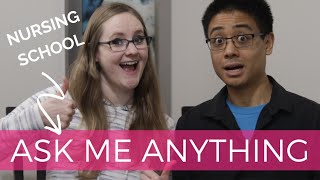
In this live Ask‑Me‑Anything session, nurse educator Christina Rafano and co‑host Matthew field a rapid‑fire series of questions from nursing students. They discuss how to handle online and distance‑learning test disputes by communicating proactively with instructors, using email or phone, and leveraging school‑provided dispute forms. They stress a proactive mindset, introducing oneself to instructors early, maintaining consistent communication, and showing empathy during the pandemic‑driven shift to online classes. For Med‑Surg 2, they advise focusing on pathophysiology, linking organ systems, and using critical‑thinking playlists and cheat‑sheets. They highlight the centrality of dosage‑calculation mastery for all terms, recommending early practice and high‑stakes exams. Study strategies include using syllabi, connecting lecture topics to textbook sections, forming study groups via Facebook or Remind, and accessing Nursing SOS membership resources (critical‑thinking videos, medication databases, HESI/ATI prep). They also cover mental‑health course tips (compare‑contrast charts, flashcards), TEAS preparation resources, and share personal background stories that shape their teaching philosophy. The session ends with housekeeping notes about upcoming live events, a week‑long break for the team, and encouragement to join the wait‑list for the Nursing SOS community.
Chapters
Live.
Yay.
We're on.
Welcome, everyone. You're live Wednesday. Ask me anything.
Hello.
Hello. Christina. Matthew.
Hi, I'm Matthew.
We are. And YouTube looks really close.
Yeah, it's a little closer this time. Did you want me to. Yeah, maybe, like, back it up a little bit.
Back it up.
Okay.
Back it up, friends. Back it up. Because then I'm gonna be like, here, like, getting into my Instagram. I'm still not sure.
I'm still not 100% sure about the sound.
That's way better. Can you Hear us on YouTube?
I was having problems, which does not.
Help, because if you can't hear me on YouTube, then, you know, you wouldn't be able to respond.
Okay, well, it looks like it should be working.
Well, we had some issues on Monday.
Oh, there we go. Yeah, we had issues.
Hello, everybody. Welcome to our Wednesday Ask me anything. I'm Christina.
Hi.
That's Matthew.
I'm Matthew. Welcome.
I am a nurse here to help you figure out how to pass nursing school without stress and overwhelm. Because that's what we do here.
Yes.
Okay. Yes. I was Emily on YouTube. That said. Yeah, we're good.
I think we are good.
Saidiya Leah. I like that name. That's nice. Okay, so leave your questions in the chat, please, friends, and we will answer as many as we can. We do have kind of a backlog of questions.
We do, we do. So we should just jump right into it.
Let's get right into it because we have a busy questions day today. Post your questions in the chat if you want us to answer them, and then we're gonna roll through.
All right, let's just look real quick. Okay. So no one posted in YouTube before.
No.
But we did have some questions from previous lives that we'd like to address.
Yep.
For you. So first one, thank you for touching over testing materials. Just a quick question on that. With online and distance education, how does that work with tests online and being able to review the tests afterwards? How do you get to talk to your professors? Or how do you go about disputing a particular question if you don't agree with. With the answer? Especially over distance? How do you go about doing that? Let's see.
Yeah, that's like a paragraph question.
Yeah. Yeah. So is there anything you suggest? Don't. Also kind of how to deal with the higher ups in school and not wanting to rock the boat or go against a higher authority?
We get that question a lot.
Yeah.
Yeah, we get that question a lot. Which tells me that, like, man, is there a lot of drama in nursing school. There should not be that much drama in nursing school. So. Okay, if I understand that question.
Yeah.
The question is asking how to dispute test questions?
Yeah, online. How to dispute test questions. Because as a distance ed or online classes, you don't have as much communication with everyone. So if you take an online test and there's no communication and then there's disputes, how do you go about disputing questions or even just one of your common things, going over your test with your professors, how do you go about.
Going over your exam?
Yeah.
Okay. So online, it's going to be just slightly different, but not too different. I think the biggest block that we're coming up against is the mindset part. Thinking that online classes and learning nursing school online is completely different than what we've ever done before. That is not the case. Keep in mind, friends, that nursing schools have been online this entire time while the rest of the world was in class. Like, there are nursing schools that have been online already. And it's. So it is possible. Now, the issue comes when you mix instructors who don't know how to be online to students who don't know how to be online. That can be a little messy, which is what we're seeing. Right. So I don't want you to think automatically my class is online. Obviously it's going to be hard. Obviously I'm not going to be able to pass my exams. Obviously I'm going to fail. That is not the case. So don't think that way. So not very helpful for you. Right. So if you need to talk with your instructor or dispute a test question or something like that, email them. Like, we can still talk to people even though we have to stay home, Right? Like, you can still talk to people, right? I'm talking to you right now. We can still talk to people. So you can talk to them during your online classes. However, your online classes are set up a lot of schools, what they're doing is putting PowerPoints with audio recordings of their instructor going over those PowerPoints. You're doing discussion forums, you have maybe some online zoom classes, all good places to ask questions, email your instructor consistently. Now, we talk a lot about being proactive, especially in the nursing SOS membership community. If you are a nursing SOS member and you've gone through our study success course particularly, and our time management mastery course, those two courses, if you've gone through them inside the nursing SOS membership community, you've heard me say this again and again. We have to be proactive. When you start A new term in nursing school. Introduce yourself to your instructor. Make yourself known. Do you remember what I did the first week of nursing school?
That was a long time ago, so no, I do not remember. Please, please remind me.
So with every single person in the class, I memorized everyone's name.
Oh, yeah, that's right.
Everyone's name in my nursing school class in one week. And I. So I knew everyone. I knew all the instructors. I knew all the people, all my peers, everyone. So helpful. You have to be proactive if you want to communicate to your instructors that you care and you are dedicated to past nursing, to passing nursing school and becoming an amazing nurse, which you are because you're here, right? You have to be proactive. Don't just wait until the day before your final exam or the day before your exam to talk to them. Be proactive. They want to see that you care and the way that you can show them that and prove that you are dedicated and actually care. What you're doing in nursing school is to communicate with them constantly, consistently. Not just when things come up, you know, not just when you don't know what to do or something happens. Communicate with them. Like, ask them how they are. You know, ask your instructors. Has anyone ever thought of this? Ask your instructors how they're doing, moving to online. Everyone's so worried about themselves. What is your instructor going to think if you email them and ask them how they feel about all this? Like, they're gonna feel pretty good. Like that's gonna make them feel pretty good. Like you care, right? So, you know, I don't want to get on my soapbox or anything here. Feel like I'm. I've stepped up on my soapbox. I don't want to go too far, but you guys just have to. Consistent communication. I'll just go leave it at that.
Yeah.
Did I answer the question or did I get sidecast?
No, I think that that is true. Consistent communication. Increasing touch points, just. Yeah, I think the biggest thing is just being aware that everyone's going through this. It is different for some people, like you said. Again, though, there have been schools that have already been distanced, so they're kind of used to that. So it's just a different way of doing it. And yet increasing touch points. So you feel comfortable asking questions, disputing things. Hey, I noticed this. I think you mentioned last. Last live. Be sure to mention facts about it. Back up, Back up your disputes things very clearly. Be respectful. They are your teachers and they're going through it too.
So, yeah, no one's really used to this online environment. Like, we're all doing this together. We've heard that a lot. Like, everyone keeps saying, we're all in this together. We're all in this together. But what does that mean? Let's talk about for a second what that means. That means that you are not the only one suffering. That means that when you talk to someone else online, they're going through the exact same thing you are. So it's very, very important that you are kind to them, that you are nice to them. It does not, you know, it doesn't mean that you're the only one holed up in your house and can't go outside. You know, we are. When we say, and I feel like, because I've heard this phrase so much like, we're all in this together, what does that mean? Well, that means that you're not the only one. So we have to be kind and compassionate to everyone else that we talk to because we understand where they're coming from. You know, we understand what they're going through right now. We're all doing this together. So we really have to come at it with a sense of compassion and grace. So when your schools move online, just be mindful that you are not the only student that's moving online. All of your peers are, too. Your instructors are too. Your schools have no idea how to handle this. It's kind of this odd expectation, I feel like, that we've put on nursing schools to be able to pivot so quickly. You know, the world suddenly changed, and all of a sudden all these nursing students are. Yeah. Kind of left hanging. But here's what I don't like to see. I don't like to see nursing students left hanging and then getting angry at your school. That's not helpful. Right. What's helpful is if maybe you talk to your school and say, hey, what if we could do it this way? That would be more helpful than, you know, yelling at them. Right. You know, we're all going through this together. So I think that's what, you know, we mean when we say that we're all in this together. We're all doing, you know, we're all going through this together. Now, I do want to specifically address the dispute thing, because I did miss that. If you have a test question that you don't agree with, was worded odd, you think is wrong, or like, you know, the wrong answer, what have you. It kind of goes back, you know, email your instructor. When I was in school, we had little Forms that we could fill out to submit. So we actually didn't even have to talk to our instructor. They had little forms that we could submit to dispute test questions, which is kind of funny. It's really proactive on their part, just, like, anticipating that that would happen. So, you know, it might be. That might be an idea to address to your school, maybe at the end of your exams. Maybe there's just like a little box that they could put online where you could just like, submit comments or something, you know, so bring that up to your school. They might be willing to do that.
So, quick question. Did you ever dispute a question?
I did.
You did? Yeah. And what was that process like? And kind of, what was the outcome? Or did they shut you down? Or did they say, okay, yeah, that. That makes sense. Or what. What did that look like?
That's a really great question. So for me, guys, if you have seen any of our videos on test taking, I talk about this a lot, and I don't know if you remember, but this is why I say this. If you think that a test question doesn't have as much information as you need to answer the question, you are most likely wrong. And I say that because I have disputed test questions thinking, like, oh, they are so wrong. That is worded totally incorrect. I don't have enough information to answer that question. And I was wrong. So that's what I say, that. Which is so funny because, yes, I have disputed test questions. I have been, you know, in nursing school exams, taking tests and be like, wait a second. Like, they didn't. They didn't fully write out this question. Like, there's not enough information here for me to answer.
Right.
Like, we've all been there. Right. You're most likely wrong. Just saying. Because they've done this. They've done this a lot.
Unless, like, it ends, like, mid sentence and, like, it just clearly cuts off.
Right, right.
Most. More than likely they're giving you enough information. Right?
Yeah, we just don't.
Okay.
Yeah, yeah. That's exactly what I'm saying. Oh, that's so funny.
So they did kind of shut you down or say.
Well, not shut me down. No, because we. The process for my school was we submitted the form and then the instructors would review it and look it over. So you guys know me. I mean, what I tell you when I tell you to talk to your instructors constantly. I only tell you that because I did constantly. Every single exam. Every single exam. I walked into their office every single exam. So it wasn't like I submitted this form and then waited for them to contact me because I don't know if they would have. Honestly, it was like I submitted that form and I went and talked to them. It's like, hang on a second, wait a minute. And there is like that instructor, student relationship. That's like a, you know, I think it should be like that kind of hierarchy. Like, they know more than you. Friends, like, let's respect them and their tests. However, I was friends with them. Like we went to coffee with our instructors. Like we went out to eat with them. You know, like, we're just friends. So be nice to people. That's going to be the theme of the day. Be nice. Be nice to your instructors. Be nice to people out there in the world. Always. Not just now, always.
And then just to wrap up this one, just that last, last part. Not wanting to go against higher ups and going against, questioning their authority. I think you're not really questioning the authority. Like I said, it's being respectful and really just come at it with wanting to learn more. Okay, what did I not understand about this question? Why did I get this wrong? Just help me understand. It's not questioning their authority or being outright mean and saying, oh, you should give me this point back or whatever. Just, just say, okay, I'm here to learn.
Can you walk me through this? Yeah. What did I miss? Things like, so listen to this guy right here.
Solid advice and just a continuing theme throughout all our AMAs and just nursing SOS in general and nursing and life in general. Yeah, it's all about the mindset. So how do you come at it? What is your mindset going in and that will affect how you're asking and what you're. What you're actually saying.
It will affect the outcome for sure.
Yep. All right, awesome. Great. Onward and upward.
Sweet.
Next question. I'm in Med Surg 2. Any tips on that? Especially with understanding the heart?
Okay, so when I Hear Med Surg 2, I. Nursing schools do it different ways, but what I think of is like the more in depth, critical thinking stuff. So when, if you take, when you take your advanced med search classes, oftentimes it is. You're bringing concepts together. Cardiac. How does the cardiac system integrate with and you know, not communicate, but how, how does it. How is it intertwined with the respiratory system? So cardiac, respiratory, cardiac, renal, respiratory, renal, you know, even renal gi. How do all these systems come together and work together? The neurological system. How does the neuro system affect the heart? How does the neurosystem affect everything in the body. You know, that is what I think of when I think advanced med surgery, med surg 2. How do all these concepts come together? So a couple of things. The first one is you absolutely have to understand first what is going on with each body system and with each disorder, which is the pathophysiology. You have to understand the pathophysiology what is happening and then you can understand the signs and symptoms of that disorder. The nursing assessment, what do you need to assess for in the nursing interventions? What do you need to do? You have to understand those four key areas for each disorder before you can start to tie them all together. Does that make sense? Right. We can't like say, oh, I don't know how the heart connects to the lungs because I don't know what's happening with the heart and lungs. Right. You can't connect the two together unless you know what's happening with them. So separately, have to know the basics. Then you go into the pathophysiology and then you go into like tying it all together. So that is what I hear when I think about that now. Matthew, do we have the link to the critical thinking?
Oh, critical thinking, Yes.
I don't know.
I don't think we do.
So there's a critical thinking playlist. Let's link to that on YouTube. We will post in the chat Matthew will post in the chat the critical thinking playlist playlist that we have that walks you through how to critically think in nursing school. And if you are on Instagram, what do I want you to do? I want you to go to YouTube. If you are on Instagram, go to YouTube and type in Nursing SOS Critical Thinking. And those videos will pop up when you watch those videos. There is also a critical thinking cheat sheet that goes along with that. You've got to got to download and as nine critical thinking questions to help walk you through this process of critically thinking, figuring out how things connect together, connecting the dots between concepts, that sort of thing. So that's what I. That's what I think of. That's what I hear when I see med search too.
Actually a little bit of tangent, but to get to that critical thinking checklist, the video that we just posted yesterday.
Oh, okay.
Has, has a link in the description. So we just posted a YouTube video yesterday. So. So if you go to our YouTube site, YouTube channel, and then the latest video that we posted, not our lives, but the one latest one we posted in the description, there's the checklist there as well.
Perfect. So that's how you find it, by the way, friends, guess what just happened today? One million views on YouTube. Wow. I'm clapping, you guys.
I don't usually clap, but I'm clapping. All right. One million views.
Is this the golf clap? What is that? Is this like the golf lap? Is this the. This is the. The Hogwarts one, right?
Oh, yes.
Yeah. They were like this. This. Yes. Okay.
That's awesome.
One million views on YouTube. Thank you, friends. With you guys sharing this stuff out to your friends, you know, it's in. It's. It blows my mind how much of an impact we can have on the world through this medium. You, you know, like, coming here on YouTube, helping you guys out through nursing school, like, this is what we're here to do. I'm so excited. So I'm so glad that we're able to help you guys every single week. Show up for you constantly. Look at all those hearts on Instagram, you guys.
Thanks, guys for joining.
Thank you.
Leave a comment if you guys are liking these AMAs.
Yeah, I really like them.
So. Yeah.
Yeah. I almost don't even care what anybody else thinks because I really enjoy them and I want to keep doing them. So if you guys like the AMAs, okay, we will. I will still like to hear from you. That's fine. They'll do it anyway. If someone's like, no, stop, Christina, get off the Internet.
You'll just keep doing it.
I will keep doing it just to spite you. That's my personality.
So let's see. I did see. Who is this? Joe. Joe Centric. Yeah, I'm actually kind of new at Instagram.
I don't know how to use Instagram.
Yes, definitely those comments there, we can see them. So if you have any questions, go.
Ahead and post them in in Instagram. And our comments on here. For other people viewing the video or the people doing the video, it's for both. You know, everyone can see it. Everyone can see it.
Welcome. Thanks for joining.
Don't say anything too personal because your comments are public. Yes, exactly. Sweet.
All right, so really quick back to the first comment or the first question about being distant and contacting people and disputing or asking about test questions or whatever. Just really quick question that someone had on Instagram that I didn't grab. So just one minute answer or whatever. Do you prefer emailing or phone calling?
Oh, for instructors, this is great. Depends on your instructor. You know, if your instructor prefers email, do it by email. If they prefer phone call, do it by phone call. Honestly, I had every okay, so here's what happens when you are friends with your instructors. Here's what happens when they trust you. Here's what happens when you are constantly in their office asking them how they are not asking for stuff. Being a friend and asking them how they are, seeing how you can help, things like that. I got their numbers.
There you go.
I have my instructor. I still have my instructor's phone numbers and I still text them. Because that's just being a good person. Come on, just be good people. Just be a good person and you'll get your instructor's phone numbers. Come on. Can I get an amen?
Awesome.
Sometimes you won't. Like, sometimes they're like, you know, private or whatever, you know, but. But for the most part, like, just be a good person and ask them for their phone number.
Barbara, thanks for joining and yes, the Dumbledore class.
Perfect.
I never read the books, just watch your movies. So there you go. Did you want to check real quick if there's any questions on Instagram?
Yeah, I do. There's a gazillion.
Are they all right?
Why don't you grab one of them? We need to do like three hour amas, I guess. I. Okay. My first semester and everything is virtual. Having a hard time getting the concepts when we are live, fall when we aren't live. Falling short on mics. Sam, I hope I. Okay. No life study guides, kids at home. Okay. So I hope that helped with like how to communicate with your instructors. I hope that kind of helped with that question. We also have a full. Matthew, do we put it on the thing? If we have, we have a full playlist on how to pass online classes and Matthew will post that on YouTube. But if you're on Instagram, go to YouTube search nursing sos online or nursing sos online classes, what have you. And it should pop up. I have a whole playlist to help help you with transitioning to online. Sorry about the request. I don't know what I'm doing. Yeah, you know what? We've never done that where we like bring people on Instagram. But I thought that would be kind of fun sometimes.
Maybe try that.
Maybe we will try that at some point or other when we are not live on YouTube because like YouTube people, you wouldn't be able to see who is on Instagram. I had a rough summer one semester. Oh, I'm sorry, Hollywood. But it will get better. It will only met three of my classmates because of COVID That's okay. Like you guys have discussion boards and things. Like there's Always, always a way. Private Facebook groups. Guess who started the private Facebook group for her class in nursing school. Be proactive, you guys. I should do a YouTube video on this. I really should, because there are so many ways. There are so many things that I did in nursing school that allowed me to succeed. Not only like test taking wise or strategy wise, that are just things that no one else does. Like starting a Facebook group. Starting a group. Meet someone actually on Instagram. What'd you say? You said you. I connect with my instructors every day of the week. Okay, wait, let me scroll down. Because someone said there was an app. Can you comment again? Oh, Remind app. What is that? My school uses the remind app. Can you tell me what that is? I don't know what that is. Is it kind of like a group me? Because group me is like the. The group text message thing. So get like a group me going. Even if you've never met other students in your class due to all this stuff happening in the world, you know, just get. Get their phone numbers. You get them on a group me app, get them in a private Facebook group and talk to them, you know. Awesome. How did you prepare for the exit exam, Kizzy? Five weeks left. So it depends on what your exit exam is. Mine was the hesi because my school used the HESI program. So if you need tips on HESI and ATI, go to YouTube. Nursing SOS ATI or Nursing SOS HESI. It should pop up. It actually says ATI, but the advice works for HUSI too. HESI was my program. So in order to prepare for my exit exam, the HUSI exit exam, I went through all the online slides, did all the practice questions that I possibly could, and there were still questions on the exam that just were out of left field. And guess what? When I got to the nclex, there were still questions that were out of left field that I was like, no, not even now. Don't even know. Still passed. Still best. So we can do our best to prepare for those HESI and the ATI exams. We can do our best. The thing is, is that they are what I like to call wild cards. They are, you know, people. You're not going to be able to study everything that's on there because they can throw anything at you. It prepares you for the NCLEX in that way, which is a very, very positive thing. So if you are passing your ATI and your HUS exams, most likely you will pass the nclex. So don't put too much pressure on yourself. But yeah, that's. That's really. Do the online slides. If you've got the ATI books, focus on reading the sections that you talk about in class and then practice questions. Read the rationales. Yep. All right, so 180 questions. You can do it. Comprehensive ATI. You've got this friend. The NCLEX is 265. How. How long is it now?
Yeah, you said it. Shorter.
Like half, I think. I believe it's like half.
Not bad.
So depending on, you know, if you're taking the NCLEX nowadays, that's pretty great because it's. The time is shorter and the test is shorter. So my. My HESI exam, I think it was longer than that. It had to have been like, the full 265, the exit exam, if I remember right, because I was there for, like, hours and hours and hours and hours and hours.
Isn't that one of those tests that, like, depending on how you're doing, it keeps going. Or is that the actual nclex?
That's the actual nclex. The HESI exit when I took it. This was years ago. I don't think it did that. I don't think it was dynamic in that way. I could be wrong. Don't quote me on that. But I remember being there for hours and hours and hours, and I'm pretty sure it didn't because I would not have been there for hours. Hours.
All right, so for those just joining or have been here a while anyway. Christina.
Hello, Matthew.
We're in the middle of doing our ama.
Yep. Yeah, we've got a lot of people.
Like, ask me anything.
Ask me anything.
I'm usually asking you questions since if you guys ask me, you might get some really weird answers. So don't. Yeah, just take that with a grain of salt. Y. But let's do some quick, quick, fascinating questions.
Okay, let's do it.
So just straight answers.
Do it.
All right.
Is that your nice way of saying, christina, don't go off track. Stop talking so much?
That. And there's just been some kind of random questions that I want answered because I don't know either. And they're just pretty quick questions. And then we'll go through.
I don't know.
Can I. Can I still ask it?
No.
No.
Oh.
Oh.
Okay. We have little hands opening our door over here. Okay, Hang on a second.
All right. Oh. All right.
Do you want to answer these questions for, like, 10 minutes?
Can I answer these questions, Matthew, to.
Do the AMA by himself for, like, five minutes? That sounds fun. I'll Be right back.
All right, sounds good. Well, we will try this. Hopefully you guys still hang on. Yeah, I guess the next question that I'll answer is when is the membership opening again? And as you mentioned, or as we've mentioned, the nursing SOS membership community is closed right now. It does only open a few times a year. We do that for a specific reason because we do want to focus on our members and focus on. Focus on giving them content. We are releasing things actively and working on things behind the scenes. So we want to make sure that all our efforts, not just on launches, because it does take a lot to launch every time. So we do launch only a couple times a year. It is currently closed. I cannot actually say the next time it is opening, but what I can do for you is there is a wait list that you can join and let me go ahead and pop that link in the description for YouTube. Go ahead and copy. Sorry, Instagram, I have no way of actually doing that for you guys. But it's just nursingsos.com and then once you go in there, it's join or nursingschoolofsuccess.com join and then that will allow you to open up the Join the wait list. And as soon as we open up, you guys will be the first ones to know. You'll be. You'll be notified a little bit before it actually opens to the public just so that you guys get the heads up. So be sure to join the waitlist and stay on there because while we do not open a lot, we are going to be opening a handful of times before the end of the year. So be sure to get on that wait list because. Because we are going to be opening. I just can't really determine really when right now. So hopefully that helps. I think actually that goes along with another question that we have here. Do you have videos on certain topics, hemodynamic shock or any advice? Those specific topics are actually in the membership community where Christina really spoke, focuses on certain disorders and things like that and goes through everything you need to know in the membership community. So I know because I'm actually the one that does the editing of the YouTube videos and on the membership community videos. So I try and learn a little bit. A lot goes in one ear and out the other. I am editing them, but I do know for sure that there are shock videos in the membership community. That was actually kind of interesting learning about it while editing it. So I know enough maybe to make me a little dangerous, but probably nothing that I should say out loud here. Because I don't want to put my foot in my mouth. So that being the case, again, just join, go ahead and join the wait list. And inside the membership community we do have a lot more courses of in depth things about disorders. Usually on our YouTube we do put some of that out there. But more of the detailed heavy hitting material is in the membership community. So that was really quick. What degree do you need to be a nurse administrator? I have no idea. I am sorry about that. That was actually one of the questions I was going to ask Christina. So when she comes back, you guys remind me and I will ask her again what that is. Along with this other question which I really want to know the answer to. She mentioned it to me as she was leaving. Why is orange gelatin considered a clear liquid? Sounds kind of weird to me. Orange gelatin considered clear liquid. But apparently I guess it is. I don't know. I'm not sure if Christina knows either. That one. That does sound really good though now that you mention it. Because orange, if you guys aren't aware, my favorite color, orange gelatin sounds kind.
Of good right now.
So anyway, let's pop back over to. Oh, Barbara, because you can see through it. So maybe clear doesn't mean actually clear, just that it is see through or partially see throughable. So there we go. Thank you guys. Let me go back over to my notes. Hey, I'm sinking here. Please come back.
Sinking.
Welcome back.
We just hashtag mod life.
There we go.
Gotta feed a baby.
Good job. There is something.
I know that that's good.
You do know the answer to that. We were just talking about that. Oh yeah, we were just talking about that because I mentioned that orange is my favorite color. Barbara helped me out. Thank you, Barbara.
Yes, perfect.
Why is gelatin considered a clear liquid? She said probably because it's a little bit of see through.
Yep. See through. I just got coffee all over myself. Well, it's better than spit up because that could have very possibly very much had the possibility of happening just then. Thank you guys so much for sticking around with Matt.
Thank you for saying. I appreciate that. That was my first time going solo. So if you guys did not like that at all, comment below.
Whatever.
All right.
Awesome.
So next question here you have mentioned in the past what to focus when reading.
Oh, does that mean. Sorry to cut you off. I'm sorry, that was rude. But someone said now 1:30. Does that mean the NCLEX is now 130?
I don't know.
130 questions. Can someone tell us how many questions. The NCLEX is right now. Because I honestly don't know. Okay, I'm gonna wave at people on Instagram. Hi, Instagram.
So you've mentioned the past. Focus on reading only the sections of the book that correlate with what your professors teach. We had a question on more detailed understanding on how to do that. They took that to mean that you just take notes on the first and last sentence of each paragraph. Don't think that that's what you meant, but can you kind of expand on what you do there? I don't exactly know what sentences to focus on.
Well, so that's the thing. Like, I can't tell you what sentences to focus on either. I just can tell you to focus on the sentences that your professors talk about in class. It is 1:30. The NCLEX is 130 questions. So literally more cut in half if I'm doing my math right. More than half. That's insane. Take the nclex right now. You guys, go do it right now. Go do it right now. Okay, so focus on reading the sections of the book that your professors talk about in class. That is the most important thing to do because what they think is the most important is what's most likely to show up on the exam. And, you know, they either wrote the exam or they know what's on the exam. So what they teach in classes. Yeah, you've heard me say this a million times. What they teach in class is most likely to show up on your exams. Right. It follows that that is true. So that was true for me. This true for you. So that's why we say that is when you take notes in class, go home, read the sections of the book that you that focus on what you talked about in class. Now you're going to read random sentences because there will be random sentences in a section that you talked about in class. So here's what I would do and here's what I did do in nursing school. I'm not going to get a book. So look at your notes. Figure out what topics you talked about. Like, let's say you talked about the electrical system of the heart and you know how that relates to things. Electrical system of the heart. Then you go to your med search textbook and you look up the electrical system of the heart. Cardiac conduction. That is the section you would want to read. So does it have to match exactly what you. What, like everything that your instructor said in class and everything that the book says, does it have to match? No, that's not the point. The point is that cardiac conduction might show up on your exam, likely to show up on your exam in some way, shape or form because your instructor talked about it. So you're going to go to your book, you're going to read that section of the book because it's going to have a little bit more information, a little more context that you might need to know for your exam. Does that make sense? Someone please tell me if that makes sense.
I think that's great.
Sweet.
All right, winner. I did talk while you were away about the SOS Membership community.
Oh, okay, great.
We only opened a certain number of times and there was just a follow up question on that.
Yeah, we've gotten lots of questions about that this morning. I've seen a lot on Instagram. When are we going to open again? You talked about that.
I did talk about that. That we only opened a couple times and so it's closed right now. But to get on the wait list and we have a handful of people starting in August. And so a follow up question that is, what do you recommend they start studying before starting classes in August?
What do I recommend you start studying before you start classes? Now, was this question totally beginner or was this question already done nursing school before?
Nope, Total beginner before I start.
Okay, I have two pieces of advice and they apply to two different people. If you are brand new, here's what I want you to do. And don't worry if you're not brand new but still starting a new term. I have good advice for you too. So if you are brand new, never done nursing school before. Total newbie. Do not read your fundamentals book. Do not try to read your fundamentals book is a waste of time. Wait until you get to school. You will be amazed at how much it's like drinking from a fire. Fire hose, right? You're going to be amazed at how much you learn in just this span of two weeks in nursing school. Here's what I want you to focus on. Dosage calc. You have to know dose calc. Say it with me. I have to know dose calc.
I have to know dose.
I have to know dose calc. Everyone needs to know dose calc. If you are in nursing school, you have to know dose calc. Now, don't come to me, do not email me and say, Christina California, you don't know what I'm going through. I have to get 90% on my dose cop exam. And I will email you right back and say, welcome to the world. So does everyone else. Some Schools have to get 100%. So here's the thing with that. Nursing schools have to make sure that you are going to give medication safely when you graduate. The best way to do that, the best way that they can test you on that is dose calculator. The end. So every single term in nursing school. I can't say every single term. For my school, it was five out of the six terms. Five of them. Like all of them.
That's pretty much all of them.
That's pretty much.
Pretty much all of them.
So I'm going to complain for a second. Yeah, pretty much every single term. You might have a dose calc exam and you have to get at least 90 or at least 100% on it. At least, least 100%. You have to get at least 100%. Guys.
If you get over 100%, good job. Whoa.
Excel right there. So, you know, make sure that you understand those calc before you go in, because you do not want to have to learn no SCALC the first two weeks of the term when you have to do everything else. Learn it first, then go to nursing school, do all the other things, dose calc. Now, if you are just, if you are, have been in nursing school already, you kind of know what's going on. You kind of have a feel for how it goes and you know how nursing school is. What I want you to do is get your syllabus, if possible, the calendar, whatever, for your upcoming term, and then you can start studying. If you do not have access to those things, here's what I want you to do. Find someone who is an upperclassman at your school. Track them down, find them and ask them questions. What did you have to study the first week of the term? What did you have to say the first two weeks of the term? What is the first exam on? What papers do you have to write? What are the topics for those papers that you have to write? Here's another tip for you. You know what I did before I started nursing school, friends, why does nobody do this? I don't understand. When I say track people down, I know there's a select few out there who are like, but wait, Christina, my classes are online and I cannot track people down. Do you know how easy the Internet is these days? Do you know how easy it is to find people? Find people, man ask you. Do you remember what I did? I remember what he did. Before I started nursing school, I went on the all nurses for forum and I found people, you guys. I found people who went to my School. And I messaged them, do it. Do it. I messaged them to get, like, insider knowledge, make friends. You guys make friends. The end.
All right, that's all.
I got those.
Just joining. Welcome to our ama.
I'm Christina.
Christina's just getting off her soapbox.
I am just getting off. I'm just getting. Christina, I need to breathe for a second. Hi, Matthew Soapbox.
Welcome for join. Thank. Welcome for joining. Thank you for joining. Welcome for joining.
You're welcome.
All right.
Hey, guys, by the way, thank you for helping us get to 1 million views on YouTube. I can't even process. That's pretty insane. Thank you. That's amazing.
All righty.
So fun that we can help so many nursing students. Students.
Let's see here. So I answered this guy while alone, so.
Oh, good job. You did a thing.
I did do a thing.
Nice. Wait, which one did you answer?
This one.
You answered a question about hemodynamics and shots.
That's right. I know all about them, guys. All about it.
Nice. Wow.
All right, so let's see. All right, quick question before we dive into heavy hanging questions. So just.
Okay.
I'm curious. What would you have been if you were not a nurse?
What would I have been if I was not a nurse?
Yes.
Yeah. So nursing was actually my third college degree, and I never wanted to do nursing because your. My parents always said that I should be a nurse. And what do you do when you're 18 and your parents say you should do something? You don't do it. That was me. So I didn't.
Yeah, you learned.
I was going to school for psychology. I wanted to be a psychologist. What did I want? Was there, like a specialty there? I don't even remember. I don't even remember.
You want to get your PhD.
I wanted to get my PhD and become a psychologist, you know, so I went to nursing school instead. No, I actually did that. I. Well, I didn't do the PhD part. I got a bachelor's degree in chemical dependency and psychology. So I have like two. I do. Okay. I have like three, four. I have four college degrees. I have a lot of college degrees. I had. So I went to undergrad for psychology and that. That chemical dependency track, whatever. I don't even know what it's called. Addiction studies, something like that. And then I went to nursing school because I did not want to move for graduate school. And. Well, I mean, there was that. And during all that time, I actually. So here's kind of my story. I had to drop out of college the first time like, undergrad, I dropped out because I physically could not stand up, physically could not go to school. So I had been passing out my entire life since I was nine years old. First time I passed out that I remember was I was 9 and all up until I was 19. So a decade later, I was in my undergrad. I was 18 years old. Had to drop out of college because I physically could not get out of bed. Like, I physically could not get up. You know, I would be. You know, I would be walking, I would pass out. I would, you know, be in the shower, I would pass out. I would be, you know, I would get out of bed, I would pass out. I could not stand up by myself and be confident that I would not fall on my face. So I did not. I dropped out of college and, like, took a. Took a semester off or whatever. How that works. I don't remember something like that. And I don't think that's technically dropping out. Is that technically dropping out?
No, it's taking a break.
Taking a. Took a break from college. Got my health stuff together. I was diagnosed with vasovagal syncope, which is basically a big fancy term for. They have no idea what's wrong with anybody's guess. There's not an official diagnosis. It is something in the lines of dysautonomia, or pots. If you have heard postural orthostatic tachycardia syndrome. Pots. Something along the lines of that, but we're not entirely sure why. So basically what happened is I got a pacemaker. I have a cardiac pacemaker. So anytime. Because what was happening when my blood pressure would drop, so when I would stand up. Right. Anytime, like, you go from sitting to standing, your blood pressure drops slightly. What your heart is supposed to do is compensate for it. Your heart rate is supposed to increase to compensate for that decrease in blood pressure. That's just normal hemodynamics. However, my heart has its own little mind, and it stops. So instead of my heart rate increasing when my blood pressure drops, my heart says, meh, I'm out of here. And it stops. Stops. It literally stops beating. So I did what they call a tilt table test. They literally strapped me to a table, laid me down, and I didn't even actually lay me down. I was. I was the fastest fainter they had ever had. So they literally shot me the table and worked, like, kind of tilting me down, and I was. I was out. I was. I was passed out because I just couldn't stand up for that long, even for that long to have Me. Them strap me to the table. Then thankfully came back and got. Got my pacemaker put in. So that was fun conversation to have with the doctor and my mom. You know, could you imagine sitting in a clinic with your mom and the doctor saying, hey, by the way, your daughter's heart has been stopping for the past decade. You're very fortunate that she's alive. My mom's, like, bawling her eyes out, and I'm trying to, you know, I'm like, mom, I'm here, okay? Like, I'm like, God has a plan. It's okay. I'm here. And so that was fun. That was the moment I wanted to be a nurse. And then I ended up in the hospital again. I've been in the hospital a lot. I ended up in the hospital again. And there was a. A. I'm. It's not good. So there. There was ambulance coming in. I think it was a bicyclist who had been hit by a car and super trauma patient, obviously. And so the whole time we were there, they were working on that bicyclist. And then the doctor came out right in front of my room after, like, he was alive. The doctor came out, whole team of nurses around him, and said, that patient is alive because of you. And that is the moment that I decided to become a nurse. That right there was like, I can change the world, and you can too. So that's my story. There you go. Didn't mean to go super long. That's my story. If you did not know I was a patient before I became a nurse. Okay, so I come at it with that mindset perspective. Okay, what do we got?
Okay, so jumping lightning round. Yeah. Jumping to the other end of nursing school.
Okay.
Did you ever. Did you ever feel ready when you graduated nursing school?
Nope, still don't feel ready. You'll never feel ready. Do it before you're ready. Graduate nursing school before you're ready. I don't think you have a choice in that. But do things before you're ready. Friends. I just did a tutoring call yesterday on for our nursing SOS members. I'm like, trying to find words to. Morning. Just did a tutoring call for our nursing associates members yesterday, saying that when you are at clinical, like, anytime you do anything, basically, I want you to be the first one to raise your hand, like, say, I'm here. I can do it. Like, no matter if you're scared to do it, you've never done it before, you're nervous, whatever, do it anyway. Like, do it. Scared we were talking about the other day, do it scared. Take chances. Do it well. Not like chance. Like, don't push crazy IV med. Like, don't take a chance like that. Like, be smart. Be smart. I feel like I have to have a disclaimer there, but, you know, you guys, like, be confident in yourself. Do things, you know, raise your hand, say, yes, I want to put in that iv, you know, Yes, I want to help with that chest tube.
It's that uncomfortable feeling that shows us that we're growing. So do it scared. And. Yeah. Will you ever feel ready? No. I think as long as you're growing, that's. That's positive. If you feel like I know everything and there is nothing more I can learn, I am ready than you are a teenager and you actually really don't know anything.
I love that you're a teenager. Oh, man, that's good.
Thank you.
Very deep for a Wednesday. That is quite profound.
So. Yeah.
So true.
Not gonna feel ready, but that's okay. You're always learning.
Always. Say, if you come to me, if you email our team, you email us and you say, christina, I feel so confident at clinical. I will tell you, I do not want to be your patient. You should be scared. I want you to have, like, that cautious anxiety. Not like full fledged anxiety. But I just want you to be careful. Right. I'm your patient.
Yeah, be careful.
I'm a patient. I was a patient before I was a nurse. So I come at it with that perspective. Please be slightly scared at clinical that you're gonna hurt somebody actually, so you'll be cautious.
Tangent. Story time.
Story time.
Story time with Matthew time.
Story time with Matthew time. That's right. I love that. Let's make that a thing. Okay, hold up a chair, everybody.
Let's do it. So I come from a family of doctors, so this story comes from the medical field and doctors specifically, but I'm sure it applies to nurses and a lot of other fields as well. But for doctors specifically, the story that I heard is that actually, if you look at statistics, who make the best doctors. And actually it's not the people that are at the top of their class. It's not the A students, it's not even necessarily the B students. It's the people at the lower end, Cs and Ds that are scraping by, that are studying, that are working hard to get through and really understand the material. They actually do make the best doctors because they understand the difficulty of it and the fact that they should be careful. They should be Cautious, but they're going to still try anyway, and they're still going to move forward and try hard and do their best. Being the best doctor, being the best nurse out there.
It's a bedside manner.
Yes. Right.
So, yeah, for sure. You got a lot of hearts for that. Matthew Time. Story time. Story time with Matthew Time. Hashtag storytime with Matthew Time. Yeah, you can't pass nursing school with a D, but, you know, C plus, maybe B minus, depending on what school you are. But you don't have to get straight A's to pass nursing school. Did you know that, like, I got straight A's and I can teach you the best practices to make that happen. However, you do not have to make that happen if it stresses you out too much. Passing is passing, friends. Passing is passing.
All right.
Yep.
So anyway, we're trying to answer as many questions as we can, but, you.
Guys, there's a lot of stuff going on.
Unfortunately, we cannot answer all. All the questions. Cannot.
Did you guys know that our toddler does not use contractions? So he literally changes them? When I say, like, oh, you can't do it, he says, I cannot.
I cannot do it.
You are so pretentious. Please, like, just don't be weird, man. Don't be weird.
We're doing. We're doing our best to answer as.
Many as we can and answering the.
Questions that would be the most beneficial to the people that are on. So appreciate you guys joining us. We are probably coming up on the.
End, but I'm going to join.
Okay.
Okay.
You answer one more question. Two more questions.
Tease test. I want to talk about the teas test because we got that the other day.
All right.
When you are. A lot of our audience is not studying for the teas because you're already in nursing school. The teas test. Some schools require it. Before you start nursing school, I. I recommend that you chat with my girl Kate over at Pre Nursing Smarter. Can you actually put that on YouTube? Can you type in? Her name's Kate K A T E. And it's at, like, the. Like Instagram. Like Instagram on Instagram. Go at Pre Nursing Smarter. Pre Nursing Smarter. Smarter.
Smarting. Smarter.
Smarting. Pre Nursing Smarter. Yep, that's her. So perfect.
All right.
No way. Your grace abounds. Ever since you mentioned Brooke Castillo, listening to our podcast has helped with inner work so much. I'm so happy. That just made my day. Okay, if you guys do not know who Brooke Castillo is, I don't even know what you're doing with your life. She is my life coach. Go find her podcast. It's called the Life Coach School. It will literally change your. Change your life. That I just. That I'm gonna leave it at that. While listening to you. And nursing SOS has helped so much with the nurse related stuff. Perfect. I'm so glad. Seriously. Brooke Castillo, the Life Coach School. Go check her out. Life Coach School podcast. I'm in their scholars program. It's life. It's life. It's all right.
All right, so that was that one.
I'm gonna.
Is there another one that you want to do?
Yeah, down here. Any good tips for what to expect in mental health and second semester? That was from a while ago. That was from a while ago. Man. We're behind on questions. Sorry, you guys. There's like so much happening, you know, there's a lot of questions coming. YouTube and Instagram. Okay, so you answer that question. I have to take adult. Oh, yeah. I have to take adult one in the fall and mental health in my second semester. Any good tips on what to expect? So mental health, we get a lot of questions on mental health. Mental health will primarily be a lot of medications. And when you study for mental health, make sure that you do compare and contrast boards. That is what really, really helped me. I got two big whiteboards we were there that I used in nursing school especially for. Especially for mental health, infectious diseases with pediatrics, things like that. Anything that you really have to compare and contrast because a lot of the mental health disorders have a lot of similarities, but some very stark differences. So you have to be able to like, look and see what the similarities are, what the differences. Differences. That's a word, you know. So do compare. Contrast charts, flashcards will help too. Anything that you just have to memorize that will help. So. So mental health, a lot of his medications. If you are a nursing SOS member, we are releasing a full medication database for you. So we'll have the psych medications in there for you. So you don't have to study your meds out of a textbook and be like, Christina, I don't know what to focus on with these medications. Well, of course you don't because you're a nursing school. So let me just tell you what you need to focus on. Let me do it for you. So. But pretty much, did you guys know that all the videos inside our membership community take us an average of 10, 10 hours to create, like from research, transcript, you know, recording, editing, all the things we really like. It's our job. Like, we put it on ourselves. To take all the information that's out that, like, your instructors are teaching you. Parent down, like what the books teach you and stuff. Pare it down to what you actually have to know. Like, that's our job. So let us, let us do that. You just watch the videos. All is well and right with the world. Right. So that's how we do it. So if you're a nursing outsource member, you have all the med search videos that we have in there, fundamentals videos, ob, like all the things. And then pharmacology meds database that we're. We're releasing now. So that's how we do that. Yeah. Pretty cool.
All right, well, I think we are coming up on the end here. So just a couple housekeeping.
Oh, yes, housekeeping things.
Housekeeping.
House cleanup rules. House cleaning rules.
We have a toddler. So we have house cleaning rules. No housekeeping. Thanks for joining. Sorry we couldn't get to all the questions. Our next live will be in is not next Monday. It will be the Monday after that. We're taking next week off from videos.
Yeah. So our team, we're giving our team a week off. I want to really give them a week off in July and a week off in December because those are kind of the slower months for nursing students. So I want to give our team a break because we work so hard throughout the year. So we're taking a week off next week. So for. So that's the last week of July and then we will be back with you on Monday. I think it's the third Monday. The third. And if you go to my nursingschoolofsuccess.com forward slash events, if you go to nursing school of success.com forward slash events, I have the calendar there for you for when the live calls will be. So AMAs and tutoring calls, if you're a member, those are on the calendar. So I'm gonna like, keep updating that. I think it goes out like the next three weeks or so. Then I'll update it as we go. But next week we will not be here. We will not be here for these AMAs next week, Monday or Wednesday. And we will not have a YouTube video next week. On Tuesday, we are taking a full week off of videos, including membership. We're not doing a tutoring call next week. So let's all take a break, friends.
All right.
So take a break before the fall.
We will schedule the next live, though. Yes, YouTube. So anyone that we didn't get your questions answered to to make sure that we can answer them or at least address them next time in two weeks time. Go ahead and go to that scheduled live. It will be scheduled probably sometime today and you can put your questions in there even before the live so we can get to those.
Yes.
All right.
I think that is love you guys. We'll see you in a couple of weeks.
All right.
Yeah. Nursingschoolofsyspas. Com Events welcome for being here.
Bye. Bye.










