Nursing School - ASK ME ANYTHING
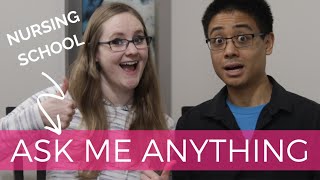
Christina Rafano and Matthew cover how to know you're ready for nursing exams, what to do after you take one, and study tactics that actually work. They recommend a readiness checklist, meeting with instructors to review answers, and quizzing yourself by writing questions in your instructor's style. Teaching concepts in plain language to a peer is one of the strongest ways to lock in understanding.
Chapters
See if it works. It says going live because it's working. Hello, YouTube land.
There we go.
Christina here with Matthew.
Hello.
This is a test, but I think we're good. Hello, friends. So we are doing a Monday morning ask me anything, because that sounds fun. We are live on Both Instagram and YouTube.
First time, so.
So this is an exciting process. I'm gonna scroll through Instagram. Welcome, all our friends. You guys are the best. Like, when we go live on Instagram, it's like, boom. Everyone's, like, on it this morning. So if you guys have questions, post in the comments on Instagram or YouTube. I was just telling all our friends over on Instagram that you need to learn the moa, the mechanism of action, when you were learning pharmacology. That is the number one thing you have to know. Know with pharmacology. Like, I don't understand. I don't understand how you can learn pharmacology and not know the mechanism of action of your medications. Friends, seriously, if you are spending a thousand hours, which I'm sure you are, if you are not learning the mechanism of action first, learn the mechanism of action first. So you're not spending a thousand hours when you are studying pharmacology. The mechanism of action shows you. It tells you what is going on with the medication in the body. What is the drug doing inside the body? You have to know that first because that is what's going to drive the side effects of the medication. The nursing assessment that you'll do for. And the interventions. Right? Okay. Good morning, Instagram. I'm in nursing school and having issues with APGAR scores. Can you explain this? So the APGAR score is basically like the baby. Baby newborn assessment. And actually, friends, I have a whole. If you go onto YouTube, type in the search bar. Nursing SOS, Apgar. We have a whole video on it. It's a whole breakdown. So fun. When both of our. Our children were born, I was like asking the nurse, someone, hey, what was. What was the Zapgar score? What was the score? And I think our first was a nine. Nine out of and out of ten.
Out of ten.
And our second was a eight.
Yeah. Okay, so nine was better. First one won the first one. Is it a. Is it a contest?
A plus if it's a contest. 80%, 90%. Oh, my gosh. Yeah. So those APGAR scores, it just. It just tells us how well a baby is doing when it's entered the world. How wonderful it's taken at both one minute and then at five minutes, just so we know we can kind of see how the babies are doing. I think our second was an 8 because he was slightly gray.
Slightly gray.
He was not. He was not as a little smurf looking. A little smurf looking more than our first. Yeah. My baby was nine out of ten as well. Yay. A's all around. Oh, man. If we're grading our children, that's how we do it. All right, let's look at YouTube.
Yep, YouTube. We have definitely some people coming in.
So how do I study A and P?
And, guys, can you also let us know if you can hear us? Okay.
Oh, yeah.
Make sure on. On YouTube. It's the first time doing it, so click. Glad you guys could join us.
Sounds fun.
And I've been dragged into this too, so if you want to see more of me, I guess I'll be doing more of these.
This is Matthew. Say hi, Matthew.
Hi.
See you got lots of waves. I love it. Oh, hearing clear. Perfect. Thank you, Denise. All right, so studying A and P. I'm gonna answer this because it also came up in our membership community. We actually got this question a lot this past. Past weekend or this past week. So A and P is kind of different than nursing school, your core nursing school programs, because it's like the foundational piece. It's really a lot of memorization. You guys, like, amp I consider to be more memorization. At least it was for me. It was more memorization. Like, do you remember? Seriously, like, how big was my stack of flashcards?
Yeah, you. You. I think that. I'm not sure if that's just you, but you like flashcards, so I'm not
sure I find them very helpful.
I'm not sure if that's normal, but we had mountains of flashcards.
A good word. Yeah. And they were everywhere.
Yeah.
I think I want to find that picture because I took a picture after I finished nursing school. I think it was after I finished nursing school, everything. And I had just like this. I mean, it was just a. A gazillion. A bazillion flashcards.
Yeah.
I just. So that's how I study for amp. And actually whiteboards are. Oh, I have two big whiteboards over here.
Over there. But still use them also. Just kind of Another thing that was interesting, too. You use flashcards a lot, but a lot of times you'd actually didn't. You. You definitely went through it, but a lot of times you actually didn't because it's actually just the. The act of writing it down constantly and just keeping on writing. It down that you. You kind of committed it to memory. So it's not really that you had to go back through and actually use them as flashcards. It was just you writing. So technically that's why the whiteboards work too. Or just keep writing it constantly. But yeah, flashcards, little piece of paper everywhere. That was awesome.
All over our house we've got like flashcards everywhere. Amp. So that's the thing is just flashcards, my friends, just flashcards. If you. And not just amp. Okay, so here. Here's the thing. Not just A and P, but anything that you just have to rote memorize. Did I say that right? Rote memorization, anything. You just have to memorize flashcards and whiteboards. And just like Matthew said, he's totally exactly right. From my experience, when you are doing flashcards, half the battle is just. And like half the benefit of them is just the act of physically writing them out. Right. So when you are creating your flashcards, that is going to help you learn. Just because you're writing it all out and then it's not necessarily going through them afterwards. You totally can. But I found for me that even if I just wrote out all those gazillion flashcards, I was so surprised at how much I knew at the end of that. So it was super helpful. I just think flashcards and whiteboards. I got my whiteboard over there. Just write out the concepts over and over and over again and again and again. How many times? I mean, until you've committed it to memory.
And that was new to me because I never studied. I was not. I was not a model student. Thus I am not in nursing school. But anyway, that was kind of new to me because I saw that Christina was doing all these flashcards, which is great. She was writing and she was studying and she was writing all these flashcards, but she would never look at them again. And it just really puzzled me because what are you doing? Isn't the flashcards the problem purpose of it is to go through it and look at it and then try and memorize it. Look at the back, see if you got it right and keep doing that. But yeah, it worked really well. Just to write it down and just write. Wrote memory. Just repetition. Just keep writing it down. And then, yeah, you'll find that, yeah, they're there to use as flashcards if you need it. But it's not needed.
Right, so. And don't do flashcards in your car. That sounds dangerous. People say that all the time. I don't. I actually really don't like that recommendation. I really, really just don't. Okay. We talked about pharmacology. Pharmacology, the moa, the mechanism of action. This question keeps coming. I think I've seen it, like, three times so far on Instagram and YouTube. How to prep for how to, like, pharmacology. Pharmacology, Pharmacology. All the pharmacology stuff. I know that's been a big deal this past week in our nursing SOS membership community as well. Everyone's wondering about pharmacology. Okay, sorry. Inst. Instagram. I'm, like, out of the frame. Okay.
That's what happens when we're vertical, so.
Oh, yeah, vertical. We, like, half get cut off. Perfect. So pharmacology. Learn the mechanism of action first. That's what you gotta do.
Help.
I hate farm. Yes. There's so many. So many farm questions I want to. Oh, there was one about microbiology. Same thing. Microbiology. Anything that's not critical thinking. And anything that's, like, your core. Core nursing or not your core nursing school classes. Anything you just have to rote memorize, you know, rote memorization, flashcards and whiteboards. Seriously? Microbiology. I mean, I took microbiology, and it was just a lot of writing out those concepts on a whiteboard. And, I mean, there's a lot of terms that you have to know. I don't even know if I can remember all those terms. Microbiology, I don't know. I know gram negative and gram positive. And I know, like, the cool clarity, clinical stuff. That was really cool. Like, I took an online chemistry class, and we just went through our. I just found my kit. It was an online chemistry class, so we got the kit for home. So cool, because I got to, like, light things on fire at home, like, burn stuff. We had a Bunsen burner at home. It was super cool.
Our first child just found all the chemicals and things. That was fun.
Safely. He's totally safe. Yeah, totally safe.
But now he. He likes playing with, like, the.
The plastic things, like the little pipettes and. Yeah, the pipettes.
That kid loves funnels.
He loves funnels. So in that chemistry kit, there were different sizes of funnels, and he seriously, like, looked at it. Funnels? Yes, honey, funnels. We've got funnels everywhere, you guys. We've got black funnels and yellow funnels and white funnels and just funnels galore in this house. I don't know, like, pouring dirt and water and stuff in funnels. Hey, it's science, right? The science.
Yeah.
Three year Olds are cool with science. Oh, man.
Really cool to watch him go at
that, but yeah, that's so funny.
So the. The distance. Micro.
Yep.
Man.
Yeah. Microbiology. Flashcards and whiteboards. Seriously, anything that's like rote memorization, flashcards and whiteboards, that's the jam.
So quick, shout out Christina. There's another Christina here, I always say.
Oh, go ahead.
Yeah, I'm in funds right now and your test taking strategies just saved my butt.
I always say that, like when I come across another Christina, I already feel like we're BFFs, because obviously. Obviously. Best friends forever. Well, hello, you say hi, Nursing sos. Hello. That's my name now. Will you upload more stuff into peds? I'm dying. Can you tell me, are you a member? This is a question from Instagram. Are you uploading things for PEDs? So on YouTube. I don't think we have any Pete stuff scheduled, do we? No.
For YouTube? No. Not. Not for YouTube.
No. It's in the roadmap for our Nursing SOS membership community. There's a bunch of things I cannot talk about. I cannot say, I cannot say.
That's another thing about our first. He does not use contractions. And so I cannot say. Or even songs that have contractions. He takes them out.
It's so funny. What does he say like? Because I think the song said I can't. And he says, I cannot, I cannot, I cannot.
So Pete's thing's definitely on the way in the membership. I'm scheduling out some stuff now, so. Yeah, yeah. Our current project right now that we've been releasing, trickling out in the membership. Do you want to talk about that?
Because people have been for you, farm people, for all you pharmacology. All my friends in pharmacology, inside the nursing SO Membership community, we now have currently releasing a medication database. Bam. Super excited. So instead of like learning your medications from a textbook, because there's. Who wants to do that? Nobody. You can just pull up a video and we will teach it to you what you need to learn. And it's like little short, really short videos. Because it's like literally One of these five minute videos takes our team about 10 hours, roughly, give or take about 10 hours of work for a five minute video, would you say? That's right? Probably. I did the math. It's about 10 hours research, transcripts, recording, editing, all that, like all the research that goes into it. And we really take all the knowledge and condense it to what you need to know. So you're not like spending a thousand hours reading and learning from your textbook, things that you don't, you know, need to know about for your exams and for life. So we give it to you. We condense it. So it's a lot easier.
So it's a little. Would you say like five minute? Five minute clips?
Yeah, most, like, actually, they're. They're between like three to five minutes per medication, depending on how complex the med is.
So those are trickling out quick, super fast.
It's nice because it could be, like, audio, too. Like, they could just listen again and again and again. For the audio. Yeah.
So those will be coming out slowly. So, yeah, we're posting them as we're getting them done. So like Christina said, it does take some time. So we're trying to get it out as quick as possible so you guys can start using it.
Male in nursing school. Any advice mail?
Like letters and, like, snail mail?
Mail. M, A, L, E. Okay.
All right.
So men in nursing school. Any advice? Not really, because I'm not one.
I am a male, but I'm not in nursing school, so.
So there's that.
Yeah.
So I don't feel like that's helpful. We had. So we had several guys in our nursing school program, and they were just the best. I don't know. Yeah, they were just the best. I mean, you knew all of them. They're just so fun. They were the nicest. Just be nice. I don't know. This goes for nursing school in general. Like, I just. Be nice to each other. Why does nursing school have to be like, I'm gonna stab you on my throat?
Not quite.
That was dramatic. But that was probably a little.
It does sound a little. A little cutthroat at times and a little competitive. But, I mean, you guys are all in it together and just be nice to people. Cue the song with. Is that a High school musical song? We're all. Okay, never mind. I'm not gonna sing it.
I was thinking don't stop believing.
There's also that. There's also that.
Don't stop believing. Friends. You're gonna pass nursing school. It'll be fine. It'll be fine.
But, yeah, I. I did. Yeah, your. Your classmates that were male. Yeah, they were.
They're all super nice. You just be nice. Just be nice friends. Okay, let's see.
I like this one, actually.
Oh, yeah, That's a good one.
Do you have a good. Good advice or pep talk for failing a nursing exam? And I bring that up because I know that we do have a YouTube about it. But you can definitely expand on that.
Yeah, we do have a YouTube video about it. Here's the thing. When you fail an exam, do not make that mean that you are a failure. Period. The end, end of story. That's what I often see happen, most often is students, when you go into your exam and you feel super prepared and like you're just gonna crush it and then you don't. Totally fine. It's totally fine. Do not make that mean that you are a failure or that you are a bad person or that you cannot pass nursing school. No, no, no. Because that's what I see a lot is I see a lot of times students walk into their exam, they. They fail it or they don't do as well as they want. And then here's what happens. You get in your head. You get in your head, you convince yourself that you're a failure. Obviously you can't pass nursing school. So what are you going to do if you don't think you're going to pass nursing school? You don't study for the next exam. And then what's going to happen? You're gonna fail your next exam. It's just a really, a self fulfilling prophecy. It's just that cycle. Do not get caught in that cycle. Break that cycle. So if you do not do as well on an exam as you wanted to, it's totally fine, friend. Move it right along. Keep studying for the next exams. Just because you didn't do as well on one exam does not mean that you're not going to do as well on the next ones. Okay? Are we cool with that? Can I get some applause? Can I get some likes? Can I get some hearts for that? You are not a failure. You are in nursing school. You are in nursing school. You are amazing. Keep going, friend. Keep going. Thank you. I got some likes, I got some hearts. Hearts for you guys. You made it into nursing school. Keep going. You can do this. Got it. There's your Monday morning pep talk.
As you can tell, Christina is very, very adamant about that. So definitely, you guys are great. You've already gotten into med school Or.
Or med school.
Nursing school. Got it. Into nursing.
His whole family's doctors. We forgive him.
Yes.
It's okay.
Thank you. Yeah. You already gotten into school or are getting into school. You've already.
Yeah, we have a lot going in there.
Yeah. Going in nursing school. So really focus on. On that. And yeah. Just because an event happens doesn't. Doesn't affect who you actually are as a person. So kind of separating that out helps. Helps a lot. So what is your identity and separate that out.
Absolutely. Just because you didn't do as well on exam as you would like does not mean you are a failure, friend. Keep going. Keep going. Because if you don't keep going, what's the other option? The other option is quitting. And friends, we don't quit on ourselves here. No, no, no, no, no, no. We don't play that game. We don't play the quitting game. We don't play the quitting game here. Please help. Let's see.
Oh, do you see one or do you want me to?
Okay, you can keep going.
Okay. Mike has a question. Really quick question. We'll start nursing school in the fall and wondering if he should become a member now or wait until after he starts.
Okay, so if you want to be a nursing SOS member, the thing is that enrollment is closed. It only opens a few times a year. So get on the wait list and I don't know, Matthew, do you have the waitlist link that we can put on YouTube maybe? Because it only opens a few times a year. And so just make sure you get on the waitlist because you will be the first to know. And we do recommend that you join two to three months before you start your program that way because we have some really good courses that you'll want to go through that will really help kickstart your nursing school journey. Like, we have a whole course on how to study. We have a whole video on how to answer and raw course as well, just to. So you know, it's like the full course on how to study pharmacology step by step. It's inside our nursing SOS membership community. So helpful. So I recommend joining two to three months before you start your program. But here's the thing, enrollment only opens a few times a year. So if you have to join like right after you start or like in the middle of your program, just definitely join because it's going to help you regardless. But ideally it would. You would join like two to three months before. So that's how we do that. Love from India. Hello, double E. No quitters here. Amen to that. Yeah, yeah, amen to that. Um, can I do one from Instagram?
Yeah.
Is that cool? Yeah. I just took my exit exam on ATI. I missed it by 6% last week. I'm so discouraged. Do not get discouraged. Keep going no matter what. So here's the thing. Here's the thing. If I can get on my soapbox here real quick, not Like, I wasn't on my soapbox earlier. If I can just stay on my soapbox. If you. If you fail nursing school, did you know that that's not the end. Like, do we know this? Did you know that there's, like, tons of nursing school programs in the US Tons of nursing school programs in the world? Just because you didn't pass, you failed out of one school, does not mean that you will not become a nurse. And it does not mean that you will not become an amazing nurse. It just means that your journey might look a little different from someone else's. That's totally fine. It's totally fine. You will not quit at becoming a nurse. That should be your motto today. I will not quit at becoming a nurse because the only way that you are not going to succeed at becoming a nurse is if you quit on yourself. That's it. That's it. That's the only reason, right? And that kind of goes for anything in life, right? The only reason that you're not going to get good at something is, is if you quit. It doesn't matter if you fail. I mean, seriously, how many times have we failed in life, in general? Nursing school, school, college before nursing school? Like, you know, elementary school, middle school. Like, we just fail so often, but we always get back up, right? That's how we just keep going. No quitters here. Happy Monday.
No quitters here.
No quitters here. So funny. I love it. Oh, difference between patient outcome and patient goals. Tell me about it. So, you know, okay, so here's the thing. I have a lot of things this morning. This is kind of the difference between the nursing process and nursing care plans. Kind of a little bit of different wording. Basically the same thing. And when I say basically, I'm. I'm saying it was like the exact same thing. So what's the difference between patient outcomes and patient goals? So patient outcome is like part of the nursing process outcome identification. If your school includes the O and add. Pie, Add. Oh, PI. Outcome identification. Then when you write your. Your patient goals for your care plans, it's basically those outcomes. Like, what do you want them to do? Like, what are the patient goals that you want that patient to achieve or that patient wants to achieve? So I can always use the example, like, patient. You know, if you have a cardiac patient who hasn't really been super, you know, ambulatory after, like, let's say they have a heart surgery or something, and they, you know, need to start, you know, kind of walking around on their own, so you might create A patient goal, patient will walk 10ft from the bed to the door and then back. You know, that's a patient goal, patient outcome, same thing. So I hope that clarifies that. There you go. What is the best way to study for the first year? I was like, look, I have to think about it. So it's basically the same that you will study for all the other years, but it kind of depends on what class you're in. Because some schools. The thing is, again, I have so many things this morning is some schools do like A and P microbiology and stuff like the first year. So are you. Maybe you need to clarify for me. Do you mean the first year of core nursing classes? Because that's very different than the first year of nursing school with prereqs like micro A and P, if you're in microbiology, or A and P chemistry, things like that. A lot of it is memorization. And then if you go, once you start your nursing school, core nursing school classes like fundamentals, med surge, all of those things, then we get into some more critical thinking. It's not as much rote memorization as it was in your prereqs, like A and P microbiology, things like that. So when you are in your fundamentals, I actually see that a lot. Have you seen that a lot? The fundamentals?
Yeah, there were, there were some comments about fundamentals and what to do with fundamentals.
Yeah. Okay, let's talk about fundamentals. So when you are nursing fundamentals, there are four key things that you need to focus on for pretty much everything. Pathophysiology or the physiology. You need to understand what's happening in the body. That's it. Whether it's abnormal or whether it's normal. Pathophysiology or physiology. Next thing, signs and symptoms. What are the signs and symptoms that you would expect to see? What are the signs and symptoms of things like. Like in fundamentals, you're probably going to learn about diabetes, stroke, heart failure, diabetic ketoacidosis, maybe in fundamentals. But those are kind of your, you know, your pretty high level. Like these are the ones you're probably going to learn. You're also going to learn about ABGs, metabolic acidosis, metabolic alkalosis, respiratory alkalosis, respiratory acidosis. Those four, you're going to learn those. In fundamentals, you're going to learn fluid and electrolyte imbalances, hypokalemia, hypercalcemia, all of those things. This advice stands for every. All of those things. You're going to learn in fundamentals, learn the physiology or the pathophysiology. What is happening in the body then? What signs and symptoms will you expect to see? What signs and symptoms would you expect with hyperkalcemia or hypokalemia, metabolic acidosis, all those things. And then nursing assessment. What will you assess for with those things? Then nursing interventions? What will you do about those things? So you have to focus on those four main things. And Matthew, do you mind putting in the chat on YouTube, the checklist? Because we have a full study checklist for nursing school. Nursing school study checklist. I think it's also in the description on YouTube. But Matt's. Matthew's gonna put in a chat here for you. So click on that, download it because it has all those. Those steps for you how to study in nursing school. It's really going to help you out. So on Instagram, I think it's in my bio. If you're. If you're watching on Instagram, go to my bio and it should be linked there in my bio for that checklist. Yep. How can I get on the waitlist for membership? Hi Dama.
Mama. Mama.
Hello, friend. Yeah, Matthew will put the.
Yeah, I put it up a little bit higher, but I'll.
I'll recall again for the members community. Oh, hello. You're Grace Abounds more. Fancy meeting you again, friends. Are you. Are both of you guys nurses?
No, no, I'm the nurse. She's not the. No, just kidding. Christine is the nurse. I am.
I am the nurse.
I am not the nurse.
Yeah, he's. He's the. He's the fun. He's the.
I'm the what? The peanut gallery.
There you go.
I am the peanut gallery.
No, I'm the.
I'm the cheerleader. The cheerleader, sure.
Yep.
Yeah. So no, I do. I do edit the. The YouTube videos that you guys see and the membership videos as well. So I have learned a little bit about nursing school. I saw a question a little bit higher up about diabetes insipidus. And it's like I recognize the term, don't ask me about it. But hey, that sounds vaguely familiar.
Yeah.
So, yeah, it kind of. While I'm editing, it kind of goes in one ear, out the other, but sometimes something gets stuck in there.
So like tachypnea. Can you say tachypnea?
Tachypnea.
It's like all these like, big words. I don't know. Wait, what did you want to be when you grew up? What was it?
Okay, yeah. So Christina mentioned this earlier but my whole family are doctors. So just growing up, people ask, oh, what do you want to be? And all my friends said the obvious answer is firefighters, policemen, doctors in general, nurses. I wanted to be a neuro ophthalmologist.
So he's like this four year old walking around the play playground. I would like to be a neuro ophthalmologist.
So yeah, that was my go to answer. See, so history kind of collides with what I've been told. So I'm not sure whether it was really my idea or if that's generally what I wanted to do or if I just wanted to sound smart. So I wanted to find the longest sounding complicated thing. And so I said, oh, that sounds good. I'll learn how to say that. And just, I want to be a neuro ophthalmologist.
Okay. Seriously though, like, that's like, okay, a neuro ophthalmologist. Someone might need to explain this to me. Is that dealing with more of the eyes or is it dealing with more of the brain?
That's a good question.
Someone tell me that is a good question.
Do you know, my understanding at 4 years old when I wanted to be a neuro ophthalmologist is that it had to do with sight, but it did have to do with how the brain sends the signals. So if you do not have eyesight, it doesn't have to necessarily do with your eyes itself being damaged, but maybe the signal or maybe that part in your brain that is affecting your sight.
See, that would be so fascinating. I love brain stuff. Where's my brain? I have a brain, guys.
Cool.
I love brain stuff. Eyes though. Freaky. Gross. I cannot. I. When I was in nursing school, I feel like almost throbbing. I watched a glaucoma surgery, like cat, like how they, how they suck it out of your eyes. I can't even.
I remember seeing that too.
Gross.
I thought it was kind of cool, like how they flip it open and kind of get in there.
That is disgusting. It's like kind of why I can't. I just. I mean, contacts are cool, but. Gross. Gross. I am not an eye person. I'm not an eye person.
Just to think that. I was thinking, I'm thinking debating laser at some point in time. And one of our friends had it done and he was saying, yeah, the previous thing is that like you're. You're awake during the whole thing and they just cut it. And it's really freaky because they flip it up and you just lose vision, but you're Still. You're still conscious. Wait a minute.
But you're still conscious and people do do this. You want to do this. That does not sound like a fun time to me. Gross. Gross. So eye stuff? I don't do eye stuff.
I. I graduated from that, though. I. I did not become a neuro ophthalmologist. I did not become a doctor. My whole family of doctors, I kind of ran in the other direction and I. I went into business and human
resources, which is perfect because he is now the CEO of Nursing SOS if you guys did not know, Nursing SOS is not just me anymore. It used to be just me back in nursing school. Now we have a whole team. Me, you, other nurses. You know, it's party over here. Really?
Yeah. So not using my degree at all, but helping out here, helping you guys. So hopefully, Hopefully I'm helping. We'll see.
He is helping. All the videos you see on YouTube. Totally this guy.
So if you want something new or want me to try something, let me know with that.
And what, like, topics you guys want. If there's like topics for videos that you guys want, let us know.
I do have a question here. Two questions actually, from YouTube. I was gonna do this one and then that one. Or do you want to do that one?
Sounds good.
All right. So someone asked, what is the membership we were talking about? Nursing SOS and Nursing SOS membership. You guys are on our YouTube channel or Instagram. But what is a membership?
Yeah. So the Nursing SOS membership community is basically me walking you through nursing school step by step. It's really what it is. So if you are confused at all in nursing school, sick of reading from a textbook, or if your instructor is not teaching in class or online and you just don't know what to do, that's totally fine because you could just pull up a video and I will teach it to you. So that's how we do that. It's basically like a library. It's kind of. I mean, it's a whole library of courses. Like we have the cardiac course, respiratory endocrine. We've got like we said, the medication database that we're. That we're coming out with now. Just all the. Everything. Study, study, how to study course, time management course. My goodness. I mean, we have a dose calc workbooks in there. It's just, it's. There's. Yeah, join because it's super helpful. Like, it's just so much in there. Pretty awesome.
Yeah.
So Christina is a character and I'm here for it. Yeah. I am.
Yeah, you are.
Yeah, you are.
I like this guy. I. I really. That's like the first comment like directed at me.
I enjoy that.
So thank you very much. Yes, I think I'm hilarious but sometimes I'm not sure.
So I think he's actually one of the finest people I know, which is super fun. It's super fun to be married to this guy. Every day's our hoot.
So wrapping up on the membership. Christina did mention it earlier but it is closed right now. It only opens a couple times throughout the year. So definitely join the wait list if you want to learn more or. Or be informed when it does open. Since it does open just a couple times. Double E just had a follow up question. How much is it? So we do offer it as a monthly or yearly membership, so.
Yep. Monthly or yearly. Currently. Currently. I say this because now don't know if it's gonna change in the future, but currently as of Today, which is July 6th, happy July 6th is 39amonth or 3.90 per year.
So.
But it might increase. We never decrease it, but it might increase. When will it open next? I got an email to start so it was open last week. It will be closed for the foreseeable future. So sorry about that.
Be sure to join the waitlist.
Join the waitlist because you will be the first to know when it opens up. Let's see. Suggested for future topics. Oh yeah, Psych and mental health. We can totally. Yeah, we can totally work on that. So if you guys have topics that you want us to do in the Future on YouTube, post them in the chat and you know, we will add those to our list. You go up. I thought that was a good. How do you write good essays for nursing school? I Woke up at 4am and wrote them all in one day. That's what I did.
So there, there are multiple schools of thought for writing in general. One school of thought is that you kind of iterate on it. So you write a bunch of drafts and you kind of write something and you go through it and kind of go through it again and again until. Until you're done with it. Is that kind of what you did when you. But you did all at once in one time or did you spread it? You didn't spread it out obviously.
But no, I. And I don't. I mean I know that some people can do it a certain way and like different ways, but how I like to do things. It's just one and done. Really. Just one and done. So I would wake up at 4am, literally like 3 or 4am I would wake up, write a paper in an entire day. I mean, it would take me probably 14 hours maybe to write a big, big paper. Like 25 pages, 30 pages. You know, we had really big ones. And it would take me the whole day, but I would wake up really early and I just got it done, one and done. But the thing is, is that, okay, so here's kind of my process. I would always get my. My sources first. So just make sure that you're like collecting all of your stuff and have all the information first and then start writing your paper. That was what was really helpful for me. So I was not going back and forth like, oh, let me Google this and get like caught up on Instagram or Facebook. Although I didn't have Instagram back then, I was not getting caught up in like Facebook or, you know, news or whatever. I was specifically focused on writing that paper because everything I already planned out, I already had, you know, all my sources and all my stuff. So it was really, really helpful to just be able to have it all in one place. Sit down in the morning, early morning coffee and get it done. And then you don't have to worry about it. And now here's another thing. Make sure that you finish your. Whether it's a paper or a care plan or whatever you have to do, make sure that you finish it early. I always say that you should have two deadlines. You need a deadline that your professor sets for you. Then you need the deadline that you set for yourself. And that should be at least a few days in advance of your professor's deadline. And here's why. You want to make sure that you have time to think of stuff. Oh, wait, I missed that. Let me go back and put that in. Or you know what I would do. Matthew, I don't know if you remember this, but are the school that I went to had a writing lab, so it was free for students. So when I wrote a paper for nursing school, I would actually email it to them at the writing lab and they would check my APA and check, you know, check it over for like, grammatical errors and things like that or, you know, how it was structured and. And all those things. So that was really helpful. So when I got my paper done early, I had time to submit it to that writing lab and then they would look it over. Super helpful. Check that out for your nursing school to see if that's an option for you. Seriously, so helpful.
So, yeah, that's specifically nursing, which is Great. Just more just studying or writing in general like Christina said. Yeah, get things done early. So if you think, think of something before you can get it in or get reviews done. Also a big thing about just writing and studying in general is just knowing yourself and knowing different parts about yourself, how you study best. There are people that are kinetic or auditory or just try and find the best way that you can learn or in writing, when's the best time even that you do write there. There is studies about how people are more effective during certain times of the day and it varies from person to person. So kind of lean into that, kind of do a self retrospection on when you can be the most productive and go and sit down and write during those times. So yeah, just, that's just another little tip so that you can be productive when you are productive and not only just when you're productive, but sometimes people write better during one time and read and memorize things better at another time. So just kind of being aware of those kind of things too may help with that.
Yeah, for sure. For me personally, I know that I can do well in the morning so long as I have my coffee. And I am very good at just focusing for an extended period of time. That's, that's me. Some people might not quite be that way. So if you need breaks throughout the day, like Matthew was saying, you know, know yourself, you have to know yourself, how you learn best, when you learn best, you know all those things. If you have little kids, man, are you gonna be able to study and research a paper for 14 hours straight if you have little kids? And the world said absolutely not. We know we have a three year old and a zero year old and no, it's just not gonna happen. So you know, you've gotta work it around your life. Work it around your life. I've seen this come in. So.
Yep.
I have poor eyesight. Can I be a nurse? I'm not good at memorizing too. Any advice? Yes. Limiting beliefs. Don't believe it. Change your thinking. That's all. That's my advice. Change your thinking. If you don't think you can do it, change, change how you think. Because you can absolutely do it. Absolutely. Like there's, there's. I mean if you decide, when you decide to do something in life, you have to go for it. Like you can't let anything stop you. If you've decided that you want to be a nurse, regardless of what happens, this stuff in the world right now, like no one expected back in February, we Would be having a pandemic. No one knew.
No. Just a little tangent on that with. With memorizing. I'm not good at memorizing. I heard a study a while back. Don't know quite anything on that, but don't quote me. But anyway, what they were saying, what
they were saying, that sounds really authority.
I know, right? That in his authoritative voice. But anyway, I'm going to continue with my.
I'm listening.
Someone. Just the act of saying. Someone was saying, I'm not good at remembering names, which is something you hear a lot. Oh, what's your name? I'm not good at remembering names. Or I. I really don't remember your name. So sorry if I. I forget your name. Just the simple act of saying that and believing that really affects your memory. So just altering what Christina said, altering beliefs, limiting beliefs. Just. Just think, oh, I'm not good at it now, or I. I'm going to improve upon my memorizing.
Right.
Just switching that around just slightly will just help. Yeah. So just switching that belief to I'm not good to. I'm working on it. And I will get better at it. Just that belief alone will. Will help you memorize things, which is kind of funny.
Absolutely. And if you guys are in the membership community. I've talked about this a gizillion times before. I'm in a life coaching program with Brooke Castillo. Check her out if you don't know who I'm talking about. I'm in her life coaching program and something that she does, she calls them bridge thoughts. So when you have a thought that is holding you back or a thought that you don't want to have, but you don't yet believe the thought that you want to have. Like, let's see, can we do that one? Like, the thought of, like, I can't memorize. Like, I am bad at memorization. You believe that right now, like, I'm bad at memorization, but you don't quite believe the thought of I'm good at memorization. You can have a bridge thought of, like, I'm learning to be good at memorization. I'm learning how to memorize. So that would be your bridge thought. Like, you're going from here to there. So bridge that thought. You don't have to go you. And you can't go from A to Z because, you know, if you don't fully believe, like, I'm good at memorization, that's not going to serve you right. If you keep telling yourself that. I mean, it's not really Going to serve you. You might eventually believe it, but it's more helpful if you say, like, I'm learning how to be good at memorization or I'm learning how to memorize things, which is what we're all here to do, right? We're here to learn to. Don't put so much pressure on yourself, friends. Do not quit on yourself. Do not put so much pressure on yourself. No matter what happens in nursing school. Keep going no matter what. Squash those limiting beliefs. Squash them. Squash them. Do not quit on yourself. Keep going no matter what. And you will get there. You will get there. Next question. I'm on a roll. Okay. I'm having so much fun. I like Monday mornings. These are fun.
Yeah, this is good. You guys having fun?
Do you guys want us to do this more often? Because. Oh, wow, that's a lot of hearts. Yeah. Okay. Thumbs up on YouTube. Can you like this? If you want us to do this more often, we got a lot of hearts on. On Instagram. So this sounds fun. Let's see. Where am I?
What do you want to do?
Craving throughout the night before the examination is not efficient because you have to remember things. Yeah, yeah, for sure. Because you. You just can't remember those things. What kinds of methods do you use to remember things solidly? So that's a question on YouTube. You've got to. Okay, so here's kind of my benchmark for studying. When you are studying, however many hours that you are in class now, this can be either in class or online. So however many classes or how many hours you are either in class or online, you will want to study for an additional two hours outside of class for every hour that you're in class. So say you have a class in nursing school that's like three hours a week. You have lecture for three hours a week, whether it's online or whether it's in a physical classroom, if you have, you know, a three hour per week lecture, you are going to study outside of class for six hours for that class. Only for that class. Because then you've also got like skills lab. You've also got. What else do you have? I mean, you could have multiple classes and then skills lab. This does not stand for clinical, though. This does. This advice does not stand for clinical because your clinical every week is going to be like 12 hours or something. You're not going to study for 24 hours throughout the week just for clinical. Basically that's what you're already doing. When you're studying for lecture classes, you are studying for Clinical.
Wow.
Look how many hearts we got. Why? You guys are awesome. Yes. Thank you, Jesus.
And on that point, to the cramming point, you don't take the two hours and you cram it the night before your next class.
Thank you.
You do need to spread that out just because, I mean, that's not how your brain works. You need time for it to percolate in there.
Percolate.
Right. Word of the day.
Word of the day, percolate. Oh, you know, no, I was just telling our son this morning, photosynthesis is his word of the day.
Oh, okay.
Photosynthesis.
Yesterday was metamorphosis. Yes.
It was today's photosynthesis. Yes. And percolate. Okay. Let it percolate in their friends.
And what not to do about studying is you don't want to fall asleep on your book because everything just seeps on out.
Basically, you need to put the book
on top of you so the words will steep down into you. So make sure that when you fall asleep that you sleep with the book on top of your head, not below your head.
I love it.
There you go.
And don't do, like anything that he did in college.
Yeah, I would recommend not doing that either.
So, like, actually study, actually do things.
So I always. I always brushed off the one hour to two hours. And I did get through college eventually. But yeah, definitely for. For nursing school, seeing Christina go through it, I. I definitely agree that that is valid information. So.
Yeah, I'm glad you agree. That's valid. I think those might be good stuff if you went through college again.
If. If I went through it again.
Let's be honest, you would probably do it the same.
I'd think about doing it that way. But yes. One hour in, two hours out, two hours spread out.
And tell you what, spread it out, friends, just like throughout the week, you cannot cram the night before. That's not going to help you. And okay, so here, here's. Here's this. Okay. It might help you for the exam. Here's where I think people get confused and why people cram. Because if you cram the night before. Yeah, it might help you on that exam. But it's all gonna fall out of your brain by the final. And we know that the final exam is gonna. That you studied in the term. And if you were cramming all that just the night before, you're not going to remember any of that. Are you kidding me? So, no, get enough sleep. Study like you should consistently throughout the week, one to two. So if you're in Lecture class for one hour. You study for two hours outside of class. That's kind of our benchmark. That's how you're going to do it.
All right. If I were to do it again, then I will listen to you.
Really?
I'm not going to do it again.
Nope. Not going back to school.
So.
Okay. Do you make a nursing diagnosis for every patient? Yeah. In school you will. And probably three of them, depending on what your clinical instructor wants you to do. That's how that works. Practice, practice, practice, practice. Important information. Okay. I was like tips on how to distinguish between the mpir. It's like mpir, npr. I don't know what that is. What's an mpir? I was thinking, Christina, should you know this? I should probably know that. No. Okay. Between the important information. So clarification. Tips on how to distinguish between the important information. Yes. There is one thing that's important in nursing school, and it is whatever your professor says is important. And here's why. Your professors either wrote your exam or they know what's on your exam. So when they teach in class, what they teach in class, it follows that that is what they believe is the most important and therefore what they will test you on or what is on your exam. Good. Are we all clear on that?
Yeah.
Are we all clear on that?
I think that, contrary to popular belief, I believe that teachers are there to help you succeed. And that they want you to succeed.
Yes.
And that they want.
Even in nursing school.
Even in nursing school. And that's why I'm not a teacher. Because I always thought that it would be fun that if I'm a teacher, I'm going to create a multiple choice test and make the answer all C, just to see what would happen. And that, that's why I'm not a teacher, is that I have these funny ideas that would be fun, but I don't think that actual teachers would do that because they're actually there to help you. Help you.
And you're not there to help anybody learn. Yeah, I'm not here for that.
No. I'm there to perform experiments on the students. That is. That is why I'm not a teacher. But yeah, see if everyone will choose
C. Is there anyone that gets my joke or you can like spell out words.
Yes, or spell words. Or make like cool little designs throughout it. Smiley face once the scantron is done. So again, no. Listen to what your teachers say. And whatever they say is important is important because they want you to succeed and they want you to be become nurses too. They just want you to become good nurses.
Yes. Yeah. Because what happens if we have bad nurses? Nobody's going to want to go to the hospital ever. I was a patient before I was a nurse. That's why I became a nurse. Please be a good nurse because I might be your patient one day. I am a cardiac patient. I have a pacemaker. Pretty cool. I'm kind of bionic. I know, right? Very cool. So there's that. Be a good nurse because I might be your patient one day. Let's see.
I like this question and I'd like.
Videos are great. Oh, thank you, friend. You're great. I love you guys. Happy Monday.
I do like that this question because I'm kind of curious. Yeah. What. What you would say. Because I think that you. You definitely did both. And definitely everyone going through nursing school will do part. Part of both. But what is your opinions on studying in a group versus studying alone?
I didn't see that question.
And studying in a group more productive than studying alone?
Okay.
At home or a library? Libraries are closed around here. Here parts.
Yeah. I don't know. It kind of depends on where you're at in the world right now and what's open and what's not and even how to study in a group versus study individually. So. Okay, so here's my advice for group studying. I think groups studying can be very effective. However, you have to know it first before you go into a group study session. You have to do the work. You have to put in the work and understand it first yourself. And then you can go into a study group and add value. What you're not going to do is please do not do this. Is walk into a study group not knowing anything, expecting everyone else to teach you. That is not helpful. It is more helpful if you study beforehand and then you are prepared to add value to that group. Walk into that group, quiz each other, go through concepts. Maybe you have quite a list of questions that you want to ask. That is the most effective use of your study time. So it's not like a group work is bad or group studying is bad. No, no, no. Like, they both have their different place. Right. So whether you're studying in a group or studying individually, you can learn stuff. But what I have found is the most efficient, most beneficial is if you learn it first and then walk into that group and add value to that group. Ask questions, quiz each other, things like that. That is going to be the most efficient way for you to study in a group setting.
That's. That's a really good point. Yeah, no, yeah, because it's a bummer
when like someone comes into the group and they're like, oh, I don't know anything. I didn't, I didn't study it all this week.
We call that social loafing. Yeah, that's a technical term, social loafing. I've never heard that before for team projects, but I think, I think it applies there. But yeah, definitely. I think that teaching is one of the best ways to learn memorization and all that. What people were asking before, how to memorize, how to just learn things in general. Yeah, teaching is definitely a really good way of doing that. So, so that I like that advice is that learn it first. Go add value, always. Be adding value always. And then teaching it will help solidify it in your own brain.
Hey, can we talk about online classes really quick?
Sure, what about them?
So when you are in an online class, like everyone is right now, the best thing that you can do is convince your instructor that you care and you are showing up. So how do you do that? How do you convince your instructor that you care and want to be an amazing nurse? You show up every single day. And I don't mean that you get into this discussion forum, you know, because like online classes, right? Have discussion forums. Can you guys tell me, do you have discussion forums online for your online classes? Tell me in the chat on Instagram or on YouTube. Tell me in the chat if you have discussion forums and have to contribute every week. So here's the thing. If you have a discussion forum, here's what you're not going to do. You are not going to go through and put a bunch of emojis everywhere. You are not going to like write, hey, man, great post. You're not going to write that. You are going to add value. I want you to write like multiple sentences back to someone. Encourage your other, your fellow students and add value. Did they miss something? Do you have a follow up question? Things like that. Instagram says we have 25 seconds remaining.
Huh?
Why is that? Oh, because we're like an hour. Huh? We've been doing this for like an hour on Instagram.
Yeah, that's right.
Almost an hour on YouTube. So apparently Instagram's gonna shut us off. I didn't know I had limits on that. Sorry, friends, if you're on Instagram, Bye. Bye. Come on over to YouTube apparently, because Instagram's gonna shut us off in four seconds.
Three, two, one. Bye. Okay. All right. I don't know, YouTube, you're still with us.
Okay, YouTube's still with us. Hello, YouTube. So, yeah, add value on your discussion forums in nursing school. Oh, Double E says you can start it back up right after.
Should I share too?
Download, download, download. Download first, yeah, sure.
And then this is what happens when you're part of the first.
Oh, error.
So thank you, guys.
Oh, no. Okay. Yeah. So happy Monday, friends. Can we share to igtv?
We'll see.
I don't know. Oh, yeah, let's see. Okay.
Okay.
All right. I don't think it's gonna let us set it back up. Okay. Okay. We'll just do that later. Sorry, Instagram. Sorry, Instagram. Okay. But YouTube. Oh, man, it's so spammy. It's so spammy when you go on, like a discussion forum and people are like, hey, man, that was an awesome post. You rad. Okay, so that's lit.
Oh, yes. Or what was I saying the other day? What is it now? What did a cool kid say?
It's fire.
It's fire.
It's fire. Is that really a thing? That doesn't sound like it should be a thing. So fire.
So what was your point? Oh, yeah.
Provide, Provide value. Always provide value. Every day of your life. Just provide value to other people. That's what we're here to do, right? Love, God, serve others. That's what we're here to do. Oh, I like that. First year videos are great. Thank you. You're great. So glad to be here, you guys. How do you know you are ready for the exam when you know this stuff? How do you know you're ready for your exam?
That is a good question.
Because it is always.
There is always that kind of doubt or intrepidation. I guess that. And I don't. I think that that's normal and natural to always have that kind of. Maybe not to the anxiety level, but always like, yeah, walking into the classroom and said, do I really know this? And. And so how do you know when you're ready.
Yeah.
For an exam?
I have to think about that. I wonder if I could actually have like a criteria for it. How do you know when you're ready for an exam? If I were to come up with a criteria, what would that look like? I think a really great question.
I think the main thing is, did I put my best into preparing? Did I put a hundred percent into what I was studying? Can I honestly say to myself, and that's a big thing, is the honesty to yourself and being honest with yourself. But can I honestly say to myself that if I came out of this test and failed it, that I can look at myself in the mirror and say, I did everything I can. I did everything I could. I'm going to try harder next time. Where I'm going to, I'm going to find what, where I can improve upon my studying next time. But as for right now, I did the best I could and I studied as hard as I could. I studied 100% and I. I left it all on a table.
That's the best you can do? Leave it all. What did they say? Like, is that like a basketball thing? Like, leave it all on the court?
Yeah. We are not sports people up in here.
Go sports.
But, yeah, I, I believe that that's a saying somewhere.
So leave it all on the field. Leave it all in the exam room.
So just, yeah, whatever you do, do it to 100. Do your best and look at yourself honestly and say, is that what I did? And what is what I did? All that I could have done?
Absolutely. Yep. Absolutely. And I also wanted to say, because you had said afterwards, do better. And now this is where I think a lot of confusion happens. Well, how do you do better after an exam?
Right.
How do you do better? So always, always, always, always. My advice has always been, when you end that exam, walk yourself into your instructor's office and either sit down with them right then or, or schedule an appointment to go over your exam every single time. Who does this? I mean, in my nursing school, I did this consistently. No one else does it.
I don't think. Everyone.
Yeah, I don't understand why, like, why don't people do this more often? Because, you guys, here's why. This is just pure gold. Pure gold. When you go over your exam with your instructor, they're going to help you understand why you got the questions wrong and why you got the questions right. You need that information. You need to know, why are you getting questions wrong? Not only to know the knowledge and the content behind it, but also figure out how are they wording questions and what answers are they looking for. Pure gold. Pure gold. If you are not doing this, friends, you've got to start when you end your exam, regardless of what grade you got, Even if you got an A, walk into your instructor's office and figure out why you got questions wrong and why you got questions right. You've got to have that information not only because it's going to help you remember the content more for your final, because remember what you're studying during your class the entire 16 weeks or 10 weeks or however long your term in nursing School is those things are going to show up on your final. If you don't understand it when you take an exam, you have to learn it so that you can do better on the final. Right, Right. So do that then. It's also going to help you figure out how are they wording questions and how can you get it right in the future, you know, like what are they really? Like what kind of answers are they looking for? It's just going to help you kind of rewire your brain. I always call it like a. We write re.
A wee wire.
Oh, we wire.
A wee wire.
A rewire of your brain so that you can really fully understand how nursing school style questions are asked. It's going to be super helpful. Oh, I have subscribed to your channel recently. I find it really useful for my studies. Thank you for your hard working love. Oh, thank you so much. You are awesome. You guys are all the best. What's the best way to quiz yourself? That was the one I was going for. Hi, Diane. Oh, is it Diane or is it Diana? Diana. Hi, Diana. What is the best way to quiz yourself before an exam? Such a good question. What I would do is come up with. And maybe it's just, maybe I just kind of take this for granted because my, my brain kind of works this way. So you guys tell me if this would work for you. I would come up with questions as an instructor. Like if I was an instructor, this is what I would ask. And seriously, they were hard questions. They were hard questions. If I was an instructor, here's what I would ask or here's what I think they're going to ask and make sure I could answer that. And how do I answer it in like super depth? Like, do I know it? Oh, also like, how do you know when you're ready? Why didn't I think of this? How do you know when you're ready for an exam, when, when you can teach it to someone else? Why didn't I think of that?
Yeah. And that that's also going back to how do you, how do you quiz yourself? That I was just thinking it goes back to what we were saying earlier about studying in groups or is working groups beneficial Once you know it, then obviously like we were saying, you teach it. But also I'd say probably the best way to quiz yourself is to have someone else quiz you because there, there's something goes in your, your own head if you try and ask yourself the own questions because you know they kind of know the answer because it's you asking It. But if you have someone that you trust that is also 100% into learning and has learned the material and can ask you good questions, then I say that that's. That would be the best thing to do. Because you won't know what they're asking. They are putting in 100% of their effort to make sure that they're giving you hard questions. So you'll. You'll both learn from that. So, yeah. Yeah, definitely. That goes back to working in a group. Once you know it, then you go. Go back.
Yeah. Know it first and then go into your. Your small group study session. And it's so helpful. I mean, if you can. If you have studied for your exam and then now you can teach it to someone and not just teach it to someone. The trick is to be able to teach it to them in simple terms. Because you guys know, like, nursing school, like, what. What in the world is a phospholipid? You know, if you can explain a phospholipid or like an amp glycolysis, the Krebs cycle, if you can teach those to someone in, what do they call them? Like, lame terms, layman's terms, really simple, easy to understand terms, you're probably going to do well on your exam. So if you can explain, like the nursing process to someone in a really, really, really simple, easy, breakdown way. I don't know. However you want to say in like, layman's terms, you're going to do well on your exam.
Actually, come to think of it, didn't you, like, teach me? I didn't learn anything, but yeah, that's nice.
Now I'm teaching things. Babe, vote of confidence. My first student would have flunked out of nursing school.
Apparently not because of her, obviously.
I mean, that's hilarious. Oh, man.
Yeah, I think that that's definitely something that you did as well. To. To learn is to teach. Teach me. So I mean, that. That's something else that you could do is you can. You can go find someone that is willing to listen.
Hey, stranger on the street, want to learn about the nursing process? How about some metabolic acidosis? Happy Monday. Okay, friends, this has been so fun. Wow. We've been on for, like an hour and 10 minutes on YouTube and I think on Instagram, it was like an hour.
Well, an hour because they shut us off. So we'll figure that out for next.
Sorry, Instagram. So, all right.
Anything else?
Final thoughts?
Any news? News that we have. Any final thoughts? No.
But if you are a nursing SOS member, every single week we're going to be releasing more medications and in the medication database. So if you're a nursing SOS member, which I know we have some on here, make sure that you're checking in your dashboard every single week and there will be new meds for you. Yeah, super excited. And yeah, so Matthew just put there the wait list. So if you want to get on the waitlist to join the nursing SOS membership community nursing school of success.com forward/join. And then also, we didn't talk about this a ton though, but if you guys are struggling with studying in nursing school, Matthew just put the checklist in the chat. So nursingschoolofsuccess.com forward/checklist. Download that. If we're talking about things that are just pure gold, that is pure gold. It's seriously a step by step breakdown. A checklist of how to study in nursing school. Gotta have it. So download it, print it off. Super helpful for you in nursing school. All right, you guys, if you loved this, can you please hit that like button? Make sure to subscribe to our channel and. And yeah, actually leave a comment and
let us know too, so that we can.
Let us know if you guys want more of these AMAs or live videos or things of the sort. And we'd love to do that for you because I think this would be super duper fun.
So let us know.
Welcome to Monday Comment.
Like, subscribe if you haven't.
Share it.
Share it.
Yep. Go become the nurse that God created only you to be. We'll see you next time.
Thanks.
Bye. Bye.
All right, how do I end this?
You have to click end stream. The big red button.
Big red button. Bye. Oh, wait, hold on, there's two. Okay, bye. For real.










