Nursing School ASK ME ANYTHING!
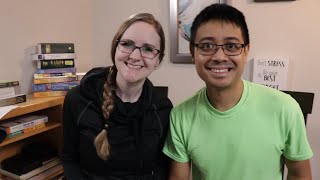
Nurse educator Christina Rafano and Matthew answer nursing school questions live, covering fundamentals versus advanced courses, returning after a break, clinical rotations, and exam strategies. They teach three frameworks for patient prioritization: ABCs, Maslow's hierarchy, and the nursing process. They recommend the six-step dimensional-analysis method for dosage calculations and the DRC model for note-taking.
Chapters
Good morning slash afternoon.
If you're on the east coast, slash afternoon. Welcome to the Nursing school show. Ask me anything. Ask Christina anything. Not Matthew, because he's not a nurse.
I am not.
Welcome to the nurse.
That is a fairly common question. So let's get that out of the way right now.
You know, let's just get it out of the way. He is here for all the fun things.
I keep track of the questions. I do keep track of the questions and ask Christina questions and then Christina answers the questions.
And to be honest, he is probably the most important person here because he keeps me on track. If you know me at all, you know that I'm like, tangent, tangent, soapbox, tangent, soapbox, tangent. That's my life.
But that's why we're here too.
And he is good to keep me on track.
Thank you everyone for joining. We are here to answer your nursing school questions. Go ahead and pop them down in the comments below. We will get to them.
Let's do it.
Did you have a topic to talk about or are we diving straight into questions today?
I think I do have a couple of soapboxes that I will get on probably later on in this live video. Okay, so stay tuned.
All right, sounds.
Someone set me up out there. Set me up for one of them. I feel sassy today. Let's go.
All right, well, I'm going to ask this question first because sometimes people ask general questions like this and want to address it a little bit more.
Okay.
So I'll pitch it to you, you say whatever your thoughts are about it. Yeah, but a question that we get or something along these lines of questions is what is the biggest difference between first semester and second semester nursing classes?
Oh yeah, that's interesting. Okay, first semester nursing class is primarily like your fundamentals class. And then second semester, depending on your school, of course, is like med search. Perhaps for us, I think our second semester term we recorders second semester was mental health and pediatrics. Am I right?
I do not recall. That was a long time ago in a galaxy far away. Yeah, Naboo was under.
That is the thing, right? Yeah, that's a thing. It depends. I told you.
Maybe Vader someday. Later.
I told you. I warned you the jokes.
What? Weird Al is a great guy.
That's so funny. Fundamentals for first semester. Depending on your second semester, it could be med surge. Could be mental health or pediatrics like it was for me. It could be something else. I don't know. So, but primarily your first semester of your core nursing classes will be fundamentals you know, so there you go. Which is like your basics. You got to know these things before you can move on to the other things in nursing school. And then you will get into more of the med surgis type things. So that is the difference between.
Those semester.
First semester you have to understand the basics before you move on to the, the next one. And here's the thing also is that oftentimes we have students asking us, I'm In Med Surg 3, what do I need to study? And I say, I don't know because I don't know what your med surg three is versus another school's med surg three. They're all different. So when you, you know, you know, students send us emails and so we always message back and we, you know, always say like, okay, tell me the topics that you're studying. What topics are you studying in your Med Surg 3 class? Or Med Surg 1 or, or you know, all the things.
Yeah, and so that's what I wanted to get to a little bit too, that when people ask questions also everyone's nursing program is a little different and sometimes things are named a little differently or you go through it in different orders and things like that. So sometimes we do get a general question, hey, what's in nursing 101? And I don't know, we, we need a little more, more information. But yeah, yeah, yeah. And sometimes some people are in two year programs, four year programs, all sorts of different things. So it's tough to say, oh, I'm in my second year, what am I going to be doing now?
Yeah, yep.
So yep. Yeah. There are a lot of questions that have come in through Instagram that I would have liked to type down but they're like long. So I do want to ratting a lot this morning.
I do want to get you on, on YouTube. Yeah, you do that. We do have study guides for critical care nursing inside the nursing SOS membership community. We've got study guides in there. So if you're in the membership, check that out. If you're interesting SOS member. Anyone out there, go for it.
Cole's Creations. Studying for the tease test. Before getting in nursing school, do you want to shout out Pre Nursing smarter.
Pre nursing smarter.com if you need help with a tease test, go to pre nursingsmarter.com or Instagram @Pre Nursing Smarter@Pre NursingSmarter. Her name is Kate. She's a friend of mine. Check it out. Check out her Instagram, check out her website because she helps with the D's Test. There you go.
All right. And then. So this one I wanted to get to.
Okay.
Nick definitely wanted you about having to ask or. Sorry. All right. Starting over. Wanting to ask about having to take a break from classes. I took my first clinical semester. I have three left and I've had to take some time off due to emergency family situations. So of course now I'm needing to get my head back in the game. Any advice? So. So you took some time off and now you're coming back into it and you need some advice getting back back in the game. Is. Is that how I understood it? Is that how you understood it?
That is how I.
If that's not what you mean, Message back. Give some clarification, but let's jam off that.
You know, Matthew and I were just talking about this, I think.
Oh, okay. Hold on. Sorry.
Oh, yeah.
Is there a way to stay in the game while off? I. I go back this fall, so you're still off. Okay.
Okay.
So how to stay kind of in. You took some time away. Vers. And then also when you get into it, how to. How to get back into it.
Yeah. Matthew and I were just talking about this, that emotions are fleeting. Right. We. We have this kind of culture out there that's telling us you have to be motivated to do things like wake up in the morning and do, you know, X, Y and Z to kickstart your motivation. Or, you know, if you. Well, if you don't, don't really feel motivated, then here, that. Here are the five things to do to, you know, to get more motivated, like drink more water or take a walk or do. Do things. Do things. Do things to get motivated. And like, can I help you feel better? Yeah, like emotions wise. But I think what feels really, really, really good is when you actually do the thing and get it done. Right. So. So instead of saying, almost saying like, I'm gonna do these things so that I can feel more motivated about it afterwards. Right. Anybody with. Anybody with me?
Yeah, just get it done.
So countercultural. I probably made a bunch of people mad right there. I just don't think that motivation is necessary. You know, if you have things to do, get it done now.
Not to say it is. It is not. It is definitely helpful to be motivated and to have the other thing that's closer related is passion. Right. So sometimes people say, oh, you need to be passionate about what you do. Well, sometimes you just got to do it. I'm not. I'm not very passionate about something. I'm not very nursing.
You are not passionate about.
Well, something that I still need to do. I'm not very passionate about cleaning the bathroom.
Yeah.
But if I'm waiting to get passionate about cleaning a bathroom, it's going to be a dirty bathroom.
Right, Right.
So sometimes there's just things that you. You just need to do.
Yeah.
Right. So same with motivation. I'm gonna wait until I'm motivated to clean the bathroom.
Well, I was thinking like this, and you. Right. Nursing. Like, you don't know anything about nursing. You don't really care about nursing. Sure, you care about nursing, but not, like, enough to go to nursing school, I guess.
Sure.
But yet you are here helping nursing students pass. So you just do the things, right?
Just do the things. You do the things. Yeah. Now, do we. Do we have any advice on, like, how to. If you're out for an extended period of time or during breaks? Maybe I can expand this out just during breaks. How to keep your mind kind of sharp or retaining information while being off so that when you get back to school, you. You jump back into it. So sounds like Nick is going to be off for a little bit. Not going back into the fall. So afraid that the memory or everything will leak out or also being rusty about going back in. So anything.
I think this situation particular is a little different because you had a family emergency. That is. That is very, very different than taking like a Christmas break and then going back the next term. So with you, my friend, having a family emergency, the best thing, the biggest thing I want you to do is just give yourself grace and space and time. Because depending on what that situation was and what happened, you might need time to process that and to. And to kind of move along. You know, it takes time. You know, God has an amazing plan for you, and it's. It's gonna. You know, you're going to need to take it one day at a time and do your best each and every day, depending on, you know, how emotionally tasking that season was for you and this season is for you. Does that make sense? So if you are going through something, you know, like you left nursing school for. We had students in our nursing cohort when I was in nursing school who had, you know, they themselves were struggling with health issues, so they had to drop out for a term or two or more. And we had other students who had, like a death in the family. They had to take a step back and then return back, you know, after, you know, they processed that and did all the things that go along with that. So there's a lot More to this situation particularly that I did want to talk about. And it's just that like, give yourself grace and space to process through this season. You know, don't, don't feel like you have to, you know, do all of these things to prepare for the next term. Like I want you to give yourself time to, you know, deepen your relationship with God. You know, make sure that you are in the right. Mindset's not the good word, but I guess, yeah, kind of like space to go back where you can actually be productive. Because I think there is something to be said about you know, processing these big emotional events in life.
So. So a follow up question that you had. Sorry, I'm just getting caught up on a lot of things. So great questions coming around. So would it be wise to study ahead? Probably not.
You know, it depends on like what headspace you're in. Yeah, exactly. You know, it depends on what headspace you're in. If you're feeling ready to go back, then. Yeah, if you, you. It sounds like you've been in nursing school already before, you've done a couple of terms and then now you had to take a break because of a family emergency. So that's fine. What I would do is like I said, give yourself time, give yourself space and then when you feel ready, I would totally like, if you've got, I'm sure you've got tons of like binders or textbooks or stuff. I would definitely go through your lecture notes from your previous terms. A month maybe before you go back, two months before you go back. Just start looking and refreshing, like looking through those and refreshing your memory on those things. That is what I would do. You know, you can jump into NCLEX style questions if you want. Maybe not that big of a deal. I went, but that's what I would say, like go. I think you will be surprised at how much will actually come back to you when you start reviewing your lecture content. I think you'll be very, very surprised. Yeah. Yeah.
So definitely make sure that you give yourself grace, make sure that you process everything and then once that's getting going to prep and move into the next season of your life. Yeah. Look back and review some, some past notes.
And this goes for anything. Friends, you know, we get a lot. We, we get a lot. Unfortunately a lot of emails from students saying that they're going through, you know, family, family health issues, personal health issues, anxiety, depression, divorce in the family. You know, there's a lot that goes on in life. It's not like we get to nursing school. And then all of a sudden we can just push the pause button on life, you know, that's not how it works. Like when we get accepted into nursing school. Now you have nursing school and life, right? They go hand in hand. Gotta do them both at the same time. So you have to really make sure that you are. I don't like the word balance. Juggling those two things, you know, and, and doing the best that you can, you know, doing the best that you can with what you have.
Great.
That's my advice for that. I'm glad it was helpful. There you go.
All right, thanks, guys. Let's see. Minnie and Emily have kind of related questions, so I'm bundling them up together and we're getting them done. So Minnie's asking what takes place in clinicals? Okay, so general question. And Emily's asking, how can I get better at prioritizing my patients? I'm in my last semester of nursing and miss the first exam by four points. I have five more exams to make it up. This professor does a lot of priorities. So prioritizing patients. So I bundled those up because, well, I don't know, maybe I shouldn't have. But you can take them as you.
Sounds like one is. Minnie, you're asking about clinicals, and Emily, you're asking about prioritizing on exams.
Okay. Yeah, so I just read prioritizing. I wasn't sure if it was in clinicals or not.
You are so good.
My bad. So I'm not sure. Do you want to take clinicals first or prioritizing patients and exams?
Let's take clinicals first.
All right, clinicals first.
Let's jam on clinicals. So what takes place at clinicals? Well, it depends on your clinical facility. So, you know, you could be in. Where was my first clinical? Was that a long term care facility? You can be in a long term care. Oh, well, it's actually not long term care. It was a mix of long term care and skilled nursing. So it could be, you know, something like that where you are long term care or hospice or, you know, skilled nursing, which is just more of a, you know, they were discharged from the hospital and now this is their stop before going home. So it depends on where you're at. You could also be in a hospital setting. You could be in a clinic, you could be anywhere. Dialysis center. You could be education center. I was at a, like an addiction. I don't want to call it a clinic. I was at a, a center, Addiction center for one of my clinicals. So cool. So there's like, there are so many places that you could go. So clinicals will all be different depending on where you are at. It's probably not what you were hoping for. I kind of.
Then how about some general tips? Because we, we get asked this question a lot. General tips, first day at clinicals or when you're in clinicals, what do you do to get most out of Clin?
See, this is how you keep me on track.
Yes.
You have all the good questions, best tips for like, just starting clinicals. The first tip I have for you is know where everything is and kind of what the flow is. Like, because like I said, it's all going to be different and you're going to be at a different clinical facility pretty much each term for the most part, you know, you're going to be, you know, jumping to clinical site to clinical site to clinical site. So in the first week and the first day, hopefully of your clinical experience, make sure that you know where everything is that you need to, you know, be aware of. Where is the, you know, med room or the med cart? How do you access the computer? Do you have your username and password to get in there? Do you know where the AED is? Do you know where the supply closet is? Linen closet? Do you know where stuff is that you need? Like where, where are all your supplies? You know, how do you, how do you use their. Either paper charts or electronic charts? Just know all of those things. Where do you find info on your patients? How do you contact a doctor, you know, all of these things. And then what does the routine basically look like? And I would write these things down as you, as you start at a new clinical facility. Facility, like, you know, kind of write down your flow of the day or like what the nurses are doing, you know, what is it kind of like, so, and what, you know and what, what to expect, you know, at 7:00am vs. 9:00am vs. 11:00am of course, things are going to go bonkers some days, but, you know, what is your general flow going to be? So that would be my best advice for just starting clinicals or those two things. Make sure you know where everything is and then make sure you kind of get a general idea of what the flow is, like what the routine is like at that clinical site.
Cool. I like it. I like it. All right.
Do a whole YouTube video about that. Actually. That's a really good. It's a really good question.
And then Emily.
Yep.
With exams, how can I better get better at prioritizing my patients? I'M in my last semester of nursing and missed first exam by four points. I have five more exams. And the professor does talk a lot about of priority. So prioritization of patients in exams is what we're talking about.
Yep.
And Emily, you also had a follow up question that I bundled up with another one and I think I did it right this time. So we'll get to that one right after this.
So good. So. All right, sweet. Okay, Emily, let's jam on, let's jam on nursing prioritization because friends, nursing prioritization is huge. So not only at clinical, but in your nursing school exams, which is what we're talking about. Emily. So when you get to a nursing school exam, what's going to happen is you're going to see case scenario questions. They're called many different things. Case scenario, case study study questions, what have you. So your instructor is going to give you, you know, this is, this is a patient's history. Like here are their vital signs and all these things, like here's what's going on and then they're going to ask you a question, priority, like what would you do first with this patient? What's your initial action? You know, what is the, what is your immediate action? What's the first thing that you would do? Or they will give you several patients, like here's, you know, patient, this patient has this, this patient has this, here's what's going on with this patient. And then they say, like, which patient would you see first? Or you know, here, like, you know, what is the sequence of patients that you would see? So these are priority nursing questions. This is what we call a priority nursing question or priority nursing action question. Very different. So they're very different from your other test questions. They're three main principles that I want you to follow. And I'm going to reference the nursing school study system because this is in here. Emily, do you have this yet? The nursing school study system. So it's on page, I think I put it in the, it's on page. How to answer priority nursing school questions is on page 40 of the nursing school study system. So, so you can get this at nursing school of success.com forward slash study system is there for you. It's on page 40. So there are three main principles that we follow. The first One is the ABCs, airway breathing and circulation. Airway breathing and circulation. Is your patient's airway clear? Are they breathing and is their blood circulating abc Airway breathing, circulation. Now the second principle that we follow is MASLOW'S hierarchy of needs, which is very, very similar to the ABC's. Airway, breathing, circulation. The baseline is their physiological needs. So you have to solve a patient's physiological needs first and then you can move on to the other aspects of patient care. Things like safety needs, love and belonging, self esteem, self actualization needs, those things. But we start with physiological needs, which are basically the ABCs. Now the third principle is the nursing process. You've probably heard ADPY, we talked about it on Monday. Addpie is the nursing process. So assessment, diagnosis, planning, implementation and evaluation. So basically what this means is you're always going to assess your patient first before you do anything. You always assess your patient first and then you can move on to everything else. So those are the three principles that we use. Now we do have, that we use to prioritize patients. So we do have a YouTube video on each one of those. So if you go to YouTube, type in nursing SOS ADPY or nursing assessment or Nursing Process. For that one you can type in Nursing SOS Maslow's hierarchy of needs or nursing process ABCs or Nursing SOS ABC, Nursing SOS ABCs, something like that. And those will come up for you where we do a deep dive into each one of those. What do you call those? Like a Principles. Principles. That works. Okay, so that is how you prioritize patient care. You have to juggle those three principles together to choose the best answer.
And it goes in that order, right? ABCs.
Maslow's.
Maslow's, yeah.
I mean, yes. Yes. Really the biggest thing is the ABCs. Yeah. And Maslow's is then again there and then the nursing process. Absolutely.
Okay.
Yep, Absolutely.
All right, Very cool. And your follow up question. And Ocean Eyes had a similar ish question. So Ocean Eyes has a question. Any advice as a newly graduated nurse?
Yay.
So congratulations. And then Emily's question. Since you said in your previous question you are in your last semester, so is it normal to feel some self doubt in your last semester? Like you don't feel quite ready to go into the real world?
Yes, yes.
I feel like that all the time, no matter what.
Like you wake up in the morning, you're like, I am not.
I don't think I'm ready for today.
Welcome to the world. I would say almost too, like welcome to parenting. You know, like taking the first baby home from the hospital. We were just like staring at each other like I don't know what to do.
Obviously anything, anything new, it worked out.
Anything new, they're, they're still alive. We kept them.
Our child. Our. Our child is the first baby I ever held.
Yeah.
And the first time I held him was when he was born. That was the first time. So it's like, I don't know what to do. But you know what? It works out. And I mean, that's what nursing school is for, is to get you prepared as best as you can be.
Yes.
And obviously it is definitely a leap from school to practical or school to actually working as a nurse, but active practice. Active practice. And so there. There is that kind of stressful jump there, but just be confident in what you've learned and keep learning. Learning doesn't stop at nursing school. So you're going to keep learning, and it's okay to feel. Feel a little in trepidation. Yeah, I suppose.
It's so funny because I think that every time I go in and work with patients, I learn something new. I'm like, I did not know this, and I have been doing this for many years, like, here, teaching and everything. I'm like, I still. There are still things that I just. I don't know. Didn't know that. Now I know. So you will just. It will blow your mind, you know, it will blow your mind how far you have come after, you know, a week, a month, a year, 10 years. I don't know. I'm not. When did I graduate nursing school? Not at 10 years.
Yeah. Not at 10 years.
Definitely not in 10 years yet. My. But it's gonna be. You just got to give yourself grace through the process, really be confident in your skills, be confident that it did help you. I think that's a big mindset thing that nursing students struggle with, is that when you're in nursing school, there's this. There's this idea that nursing school is not preparing you at all for the real world. And, you know, could it be done better? Sure. But that doesn't mean that you're not prepared at all for the real world in nursing. No. You know, so much like you learned so much in nursing school, you're learning so much in nursing school, and you will be, you know, a level of prepared for active practice. And then what you, you know, don't know, you'll learn during that active practice. So have confidence. Have confidence in yourself, you know, have, you know, have faith that in. In the decisions that you make for where you want to go practice, you know, really, really, you know, pray about it, follow God's plan for you about where, you know, where is your gifting more aligned with than Others, you know, if you want to be a hospice nurse or an ICU nurse or a med surge nurse or a clinic nurse or, or wherever, you know, make sure that your, your gifting falls in line with where you want to practice. And, you know, I think you just do the best you can. Is there anything you want to say for that?
I want to flip it a little bit on its head because I know that you're either ocean eyes, you're a newly graduated nurse, or, Emily, you're in your last semester. I do want to flip it to the people just entering. A lot of people saying that they're in first semester and just getting going. And we've talked about this before, but just a little bit more about the mindset of going into nursing. And you alluded to this, like, what do you think about nursing school? Do you think about it as just a barrier to become a nurse? Like, oh, they're just trying to make me fail, or, oh, they're not helping me at all, versus how is this preparing me to be the best nurse I can be? And it's really all about mindset. So if you've gone through the whole nursing program thinking that it's just a struggle and you not learn anything at all, and, oh, they're just trying to hold you back, it's impossible, and it's just a wall for you to get through, then it's going to be hard to take that and change it into, okay, well, I actually learned something in nursing school and how to apply it in nursing. Whereas if you come into nursing school at the very beginning with the idea of, okay, how can this improve me to be or how. How are they preparing me? The best way they know how might not be the perfect way, but in the best way they know how, how are they preparing me to be the nurse that I want to be and then using all of that together so by the end, you can start. It's just a way of training your mind so when you're actually in practicing nursing, you can say, oh, yeah, I remember they were trying to teach me this. It's a lot easier to recall that memory if you have a positive outlook on it. Oh, they're trying to teach me about this. And now I get it. Rather than just thinking negatively about everything and it will just go right over your head or you won't even think about it again. So definitely, for the people coming into it, just keep an open mind and know that it is for your benefit and it is preparing you in the best way that they Know how it is a learning experience and yeah, you don't stop learning and you keep going from there. But definitely a more positive outlook on nursing school, I think is helpful too.
Absolutely. And I think when you're on the floor, then when you're, when you're in active practice, what I really like doing is like, just, you know, take notes. I write down the things that I don't know and want to research more. So like if I come across a patient with a medication that I've never heard of, I write it down and then I look it up when I get home or if there's like something that the doctor says that like, you know, we worked out there, but I want to know more about, then I, I write it down and I, you know, learn more about it. So you're always constantly learning and constantly growing, even on, in active practice, even on the floor. So make sure that you, you know, you don't, you just don't stop, you know, it doesn't stop. Nurses are lifelong learners. We should all be lifelong learners, you know, trying to get better and grow and, you know, always, always, you know, trying to be better and learn more and do, you know, better for our patients?
Yeah. Yeah, I agree. All right. For those just joining, welcome to the nursing school show. By the way, Christina is answering nursing school questions. I am here too.
I am here too.
Let's see. I have.
That is so funny.
Ah, here we go.
That is so funny.
So if you have any nursing school related questions, go ahead and pop them in the comments. We have a couple that have been asked from the start. So we've been going for a little bit and want to get to the.
Questions that really help on it.
As many people as possible.
So on it for your questions.
There are more questions to go through, so we'll jump into more.
Do it.
Ready?
Yep.
All right. If you have not yet and you want to go ahead and hit subscribe, hit the bell.
If you want to. Of course you want to subscribe and.
Hit the bell so you get notified. Hit the bell so you get notified. As soon as we post, go live or post more videos. We're posting a video probably right after this about dosage calculations.
So Heparin. Heparin that so many students ask us about. Heparin Friends, subscribe to our YouTube channel. Click the bell. We have so many great things coming for you. You do not want to miss it.
And carried out. I see your question. We're going to do this one right after.
Sweet.
This other one. But you did ask Dosage calculation, questions. So we are going to get to that. So hold on a sec. Right now we're going with Lala. Question. I am in pathopharmacology. I failed my first test. Do you have any study tips? It's an accelerated program. My next one is next Friday over pain management, headache drugs, opioids, RA and gout drugs.
Yeah, accelerated pharmacology, man, that is, that will take a lot out of you. You have to stay organized and you have to learn medication how, how medications, how we teach. There's, there's just no two ways around it. Okay, two. Is this Lala?
Yes.
Okay. Hello, Nursing School of Success.com forward slash study system. I want you to go get this right now, my friend. Get the study system right now. On page. I'm going to give you the page number. On page 22 is how to study pharmacology in nursing school. We walk you through a step by step process of how to study pharma nursing school and how to learn your meds faster. So really the key thing is, is you do not want to memorize every single medication. Where is my Davis's drug guide? Here you go.
I have them.
Yes, the best. Okay, drug guy, get yourself one of these, like the newest version. These are the old, older versions. Get yourself the newest version of the Davis's drug guide and make sure that you are not memorizing each individual medication. Because my friend, look, look at this. This won't, this will take you decades. I don't know how pharmacy tech students do it or pharmacists do it. I mean, they know the things, but, you know, but that's all they're learning, right, is medications. We've got other things we need to do too. So here's how we study pharmacology in nursing school. In the front here, you will see there's a red tabbed section. Do you see that? In the front of the Davis's drug. And now I can't speak for other drug guides, but in the Davis's drug guide, there's a red tab section here that says classifications. So these are your medication classifications, either pharmacologic or therapeutic. Preferably use the pharmacologic ones. Therapeutic, you can too as well. It's just not going to be as accurate. But here's what you're going to want to do is look up the medication, the medication classifications and learn the mechanism of action for the drug class, not for each individual medication. Here's why. The medications inside a pharmacologic class. One pharmacologic class will act the same way in the body. So let's say you have 10 medications that fall under one drug class. They all act the same or similar in the body. Why would you then memorize the mechanism of action for all 10 of those medications when you could just memorize the mechanism of action of the drug class and then you automatically know the mechanism of action for those 10 medications? Makes sense, right? You want to make sure that you're focusing on the things that are the most important and that is the medication mechanism of action of the drug class. Drug class. Remember that either pharmacologic or it can also work for therapeutic. But you will want to double check that with the individual medications because therapeutic class are more grouped based on like body system and, and problem or disorder rather than the mechanism of action. So just be careful with that one. Preferably the pharmacologic class is what we're working with. So that is the biggest thing. And then once you know that mechanism of action, then you can more critically think through the side effects of the medication, the nursing assessment, and then the nursing considerations for that medication. It becomes so much easier to learn meds when you do it this way. You absolutely have to learn the mechanism of action first. So that's what we walk you through the step by step process for pharmacology in the study system. I also want to point out that we do have a whole medication database available for you inside the nursing SOS membership community. And we also just put it out as a standalone course. If you don't want to join the membership community, that's fine, you can just purchase the med database. Friend, I cannot tell you it is going to be gold for you in nursing school. Instead of having to learn your medications via textbook that you struggle to understand and there's too many big words and you just don't get it and it takes you forever and it takes you hours. Like don't do that. That's a waste of time. All you'll need to do is pull up the video that we have for you on that medication and we will teach it to you what you need to know. We will help you connect the dots with all the critical thinking, like why what? Here's what the drug does, here's the mechanism of action of it. Now why do these side effects happen? Let's connect, connect it back to the mechanism of action. Now the nursing assessment. Why do we do that? You know, we connect it all back to the mechanism of action. It's so helpful for you. So check it out nursing schoolofsuccess.com forward/shop S H O P so we have.
A bunch of different standalone courses or the membership community. So and the study system too. So that's all in our shop now. So check it out. I threw that in YouTube as well. Nursingschoolsuccess.com shop to take a look at all of those.
Yep. There you go.
Definitely that is good that it we have our med database for pharmacology and the reason why I put that there is for terad as well with your dosage conversion or dosage calculation questions. Because we also have a dosage calculations course.
Yes.
There as well. So let's go into that. So you're saying I'm having a lot of problem. I'm having lots of problems understanding Dosha's calcul dosage conversions. Any I'm having trouble talking dosage conversions. Any suggestions? And then I wanted to follow up because someone else Meiji also asked any advice for someone looking into becoming a nurse because they love the field but is afraid of all the math in it. So my one point before you go into just dosage calculations is don't let just the math stop you. Especially if you love the field. That's you should definitely pursue that and don't be worried about the math. There's not a lot of math and when we talk about math the main thing is Doch's calculation. So don't be worried about it at all. And we have a way for understanding dosage calculations.
So easy. Yes. Do not let the math part stop you. My friends. We have a very defined step by step process that we take you through so that you can get dose calc questions right every single time in nursing school. Nobody, nobody teaches dose calc as well as we do. I I say that with a thousand percent confidence. We teach it the best. Go to our YouTube videos. Go to YouTube Nursing SOS Dose Calculator. Check out those videos. We'll walk you through that six step process for how to get those calc questions right every single time. And if you want practice problems that go along with it, we have our dose calc course that's in the shop like Matthew mentioned that will be just so helpful for you. If you are not confident with dose calc in nursing school, that's a problem because it's going to show up on every single exam you take. You have to do dose calculator questions on every single pretty much every single exam you're going to take in nursing school. And the NCLEX So you have to get comfortable with this. So go to nursingschoolofsuccess.com forward/shop. Check out the dose calc course. So really, the biggest thing is to follow that step by step process you have. I mean, there's no other way about it. I mean, I just check out those videos. We will walk you through it. That is the best and the easiest way to learn dose calc. And always use dimensional analysis. Always, always. Dimensional analysis. Not the formula method. Dimensional analysis. We all on the same page on that. That's my soapbox.
There you go.
That's one of my soapbox.
That was a baby soapbox.
Dimensional analysis, not the formula method. Okay, okay. Just please, just please.
So definitely. Meggie, do not let the math stop you. You love the field. Go for it.
Yep, yep, yep, yep. Yeah.
All right, next up, Kenesha.
Yes.
Was asking. Hello. Is there a difference between an LPN and an RN Fundamental Nursing book? I asked because I wanted to practice purchase the RN to prep before nursing school, so.
Well, if you're in an. Yeah, if you're in an RN program, you don't want the LPN. Yes, there is a difference because LPNs don't do the traditional nursing assessment. LPNS is more data collection and then the RN's role is interpretation of that data collection. So they are going to be two different. Two different things. For example. Oh, I don't have it. Do we have the Saunders here? I think I don't have it here. For example, like when you go to take your boards for the nclex, you will have different NCLEX prep books depending on what one you're taking, either the LPN or the RN nclex. So they are different. So I would definitely get the book that applies to your program or the book that your program wants you to get. There you go.
Okay.
Yeah. Or else you'll just get confused. So don't do that.
All right. Okay. Let me see here. What do we have? Trisha was asking. She had a couple other questions I think you answered about critical care nursing. And we have those things.
Oh, critical care in the. Yeah. Did I answer? Course inside the membership community, we do have that Trisha. And then also. Yeah, the study guides. I think I told you that. Yeah, I think I said that.
I'm not sure. Okay. But another part of that is I want to pass the RN NCLEX on my first attempt. How? What? Where do I study to ace the test?
I like the Saunders Comprehensive Review Guide and I like the. They just changed the name. It Used to be NCLEX Mastery App.
But now my mastery.
My mastery. Check out my mastery. It's the NCLEX RN mastery. That is what you're. Those are the two things that I used for the nclex. There you go. Okay, I like that one.
Yep. So the, the basis of that is just practice. Practice. Lots of practice problems to get used to how they ask questions and also just the knowledge too. But I mean really half and half. Really. It's, it's not just the knowledge of the nursing topics, it's also how they ask the questions as well. So lots and lots of practice questions will help with that.
Yep. Yes. It's how they're asked.
Absolutely. Did you want to do Ebony's?
I do. Ebony, have you used level up RN's flashcards? Do you think they are useful? I have not, but I have heard great things. So can you guys let me know? Have you guys used the Level Up RN flashcards? I have seen them out in the world. I've heard students talking about them that really like them. From my understanding, I, I do not have them. I haven't seen them in person. From my understanding, they are flashcards with like the key points that you need to know for a lot of different things in nursing school. So it's, it's like a, it's like a, it's like a flashcard, right, that's pre written for you. So if you were to go write flashcards yourself, it's kind of like that, but it's already done for you. Do you guys have them? Do you like them? Like, let me know if I was all. I was wondering if we should recommend them. I mean I, I see them all the time and students really seem to love them. So I mean, I, I think have no issue with it.
Yeah, I guess. More comments on whether you did find it useful or you do find them useful because you have not used them personally.
I have not used them personally, no. The thing that I would caution you against, however is um, that when you're, when you're buying those things that are already pre done, like for example on, if you go on Etsy, there's a lot of like nursing students that sell their notes on Etsy. Like this is a big thing. And so if you are going to buy someone else's notes on Etsy, just be careful that A, their notes are aligned with your school and that their notes are actually correct for starters. B, make sure that, that you're not sabotaging your own success by using it. And here's what I mean by that, I mean by when you buy a pre populated flashcard or when you buy notes that are already written out for you, you no longer have to write out your own flashcards and you no longer have to write out your own notes. And there's a lot of value in writing out your own flashcards or writing out your own notes. You see what I'm saying? So yes, I think the level up rn flashcards are a fantastic resource for you for probably refreshing or testing your knowledge. Are they going to help you learn it the first time? I'm not entirely sure I would. I would honestly, if I'm just thinking through this, I'm thinking while I'm talking, but just thinking through this. I think that if it were me, I would use it as like a refresher before the test, like a, like a, like a test myself kind of thing or quizzing myself rather than to actually study. Because to actually study you have to understand it first and to understand it, you have to write it out yourself. Does all that make sense?
Yeah. So I, I guess to wrap that up that as a resource, good resource for the information. Information is accurate. It is well written. It is pretty.
Yep.
But one thing of caution, and we talk about this when people ask, oh, how do I memorize a lot of information? Or rote memorization, what do we do? And we always say write your flashcards, write it on whiteboards, repeat it, writing it out. And the reason we say this is it's the act of writing it down is what gets it into your memory. So I tell the story quite regularly that Christina really loves flashcards, really likes writing out flashcards. She never went through them again, very rarely. But it's just the act of writing it down, writing down one term and then turning it around, writing the definition, it's writing it down, it's creating these flashcards that actually helped her with the memorization and get that information. It's not really just going through it. So to her point, yes, the, these flashcards are good, but the information's already there. So you no longer have to go through that writing process or critical thinking things about writing it out and turning over writing the definitions, et cetera. So you remove that part of the learning process which I think is a key part of the learning process. So just there is some give and take there. So just want to caution you about that, that flashcards. Great. Prefer that you write it out so that you get that extra practice that extra learning in of actually writing it down.
Yep, absolutely.
Yeah.
Absolutely. Yep.
All right.
I think. Yeah, I think it is just that. It is. Just make sure that you are still taking the time to write it out and study it yourself. But totally, I. You know, as a review, I think they're great. I think they're great just because I've seen, I've heard from so many nursing students that they love them. So check it out if that's something you're interested in.
All right. Anita has a question, and so does a future nurse, Melissa. Hello. All kind of related together. I'm going to read all the questions and summarize them a little bit. So Anita asked. I just took my first nursing test on fundamentals. Our professor gives us PowerPoints and recorded audios. I go and take a look at them, but I feel like I'm not retaining the information. How can I change that? So put a pin on that. Okay, future nurse, you wrote a lot. So I'm not writing it down. I'm just going back and reading it. Our instructors do not give any types of study guides, and our test quizzes always seems so confusing. And then what recommendations would you suggest to grasp better understanding or to understand better? I am a huge note taker. I rewrite over and over again and combine with videos on topics, et cetera. So you are a note taker. So the general gist of that is nursing school. There's a lot of information.
Yeah.
Professors, yes, professors give your information in so many ways. Sometimes they give study guides, sometimes they don't. Sometimes they give PowerPoints, recorded audios, all this stuff. How do I study? How do I retain this information? How do I take notes?
Go. Okay, let's do it. So studying in nursing school, the best tips that we have for you to study in nursing school, the biggest one is to not read every single thing in the book. So, as you know, your textbooks are ginormous and you have about a thousand of them. Right. You are not going to be able to read every single thing in the book during your program. It's just not gonna happen. So. And retain it. Right. You. You could read it all for the sake of reading it all, but then you're not going to be able to critically think and have the time to critically think and apply the information that you learned and then, you know, be able to critically think through on your exam.
Side note, Emily, you're just asking about the best way to read fundamentals with it being so much to read. This is it.
Here you go.
Do not read everything.
There you go, Emily. Do not read everything. So read the sections of the book that your professors talk about in class, that is the biggest thing, my friend. So read the sections of the book that your professors talk about in class. Okay, Number one. Now, when you, when you are studying in nursing school, make sure that you are critically thinking. And the key for this is that you are understanding the why behind everything, like pathophysiology. Why are these disorders happening in the body? What is going on? Why are things happening the way they are? And then once you know that, you are able to put the pieces together and understand the signs and symptoms, the nursing assessment and the nursing interventions for this disorder as they connect back to the pathophysiology, you have to understand the why behind things. Okay, so I also want to point out, here we have, I have books everywhere. Here's some books. That's for later. Okay, so on page, I think it's on page. I'm gonna say, is it on page 17? Okay, so on page 17 of the nursing school study system, we walk you through a concept map and then also critical thinking. So if you go to nursingschoolofsuccess.com forward/study system, do it, do it now, download the study system. If you're a nursing SOS member, it's already in there for you in the membership community. So don't go buy it on our site. Like just log into your dashboard and it's there for you. If you're a nursing SOS member already. So what I want to draw your attention to is on page 19, the DRC Critical Thinking Model. DRC Critical Thinking Model. What's the description or the definition of what you were studying? Like high level overview. Like what is this thing? And then R. So that's the D drc. So definition or description, high level overview of what you were studying. Now, R is the reason or the rationale. What is the reason this is going on? So pathophysiology, what's the reason this is happening? Right? Or what's the rationale of this thing? And then C for connection. Let's connect the dots between what we're studying here to everything else that we're studying. That is the key for how to study. It's how to study. It's this DRC critical thinking model. Follow this, my friends, and we give you also examples of that, of how to use the DRC critical thinking model here in the study system. So I can't tell you enough. It's like it's going to help you so much in nursing school. So check that out. You can't Just read for the sake of reading. It's not going to help you on your nursing school exams. They're going to test you on your critical thinking skills, not on random facts from the textbook. Now you have to know those random facts from the textbook, but they're not going to test you on those. They're going to test you on how well you apply those random facts from the textbook to a patient scenario question on your exam. Right. So that is how they work. That is how those exams work. Make sure that you are spending time critically thinking and putting the pieces together. And that is how we do it. The DRC critical thinking model. We also have nine key critical thinking questions to ask yourself as you study. So good. So check out, check it out. It's inside the nursing school study system. Nursingschoolofsuccess.com forward slash study system. There you go. But there's a high level overview of that. There's an overview of the DRC note taking.
Just, just to touch a little bit on note taking. A little bit. Because backing up, backing up, backing up, backing up, backing up, backing up. Oh yeah, future nurse Melissa said that she is a note taker. I rewrite over and over and combined with videos and on the topic. So just we have a YouTube video about it also about how do you do note taking? So definitely take a look at that. Nursing SOS note taking, note taking on YouTube if you want to search that.
Yeah.
But just a brief overview on what you take notes on.
Yes. So when you are in class, whether it's virtual now or you know, you're actually in class, take notes on everything that your instructor is saying. I want you to print out your PowerPoints beforehand. And then here's a good example. This is why I keep some notes over here. Print them out like this where you have the three. What is this called on PowerPoint, do you know?
I don't know what note taking notes, whatever.
Yeah. So where you have the lines on this side and three slides. So it's like three sides, slides and then lines. And then what I did in nursing school was I wrote out in one color, let's say a black pen. I would use a black pen and take notes in class in black ink. And then so like everything the instructor said was in black ink. And then when I got home or was reading the textbook, I would write my textbook notes on the same page but in a different color and usually along these outside margins or on the back, like you can see here. Like I have a lot of notes on the back there. So that's what I would do. So one color used for class and then another color used for textbook notes. Does that make sense? So that way you know, you know which notes come from where, and then you can prioritize your studying based on that.
Yeah, she actually just said yes. Use your tip for that today. And I like it a lot, so. Good. Yeah, just want to make sure that we touched on that because you mentioned note taking. So, like, you're on top of that. Hopefully other people.
Yeah. You guys, I cannot tell you how important it will be if you are struggling at all with how to critically think in nursing school, how to do dosage calculations, how to do, you know, how to take notes, how to study, how to learn all of this stuff. You know, if you're feeling overwhelmed, if you're feeling frustrated, if you are feeling confused because you have to teach yourself everything. Stop, stop. Let us teach it to you, okay? Please, please, please join the nursing SOS membership community. It is going to be so helpful for you in nursing school. I cannot even. I cannot even start so helpful. It's like everything that I wished we had when I was in nursing school because it's, you know, we walk you through everything you need to know for nursing school. It's the best, the best. We walk you through critical thinking. We, you know, connect the dots for you. We help you really, really develop and deepen your critical thinking skills so that you can rock your exams. I do not want you to feel frustrated or overwhelmed or confused. That's why we're here. So go to nursing school of success.com forward/join. Get in the nursing as well as membership community. So helpful. All right, my friends, we have to jet out of here. We have a meeting. So thank you so much, guys for hanging out with us.
Monday.
We will see you on Monday.
So we do these lives Monday and Wednesday. Go ahead and hit subscribe, Hit the bell so you are notified when we pop on and do these lives. So thank you all for joining us. We will see you then.
We'll see you on Monday.
Take care. Bye bye.
Bye bye.










