Nursing School ASK ME ANYTHING!
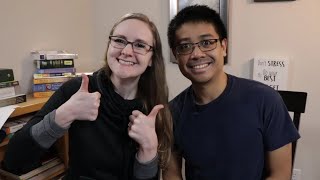
In this live YouTube AMA, hosts Matthew and Christina Rafano answer a flood of nursing‑student questions covering core study strategies, essential content areas, resource recommendations, and community support. They introduce the "four main things" framework—pathophysiology, signs & symptoms, nursing assessment, and nursing interventions—as a universal lens for all nursing courses (fundamentals, med‑surg, pediatrics, OB, critical care, etc.). They advise a 2:1 study‑to‑lecture hour ratio for lecture classes, 2‑4 hours per week for clinicals, and a 1:1 ratio for skills labs, emphasizing the Pareto principle (focus on the 80 % most likely to appear on exams). Textbook guidance includes a high‑level overview (Pathophysiology Made Incredibly Easy) and a deep‑dive (Merck Manual, professional version). NCLEX prep tools highlighted are the MyMastery app, Saunders Comprehensive Review Guide, and Hurst Review for those needing extra content review. Dosage‑calculation is stressed as a prerequisite skill, with a dedicated course and dimensional‑analysis method. Study‑group logistics favor Zoom and shared Google Docs. They promote their membership community (nursingschoolofsuccess.com) for structured courses, tutor support, and a dose‑calc module, recommending joining 1‑2 months before program start. Additional tips cover planners, sleep, flashcards, whiteboards, and teaching peers for rote memorization. The hosts repeatedly encourage subscribing, hitting the notification bell, and attending future live sessions.
Chapters
One, two, three.
Good morning. Whoa, Instagram. That was, like, really zoomed in there.
Good morning, everyone. Welcome to the Nursing School Show. Happy to have you guys here. I'm Matthew and this is Christina.
Hello.
We're doing Ask Me Anything nursing school related. And me, Christina. So not me, Matthew. So, Matthew.
Christina looks weird. Instagram looks weird. Hi. Kubani. Okay. Okay. Emily. Okay. You guys are YouTube.
How's YouTube doing? We sound okay. We look okay. Everything good? Facebook, anyone? Anyone out there? Okay, say hello. Hello. Hello.
Here we go. I'm gonna start this off.
Oh, you're gonna.
Four main things. Because we have had so many students that ask us this constantly. So I'm just gonna talk about it constantly on this live.
The four main things. Type them down in the comments if you know what Christina is going. What are the four main things to know in nursing school?
Is that four main things to know in nursing school?
Not the four main things for other things. Okay, Four main things to know in nursing school. Type them down below if you know them, bonus points. And if you're new here, go ahead. While you're at it, hit subscribe, hit the bell. Hit, like, hit. I don't know what else you can hit, but hit the buttons and see what else.
Like the hearts, buttons. All the things. Okay. Four main things that you have to know in nursing school. You've got to know these things. Oftentimes we have nursing students that tell us, Christina, I just started nursing school. There's so much to read. So many, you know, notes that I take during class. There's just so much information to know. Yes, there is. Good thing that there's only four main things that you have to know in nursing school. Are you ready? Okay, can somebody write these down on Instagram, Facebook, and YouTube so everyone has them and can, like, screenshot the chat?
Don't know, but I'd like to know. So here we go.
Here we go.
Here we go.
Pathophysiology, signs and symptoms, nursing assessment, and nursing interventions. Okay, Right? Oh, boom. Arilda. Of course you already knew it, my friend. Thank you for writing it down. Pathophysiology, signs and symptoms, nursing assessment, and nursing interventions. Those are the four main categories that you have to know in nursing school. Four main things. Now, here's the thing. We get this question a lot. Well, Christina, this doesn't apply to fundamentals. Yes, it does. Christina, this doesn't apply to med surg. Yes, it does. Christina. This doesn't apply to pediatrics, OB Critical care. Yes, it does, my friend. Okay, listen up here's what you're going to do. If you are in fundamentals, if you are in med search, if you're in pediatrics, ob, mental health. Give me another one. Critical to care. Did I say OB already? Anything? If you are in any. If you are in nursing school, my friend, four main categories. Pathophysiology, signs and symptoms, nursing assessment and nursing interventions. Let's jam on fundamentals for a second. So if you are studying fundamentals, like Carrie, you just said you have a fundamentals exam tomorrow. This is what you need to know, Carrie. So when you are studying things like ABGs, fluids and electrolytes, intake and output issues, ventilation, perfusion, respiration, all of the things that you need to know in fundamentals. Right, all of those things. You've got to know those things. Focus on the four main categories. Pathophysiology, what is happening in the body. So if you have an abg, you know, disorder out of balance, like metabolic acidosis, alkalosis, what have you, you have to know the patho for that. Same thing with fluid and electrolyte imbalances like hypovol. I said hypovolemia. Hypovolemia counts too. Hypokalemia, hyperkalemia, hypomagnesemia, hype. Did I say hypo hyper? All the hyper.
All the hypo hypers.
Calcemia, magnesemia, cholemia, natremia, hypo hyper. Of all of those things, you have to know the pathophysiology first, what is happening in the body? Then you're going to move on to signs and symptoms. How does that pathophysiology relate and cause those signs and symptoms? Okay, so here's the key. I do not want you to just memorize an entire list of signs and symptoms or an entire list of nursing assessments or an entire list of nursing interventions. That is not going to be useful for you. That's not going to be useful for you if you're just memorizing lists. No, that's why we start with the pathophysiology. You have to know what is happening in the body and then you can be more able to critically think through the signs and symptoms, the nursing assessment and the nursing interventions as they relate back to that pathophysiology. Does that make sense? So, Carrie, you have your fundamentals exam tomorrow. I want you to focus. You've got to focus your study time on those four main categories and of course, what your instructors talk about in class.
Yeah, it definitely goes into critical thinking and thinking beyond just the topic that you have at hand. Because yes, you can do just rote memorization for every single thing, but that's a lot of memorization. Oh, Christina, there goes some water.
Spill water everywhere.
But really the critical thinking is getting these, these main categories, pathos, signs and symptoms, nursing assessment, nursing interventions, and understanding how each of these categories, how all the disorders work within those. Because then you can kind of backtrack and critically think about each disorder, even though you don't necessarily know everything there is to know about it.
Absolutely, that does help, because here's what's going to happen. Carrie, can you tell me, you are in fundamentals now. Can you tell me, have you taken a nursing school exam before? Because I'm going to tell you what your exam is going to be like. Here's what they're going to test you on. They are going to give you case scenario questions or deep dive questions where they maybe give you a list of signs and symptoms of a possible disorder. And you need to pick out like select all that apply. Select all that apply SATA questions. Right. You have to select all of them that apply to that disorder. Well, here's the thing. If you already, you know, if you just memorize the list of signs and symptoms, and there are some signs and symptoms on there that either you've never heard of before, they weren't in your memory, but they might apply to that disorder, that's no good for you. Like, that is not how they're not going to test you on memorization things. They're going to test you on how well you apply that information to a case scenario question in a real life situation. So that is why we do that. You have to be able to look at that test, question the case scenario, and say, oh, okay, so this patient has this disorder and I know the pathophysiology of that. And then if I know the pathophysiology of that, these are the signs and symptoms that I know that go along with it. And then let's take a look at the other ones and see if those make make sense as they relate back to the pathophysiology. Right. So you have to understand the pathophysiology first.
Okay, cool. Taking a break there between pathophysiology and signs and symptoms before we get to signs and symptoms. So Christine is going over the fourth main category.
Yeah, nursing. I guess I kind of, I'm kind of done with that.
Yeah.
Oh, you're kind of science and symptoms, nursing assessment, nursing interventions. But they all have to relate back to the pathophysiology. Okay, there we go.
All right, great. If you have any more questions specifically related to that, be sure to type in the comments so that we can answer them specifically. Eric, you're wondering, is there anything in the membership about chest tubes or trach care? Yes, there is. It's in our critical care course. I believe is where I know trach is. I believe test tubes in there, too.
I believe test tubes.
Okay, so critical care course in the membership community. If you have specific questions related to that, be sure to use our tutor form where you can just ask our. Our nurses on staff questions. Specific questions. Be sure to write specific questions and then they'll get back to you in like 24 hours.
So with it. Yeah, they're really quick.
Yep, really quick. So be sure to use that if you don't find what you're looking for specifically in the critical care course or other courses.
So sweet.
There we go.
Hey, Carrie, can you tell me what your exam is going to be on tomorrow for? Fundamentals. So, Carrie, something else that I wanted to mention about those four main categories. So when you are studying for your nursing school exams, there are two things, two main categories you want to focus on, right? Those four main things. Patho signs and symptoms, nursing assessment and nursing interventions.
Alexandra, this is for you, too. I have a med surg exam in like an hour. In like an hour. Any pretest tips to keep from stressing out? Well, okay, so this is not for you. Okay, so within an hour, just don't stress out. Just know that basically anything that you do now to try and cram, that's not going to stick in your head. So just take it easy.
Relax.
Relax. Just prep for your. Just. Just get ready and make sure that you arrive right on time.
Calm it down. Yeah, for sure. Like.
Okay.
Yes, yes. So when you are studying those four main categories, you need to focus on pathos, signs and symptoms, nursing assessment, and nursing interventions. But you also need to focus on studying the things that your professors talk about in class. So whatever your instructors talked about in class is what you need to focus. So, for example, if you're in, you know, if you're in fundamentals like you are, Carrie, if you're in fundamentals, and let's say you are in your first exam like you are, and in the first two weeks, you went over ventilation, perfusion intake and output elimination, what else do you learn in your first week? Like the nursing process, those things. So. So you went over those things in class, but then you go to your textbook and your Textbook has a bunch of other stuff like nursing theorists and theorists your instructor didn't go over. And it's like deep dives into other things. Just ignore it is the best word, I think. Ignore it. Focus on reading the sections of the book that your professors talked about in class. So nursing theorists is a great example for nursing fundamentals. You might go over a handful of nursing theorists in class, and then you might read your textbook and find out that there's 16,000 more of them that you didn't talk about in class. Because there are. There's a lot. You are not going to want to waste your time learning everything about those other 16,000 nursing theorists. That's not going to be helpful for you because what your instructors talk about in class is what they believe are the most important things for you to know and is therefore what's most likely to show up on your exams. Does that make sense? So, yes, a question or two might pop up in your exams on one of the 16,000 nursing theorists that you didn't talk about in class. However, there's going to be a lot more questions about the ones you did. Okay, so we want. This is about. You've heard the phrase study smarter, not harder. Focus your study time on the things.
That matter or the Pareto principle. 80%, 20%. Yeah, yeah. So focus on the 80% that will probably be on your test. And are there going to be some things off out of left field maybe?
Absolutely.
Don't worry about that. Oh, Anastasia. Yes. After our live is done all our lives, you can just go back to our YouTube page and rewatch if you would like. Mm.
Yep. We talk about a lot of good stuff here on the nursing school show.
Okay. Yep. So, Tammy, that kind of goes to you. Your question as well, just how to study for exams. Did you have any other tips, tricks for how to study for exams beyond. Beyond what you were just talking about?
That is primarily it. So for. For your core nursing classes, those four main categories, Pathos, signs and symptoms, nursing assessment, and nursing intervention statute, you need to focus on. And then reading the sections of the book that your professors talk about in class, studying the content and the topics that your professors talk about in class. Now greasy. Oh, geez. There's no. Are there? Geez, I'm hungry. That's hilarious. Geez, I'm hungry. And kiss, kiss, kiss my, Kiss my. Oh, hello. Okay, I'm finally in nursing school. Sorry, just joining. Do you have anything regarding pathophysiology? I'm struggling to take notes and study. Okay, so here's this for you along with studying for exams. So when you are in like pathophysiology. Pathophysiology. This is specifically pathophysiology. The best way that I know how to study for pathophysiology is to break things up step by step. Break things up step by step. So when you are reading about pathophysiology in a book or looking at a video online or what have you, however you're studying, I want you to kind of think in your brain, okay, what comes first, then what happens? And then what happens? And then what happens? Pathophysiology, step by step. So, like, this happens, There's a trigger in the body that causes, you know, something to happen. And then this happens. And this happens. And then this happens. If you've ever watched a pathophysiology video on our YouTube channel, you know that this is how I teach. I break things down for you. So step by step. So it makes it so much easier. So tulips and Geez, I'm hungry. That's funny. I like that one. So if you are struggling with pathophysiology, which you said, you guys are in the same boat. Emily, you too. Pathophysiology. Definitely two things. Go to our YouTube channel and find the patho videos that where we break those down for you. Step by step. Pathophysiology. And then also if a video that you need or a topic that you need is not on our YouTube channel, it's in our membership community. So you can join the membership community too. Nursing schoolofsuccess.com forward/join. So if you need help with patho, we have so many videos there. I mean, covering like anything you'll ever need. Patho stuff inside the membership. Step by step. So we break things down step by step. Now the other thing I want to say about patho is you need two kinds of textbooks for pathophysiology. Okay, you ready? Get ready to screenshot, friends.
Ooh, screenshot time.
Ready to screenshot. Where's the. I think it's down there.
Oh, do I have.
Yeah.
Okay, I will get it. I will get it.
Okay, who's ready to screenshot? You need two different kinds of textbooks for pathophysiology. You need. I have so many books. I need this one.
Oh, this one.
Thank you. Okay, you need two kinds of textbooks. One, a high level overview book like this pathophysiology made incredibly easy. Okay, screenshot. Can you screenshot? Screenshot.
You can just crop out my face if you don't like it.
Screenshot this friends. Yay. Okay. Path of physiology made incredibly easy. This is a high level overview book for patho. It's going to give you a general idea of what's happening with pathophysiology in the body, but it's not going to go super deep into like chemical level, cellular level, enzyme level, protein level, you know, all those things. So this will give you a very good starting point. You have to know kind of the high level overview first. And then if you need a deeper dive into pathophysiology for like if you're writing a research paper or you just really want to understand something, you're really not sure why this sign or symptom connects with the pathophysiology because, you know, the high level overview doesn't really give that to you. The Merck manual is the deep dive book that I recommend that I really, really like. This is obviously a physical textbook. They do have an online version. So I think if you can just search maybe Merck Manual on Google, like search Merck Manual on Google. Somewhere on Google, search on Google. It's out there. They have a whole website and it's pretty much everything you need on the website. You will want the professional version, not the consumer version. So make sure that when you're going to Merck Manual online that you get the, that you're on the professional version. It'll like say at the top, you're reading the professional version, switch to consumer version. Or you're reading consumer version, switch to professional version. You want the professional one. Cool. All right, screenshot this again. If you are just joining us friends, we have a lot of you guys just joining us. Screenshot this please. So you have, you know what textbooks to get for pathophysiology. There you go. Screenshot. Got it. Emily, you said you got it. Sweet. Okay, so that is what I really recommend for patho, A high level overview. And mark Manual on Amazon, it doesn't look like yours. And I searched professional. Okay. So no, this is like, this is the Merc manual. It's a physical book. So I think if you go on Amazon, just search like Merc Manual, maybe there's enough. This is the 19th edition. I don't know how old this is a few years by now. 2011. So that was 10 years ago. So this is, this is the 19th edition. So I would check out a more recent one if there's one. And then if you don't want the physical book of the Merck Manual, that's fine, go online. Just Google Merck manual. And there's a whole website that gives you basically the same information, but on the website, you want to make sure that you have the professional version and not the consumer version. Does that make sense?
The version that we have is the 19th version.
This is the 19th edition. Yeah. Of the book.
And so make sure that it's the most recent one. Most recent edition and professional.
Yep. Well, this, this is the professional. This is not a consumer. Like, I don't know if they make a consumer version of the book. Maybe they do. I don't know.
Yep. All right, let's see. There's a lot of questions coming in, so thank you for your patience. We will get to as many as we can. Stacy, I even saw that you put in Facebook in on YouTube. We'll get to that one right after this first one, and then we'll get to your question, Stacy. But Tasha and Nicole were asking, how long do you suggest one studies a day for classes? Or how many hours of studying a day would be sufficient?
I love this question. Okay, let's go to the nursing school study system, my friends, because this is here under our frequently asked questions. How many hours should you study? So there are two, really kind of a couple. A couple of different recommendations that we have if you are studying for lecturing skills. So this is on page 42 of the Nursing school study system. So if you go to nursingschoolofsuccess.com forward/study system, nursing schoolofsuccess.com forward slash study system.
I can go ahead and put that in YouTube.
Sweet. That's here, tubes. This is on page 42. And it's actually question one, because we got this question a lot. How many hours should you study? So for lecture class, I recommend that you study for two hours outside of class for every hour that you're in class. So let's say you are in a lecture class for three hours per week for one of your classes. Well, if you're in lecture class for three hours a week, you are going to study outside of class for. For six hours. Three times two is six. Look, Christina can do basic, and that's math. That's math. It's about where it ends for me without a calculator. So three hours of lecture class for one class to study for two hours for each hour you were in class. So then you would study six hours outside of class for that one class. Now if you have another class, same thing. You know, maybe you're. Maybe you're in class for two hours and then you Would study for four hours outside of class for that class. Tulips, you had question. What about online classes? Depends on how the online class runs. Here's what I recommend. Actually, a lot of online classes are kind of similar to in class. You still have an instructor there with you doing like, you know, like Zoom calls or something with you. So however long your class time is, study for double that amount outside of class per week. If you are doing like, I'm thinking, you can tell me, tulips, how yours is structured. But here's kind of what I'm thinking you're asking is if you have online classes and it's totally like self paced, like there's no actual class that you attend, maybe your Instructor puts a PowerPoint up and then does audio recordings over it. That's fine. I would. For that you're kind of just studying as you go. What would you think if Your instructor does PowerPoints and audio over it? Oh, no. Zoom. Just lectures posted with. Yeah. So there's no class, right? Yeah, no, no. Zoom lectures posted with a PowerPoint. That's exactly. Yeah.
Does anyone else have that where there's not really a lecture at all? You just get PowerPoints and maybe lecture.
And like an audio recording for the PowerPoints. Deborah says yes. Yeah, I would say that in the same way you kind of go through the PowerPoints and then however long it takes you to go through those PowerPoints with the audios, that's your lecture class. And then you're gonna study outside of that for two hours each time. Emily, you have Zoom class. Charlotte. Charlotte. Good morning, my sweet friend. Welcome back. I was just thinking about you the other day. I'm so glad you're here.
Haley says. Yeah, me too. So, yeah, for that. Yeah, I guess that, that would be. Yeah, that would be appropriate.
It depends. Yeah, I would say, you know, I guess it also depends on the instructor too, because some instructors might just give you a PowerPoint, right? A PowerPoint or something where there's like no other information. So it is going to depend a bit. Let me think on that. Like, how would I study if I was just. If I was given nothing. If I was just given a PowerPoint. Let me get back to you on that. I'm gonna, I'm gonna think about that. How to fuse those together. You're so funny. I love that. Two hours per day. No, it's not two hours per day. It's study two hours per week for every hour you are in class. So if you are in class for three hours a week, for if you have one class, like let's say you have a pathophysiology class and it's three hours for one class, then you would study for six hours per week outside of class. Does that make sense?
Haley says that her school recommends or suggests two hours per credit.
That is that 10. That's like. That's pretty much exactly what it is. Because isn't like one credit an hour typically, like one credit at a school is like an hour of class or 50 minutes of lecture time?
I don't know if there's any correlation there.
Yeah, I think so. If you're in like 10 or 15, 10 credits, that's like 10 hours of in class time. I could. I'm pretty sure that's how it is. I'm like 90% sure. Yeah, Haley says that's correct. So there you go. I mean, for every credit you're doing, you know, double check that. That, that is what I remember for my school. Maybe other schools are different, but so if, if like one credit is like an hour of class time or 50 minutes of class time or something like that. So then yeah, you would study for two hours a week for every hour you're in class. There you go.
And that's for lecture.
That's for lecture.
Okay. And then how about for clinicals?
Okay, so for clinicals again. So this is. Let me find the COVID here. The nursing school study system. If you can get this@ Nursing SchoolofSuccess.com forward/study system. This is your step by step guide for how to study in nursing school. All of the information that you know, I have been teaching for years now for nursing students to help you learn how to study better in nursing school. I condensed all of it into a step by step guide for you to follow. So this is there for you if you are a nursing SOS member. Though it is free for you inside the membership community. So don't go buy it if you're a member already. It's in the membership, so just log in. There was a question about annual for the membership. Yes, you can have to scroll a lot there.
There was a question that I saw there. So yeah, we. The membership is open. You can go to nursingschoolsuccess.com join to find out more. And yes, there you can either pay monthly, month to month basis or you can. There's an annual option as well. So you can pay yearly and you.
Get a discount for the annual. There you go. Nursing school study system. I forgot what I was gonna say. Nursing schoolofsuccess.com join so this is on page 42 under how many hours should you study? So for clinical study, 2 to 4 hours per week for your clinical. That's what I say. Because it wouldn't you have like a 12 hour clinical day, maybe two 12 hour clinical days or three 8 hour clinical days. Like if you did, if you studied for two hours for every hour you were at clinical, you would not have enough time. Right. So two to four hours for clinical per week. Now you might need to do more. If, let's say you have like, like a huge research paper that's coming up, you have a huge research paper that you have to do on one of your patients, you might need to do a little bit more than that, the two to four hours per week. But if you don't, if you have just like care plans to do, maybe you're on the two hour end if it, you know, if you're pretty quick with care plans. So that's kind of how that rolls. Yep. Now, skills lab is the last one. If you're in skills lab. If you have a, you know, skills lab class to do, I recommend that you study outside of your skills lab class for every one hour you're in class. So one hour to one hour. So study one hour outside of skills for every hour that you're in skills lab. So let's say you have, you know, two hours of skills study, two hours outside of your skills lab to get practice in. Okay.
And I think Haley brings up a good point too that like this is, this is kind of a guideline. Guideline hours. Obviously as you dig into your studies, it could take a little bit less time. It could take a little bit more time. You definitely need to critically think and practice your critical thinking while you're at it. Critically think on whether you need more time or less time to study a specific topic. So definitely be tune into that a little bit.
Yeah.
Just because we say that it's two to one or whatever. If you don't get through all of your studying and you hit that mark, you, you don't just say, oh, I'm done studying. You kind of play along with that. And it's just a guideline for a starting point.
This is exactly Charlotte. Yes. So, so three hour skills lab. I would study three hours outside of skills lab. Yes. Now just what Matthew was saying. Let's say one week you learn IV what, you know, what are some that you would learn together? IV push and maybe IV piggybacks. In one week you're learning an IV Push medication and IV piggybacks. So if you are learning that in one week and you feel pretty confident with that, you know, maybe you are studying and practicing outside of class for one hour, and you feel okay with that. And you allotted yourself three hours. You don't need to. To practice the full three. If you're like, I got this. You know, if you get. If you do it faster or learn it faster, great. You know, it might. Might take you a little longer sometimes, you know, it kind of balances out. But this is a good baseline, gives you a good starting point to know kind of benchmarks, how many hours to study.
And Haley, definitely your. Your last point, too. Very good. Sleep is really important as well. So.
Yeah.
Be sure to make sure that you're sleeping as well.
Haley's reading my mind.
So sleep very important as well.
Yep.
If you're having trouble kind of juggling all that, we do recommend a planner and to plan out your day by hour.
Yep.
Just to see where all your time is going. I. We did get a little bit of a planner tangent, but we did get a. A quick question, just not a long answer, but just a really quick answer to this. Some people say, well, I'm willing to put in the time to put together an hourly schedule just to see where my time goes, but that seems like a lot of time that I'll be wasting on doing that when I could do other things. Is it worth it to do that?
What is that quote? You probably know it like an hour spent or whatever times is spent planning is time saved. Something like that. Is there. There's like. There's like, things like that.
Yeah. I'm sure there's a quote like that. The. The analogy or story that I always turn to is the. The. What you call it? Lumberjack. Lumberjack cutting down a tree. You can cut down one tree in, let's say, eight hours or whatever with a really dull ax. But if you spend an hour really getting your ax really, really sharp, and it takes an hour to cut down the tree, then you've saved an hour or you've saved a lot more time.
Yeah.
So the planning ahead of time, the prep ahead of time does save you, even though it does seem like a lot of potential busy work. But if you find out where all your time is going, then that is. That is very helpful.
Yep. Absolutely. Emily. Yes. You just got a planner. Sweet.
Awesome.
I think it's just so important to plan. Plan your time hour by hour. Yeah. Also something that you could do is. And what I like to do Too is Google Calendar or like an online something. So if you can plan your time hour by hour and then set it as recurring. So let's say for example, you know, you go to bed every night at nine or something and you sleep until five, unless you have a baby and are waking up all the time at night, then you can like set it to recurring. Right. So every night your. Your time is planned like 9pm to 5am you're sleeping and then you don't have to like write it in again and again and again. It's just recurring. Yep, yep, yep, yep, yep.
Very cool. All right, Stacy, what NCLEX prep programs would you recommend? I'm in my last semester and they say we should start practicing NCLEX style questions. However, there's a ton of programs out there.
Yes.
What would you suggest? I'm also bundling up a question that was asked at the beginning of this live. Actually, any good apps to practice for nursing school? Just kind of bundle that.
Yes. So, okay, so two main resources for you, Stacy. The first one is an app. It's called My Mastery. The. My Mastery app for NCLEX prep practice questions. So My mastery. Check them out. You will want to make sure. Stacy, are you in an RN program or an LPN program? Which. Which are you taking? Oh, rn. Okay, so, so my Mastery rn. Make sure that it's the rn. Nclex. Nclex RN exam that you get. So My Mastery. Just Google My Mastery and that should pop up there for you. Now the second resource is a physical book and it's the Saunders Comprehensive Review Guide.
Do you have it back there?
Which I don't have back here.
I don't know where it is.
I have to find it. Saunders Comprehensive Review Guide is the one that I recommend. It's really, really good. It has like a high like general overview outline of the information and then it has practice questions. So it's really good for studying for the nclex because it's like a general overview of things like, you know, just points to remember and then practice questions. So that helps. Yep, yep, yep.
All right. And those are my two favorite. And that's just for nursing school as well. Like the. The other question was just what apps to use for nursing school.
I just use both of those.
I think that just to our general tip or guideline is just. Yeah, practice, practice, practice, practice, practice. Lots of practice questions just really get used to. Again, like you said, the NCLEX style questions. And really that's, that's what that's for is to get through a lot just so that you're really comfortable with the type of questions that are being asked. So you can remove that from your stress level when actually taking your exam.
Yep.
What about uworld or Kaplan Question Banks.
Stacy, can you tell me, how did you do in nursing school so far? If you did pretty good in nursing school so far, I wouldn't. I. You're gonna be fine on the nclex. I would honestly just do the My mastery questions, practice questions and supplement with the Saunders book. That's. That's what I would do. I think that's all you need. If you've done pretty well in nursing school, you're gonna be fine. So if you feel like you need a little bit more and you want to take a guided class, I would recommend the Hearst Review. Struggle with some things. Okay. If you are not super confident. Hearst Review. I would check that one out. I would check that one off. I think they're online now. Hurst Review. H U R S T Review. If you need a content review for the nclex. Yep.
Jade asks a good kind of related question. I'm in my last semester, not sure when I should take my nclex. Is it best to apply to residency programs now?
That's a really good question. Last semester, not sure when I should take my nclex. Is it best to apply for residency programs? If you. It depends on the residency program. I. So I think in this area, at least a lot of residency programs you can apply for before you take the NCLEX and pass your boards. So it. But it depends. So if you can apply to residency programs now, I totally would. I totally would. But if you have to wait, then obviously you have to wait. But if you can. Great. Now with like, when to take your nclex. You cannot take the NCLEX until you get what's called an ATT Authorization to test. So you need your ATT Authorization to test. And you will get that once your. Your school has to submit all the paperwork and stuff. And then you'll get your authorization to test and then you can register for the nclex. So hopefully your school gets their paperwork in as soon as possible. I think usually they're pretty good. So there you go, Haley.
Thank you so much, Stacy. I saw that. You saw that. Saunders Comprehensive Review for NCLEX RN examination, 8th edition. Thank you, Haley. And yes, question was right up. As soon as we're done. Are we done with this topic?
Yeah. Yeah. Yeah.
All right, Haley, Recommendations for working with a study group. Since our class is not on campus. So how did. How to work as a group and not in a group.
Can you.
In person.
Can you like get together in person, like socially distanced style? Could you do that? I mean, I think that would be super fun and that. Or like Zoom.
Yeah, any kind of like Zoom. Yeah. So you have Zoom lecture. So you guys all have Zoom.
So I would just do Zoom.
Probably just set up setting up your own. Own Zoom group or whatever to. To be together as together as possible. If you are guys. If you guys are comfortable meeting in person socially distance, that could help as well.
Yep.
So best way to. Oh, okay. Yeah, definitely. And best way to document share. So you have a really good point.
Google Docs.
Google Docs is really, really great because most everyone has it. If not, it's free to get. Right. And as long as everyone has the same shared document, it gets updated really quickly. Everyone can have access to the same document and you guys can see all the same things. Even when taking notes. You were recommending take notes as a group and put it all in the same doc. And so you guys can see and maybe Mitt or fill in some blanks that other people have missed or you'll see other people's notes and kind of get a better idea of maybe what the teacher was talking about. So Google Docs for document sharing is really the way to go.
Yeah. So group projects, friends. If you are in a group project, you know, with other students in your class, Google Docs for sure, pretty much everyone has a Gmail account or Google account. Make sure that really the key thing to any group project is to make sure that everyone knows what they need to do. Like everyone knows what their role is and then people do it and everyone can see what everyone else's parts are. And so that's why Google Docs really, really helps is because when you log into your Google account and go to the Google Doc, you can see where people are typing in real time, what work they've already done, where they're at with things. So it's like kind of embedded accountability. Right. So making sure that everyone is doing what they should be doing, people making sure people are on track and things like that. So it's really, really nice to have that ability just to see in a Google Doc where everyone's at, you have everything in one place. It makes just so easy. So, Haley, that is absolutely what I would recommend is the Google Doc for you. And then like we said, Zoom. Zoom for meeting online for your for your group project.
Yeah, yeah, definitely. If everyone has definitely Webcams, so you can see each other and better accountability that way too.
So. Absolutely.
Yeah. I think both of those things is pretty much. Except for the zoom. I mean, that's roughly what you did too.
Yeah. So, yeah, absolutely.
Yeah.
Yep.
Awesome. All right, so Deborah has a couple questions and wrapped up with. So all of these questions kind of all commingle together, so I'm going to take a bunch of them and jam them together. So here we go.
Yep.
Deborah, when should you join the membership? I just got accepted in nursing school this fall and I really want to be prepared also, what do I need to do to prepare for nursing school? So take that, put it to site.
Okay.
Scrubs and Freckles is asking advice and tips for new nursing students starting in two weeks. So Freckles, starting in two weeks, you're a member.
Okay.
So there you go. So that's all kind of together. And Rodney was also asking dosage and calculations.
Okay. And I know we have some on Facebook who are asking about dose calc too, and just starting nursing school. Okay. So.
So I think what you start off with is when to. When to join the membership.
Okay.
And then what to. What to do to prep for starting.
When should you join the membership community? Toby says join now, Deborah, trust me, I agree. So if you are starting nursing school within the next one to two months, you absolutely want to join the membership community right now, like yesterday. So make sure you join.
Like.
Thanks. That's so funny. Yes. Join the membership community ASAP if you are starting nursing school within the next two months. So there's that. It's just going to help you get prepared, understand, you know how to study in nursing school. We've got a lot of courses in there that's going to show you how to study in nursing school, how to start school off right. And just how to get prepared.
It's.
It's like gold for you in nursing school. I'm telling you right now. So is Toby. Toby's telling you right now. Join now. Trust me, for sure. Now, for everyone else, make sure if you are, like, not interested in joining, that's totally fine. Here's what you're going to want to do. Dose Calc before you start nursing school. You absolutely have to do and understand dosage calculations before you start nursing school.
So that's where you should be putting your time, focusing your time before starting nursing school. Focus that all on dose calc.
Yep. And so we have a dose Calc course inside the membership community. So if you wanted to join and become a Nursing SOS member you can. We have a whole Dose Calc course that you're going to want to go through before you start school. So it's going to help you so, so much, I'm telling you. But if you don't want to join this fully, fine, go to YouTube, type in nursing sos dose calc. We have a few videos there that will walk you through how to do dose calc in nursing school. Scrubs and freckles. I'm also in the community as well. Yay.
Yay.
Yep.
Yeah.
And Stacy, I know a lot of you guys on here in the membership. You guys are awesome. We have the most supportive community.
Yeah, Stacy, just saying, everyone is so helpful on this chat as well. So, yeah, our community, both in and out of the membership, is just a really supportive group. So I really like that. All right, so, yeah, that was a lot of questions all bunched up. But to recap, join one to two months before, if you're not joined yet, one to two months before you actually start nursing school. And then really in preparation to start a nursing school, just really study Dose Calc. So either on our YouTube channel, nursing SOS dose calc.
Yep.
Doses calculations. We're. I actually just posted up a series of videos about Dose Calc. If you want all of the Dose Calc videos in the membership, there, there's a Dose Calc course that you should be going through too.
Deborah, you say you start in September, so you will want to join like July, August. Okay. To make sure. So like one to two months before you start your program. That will give you enough time to go through the dose count course that we have in the membership community where we'll walk you through Dose Calc, how to get all those questions right. That'll also give you enough time to go through our course on how to study in nursing school. So there's. There's a couple of courses in there that you will just want to, you know, watch the videos inside those courses to help you out before you start. Could we do that one?
Yes, we can do that one.
Yeah.
A.J. so many electrolytes and many videos and resources, which is great, but so much information can be overwhelming. What's the best way to organize the electrolytes and functions?
So, friends again, the membership community. Nobody teaches fluid and electrolytes like we do. Nobody. It is. The way that we teach is so unique. If you have watched any of our videos on YouTube, you know me, you know how I teach. You know how our team teaches. Step by step, we walk, you through step by step, how things happen in the body, how the signs and symptoms relate to those things. All of the steps, we walk you through nursing school step by step. So same goes for fluid and electrolytes. This is kind of what we were talking about at the beginning of this live. Four main categories. Pathophysiology, signs and symptoms, nursing assessment and nursing interventions.
All right, so I'm gonna put a pin on that.
Do it.
Riddy and pretty Coco are asking best way to study for pediatrics. And then also can you help me out with Bed Surge 2? So this is all med surg topics. We started out the conversation this live with this. The four main things to learn, four main categories to learn in nursing school. This covers pediatrics. This covers critical care. This covers fluid electrolytes. This covers med surg, etc. So this all applies to those topics.
Four main categories. Pathophysiology, signs and symptoms, nursing assessment and nursing intervention. So AJ when you were studying fluid electrolytes and who was studying med surge? Everyone else is studying Pretty Coco. Pretty Coco.
Pretty is studying pediatrics.
This goes for all of you guys. Patho signs and symptoms, nursing assessment and nursing interventions. Those are the four main categories. Now for fluid and electrolytes, make sure that you are connecting everything back to the pathophysiology and the physiology of what is happening in the body. Okay? That is key. So I really recommend we have a whole fluid and electrolytes course inside the membership. I highly recommend, AJ if you're not in there already, that you join. It's going to help you so, so much. And anyone else who is struggling with fluid electrolytes, I just, I can't even tell you. It's so, so great to just have the step by step. Here's what you need to know about fluid and electrolyte disorders in one place that is super easy for you to.
Understand if you're not interested in joining the membership. We actually do have that course available just to buy standalone if you'd like that too. We did bundle up our fundamentals course and so it's the fundamentals course and fluid electrolytes. So if you're not interested in joining the membership, you can go ahead and take a look at that. Everything that we have available is in nursing school of success.com shop.
Nursing schoolofsuccess.com shop. There you go.
So there you go.
Check it out.
Nicole, do you have any doses calculation tips? So we were just talking about this, I think probably right before you joined. We do have a dosage calculation Course that definitely take a look at that. So either the individual course again in our shop or it's all in our membership community. If you want to join that way as well.
Yep.
If you're not interested in any of that, our YouTube videos, nursing SOS, dosage calculations. There's a whole series of dosage calculation there. The one main tip is do dimensional analysis.
Yes. Dimensional analysis. Make sure that you understand dosage calculations with dimensional analysis, not the formula method. Please, please, please. The formula method will fail you as you get more advanced in your program. That's just. That's where I'm going to leave it. Do. Do dimensional analysis. Please, please, please. Yep, cool. Pretty cocoa. I think we answered one of your questions.
Yeah. So your. Your question as I understand it. Pretty coco. Can you help me out with Med Surg 2 in my third semester, how to pass and what exactly to study over to help me remember the info. So I just.
Four main topics, those four main categories. So rewind this video after we're done so you can check that out.
Definitely.
You guys have a lot of questions, really good questions.
Thank you so much. Yeah, we're just rolling through it so all of our lives are available to watch again after we're done with our lives. You can also watch previous lives. If you have not yet go ahead and hit subscribe. Hit the bell in YouTube. If you're on YouTube or hit like or whatever you do, hit on Instagram and Facebook so that you are notified whenever we do go live.
So make sure you subscribe. Yep. Subscribe and hit the bell please, on YouTube.
Yes, sir. Sydney, do nursing.
That's a good one.
Nursing exam. So I'm guessing. Okay, so medications in regards to medications. So kind of switching topic a little bit. Medications. Sydney's asking, do nursing exams always use generic names or should we memorize both generic and brand names?
Such a great quote question. So, good news and bad news, Sydney. The good news is that the nclex, and hopefully your nursing school exams as well, will use the generic name always. The generic name should always be listed on your nursing school exams on the nclex. The generic name will always be listed there on the nclex. So when you go and take your nclex, when you go and take the nclex, the generic name is always going to be there. Now here's the bad news in your lecture exams for nursing school, I'm hoping that your instructors will follow that, like how the NCLEX teaches or how the NCLEX test with the generic name. But they might not. They might just use the brand name, which is unfortunate. They shouldn't, but they might. So I would ask them up front. How. What names of medications are you going to use on your exam? I would ask your instructors that they really should be including the generic name on your exams because that is how the NCLEX will test. So for. For you, for you, when you are going to take your lecture exam and then going to the nclex, you have to know the generic name of the medication. Medication for the nclex. The NCLEX might include the brand name too, but they are always going to use the generic name. So the generic name of the medication will always be listed. Does that make sense? But for nursing school exams that your instructors write. I'm hoping. And they should always include the generic name. But make sure to double check that before you go in to take your test, because I'm hoping that's the case, but it might not. Totally be. Yep.
Very good. I want to back up. We were talking about Dose Calc and I actually miss what Layla. Layla mentioned also. So I just want to back up a little bit. This is dose calc. I'm having trouble with dose calc. Math intimidates me. I've studied the docs you sent me, but I'm still lost. So, as a member, you're probably taking a look at the workbooks and the practice problems that we have for you. I would suggest probably the best way forward for you, especially since you're in the membership community, is to write down some specific examples and walk through it. Like. Like actually walk step by step through it. Kind of like how we do in our practice problems and in our Dose Calc videos, how Nicole walks through that. Walk through some problems of your own, Write them all out. Either video it or take a picture of it and then send it through a tutor form.
Yep.
So that you can kind of outline what exactly you're doing so that our nurses can take a look at it and be able to better guide you specifically for. For your cases.
Yeah. So if you. Layla, Nicole will go over it with you. So do the question, like, do a practice problem and write out your work and where you're getting stuck and send it to us. Okay. Send us the picture or just write it out on the tutor form and then Nicole, get back to you and help you out with it where you're getting stuck and walk you through it. So that is a huge aspect of our membership community, you guys, is the ability to submit questions to our team and a nurse on Our team will get back to you and answer your questions so you're not alone in nursing school. Like, we do not just leave you to watch a video and try to figure it out yourself. That's not how we do it here. So anytime you have questions, you know, submit a tutor form and we'll get back to you. It's awesome. So there you go.
Awesome. So hopefully you'll. You're able to do that so that Nicole can definitely take a look at that. Laura, I'm in my last semester. Any advice for transition into capstone? I'm having a hard time. I've done well, but bought my first exam for capstone, which is like policies theorists, etc. So I'm not exactly sure what you mean by capstone.
Last semester, is it first? I can't really read first exam for.
Capstone, so I'm in my last. Yeah, last semester. Any advice for transition in the capstone? So is that a specific class? Transition, capstone.
See, I didn't have like a capstone class. That's going to be like your project class. Right.
And then I've done well first. First exam, which is like policies theorists. So is it kind of the.
That's going to be a lot of memorization? Yeah. So there are two types. Like we say we haven't talked about this in a couple of weeks, so let's talk about it now. Anything that's critical thinking. Friends, four main categories. Patho signs and symptoms, nursing assessment and nursing interventions. Anything that you just have to straight up memorize. Like nursing theorists. The vaccination schedule for pediatrics, anatomy and physiology.
Yeah.
So microbiology.
Addie, you were just asking any advice for taking microbiology and anatomy? So this goes to you. Some prereqs, all of these that don't fall within those four. The four categories of nursing school. Things that you need. Rote memorization. That's really. It is just rote memorization. So tips that we have for rote memorization.
Yes. Flashcards and whiteboards. Anything that you just need to memorize. Flashcards and whiteboards. I really like writing things out again and again and again. Repeating them to myself helps me hear it. If you're an auditory learner, repeating it to yourself again and again and again. I'm teaching it to someone else. Writing it out on a whiteboard over and over and over again. If you're a visual learner, that will help. If you're a kinesthetic learner, even that will help because you're physically writing things out. So rote memorization Yep.
Lots and lots of repetition.
Yep.
Flashcards, whiteboards. Try and get as much of your other senses involved. So that's writing. That's verbalizing it. Talking out loud to yourself while you're writing it down, or teaching other people. Once you understand the material enough to teach it to other people, taking what you know and translating it to more common speak or whatever to someone that's not going through nursing school so that they understand it. So that process of getting what you know and telling it to someone else in another way also helps you remember things. So teaching other people. Yeah, Just a lot of practice and a lot of repetition.
Yep. Haley says use open lab and tutoring when you can for amp. Absolutely. Open lab, friends, open lab. Yep. Members and man, I used open lab a lot in amp. Like, you just go. And. Yeah, you just go through, like, the mannequins and like, it's just a lot of memorization. Also what I did for. For anatomy and physiology is like, take pictures. Take pictures of the mannequins and then memorize it that way. Yeah. Yep.
So, Laura, I'm not exactly sure what's involved in transition caps. That sounds like a specific course, so. Yeah. But again, if it's theorists, if it's things that you need rote memorization, then policies and stuff. Yeah, policies.
And also, like, capstone, like, projects and stuff is. Is not really like studying for an exam as much. It's just like doing a huge research paper too, you know, so there's a lot of more aspects that go into a capstone, most likely, unless you're. Maybe your school isn't structured that way. But yeah, for us, we had, like, a big project on, like, we didn't have, like, they didn't call it a capstone class or anything for us, but we did have a project we had to do where it was like, patient safety. So we worked in a small group and we had to, you know, write a big, big paper about improving patient outcomes. And they gave us, like, a scenario, and, you know, we had to. We had to write a whole paper about it. So that was more kind of what ours was like. So awesome.
Giovanni was asking, will all these Tips work for LPNs?
Yes. So for LPN students, if you are in an LPN program, LPN is slightly different. These tips will work for you when we talk about the four main categories. Pathophysiology, science and symptoms, nursing assessment, and nursing interventions. The nursing assessment and the nursing interventions might look different for you. Like, the nursing assessment for an LPN program is primarily collecting data, which is where the RN's role is, interpreting that data and making clinical judgments on it, making nursing judgments and nursing decisions based on that data. Whereas the LPN role and scope of practice is more like data collection. So that. That will be a slight difference for you. Yes, we have a lot of LPN students inside our membership community. You just have to know going into it that there will be more information in there than what you need. So there you go. So don't get, like, overwhelmed or anything. Alrighty, friends, if you are on YouTube or if you're not on YouTube, go to YouTube, hit the subscribe button and click the notification bell. We just passed 60,000 YouTube subscribers.
Yay.
That's incredible.
So thank you all.
Thank you. 60,000 of you. My, that's pretty amazing.
Be part of the 60 to 70 crowd.
Be part of the 60 to 70 crowd.
So hit subscribe. We also. That's also so that you're notified whenever we do go live or post new videos. We just posted a. A dosage calculation video yesterday. It's pediatric dosage calculation. So if you have not checked that out, go ahead and do that. But, yeah, so good. Be sure that you're subscribed because we go live every Monday and Wednesday.
Yep.
For these AMAs.
To answer your question.
To answer your questions.
All right, my friends, we will see you on Monday. Today's Wednesday. We'll see you on Monday at 9:00am Pacific Standard Time.
Thanks.
Take care.
Take care. Bye bye. Bye.
Bye. Bye, bye.










