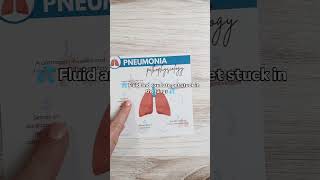
Christina Rafano breaks down how pneumonia develops: pathogens invade the lungs, triggering inflammation and fluid buildup that blocks gas exchange. The infection can lead to sepsis or collapsed lung tissue if untreated.
Chapters
Here's what's going on with the pathophysiology of pneumonia. The first thing that happens is a pathogen invades and it triggers the inflammatory response in the body. And then capillary leak happens in the blood vessels, and then exudate and fluid accumulate in the lungs. That's really what this is. It is a lung problem with pneumonia. So all of that gunkiness is really just going to accumulate way down here in the lungs. And then what's going to happen is gas exchange is decreased. If there is so much of this gunkiness and all that stuff in the lungs. Lungs, then the lungs can't function as they normally would. So gas exchange is decreased. And then a possible complication is sepsis and atelectasis. Sepsis, meaning that the bacteria, the virus, or the pathogen goes into the bloodstream can affect the whole body. And then atelectasis could be possible lung collapse. Those are two possible complications from pneumonia.