Pathophysiology of Stroke (VISUAL BREAKDOWN!)
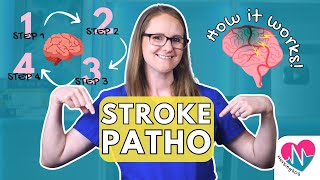
Christina Rafano breaks down the three types of stroke: ischemic (thrombotic or embolic clot), hemorrhagic (vessel rupture from hypertension or aneurysm), and TIA (temporary blockage that resolves within 24 hours). All strokes kill brain cells, and symptoms depend on which region is damaged. She ties pathophysiology to nursing care and NCLEX prep.
Chapters
Hey there my friend. My name is Christina Rafano from nursingsos.com and in this video we are walking through the pathophysiology of stroke. I am going to break it down for you super, super easy into simple steps so that you can more easily understand it and remember it for your nursing school exams. And of course I will share the key NCLEX points that you absolutely need to know to rock your exams in nursing school. So hit that subscribe button and click the notific bell and let's dive in. Now real quick, I want to make sure that you know about my free stroke study guide that I have for you which is going to help you so so much in your nursing school exam study guides. They're awesome. They're so such a cool tool to use to help you learn things faster. So I'm going to put that link down below in the description. So be sure to snag that after you watch this video video. So straight out of the gate, my friend. This is key. It is so important to understand the pathophysiology first for any disorder that you're studying and learning about in nursing school because then we can really connect the nursing school interventions and the signs and symptoms and the assessments back to it and do more critical thinking about it. You know that I am all about critical thinking and helping you to learn how to critically think in nursing school. So we always want to connect everything back to that pathophysiology so that you can really understand why these things are happening in the body. We don't want to just memorize a list of stuff, right? We need to know why because then you will be so much more prepared to critically think during your nursing school exams and the nclex. Now, stroke is one of those topics that the NCLEX loves to test you on. So we really need to make sure that you understand this well. And here's the thing. There are three main types of stroke strokes that you need to know about for your nursing school exams in the nclex. These are ischemic stroke, hemorrhagic stroke, and tia. This stands for a transient ischemic Attack tia. Now let me give you a quick memory trick to help you remember these three. Think IHT like you're saying I hit my head, but it's iht. So ischemic, hemorrhagic and tia. Now let's break down what's happening with each of these types. Okay? Now I'll walk you through the critical thinking behind it all as well to really help this all come together. So with an ischemic stroke, think of it like this. Your brain is kind of like a busy city that needs constant deliveries of oxygen and glucose and nutrients to survive, right? Then the blood vessels, these are like highways that make these deliveries 24,7. But during an ischemic stroke, one of the highways gets totally blocked off by a blood clot. So it's like. Like there's a traffic jam on the highway. But this traffic jam, it's deadly because it stops all of that oxygen and the nutrients and that glucose getting to that part of the brain. Now, there are two ways that this can happen. And this is a key nclex point. You've got to know these two. Thrombotic stroke and an embolic stroke. So here's how I remember the difference. Think T for right there and E for everywhere else. All right? So a thrombotic clot forms right there in the blood vessel in the brain, and then an embolic clot can form everywhere else in the body, and then it travels to the brain. Thrombotic strokes often happen when someone has something like atherosclerosis. So that's buildup of fatty plaques that really make the blood vessels more rough and narrow. It's like a pothole that gets worse and worse and worse until it totally blocks off the road, right? And blood just can't get by. Now, embolic strokes happen when a piece of debris breaks off from somewhere else around the body, often the heart, and it travels through the bloodstream until it gets lodged into a smaller brain vessel. And then patients with atrial fibrillation, they're at higher risk for this because of that irregular heart rhythm. It can cause clots to form in the heart and then move to the brain. Key, key nclex point for you right there. And now here's a key critical thinking point. That's once that vessel gets blocked, my friend, you've got a race against the clock. And here's what happens. And just so you know, I put all of this inside a stroke study guide that I have for you. So please don't forget to download that. It's totally free. And the link is down below in the description. So step number one is ischemia begins here. Now, the brain tissue downstream from the clot immediately stops getting that oxygen and that nutrients. And the brain cells, they're so, so hungry, right? They can't without those nutrients, without that blood flow. Now, step number two is when these cells go into chaos, so they will start to malfunction. The Energy system that they have, it shuts down and the cells begin to swell. It's like there's this power outage happening in that part of the brain that the blood flow is cut off to. Then step number three is the point of no return. So if blood flow isn't restored quickly, then those brain cells, they will die. And then this dead tissue, this is called an inf. Here's the key point for you, okay? Unlike other parts of the body, brain cells, they typically don't regenerate. So every minute counts here for our patients. Now let's talk about tia. Transient ischemic attacks. Okay? This is another huge NCLEX point. TIA stands for transient ischemic attack. With a tia, you still get that clot blocking blood flow. But here's the key difference here. The clot breaks up or moves on on its own within 24 hours. So blood flow, it gets restored here before that, permanent brain damage can occur. Now, patients might have stroke symptoms for a few minutes or a few hours, then feel completely normal again. Now let's talk about hemorrhagic strokes. If ischemic strokes are like, think of them like that blocked highway, right, like we talked about, then hemorrhagic strokes are like a damn breaking. When patients describe the worst headache of my life, that's often a hemorrhagic stroke. That is a key NCLEX sign and symptom right there for you, my friend. Worst headache ever. So what causes this vessel to burst in the brain? Well, uncontrolled hypertension. That's a huge one. High blood pressure constantly pounds against those blood vessel walls in the brain until they weaken and give way. We also see aneurysms. Those are we balloon like bulges in the blood vessels, and these can rupture and then aging blood vessels really become brittle over time, and those can rupture as well. Now, here's what makes hemorrhagic strokes so dangerous. They can cause problems in two main ways. Problem number one is direct damage. So when that blood flow is stopped because of that hemorrhage happening in the brain, right? The brain isn't getting that blood flow that it needs to function in that part of the brain. And then problem number two is increased intracranial pressure, or icp. The skull, it's like a rigid box. When blood pours into that closed up space, then the pressure goes up and up and up and up and up. Then high ICP is dangerous because it really compresses on that healthy brain tissue and it makes it harder for new blood to get into the brain. And obviously, if there's a block in the blood flow to the brain, that is bad news, my friend. So here's the universal principle that applies to all strokes. And this is super important to know for critical thinking. Whether it's ischemic or a hemorrhagic stroke, all strokes lead to the same end, the same result, which is brain cell death. And here's the critical thinking piece that you need to know. The symptoms that your patient experiences really depend on which part of the brain is damaged in the stroke. So this is hu for the nclex, okay? The signs and the symptoms. If there's damage to the motor cortex, you'll see weakness or paralysis. If there's damage to Broca's area, you'll see speech problems. If there's damage to the visual cortex of the brain, then you'll see vision changes. If there's damage to the cerebellum, the patient will have balance and coordination issues. And if the stroke happens on the right side of the brain, it affects the left, left side of the body and the patient may have impaired judgment. They might be more impulsive and then have more inappropriate actions. They may have spatial and memory impairment too. When you think right brain stroke, think no right actions. And if the stroke happens on the left side of the brain, then it's going to affect the right side of the body. So left brain strokes can cause the patient to be more cautious and depressed or anxious even, and they may have language and reasoning and some memory impairment. When you think of left brain stroke, I like to think I left my logic behind. This is why stroke symptoms can be so widely varied and why the location matters just as much as the size of the stroke. When it comes to how bad that stroke is, is. Now let me give you a simple four step pathophysiology framework that you can remember for your exams. So step number one of the stroke is a trigger. Now this could be caused by that blood clot formation we talked about for ischemic strokes or TIAs, or a blood vessel rupture for those hemorrhagic strokes. Now, step number two is where blood flow is disrupted. Now, with ischemic strokes, you have a blocked blood vessel, right? And with hemorrhagic strokes, you have a ruptured blood vessel. Plus now that increased intracranial pressure. And then step number three, this is brain cell death. So a lack of oxygen, lack of nutrients, it kills the neurons and inflammation causes even more damage. And then step number four is when symptoms start to appear. You'll see specific symptoms then based on the location of the stroke in the brain and where the damage is. Now let's talk about risk factors really quick because the NCLEX loves to test you on these. The major risk factors for stroke are things like hypertension. That's the biggest one, atrial fibrillation, diabetes, high cholesterol, smoking, increased age, and having a previous stroke or a previous tia. Now here's the good news. Many of these are modifiable risk factors and this is huge when it comes to patient education. So things like blood pressure control, diabetes management and lifestyle changes and these can all really dramatically reduce the stroke risk for our patients. So those are things that you'll want to be talking with your patients about. So when you're nursing exams in the nclex throw those tricky select all that apply questions at you on patient education. Those are really the big ones that you will want to remember. And if you struggle with answering NCLEX style questions and choosing the most correct answer on your exams, like who doesn't struggle with that, right? Be sure to check out this video here where I walk you through the top strategies for choosing the most correct answer on your nursing school exams. And if you liked this step by step guide on stroke and you want more videos like this, write love in the comments below because that is just what we do around here and it really helps me to know what kinds of videos you want more of. And hit that subscribe button and click the notification bell and as always my friend, go become the nurse that God created only you to be and I will see you over there in that next video.










