TEST TAKING STRATEGIES for Nursing School | ASK ME ANYTHING!
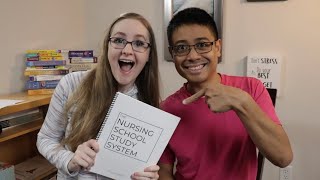
In this YouTube AMA, Christina Rafano and Matthew discuss comprehensive test‑taking strategies for nursing school. They start by answering a member’s question about study hours, recommending two hours of study for every hour of lecture (excluding clinical hours). They introduce their newly released Nursing School Study System—a step‑by‑step PDF guide that condenses the content of their long‑running Nursing SOS membership community. The hosts then cover key exam tactics: reading the entire question, avoiding reliance on past clinical experience, steering clear of answer choices with absolute terms ("always"/"never"), handling Select‑All‑That‑Apply (SATA) items by treating each option as a true/false question, and prioritizing patient care using the ABCs, Maslow’s hierarchy, and the nursing process. They stress calling a doctor only when no other nursing actions are possible and staying within scope of practice. Additional advice includes practicing NCLEX‑style questions (e.g., Saunders), embracing repeated failure as a learning tool, using flashcards for rote subjects like anatomy & physiology, communicating frequently with online instructors, and maintaining focus and rest while studying. Throughout, they promote the Nursing SOS membership and the Study System as resources, note the product is currently U.S.‑only, and invite viewers to future AMA sessions.
Chapters
Hello. Hello, everyone.
Welcome to School Show Ask Me Anything edition. My name is Christina Rafano and I am Matthew.
Thank you for. Happy Monday.
Happy Monday.
Happy morning or afternoon or evening or night, no matter where you are.
There you go.
Glad to have you.
We have a fantastic topic for you today. Test taking strategies in nursing school. How to take nursing school exams confidently. All right, let's do it.
So anyone new? This is our Ask Me Anything show you every Monday and Wednesday and go ahead and pop your questions in the comments below. And we will try and get to as many as possible. We do have a topic today of test taking strategies. So if you have questions specific to test taking strategies, be sure to ask those and we will get to those as we go through our discussion. Also, we also have our members that are allowed to ask questions throughout the week and we'd like to get to those first. We did have a member ask this question and it kind of goes towards studying. But I'm not sure if you want to wrap it up or answer that first. I'll try to wrap it.
That's fine.
And then do test taking strategies. All right, so the question from the member before we get to our topic of the day is how many hours a day should you aim for when studying for an upcoming exam?
Now this is a perfect segue, perfect setup. Thank you to this nurse member. Boom. So Matthew and I spent the better part of the weekend. Of course, you guys know that we don't do anything on Saturdays, so. So no, not Saturday, but like all day yesterday, Friday night. Like, we're just like going, we just released brand new nursing school study system. Now this thing is like, I can't even. Like, there are no words like, this is everything you need to know. There's a lot studying.
There's a lot in there.
This is your step by step guide for studying a nursing school. Step by step. So I literally break down for you, step by step, how to study. So here's what happened. We have had our nursing SOS membership community for years now. Years. Three years, actually. I think it'll be in October. Yeah, yeah, three years. And we have. I mean, my. We have had hundreds. How many thousands of members go through that? The thing is, is that we're only open a few times a year for enrollment into our nursing membership community. We close it down. We close enrollment because we want to focus so heavily on our members who are in there. And so we've had this kind of weird dynamic where we wanted to help other students as much as possible. So we would do it through YouTube and you know, but all of our tips are kind of scattered on YouTube like you watch YouTube videos and I give you three tips here and five tips here and all this stuff. And I wanted to create a systematic way for you to get the information that you needed when enrollment for our nursing SOS membership community was closed. And so we did it enter the nursing school studies system.
So basically what we did was we have our step by step process in the nursing SOS membership community where. Which we guide you through, we walk you through. Well, I say we loosely because Christina, Christina and Nicole, you guys are the rock stars there. I just pop in with funny gifts in the Facebook group.
He's here for the comedic value.
If that's what you're looking for. I'm here for that. But they walk you through nursing school in the nursing SOS membership community and there's a roadmap, a step by step process that they do that and they guide you through that in the membership community. Like Christina said, we've been doing this for years. And so they have condensed that step by step process into a guide for you in printable format that you can get at any time. So you have this step by step process on your own even when you
cannot purchase, even if you cannot join
the membership at that point in time. So we've been having questions on YouTube. How can I join the membership? Definitely, if you want to get into the membership and have that kind of guided and more hands on guide with Christine and Nicole and the team, definitely go ahead and go to nursingschoolofsuccess.com join and join the wait list because we will be opening at intervals. But while we're closed, you can definitely check out the nursing school studies system step by step guide and that will definitely get you started. All the questions that I've seen so far are answered in this guide.
So we will be specifically referring to this a lot. Charlotte, on Instagram you said it helps a lot. I purchased the study system and it's awesome. Yes, it is. I'm so glad that you snagged it because seriously guys, I cannot tell you this was a long time coming. I have been thinking about this for a while. We wanted to be able to serve as many nursing students as much as possible and and our nursing SOS membership community, like, you know, that is really where I hold your hand. I hold your hand. Through nursing school, you get all the videos, all the trainings, all you get the studies. So if you're a member, do not buy the study System. This is inside the membership for free for you. Do not buy it. So that is inside the membership. So what does this mean? I lost my train of thought.
So the membership community is the guided. Christina's here ask us questions all along the way. Like I said, members can ask questions and we'll answer those before these AMAs. You have tutoring calls.
I am tutoring you.
There is a lot in there. She pops in just randomly on Facebook lives and says, hey, how's it going? So it's a really nurturing, uplifting community. I still recommend that. It's a great place to be for nursing students.
If you want me to hold your hand through nursing school. The nursing SOS membership community is for you if you are struggling with passing your next exam. If you need a step by step process for how to study, this is for you. And the membership is closed. So I, I just, I, I cannot say this enough, you guys. I cannot say this enough. Like Matthew said, all the questions that we get on these AMAs are answered here in this guide. So if you want, you know the step by step process for how to pass nursing school. This is it. This is it. We talk about everything online classes, how to study for finals, like step by step on how to study for all of your classes. Med Search Fundamentals. We have, I added here a FAQ Frequently Asked questions which we will go through today. Frequently asked questions. What do I focus on when reading the textbook? I struggle with anxiety. How can I pass? What do I do if my professor doesn't teach? What do I do if my professor wants me to read everything in the textbook? What do I do if my professor wants me to read everything before class? It's all in here. Everything that we've been answering on this ama. It's fantastic. I just put it into one guide for you. It's amazing.
So we're going to be referring in YouTube nursing schools success.com study system. One word will take you there. If you want to still join the wait list, definitely get on the wait list to join the membership community when it does open. That is nursing schoolsuccess.com join and really it's just kind of what, what you want and what you want to get into at this point in time. Like we said, the study system is available at any time if you're planning on joining membership or if you're in the membership already. We actually decided, you know what, this is the roadmap. This is the guide. We're releasing it to members for free. So that is in the watch this first course, it is a new section there that was just released this morning. So everything in the study system, along with some nice little bonuses are in there, some templates and things like that. So definitely check that out if you are a member. So that is it. So circling back around on this question that you can look up in the
study system, such a great setup.
How many hours a day should you aim to study when studying for an upcoming exam? And that will also segue into our topic.
Let's just turn to page 42. How many hours to study? How many hours should I say? So we recommend study. I'm not going to read off of it because I know it. We are. We always recommend that you study for two hours outside of class for every hour that you are in class. Class. So when you are sitting in lecture class, and oftentimes you know your lecture classes are going to be like four hours, six hours, two hours, three hours, what have you. Let's just say it's four hours. If you're in class for four hours per week in a lecture class, you will study for two hours. Two times that. Two hours, you'll study two times that. So four hour lecture class, you will study for eight hours outside of class every week. Week. Does that make sense? Anyone need clarification on that? Just multiply by two. How many hours are you in class? And that could be virtual class. Now, lecture class, you know, online class, in class, class, in person, what have you. 2 hours study 2 hours for every hour you are in your lecture class. Now the thing with this, this does not apply to clinical. Your clinicals will be like 12 hours or something. And do not study 24 hours a week. For clinical. If it's 12 hours. No, I'm just specifically talking about lecture class. So lecture class, two hours. Study for two hours for every hour you are in class. That makes sense. And if you have the guide study system, turn to page 42. How many hours should I study? It's in there. There you go. And I actually break it down for you. Lecture, clinicals, all the stuff. There you go. All right, perfect.
Great. So with that out of the way, our topic of the day is test taking strategies. Test taking strategies.
Well, let's just jam on it, shall we? How to answer nursing school exam questions and choose the most correct answer. Not the correct one. The most correct one. And hey, what do you know? It's in the nursing school study system. Page 38. You guys, if you have the study system, turn to page 38 because we're going through it. So I'm not going to go through all of them, but I will hit the highlights, the things that I think people really get stuck on.
Okay, before you do, I'm my way in here. Someone from YouTube just mentioned a really good point. Unfortunately, we are only selling this study system in the US currently.
Yes.
So, so, so, so 2.
2.
2 points. Yes. It's only available in the US currently, so apologize for that second point. It is a PDF download, so Christina has it nicely printed out here and bound and stuff like that. It comes as a PDF download. We do have recommendations on where you could go and get it professionally printed and bound if you like. Or you can just print it out yourself or you can just keep it digital. Keep digital. Totally up to you. But it does come as a PDF download, so we are not mailing these out, just FYI. All right, great.
All right. Determine what the question is really asking. Determine what the question is really asking. So when you go through nursing school exam questions, test questions, you guys know that they are testing you on your critical thinking. When was the last time you had a nursing school exam that tested you on facts from the textbook? Like never, right? Maybe you'll get like one or two questions periodically. That's like, hey, what does you know this term mean? You know, or whatever medical term mean. Maybe, but not very often. They're going to test you on your critical thinking. And how they're going to do that is case scenario question. We were just talking about this last week on another ama case scenario questions. If you want a deep dive on case scenario questions, go back to the YouTube video from last week, Monday. I think it's actually titled how to answer case Scenario Questions in Nursing School. So definitely watch that. But your nursing school exams are going to give you case scenario questions. And you have to make sure that you read the whole thing. You know what the question is asking you for, right? Make sure you know what it is asking you for. So when you read a case scenario, they're going to give you random information about that patient. Like it's a full case scenario, like patient scenario, where, you know, patient comes in, they have. These are their vital signs, here's their history. You know, here's what's going on. Here's. Here are your assessment things like what are you going to do about it Kind of thing. So you go through that. You have to read the full question because there's. They're going to throw things at you that you don't need to know about and then make sure. That you read what the actual question is asking you for. We were just on an AMA last week and someone pointed out. Yes. I always get tripped up with the ones where they say you what not to do. It happens. What not so, like, you could get a question, a nursing school exam question, and it, like, it gives you this whole patient situation. You're like, oh, I would do this, but the question might be asking you what you wouldn't do. You see what I'm saying? So read the question. You have to understand what it is. You know, what is. What is it asking you for first? That is the key. Hey, by the way, Christina, turn your phone on silent. There you go. I turned my phone on silent. Sorry, Instagram.
This is interesting. Would you suggest underlining the main points within that question when reading?
It depends on how your instructor says. We could not because it's online. So our, our. When I was in nursing school, our exams were all on the computer. And so you can't, like underline it. And like the nclex, you can't, like, underline stuff. You know, you can't like underline a sentence in there. If your tests are written. Sure. Like, if they're on paper written, that's fine. But I, for the most part, I don't think you will be able to because they will be online.
Yeah. So it's just really understanding and reading the whole question. Make sure you get all the nitty gritty details. They might have this long exposition and at the end it's just, oh, what not to do.
Yep.
Or things like that.
So random things are going to throw at you. Now what you could do because the NCLEX gives you a whiteboard and then your nursing school exams should at least give you a whiteboard to kind of. Oftentimes nursing schools will try to mimic the exam experience. The NCLEX exam experience as much as possible, as close as possible. So you might get a whiteboard. As you take your nursing school exam, you might get a whiteboard. So you could do it that way if you wanted to. Was it Charlotte that asked this question? Yeah, Charlotte. So, Charlotte. Yeah, you might do that if you, if you find that helpful. You could, like, write down the key points on your whiteboard as you're answering the question. That could help. But I don't think it depends on how your school tests you. Most likely it's going to be on the computer. So I don't think you'll be able to actually underline or like, you know, highlight things as you go. Does that make Sense. Perfect. All right, next. Was there anything else for that?
No.
That one. Okay, that is it for that Next testing. You're welcome. Next. Test taking strategy. Where do I think people are getting stuck now? Like I said, we've got a bunch of these in the nursing school study system. So if you go to nursingschoolofsuccess.com study system, you can get this. I'm going to hit the highlights, the places that really students get caught up on a lot. So I'm doing the highlights. Number three is imagine that you are in a perfect world. NCLEX and nursing school exams are in a perfect world. We see this happening a lot inside our nursing SOS membership community. Say all a lot. It happens a lot where we get members who come in and they say, Christina, I have all this experience, all this experience, which is fantastic. If you pre, like if you, before you went to nursing school, you were an emt, you were a cna, you were a tech, you were an lpn, you're in healthcare in some capacity. You have previous experience, right? In the healthcare industry. You have taken care of real patients, you have seen real patients, you have seen real scenarios. Now here's the problem. When you get to your nursing school exams, they're not going to test you on real world. They're not going to test you on real world. They're going to test you on perfect world. Textbook world. Textbook world. If, if it was a perfect world, all patients were textbook perfect. That is what they're going to test you on, on your nursing school exams and on the nclex, they're not going to test you on, you know, how it goes in the real world because, you know, patients could all present differently. But they are going to test you on the textbook cases, right? So you have to forget about your past experience. You have to you, when you are taking your nursing school exams, leave it all like dump your brain out from your previous experience. If you are a mom, if you are a mom, forget everything you know about your kids, right? We see this a lot in pediatrics and ob. It's like, oh my labor and delivery was like this. And then you answer a test question based on how your, you know, birth experience went or the developmental milestones your kids hit and when, like if your child started running at six months, that is not textbook friends. You have to learn the textbook, the textbook signs and symptoms, the textbook developmental milestones. You have to know the textbook book stuff, not the real world stuff, right? Like your child may have, you know, may have developed early, later what have you. But when you sit for your nursing school exams, do not think of your kids, do not think of any previous patients you have. You like, forget about it all or you will get tripped up.
Yeah. So we, we actually talked about this a couple AMAs ago. This whole idea, people were asking, hey, I have previous experience. Experience. I, I as in the medical field already. Will this help me? They were just starting out nursing school and yeah, this is exactly what we told them is that perfect world environment. So you need to kind of be able to separate that in your mind. So I'm kind of curious in the comments below, let us know if you've actually dealt with this already, whether you got tripped up or whether it's something that you thought of or just the, the difference that you've started seeing in nursing school versus real life.
So, yeah, for sure.
We talked a lot about that at previous ama. I'm curious what you guys have experienced
so far and if you have previous experience, let us know.
Yeah.
All right. Eliminate answers that use global words. Now this is big. When you sit for the NCLEX or your nursing school examination, there might be answers that they will throw at you that say, never do this, always do this. You know, those are global words like, how do you feel if someone's like, Christina, you always do that, or you never do that. You know, Shakira, you never do that. You know, Jess, you never do that, you always do that. Trevor, you never do that, you always do that. How do you feel? That's not very good feeling. Right. If someone's like globally pinning you in a corner, like, you always do this, you never do that. Same thing with the nclex. The NCLEX does not like to be pinned in a corner. Your nursing school exam does not like to be pinned in a corner. That is most likely the incorrect answer. Avoid answers that use those global, like all encompassing words. Never, always those things. That makes sense. We all clear on that? So what is that? Tip number three?
Yep.
Shannon, you said yes. I work in telemetry. Yep. Test on rhythms. Oh, no. Yeah, I know because I put everything that I saw with the strip and that's not what they asked. I only got partial points. We have. That's so funny. I know. That's a bummer. That's a bummer. I'm sorry about that. Yeah. That goes back to. What do we say? This is tip number one in the study system. You have to read the question. Read the question. Don't use your past experience, man. Shakira, I've been a CNA for two years and currently work in the hospital and do home care. They're very different environments. Yep. The difference since nursing school.
And that's important. That's all about learning. It's just learning the difference and getting through it.
Yeah, that's great. Past experience. Oh, man. Okay, now let's see SATA questions. Let's talk about.
So we. We just had one come in from.
Perfect.
Louis. Sorry.
Yeah. Louis Creasy. I think I said that right? I.
Okay.
Yeah.
Hello. About SATA questions. We had one earlier in this AMA about SATA questions.
Okay.
Static questions. I feel like. Is it a nursing school thing?
Although it's correct, it's not the most correct.
What is the most correct?
Select Luke Creasy. Hello.
Yes, Lucreasy.
Great. Hello. All right, let's ask your questions. Let's jam on it. Select all that applied. Okay. Where's Barbara when I need her? Because Barbara always post in the YouTube chat her tips for Santa questions, which is so nice. When you answer SATA questions, there are two things that you have to do. You have to. Have to take them as true or false. So read the question, read the first answer. Because they're going to be numbered like 1, 2, 3, 4, 5. 1, 2, 3, 4. And you have to select all of them that apply. No partial credit. No. No partial credit. No soup for you. I don't even watch that show, but I think that's funny. One, two, three, four. One, two, three, four, five. Read the question. Look at the first answer. Answer the first answer as if it were true or false as it relates to the question, is it true or false? And then choose is it true or false as it relates to the question. And then you can check. Check. Mark it right? Checkbox it. Checkbox it, if it fits. So you do that for every single answer. Read the question. Read the second answer. Is it true or false? Check it. You know if it fits. Read the question. Read the third answer. True or false. You see what I'm saying? Go back through every single one. Read the question, Read the first answer. Read the question. Read the second answer. Read the question, Read the answer. Double check yourself. Now, here's the real reason that this works, is because when you do that, you are basically using each answer by itself. You cannot combine them together. So even if. Even if. And this happens. Listen up, friends. Even if two of those answers are very similar or even basically the same thing, right? You can choose them both, because you can select all that apply. Okay? So read the question, read the first Answer, is it true or false? Then read the question again. Forget the first answer. Read the question again, go to the second one. Is it true or false? Take every single answer on its own merit. Do not relate them together. Do not say, oh, because I selected this answer, I can't select this one. No, it's select all that apply. So if it applies, select it. Right. Does that make sense? Was that clear enough?
Yeah, I think that that's clear enough. I think short version of that. Yeah. Just pretend that it's however many choices there are, that it's that many questions of true, false.
Right? Yeah, that's a great way.
If there's four options, it's not really four or it's not really one question. It's actually four true and false questions.
Yep.
So just answer it like 4 true and false questions. So read the question, check the. See the first option, and then if it's true or false, and then select it and then go through that process again. So it's not one question with four options, it's four true and false questions.
Perfect. I like that. Yeah, that's a really good way to explain it. All right. Now let's talk about prioritization questions. Now, if you have the nursing school studies system, this is on page 40, number 11. Prioritize how to prioritize and answer priority nursing school questions. There are three principles that you must follow. Like I said, if you have the study system, it's on here. The first One is the ABCs. Airway, breathing, circulation. Is your patient's airway clear? Are they breathing and is their blood circulating? If one of those three things is not happening, it's game over. You cannot move on. Do not pass go. Do not collect. What is it?
$200.
$200?
I love Monopoly. It's a great game.
Your patient must have their ABCs going on, right? Airways clear, they are breathing and their blood is circulating. If one of those three things is not happening, that is what you need to fix, Right. That is your top priority. So answer that first. Maslow's hierarchy of needs is principle number two. Now, Maslow's hierarchy of needs is a little bit very. It's actually. I don't want to say a little bit. It's very related to the ABCs. When you look at Maslow's hierarchy of needs, it's a pyramid. It's a pyramid where you go bottom to the top. Now, the bottom is physiological needs that would. That's what you will solve first. Solve their physiological needs first. Now, these physiological needs, you Guessed it. Are the ABCs, airway, breathing, circulation, ABCs, physiological needs for Maslow's. Then you'll move up to safety needs. So let's say your patient, you get a scenario question. Your patient, is their airways clear, they're breathing, their blood is circulating, but maybe there's a safety need going on. That's when you would want to consider Maslow's hierarchy of needs. Oh, okay, I have to solve a safety need before I move on to a love and belonging need that they have or a self esteem need that they have or a self actualization need that they have to make sure that they're safe. Does that make sense? So you move up the hierarchy. Now the third principle is, is the nursing process, good old nursing process. Now this is ADPY or adopy, depending on how your school does it. Assessment, diagnosis, outcome identification. If your school uses the O. So Assessment, diagnosis, outcome identification, Planning, implementation and evaluation. Now this is your hierarchy. You are going to assess your patient first before you do anything. Assess your patient first before you do anything. What do you do before you give a medication? You assess your patient first. What do you do before you do anything? You assess your patient. I don't want to say this is always the case, but I'm just going to throw it out there to the world. Assessment is most often going to be the correct answer. Not always, but oftentimes it's going to be the correct answer because the nursing process is everything for nursing. It's everything. You have to assess your patient first before you do something. Now I actually was thinking about. We had an ama, I think it was last week or maybe the week before. We were talking about prioritizing patients. I think it was Monday. I think it was with case studies. Go back through with case studies if
you want a little bit more about prioritization. What we were just talking about last week, last Monday, that was the main topic of that day, how to answer case study questions. How to answer case study questions. And prioritization was a big deal. So basically the whole hour we talked about that. So more in depth, more shenanigans. You can check that out.
More shenanigans. Yes, more Matthew and Christina shenanigans, like we do here. You're the best. So when you are answering those questions, assessment is always first. Now I came up with a good example after the Monday thing. What I wanted to say was, for example, for example, this is a really good example. If you are watching. Actually we had. Who was it? Shannon on telemetry. If you are watching the patient's cardiac monitor. You are watching their ecg, like, from, you know, telly. And you see, it's like, whoa, whoa. Like they're in VFIB right now. Like they're inventing. You run into their room, right, with the paddles, get you. But they're just brushing their teeth, bouncing everywhere, you know, ventricular fibrillation. Right, right. Are you gonna go in there, your patient's brushing your teeth? No, I'm gonna save you. No, you're not. You're gonna assess them first. Okay, I know it's an extreme example, but there's your example for your Monday morning.
So I thought of something just as you were saying that a little bit before that.
Non nurse. Matthew.
Yes. I'm going to tie this to non nursing things.
Okay. Perfect. I love it.
Ready, aim, fire. Right?
Yeah.
You get ready, you aim and then you fire.
Like fireworks.
Yeah. So you don't. Ready, fire, aim. That's usually not correct. Process of doing things.
Oh, that is so good.
Ready, aim, fire.
You know what came to mind for me when you said the three?
Yeah.
Mirror, signal, head check.
Okay.
Who remembers that? And do you do that in your state? Like when you're driving? Okay, what you're supposed to do, right, when you're driving, if you want to change lanes, you look in your mirror, then you put your signal on, and then you do your head check and then you can change lanes. Right?
Yeah.
Use your signals, people.
I go in all sorts of orders for that one. Just whichever one. Just whichever one I want to do.
Mirror, signal, headjack. So that's so funny. Like those three. Yeah. Always assess first before you do anything. Right? Right?
Yeah.
All right, so there's your three principles. And like I said, it's in the guide. This is page age 40. If you are following along in the nursing school study system, which, by the way, is available for you. Nursing School Success.com, forward/study system. It's gonna change your life. Alrighty. I am, like, not even. Man. I gotta tell you guys, I genuinely, like, I genuinely hope every single person who's watching us right now, all gazillion of you get this guide. Because it's just. I mean, I can't even tell you. I can't. This is everything I wish I had in nursing school. It literally walks you through nursing school step by step. I mean, who does that?
It.
Who does that?
It won't help you.
Me. I do that. Yes, it will help you.
It will help you.
It's everything I wish I had.
I'm really bad with names, but.
Oh, I know these, like my orgerie, my. Oh, Marjorie.
Marjorie. Okay, Marjorie, thank you for the kind words.
Hi, Jasmine. All right, patho test this Wednesday. Check out our patho videos, friend for
those just joining before you continue on.
Oh, okay. Hi, I'm Christina Rafano. Nice to meet you.
Hi, I'm Matthew. Nice to meet you. Welcome to the nursing school show. We're talking about test taking strategies.
More nursing school.
Christina is just going over some main tips, pointers, what have you about test taking strategies and then we're going to answer a couple questions that you guys have about test taking strategies. So if you have not yet already, go ahead and post them down below. I have them all that you have asked so far. So do not go away. We will answer them shortly.
Perfect. All right, next test taking strategy. Rarely call the doctor. Here is I'm going to give you the answer. Are you ready? I'm going to give you the answer. You only call the doctor on a nursing school exam when there is nothing else you can do. Nothing else you can do as a nurse. That is the only time. It's the only time. So oftentimes your nursing school exams will give you a whole list of answers and one of them might be call the doctor. Oftentimes, like, you guys have seen this, right? Who has seen this? Give me a thumbs up. Thank you. Give me a thumbs up. Give me something. Who has seen this on a nursing school exam? They give you like, hey, what will you do first? Prioritization. You know, they'll give you a case scenario question. What will you do first? You know, check their blood pressure, check their oxygen level, whatever, whatever, whatever. Give a medication. Call the doctor. What are you gonna do?
Me?
Everyone's saying me. Thumbs up. Me, pretty boy. Xavier. Hello.
Hello.
That's funny. Yep. Oh, yeah. Notify the provider. That could be another one. Call the doctor. Call the doctor. So, so only call the doctor when there is nothing else you can do as a nurse. Your nursing school exam is going to test you on making sure that you are doing nursing right. Competently and confidently. Competent and confident. A little bit of a. Yeah, competent or confident. And so have to make sure that you were doing whatever is within our scope of practice first. Now the key thing here is to only call the doctor. Like you said, only call the doctor when there is nothing else more that you can do. Because here's what the NCLEX is thinking. I will tell you here is what they are thinking as a nursing school instructor or as whatever test writers are out there, they're thinking, oh, are they going to call the doctor before they get all the information that the doctor needs? Because here's the thing, here's what we see on test questions. There will be things that you will need to assess for and then they'll have an answer that says, call the doctor. So what did we just Talk about? Page 40, number 11. Assess your patient first. Assess your patient first. If you can assess your patient, I would be very, like, very, very wary about answering. Call the doctor. You have to make sure that there's nothing else more that you can do. There's nothing else more that you can do. Because what will happen is like, you know, call the doctor. The doctor's gonna ask, well, what is their vital signs or, you know, whatever. Which is an assessment. Right?
Well, I just thought you'd do it. I didn't want to do it, so I just thought you'd.
Exactly. So that's kind of what they're looking for on the test, right? Oh, are they going to want to like, like, you know, pass it up, pass it on to somebody else? Like, I don't want to do this.
I'll just call the doctor. It's cool. He'll do it.
He'll do it. It's awesome.
So Phyllis had a, had a good question. Is this advice good for practical nursing as well?
Yes. The thing is, is that your LPN exams will be slightly different. With LPN exams, LPN programs, you will not be using the critical thinking parts. And in this guide or how we talk about here, like the nursing assessment does not apply to you in the way that we talk about it. The nursing assessment that we talk about here, and what I talk about here in the study system is the RN nursing assessment where you are making nursing judgments that is outside of the LPN scope of practice. For the most part. I think it probably depends on what state you are in. But for where we live, for the majority of cases, that is outside of the LPN scope of practice. So make sure you know your state laws. A. I would absolutely still get the study system in the same way that we say LPNs join the Nursing SOS membership community because it will help you so much. The thing that you have to be aware of though, is that in here and in the nursing SOS membership community, it will have more than what you need. Does that make sense?
Okay, yeah.
So it has everything that you need, but it will have more than what will apply to your program.
And so that that test taking strategy. Tip of don't call A doctor until you've done everything basically that you can.
Right.
Still is for practical nursing as well.
Yes.
Everything in your scope of practice.
Yes. If you know everything within your scope of practice, do everything within your scope of practice. Which is number 15, do everything. Only do things that are within your scope of practice. Nice segue there.
I did that on purpose, by the way.
Right on. So yes, you know, okay, so here's a big one. Here's a big one. When you are taking nursing school exams. Here, here's what I saw in nursing school. Here's what we see. They will give you. It's like, okay, here's your patient scenario. Here are the things like what are you going to do first? Like a priority exam question. Right. Here's your patient situation. Here's answers. What are you going to do first? Sometimes they will say, you know, like the patient isn't responding to their medication. Patient isn't responding to their medication. What are you going to do? Increase the dose. Change the dose. As an RN or an lpn, can you change a dose or increase the patient's dose? No. Outside of your scope of practice. Right. Now here's the thing where we get confused as nursing students because we're like, wait, I see you nurses can do that? Yeah, they can. Sometimes they have a lot more leeway. A lot more leeway. However, when you're in NCLEX world, it's perfect world, right? RN scope of practice. RN scope of practice. That is outside the scope of practice of a nurse. We cannot change doses. We cannot do not double dose your patients, you know. No, no. What is prescribed by the doctor is what you do. So number 15 only do things within your scope of practice. That's one that you often see on nursing school exams. So watch out for that little stickler there. Watch out for that stickler.
Hey, that's kind of funny, this next one.
Yep, there's a question there for hey, there we go. Okay, so shall we dive into the
next how to study for NCLEX and pass specifically.
You know what's so funny? That's the last step in the study system, passing the NCLEX exam. Literally. Friends, I am telling you right now, get the study system. And I am not even going to be bashful about it. It is your step by step guide through nursing school. It will save your nursing school, save some patients lives. So that is the last step is passing the nclex. And I walk you through how to do that. So all right, practice NCLEX style questions. And we actually have some what's it called? Resources for you. But here's for nursing school. If you are in nursing school, I really recommend, I love it. I really recommend that you practice NCLEX style questions when you are in nursing school for two reasons. Number one, it's going to help you out with the content and learning the content better. Number two, it's going to rewire your brain, which sounds horrible, but it's not that bad. It's going to change your thinking. Rewire your brain to be in like nclexy zone, you know, and like how do you like, you know, the mindset of nursing school exam questions. The more you practice them, the better you will get. Now here's the thing. When you first start answering nursing exam questions, you are going to totally bomb all of them. If you get any test bank resource like Saunders, I'm not gonna reach back there and grab it. I don't know, maybe Matthew can get it. The Saunders Comprehensive Review Guide. Doctor, that's awesome. The Saunders Comprehensive Review Guide. That is one of the resources we recommend. It's on Amazon, so that has like practice questions for you. When you first do that, you are probably going to get so many of them wrong, it's going to shatter your soul. But here's the thing. The more you practice, the better you will get. If you stopped there, if you just like did a bunch of practice questions, you know, got 70% of them wrong and then you quit, obviously that's not going to help you. You have to keep going. I expect you to get the vast majority of them wrong. I expect that of you. What I also expect from you is that you do not quit on yourself. You keep practicing and keep going because you will get better. Now Primabella just asked, does the study system include how to study and pass the ATI proctored exam? Oh, friend, you know you know me. Of course it does. Of course it does. Come on. Okay, so this is, I wanted to point this out here because this goes with practice questions. When you are in an ATI or a HESI program, you must do the practice questions and you must read the rationales. Let me see if I can find.
So while you're finding that out, Deanna also on Facebook commented trying to find the best way to study for my P.N. nCLEX exam and Saunders is very confusing. What is your advice? And from what I gather, from what you're just saying, that's kind of the point is the testing of NCLEX style is different and you need to get used to it. So keep doing Saunders Keep doing those practice test banks. Practice questions. Yes, it's confusing now. You'll get a lot wrong. But that's the whole point. You want to get comfortable with it and keep going. It will get better. Just keep doing more and more. Lots of repetition on that one.
Do not quit.
Just keep doing it and you'll get more comfortable with it. Because if you just quit now with it being confusing and then you go take the test, it's going to be the exact same thing and you'll just be confused all over again.
Right. So you don't want to be confused on your exam.
You don't want to be confused on the exam. So be confused now.
Yeah.
So you won't be later.
Yep. So I like the Saunders review guide. I think it's set up very well. It's like a study guide and then practice questions. So I really like that. Now, here's the thing that I wish it had that the problem we solved with the nursing SOS Membership community. Here's the issue with review guides like that, with textbooks. Ugh, textbooks. Here's the problem with nursing school in general. Everyone expects you to know how to critically think, but no one shows you how. No one teaches you how except us. So when you get. Okay, so first off, I want to pretty much. Bella. Yes, we answer how to not there, there, number seven in the FAQs, how to pass ATI and HESI exams. It's in here. Now when you go to. I can find it. Oh, here it is. We have a whole section on critical thinking, how to critically think in nursing school. It's literally how to critically think in nursing school. We walk you through how to critically think, step by step. That is in the nursing school school study system.
So.
Nursingschoolofsuccess.com forward slash study system. Now, here's the thing. When you join the nursing SOS Membership community, which is our monthly subscription program, we do not just give you videos that walk you through signs and symptoms of a disorder. Nursing assessments that you have to assess for. No, no, no. We tell you exactly why, which is the critical thinking part. We give you the answers. So when you join the nursing SOS membership community, you get the videos where we walk you through. Here are the signs and symptoms of the disorder that you might see. Here are the nursing assessments that you might do. Here are the nursing interventions that you might do. And here's why. Here's why the signs and symptoms happen. We connect it all back to the pathophysiology for you. Here's the nursing Assessments that you might need to do, most likely will need to do. And here's why. Here are the nursing interventions that you might do and here's why. That is the critical thinking part. You have to understand the why behind everything, everything that you're doing. So inside the nursing school study system, we walk you through how to create critically think. It's on page 15. How to critically think in nursing school, we walk you through step by step how to do that. That's step one. That's level. Level one is the study system. If you just want, you know that you know me teaching you step by step how to do that, then when you get inside the nursing SOS membership community, I do it for you. So this is like you do it yourself. The nursing SOS membership communities, I do it for you. I'm basically giving you the answers. Here is why the signs and symptoms happen. Here is why the nursing assessment happens. Happens. Here's why you need to assess for these things. Here's why you need to do these things. So we really, we give you the critical thinking that you need to know for nursing schools. You can answer those NCLEX style questions, your nursing exam questions correctly so you will understand the critical thinking behind it. Does that make sense? I feel like I just went on a soapbox there. Sorry about that. I get a little passionate.
She does, she does get a little passionate.
Get a little passionate when nursing students are confused because I'm here to help you not be confused. So that is why we have this. This is your antidote for nursing school confusion.
So go for us to recap. I'm just gonna, I'm just gonna jam my way in there to recap. This is the study system. A lot of people are asking. This is our new study system. We have it available on nursingschoolsuccess.com study system. It is your step by step guide on passing your exams, understanding nursing school. It is our condensed version of the steps that we actually go through in the membership. Membership is closed now. If you want to join though, nursing school of success.com join will get you on the waitlist for the membership. But in the meantime, this is a condensed step by step guide. So as Christine was saying, this is kind of a little more DIY if you want the full premiere or handholding process. And that is still the membership community. But this is definitely a good, good start. And like I said, all the questions are in there. If you are a member, do not buy it. We have just released it for free for members in the community. So if you're in the community, you will get it for free. So if you're a member, just go to the watch. Watch this first course. And it is a new section in there that we just did, so definitely go ahead, check it out. Someone asked if it's on Amazon. It is not. It is just on our website, so. NurseSchoolSuccess.com study system.
Perfect.
Okay.
Oh, Charlotte, the study system really helps with critical thinking. Yes, it does. I'm so glad to hear you say that. Literally walks you step by step. How to critically think in nursing school.
Carol, I'm not sure. I'm not sure if you're still here or if you had to jet off already from your lunch, but yes, all these YouTube lives are recorded. You can go back to our YouTube channel and it's all there for you afterwards. Yeah. So go ahead.
There you go.
That's where you go. Be sure to. If you guys are watching us on YouTube or anywhere, be sure to subscribe and hit the bell so that you are notified whenever we pop online.
Hey, by the way, can you guys post in the chat? What topic do you want me to cover on Wednesday? We're not done here, but I just want to know what topics you want me to cover on Wednesday of this week on our ama. Tell me in the comments. I'm gonna. I'm gonna pick. I'm gonna pick.
You're gonna pick?
Yep. There we go. I'm gonna pick. So there you go. Oh, perfect. Carol. Glad. Awesome. All right, what do we got to
answer a couple of quick questions here?
Yes, let's do it.
All right. Olivia's asking, how do you memorize a lot of material quickly but efficiently? I'm starting struggling in A and P. So amp is a really big one. All the kind of pre nursing stuff, anatomy, physiology, micro chemistry, those kind of things have a lot of material to study and memorize quickly. So what is our best tips for studying stuff fast?
Yes. So studying things more efficiently. The thing with A and P, it's a little bit different than your core nursing school classes. Meaning like med surg, fundamentals, things like that. Because A and P is just a lot of rote memorization. So for anything that you just have to straight up memorize flashcards and whiteboards, my friend. I don't think it gets any easier than that. Flashcards and whiteboards. I just purchased like a thousand flashcards on Amazon. They're pretty cool. So Amazon flashcards. There you go.
So just repetition, repetition for rote.
Again.
Rote memorization and again, now this is
for anatomy and physiology. You just have to drill it down, right? You just have to drill it down. Anatomy and physiology is just a whole lot memorization.
Put it to songs if you like, where we have our three year old singing his multiplication tables and he's getting that down. So, yeah, just as outrageous, the more outrageous stuff are, the more you remember them. So you can kind of do some mind mapping that way.
Yeah.
As well.
So, yeah.
Okay. Oh, back to the study system. How do you study for online nursing classes?
How do you study for online nursing classes? Well, let's just take a look in the study system, shall we? How to study for online classes, page 51. My friends. How to study from my classes. Seriously, everything is in here. Do you have guides for the HESI exam? Well, yes, we do in the nursing school study system. My friends on Instagram asking for Ati and Hessie. Nursing school study system. Nursing school success.com study system. There you go. So how to study. Oh, I lost it. How to study for online nursing exams. Let me just flip back through it. Walk you through step by step. Now, let me just hit the highlights really quick. The first one that I want to cover is that you absolutely have to communicate with your instructors early and often. Early and often. And when I say often, I mean like every week. At least once a week, preferably more. Email them. Post in the discussion boards. Hey, can you guys tell me, do you have discussion boards? You know what I'm talking about? Like discussions, like online discussion boards for your online classes. Can you tell me in the chat,
didn't you, when, when you had classes when you were in nursing school and like they almost, they kind of required you at least one comment or something like that? They did go above and beyond that.
Yeah.
Commenting there all the time.
Yep, all the time.
Especially now with online classes. You want that entire class to know your name. You want to. You want to be that guy? You want to be that person. Like, oh, they'll. They'll answer.
Yep.
Or, oh, they'll call. Be that person.
Yep. Know everybody's name. That's what you should do. That's what you should aim for. I don't know. People in my nursing school make fun of me because I know every single person's name. I memorized every single person's name in the first week of school. Every single one. It was great. Great. We're best friends. So there you go. Communicate with your instructors early and often in an online environment. It is a lot easier to get lost in the crowd right when you're online because you're not seeing someone face to face. You're not walking into your instructor's office for office hours. You're not seeing them before and after class early and often. Communicate with them early and often via email, via Zoom, what have you. Just communicate early and often. Reach out, say, hey, you know, what have you. You know how much I love you guys? I literally walk you through it. It says, communicate with your instructors early and often. And I give you questions to ask them in the study guide. There are questions here that you need to ask your instructor. So let's walk through a couple. How can I be successful in your online course? What is the best way to study for your class? Two questions, please. If you have not asked your instructors this yet, do it this week. Okay? Promise? Promise me.
Promise.
All right. If you are going to promise me that you are going to do this this week, can you please, please put like a heart, give me a thumbs up. Give me something. You have to ask your instructors this, friends. And if you don't, please do not come back to me and say, christina, I'm failing my class. What do I do? And I will ask you. Did you ask your instructor these things? And if you say no, I'm gonna get all up in your business friends and get all of them.
There you go. You don't want that.
Thank you, Charlotte.
You don't want that.
You don't want that. No. Jay, how can I be successful in your online class? How can I best study for your class? Email that to your instructor right now. Do it. Email. Email right now. Just, like, pause this. Ama. Pause. I don't know. You can't pause.
I don't think you can pause.
I'll freeze. Just, like, pause while you.
She'll freeze. I won't freeze. I'll keep going.
All right. Anyway. Okay. Make sure you stay focused. There's a bunch of steps. Yeah, there's. There's. I've got not a bunch of steps. There's like a few. There's a handful of steps. I am steps that you can follow. Paraphrasing. Make sure that you stay focused when you are at home is a huge thing for online classes. And I walk you through how to do that in the nursing school PSI system. So fun. So stay focused when you are at home. I would rather. I would rather that you sleep, take a nap, recharge, refresh, and then study and have focused study time rather than be exhausted, be tired, be overwhelmed, be stressed, and have to study for twice the amount of time.
All right, I know it's happened to at least all of you, to at least all of you, where you're so tired that you're reading your book. You read through the page and just think to yourself, wait a minute, I have no idea what I just read. So I'm going to read it again. Go through, read it again. And at the very end, it's like, wait a minute. Did I just read that? Don't be that person. It's better to be rested. It's better to recharge and have focused study time.
Yep, there you go. Instagram. We have 15 seconds left. But I see there's something new that popped up in the left hand corner of my screen. So I'm going to see what that does.
I don't know.
It might restart. I think it might restart.
I don't know.
Okay, Instagram, head on over to YouTube. We'll see. Bye, Instagram.
Bye, Instagram.
Let's see if you restart. Reconnecting, reconnecting.
We'll see, we'll see.
Oh, no. Bye, Instagram.
Bye, Instagram.
Bummer. All right, make sure you stay focused.
Yes.
Okay, friends, that's, you know, just do it. Oh, someone on Instagram. I think it was on Instagram.
Sorry, Instagram. But YouTube and Facebook will benefit from your questions.
Someone on Instagram said, our instructor said you study by studying. Okay, now, that is not a helpful answer from your instructors, by the way. Obviously, follow up question to that. Okay, how do you recommend studying? Now, here would be a great answer. If you were taking your class, how would you study?
That's a good one, right?
That's a good one, right? Okay, so ask this of your instructors. If you were taking this class, class, how would you study for it? So good. I'm so glad you guys showed up on today's AMA Gold right there.
So to go. Go above and beyond that, there is a general idea of how to ask questions. It's a thing. How to ask questions or what kind of questions to ask. And really what you're trying to get at is ask a question in a way that they know that you're. You're trying, that you are listening to them, that you are deciphering that you are learning. That's really the key point. It's fine if you don't get it. It's totally fine. It's totally fine that you're asking questions. I think they probably prefer that you do ask questions, but they have to be questions phrased in a way that shows that you are learning, that you're trying to deciphering and that there was just a miscommunication or that you just need a little bit more information, so. Oh, you study by studying. Okay, well, this is how I'm studying, currently. Lay out your process. What is one thing that I can add to this that would be better or like Christina said, okay, how would you study if you were going through classes? Depending on how you ask that, it could be a little antagonistic. So you want to be careful with that. But yeah, just be sure to ask questions in a way that shows that you're open to learning, that you are learning, and that you just need a little bit more information. So. Oh, on. On this lecture, I heard you talking about this, this, and this, and I wrote down my notes that I thought it meant this, but I'm a little bit confused about this area here. Can you explain that? They're very much more likely to say, oh, thank you, and then actually give you more than you need or whatever. Just let you. Let them know that you're actually listening to them. I mean, from the teacher's point of view. I mean, I'm trying to talk, I'm trying to teach these people. And then they keep coming back and just saying, hey, I didn't hear that. Or hey, what is this?
It's.
You want to give them benefit of the doubt that they're. They're teaching you and they want you to succeed as nurses. So also, I'll give. Yeah, just be really open about it and restate a lot.
All of that.
All of that.
Do it.
All of that.
There's wheat.
Okay,
perfect. All right, friends.
Okay.
Wednesday.
Wednesday at 9.
Anything? 9am we will be right here again with you. Hope to see you there.
About the, about the study system. So unfortunately, it is only to people in the U.S. is there any way that anyone else can do that? We are looking into it.
Yep.
We will keep you updated. Everyone else in the world, I apologize, but right now from our website, it is only available to people in the U.S. yep. But go ahead and check it out.
Nursingschoolofsuccess.com studyingysystem we'll let you know when it's available to our international students.
Yes. Also note that it is a PDF download. So the one that Christina has here is. Is nicely printed out. And the one that we have on our site is a PDF download. So you can either keep it on your phone, keep it on your computer online, or you can print it out yourself, or you can go to different places and get that printed, mark it
up do whatever it is we give you printing instructions. Don't you worry. I walk through it. Hold your hand through the whole printing process. There you go.
And if you have any questions, also Wednesday, come back, comment below.
Bam. All right, friends. All right, see you on Wednesday, 9aM Pacific Standard Time, right here. Same place, same time.
Take care, guys.
See you later.
Bye. Bye. Bye. Do I have to press again?
I think so. Thank you.
Bye.










