The LIVE Nursing School Show is BACK!!
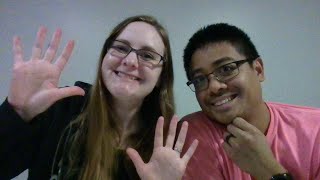
Christina Rafano and Matthew relaunch their Nursing SOS live show to answer student questions. They break down med-surg study into four steps: pathophysiology, signs and symptoms, nursing assessment, and interventions. For pharmacology, they teach mechanism of action, side effects, assessment, then considerations.
Chapters
Oh, chain connection.
Testing, testing. One, two, three.
Are we live on YouTube?
Yes, live.
Live on YouTube. Live on Instagram.
Live on Instagram.
Okay, here we go.
Hello, everyone.
Live Q A. Hey, friends.
Q and A.
And we're back.
And there's mic volume, so that's cool. Oh, I got a notification. I think that we are online.
Okay, if you're on Instagram and If you're on YouTube, can you please tell us that you can hear us and see us? Because this is not our usual setup. This is very DIY right here.
We wanted to just get online.
Very diy.
So let us know if you could hear. See us, smell us. Probably not smell us. I don't think we have smell o vision yet, but there you go.
Smell the baby.
All right.
That's for sure.
Oh, you can see and hear. Awesome.
Okay, thank you. Sierra, what question and seesaw do you have for us?
Hey, hey, hey.
Here's the thing. We. I have been polling our nursing SOS members and Instagram and YouTube, and pretty much everyone said to bring back the live Q and A show. So if you remember, please raise your hand if you remember. About a year ago, we did a live Q A show, like, all the time. I mean, when were we live? Like, a few times a week. Yeah, it was sometimes. Every day. It was really fun.
It was fun.
Raise your hand, leave a comment, and tell me if you were here for that, because I'm sure a lot of you guys were. And that was fun. So we decided to bring that back because obviously we like going live, and it's so helpful for you to get your nursing school questions answered on live video. There you go.
So are you glad to have us back? You glad to have me back? We. We could go live without me if. If. If you so desire. So let us know. Comment whether you want us both here or just. Just Christina. Just me, which would kind of be boring because I actually don't know any of this stuff. I just ask the questions. If all y' all remember you asked.
So, yes, we should actually probably introduce ourselves. Who are you? Oh, because we probably have a lot of new people.
There are a lot of new people. Hello, new people. Hello, new people on YouTube and hello, new people on Instagram. Yes, I am Matthew and I'm Christina, and we are nursing S.O.S.
We are together.
We are together.
Yes, we are married. Yes, we get that question a lot.
Christina is the nurse. Yes, I am mostly behind the scenes. Obviously not behind the scenes. Right now. Right now, I am nurse front of.
The scenes in front of the scenes. Yes, you are. All the scenes we're having. We have some really good questions coming in from Instagram, YouTube, post your comments.
Yes, comments, questions. We will.
Okay, I have, I have two questions for you. YouTube and Instagram. Number one, what days work really well for you for us to go live and do this? Number two, what time? So I got days, what time? So it's got to be like the evenings because, you know, we have childs.
And other things to do. So yes, we will be figuring out a time to go live for Q&As, questions, comments, just hanging out. So let us know what would work. Seesaw. To answer your question, no, I am not a nurse. I am behind the scenes. I do the video editing and audio editing and all of the editing and the techie wizardry, I guess you can call it. So I do the behind the scenes stuff usually. So all those on YouTube, all the YouTube videos, I am the one that edits and post those up. Yep.
So yeah, people are saying this is a good time. We have a lot of people.
Okay.
On you guys right now. This is awesome.
Also, before we continue on, just really quick, the Nursing SOS membership site.
Yeah, the Nursing SOS membership community is open this week. I put the, I put the Link in the YouTube description. So if you're on YouTube, you can, you can click that link in the description on Instagram. I can't put links right now because I, it's like on my phone and if I like type, then it's gonna be weird with my hands and the phone. So. Nursingschoolofsuccess.com join on Instagram. So just type that into your browser. Nursing schoolofsuccess.com join actually, it's the link in our bio too, on Instagram. So there you go.
So there you go. It is open for this week only.
Hello, my friend.
Oh, wow.
Hi.
All right, so we also have members looks like joining. So hello, members.
Hello. Hello, members. Okay, I'm gonna go back up because we have a lot of good questions.
All right, let's get some questions done. Let's just. Can we hit one that I saw a couple times? Don't type. All right, so one that I've seen a couple times is just general how to study for med surge.
Yes.
Okay, so let's, let's just jump right into it.
So there are always, always friends. So who's in Med search? Can you like, like leave a comment? Tell me who's in med surg right now and like, where are you at in Med Surg because med surg has kind of different sections to it. You can be like, message one, Med search two. Some schools have med search three. So my school had like, med surge one, two, and three. So we hit like, the big ones like cardiac, respiratory, renal, and GI like, the first term. And then I think we went more into, oh, maybe that's wrong. Maybe we did like, cardiac and respir one term and then GI and renal the next term and then it was like neuro the. The following term. So I think it was three for us. But all of it's the same, so.
Oh, let's see. Emmanuel, you're in med surg. Stacy, you're in med surg one. Megan, med surge two. Kelly, med search one.
So what are you guys studying in, like, Med Surg 1 and 2? Can you tell me like this? Oh, man. Yeah, Instagram kind of changed there. I'm in. Pete, does your membership community focus on pathophysiology? Yes, a lot. If you're in pathophysiology right now, you. If you are in med surg, if you are in pathophysiology, if you are in nursing school, all of us are. You guys have to be in the nursing SOS membership community. Like, patho is what I do. Like, I will get you through patho.
Med surge four, my last semester.
So depending on how your school breaks up, Med surge, like, I rarely, like, if ever see just one med surge, like, you've got to be like, your. Most schools have like multiple med surges. So, like, med surg classes to take and you'll. You'll do different things in each of them. So like I said, like, ours was broken up in like, cardiac and respiratory one term and then renal GI the next term. And I think it was neuro the term after that. Something like that. So. But basically all across the board, if you are in med surg, there are four things that you have to focus on. Okay, you guys, somebody write this down so that everybody knows. So if you are in the chat on Instagram or on YouTube, can you please write this down? Four things that you have to know for med surgery. Ready? Pathophysiology, signs and symptoms. Nursing is. Got my fingers wrong. Nursing assessment and nursing interventions. Okay, somebody write that in the chat for everyone to see. Pathophysiology, signs and symptoms, the nursing assessment, and the nursing interventions. So pathophysiology is huge. You absolutely have to know the pathophysiology before you can move on to anything else that you are studying. The patho is you Know the foundation of what you need to know. You have to know what is wrong, what is going on inside the body before you can understand the signs and symptoms of that disorder, before you can understand what you're going to assess for, before you can understand the nursing interventions. Right. Thank you, Holly, for writing that. YouTube. Somebody please write those four things. Path in the chat. Patho, pathophysiology, signs and symptoms, the nursing assessment and the nursing interventions. So when you get to your nursing school exam, it's going to look. Here's what it's going to look like. It's going to look something like, here are the things that you need to assess for. What is going to be your first initial action? Like who has gotten a nursing exam question, where they ask you raise your hand, what is your initial action? What will your first action be like? That is either an assessment question or a nursing intervention question. But before you can answer that question, you have to know the pathophysiology of what is going on with that patient. Right. So you have to understand, like, you have to be critically thinking about what could be going on. Does that make sense? Thank you, Maria. Pathophysiology, signs and symptoms, nursing assessment and nursing interventions. Perfect. Thank you, Jessica. On YouTube. Fantastic. So does that make sense, you guys? So the pathophysiology is everything. So you guys that asked, does the nursing essence membership community help with patho? Yeah, like, patho is what I do. That is my jam.
Yeah. And the way that it's set up, actually we have videos for each disorder or whatever. And then we actually go through each of those four things, just really bite size. So it's really that system that we.
Walk you through step by step. Literally all the disorders that you have to know for med surgeon, nursing school, heart failure, diabetes, stroke, like asthma, you know, all the disorders you have to know. We break it into those four things. So patho signs and symptoms, nursing assessment and nursing interventions. And we do it that way because this is exactly what you're going to be tested on. That is why so important. So those are the four main things that you have to study for Med Search. I know your instructors are going to, you know, they're going to dive into, like etiology and causes of things and like just some random facts and stuff. Like, if you read your textbook, right, like if you read your entire Med search textbook, first of all, it's going to take you a thousand years. Second of all, you're going to learn a bunch of information that is not really going to help you for Your exam, because they're not going to test you on it. Those four categories are what you are going to be tested on. So that's why we teach it that way. Patho signs and symptoms, nursing assessment and nursing interventions. I hope you guys remember that.
Awesome.
4. I actually just did an Instagram post about it, too. So if you ever forget what those four things are, I think I did an Instagram post, like last week about it. So go over to our Instagram page and you'll find it there.
Yeah. And let us know if that makes sense or any other questions. Diving into that a little bit while we go over a couple other questions. Yep. Yes. But yeah, it's really good to have that system that really clear. Four things to walk through and really to set it up, all with patho first.
So Stacy asked about pharmacology.
All right. Yeah, there were a couple of pharmacology questions coming through. So let's. Let's jam on pharm right now.
Who is in pharmacology? Raise your hand. Can you still raise hands on Instagram? Wasn't that a thing? Raising hands? Or was it heart on Instagram? I think you can heart. See, I'm trying to remember, like, what. And actually, it's kind of funny. When we went live on YouTube and Instagram, it was like, whoa, like, what is happening? Because we haven't done this for a while and. And like, it kind of changed how they do it. So awesome. Stacy. Emmanuel.
Oh, there you go. Raising hands. Hearts, Vicki.
Okay. Hearts.
Yeah.
Awesome. Yeah. So put up your favorite emoji seesaw if you are in pharmacology. Oh, I have another question for you. Is your school. Does your nursing school have a separate pharmacology course or is it integrated into all the other classes? Does that make sense? So can you tell me in the comments, do you have a separate pharmacology class that you have to take? Like a separate. Like totally separate. Like this class you have to sign up for is pharmacology, or does your school kind of integrate pharmacology and all of the other courses that you have to take?
Kelly says separate seesaw, separate farm.
Separate.
Separate. So separate. Separate and integrated. Separate farm.
Yeah.
Okay.
Separate class, separate. Nina. Mine was combined yours. And they actually explained that to us day one. They said, because we. We asked. We were like, why is there no pharmacology course? That seems like it's kind of an important thing. But we did have, like, we. We have a pharma. We had a pharmacology book. And Then we went through it throughout the whole like program. So that was kind of interesting actually. So it was kind of getting like a pharmacology class every term. Kind of rough.
Okay. There's initial separate farm class and then it is incorporated into all.
Yeah, it makes sense. I mean, because pharmacology is everything, right. For nursing. I mean that's what you're going to be doing is giving meds when you're at clinical, when you're on the floor, all that stuff. So. So Nina, you're combined. So I'm really not seeing very many combined. So my program was combined, it was integrated in. So Katrina combined.
There were a couple on Instagram more. Okay. So it looks like, looks like YouTube is separate and Instagram is integrated. Just, just throwing it out.
Mar. For Joe's and London. Hi. Integrated. Yep. There you go. Mine is integrated. Has for real. Oh, one. See. Okay, now we're, we're really taking it back.
Yeah.
For like from a year ago when we were doing the live Q&As. Who remembers this? I am so bad, so bad at pronouncing these Instagram handles. Are they called handles? Instagram handles Instagram names.
Yeah.
Because there's usually like numbers and symbols and stuff and I just don't know. YouTube, y' all are easier because you're just your names. It's kind of fun. So, yeah. So pharmacology, go ahead.
Doesn't matter if it's combined or integrated. Pharmacology obviously is something that you guys will need to know. So yeah, what are some quick high level tips?
See, saw, you're retaking pharmacology. So if you guys are retaking pharmacology, if you are struggling with pharmacology at all, please reach out, reach out to me on Instagram. Well, Instagram preferably, or via email. We'll tell you about the membership community because we actually have a full pharmacology database, medication database, inside the nursing associate membership community. So all the meds that you have to know for nursing school, we walk you through them. Like we literally hold your hand, take you step by step through all the meds that you have to know. We have a whole farm course where I walk you through step by step, how to study for pharmacology. So we'll talk a little bit about it here. But there's a lot more in depth stuff in the nursing SOS membership community. So if you are struggling with pharm, please, please, please reach out, reach out to me, reach out to our team and we will get that information for you.
So. So nursing schoolofsuccess.com join for the membership. It is open this week. It closes on Friday.
Closes on Friday.
And there's some fancy special goodies especially for Farm. So go ahead and take a look at that.
Yeah. If you want to join our annual membership, we're actually going to send you our pharmacology box. So if you have seen our pharmacology box, it's awesome. It has a whole medication reference guide and flashcards for pharmacology all in there. So it's everything for you that you need to help you study for pharm and learn your meds faster because, come on, there's a gazillion of them, so we make it so much easier for you to learn all of that. So, anyway, pharmacology, let's talk about how to study for pharmacology. Ready? Very similar to Med Surgical, the first thing you want to understand is the mechanism of action. You absolutely have to understand the mechanism of action for the medications that you're studying, the medications that you're learning, because that is how the medication acts in the body. Okay, so the mechanism of action is exactly that. It's how does the medication act in the body? And then when you know that, then you can move on to learning what the side effects are. So, so the side effects of a medication will relate back oftentimes to the mechanism of action. So what is the medication doing now? What are the side effects? Connect those two things together.
Okay?
And then the next thing you want to know is the nursing assessment and then the nursing consideration. So what are you going to assess for? And then how are you going to give the medication? So, you know, obviously when you know the mechanism of action, you understand how the medication acts in the body, then you can understand the side effects. And then when you understand the side effects and the mechanism of action, you can know what you need to assess for. Okay, so let's give an example that kind of most nursing students, if you were just starting nursing school, one of the first medications you'll learn is furosemide. Lasix. You've probably heard of this Lasix. So furose, my Lasix is a diuretic. It's a loop diuretic. So what it's going to do, it's really going to. It's. It's going to kick out fluid and electrolytes from the body like nobody's business. It is a loop diuretic. It is going to kick out fluid and electrolytes from the Body in massive quantities. That's what it does. So in a nutshell, it's mechanism of action. It's kicking out fluid and electrolytes. So what do you think you would need to assess for and what side effects do you think would happen with a medication like furosemide or Lasix, if you know the mechanism of action? So the mechanism of action of Lasix. Right. Like we said, kicking out fluid and electrolytes, lights in massive amounts. What side effects do you think could potentially happen? Thank you, Emmanuel. Dehydration.
Awesome.
Fantastic. So if we're kicking out water from the body, a lot of it, you know, obviously dehydration, we're looking at things like at low, low electrolyte levels. Low electrolyte values. Yep. Fluid volume deficit and hypokalemia. Thank you, Evan. Studies. Welcome. Yes, exactly. So we're looking at pretty much the hypos of everything. So low electrolyte levels, low fluid levels in the body. Okay, what would you want to assess for? Muscle cramps. Fantastic. Dehydration. What do you think you would want to assess for? So obviously, blood draws. We want to assess their electrolyte levels. Somebody else raise your hand. What do you think we'll assess for? A big one. Obviously, anytime that we have a patient with any fluid kind of issues, daily weight checks is huge. So make sure that we are checking their weight. Daily weight is the most sensitive indicator for fluid status. So making sure that we are checking their daily weights, tracking and taken output. Like, these are the things that you would want to assess for in a patient who is taking Lasix, taking Frosamide. So does that make sense? So those are really the things you want to make sure that you understand the mechanism of action. Then once you understand the mechanism of action of the medication, then you can understand the side effects. Then you can understand the nursing assessment and then how to give the medication as well. So you've got to think through these things. That is really the critical thinking point. The critical thinking part that is so huge in nursing school. Like, obviously, if you've ever taken a nursing school exam, what are you tested on? Are you tested on memorization stuff? I know, I know. You are tested on how well you critically think. So you have to make sure that you are not just memorizing a list. Let's say, like you're not just memorizing a list of the side effects. Right. For. For Osama, you want to be able to connect them back to the mechanism of action. And let's say you are not. You don't want to memorize a list of signs and symptoms that you could potentially see for a patient with heart failure. No, that's not what we're going to do. We're going to critically think. We're going to understand the pathophysiology of heart failure and then we are going to critically think through some of the signs and symptoms that you could potentially see with a patient with heart failure. Because once you know the patho, then you can critically think through everything else. So does that make sense? So when you get to your nursing school exams, you're way more prepared because you understand the critical thinking behind everything. You didn't just memorize it.
Yeah, I think that's a key point. It's a critical thinking. And just really, in general, when you're learning things, don't just learn rote memorization. Yeah. For, for these things, side effects or, or just lists and lists of things for specific meds or specific disorders. Really try and expand on your knowledge on what leads to what or really how to connect all these ideas together. So if you ever come across some idea or something in your exams that you didn't study specifically, you know enough about, like the general path of physiology or the general, general mechanism of action to kind of deduce exactly what's going on from there. Who? Deduce? Deduce.
Is that Matthew's word of the day?
That is my, My word of the day.
We're gonna bring back the words of the day. You always have the coolest words. Deduce. Yeah, absolutely. I mean, because you guys know, I mean, who has taken a nursing school exam? Have all of you guys taken a nursing school exam?
People are just getting started and some, some of the classes have just started. Is that right? Am I, am I just seeing things or comment below if, if you're just starting out too.
Yeah. So when you take a nursing school exam, they're not going to test you on how well you memorize stuff. They are going to test you on how well you critically think. And I mean, it's just, it's, it's everything, it's everything. You've heard of SATA questions, select all that apply questions where you have to think through every single answer and select all that apply to that question. Those are not memorization questions. Those are critical thinking questions. So you really, really have to critically think. And really the easiest thing for all of us to do is to practice those critical thinking skills before we walk in and take our exam. Right. You've got to practice critical thinking before you go in and take a nursing school exam because you're going to be so much more prepared. You don't want to wa to, you know, do your critical thinking until the exam, obviously. Was that. That is weird.
Oh, yeah.
Oh, you just mentioned. Oh, okay. That's awesome.
We're highlighted.
That's cool.
Yeah. So. So really, the exams, obviously, they want to test you on what you know and how you know it and the thinking process, making sure that everything is coming together. So that. That's really the. The goal. They're not going to ask you, oh, what is the third side effect of such and such? That doesn't make sense.
So, yeah, everyone's crying over the select. All that applies. Everyone's saying, I don't like those.
So it looks like a lot of people are in their second semester or second week.
Second week. Oh, nice. Yeah, Second semester. Almost done. Katrina. Nice. Fantastic. Kelly's like, those are the worst.
Yes.
SATA questions are not super fun. Yes. Review. Thank you, Nicole. Thank you, Nicole. On Instagram. Reviewing questions definitely helps with that. Yes, it does. Okay, so reviewing questions.
Let's just.
Can I just jam? Yeah, I have.
I have a question.
After that, I have several soapboxes. This is one of them. So there are two ways that you can practice and review questions for nursing school exams. The first one is practicing nclex questions before you go and take your exam. That's pretty fun and fancy, right? We all kind of do that, or you've heard about that a lot. Now, the one thing that you probably haven't heard of before or nobody's told you about is that after you take your nursing school exams, you can go ask your instructor to review your exam with them.
Boom.
I just feel like someone should play like a drum roll. And I should say that again. Let me repeat this. You can ask your instructor to review your exam after you take it. So this does a couple things for you. This, if they allow you to do it, some instructors don't allow you to do it. I get that. That's fine. But if they do, a lot of them will. If they do. This was a couple things for you. It helps you understand why you got the questions right that you did. So it reinforces that you are, yes, doing something right. But it also shows you why you got your questions wrong. Right. And oftentimes what happens in nursing school is obviously or really with any school, when you get to your final exam, your final exam is going to be comprehensive, Right. Your final exam is going to test you on everything else from the semester, right? So you need to understand, like, if you missed something on week two or week three, and you got it wrong for your exam on week three, and then you get to your final 10 weeks later and miss it again. Like, you don't want that to happen. Right. You don't want to keep missing the same questions or not understand those concepts. So going over your nursing school exam after the fact with your instructor will help you understand why you got those questions wrong. So that you can then understand it for your final and do better on your final, obviously. And then know it as well, because we do want to actually know the information too.
So Kelly says hours offers review. It's so helpful. So, yeah, that's awesome. Take advantage if you do. Stacy, on the other hand, my school doesn't offer exam reviews, and some schools don't.
They might not offer it outright, but go ask. Like, our school didn't offer it. Like, they didn't say, hey, come on, and let's just review your exam together every time. No, no, no. Like, I walked into their office, like our instructor's office, and I said, I would like to go over my test, please.
Yeah.
And thank you. So.
So every single time, put yourself out there. Try it out. See what they say. Sometimes they'll say no, but at least. At least you try just any. Anything that you can get review and. And get an idea of how to do better on your next ones. And that. That's obviously the good way to go, right?
Yeah, that's the best way to do it.
If they don't offer it outright or like, say, no, you can't. Another thing that you could do is if you can remember, like, a specific question and not. Not the exact question, but like, again, critical thinking, Dig deep into the concepts of it and just say, well, I don't want to know that actual answer or anything like that. Just what are the concepts that I might have missed?
Yes, absolutely. Oh, Nancy, that reminded me actually, too, the other really great thing about this, when you meet with your instructor, it will also help you kind of refine your study strategies, right? Because if you got to your exam and you realized, wait, I actually didn't know this as well as I thought I did. It gives you a really great opportunity to meet with your instructor and then go over how you are studying so that you can. You can study better for next time. Because some study tips for some classes might be better than study tips for other classes, right? So, like, how. How you study for pharmacology is not necessarily how you study for med surge or skills lab, things like that, you know, so you're going to study different depending on what class you are in or what you are learning, and then.
Then you realize how many questions you could have gotten which could happen. But again, that's. That's a whole learning experience right there.
Yeah.
So.
Oh, that's a good. Yeah, awesome. Fantastic. I will ask a good. Stacy. I hope that you ask. So next time you guys take your nursing school ex, who has an exam this week? So what day is it today?
Today is Wednesday.
Wednesday.
Wednesday here. I don't know. Might be other days, elsewhere, somewhere else.
Exam. Well, I can't really say this because our exams were when I was in nursing school, it's like on Tuesdays, like Tuesday mornings. But you would think that most exams would be toward the end of the week.
I don't know. Yeah, because you want to finish it off. So.
Yeah.
Who has a test within the next couple days? Before the weekend.
Before the weekend.
Let's see.
Yeah, ours were on Tuesday.
I had one on Monday.
Yeah, See, Sauce has had one on Monday.
Friday.
Congratulations. You're gonna do great. Yeah, I think that they're all. I mean, it depends on what classes do, like lecture class or skills lab or test tomorrow.
Good luck. Good luck.
Okay, I want to answer this question.
Question.
Because it is very good from Michelle. Do you recommend any help for the hesi? Not the entrance exam, but the exam after each semester. So our class. Our class, my nursing program used the Hessie. We had the HESI exit exam. And here's what I did, and here's what I recommend for both the Hussy and the ati. Actually, I think ATI is more common. Who here is an ATI or Hussey? Put in the comments. Which. Which one you are in. I've noticed talking to nursing students that ATI is more popular than the hesi. So, Stacy, ati, Kelly. Ati. Karen Hessey. Yeah. So for hesi, ati, they're very similar. They. They are really what they are. If you're, like not familiar with them at all, they just help prep you for the nclex, really. Like, they. Their goal is to help you understand the information better and be able to critically think about it. So they're like separate programs that your nursing program might use as its curriculum, basically. So ati, ATI has the. Well, we're kind of mixed on Instagram. You go, oh, ati.
Ati.
Yes. I think ATI is a little more popular. That is what I have noticed when teaching nursing students so these strategies can be used for both. So I have two things for you. There are oftentimes and tell me if this is true for you or not true for you. But oftentimes schools will have online resources for either the HUSI or the ati. So you will have online slides, you will have online videos, you will have online modules, you will have online something or other that is like HESI or ATI created. I don't know if that's a word for it, but like, for our program, we had a, like, I think it was like a separate login even to, like, HESI stuff. We had, like, lecture slides to go through. We had, you know, just. Just stuff like practice questions, outline stuff like that. So we had like all this online stuff. So do that. Focus on those online. Like whatever Hussey gives you. Like, those are the things that you need to know. Whatever ATI gives you. Study guides, outlines, modules, PowerPoints. Focus on learning the things that they point out in those things. You do not need to read the entire ATI book. You do not need to read, like, all the textbooks for nursing school. Just focus on reading the sections of the book that are in those modules and that your instructors talk about in class, because those are going to line up really. So focus on reading the sections of the book that your instructors talk about in class. Those are the most important things for you to know for an ATI or a HESI program. So look at those online slides and then focus on, on studying about those topics. Now, the second tip I guess that I have for you is probably the biggest one for ATI and hesi, and that is you have to do the practice questions. It is. It is. It is not optional. Do not consider it optional. Here is what I have noticed. I have heard this from a gazillion nursing students that the ATI tests that you will have in your nursing program that they will actually test you on for class are very similar, if not the same as the practice tests that they give you online. Maybe I'm not supposed to say that. Maybe that's supposed to be a secret, but I have heard that a lot.
There you go. Practice questions are very helpful. Yes, yes, exactly.
Let me just say I have heard it a lot. Do the practice questions. So they will be very similar, if not the same. We'll just say Sarah says, true that. Okay, I don't know if I was supposed to say that publicly, but I am not affiliated at all with ATI or Hessie and have, you know, no stake in the matter. So there you go, Karen sister. So everyone's saying, true. So that is what I have heard a lot. So wink, wink, nudge, nudge. Do the practice questions, if you are in an ATI or HUSI program, do not consider them optional. I actually, I've talked to so many nursing students who have said, like, I didn't do the practice questions. I, you know, they, it just, they use the term busy work. Like they think it's busy work. And I always tell them, no, no, no, no, no, no, no, no, no, no, it's not busy work. Like, if you do one thing, do the practice test, like, do those practice questions, because that is going to be the best. Like the best prep for you for your exam. Yep. There you go. See? Saw. Yes. See, everyone's telling us. Everyone's telling us they show up on your exams. I am not kidding, friends.
Be sure to read them closely because it might almost appear and like, they change a word or make sure it's opposite. So they are tricky. So just be sure. But yeah, definitely do the practice questions.
Tricky or lazy?
Tricky. Yeah, something like that.
Because it's like, oh, I'm gonna, I'm gonna write, I'm gonna give them the same question, but it's gonna be like one word different. It's this. It's a different question because it's one word different, you know, so. Yes. And that's why we want to review our exams afterwards too. Right? If you take a nursing school exam and you want, like, do your best to review it afterwards. Because then on the final, like, this is what I noticed for our nursing program is like, they will take literally the same questions or they will just slightly change it a little bit and it's basically the same question. There you go. So go over those things, do the practice test and meet with your instructors after your exams.
Awesome.
Well, there's all my advice for tonight.
Yeah, I think, I think those are good, man.
That was a good one.
That was a good quick half hour. So if you guys are interested at more tips or anything like that, or more. More videos, more. Etc.
More help.
More help. Our membership is open.
Yes.
Nursing schoolofsuccess.com join. We are open till Friday and then we close it. So, yeah, be sure to get on that. If you need help with Farm, there's a couple goodies I think actually ending tonight. We. We are offering a bonus of Pharmacology Flashcards. Pharmacology flashcards.
I'm gonna send you PDF Pharmacology flashcards if you join by tonight. Yes.
Or if you get your. The annual one, we'll actually ship you the pharmacology box. So take a look at that, see if it will help.
You're gonna love it. If you literally. If you want me to hold your hand through nursing school, if you feel like you are confused or overwhelmed or just you just don't get it or you're, you know, you don't have community around you, if you don't have support, if you are just like, I'm here for you.
We are. All right.
We are here for you because I know how that feels like in nursing school when you're just like, your brain is just fried. I mean, come on, your brain is just. It feels like it's going to explode all the time. And so for me, I think it's really helpful to have someone come alongside you and hold your hand and walk you through nursing school step by step. So that's exactly what we do. I walk you through nursing school step by step. We hold your hand the whole way. So, you know, if you are in fundamentals, we have a whole fundamentals course. If you're in med, surgical, I mean, we've got tons of med surg stuff, We've tons of fundamental stuff. We have tons of obese stuff. You know, mental health. If you are in pharmacology, we've got the full pharm database. If you are going through critical care, we have critical care videos, like literally at all. So hop on over there. Nursingschoolofsuccess.com join. Gonna be real helpful for you. Let me know. A lot of people said that this time works for them. Does this time work?
Let us know what time works best for you.
Thanks, Sarah. I'm glad that the med. The Med template helps. Yeah. Yes, it's awesome.
If you haven't yet, join on Instagram, join our Instagram or join what? I don't know. Add. I don't know, something. Follow. Follow. Yeah, YouTube, definitely subscribe. Hit the bell. So you get notified. We usually new YouTube videos on Thursdays. Which is tomorrow, right? Tomorrow is Thursday. I think we are instead going to do another live session like this. So if you enjoy this, want more questions answered, be sure to get in on that and ask your questions and we will get to them. So subscribe, Hit the bell, follow all the. All the things. Yep, all of the things.
All of the things. So I hope you guys like this. Did you like this? Was this helpful?
Hearts. Hearts emojis.
If you found this helpful and want us to do more of it, because that's what I gathered on Instagram. So here's the thing. Like, with all the stuff of everything, I really think that I just really felt like we needed to go live more because I think people feel alone right now, and I don't want you to feel alone. So we are going to walk with you through nursing school. So there you go.
I will be in front of the camera with you again. Yeah, here we go. It's gonna be great.
I'm so excited. So, yeah, it'll be in the evenings. I think we're gonna kind of figure it out. We're gonna kind of, you know, we'll play around with it tomorrow.
Is it going to be this evening?
I don't know. I mean, it kind of depends on. Yeah, I think so. I think it'll be the evening, like, because this time seems to work. And like, around this time, those that have tests tomorrow.
I. I saw someone has a test tomorrow. Come back. Join us.
Us.
Let us know how you did.
Yes. Yeah, let us know.
Share with class. Share with this class. The cool class.
Share with the cool class. Hey, so we have. Oh, we can do filters and stuff on Instagram. And then what does the video thing do?
I have no idea.
Oh, man. I'm not supposed to do filters.
All right.
I'm just playing around on Instagram because a lot of the things changed, you guys, since we. Well, you guys know, I see a lot of you on YouTube who were with us back in the day when we were back in the day.
So welcome back. And welcome to all the new people, too.
Welcome to all you guys. Yay.
I guess we should introduce one more time.
Oh, okay.
Yeah. Since it's. It's been a little. It's been a minute.
Hello. If you're just joining us, I'm Christina.
I am Matthew.
This is Matthew. I love Instagram.
You can see one eye. I'm a creeper. There you go. But yes, on YouTube. Hello. And on Instagram. My name is Matthew, so. Hi.
Yeah, they should really see you, though. So you should, like, come up close.
Okay.
Because, like, can you hear? I don't know. I like looking at people's faces when they talk. Is that.
Do you like looking at people's faces when you talk?
Like, looking at people when they talk? And that seems like a normal thing to me.
That should be a normal thing.
All right. Friends.
Okay. I don't know what that Question.
Oh, questions.
Oh.
What?
All right, guys. Sorry. We should.
What happened?
We should do this next time. Apparently you can ask questions.
I had no idea.
Sorry. That we didn't see those.
Okay, I'm gonna screenshot that.
Screenshot that. And again, we are doing another live. I don't know if you can. We'll see. We're doing another live tomorrow in lieu of our normal drop YouTube videos. But we usually drop a video on Thursdays instead. We're going live, so. Yep. Ask more questions and we'll get to them.
Yeah. All right. Okay. Well, I'll just play it on Instagram. All right, you guys have a fabulous night. And we'll. We'll see you tomorrow.
Yeah, we'll see you tomorrow, everyone. Be sure to join back. Bye.
Bye.
Do it.
Do it now. I click the X for Instagram. Bye, Instagram.
Okay. And YouTube.
How do I close out YouTube?
It's the exit button or edit. No, that's Edit.
That's not. Was. Welcome back.
Welcome back.
You graduated in December. When are you taking your nclex?
Oh, maybe we'll go through some nclex things tomorrow.
We should do that.
Yeah, yeah.
Really good tips for the nclex.
You're gonna be here tomorrow. We're just about to stones head out. But we're gonna go live tomorrow. So everyone subscribe. Hit the bell.
Hit the all the things. Tomorrow we'll jam on the NCLEX. Yeah, someone remind me on YouTube and then we will talk NCLEX tomorrow. NCLEX is changing.
So what's the other one that I saw up here that we'll talk about?
Still waiting on your att. That's okay. I remember waiting. I remember those days.
Reading books. Reading the books and what to read for the books in the book.
Oh, okay. So we have two questions. So tomorrow we'll go over nclex and some of the changes with that and then we will talk about what to read in the textbook because it's not what you think.
Oh, yeah, Stones. Are you taking the. Are they starting the new in the NCLEX or has that started yet?
No, the new NCLEX. The first cohort that will take the new NCLEXes in the fall of 2023, I believe. Right. Or 2022. Did they get those years wrong? It might be this fall because we've been waiting on it for a while.
So. All right.
All right. Okay, you guys, we'll see you back tomorrow.
Let us know how your tests go. Yes, those that have tests tomorrow. We'll talk to you guys later. Bye. Bye.
Bye. End Stream.










