This Book WRITES YOUR CARE PLANS For You
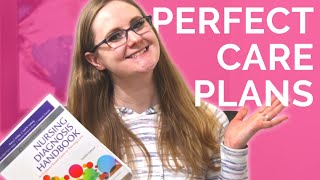
A nursing student uses the Nursing Diagnosis Handbook by Ackley and Ladwig to build a care plan from scratch. The book's green-tab section lists NANDA International diagnoses; you fill in related factors, defining characteristics, SMART goals, interventions with evidence-based rationales, and evaluation. Pre-written lists in the handbook cut down the thinking work.
Chapters
In this video, today I am walking you through how to write amazing care plans. If you've been around for a while, you know, care plans are kind of my jam. I love them, but I didn't always love them. They were kind of my nemesis for a very long time until I figured out how to write them correctly. So in today's video, I'm going to walk you through the number one resource that I used to write perfect care plans in nursing school. And I want you to be able to as well. So, so be sure to hit that subscribe button and click the notification bell and let's dive in. So, friends, I am telling you, you have to get this book if you don't have it already. It's called the Nursing Diagnosis Handbook by Ackley and Ladwig. And my friend, it basically writes your care plans for you. I am not here to try to sell this book to you. No, no, no, friend, I am literally, legitimately telling you, if I had known about this book way before I did, I think I had actually started using it probably the second half of my nursing program. If I had known it from day one, holy moly, I would have done so much better and written care plans so much easier because it basically writes your care plans for you. I'm telling you. I'm telling you. So I want to walk you through, because I get so many questions from nursing students how I use this book to write perfect care plan. So I'm going to walk you through it today in this video, and I'm going to give you a lot of care plan tips along the way as well. So the first thing that I want to point out is that oftentimes I see nursing students, they're asking me, where do you get your nursing diagnoses? Right? Well, the first thing you have to know is that nursing diagnoses are actually standardized. They're put together by a group called nanda, NANDA International, or NANDA I. So it's the North American North American Nursing Diagnostic Association, Nursing Diagnosis association, something like that. But here is the whole list. In this book, they give you the entire list of NANDA nursing diagnoses. So in the first. In the first two pages here, that's what you got. So all you have to do is choose. And even better yet, my friend, better yet, in the. This first section here, the green tabbed section, you can actually go through this section and find the disorder that your patient has. So let's take a look. Let's see. Anemia. Anemia in pregnancy. Let's see. Anaphylactic shock, perfect amnesia, bone marrow biopsy, bed sores, Bell's palsy. I mean, my gosh, there are so many things in here. If they had a colostomy, my. I know. Diabetes is in here. Let me find diabetes to make sure. I'm pretty sure I saw it before. Yes, diabetes is in here. My DIC is in here. So you just go through this green tab section, look for the disorder, disease, pathology that your patient has, find that section in here, and it'll give you the nursing diagnoses that might fit for that disorder. So it's like literally no thinking. No thinking. Not that I don't want you to think in nursing school, but you've got so much else going on. The less you can think about things that you know you can get away with. That's what we're going to try to do, right? So take this step one, figure out what disease, disorder, pathology your patient has. Look it up here in the book, my friend, and then they'll give you some proper nano diagnoses to use. And then the next step is to go through the white section here of the book where it has all these, you know, purple tabs and these walk you through everything you need to write on your care plan. So care plans are structured in a few different sections. The first section is the Nanda International. The diagnosis, the nursing diagnosis. So that's what we just talked about. That's this. Either this front cover here, and it's also the one that you can find out using this green tab section. So you've got to have your nursing diagnoses, those are standardized. You do not have to think about it or make them up yourself. Please don't make them them up yourself. They are standardized. So you've got to use one that's from this list. So that's the first part. Now the second part is the related two factor, or you'll oftentimes see it written as an R T. Related two factor. So this is basically the pathophysiology. I really want you to dig deep here and figure out what is the pathophysiology that's causing this issue with the patient. So really, really, really, this is really where your critical thinking comes in. I want you to really dig deep and think about it. What is the underlying pathophysiology that's causing this issue for the patient? So I had a nursing SOS member say a really great one, and honestly, she just blew me away. I was so excited. She had used Ananda International. Ananda Nursing Diagnoses that had something to do with airway. It was like a respiratory diagnosis. I forget exactly what it was, but it was a respiratory diagnosis. And her related two factor, her RT factor, was impaired ciliary mobility. You guys. Who uses those words in nursing school? I was so excited. I was like, impaired ciliary mobility. What? That's amazing. So basically what she was saying is that, you know, the cilia in the lungs, the trachea, could not get things up like they should. You know, we're not supposed to have gunk in our lungs, right? All those. Those little cilia, little hair, help to keep things out of our respiratory tract. Right? So that's what she was saying. Those are impaired. They couldn't do their job. So things were getting stuck in the respiratory system. Beautiful. I loved it. It was perfect. So that is really what I want you to do, is dig deep in the underlying pathophysiology to see what exactly is happening. Now, good news again, if you look. This book is crazy, you guys. Seriously. Fred, I am telling you, if you do not have this book, you've just got to go get this book because it has everything you need right here. If you look right here, it says related factors. Hello, that's your RT related factors. All you have to do is like, look at this list and choose. But I really also want you to dig deep in the pathophysiology. Like, do some critical thinking about it, please. But you can also look in the book. So that's the second part. Now, the third part is the aspect evidenced by or the aeb. So you'll. It's technically as evidenced by, but you'll see it written as AEB for short. So the AEB is basically the signs and symptoms that you're seeing in your patient because of this issue. Holla. Again, these are in this book, so they're under defining characteristics. So you can literally go through and see, okay, what are the common signs and symptoms that a patient with this NANDA nursing diagnoses would have? So this one for anxiety. Let's just go through it as an example. So this nursing diagnosis is anxiety and says facial tension. I like it. Hand tremors. Awesome. Abdominal pain, Nausea. Love it. Decreased blood pressure, decrease in productivity. Ooh, yeah, for sure. I can really relate to those things because I have anxiety. So, yeah, decrease in productivity, for sure. Yeah. Yes. So all of those defining characteristics are those signs and symptoms of that NANDA nursing diagnosis. Some things that you would see. Now, of course, you can do other things that you see that are not listed here. Totally fine, as long as they fit your nursing diagnosis, right? So those are really the main parts of the nursing diagnosis. When you write your care plan, and that's the first section of your nursing diagnosis, you've got the actual name of the nursing diagnosis, like anxiety, like I said, that's where you get it in the front section here. Or if you want to look up the disorder that your patient has and just look it up through that way, that's cool. And then you'll have the related two factor or the RT factor, and then you'll have the as evidenced by or the aeb. So that is your nursing diagnosis. Now, the next step for your care plan are your patient goals. Now, number one tip for you here, make sure that your patient goals are things that your patient will do and they should be smart goals. Specific, measurable, attainable, realistic and time bound. Because I can spell smart, right? Specific, measurable, attainable, realistic and time bound. Time bound and measurable are probably the two biggest things that I see nursing students get caught up on. So it needs to be measurable. I like to put a number, number to it. So when I'm writing my care plans, I like to say things like the patient will walk 10ft from the bed to the door and back, something like that. So I like that number of 10. The patient will walk 10ft. That is very, very measurable. I guess even if I had said from the bed to the door and then back, that's still pretty measurable because, you know, you could see their progress. Bed to, to door and then back. So it just has to be something you can measure. It really shouldn't be super ambiguous. Now it also needs to be time bound. So oftentimes when we write our care plans as students, because we're only on the floor for like, you know, depending on your school, maybe eight, maybe 10, maybe 12 hours a day only really one, two, maybe three days a week. So oftentimes in nursing school, what we'll do is we'll write our patient goals to be completed by the end of the shift, by the end of the clinical day. So 7 o' clock at night, or you know, 4 o' clock, whenever you get out of your clinical, that's when you would write it. Or if you want your patient to achieve that goal earlier in your shift, totally fine. But just make sure that you put a time on it. It needs to be time bound. So that is the patient goal. So make sure that they are things that the patient will do or the patient can do and make sure that they're smart goals, specific, measurable, attainable, realistic, time bound. Now the, the next part of your nursing care plan is the nursing interventions. So now this, in contrast to the patient goals, your nursing interventions are things that you will do. What will the nurse do or the nursing student? So it's literally what the nurse will do or the nursing student will do. That's you. So if we're keeping our example of the patient walking 10ft from, you know, the bed to the door and back, you might say the nursing student or the nurse will assess the patient's blood pressure and assess them for dizziness or fatigue before ambulating, before standing, something like that. Or, you know, assessing them as they're walking, making sure that they're staying safe, you know, that their gait is okay, using the proper assistive devices, anything like that. You know, the nurse will assist the patient with using a cane, or the nurse will educate the patient on using a walker, or the nurse will assess the, the patient for fatigue when standing, or assess the patient's blood pressure when standing, something like that. So all those could be really good nursing interventions that you could do if you're helping a patient, you know, ambulate or, you know, start to walk, perhaps after surgery or something like that. Those are some really good, well written nursing interventions because it's written as what the nurse will do. Now, of course, friends, of course, both of these things, both of the client goals or patient outcomes or patient goals are here. You can use these here. They're called client outcomes. So let's see, for anxiety, what do they got? The client will identify and verbalize symptoms of anxiety. And then of course, you would put the time frame. So, you know, that's just one example. They've got lots of examples here that you could possibly use. Now just make sure that they're smart goals, specific, measurable, I don't know why I keep doing this to myself. Specific, measurable, achievable, relevant, and time bound, or realistic and time bound. All right, moving on. And then nursing interventions, make sure that you read these, because these do two things for you. They give you good nursing interventions. They also give you one of the last parts of your care plan, which is the rationales. Oftentimes nursing schools will want you to write out, hey, where'd you get this? Is it evidence based? And does it actually work? And does it actually matter? And yes, it does if it's in this book. So you can go through these nursing interventions and the rationales for them. So, you know, for Example, this one says, assess the client's level of anxiety and physical reactions to anxiety. And then they've got, you know, the review, basically the evidence where that came from, evidence based on citation there and why it matters. So they do this for every single nursing diagnosis. So seriously, friend, when I say this book writes your care planes for you, I'm not kidding. It genuinely does. Now, the last part of your nursing care plan is the evaluation part. This is basically a reassessment. I know students get kind of confused about this, but genuinely with the nursing process, nursing care plans, evaluation is basically another assessment. So you are just evaluating whether your patient met their goal or didn't meet their goal. If they met their goal, why do they meet their goal? And what are you going to do next? What's the next course of action or plan of care? And then if they didn't meet their goal, why didn't they meet their goal? What are you going to do next to help them meet that goal? Does the goal need to change? You know what changes, modifications need to be made or all of those things is what you would write in that evaluation column. So that is your care plan, my friend. It really is that easy. And seriously, when you get the book, it makes it so much easier. I'm telling you. I am telling you. I seriously wish that I'd had this book so much earlier in my nursing school program because. Awesome, right? We will put that link down below in the description box for you. So if you want to buy it, you don't have to, don't worry about it. No pressure. But some pressure, because it's just so helpful and I genuinely want to help you through nursing school. But if you want to purchase something through that link, we will receive a small commission at no additional cost to you. I hope it helps. I just genuinely want to help you out. So you do have the link to this book. Amazing. And before we go any further, I want to give a shout out to Diane for our YouTube comment of the week, which says such a very simple way to get this point across, making this so much easier to understand. Oh, thank you, Diane. Seriously, you guys, my goal is to break these tough nursing school concepts down for you into very, very simple terms for you to follow. Very simple steps for you to follow. Man, if you are inside our nursing SOS membership community, you know how big on step by step processes I am. Like all our pathophysiology videos, I literally break them down for you step by step. I want to break it down so simple that you, you don't even have to worry about it. Like you learn it the first time and then you don't have to think about it because you already know it because it's so easy and simple to remember. So that is my goal for you. So thank you, Diane. I really, really appreciate it. And speaking of the nursing SOS membership community, before I forget, if you are a nursing SOS member, of course, if you, if you didn't already know, I hope you already knew. But just in case you didn't know already, we have a full care plan course inside the community for you to check out. Not only do we have a step by step course on how to write amazing care plans, but we also have a full care plan database for you to use as examples as you write your care plans for nursing school. So all those resources are there for you if you're a nursing association. So check it out. Now, in a couple of weeks we're going to be posting a brand new video on the study strategies that I use to get straight A's in nursing school. Do not want to miss it. So make sure that you subscribe to this channel and click the notification bell so you don't miss that notification and miss that video when it comes out. Because you've got to know those study strategies. Now, friend. Click on one of these videos right over here so you can keep rocking nursing school and go become the nurse that God created only you to be. And I'll catch you in the next video. Take care. Bye.










