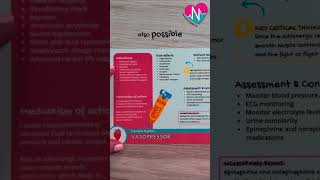
Vasopressors like epinephrine, norepinephrine, and vasopressin trigger the fight-or-flight response by stimulating adrenergic receptors and constricting blood vessels. They're used for severe hypotension and shock but cause hypertension, rapid heart rate, arrhythmias, tremors, and chest pain.
Chapters
Let's talk about a key critical thinking point for vasopressors. So these are medications like epinephrine, norepinephrine and vasopressin. So what these medications are going to do is cause vasoconstriction. Now here's your key critical thinking point here. Since these adrenergic receptors are stimulated, that's what this medication is doing. It's going to cause smooth muscle contraction, which causes vasoconstriction and fight or flight response in the body, which is why we see all of the effects of vasopressors. You're going to get hypertension, tachycardia, possible arrhythmias, dizziness, dizziness, possibly chest pain, possibly GI upset, nervousness or tremors. Headache and electrolyte changes are also possible. Now, these are side effects from these vasopressors because it is causing all of that vasoconstriction and really think about it as that fight or flight response kicking in. It's going to act on the adrenergic receptors to cause smooth muscle contraction and that causes vasoconstriction. So vasopressors are given when a patient is in severe hypotension or shock or having an anaphylactic allergic response. Anytime like that, where we want to increase the blood pressure. If you're struggling with pharmacology in nursing school, be sure to check out the pharmacology study system inside the nursing SOS shop.