What to do when you fail an exam in nursing school | ASK ME ANYTHING
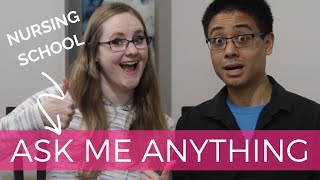
Christina Rafano and Matthew answer nursing students' questions about failing exams, study strategies, and NCLEX prep. They recommend reviewing failed tests item-by-item with your instructor, organizing study around pathophysiology, side effects, assessment, and interventions, and practicing NCLEX-style questions. For time management with kids, use micro-goals and small pockets of time instead of long cramming sessions.
Chapters
Wait. Good morning, everybody. Welcome to Wednesday. In this video, we are going to talk about what to do if you fail an exam in nursing school and other nursing school questions that you might have.
Awesome.
Sweet. Deal. So this is kind of an ama. We're also going to talk about the topic of the day because we got one of those. We got that from our nursing SOS members. So I want to chat about it. What do you do if you fail an exam? This has come up so, so many times the past week. Probably two goes through seasons.
I think someone asked that two days ago when we did our first ama.
Right? Maybe. Yeah, maybe. Yeah.
Okay. So that's the topic of the day.
Topic of.
I did not know that that is the topic of the day.
If you guys have other questions, post them in the chat, whether on Instagram or on YouTube. We learned last Monday that Instagram has a one hour time limit. So sorry about that. But we were live on YouTube for like forever and a half. So if you get cut off on Instagram, come on over to YouTube.
Come on over to the other camera. It's right over there. The camera right over there.
Right over there. All right, you guys, what do you do if you fail an exam?
Before we do that, what's up? Can I. Can I barge in for a sec?
You barge. You barge away.
This time I have my coffee and I just want to say happy Christmas in July.
Happy Christmas in July.
So I broke out the Christmas mug because. Because it's Christmas officially.
Oh, this is the best time. Okay, seriously, like the best day of my life, Christmas. And then also second best day of my life is. What do they call it? Like summer solstice, where you're now on the other side of the year where it's basically Christmas. Right, Right. So the days are now not getting longer anymore. They're getting shorter. And you know that it's almost Christmas.
So the countdown starts now, right?
The countdown starts now.
Yeah.
Let it begin. Hold on.
We're on the let it begin letter half of 2020. So good luck to us all there. And I like to think of it as a glass half full.
Don't make me sit on my coffee.
So it's a glass half full kind of year. So we have our second half of the year. So congrats to everyone and happy Christmas in July.
We made it, you guys. We. We made it to July.
And the countdown starts for the real Christmas. So that's exciting.
Oh, man. Okay, welcome to Wednesday.
All right. Okay. Now we can go.
All right, friends. Okay. If you Guys have questions, post them in the chat and we will try to answer as many as we can today. So first topic, topic of the day. What do you do if you fail an exam in nursing school? This comes up all the time. So if you fail an exam in nursing school, really the first thing you've got to do. Have to do it. Absolutely have to do it. I'm like either like stabbing something or just like, you know, woohoo. Have to do it. Friends, walk into your instructor's office. Walk in there. If your classes are online, don't let that stop you. Email them. If they don't respond, email them again. Hey, you want to guess what you do if they don't respond the second time you email them, you email them again.
I was going to say send a letter but that would take too long.
So just email them again, email them again, email them again and then email them again until they respond to you. So if your classes are online, you need to talk to your instructor about your exam no matter what. So if it's in class, if it's online, does not matter. The advice still stands. Talk to your instructor. Go over your exam item by item, question by question. Here's why. Not only do you have to learn the content, it's going to help you have a deeper understanding about what that test was actually about and what you missed. Right? So if you go over your questions on your exam, it's going to help you learn the content better, number one. Number two, it's going to help you figure out how they ask questions questions and what answers they are looking for. Having your instructor there to sit with you, going through item by item, question by question will give you such good feedback for next time you take your exam. Okay, what did that instructor say last time? What are they looking for? This is how the question is asked. You know, it's really going to help just rewire your brain. This is why we encourage nursing students to answer nclex style questions during nursing school. It just really is a different way of testing. You have to kind of rewire your brain to say oh this is how they are asking these questions and this is the response that they are looking for. Here are some exam hacks that I can use, things like that. So number one, it's going to help you with content, number two, it's going to help you rewire your brain. I'm saying rewire your brain a lot, but that's what it does to figure out how to answer nclex questions better and what your instructor is Looking for now. Number three. This is huge, you guys. If you have a final exam, particularly if you have a cumulative final exam, you must understand all of the topics that were tested on throughout the term or else you will miss those questions on your final. You with me. If you have a cumulative final exam in nursing school, you absolutely have to understand what all of the concepts that you had learned up until that point because it's cumulative, right? So not only did you fail that first exam, but you might also miss a bunch of those questions on your final. The questions might be totally different, but you still have to know the content from the first exam. Right? So you need to understand that content in order to be successful with it on your final. Cool. Are we all good there? So when you fail an exam in nursing school or, or do not do as well as you wanted to, it's totally fine. Move it right along. Keep going. Do not give up. Walk into your instructor's office or email them and keep emailing them to go over your exam with them. Do this every single time. And even in nursing school, I did this. Not even if I did bad on an exam. I did it every single time.
You did it every single time?
Every single time. So even if I did did well on an exam, I would just walk into their office, go over it item by item, make sure that you are getting their feedback on not only the things that you got wrong, but also the things you got right. So it's really important to know why the correct answers were right and then why you know you got things wrong as well. All of that feedback is going to be really, really good for you to have.
I really like that. The idea of really, when you're taking tests, there's really two parts of it. There's the answer which you give and you could get that right or wrong, but it's also the understanding of the question. And like Christina said, yeah, the nclex style questions are different. So I've heard. I've never, never done it myself, but heard that it is different. So really practicing that nclex style question and also talking to your teachers just gets a better understanding of not just what is the right answer, but. Okay, how can I understand the question better? That's what I'm hearing. Is that, is that correct?
Absolutely.
Awesome.
Hey, did you do this in college? I feel like every time we do an AMA we should all just make fun of Matthew for his college experience.
That's me.
And basically being a bum.
Well, okay, so that's only partially accurate.
Where was I. Wrong.
Okay. It's accurate. So, yeah, I. How long did it take me to get through college?
A very long time.
It did. I was a super, super, super, super duper senior by the time I graduated. So, yeah. Yeah. Okay. So have at me. What did you want to make fun of me about?
Oh, just.
Well.
That you didn't do this or anything.
No, no, I did not do that at all.
I didn't really have points of.
Oh, okay. Just. Just in general.
Just in general.
I could have done college better than I did, and that's why we're here. That is. That is a valid point. Yeah. So, yeah. Yeah.
All right, Maddie, I see some questions. How do you properly prepare for a test when you feel like you can't? Can I get some clarity on that? Why do you feel like you can't prepare for an exam or can't prepare for a test? How do you properly prepare for a test when you feel like you can't? So that could go a couple different ways. That could go like you don't have time or that could go like you don't have the textbooks or the resources or things, or that can go like, a bunch of other different ways. You know, Follow up question. What about when you have studied, but you don't feel like you are not retaining information? Okay, that's more clear. What did. What do you do when you have studied, but you don't feel like you are retaining information? So, okay, here's the thing. There's always going to be a thing on these AMAs. And here's this thing. Here's the thing. When you don't feel like you are retaining information, Friend, I want you to dig deep in your brain and figure out what is going on in there. So most often, what I see for me is that if I am not focused or paying attention, I know that it's my anxiety kicking in. Like, there's other thoughts that I'm having in my mind that, like, I can't do this. This is too hard. It's not possible. I'm going to fail this exam. I'm going to fail out at nursing school. The world is ending. Everything's a disaster.
She does that a lot.
That escalated quickly. That's what happens in my mind. I don't know about you guys, but that's what happens in my brain. So that is how I know what's happening when I'm not focused. When I'm not focused, I know that there's all those thoughts in my brain that are like, christina, you can't do this, you're a failure, blah, blah, blah. So those are what you have to reel in in order to focus on your studying. Does that make sense? So if you don't feel like you're focusing on your studying, you're not retaining the information. That's what tells me is that you're not focused.
I like that too. And really, it goes back to something we talked about on the last episode is. Is really knowing yourself, because it could be the anxiety and all that, but it could just be something a lot more simple. Like I was thinking for myself, I really do better focusing just on one thing at a time. And even listening to background music, I'm losing focus. So I. I just naturally know now, just knowing myself and knowing my study habits or just work habits in general, that I'd like to listen to music in the background. I. I hear a lot of people saying that, oh, music is good for you. As long as it's white noise, or as long as it's just classical music or whatever in the background, then it's fine. It's good for you. But you need to know yourself. And I just learned from myself that any background distraction, any background noise, no matter what it is, just hits my focus and I'm not able to study, and I end up reading the same thing multiple times. So just knowing yourself and really, like Christine said, digging deep into your thought process and really, why are you not retaining information? And it can be just as simple as that. As simple as environment change or more. More thought process or thought work to go into it on. On deciding, okay, why is my anxiety so ramped up and how can I lower my anxiety to focus more?
Can't change the world, but you can change thoughts. Can't change the world. I hope that was helpful. Let's see. How do you control the anxiety of starting nursing school before you start in the fall? This is from Instagram. Instagram before you start in the fall. Okay, so here's the thing about nursing school is that the rumor mill is alive and well. It is just. It is just rampant, friends. Really. The rumor mill is alive and well. Don't listen to it. I don't know. Everyone said that the fourth term for my school was the hardest and everyone fails out, and it's the worst experience experience ever. And it's terrible and an awful and a disaster. It was my favorite term ever. I had so much fun that fourth term. That was like your really difficult med surge course, and I just thrived on it. I absolutely loved it. So here's the thing. Here's the thing. I really should stop saying as if.
There'S only one thing.
As if there's only one, there's a thousand. Here's the thing. Your what you are good at might not necessarily be something that someone else is good at. And what someone else is good at might be your weakness. So you might be opposite on your strengths and your weaknesses, and that's totally fine. So when you hear other students talking about how hard nursing school is, that's them. Doesn't make it true. Doesn't mean that you have to take that on for yourself. It doesn't mean that nursing school is going to be hard for you. It means that it might be hard for them, but it does not necessarily mean that it's going to be hard for you. I thought nursing school was pretty great. So go in it with that attitude. If you go in it feeling like you're going to fail, it's going to be so hard. Your anxiety's ramped up to a million. How do you think you're going to do. You're not going to do as well. Right. So bring it down.
A lot of it has to do with your thoughts. Going back to your thoughts and. Yeah, think happy thoughts.
Think happy thoughts. You know, if it was just that.
Easy.
Matthew, I'm a super, super senior. Yeah, there you go. We got another one.
You only have a couple more years to catch up to me.
You're fine.
You're fine.
That's great. Fantastic. Goodbyes. Okay, this is all Instagram. I'm just scrolling up because.
Yeah, scroll up. I think we missed something.
Okay, so I have a lot to study. So this is from YouTube. I have a lot to study in a short period of time. What do I do? Focus on the four key things that we always tell you to focus on. Now, if you do not have our nursing school study checklist yet, be sure to download it. Matthew can put it in the chat on YouTube and on Instagram. If you're on Instagram, it is in my bio. So check it out there. Yeah. Matthew will put. I'm going put it in the chat. So we have a very particular study process that is very important for you to follow. So if you don't feel like you know what's going on in nursing school, you don't know what to study. You don't have time to study everything, friend. Follow this checklist. So download it. Follow that checklist. But here's kind of the basics. I want you to focus on four main categories. Pathophysiology, or the physiology. If you're in fundamentals, it will mostly be physiology for things like fluid and electrolytes, meta, all the ABGs, metabolic acidosis, alkalosis, all those things. So first thing, pathophysiology or the physiology. Second thing, side effects. Focus on the side effects. Then third thing, nursing assessment. What are you gonna assess for? And then the fourth thing is nursing intervention. So those are the four key things that you have to focus on all throughout nursing school. Whether or not you're in fundamentals, if you're an ob, if you're in peds, if you're in med surge, that advice still stands. Focus on those four main categories. Pretty much everything else is just memorization, and that is flashcards and whiteboards. I mean, how many times have I said those two words, flashcards and whiteboards the past two weeks? About a thousand. So if you have anything that you need to critically think about, most likely it's one of those four main categories. Patho signs and symptoms, nursing assessment, and nursing interventions. And if it's not one of those four things, it is most likely rote memorization, flashcards and whiteboards. So if you don't feel like you have time to learn everything in such a short period of time, those are the four key things that you've got to focus on. Leave everything else out. I hope that was helpful.
I think probably, yeah, I think probably another one is something else that you, you suggest a lot and we've talked about numerous times is the. The fact of studying what your professor teaches.
Absolutely. Study what your professor talks about in class. Yep. And that is it. Which will basically most likely fall into one of those four categories. So what your professor talks about in class is what they believe is the most important for you to study and to know which is most likely what's going to show up on your exam. Follow my logic. Does that make sense? So if your instructor is teaching you in class, that is what they think is the most important and they have either written or. Or seen your nursing school exam. So if they have written or seen your nursing school exam, they know what to teach you. That's what they think is the most important, and that is what they're going to teach you on. So focus on what your professors talk about in class. Good. Are we all clear on that?
Yeah.
So wait.
I think so.
Any resources or advice to pass the nclex? And I saw, I saw some other questions here on Instagram. How do you work nclex style questions in a regular preparation for unit exams Um, I would do it at the very end. So when I was in nursing school, what I would do is study everything, learn it, get with a group if. If I could or if I needed to, to study that way. And then the very last thing before the exam is when I would study and practice NCLEX style questions. So that's that. Answer. Any resources or advice to pass the nclex, Just practice questions again and again and again. Just three. Seriously do them. Like, do you remember, man, when our first baby was born, I was pregnant My whole last year of nursing school felt like forever. You say, wow, Christina, you're usually pregnant for nine months. And I would say, no, I was pregnant for forever. The whole time I was in nursing school.
Kind of seems like that.
Kind of seems like that. Yeah, it really does.
But it was not the whole nursing time at nursing school.
It was not. It was like the. The last year and a half, two years. It was the last nine months. I. So our first was born just a few weeks after I graduated. Right. I mean, it was just. Just a few.
So may. So.
Yeah. And then. Yeah, just a few weeks before you.
Before you took the.
Before I took the NCLEX. So I was 10 weeks postpartum when I took the NCLEX and what I would do. I don't know if you remember. You were sleeping in the middle of the night. I was. I was up.
Just kidding. I would help too. Sometimes you were very. Times I would help.
I was up feeding the baby in the middle of the night, going through NCLEX questions. Right. That's how I studied. That's how I said. So if I can pass the NCLEX at 10 weeks postpartum, I brought my whole pump. Like, okay, if you're a female, you probably get this. If you're a male, just don't even listen to me right now. I brought my breast pump to the NCLEX testing center. And you know, because, you know, you got to do the thing. And so if I can do that and like, manage all those things, you can pass the nclex, my friend. While not having a baby or feeding a baby. You can do it. Alrighty.
Are there any resources that you have for that?
Yes. Nclex questions. Thank you for getting me back on track. Yeah, that one right there. The Saunders Comprehensive Review Guide and the NCLEX RN Mastery App. Those are the two. So actually, Matthew, can you put this in there?
I don't have links for that yet.
Saunders Comprehensive Review Guide for the.
Should I get it right?
I can get It. You can get it.
I'm gonna get it.
There we go. And then the nclex RN Mastery app. So those are the two that I use to study for the nclex. That one. This is the old. This. I don't know. This is the old one. Maybe. Maybe there's a newer one. Check. Check that on Amazon and get the newer one. I mean, yeah, that. And then the nclex RN Mastery app is what I used in nursing school. All right, I saw a comment. I lost it on Instagram. How do you stay motivated? Great question. How do you stay motivated? Lots and lots of coffee. Lots and lots. How do you stay motivated when you have two children under three? Oh, well, I guess our oldest is three, so that's not considered under three. How do you stay motivated? I think figuring out your why, Chris. Hear that all the time, man. I feel like that's so lame. Now everybody talks.
Yeah. Thanks, Simon Sinek.
He's awesome. Everyone talks about it now.
Yeah.
You know, you just have to have a reason behind what you're doing, you know, why are you going to nursing school? And for most of us, it's to have a better life for our families. Right. To take care of people, to live out that dream. Like, so many students email us, and they're like, christina, I'm in my 40s, 50s, 60s, 70s, and I've had this lifelong dream of going to nursing school. I'm like, can I do it? I'm like, absolutely, you can do this. Absolutely. Like, if you've wanted to be a nurse for forever and a half, which most likely you have, if you are here, that's. I mean, do the thing. Do it, man. Remember how much you wanted this. And also, I think when I was really, man, there were some low points in nursing school. It's. Man, it's tough sometimes. What I really like to remember is where I was a year ago. Where was I three years ago, four years ago? I was just thinking about this. I mean, I've been a nurse for a few years now, and like, during nursing school, I was like, man, I got through my prereqs, and those were so hard. And if I could do that, man, I can do this. And then, like, you know, now it's like, oh, these things are so hard. But, man, I got through nursing school. I can do this. You know, just remember where you were. Like, where were you when you were 10 years old and wanted to be a nurse? And now you're here. Now you're here, like, in nursing school. How cool is that, like, mind blown, just remember how far you've come. And I think that that's pretty motivating. Am I right?
I agree with that. Yeah. I agree that where you come from is motivating. How far you've come so far is motivating. What's that quote? Um, I don't remember the quote, but anyway. Yeah, so we have lots of quotes. Yeah, we have lots of quotes and.
We forget them a lot.
I think another thing to realize about motivation is there's really two parts of motivation. There's short term and long term. So like the long term is motivation to get through all of nursing school, Motivation to graduate or. Or. Yeah, those really long term, like long term goals. Long term goals. Right. And then there. There is also the short term. Sometimes you wake up and want to stay in bed and how to get past that. So I think there's. There's really two parts of that. And I think the why does encompass that all. But also the short term, short term motivation, short term goals. You also have to think of it as a willpower and it's more of a muscle. So it's something that you practice, definitely. So you practice being uncomfortable and the next time you can be more uncomfortable for longer. So, yeah. Motivation, I feel, is kind of related to willpower in that sense that it is just practice and sometimes it is just brute get through it and push yourself. Sometimes it is hanging on to your why or. And then for short term things, it can be short term wise as well, like food or.
I want a cookie. So I'm gonna work out. If you guys have been around for a while, you know that cookies are my love language.
It's true. Which is kind of funny because you make your own cookies, so you make your own love, which is. Which is kind of fun.
I love that. I think that's so beautiful. I think that we can all make our own love, right? Like, how profound was that for a Wednesday?
That is very profound.
That was extremely profound for a Wednesday. No, but for real. Oh, man. I was also thinking too that I think that core beliefs also go into motivation. I have some very deep core beliefs about myself that I'm very, very clear on. And one of them is that I can handle anything, no matter what. No matter what, full stop. I can handle anything. And I can. I can do anything. Like for 30 days. Like, I just. I just have that. I just have that core belief of myself that I can do anything. I can handle anything. I can make anything happen in my life that I mean, period. End of story.
Yeah.
You know, and so I think that's so important to have that belief in yourself that you can do whatever you set your mind to, you know, I think that's so important. And so when you wake up in the morning and you're, like, totally exhausted, don't want to make a Wednesday happen, you can lean back on that and be like, no, no, wait a second, I can do anything. Like, I incapable of this. I can make it happen. Oftentimes I tell myself, hey, Christina, let's see what you're capable of. Let's just see what you're capable of.
Yeah, push yourself. Okay? This is a challenge.
This is a challenge, and this is awesome. And I'm gonna do this, you know, And I think. I think when we think about confidence and motivation, like, oftentimes they really go hand in motivation. I feel like when students ask us, like, how do I. How. How do I stay motivated in nursing school, oftentimes what we see is like, they're losing confidence in themselves. Right? Because, like, the more you do exams and the more things you go through through nursing school, you can think of it one of two ways. You can think of it as, oh, man, this is so hard, and I cannot do this. And you can lose confidence in yourself, or you can say the opposite and say, wow, look at what I just did. Like, I just did that exam. I might not have done as good as I wanted to, but I did it, and that would build confidence for you. So I guess I tend to be more of the latter. You know, just force yourself. Just like, force myself. I don't know. I feel like I have a lot of confidence in myself, and that came from just doing things like failing over and over and over and knowing that I would always still keep going, you know, like, there's like, that even that question to me is just crazy. Like, Christina, why would you ever even stop? Like, why would you, like, why would you quit? I don't understand. Like, that just doesn't even register my mind. Like, why would you quit? I don't get it, you know? Yeah, that just doesn't even register for me.
It goes back to the practice. So practice, failure, Practice just pushing past your uncomfortableness, growing that willpower or that confidence or that motivation muscle, and just want to end on this. Another synonymous term now that you mentioned, confidence is faith. So what do you have faith in and grow your faith? You have faith in yourself. You have faith in. In God that he will carry you through as well. So, yeah, confidence and faith. I also closely correlate together. So, yeah, confidence, faith, willpower, motivation. Just practice it and then it will.
Grow all together, bringing it all together.
Beginning of this year, one less. Yeah, Beginning of this year, we got a peloton.
Yeah. Yeah.
And I have never exercised in my life. And so that, that's a new experience for me. I do like it. But one of the things that they keep saying is it's really nice to have someone there talking with you and motivating you forward. But when you're in the middle of a push or whatever, like when there's 20 seconds left, they always say, oh, you can do anything for 20 seconds. And so you can taking it into bite sized chunks also, you can do anything for 20 seconds or you can do anything for today. You might not feel like doing it, but you can do anything for a day. And that day turns into two days, etc. And then you, you have your long term goal, long term motivation.
You just keep going. I love this. Quitters never win and winners never quit.
Boom.
Thank you, Instagram. Thank you, Francesca. All right, let me scroll up here because I. I know you. Sorry, guys. Good morning, everybody. I missed all the good mornings. Yes, I missed all the good mornings on Instagram. Okay, well, there are so many. I. I've lost them. Okay. How do you calm yourself when your test is timed? I feel like the timer is a distraction and causes unnecessary panic, which clouds your critical thinking. So. Good. Awesome. Okay, I'm gonna take a second to get my thoughts together. And I haven't talked about, talked, talked to you about this yet, but I am reading a book and is very, very good. It's called David and Goliath by Malcolm Gladwell. So good. And so your question reminded me of this, that when things are hard, he talks about this in the book. When things are hard, we tend to push ourselves more. So if you. His example was an IQ test that was written legibly, like you could read it and people did, you know, like, they did like a one point. I don't even know. But they, you. They had a score, right? This was the average. And then they gave them another test, the same test, maybe a different group with, like letters that you could not read. Like you really like, it was like this crazy font that you had to, like, squint and like, see, like, I don't know what's happening. Like they had to read it. It was harder to read. And then they did better. Like crazy, right? So when we actually have to work at things, when we actually, like, have to overcome a challenge, oftentimes it'll push us to be better. So I wonder if we could rewire that and think, like, oh, this is just pushing me to be better. Like, this timer, right? Like, I can do this. It goes back to the confidence thing. Like, add this. I don't know. Is that, like, too. Is that, like, too confident? I don't know. I think it's fine. Like, I can do this that time. I ain't got nothing on me. Got nothing on me, friends. And I think that the more you practice your NCLEX style questions, the better off you're gonna get. So, you know, if you. I know we all had those timers in the corner, and I believe it's the same for the nclex if I'm right. Yeah, I. I mean, it. I don't meant. I mean, I just remember it being right there. So if they still do that, I'm assuming, you know, it's gonna be. It's good practice for you. So just. I would say just like, really reframe it in your mind that it's okay. You know, it's helping you succeed on your nclex. Is that helpful?
Yeah, I think that's helpful. Yeah. It definitely does go back to confidence and knowing that you can get through it all. Are there any practical tips for doing tests on a time basis? I don't know how to NCLEX work again or any kind of computerized tests. I know that what I was told and what I kind of did for. For my own testing. Not sure if you guys can do it, so maybe you can fill me in on that. Is to go through and do the ones that you're confident of.
No, it's. It's one at a time.
Okay.
It's one at a time. Yeah, it's one at a time.
All right.
And so when it's one at a time, you know what I did you have your whiteboard, right? So so oftentimes your school will mimic it after. Mimic it after your what? The NCLEX is. So you'll get a whiteboard during the nclex. And then I would write scripture verses actually on the whiteboard. So when I sat down, I would write a scripture verse right on the top, you know, and that. That was the confidence that I needed. That was the. The centering that I needed to get through. I. That was always the first thing that I would do. You are not allowed to brain dump. You are not allowed to, like, get to your seat and brain dump on your whiteboard and just write a bunch of stuff.
Out.
That's not allowed. But I would write a scripture verse, and that was so, so powerful for me to kind of center myself, give me peace of mind, like, okay, I can do this. That was the confidence I needed. And then also, like, if you get to a question that's super hard, don't trick yourself into believing that all of them are going to be the same way. I think that it's very, very important for us to remember that it's not going to take you the exact same amount of time for all your questions. So if you have a test that's like, let's say, let's make it easy on Christina for a Wednesday morning, 60 questions, and you have an hour to do it. So a minute, a question. And here's the thing. If you come across a question that takes you, like, two minutes to do, it doesn't mean that all the other subsequent questions are going to take you two minutes. Like, some are going to be easier for you, some are going to be harder for you, and that's okay. So just move. I would say move it right along. Like, don't get stuck on any one question. You know, answer it the best you can. Don't psych yourself out. If you don't know the answer for one question. It does not mean that you're not going to know the answer for all of the following questions. No, it just means that that question you may not know the answer to, and that's totally fine. Just keep going and do your best throughout. Throughout the rest of the exam. So as you see that timer going down, it's no problem. It does not mean that you're going to take two, three minutes on every single question because some questions are going to be easier, some questions are going to be harder. So I guess those are some practical tips. Definitely. Write a scripture verse on your whiteboard when you sit down. And I also recommend just taking a pause. It's okay. If you need to take a deep breath, that's totally fine. Like in nursing school are. I'm assuming yours are too set up in, like, rows of computers. Right? You've got the little. The little cubbies with your computers, with the proctor exam. Just like the NCLEX looks, right? And so everyone's there. And you would hear, like, throughout the class, like, people just all of a sudden, just take a deep breath. Okay. Yeah. You know, so, you know, people are doing it. It's okay. Like, it's okay to pause, take a deep breath, take a step back. It's totally. It's totally all right. Any other tips?
I like that.
I like it, too.
I do like that.
That was pretty good advice for a Wednesday.
Good job, Christina.
Thank you. Thank you, friends. Okay. Advice for foreign students. This question has come through a couple of times, and I honestly don't know because I've never been a foreign student. And like. Well, this question is specifically actually for the nclex. There's a lot of things about this that I don't know the answer to. The language barrier, for one. I don't know what content you've studied already and what content we have here and what the difference is. So I would definitely. My best advice is to probably, hopefully find a program online that. That does that. You know, like, your family is. Well, your family's from the Philippines.
Yes.
You're Filipino. And I know they talk about that a lot, like, coming over. You know, there's a lot of nurses in the Philippines, and then they come here and so I don't know. I don't know. I'll have to ask.
Yeah, I don't know. I don't know the details on that.
What's. How they do that or how they do that. Yeah, things like that. I love the honesty. Yes. I will always tell you when I do not know the answer, which is a lot of the time. Let me just tell you. YouTube and interpretation. So did I miss interpretation? I don't know what the context of that is, but, yeah, YouTube. So if you are trying to come, you know, trying to pass the nclex as someone who. Because, like, in a lot of other countries, too, they have something akin to the nclex. Right. Like in the Philippines. I'm thinking the Philippines, because we get that a lot. Yeah, we do. And so I'm assuming that there's some kind of licensure exam in the Philippines, and then you come over here to take the nclex. I'm not entirely sure how that works. I need to do a little more research on that, so let's put a pin in it for later, and maybe I can speak more intelligently about it next time. Best way to handle anatomy and physiology. Do you know what I'm gonna say? Flashcards and whiteboards, my friend. Flashcards and whiteboards. Anatomy and physiology is a whole lot of rote memorization. A whole lot of rote memorization. Like, a lot. You gotta memorize all bones and all processes and glycolysis and the Krebs cycle and what all those things mean. I don't even know. So, you know, flashcards, whiteboards. I'VE got two huge whiteboards here. I got them from Costco. Costco's the best.
I was just there the other day. They still have them.
Oh, they still have whiteboards.
They do still have them. They're a little different now, but we.
Didn'T have a run on whiteboards during this whole stuff going on in the world. No, no one needs whiteboards, apparently.
I don't know. But yes, they do have them. For a while they were out, but I think it changes style. But they're there. They're really cool for other things, too.
But, yeah, ignore that.
Okay.
All right, general question. But starting my first semester of nursing school this August, what is your best advice for studying and test taking if you're starting in August? Okay, guys, let's talk about this seriously. So important, because I see nursing students getting this wrong. Do not get this wrong, please. If you are starting nursing school in the fall or if you're starting nursing school in the spring, whenever you're starting nursing school, if you haven't started yet, the number one thing you need to focus on is dose calc dosage calculation. Here's why. When you start nursing school, you're going to have a dose calc exam pretty much in the first week of your program. And it doesn't sound bad, but it kind of is because you cannot get any wrong. You cannot get any questions wrong. We get a lot of emails from nursing students. They're like, oh, my God. Goodness, Christina. Like, my school has this dose calc exam and we can't get any questions wrong. And I'm like, I know it's every single program in the world, so maybe not in the world, but in the US that's how it is. You have to take a dose calc exam, you have to pass the medication. You know, dosage calculation problems. You cannot get any wrong. Some schools allow you to get one wrong. Maybe you can get 90%, some schools, but a lot of them, you have to get 100% correct. So make sure that before you start your program, that is the number one thing you need to focus on is dose calc and knowing your dosage calculation conversions, making sure that you understand dimensional analysis. And if you have no idea what those words mean, go to YouTube, type in nursing sos dose calc, d O, S, E, C, A, L, C. Maybe you could put that in the chat on YouTube so that people know what to search for. You know, nursing sos dose calc or dosage calculation. So go to YouTube nursing sos dose calc, and I will Walk you through step by step how to succeed on your dose Calc exams. That's how we do it here. And if you are a nursing SOS member as well, we do have two workbooks in the membership community for you with a bunch of practice, practice problems. And then of course, actually this happens a lot in our Facebook group, our private Facebook group for our nursing SOS members, because I know we have. I see you guys. I see you. We've got nursing SOS members on here. So if you need help with dose calc, go into your private Facebook group and post your questions there. And we can definitely help you out with those. So that's how we do it here. And then Matthew just posted the wait list on YouTube. If you want to get in the nursing outside membership community, enrollment is closed right now. It's to close closed for the majority of the year. We only open it up a few times during the year. And there's the wait list. You'll be the first to know when enrollment opens again.
Awesome. And a follow up question to that because that yes, led up to or we, we came to this topic because someone's starting in August, which is great. Congrats. Congratulations guys. Anyone starting in the fall, when should they think about joining? I know you said it's closed right now.
Yeah, but like last month. All right, so two to three months before you start your program is what I recommend. So if you want to join a nursing SOS membership community, try to join two to three months before you start your program because we have a lot of courses that will help prepare you for nursing school and give you a running start. So we have a ton of nursing or a ton of their nursing students. They've been accepted into their programs. We have a ton of them inside our community and they just find it so, so helpful. Like we hear from them all the time. This is so helpful. So we have a course on how to study, how to manage your time. I have a whole deep dive video training on how to hack nclex style questions. So nursing school exam questions, how to answer them. So good. So two to three months before you start your program would be the best time to join to give you enough time to go through all those courses.
Awesome.
That is that. All right. Hello, Instagram. Hi friends. That's a great tip. Sweet. Hello.
Hello.
All right, everyone. Everyone's saying hello.
All right.
I just love that. Alrighty. Studying five chapters of microbiology today. I'm dying. Oh no. You will do great, friend. Keep going. Do not lose confidence in yourself. Oh, I do lose confidence in myself, but I do believe that I can do it. Awesome. You know, I think that's kind of an ebb and flow. It's totally fine if you lose confidence in yourself somet as long as you are able to pick yourself back up. That's the key. If you lose confidence in yourself and you just quit like you're never going to do anything, right? Like, we don't quit on ourselves like ever.
What was that?
What?
Quitters never win. Winners never quit. Yeah.
Quitters never win and winners never quit.
Yeah.
Someone put that. Awesome. Let's see. Since we missed the time to join for fall, when will we have the opportunity to join next? So that I wish we had a solid schedule, but we do not. So it just kind of depends on we. So, okay, so here's the thing. We keep it closed throughout the year because we have so many things that we do with our members. You know, we release a ton of courses, videos and stuff for them. Like we're really focused on our members and giving them the best that we can, like the most value as possible. So we have a ton of news. Like right now we're releasing a medication database and it's a lot of work to open up enrollment and release new courses at the same time. So that's why we keep it closed so that we can focus on releasing new stuff for our members. So it's kind of like, okay, when that's done, then will open it, you know, so the best thing to do is to get on the wait list and then I will let you know.
Yeah. When it opens, definitely just join the waitlist and hang out there. And when it opens, you guys will be the first to know. And again, we, we do get that question a lot is why do you close it? Why don't you just keep it open? And we really do want to give focus, focus attention. We've been talking that about that today. Focus on our membership, member community and make sure that they are getting everything that they need as well. So we find that the best way of doing that is to do open and closed enrollments. So yeah, definitely just get on the wait list and we'll let you know.
Yep. We do prioritize our members very, very highly. So for like these AMAs, for example, we let members submit their questions before and we will answer member questions and then do like general questions in the chat as we go if we can. But we prioritize member questions too. Members also get a tutoring call with me every week as well. Which is kind of fun. Let's see. Can you scroll up on YouTube because I don't know if we missed. I think we did. We got some. Okay. Perfect. Awesome.
Yep.
Okay, friends, any tips on how to study effectively with four kids? Four kids time management tips. Four children is awesome. I want four kids. I want more.
You want more than that. Let's be honest.
Congratulations on having four kids too and still working on it.
I have a follow up question for the four because my friend has more than that. And at what point in time, how many kids is a tipping point where they just take care of themselves?
Can you tell us in the chat if you have more than four children? Like when do they start just taking.
Yeah, they'll just take it. So. So, so my advice is just to have more just so that they'll. You'll reach that tipping point. Yeah. Not sure where that is. Maybe someone else knows.
But tell us in the chat. I would be curious to know. Oh man. Time management tip with Ford High School. She's at a high school. Oh man. Yeah, we're not going to be. It's gonna be a few years for us. That's gonna be a few years.
Yeah.
Oh man. Okay. So time management tips. One of the best tips that I got was the thing that's the most helpful for me, to be honest, is to having what I call them micro goals or micro tasks throughout the day. So I have like a list of things that I need to get done and it's never gonna be this like huge thing because you can't. Right. You only have small pockets of time throughout the day. When you have littles at home. Like we have a three year old and a zero year old. They call them zero year olds. He's a baby. We have a baby and a three year old. And you best believe that I don't have a ton of time to do. Especially with the whole like all the stuff going on like quarantine and all those things. Like I don't have time. Right to the Q word. Welcome to 2020. Yeah, I don't have all of that time to, you know, to devote to getting things done like for nursing school or for work or things like that. So small pockets of time. Start your day with a to do list of just small tasks to get done. And then as you go through the day, if you have like a small pocket of time, 10 minutes, 20 minutes, whatever, as you go throughout the day when your kids are like playing or eating or napping or whatever, then you can get some of those Things done. It's so important to just do small things throughout the day because they really add up to big things. Do not expect, if you have kids at home, especially if you're trying to homeschool them and do the whole everything, you know, lockdowns and stuff, you know, wow, two hot button words for YouTube. I just said there, you know, do not expect that you can sit down for an hour or two and have deliberate focus. Like, that's just not gonna happen in the season, friend. You know, so that's why I really recommend small pockets of time, small to do list tasks. So if you have, like, if you want to get like your care plan goals done for your care plan, that would be one thing that you can do maybe in 10 minutes, maybe care plan interventions or rationales in 10 minutes. So, you know, things like that. If you have care plans to do, if you have a paper to do, maybe you can find some research articles to use for that paper, or maybe you just go through a few flashcards, things like that, or write out some flashcards, Just have a task list of small things to do and then that will really, really help you as you go throughout the day. You're not going to be confused as to what you need to do. So just small chunks of time. And then don't beat yourself up. Like, if you don't have an hour to devote to nursing school at one time, that's fine. But realize that you do have small chunks throughout the day to do this. And then also, you know, of course you can wake up early, stay up late if you can, but please get sleep. If you are beating yourself up about going to nursing school right now, please watch the video that I posted on YouTube yesterday. If you saw it, let me know in the chat. We got a ton of comments on that video. It's basically why you should quit nursing school and when you should quit nursing school, which is something that I never thought I would talk about, never thought I would say, but in this season, I've realized that there are, there is a tipping point of when I believe you should quit nursing school. And I talk about that in the video from yesterday. And I don't mean quit, like, I don't mean quit, because we don't quit here, right? But put pause on nursing school. Like, this season is crazy, you guys. If you're homeschooling your kids and dealing with, you know, finances and, you know, job losses and, you know, trying to keep your family together, let's be honest, nursing school might need to take a back seat right now. And that's totally okay. Like, don't beat yourself up. Give yourself grace. It's just a season and it will get better. So if you need some confidence and some motivation and some peace with that, check out yesterday's video and that will help you out. You time saved that, I think.
Yeah. Yeah.
All right, let's see. Smart way to go through four chapters by the end of the week. Or did you have something else? No, that was good. Smart way to go through four chapters by the end of the week. Like we said earlier, focus on what your professors talk about in class. That's really the best way if you are running out of time. Don't know, you know, just can't. Don't think you can get through everything. That is really the best thing to do is to focus on the things that your professors talk about in class and study that because that's what they think is the most important. And that is most likely what's going to show up on your exam. So we want to study smarter, not harder, friends. Study smarter, not harder. Do you have anything to add?
Yeah, probably. I know that that sounds like a lot. So definitely what you were just saying the previous one, chunk things up, small bits and pieces. Start as soon as possible. So by the end of the week, start yesterday and just chunk things up and work through it all as soon as possible. Let it. Give yourself time to actually consume it and for it to stick in your mind. If you try and do it all the night before. Not recommended. Because that's what I do and that's. That's not recommended.
We talked about that on our last. I have a hair like around. We talked about that on her last AMA on Monday was do not cram the night before. Because, friends, if you cram the night before, you will do well on your exam like you will, because you know it for that exam. But here's the thing. When you get to your final exam, which will most likely be cumulative, you will not do as well. And those are very important, those finals. It's like sometimes exams are weighted like 10%, 20% all throughout the term. And then your final is a whopping 60% of your grade. Come on, can we just do some simple math? Focus on that final, friends. Focus on the final. Study, study, study. So do not cram the night before. It's not going to help you with the final. It's actually going to hurt you. So make sure, like we said on Monday, make sure to study for two hours outside of class for every hour that you're in class. So whether it's an online class or an in class class, study for two hours for every hour you are in class. So if you have like two hours of online lecture, you study for four hours outside of class for that class. That makes sense. And then when you get to the final, I do recommend that you start studying two weeks. Like deliberate, intentional studying for finals. Two weeks before that final exam.
Get it?
Got it. Good. Perfect. What if they barely teach anything? Four main things, friends. Say it with me. Pathophysiology, signs and symptoms, nursing assessment and nursing interventions. Those are the four things you have to know for nursing school. Pathophysiology or the physiology. If you're in fundamentals, learn the physiology. So when I say physiology, I mean things that are normal in the body. Pathophysiology is things that are abnormal. So with your med surg disorders you need to learn the pathophysiology. But when you're in fundamentals, things like fluids and electrolytes, ABGs, metabolic acidosis, alkalosis, respiratory acidosis, alkalosis, those are things you need to know the physiology of. And then we're going to move on to signs and symptoms, nursing assessment and nursing interventions. Those are the four main things that you have to know. So even if your instructors are not teaching you in nursing school, that's totally fine. Focus on those four main things. Oh, and here's an idea. You can also join the nursing SOS membership community and I will teach it to you. Shameless Plug.
There you go.
So helpful. Seriously?
Yeah.
So if your instructors are not teaching you, that's totally fine. Come, come to our YouTube channel. I will teach it to you. And if you are a nursing SOS member, log into your dashboard because I will teach it to you.
And I'll just plug at the end of that. Someone asked on YouTube, do you offer tutoring sessions? So in the membership community, once a week you do do a tutoring call. So people submit questions kind of like this, but more detailed questions or, or more specific questions. And you get on once a week and talk through that. We provide notes, basically a study guide for that tutoring call. So that's, that's once a week.
Yeah, it's like every single week our members get a brand new study guide, which is pretty, pretty awesome. Yeah, that's super fun. We do not do one on one tutoring, but I do. Yeah. So our members can submit questions and then I will answer them, which is pretty great. Alrighty. Can you scroll up? Because I feel like.
Scroll up yeah.
Okay, friends, let me see. I want to make sure that I got this. I. So. Okay. Okay, we answered that one. I want to make sure that we're answering all your questions. Okay, great. Great. Friends. Oh, I see some hearts. I know you're a member. Yay. I know we have a lot of members on right now, so. Which is super fun.
Hooray.
Hi, guys. Hooray. Hello.
On that note, to. To the members specifically, we did have our tutoring call yesterday, and so we post that also on our membership community. So I will be posting. I will be posting that today, so look out for that. And the study guide will be there. So.
Yeah. So awesome. If you missed. So, members, if you missed the tutoring call from yesterday, log in today. Like tonight.
Yeah, yeah. Probably this afternoon. Yeah, yeah. Our community manager, Nicole, will also send something out in our Facebook group when it's up.
So perfect. So you get the study guide and also the recording for the call every single week. Perfect. And then we also keep a library of all the replays there. So you've got.
There are lots of questions now.
Tons of answers for you in there. How much is the membership? Someone asked on YouTube. It's $39 a month or 390 per year as of right now. That is how it is right now. And I cannot promise that that's how it's going to be later, but that's what it is right now. We do not decrease the price ever. We always just increase the price. That. That's how we do it.
As. As we.
As we add more things, Add more.
Things to it and do more things.
Because there's, like, a gazillion things.
We do want to make sure that we're providing the most value to. To our membership community. So as we. We. We keep on adding things. So.
All right. I say hi because people are waving on Instagram.
It says wave, so click the wave.
I don't know, actually, can I try this? Okay, let's try Wave. I just waved at somebody. You waved? Oh, sweet. So this. Okay. Someone. Someone like. Okay, I'm gonna. I'm gonna wave at people.
Okay.
I'm gonna wave at people on Instagram because this just sounds so fun.
Oh, there you go.
Hi.
Now she's gonna wave at everyone on Instagram.
Exciting everyone on YouTube.
If you have any more questions, go ahead and put them in because she's busy.
Hello.
She'll be busy for a while.
This is great. Oh, hi, Crystal. Hi, Jamie. I'm just gonna wave.
Get ready for the spam.
Get ready for the spam. If you have any questions that you want us to answer. When are we gonna go live next?
It kind of depends on what you guys are thinking out on.
Do you guys want us to do this more often?
We are open to doing it more often or less often? Less often, I guess. I guess is the other option or exactly the same, which is this. This is our second one. So I'm not sure there's.
So you should do exactly two. So we will not do anymore. They're like, christina, we've had enough of you. Yeah, let's be real. We've had enough of this.
So we're thinking about multiple times a week as far as how many.
Yeah, I think it's super fun. I like coming on here and answering you guys questions. So I would like to do, like, a regular AMA show, which I think is just really fun, because, let's just be honest, we should all just wake up and drink coffee together every morning, and I think that would be pretty fun. So if you guys want us to do this more often, let us know in the chat on Instagram or on YouTube. DM me.
I think probably the next one will be next Monday. Monday. Yeah, next Monday will be the next one. So we'll. We'll reassess and see what you guys are wanting, and we'll see.
Andrea says yes.
It's a lot of yes.
Yeah, that's how I write, too.
Yes.
All right.
All right.
So if you guys want this part. And Instagram says yes to. I say Instagram because.
Yeah.
People on Instagram are saying yes. Yeah. Okay. So next Monday, we will plan on being here 9:00am Pacific Standard Time. Yeah.
Okay. Yeah. Quick. We only have 25 seconds left.
25 seconds. Instagram. Sorry. There's an hour set on Instagram, but look at us go like.
All right, we're good.
Hi. I love it when people, like, come on in the chat and they're like, hi. Hi.
Okay, we'll see you guys on Monday. Go ahead and post up some questions if you want us to answer them.
Yep. All right, we'll see you guys on Monday. 9:00am Pacific Standard Time, right here. Same place, same time on Monday.
And there they go.
And then there they go.
There they go.
All right. There goes Instagram. Bye.
Thanks for joining us. Talking.
Love you guys. Bye.
Bye. And I need to press it twice. All right, Pressing it twice.










