[Asia] Day 2 - Panel: Future of Learning: Microlearning & AI Trends
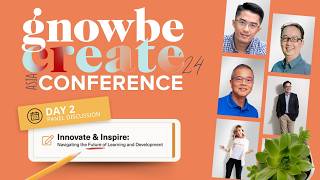
The session is a live, experiential panel at the Create24 Asia conference, moderated by the founder/CEO of Nobii (Speaker A) and featuring three experts: Daniel Chua, Dr. Andrew Ma, and Dr. Cj Meadows. The discussion centers on the evolution of microlearning, the rise of AI‑powered content creation, and the interplay between bite‑size learning and solid instructional design. Key themes include: - Current microlearning trends such as AI‑assisted storyboarding, just‑in‑time training, hyper‑personalisation, and the emerging "nano‑learning" format driven by short‑form platforms like TikTok. - Myths around microlearning, especially the misconception that simply chopping a long lecture into short clips makes learning effective; the panel stresses the need for instructional design, gamification, and behavior‑design to weave micro‑chunks into coherent learning experiences. - Risks of AI, notably hallucination and over‑reliance on generated content without verification, and the importance of human oversight and citation discipline. - The concept of a digital twin or AI professor that can act as a 24/7 learning coach, illustrating a "man‑plus‑machine" future where AI handles repetitive tasks while humans provide judgment and empathy. - Prompt engineering as a critical skill for extracting useful AI output, and the broader need for upskilling staff in effective prompting. - Community‑building strategies: leveraging the Nobii platform’s digital companion, leaderboards, reflection boards, and post‑session alumni engagement to keep learning continuous rather than a one‑off event. - Ongoing development of Nobii AI, an auto‑translation and instructional‑design engine, with a call for beta testers. The panel wraps with a reflection break, encouraging participants to share takeaways, rate the session, and continue the conversation in the global Create24 community.
Chapters
Welcome everyone to Create24. This is our flagship experience that we have, and it's our third year, so we're so delighted to have the Asia version. We have guests joining from all across the region, and we're delighted to have you all here. And this is really not a typical conference where you have talking heads. As you know, this is an experiential— it's more of a learning experience. I would say it's a living conference because it's an experience where we invite all of you to participate and join in with us because I think you don't— we can all have the chance to learn from each other. And that's part of adult learning. It's the idea of being able to learn together. And this conference is also one for creators by creators. So this is a showcase of people who are practitioners in this space. So we encourage all of you to ask lots of questions, to challenge each other, including the speakers. And I see each other as in the overall global community. And today I'm very excited to talk about topics I love, which of course, microlearning and AI. So we're delighted to have a kickstart with a great panel today. And as we do so, if you have not already logged in, Nobii will be your— so the way I use Nobii is I have my Zoom, then I have my phone next to me, and Nobii, the phone will be your digital companion for the journey. So the polls, the reflections will all be in your Nobii digital companion. And also as your speakers speak, you don't have to worry, all of the content is already in NOBI. Thanks to your amazing speakers. So you don't have to take snapshots of the different screens and worry about losing it. It's all in your pocket. And because it's a living conference, for those of you who, you know, may have to come in and out, of course we hope you stay till the very end, but want to share with your colleagues or continue to access the content next week because of the forgetful curve, you have the opportunity to continue to join and also to continue to stay in community with us. So we hope that you will stay with us in the community because you are— we learn so much from all of you. So we thank you for being part of this journey. So as we kick things off, we will introduce our opening panel today. So this is also a preview of our Asia Create landing page. This is our custom landing page, which of course we just unveiled yesterday. To the public. So now all of you creators can have your own custom landing page for your companies, your organizations, and also for your school as well, or your, your clients. And so we'll do that. Can everyone see my screen? Yeah. Okay. So we're going to kick things off here. And then with session 1, I think there was a poll here in session 1. And of course, I think some of you who came yesterday, this is a repeat of yesterday. But for those who came today, We asked what topics you are interested in. And of course, this is on AI and microlearning. So it seems logical that you're in the right place, that all of you here are very interested in these two topics. So let's just jump right in to session 2. So we're in session 2 here where we're going to discuss the panel, which is Innovations in Microlearning and AI. And so let's see how everyone is feeling today. So we only have a few people who signed up the poll. I'm feeling excited and ready to go, partially because yesterday was such an inspiring set of conversations. So I invite all of you to join us and let's see how you're feeling today. And we also would love your feedback. This 2-3 hour formats, so hopefully you have the time to break, reflect as well. And it is Lunch and Learn, so we want to give you a chance to also grab a bite as we do this today. All right, we have 8 people. I think some people are still waking up and we have people who are a bit tired but excited. Okay, awesome. Thank you all for joining and we'll invite you. Okay, with 9 people. All right. I think I know we have about 40 people here on this call, so we'll just invite folks. We have 150, if I'm not wrong, for joining the group. Okay. So, and this is my bio. So I'm the founder and CEO. I'll be your host for today. I'm really delighted. I'm passionate about Really about impact. That's really what I'm passionate about. I'm not a technologist, so my background, I love technology, but I'm not a coder. So when Nobi was created, it had to be very easy for people who are not good at technology like me. I am Gen X, and yesterday we had a great session about generations, so I'm not the generation that grew up with tech. So Nobi has to be very easy for people even like me to use. And so the joy of creating things that are easy, that are accessible for Gen X, Y, Z, Millennials, and Baby Boomers, of course, is the challenge. But I'm delighted to be able to help partner with you to create transformational learning experiences for your communities. And then today we're joined in our panel by Daniel Chua. He is an expert speaker at Create and many of our masterclasses because he is an educator, learning desire, designer, multi-talented. He has been with NTC First Campus and we've been partnering for at least 5 years, if I'm not wrong. So he's really at the cutting edge of large systems, education, early childhood, distributed workforce. So you can ask him tons of questions because he's really awesome at that. And then we have Dr. Andrew Ma, a friend from Hong Kong, also been partnering through our network for, for a couple of years and really an expert in technology. So he's actually an expert in tech. AI, tech, microlearning, and he'll be showing different tools of how to really do that in learning design. So stick around for that session. And then we have Dr. Cj Meadows, dear friend, lovely and just talented. You can read her bio here, but she really is really at the pioneer and always at the cutting edge of thinking about innovations. She was one of the first people to invent the living book. Innobe, she— I just found out she wrote 12 books. When I met her, it was like 4. She's up to 12 now. She's nobified many of her books and turned them into living experiences. So she just has such a unique perspective on technology innovation and learning. And so I think she's— we're delighted to have her as our special guest to join us on our panel today. So without further ado, I'm going to ask each of our panelists to introduce themselves. Beyond what I shared, and then, and kick off with the first question. But before we do that, of course, we want to make sure we get your questions answered. So if you have any questions for the panel as you're hearing it, please do write them down here and share to the group. And I wanted to just call out Jit and Eleanor, our amazing Nobii team. Could you please raise your hands and wave? Menjit, who are here to support. And so if you have any questions, they'll also be helping to post things and to share links, etc., as well. So thank you so much both for doing a lot of the hard work in the background. And then, so please ask your questions here for the panel. And then we're also going to give everyone a chance to reflect and any takeaways and notes you have. The beauty of putting it into Nobii is that in 2 weeks' time, in 1 month's time, in your pocket, you'll have access to the content, your reflections, and your notes. So it's an all-in-one kind of thing. And for those of you who are competitive and want to see how you're doing, you can click on My Progress., and you will always be able to see what your course progress is. And if you want to download all the content and your, your own reflections, you can go to the digital workbook, download the PDF, and then you'll be able to see all the content plus your reflections. So that's for people who want to keep it. And then for those who are competitive and also social, you can go to the group board. View all. We have 155 people here now, and then you can order by rank. I love to do this. Daniel, of course, top of the leaderboard again. Great job, Daniel.
Yeah, I'm the kid in class who does all the pre-reads before the session.
I can tell. It's awesome. And, uh, and then, but Mark is, Mark, Mark is catching up. He's at 9%, and that's because we just got started. So we give everyone else a chance to get started for the rest of the day. All right, so jumping right back into the panel, I'm going to turn this off now so that we can actually highlight just our speakers. So just to kick things off, microlearning, and there's so many trends with microlearning and mobile. I think it's probably been nearly a decade now since microlearning became a thing. So what trends are you seeing in microlearning in terms of awareness and adoption? And please introduce yourself, and then anyone can just jump in and share your perspective.
Yeah, maybe I'll start. Hi everyone, I'm Daniel. So essentially, where microlearning trends are concerned, I think right now, I think we are seeing a huge push in terms of AI-powered content creation. So what we have done in our team is we've used a bit of it with our storyboarding and various content creation, even things like creating videos and all that. So that's been a great time saver. And as in all organizations, right, we're always concerned about productivity. And I think AI is that magic bullet which will help us improve our productivity without sacrificing quality.
Absolutely.
And actually, I use Nobii for one of my MBA courses, and it's also taught to the next level down in Agewise. And in terms of it really engaging a younger audience, microlearning is a terrific way to do it because that's how they are learning naturally these days. They learn off of videos and little snippets of this and that. And I spoke to my kids one day and said, well, do you even read? And they're like, we Google things all the time. What do you think it's written in? We read it. But they learn and read and interact with the world in little snippets. So I see a lot more awareness of that among the learners than among the educators. But the educators are catching up.
Yeah, absolutely.
Yeah, I see too. I do see a few trends. Some are positive in my opinion, some are negative. Okay, let's start with the positive first. So I think the just-in-time training, meaning that if you have a new situation and you want to quickly push out some learning, using AI can really accelerate the production and curation of the course. So just in time, I think that's one positive trend. Second is hyper-personalization, meaning that each person may face a different— like I'm doing corporate training, so I do a lot of training that how do you handle your staff with different personality, with your boss with different demands. With your client that always negotiate with price. So you can use the proper prompt to do role play and make it so that your boss, you describe his or her personality, and you can do a role play before you go into your performance review. So that, that type of half a personalization is ready to use. In our learning program. The third trend, I have some reservation. We have called microlearn— we have used microlearning for 10 years, but I think the next trend is nano-learning. TikTok, few seconds, 10 seconds, 20 seconds, 30 seconds. I think the next generation, the attention span is even shorter, and we need to So to them, TED Talk is already 18 minutes too long for them. So, but if we make such, if we make videos in such a short duration, do we trivialize things? Do we just touch on only on the surface? So that trend, I'm not 100% sure, but definitely the demand or the customer taste seems to be going that way.
Yeah. It's interesting.
If I could build on that for just a moment, I think what you're getting to is something deeper. We think of education as something you do, you train, and then you go out and do the thing that you trained in. But that's not how the world is and certainly not how it's going to be. Working and learning are intertwined. There's no need to separate it. And that's where microlearning and the power of AI come in.
And what's interesting, and I'll challenge a thought here, you know, just because it's fun. And this idea of nano learning and micro learning, the terms themselves are fairly new. I would say in the last 5 to 10 years, you start to hear people talking about that. But I would argue that humans have been communicating in nano bytes and micro since the beginning of man, the beginning of mankind. And the reason why is if you take this conversation And I challenge people with a timer to time this conversation. What you'll notice is each one of us will speak for less than 60 seconds, maximum 90 seconds. Then the next person will speak, then the next person. Because if one person speaks, and even if you're doing a monologue, an 18-minute talk, you usually will pause. I just pause, right? Because I'm speaking for a few seconds, so I have to pause. I give you a chance to process information, then we keep going, and then we pause. So it's actually a more human way of interacting. And so if you think about that kind of psychology of how the brain processes, it kind of makes sense. Daniel, you're going to say?
Yeah, no, so actually what Andrew just shared around microlearning, I think Dr. Meadows shared that as well. Microlearning is something, if you Google today, okay, learning trends, you will see microlearning pop up all the time. Okay, and I still remember this, right? About 5 years ago when we were looking for a mobile-first platform, Nobi came along and said mobile-first microlearning platform. And my first impression was microlearning means a mobile device, right? And then I very quickly learned that no, it's not about that. It's about chunking information And I think in many aspects, I think KnowBe4 is ahead of its time. And to be honest, in hindsight, we are so glad we picked the KnowBe4 platform because we already by design have something which caters to adult learning.
Thank you. I mean, I think, and the thing about microlearning, and maybe I'll break a myth here. And we did a video a few years ago around the myths of microlearning. And it's actually similar to what Andrew just said about nano-learning, that if you take a long piece of content and you break it up into micro or nano bites, it's going to be great. You are microlearning. But I would say that even if you take a 60-minute thing and break it up into 60 one-minute bites, it doesn't make it more effective. So I think part of the challenge is that microlearning alone is not going to be the thing. That's why we don't go to TikTok to get our MBA, right? YouTube arguably has all the videos that we need, but we don't go to YouTube to get it because it's not about just a bite size. It's the instructional design. And what is really exciting is instructional design. And by the way, I've been teaching and training for 30 years. I never heard the term instructional design until Nobi, right? Because I was studying the research and science of learning. Instructional design is how to train. It's the science and research of how to train and how to teach more effectively. So that's why the role of each of us, the creators, is still so critical. It's not just microlearning. You take bites of content, but it has to be woven together into a learning experience that then transforms and impacts learners. So, so that's what the microlearning plus instructional design combination is, what's really powerful. Not just microlearning alone. So just video, video, video with some short quizzes is microlearning. Is it the most effective? Question mark, right? So I think that's really the thing. So curious, we talk about myths. What myths are you all seeing when it comes to these trends of AI and microlearning? And what have you experienced, whether it's in the edgy— and I love that 3 of you have different contexts, right? Classroom, corporate, you know, serving clients, educators. What myths do you sometimes struggle with when you're trying to change the mindsets even within your own organization?
Well, one of the things that I did fairly within the past year or two was create a digital twin of me so that my readers and my executives in exec ed or MBA students, whoever, can talk to me 24/7. I give them my WhatsApp number and tell them, do not wake me up. So they've got her all the time. And when my institution, SPJ Global, wanted to make a professor bot or an AI professor, I said, oh, pick me, pick me, take my videos, take my, you know, whatever I've got and model it off of me. This is so cool. And the immediate response from everybody is, What? They're gonna replace you. And I'm like, well, yeah, they're gonna replace me doing the boring stuff that I don't wanna do. And then all of the new kind of developments, AI cannot guide itself. It can't go into an unstructured situation and handle it. It can't talk to a person and discern their needs and then create a solution for them. That is very human. That will remain human. Absolutely. And it's going to be in future, man plus machine. Man plus machine beats man or machine every time.
Yeah. And I mean, we have been doing man plus machine. You know, we have cars, we have computers, we have phones. I mean, it has been. It's just, yeah, this is, but this is a little bit different too. So curious, you know, Andrew, you know, you look and think about AI all the time. What are the myths that you're seeing and maybe what are the truths?
Wow, speaking about the truth, I guess one of the drawback of AI at this point is still it still have single-digit hallucination, meaning that it when it gives out answer, it sometimes lies and sometimes embedded very seemingly persuasive Very well-written argument, but the facts is simply true— uh, false. Okay, so yet, um, I have worked with different corporations, different CEOs, different senior management. Um, they sometimes, they blow this out of water, meaning that, oh, because it is hallucinate, we shouldn't use it, wait until it becomes really more accurate. But then I usually challenge them. Hey, men and women hallucinate all the time. When we give out our answer, our response, do we actually have citation to every one of our opinion? Sometimes we present our opinions as facts too. And maybe human have more hallucination rate than AI to some extent.
Interesting.
When I supervise PhD students, in their dissertation, every single sentence I need them to, okay, do you have ground? Do you have citation? Do you have, right? But in normal conversation we don't do that. But then we challenge AI that every single sentence need correct citation. Then they stop using it. Then I think that may not be the right way to look at it. But the other way is if we just, fully embrace and just copy and paste all the response from AI into our daily work, that is also dangerous as well. So we need to find the right collaboration. I think what Dr. Meadows say, how do we actually collaborate with AI and with human so that we can co-create a learning community? That not only share knowledge but also share wisdom in the knowledge overwhelm and information overwhelm world. How do we find the truth? How do you find the right argument, right facts that help you to paint a better future? And I think right now we are over knowledge and under wisdom.
I, and there's so much depth to that statement that we're over-knowledged, under-wisdom that I know Andrew's gonna unpack that in his session later today, which, so I don't want to steal his thunder now. I think it's super important. And, and I think that the question then about the role of the human, and I think the point you made about AI lies, I think is very, very important. And, you know, in terms of the skills required now to use AI and recognize that the answers you get may not be fact and truth, right? And so then, you know, Daniel, you've been experimenting with AI now, even with the NTUC First Campus. How do you develop the skills then, right? You know, with AI, even for your own team, because you have so many staff, right, who are using AI tools. How do you deal with this challenge?
Yeah, so I think with AI, one of the things— so we are taking baby steps, and one of the One of the things which we are in the process of doing is to— what's the word for it— to help our staff members write sharper prompts. Okay, so the information you get is only as good as the prompt you put in there. And the tool is really quite amazing. I remember I went through, I think it was a Coursera program where this gentleman actually demonstrated how he wrote a children's storybook for a 5-year-old purely through prompts. So it was about adventure in a forest, and there were endearing characters and all that. And he's not an author, but he wrote very sharp, very accurate prompts. And I was really amazed at the quality of the output. So I think sometimes it's very easy for us to fall into this false sense of security because, like Andrew says, The feedback you get is so convincing that even when it is not the truth, you believe that it is the truth because it's so well written.
Yeah, absolutely. And I think I should share with you because you are all coming part of Kreate, you know, our community, right? We are at Nobee developing Nobee AI. So I think earlier this year we launched Nobee AI, the AI auto translation tools. You know, that translates anything, right? Copy paste into over 70 languages. But we are literally— we've already started the development of Nobii AI, which will be our machine that takes any content, ingests it, and will put out a program based on instructional design, gamification, and behavior design research. So, so we're very excited. And if any of you are keen to be part of our beta test, for Nobii AI to test it and help us. Yeah, I know all of our speakers for sure. And if you are, please do contact us. We are delighted to start to get beta users to also help us with requirements gathering because we're very excited to empower the creator because we're seeing a lot of AI tools out there now for learners and we want to empower the creators. So we're going to continue to invest in there. So we're super happy. I'm conscious of time and I know that there's a question here in the audience. So thank you all for sharing. I think this is Isaac. If learning and living are intertwined, how can microlearning not just be a one-off course? How can course alumni be invited to come back and reflect on issues with current learners and form a learning community? And Isaac, I do recommend that you watch and go back to yesterday. We had an awesome session in the panel with Hans and also with Nick Fong on literally this topic. But I welcome the panel to share your point of view on this. And how to combine high touch with high tech. And we literally talked about this yesterday, so I love it. Let's, let's, I'd love to hear your views.
So why don't I start off with, you know, a lot, if you've got a library of experiential learning such as Nobiz and you've got a something like a tutor that can remain your lifelong. Tutor or digital twin or what have you, that GenAI, if you develop a relationship with it and it grows in learning knowledge and so forth and understands you as well, it can become a lifelong coach. And that also comes back to some of what Daniel was talking about in terms of prompt engineering. Everybody's talking about it, but honestly, It's just asking good questions. So asking good questions and critical thinking are, are becoming more important than ever. And where, as technology advances, it helps us reconnect with something old, the Socratic method, personalized apprenticeships, all of these types of learnings that we've gotten away from now become possible with technology. So you can have your own personal coach forever.
Absolutely. And I think also this idea of kind of staying connected and it's constant, it's in the flow. So, you know, one of the interesting things that, you know, is that even this, this conference, this conference, everyone who's a participant of this conference, the 50 people on the call, and then there are another 150 like online. Are part of this global community. And how we nurture and foster that by sharing your perspectives is part of how we build community. So I mean, I think I'm curious because Daniel, you have a large community that are distributed. How do you foster community and learning outside the courses?
Yeah, so in our case, because we are in the education industry, so we carry out workshops. So it's a combination of no-bi programs, facilitated sessions. And where the rubber hits the road really is we have a team of pedagogists who would do some classroom observations. Okay, so because we can train our people all as best we can, but ultimately where the rubber hits the road is are they able to deliver the curriculum as expected? Okay, and to be fair to the educators out there, the dynamics in a classroom is so different. You can learn something in a classroom when you bring it to the field. Physical class with the children, the dynamics comes into play and other challenges come in. So we have a team of pedagogists who go out there, carry out these observations and help our educators hone their skills in some of these areas. So it's end to end really, and that's how we attempt to do this.
Awesome. I'm conscious that we are at time for a break, but we have— this panel was so exciting. I think we can talk, knowing everyone here, we could talk probably all day about this topic. And so I want to invite everyone, and what we've done this year, and this is also, we're always learning as a team at CREATE. So what we did is we decided to put in breaks in between for reflection time because as adults, we can't just consume information, we have to reflect on it. We know things, we have to think about it, apply, and share. And when we know, think, apply, share, then we can retain more. And then make it part of our being. And for those of you who know, KnowBe stands for Grow Knowledge into Beings. That's our passion, right? It's to make learning real. So I want to give everyone a chance. I'm showing our group board here, and this is so super cute, a picture of your pet. This would be me because I don't have real pets, but I think it's super cute. And then please share your takeaways and learnings. So we want to give everyone a moment to just reflect in session 2 after the panel. What did you learn? What are your key takeaways? That's your reflection part of the thinking. And if you share it with the community, then, you know, give everyone a chance to learn with you. And so we can learn from each other. So we're going to give everyone a coffee break and a toilet break. So bio break. We'll be back at 11:15. We do invite you to share. And if you don't want to share now, you can do it later here, and you'll get a reminder. But please do click this arrow button. Because we also want to get your feedback and to get— oops, sorry, I didn't do that correctly. Oh, wrong one. Sorry. Here. If you click this and you click this button, you will also get a 5-star rating of how much did you enjoy our panel's discussion. So I thoroughly enjoyed it. So I'll put that. And we always want to get your feedback. So we'll see you back at 11:15 AM. Thank you. Please join me in giving a huge round of applause to our amazing and inspiring panelists. Thank you.
More from Dr.



Leading Innovation for the Corporate Business Through Impact | CSI Insights Ep. 7

AI Transformation: Is the Consulting Career Model Breaking Down? | Dr. C.J. Meadows | S1E5


CIO Leadership Live ASEAN with Dr CJ Meadows, S P Jain School of Global Management


Usha International - Tiger Center Sewing Center 2025 - Now a Learning-and-Production Center


