Future of Work Show: Ep. 48: BTO or WFH?
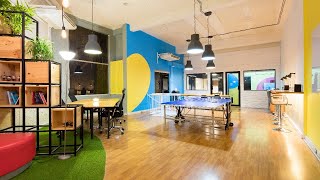
Professor Cj Meadows discusses hybrid work models and why 70% of firms are adopting them. She argues that early-career employees need in-person time for relationship building and sponsorship, and that tracking productivity by keystrokes doesn't work. Clear KPIs and intentional face-to-face interaction matter more than flexible policies alone.
Chapters
Hi everyone, welcome to episode 48 of The Future of Work Show. Frankly, sometimes I can't imagine we've been on for so long, but the future of work is constantly evolving, and that means we've got so much new to talk about that's topical and really shares where we're at at that moment in time. And today's conversation takes a very similar vein. I have with me a very special guest, someone who's really in the know of how organizations across the world are thinking about the future workplace. Uh, please join me in welcoming Professor Cj Meadows. Hi Cj, lovely to have you here.
Thank you for inviting me.
Professor Cj Meadows is, uh, top— one of the top 10 women in IT for Asia. But she's also the chair of innovation and design thinking for SP Jain Institute of Management and Research globally. And she works out of Singapore. So a warm welcome to you, Cj. I'm so excited to have this opportunity to ask you about all that you are seeing.
I'll try to give you some sort of reasoned answers, and, and I don't know is always a good one. But I am in your completely capable virtual hands, which is a good lead-in.
And for those of you who don't know, Professor Cj Meadows has her own podcast on LinkedIn. So do, do make sure to check that out as well. You could perhaps follow her on LinkedIn along with the SP Jain Global Management Research Institute.
Yeah, it's called Job Talk. I love followers. I love for people to join in and ask wonderful questions. We'll either help you with your work life or at least let you laugh about it and know you're not alone.
I'm sure they're going to learn a lot. In fact, Cj, I'm so excited to have you here because I'm going to try and really explore what the future workplace is going to look like. Good, I'll come too. I'm going to lead you in with the first question. What are you seeing? You know, what's the popular sentiment around you? Do you see most organizations as, you know, sort of longing for the past, wanting to bring people back into office as things were pre-COVID? Or are you seeing many other organizations wanting to now completely rethink the work is done and the way the workplace itself is set up. So what are you seeing?
Funny enough, 70% of organizations have plans in place for hybrid workplace. So although, you know, there was a lot of fighting going on beforehand, and I would listen to bosses say, no, no, no, nobody's going to work if they're home, then the exact same bosses after COVID said, oh my God, people got more productive. How did that happen? I'm like, yeah, duh, we've been telling you, and you bosses did not trust your own people. And I didn't mention that, you know, you don't actually know what they're doing in the workplace when they're in your workplace physically. So, so engagement is really the key. And figuring out what kind of work should be done face-to-face and what kind of work is okay working from home or even better working from home. And there's different circumstances for different people.
I can't wait to dive into that. But let me first ask you questions around what forms of hybrid are you seeing? So, you know, are you seeing the form of hybrid, the most commonly spoken about, which is a few days in office and a few days work from anywhere, or are you seeing other formats of hybrid emerge where people work remotely for the most part and then come together on pre-specified weeks in a quarter, weeks in a month? What are the different shapes and sizes of hybrid, if you like, that you're seeing?
Absolutely. So there's work from office, work from home. There's also work near home. And organizations are really having to rethink the size and the infrastructure of the office, the workforce, both physically and virtually. You need both the physical and virtual infrastructures for work. And don't forget that a lot of organizations are global anyway. So, you know, my office, for example, I'm, you know, we have a policy to be in the office 3 days a week and work from home 2 days a week. But when I'm in the office, what am I doing? Well, I'm sending emails and having Zoom calls and WhatsApp calls and videos because the people I work with are in Mumbai and Dubai and at Sydney and all over the place. So quote unquote remote work entered the workplace long before COVID attacked us. And as a matter of fact, funny enough, I saw a big opportunity in virtual teams. And 25 years ago at Harvard Business School, did my doctorate working on virtual teams and outsourcing to figure out how to work effectively when you're spread around the globe. The only problem was nobody wanted to do it until we had a pandemic. So what I'm seeing is it— I'm not seeing organizations planning on a quarterly basis how you're going to work from home, work from office. It's generally per week. There's also some argument around whether you should let your employees choose which days to work physically in an office and which days not. Even for those who are having people work from office, they're rethinking, do they really want to have it in a city center with long commutes and, and all kinds of other problems, or have a distributed building sort of setup in suburbs and industrial parks and so forth. So we're seeing kind of two steps to the virtual work.
It's so interesting you say that, Cj, because we had Professor Anna Tavis from NYU here a few months ago, and she spoke about something similar. She had done a study of the New York real estate market Yeah, so while, yeah, while there are the big, you know, tech companies buying up some of the prime locations, so there's that as well to create experience offices. She also found from her study of real estate that there are a number of organizations which now are thinking of the, the big sort of brand-bearing office, then the smaller to home, you know, smaller, closer to home, smaller— work near home offices. And then of course the, you know, the third option of work from home or wherever you like. So she spoke about how, you know, she in the New York, for the New York real estate market, saw this trend of three different, you know, ways, formats coming together. Would love to hear, are you seeing something like that happen in Asia as well? Singapore, Hong Kong, or some of the other places you work with?
In Asia, I'm not quite yet seeing the work near home revolution. It's still work from home or work from office. But I am seeing companies put up a lot more virtual infrastructures for collaboration and paying more attention to the social aspect of work. There was a wonderful article like 2 decades ago by Malcolm Gladwell in The New Yorker, and it was called something about designing your workplace to be more like Greenwich Village. Because what happened in Greenwich Village was, you know, people had little tiny dinky apartments, and they didn't always want to cook in those little tiny dinky apartments. So they would go out to eat, go out to do the laundry, they'd go out and get a newspaper, they'd go out do this. And there was a, a much greater sense of community in a place like that. And, and that sort of social engineering, which was totally accidental— it was not on purpose— um, became social engineering within companies to put departments together that you would like to work together and put their food and their bathrooms and the printer and the water in far-flung places. So people had to walk around and they would bump into each other and just by necessity have to physically interact. Companies did see some positive benefits of that. And some believed that they had better relationships and more innovation. I haven't seen conclusive research on that. What I have seen is research on, you know, everybody's doing research on work from home now. So what we find now with the research is that 61% of people who are working from home are doing so by choice, even though their offices somewhere else are still open. That said, they're 60% more likely to feel disconnected. From their, their social cohorts. And there is a demographic difference between the people who want to work more from home and the people who want to work more from the office. There's also a promotion impact. And so companies moving forward, if they're letting people choose, what's happening is in general your younger workers want to work in an office because they want to meet people and learn from them in person. Young women, especially young mothers, they wanna work more from home, especially 5 days a week at home. Promotions are more likely to happen with an in-office worker than an out-of-office worker. People of color are more, for whatever reason, wanna be at home. So you're gonna get, somewhat of a divide between the in-office and the out-of-office people, especially in terms of promotion and leadership, if you don't address those social issues right away. And this is actually causing a good deal of anxiety, um, which impacts productivity and encourages burnout in workers where their organizations have not yet set any policies or they've become really vague about it. So company leadership needs to set some policies, pay attention to not creating an in-group and an out-group, maintaining diversity and cross-functional innovation collisions, um, and communicate it clearly to everyone.
That's how it works. I love, Cj Meadows, that you brought that up because, you know, the difference in career opportunities for those who have more face time, work in office much more, you know, compared to those who for whatever reason choose to work remotely is a very real cause of concern. I was wondering if you had any thoughts around, particularly since in a very prescient move, you chose your doctoral research topic as, you know, what makes—
A little early, you know, maybe I should have done that a little later.
But I mean, that's pure gold at this point in time. So do you have any suggestions in if organizations do choose to give that flexibility to their people, as many are at least thinking about or considering, What are then good ways for leaders in the organization, for managers to work with what seems to be, you know, a form of, I don't know, affinity bias, unconscious bias of some kind, you know, play out? What is it that we can do?
Well, one of the things that organizations are doing is making sure they have the good virtual infrastructure, first of all. So that, and a lot of organizations are deciding to pay for the virtual infrastructures that work from home people are putting into their homes. So you need a laptop, you may need a camera, you may need some lighting, et cetera, et cetera, the electricity and et cetera. So being work from home friendly and yet, What I found in my studies was that at the beginning of a relationship, the face-to-face interaction is really, really useful. It super helps people bond. So some organizations are saying, okay, if you've been with us a year or more, you can work from home 3 days a week. But if you've only been with us a year or less, please come in, please only work from home 2 days a week. We want to see you an extra day a week in the office to start to make those relationships and get accustomed to our culture. So that's a helpful thing. Another, you also want to have some face-to-face time just on a regular basis, just regular old relationship maintenance. And things that you won't say in a formal meeting, and you won't bring up because, you know, it's Zoom time and then, oops, sorry, we're out of Zoom time, gotta go. People will share more face-to-face. So little snippets of regular face-to-face time. Also, face-to-face time is good for fixing complicated problems. It's actually good for those early innovation design type stages where you don't know what you're doing and you It's a lot more productive and comfortable to do your design thinking together physically. A surprising thing that I had found was that too much of a rich communication medium, like face-to-face, can over-politicize situations that really shouldn't be. And now in the back of your head, you're probably thinking, oh my God, I know so many organizations that are political, political, political. If you get some of them out of the office part of the time, maybe a little of that will tone down and people will just focus on the work, the deliverables, the timelines, and simple responses instead of emotional ones. So those are some of the things going on. I will pause, otherwise I could just like monologue for the next hour.
I love that, Cj Meadows. I love that. It's the first time I'm hearing that one point that you just made, that sometimes just having a hybrid or in some form moving out of the office and in, you know, having some work done virtually, perhaps because the work tends to be more outcome-focused, more, you know, it's just more merit-focused, more outcome-focused, more structured.
And the responses are, number one, you stop and think before you send an email. Or before you can actually make that Zoom meeting.
Yeah, yeah, yeah.
And if it's a phone call, you'll be kind of more sensitive than if you can blast somebody in person.
Right, right. That's such an interesting— that's, that's really a new thing I've learned.
I was surprised.
Yeah, that's super interesting. So, so I'm just going to try and, you know, summarize some of this to make sure that, you know, we've got it right. I love that you started off by saying that, you know, you're seeing 70% of the organizations that you work with think about hybrid in some form. And the most—
actually, no, that's a research finding. Somebody did a study and asked organizations, uh, are you gonna do work from office, work from home, or hybrid? And 70% of, of a great many organizations said, yeah, hybrid.
Right. So there's obviously a lot more openness to hybrid. A lot. A lot. And you're seeing hybrid emerge in 3 different ways. You know, the work from office combined with work near home combined with work from home. And you are seeing, you know, the most popular form of hybrid being one of certain number of days in office and certain number of days you know, working remotely. I also want to bring back a point that you brought up because I want to make sure that, you know, none of our listeners missed that, that there are some things that happen far better in person. And one of the suggestions you have for even people who make that choice, for instance, to work largely remotely, is to be conscious that right at the start of the relationships, they need to spend some time, you know, just building that relationship, getting the foundation for that set before, you know, they, they work from anywhere.
Super useful.
I also want to like bring back what you said about the fact that perhaps there are some stages where working together is just much more— working together in person is much more effective than working remotely. Like, I think you spoke about when there's a design thinking sprint or something, it's easier to do it.
Yeah, it just kind of goes. And when we design thinking prod— oh, the internet burped.
Okay.
We're back. So during COVID we were still doing design thinking projects, and it was not easy because you couldn't go out and observe people to learn their needs. However, one of the things that we found super effective was to look at videos that people posted just by themselves, just because they wanted to. And we learned so much. For example, I was working with a pharmaceutical company that wanted to move beyond just the pill and develop healthcare services, but they were very restricted by the legal team as they couldn't go into a hospital and watch people taking the drug that they produced because that would cause all kinds of legal complications. However, we found people who were taking their drug and other similar drugs on YouTube, and they learned so much about the experience around those pharmaceuticals and got so many ideas for what they could do to extend their services. It was just like— it was magical. So there are— there are always other— there are always ways to supplement face-to-face, and there are times other than COVID when you need to anyway. So you got to get good at it.
Yeah, and that's really a big question, you know, which I'm going to ask your views on. So given that in many ways, you know, the workplace— how do we almost begin to think about doing some of the things you spoke about, like building relationships innovation, collaboration, you know, brainstorming. In a digital-first world, do you think it will always need teams to come together for some time in person, or do you think that we are seeing the evolution of practices that are digital-first practices where, you know, we don't necessarily have to meet in person but we find good ways of doing this virtually?
Because I think people will get more and more comfortable developing relationships virtually. After all, ask anybody who's on the metaverse— Minecraft, Roblox, um, online dating. Now, online dating, they actually do go out physically in person, etc. But, um, I, I do think that we're going to get better at making relationships and fixing problems and collaborating and co-creating virtually than we are now. As a matter of fact, I've been— I've become more open to lean media. I had a design thinking team, for example. Normally in design thinking, you want to go out in person. It is a rich experience. You learn so many things that people aren't going to tell you and you're never going to think to ask. And when I send out teams to do ethnography, I tell them, okay, video and photo if you can, certainly watch. If you're talking to people, try and have somebody else record it, or at least take notes. And I had a team come back, and they were, they were interviewing teenagers, and they said, well, we don't know if this data point is going to be okay with you. This respondent wouldn't talk to us in person. She would only text us. And I said initially, what? That's dumb. That's such a lean media. You're not going to learn— whoa, wait a minute. And then I thought back to who that respondent was, and I realized that's a person who spends spends 90% of her communication time texting, not talking. So in essence, you're speaking that person's language. Yeah. So I think what we're going to have is a consumer base and a worker base coming up having had more experience and variety in terms of virtual communication. And virtual relationship making. Yeah. And that's going to spill over, and not only into the products and services we need to offer them, but also into the workplace that they're going to take part of— pardon. And funny enough, there are also workplaces in the metaverse, and you can buy and sell like Louis Vuitton outfits and Rolex watches for your avatar. I know somebody who bought a Starbucks franchise and opened it in the metaverse and had customers coming in and she was making change and selling stuff and running her business on the metaverse. So I think we're going to see a lot more of that.
Yeah, I think so too, Cj Meadows. I mean, I love the example you brought up about text versus call because in some ways it's almost a generational giveaway, your preference. It's a generational— Absolutely. It's going to be hard to find someone under 30 who prefers to call, you know.
But actually, what I'm seeing is just like your kids know when to go to mom and when to go to dad, they need to learn when to go face-to-face, when to call, when to text, when to speak as an avatar in the metaverse. They're going to start choosing the medium and experimentally winding up figuring out how to use them most effectively.
I absolutely agree. I'm going to come back to that point, but I'm going to take some questions first. So here's a good one. Do we need to fix the mode of working first and then frame KPIs? Or think of our mode of working and then mode of working to the already existing list of KPIs?
Very, very good question. And this was actually one of the things that happened at Yahoo. So they got a new leader at Yahoo, and people were working from home as well as working in an office, but they didn't have an effective performance management system. So she actually shut down the work from home stuff and had everybody in the office, fixed the KPIs and all the performance management and feedback systems, then had people go and work from home. You know, work is work. Work comes first. You're not there to socialize. You're there to do a job. It just happens that The more we move from the industrial age to the information and creative age, the more social work has become and will become. So fix your, your performance and your work-related issues. And then, then the question is, then do you let people choose to work from home or not? Okay, the truth is certain kinds of work really are best done, you know, their social work, their meetings, their co-creation, collaboration, all that kind of stuff, coordination. Uh, why did it start with co-? Oh, because that's part of the language, co-. Um, um, that's how you collaborate, um, co-labor. So There is some work that is social in nature, and some of that can be best done face-to-face, and some of it can be best done virtually. There is some work that requires a good deal of focus and concentration. And if you force people who are doing that work into an open office, you're going to see dips in productivity, as so many other companies saw when they all went to open offices. I know, for example, a worker who had to tap into her office, but she had focus concentration kind of work that she had to do. And it was a big long project, took about a year. So for about a year, she would tap in, set up her little desk, walk to— I'm making this up, this is true, walk to the shopping mall next door to her building. And all day long, she would work in coffee shops and restaurants. And then every hour and a half, she has to pack everything up and go find a toilet and go back and order some $5 cup of coffee or what have you. And then at the end of the day, she'd pack it all up, take a bus right back to her office and tap out. And then take her transport home. And this was an entire year, and this is absolutely ridiculous. So what I would say is, number one, get a handle on the kind of work being done, match the medium and the kind of work. Number two, nobody knows their work like the person doing it. But one of the challenges of COVID was people were let loose at home having to set up their own productivity boundaries and, and infrastructure and, and culture and practices, whereas that had always been done for them in an office. They didn't know how to, like, set work hours and ignore email at night and all that kind of stuff. So you will have to provide some training to individuals as well, how to manage and maximize the productivity. But you've got to trust them to do it.
It's funny you should say that, Cj Meadows. You know, all my life when I worked in open offices, I would constantly seek out a conference room to do my actual thinking work in because— Yes, yeah.
There's a practice called library rules. And there's a marvelous article on that. I think it's Harvard Business Review. And there's a consulting firm that goes out and institutes library rules in offices where shh, nobody can talk. If you want to talk or have a phone conversation, you have to go outside, just exactly like a library, and you cannot interrupt anyone, etc. And they would do this like one day a month. Or one day a week, and productivity shot through the roof because all of a sudden people could concentrate.
So I'm going to take another question from Varsha. Hi, Varsha. Thanks for joining us. Do you think these hybrid work models will help scale up productivity, or would you need more supervision to track what's happening?
Well, to be honest, I don't know any company that actually tracks what's happening in the office effectively. Productively. You can track deliverables, you can track the hours and the location of your people, but you don't know, you really don't know what they're doing. As a matter of fact, there are, there are companies that try and track your keystrokes. Yes.
So, so at one point, right, that's where Marissa Mayer's decision to bring people back to office, I think came from some such study.
Well, unfortunately, people also have software to augment their keystrokes. We get a Fitbit watch and one of the most popular devices on AliExpress is a recharger that does this. Oh, so we got 4 steps in a day. Okay, so whatever system you put in, Your workers are going to get around it. So don't fool yourself. The way to ensure that you have productivity is to have engaged workers.
You've got to be—
you've got to get people who care about what they're doing and support them.
One of the things organizations have been very concerned about, for frankly good reasons, is, you know, how social capital has weakened, people's, you know, networks have shrunk through last 2 years of working remotely. There's also been a concern around, are we really— how do we embed culture if we're not— we don't have enough moments together? So, you know, I wonder if you have any thoughts around, are there in fact ways to embed culture, you know, virtually. I mean, there are organizations which are completely virtual. So how are they doing this effectively and what can we learn from them?
Exactly. And yet somehow they have a culture. Ed Schein is like the, the be-all and end-all of culture. And, you know, he, he said, look, it's very much like an onion. There's the, the, there's the artifacts that you can see and there's people's behavior. And then there's the assumptions and values and so forth. At the end of the day, I like what Clay Christensen said about it. Culture is a collection of what works. You know, some worker does something one way and it worked, and they pass it on to somebody else who has a similar problem, or they train people that way. Et cetera. So even in a totally virtual organization, if people are figuring out how things work, then that will be embedded in culture and people will start to do that. And you'll start to hear, oh, that's the way things are done around here. The artifacts, the visible stuff, um, okay, you can have avatars and you can give people stuff to have in their virtual office at home, but you have less opportunity for those artifacts if you're not in a physical office. Now, if you go down into the interior of this, the values, um, That's something that you hire for. That's something that should be coming out in the review process. You know, and those deeper values are passed around as they are in societies with legend and stories. So at American Express, for example, you know, it became a legendary story that somebody had left their passport at American Express and the whole journey of how the worker who was supposed to be off duty, but oh no, they need their passport. You know, and they went through this incredible journey to get the passport to the customer. You know, that became a legend and that became a virtual artifact, I would say. Of value, customer first, we go way above and beyond to help our customers, our people. So you can measure culture, you can manage culture virtually. You're going to have to get a little creative about it. But I have to say, a lot of organizations are not managing culture in their physical office. So don't think that that's going to solve your problem, just being there physically.
That's such a good point, Cj Meadows. That's such a good point because I think across the board, when we meet organizational leaders, that's the first concern that they have. We've got to get people back into the office. The culture is getting spoiled. They don't know what we stand for, etc. And what I hear you say—
Oh, wait, I'm sorry. Time for leaders? You said we don't know what we stand for.
We don't— they don't know what we stand for.
They don't know what we stand for. Yeah. So what's gonna— but what is gonna happen when you have them in the office? Are they magically going to know what you stand for? No. The leader has to get off his or her butt and, and find ways to communicate those values.
So, and encourage Yeah, in a sense, you know, there's a little bit of a shift from perhaps if you were in person, you could rely on the 5 or 10 people who happen to observe you in a day, watch you in action. But here you're going to have to perhaps rely much more on the stories you tell, the, you know, the narratives, the mythology. So it's like, what are you telling people about what you did becomes a carrier, one of the carriers of culture. So it could, you know—
oh, sorry, sorry, go ahead.
New learnings, I imagine, right, as organizations try and build culture, uh, you know, virtually. Because I'm not sure how many organizations know how to do this at this point.
You have to ask what is actually happening physically, is that transferable, and do you have more opportunities virtually than you do physically. So one of the things that I learned when I started working at a particular client like 30 years ago, you know, I, I'm, I'm a bit head and I love coding and building mainframes and I was an accountant, all this kind of stuff. So tech, tech, tech, spreadsheet, spreadsheet, spreadsheet. But I never saw my productivity shoot through the roof as much as when I started every day taking my cup of coffee around the office, just asking, hi, how are you? Hi, how are you? And then pretty soon people would just tell me early information, and I could head off problems more quickly. So how about the virtual cup of coffee? Those 5 people that you just mentioned in the office It's not magic that they're exuding the vibrations of culture. It's, it's through conversation. So are you, are you setting up conversations virtually? Are you setting up ways to bump into each other virtually? A lot of organizations are not, so they're missing that. But you can do it.
So it sounds like almost this missing body of knowledge at this point of how do we do what— we didn't need to necessarily put conscious thought in building relationships, culture when we were all in office. How do we do that now virtually? That's a missing body of knowledge. It exists, but it isn't— not enough people know about how to do it.
But that means that people are not digging deeply enough. They're not observing. So there's no design thinking going on there. They're not digging deep enough, deeply enough physically. And they're not looking at analogies such as the metaverse, Minecraft, Roblox. You know, there's places you can go virtually and you run into people and you make friends and all this sort of stuff. So how is it that the kids are doing that? And these leaders in organizations say it can't be done. Sounds doable to me.
That's such a good point, Cj Meadows. You're absolutely right. You speak to young people and their comfort with living in almost parallel universes and their entire social network, you know, parallel social networks that exist in these different universes. It's a reality. It's as real as, you know, gamers.
They go for hours and hours and hours and hours and they get lonely. So there is software to have them connected 24/7 as if they were on a phone call 24/7. But, you know, they're doing their games and they're talking to their friends. People hop in and out. And I just— it starts with a D and I can't think of the name of it. Um, um, Discord. Yeah, so, you know, while gamers are playing a game in one universe, then they're on Discord actually just talking to each other. And if they don't want to talk anymore, then they leave the Discord room. But, you know, can we have these multiple platforms going on?
That's a really, really good point, Cj Meadows. That's a really, really good point. So let me then ask you, you know, one of the big concerns organizations have had over the last couple of months is that leaders have wanted to bring people back into office, but people haven't had a similar excitement about coming back to office. In fact, it's hugely asymmetrical. There's Uncube, our organization, works in, you know, future organizations, future leadership space. We just finished a qualitative study of 55 0 to 10 years work experience people. For 53 of the 55, flexible working hours and flexible working days were very important.
Yeah. And I've got another study to build on that that says that 25 to 30% of workers, if you don't let them have work from home flexibility, they will look elsewhere. And you're going to do this during the Great Resignation, what?
So then, how would you as a leader, even in a hybrid setting, how do you get them back into office if you want to do a 2 days or 3 days work in office kind of hybrid? How do you do that?
I can tell you how they are doing it. I'm not telling you how they should do it. What you're seeing, how they are doing it, is mandating it. If you want to be paid, you have to be, uh, in the office 3 days a week or 2 days a week or 5 days a week. And, you know, if you haven't read the letter by Elon Musk— oh my God, that was amazing, you know— and his His whole take on it, because he's an innovator, was, "I was on the shop floor. I was there 100% of the time. If you want to phone it in, you phone it into some other company. You don't work here." But I still have to go back to, that's his job. But what if you need focus and concentration and to be alone sometimes?
And not just that, you know, the fact that there's such a big difference now between what employee expectations are versus what leader expectations are. So I also want to pick your brains on one idea, Cj. There are some of these large organizations, global organizations, which are thinking of different hybrid formats for different parts of their work based on the remote potential of different functions, how co-located or how geographically dispersed the team anyway is, and a number of such criteria. What are your thoughts around the challenges organizations will have if different parts of the organization work in different formats of, you know, work from office, hybrid, work from home? Are there even any challenges, or is, is this even something to be concerned about, or you think it'll settle on its own?
Well, if, if you're leading a global organization, um, you naturally do want to have the same policies for everyone and, and as a culture that has some consistency. But I have to say that different jobs have different requirements for work from home versus work from office versus work near home. And you've got to go with what's most productive. Um, there is, there is some debate about, um, should you let your off— your workers choose the days that they are, um, that they work from home. And guess what? Everybody wants to work from home Monday and Friday. Okay, I don't know anybody who doesn't. That means that you've got to pay for an entire office Tuesday, Wednesday, Thursday, and then Friday, Saturday, Sunday, Monday, the damn thing's empty. So what are you going to do about the expensive office space? There, there is also the problem of creating a different— different categories of people: the in-office people, the out-of-office people. And the in-office ones are generally going to be men, um, and they're are generally not going to be in charge of the kids, and they're going to get promoted. So then you've lost your diversity and your inclusion. So you need to find ways to combat that. One, one way actually is desexing CVs and performance reviews. Some companies also mandate that, you know, if there's 5 people up for a C-suite position, for example, at least 2 of those CVs have to be women. It doesn't mean we're going to hire them, but in the process of choosing the candidate, they have to be considered. You know, so there's a whole host of different things that you can do.
Sounds like there are a lot of, you know, we sort of know what the big questions are and we're still really exploring the answers to this.
Oh, oh, and another one to loop back to your question is pay. So one of the big issues that I had to consider when I was working on Global Virtual Teams and Indian Outsourcing over a quarter century ago in my research. You know, you can get a worker so much cheaper overseas than in person. So then you've got, you've got issues of national economy and okay, well, if you're piping somebody in on the internet, and they don't have a green card, do they still have a right to work in the US, basically? Um, another piece of that is if you've told your workers, oh well, you don't actually have to come in the office, can they move someplace far, far, far cheaper and have their, their current city salary? And most organizations pay differently according to the big cities, the medium-sized cities, and non-cities. So are you going to pull their wages back because they moved but they're still doing the same job? So I'm sorry, I don't have answers for that. Yeah, this is one of those times when I'm going to say I don't know. Yeah, no, no, no, I will work it out somehow.
Yeah, yeah, we've had in fact, uh, guests on our show to speak about future of compensation in particular and this thorny issue of what happens when you move location.. And, you know, some of the models emerging is that you say, okay, if you're in the same country, you know, you can— you're going to get pretty much the same salary. Of course, then that has implications because, you know, it does mean that—
okay, if you're in Cleveland, Ohio versus Manhattan, yeah, it's a huge difference in cost of living.
So, you know, it just depends on how the organization is thinking about their own geographical distribution. And if being in Manhattan is not work-related, if, you know, it's because you want to live in Manhattan, then so be it. You know, when you pay additional cost for living in a place of your choice. So yeah, I mean, nobody knows, but some of these early models, um, you know, are around. I think Airbnb is also recently announced this, that if you're the same country in the same geography, you'll get paid the same. So my final set of questions, Cj Meadows, uh, for young people who are joining the workplace today, what would be your suggestions around how they should build their careers? Um, how should they build relationships, collaborate, innovate? Because we are living in a time of great flux where perhaps the virtual fluency as well as virtual experience perhaps of younger people is far more than, you know, maybe even some of the leaders, in fact quite likely some of the leaders. So what do you think are some of the good, you know, good ideas for young people to take away in building a career in what will certainly become a digital-first world as we move through it?
Absolutely. You know, one of the things that's going to be happening is artificial intelligence, machine learning, robotic process automation, robotics themselves physically. And so a lot more of what we do will be social. It doesn't mean necessarily face-to-face, but it does mean social. Make sure you've got not only the technical skills but also the the social skills. Make sure that you don't just get mentored, you get sponsored. And I mean this for women, especially women. A lot of women are over-mentored and nobody sponsors them to get a higher-up job. Also, reach out to people for advice, mentorship, sponsorship, or just ideas. There's this wonderful organization called 100 Coffees, and now companies are having their new recruits not just do some sort of buddy system but actively reach out to people for a coffee and share wisdom. And then also go back to people that you've had a coffee with if, if you need their help with something. So learning how to network is going to be key. For innovation and creativity, you can certainly learn the skills. You can start learning them online and then put them into practice doing what you do. Also, don't make the mistake of doing what you're told. That was great in school. Now it's a different game. Hear what you're told, but if it doesn't make sense, talk back and say, well, I don't understand how that makes sense. Wouldn't it make more sense to do this or to do that? Find— also find better, hopefully far better ways of doing what you need to do, and share that with the guys above you and around you so that everybody can be more productive. So actually do the innovation creativity thing as well.
Lovely. I love, I love that, you know, the set of suggestions for young people starting out their careers. It almost sounds like You want them to take the lead in— Yes. Yeah. Back in the day, you know, you— I think many of us tended to be a little more passive of how we build our social networks, influence, our ideas for change and innovation. And you want them to be a lot more proactive right at the start of their careers and to do so, you know, virtually but also in person. And I'm bringing back something you spoke which we spoke about earlier in our conversation. So don't underestimate the importance of those conversations in person if it's possible, then consciously choose to do that, as well as setting up meetings with people and maybe, like you said, going back to them later so that the connections stay alive. So the social component of work is increasing and therefore focusing much more consciously on the social element of their work, right? Wonderful. So before we sign off, Cj Meadows, any last advice for managers and leaders? Because everybody's, as you said, trying to figure out this new workplace, the new hybrid workplace. Any suggestions for people who are going to do this for the very first time in Cj Meadows?
You mean for the, for the younger, at the bottom type of folks? Don't forget to do all the things that you would have done physically virtually, such as having coffee with somebody, tapping on somebody for advice, or what have you. And don't think that because you're working virtually, that means you're a second-class citizen, that you're shirking from home. That's what it used to be called. Because you're not. But do be very, very aware of how you brand and market yourself. And remember, LinkedIn is a super good tool for this. And, and don't just go and do your job and leave, but put some real thought into becoming a media influencer, even in a small way. Even if you don't gather a big following in your workplace or in your field, it will help you clarify your thoughts so you get better at what you do and more polished at presenting it. And presentation becomes ever more important virtually. Lovely. Both in writing and videos and photos.
Love that. That's a great suggestion, whether or not you want to be an influencer. Just the, just the whole habit of expressing yourself, you know, verbally, on video, in your writing, helps sharpen your own Yeah, it works. Thank you so much, Cj Meadows, for this wonderful conversation. Really enjoyed it. Thank you so much for being on our show. For those of you who've joined us this Saturday afternoon, I'm so glad you could join us today. Do keep watching the Future of Work Show. Uncubed works with leaders, managers, and organizations pretty much across the world in helping them think through some of the thorny issues that we spoke to Professor Cj Meadows about today. How do we build workplaces of tomorrow and how do we train and build leaders for tomorrow? We also work with organizations on enabling hybrid workplaces, mapping social capital, and thinking of ways to build culture virtually and in person because it's almost like the rules of the game have shifted completely. Completely, and we're just putting the pieces of this together to create a new body of knowledge. So keep following and keep following our page on LinkedIn for this as well. And do make sure you check out, uh, Cj Meadows' own podcast. So follow her on LinkedIn and join her for her next job talk. So with that, thank you very much. Thank you.
More from Dr.



Leading Innovation for the Corporate Business Through Impact | CSI Insights Ep. 7

AI Transformation: Is the Consulting Career Model Breaking Down? | Dr. C.J. Meadows | S1E5


CIO Leadership Live ASEAN with Dr CJ Meadows, S P Jain School of Global Management


Usha International - Tiger Center Sewing Center 2025 - Now a Learning-and-Production Center


