Future of Work - Virtual Working & Learning: Blending the Best of Solo & Social
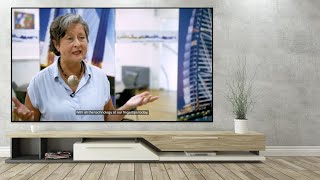
Dr. CJ Meadows argues that hybrid work and learning models cut costs while boosting satisfaction and productivity. His research from 25 years ago found virtual and physical teams performed equally well. SP Jain's studio approach uses real-time polling, breakout groups, and emotion-gauging tools to replicate classroom engagement online.
Chapters
Virtual working and learning. When COVID came upon us, you know, most of us then had to start working virtually without any training in how to do so productively and comfortably. Companies have been integrating working and learning and trying to get most— the most productivity out of our learning for quite some time. But now with COVID as well, we need to learn virtually and make sure it's productive. So what I'd like to do with you today is to share our studio approach at S.P. Jain School of Global Management, some new research on virtual working and learning, some old research that you might not have heard about, and open it up to your questions and address your issues. So let's go. So first of all, my focus today is going to be on how to combine the best of working and learning and the best of doing those things virtually and physically. When do you want to use one versus the other? Because now that we have vaccines around the world, they will roll out and we will be able to physically collect together in offices and schools. But do we really want to? When is it the right thing to do? Can we bounce back better, more productively, more creatively? Well, first of all, why would you do virtual work other than COVID? A lot of companies have discovered during this time, looking at their empty, hugely expensive office buildings, they've discovered that these buildings are actually quite expensive. On average, according to JLL, the office cost per person is about $11,000 US. Multiply that by everybody in your workforce, and that's quite a lot. So a lot of companies are going to distributed offices, open offices, shared offices, hot desking, all of this. And we can talk more about that because there are some productivity implications. From the worker's perspective, some love it. I personally love it, but some people hate it. It depends partly on your personality and partly on what exactly is the work you're doing. It also depends on what's your setup at work. Are you doing things that require focus but you're stuck in an open office? And what's your setup at home? Do you have small children and yet you need to focus on your work and manage them at the same time? So some people are fine are finding it extremely difficult. New doctoral research has found that teleworkers, funny enough, are more satisfied with their jobs than face-to-face workers. And this could tie into the difficulty with global disengagement. According to Gallup, 85% of the world's workers are disengaged from their jobs. And this costs in the US alone between $450 and $550 $1.2 billion a year. It's a big deal. So if we can mix physical and virtual work performance and learning, which engages very many people, can we improve employee engagement? Now, one of the issues when you go virtual is social networks. Are you still building social networks? And are you still having casual conversations the way we did in an office? That builds networks and helps with creativity, innovation, problem-solving. Another issue is trust. A lot of managers, when COVID hit and people had to stay home to work, wound up calling them all the time asking, what are you doing? What are you doing? They don't see their people, and they forgot that you don't see them anyway in an office, even if they're there physically. A lot of companies and managers resist going virtual because they don't trust their workers. But then again, if your workers are not engaged, maybe that makes sense. If you can engage and support them, then are you willing to go ahead and trust them? And instead of policing them, support them. It's, it's all a bunch of issues that are tied together. Also, if you show your workers you don't I don't trust them. Guess what? You have set up an adversarial relationship from the start, and all the cost and well-being benefits that could accrue to the company through virtual work and virtual learning then don't. Now, how about virtual learning? Okay, so it's very widely agreed by every corporate HR director and McKinsey, as a matter of fact, that learning is helpful for productivity and helpful for innovation. McKinsey actually has a study that shows that companies that are better learners are also better performers. The two are tied. Oddly enough, a lot of people think that virtual education is just cheap and nasty, and that's not true. Clay Christensen, when he put out his Harvard course online, which was the first Harvard Business School online course in disruptive innovation— disruptive strategy. He said, you know, I hadn't realized, but knowing that I'm not standing in front of just 90 people, but I'm standing in front of many thousands, he actually improved his materials, tightened his frameworks, made everything a great deal better. So virtual learning can be not only cheaper, but actually a lot better quality. Unfortunately, there's another side to it. 75% of people who sign up for online courses don't complete them. So this learner disengagement, why does it happen and how can we help people not drop out? Well, I'd like to introduce you to some old research that you may not have heard of. As a matter of fact, this was my doctoral research search 25 years ago. I never thought I'd be saying that sentence. You know, 25 years ago we had global communications and information technology infrastructures. And I thought, wait, wait, wait. In the same way that we've globalized manufacturing, we can now globalize services and have integrated worldwide teams. You can get the best human resource price and quality experts that you couldn't otherwise access, all working together at the same time. I studied projects in a crazy little industry that people told me would never take off— Indian IT outsourcing— and I found that the virtual and physical gave the same work, and teams and projects gave the same productivity and the same quality of work virtually and physically. There was no difference. But there was one difference. Face-to-face gave higher customer satisfaction. We like making relationships face-to-face. Also, too much face-to-face sometimes hurt. It would politicize issues where we didn't really need to. I thought this was around the corner. But there was no real burning platform till COVID came along. So we have a chance now to dig into old research that we haven't used, as well as looking at new research, like library rules. There's a wonderful Harvard Business Review article going through how companies are introducing library rules as if they were a library. A day a week, a day a month, whenever— a day whenever needed. And everybody has to whisper or be absolutely quiet. Your phones have to be off. Everybody's focused, and productivity shoots through the roof when people are not bombarded with noise and interruptions. So in some regard, it's like turning your physical workplace into a virtual workplace. Speaking of virtual workplaces, SP Jain School of Global Management has been worldwide from the start. Operations are spread across Mumbai, Dubai, Singapore, and Sydney, and we have virtual teams, virtual tools, but the product is face-to-face transformative global education. The people who come to us to learn want to have physically— physical experiences, life-changing experiences around the world. Not only, according to McKinsey and a lot of others, does learning help you work better, but also working helps you learn better. So we have consulting projects, bring your work problems to class and let everybody help solve them. And we have more emphasis on entrepreneurship. So what does all of this then mean? So learning helps your work, work helps your learning. Sometimes virtual is better, sometimes face-to-face is more useful. Let me share with you a video showing our studio approach and then tell you some backstories. Here we go.
With all the technology at our fingertips today, is it really possible to bring a classroom-like experience online into your home? Can you really sit in front of your laptop and get the same kind of engagement and real-time learning as in a conventional classroom? Sounds unlikely, right? Come. Let me introduce you to a powerful new way to learn online. Welcome! How is everyone today? It's great to see you all. I assume you've all read the TrustSphere case. So, Jim, in Singapore, as the TrustSphere CEO, what's What's your most important strategic decision to make today?
So I think that we should pursue people analytics with today's platform while setting aside a small team to pursue advanced technologies.
I think we already have a response here from Dubai. Dr. Gulnara? I think we need to develop what our customers are— I can make eye contact, moderate a discussion, have a one-on-one conversation. Cold call, split the class into groups, take a poll, all real-time. The technology allows me to do pretty much what I do today to engage and motivate students in a conventional classroom. So it sounds like we have two approaches to growing the company. Let's take a poll and find out what everyone thinks. It feels like you're sitting in class because, you know, you have a very engaged atmosphere where the Professor is asking you questions, there's a lot of cold calling, you see your classmates in class, so it's really been a great experience so far. 10 more seconds. Who answered C? Shirley in Singapore, what is your other way and why is it better?
Could also manage an open innovation portfolio with high-tech startups.
That way we can do both and innovate beyond our own resources. Not a bad option. What I'd really like to do now is diverge-converge to come up with some creative solutions to the company's problem. So let's split out into virtual teams for 10 minutes. I'll assign you on a random basis. Each team should choose a spokesperson and then come back ready to tell us what's the core problem? Okay, spokespeople, please use your chat tool to tell us what's the core strategic problem. Artav from Mumbai, why did your team say the CEO is the real problem?
Well, the case says he recognized people analytics to be crucial to their long-term success. However, the world's fastest growing region is Asia, and the Asian clients want Wanted risk analytics.
Understood. Oh, we already have a response. With ELO, we bring the on-campus experience of our world-class EMBA right to your doorstep. There's no need to come to campus anymore. You can connect and learn with your batchmates no matter where you are—home, work, or wherever you're traveling to.
I attended my first session Singapore Airport launch. Then I was in Pacific Islands for almost 3 weeks. There I attended my 2 complete modules or subjects. And I was in Ecuador. There also I attended one of my sessions. I have that flexibility and that connect with my class from anywhere. So I never felt that, oh, I'm missing the class. I'm already in class.
Thank you everyone. It's a wrap. We'll see you next time.
So it's an interesting mix of needing virtual education because people have to go different places physically. In a future world where you don't have to travel, do you, etc. Again, I think the key to the whole thing is mixing the best of both and maybe understanding a little more deeply what works, what doesn't, what are the backstories. So let me share with you this. That day there were 48 people on the, on the big screen. We can go up to 56, but on Zoom, for example, only 25 people really are comfortably displayed at one time. So with a big studio-type setup, you've got everybody able to see everyone and a screen of PowerPoints or writing or what have you. Here's another little thing. In one of my corporate education sessions, I had two guys sitting right next to each other named Abhishek. Okay, and the company wanted me to assign marks to assignments and their speaking and their class engagement. So in order to do that, it was very, very helpful to have them in one spot all the time as if they were in a physical classroom. You'll— if you've ever used Zoom for groups, you'll notice that Zoom has people switching and moving around, and it's very hard to keep track of who's who, what's what, who gave what idea, because they're constantly moving. Another thing that I find useful and that I think the, the participants find good is physical movement. I'm physically up moving around as if we were in a face-to-face classroom, and it increases the energy level in the room. Another thing that's useful is I can see underneath the person how they voted on the poll. So I didn't actually have to say who voted this way or that way. I can see it on the screen. Another marvelous thing that happened that day, we were doing a Harvard Business School case called TrustSphere. And everybody was deciding which way the company should go. And hey, what's the CEO doing? And one guy in particular said, you know, I think the CEO is the problem. Funny enough, we had the CEO attending the session. We were doing the session in Singapore. People were logging in from Philippines, India, Vietnam, heaven knows where. And the CEO himself logged in from London Heathrow Airport. So Manish Goel, he's a much more handsome fellow than this. This is just a bad picture. He's a very, very nice guy. He just does not actually look like Scrooge. But we would not have had a discussion with the CEO of the company we were analyzing without this sort of a format being virtual. So that's another advantage of virtual. So what's happened is our virtual stuff is popular and fast growing. However, people are still choosing in-person programs so they can travel around the world live with their new cohort and network with them, socialize, have fun, and, and make personal transformations away from their day-to-day life. So that's another one of the advantages of face-to-face that you don't quite get virtually. All right, so what's new and what's next? Uh, at SP Jain, we've got productivity tools coming out beyond Blackboard. Facial recognition and gauging the emotion and engagement of our participants. Hybrids, where people are in a room and logging in to have a discussion all together. Time zones are a big problem. My kids have gone to school online for a long time. And one time in particular, I couldn't punish my daughter for falling asleep in French class because it was 11:30 at night. The teacher was in the UK doing things in UK time and we were in Asia. So although virtual has a lot of benefits, people are winding up getting up in the middle of the night for stuff. Um, that's something that you have to manage, especially neuroscience and leadership. We're taking neuroscience readings or neuro readings from people's brains and integrating that into leadership programs because we've learned through technology that better leaders use their whole brain. It's whole brain leadership. There's also work under— going on by Squirrel, for example, on AI teaching and AI tutoring and coaching. So that's coming up. An area of my research is also what's the future business— what does the future business person need to be like? What are their skills? What are their attributes? I piled through World Economic Forum and a whole bunch of other stuff and found that in what we're predicting now is in the future, in this virtual AI-enabled robotic machine learning world, most of what we need is our— its attributes of being intrapersonal and interpersonal management so we can engage in more human sorts of work. Does that require face-to-face human learning? There are pros and cons to that. Uh, also I've got a little 3D mindprint map that we can discuss later if you'd like, uh, using this being, thinking, doing, um, concept and putting these, these skills and attributes on a brain map. Left brain, right brain, top brain, bottom brain. All right, so big question: what's new and next for you? We had work from office, now we've got work from home. Many companies are going to work near home and mixed and blended learning, but they— you need to support your employees to manage their own productivity and well-being. Companies set up environments in which you know, trying to make it conducive to work. But now people have to set up their own. And if you're going to give them more flexibility, they need to be running experiments on their own productivity. I'm more creative in the morning. Other people are more creative in the evening. Some people need more little breaks. I need fewer. Some people work better in a closed room with no noise. Some people work best in a coffee shop with hubbub around. Et cetera, et cetera, et cetera. There are great companies out there like NetForm and TrustSphere who will help you model and manage your social networks inside and outside the company. You've probably read some of this in Malcolm Gladwell's The Tipping Point. KnowBe is a great microlearning company and they're working now on work-learning integration and trying to calculate the ROI of your learning By assessing in a 360-degree manner from your colleagues, has the learning helped or changed your performance in any way? EdCast, which I notice is a sponsor of this event, gives a Netflix-like experience to learning, both— and it finds for you inside your company and outside your company for free and for fee What are the things that you need to be learning now? How can you do that most quickly? And what's the format that's best for you? Text, audio, video, etc. Streams AI is giving information to salespeople as and when they need it. And in fact, it winds up being a learning platform as well. AI and Think+ is a new program by a friend of mine and myself on what does AI do for us and what doesn't it do, and how do people think differently, and how can you get the best of synergy from both of them. Deloitte, Entomo, and Epidemy are focusing on future of work skills and the disruptive work— disrupted workforce in that scenario with robotics, AI, and so forth. So can you map your workforce today Can you map it 5 years from now? What do you need to do to make that transition? That is a work and learning transition that should be done physically and virtually. So basically, design, technology, and business models of working and learning all need to change in an integrated fashion. I would suggest that we need learning and innovation centers with simulations, sprints, real experiences, and coaching. So the physical world, the digital world, the world of work, the world of learning, all of these need to come together productively. And now I would like to invite you to share your issues and questions, and I thank you for being with me today. I wish you a wonderful future learning, working most productively. Thank you. Thank you, Dr. CJ Meadows.
Perhaps I can start with a question. In your opinion, how can companies help their employees manage their virtual and physical productivity? And do you see any obstacles in the way?
You know, the, the first obstacle really is knowing, knowing yourself, knowing your work style, thinking about the types of tasks you're doing, and experimenting with yourself. For example, I, I write books, which requires a great deal of focus and concentration. I have meetings, I coach people, it's— I do admin, etc. I do design work. So when I'm writing or designing, I find that I'm most productive in the morning. And one of the things that I do is not open up email, WhatsApp, and so forth. I just go in fresh, sit down, and whatever it is can wait until the afternoon when I'm slightly brain dead and ready to take care of admin and ready to boost myself because I'm an extrovert with some social contact, contact, having meetings and mentoring and coaching people. So, you know, one, one thing that is useful is Dr. Edie Greenblatt's Restore Yourself book and some other things you'll learn in Employee Wellbeing and Resilience to help people understand what drains you of your energy, what gives you energy, and managing your workday so that you don't get overdrained all the time and so that you create your own conditions to be most productive. But employers need to give people the freedom to do this. So if I have to go into someplace, an office building, and tap into an open office, but I have design work or something else that requires concentration, I'm going to have to waste a lot of time getting in, tapping in because you don't trust me to be working, and then go to a coffee shop to get my work done. In which case, why make your workers go in anyway? So yeah, so setup, um, things to try out, a method of experimentation, and rules of engagement between management and workers so they know you're supporting them and not trying to get in the way.
Thank you, Dr. CJ Meadows. We have just one question. Uh, oh, you talk about ELUs, right? So just wondering, so for people who are interested in this, should they set up in each of the cities the company operates in. Would that be a concern in terms of increasing costs without actually decreasing the office costs and without any genuine productivity gains? Do you think that's a concern?
Good question, good question. I mean, we have had people tour our ELO facilities, and not only do we have an ELO in each of our locations. We have even more than one, but that's because we have large groups that do work together and we need to make it engaging. So if you have large design groups and problem solving, if you have— if you need interaction by large groups of people and you want to make it engaging, it could be a good move for you as a company to set something like this up. Or you could even find a studio and make sure something gets set up and, and rent it. Um, an earlier version of this— this, this ELO is the first in Asia, but an earlier version was by Harvard with WGBH Television. So as a business Why not use other people's facilities to make sure that when you get together to problem solve, design, innovate, whatever you're doing, to make it the most engaging you can to get the best results you can.
More from Dr.



Leading Innovation for the Corporate Business Through Impact | CSI Insights Ep. 7

AI Transformation: Is the Consulting Career Model Breaking Down? | Dr. C.J. Meadows | S1E5


CIO Leadership Live ASEAN with Dr CJ Meadows, S P Jain School of Global Management


Usha International - Tiger Center Sewing Center 2025 - Now a Learning-and-Production Center


