Linking Budget to Strategy in Local Government
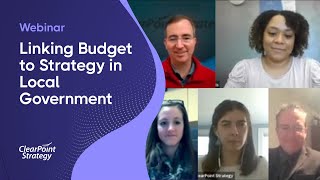
Ted Jackson moderates a panel with budget leaders from Olathe, Raleigh, and Fort Collins on how cities align budgets with strategy. They discuss pandemic recovery, organizational restructuring, and measuring what matters when money is tight.
Good afternoon. We want to welcome you to today's panel discussion, Linking Budget to Strategy and Local Government. Before we begin, I'd like to take a moment to go over a few housekeeping items. We'll save a recording of today's discussion so you can revisit what you learn and share it with your network. Your microphones and conference phones are automatically muted and your videos are turned off. So we encourage you to participate by putting your questions or sharing information in the chat box. Many of you probably used Zoom before, so you know there's a chat at the bottom and Q and A. So I'm Ted Jackson, founder and managing partner here at Clearpoint, we make the leading management reporting software for local governments. Last year we published a research paper on the topic of Linking budget to strategy and local governments. We work closely with the cities of Olathe, Kansas, Raleigh, North Carolina and Fort Collins, Colorado to produce this paper. I'm lucky today to be joined by Shawna Davis, Stephanie Olson and Lawrence Pollock from these organizations. We will hear from them momentarily. Also joining me today is my colleague, Laura Dillon, who will serve as technical support. Thank you, Laura. To each of the panelists. Sorry. To kick off, each panelist will introduce themselves and their perspectives on this topic. We'll then launch into questions and Q and A with the audience. So let's get started. I've asked my panelists to provide a five minute background on their organization's approach to strategy and budgeting. You'll get to hear about their past, current and future challenges and then we'll open it up for questions. Let's turn to our experts. Shawna, can you kick us off?
I sure can. Let me share my screen here. Okay. All right, so my name is Shawna Davis and I am a budget and performance analyst for the City of Olathe, Kansas. So today I'm going to talk to you guys a little bit about how Olathe, Kansas does our budget and strategy connection. So I'm going to get started. The theme here today that we're going with is past, present and future. So I'll start off with the past and how we've aligned our budget and our strategy in the past years. Okay, so in the past, the city of Olathe has had a formal 20 year strategic plan in place. With the strategic plan, the city of Olathe also created an organizational scorecard. So that's what you can see on the screen here. This is our organizational scorecard that we use for our past strategic plan. That was really the anchor between our operations. Our Budget and our strategy, really, it's what connected everything to the strategic plan. So the organizational scorecard was the backbone for department business plans, the budget, all of our performance measures. And that helped gauge our success and our alignment with the strategic plan. So in 2016, the city began budgeting on a biennial cycle. And this allowed for continued alignment with the plan and with the city council's two year goals. So for the most part, our budget strategy aligned most with base budgeting. And then any additions to the budget had to have a strong tie to our organizational scorecard and our strategic plan. So in 2020 this strategic plan actually expired. So the city prior to went into full blown planning mode to create a brand new 20 year strategic plan. So I will say my kind of lines between past, present and future kind of blur a little bit. So the present is Olathe 2040 and that is our current strategic plan. But I need to rewind just a little bit to explain to you guys how we got there. So flip my notes here. So just like everyone, just like everyone I'm sure has experienced, 2020 has been a crazy, crazy year. The number one reason for that being COVID 19 and the pandemic. So the city of Olathe at the beginning of the year really decided to make some major changes on how we operate. So, so major changes that align with how we connect our budget and our strategy. So at the end of 2018, beginning of 2019, we began the development process of a new strategic plan. We started from the ground up, literally boots on the ground. We started at community events, talking with citizens and asking them directly, what do they think Olathe, Olathe should look like by the year 2040, we had multiple staff from every different department working together to build what is today's Olathe 2040 future ready strategic plan. So we worked to develop multiple focus areas, goals, performance areas. We also created new performance measures and defined strategies and tactics on ways that we can achieve the goals that we've set forth by the year 2040. So the Olathe 2040 plan was adopted formally on September or in September of 2019, followed very closely by the pandemic. So we adopted a brand new strategic plan. And then just a few short months later, we were having some difficulties with how are we going to get through this pandemic, Pandemic and any revenue decreases that this could have on us. So at the height of pandemic, we were working to reduce the existing budget to allow for our projected decreases in revenue. And we were trying to plan for fiscal year 2021's budget. So one of the key goals that is in the strategic plan is that we need to be resilient. So we all knew exactly how the strategic plan worked. So we had all worked so hard, we had all put our heart into that strategic plan, and we knew exactly what needed to occur in this disruptor that we were experiencing to allow for this plan to carry on and come out positive at the end of this all. So we knew that we needed to make decisions to our current year's budget and for fiscal year 2021 that weren't going to be sustainable cuts. They were gonna be things that were one time. So we didn't impact citizens quality of life and the programs that we provide to our citizens and our mass amount of infrastructure that we have, and most importantly, the services and the level of services that we're able to provide to citizens. So that being said, that kind of leads us up to really, really where we are today. But I'm kind of blurring that and calling it future because it's our goals that we need to achieve to have what we want in the future. So that being said, in the future we have some major plans to align our strategy and our budget. So one of the things that was recently announced at the end of 2020, beginning of 2021, was that the city would be completely realigned in structure to our lathe 2040 future ready strategic plan. So not only are we working towards aligning our budget and our operations and our performance measures all to our strategic plan, but we have actually aligned our entire department structure to match the strategic plan. So this means, you know, we have a focus area for quality of life, infrastructure, Exceptional services and economy. Those four focus areas are now complete departments at the city of Olathe. So we have a quality of life department and infrastructure department, Exceptional Services and Economy, in addition to police, legal and fire. So obviously right now, you know, our budget office is working very closely with, with all staff to make sure that the infrastructure and the financial infrastructure behind this reorganization is built before we can start making sure everything else aligns with our strategic plan. So we're working on the chart of accounts, making sure any shifts in people, if people are moving from one department to another, those are taken care of. And then we have our major plans Too, by the 2023, 2024 budget cycle to completely move to program based budgeting that follows the strategies aligned in our strategic plan. So that being said, we still have a lot to do 2021 and 2022 were both one year budgets instead of two year budgets. So. So we're taking 2021 and 2022 as like a transition year couple, a two year transition to help us make sure that by 2023 we can have a program based budget that aligns with our new structure and our plan. So one of the other things that we've already started working on is aligning our performance measures. So in our new plan we had 60 new performance measures that all align with the new strategic plan. So along with business plans as well. So we're trying to slightly move away from department business plans and we're going to go out on a limb and try to make kind of a overarching business plan for the entire city and then possibly and or have department focus or focus area plans instead of department plans. We're just trying to do what we can to improve our collaboration between all of our departments and try to work away from any silos that could exist. Those are our big plans. We have a lot going on in the future.
Shonda, that is great and thank you for sharing. So next up is going to be Stephanie from Raleigh.
Okay. So thanks again, Ted, for inviting me to participate. I'm Stephanie. I am with the City of Raleigh. I'm in our Budget Management Services department and my title is the Strategic Planning and Performance Manager. So I'm going to talk about how we have connected budget and strategy in Raleigh. The big takeaway that I want you to have from my portion of the presentation is that we've done a lot in Raleigh to make the strategic plan and strategic thinking a part of our culture. And that's really helped us through our budget processes, especially the couple years that we've gone through here where the pandemic is having a big impact and making us think a little bit differently about how we do things. So I also took the same past, present and future approach. Some of mine blur as well, Shauna, so you're not alone in that. But I did want to just share briefly how we made strategic planning a part of our culture. Some of the really intentional efforts that we made. So our first strategic plan was adopted in fiscal year 16 and ran through fiscal year 20. And as a part of the rollout of that plan, we had a couple of really intentional efforts to make sure that the organization was involved and understood why strategic planning is so important. So one of those efforts was implementing a core STAT program, City of Raleigh statistics. These are biannual meetings where we have staff come and report to city management and have a conversation about what's been accomplished over the last six months, what they plan to accomplish over the next six months, and get feedback to make sure that we're headed in the right direction. We also have what we call the Strategic Planning and Performance analytics academy. We abbreviate that as the academy in Raleigh. And that is an effort that we undertook to make sure that the people who are involved in implementing our strategic plan have the skill sets that they needed in order to do that successfully. And so we cover topics like performance analytics, budgeting, continuous improvement, and strategic and business planning to make sure that our staff feel well equipped to move forward. We also have departmental business plans. These are three year business plans. And throughout the business plan department are required to identify the connections between their business plan and the strategic plan. So that helps them think about how what they're doing as a department supports the overall organization strategy. I often get questions from folks about how what that looks like. Exactly. So I just pulled a quick snapshot from the budget department's business plan. And we have an objective in there that's about aligning our resources to the city's goals and outcomes and elevating the use of data. So that's our departmental objective. And you can see here at the bottom that we required that to be linked to one of the objectives in the strategic plan so that people can see how what they're doing as a department ties and supports council's vision. And then finally, I think Shawna talked about this as well, that we do require, as you submit budget requests, that they're tied into the strategic plan so that we're funding things that are supporting our organization strategy as a whole. So those are some efforts that we went through to really intentionally try to get strategic planning a part of our culture in Raleigh. And that has really assisted us as we've moved forward in the process. And I will say business plans and budget requests are something that are discussed during the yearly budget meetings with the city manager's office. So every department has a budget meeting during the year as they're preparing their budget. And we do require that they go over their business plan and their budget requests with the city manager's office. And that again, helps show the tie to the broader strategy of the department and the organization as they're having their budget conversations. So then moving into present. And by present, I'm referring to that as fiscal year 21. So obviously, when we were moving into our fiscal year 21 budget season, the pandemic hit. And so we had about 60 days to completely shift our plan for the upcoming budget year. And so, because we had done so much work up front and in making sure that people understood our strategic plan, the goals that council has for us moving forward, we already went into that kind of tough budget year understanding what our priorities as an organization are. But we also recognize that we had to do something pretty drastic because we're experiencing some budget shortfalls. And so we had to have conversations about what are the specific goals that we're going to pull out to help guide our fiscal year 21 budget process. And so we had three goals that we set as we went into that kind of 60 day period of turning up around a budget. The first was we must present a balanced budget without a property tax rate increase. Our priority is to maintain our greatest asset, our workforce. And then we should seek to avoid solely relying on deferring our capital maintenance to balance the budget. And so we have this strategic conversation, even in the midst of a crisis, to say, these are the things that need to guide our work moving forward. And I think because we built up this culture of thinking strategically and understanding what that meant, we were able to get through that process fairly quickly. We also were up for a rewrite of our strategic plan mid pandemic. So we did accomplish that, and we adopted our fiscal year 21 through 25 strategic plan. So that was adopted by council in October. And then a new effort that we underwent this year was putting together a program catalog. And the program catalog outlines all the different programs that the departments provide to our community. And through that program catalog, they're required to identify how a program tied into the larger strategic plan. So in each program description, you'll see a very clear link to the strategic plan. So again, this was another effort to really make sure that our broader strategic plan is influencing the other plans and programs that we're putting together. So moving into Future fiscal year 22 and beyond, we are currently working through a budget priorities exercise with city council. We obviously have continued financial strains that we're experiencing because of the pandemic. And so we recognize that we really needed to focus in on what it was that council wanted us to prioritize with this next fiscal year budget. And so because council again has that understanding of their strategic plan, they find it very important. It was really quite simple to have a conversation with them about strategies. And so they kind of understood what we were getting at and helped identify their top priorities for us moving into the fiscal year 22 budget. And we took back those priorities. We have documented our current efforts and how those priorities that they identified tie into their broader strategic plan. So again, bringing that strategic plan link. And then we're currently working on putting together options for how council can further the priorities that they identified as part of the upcoming budget. We're also going to be working on developing our new three year department business plans. So we're going to have departments again tie their business plan to the newly adopted strategic plan and then also connect to that program catalog that we put together. We're still figuring out exactly what that looks like, but again, tying all of these together to make sure that we have connections from strategic plan all the way down through the programs that we provide. And then finally, we're working with departments on developing communications guidelines around our strategic plan. So we've done a lot of efforts as a city to communicate some of the big wins and big things that we've done through our strategic plan and some kind of broad efforts of communicating. We put together videos on different projects that we're accomplishing as part of the strategic plan. We also put together yearly public reports. But we do recognize that departments go to city council with presentations or project updates throughout the year. And so we're encouraging departments to reference how those projects tie into our broader strategic plan so that council can see that we're making progress all throughout the year. And so that again, we're kind of furthering that culture of strategic thinking. So that is all that I have for Raleigh.
Great, Stephanie. Really appreciate it. I assume others are also taking notes and prepping questions. Lawrence, you're up. And then I know some people have put in a few questions already in the chat. We're going to get through the presentations first and then we'll start rolling with the Q and A. So Lawrence, over to you.
Good. Can you see the presentation? Great, thank you. So, like both Alatha and Raleigh, I'll be using the format of A Path Past, Present and Future to talk about the City of Fort Collins strategy and budget alignment. So historically we started a priority based budgeting process called Budgeting for outcomes back in 2005. This is a biennial process, so we do it every two years. And as part of the standard work of budgeting for outcomes, each of the focal themes or outcomes had a mini strategic plan. It was called a request for results, the results we were looking for as an organization. And so the process itself included an aspect of strategic planning. But we will. I'll show you how we expanded on that a few years later. In 2009 was the first time that we implemented performance metrics. As part of a requirement for budget requests. And that really was in its infancy. People could speak to it. We didn't really have a systematic way of showing data. And so it wasn't until 2014 that we made huge advances, in my opinion, both from a strategic planning perspective and the linkage of metrics within our budgets. So the first of those, even though our budgeting for outcomes process had these mini strategic plans by focal area or focal theme, they were potentially siloed. And so the executive body decided it was really their responsibility as city executives to drive strategy for the organization. And so in 2014 was our first city wide strategic plan. And when we got into the next budget request, then every budget request had to link to a primary strategic objective and then could link up to two others as well to show the overall value that the program or service was intending to provide to the community. And so that really helped from a strategic planning perspective. And then also in 2014, we collaborated with Clearpoint to create a central repository of metrics where when people are building their budget requests, then they're actually linking to data from clearpoint to be able to visually show the charts and the data and the analysis that go along with the metrics that were aligned to budget requests and the combination of both of those. So thinking your budget requests, making sure it aligns to strategy and also aligns has metrics aligned to it, allowed us as a city organization to move into it created the foundation that allowed us to move into an executive level organizational performance review model that we refer to as strategy maps. We now speak that although we do budgeting every two years, our budget starts with the strategic plan and that so that strategic plan is a five year view that we refresh every two years. So interesting to see some of the differences between olathe as a 20 year strategic plan, Raleigh that has a five year strategic plan, and in Fort Collins ours is a five year, but we refresh it every two years in alignment with our budget process. So those foundational components, that linkage of budget to strategy and metrics really helped us create this organizational performance forum that we refer to as Strategy Maps, where MAPS is an acronym for Measures analysis and performance. And this has been a decade, over a decade of evolution, as you can see. But it's really served the city of Fort Collins as an organization as well as our elected officials and our community very well. And I think that's one of the reasons that it helped us navigate last year and this year more effectively than we would have otherwise been able to. So if I move to the present and I'm going to talk about both last year and this year as the present. We were slated to take our 2020 strategic plan to council in March of last year. That's where everything blew up, as you know. And so it was a little over a month later that we brought the strategic plan back. It really didn't get modified because of COVID and that was. There were just too many unknowns. And we also know that even though it's a five year view, we would be refreshing it in two years. And so we'd be able to respond to it more quickly than if it was a longer term strategic plan. And so that was just standard workforce. We just continued that as we normally would have. The next thing we had to do was balance 2020. And we did that with the strategic plan in mind, with the key focus of minimizing impacts to service delivery to our community. Once we balance 2020, we could look forward to 2021. We typically do a two year budget, but we decided to go to two one year budgets because of the number of unknowns. And as part of our budgeting process, we also have a number of staff teams, one per outcome. And we did not invoke those last year for the 2021 budget, again because of all the unknowns. At that time. As we were going through that budget process with those changes, we went into the deliberations for the 2021 budget. Again with the strategic plan in mind. We were looking forward. Even though we had to address anticipated revenue shortfalls for 2021, the strategic plan was still guiding us in so many ways and we were able to move forward on those, try on those priorities, those strategies, even in the midst of dealing with the pandemic and all those unknowns. Again, without having that linkage of budget and strategy and using it for a number of years as an organization, we would not have been able to navigate last year as effectively as we were able to. And then the other piece I'll mention is that those strategy map reviews, so these are executive reviews where we're talking about how are we doing on achieving the strategic plan. Those meetings with the entire executive team and the department heads who either have metrics or programs and services associated with those outcomes, those were. They were discussed continuously as a standard course of operations. And then moving into the future, we'll continue on with the standard work. So later this year we'll start working on our 2022 strategic plan. We'll also then be returning to our cadence of a two year budget. So next year we'll be doing our 20, 23 and 24 budget, and we'll be invoking those staff review teams of the budget requests that we had previously had. Another big thing that came out of COVID was and other national events, as we're all aware, was a heightened focus on equity within the city and how do our city programs and services advance equity or not. But we're going to start to ask those questions at a program level. And so we know that historically we have underserved populations within our community, and we need to do a better job as an organization hearing those specific voices within our strategic planning and within our budgeting processes. We have an equity and inclusion office that's coming, will be launched this year that we're very excited about. And one of the big things we heard last year is that our budget information, although we were transparent about so many, so many aspects of city operations, our budget information wasn't accessible, meaning that it's in English, it's only online, it's filled with city speak and jargon. And so we've been very intentional about making our budget information more accessible to our entire community, especially for those historically underserved populations. And then next year, building on work done in 2020 and 2021, our budget process will include our equity indicators, work that we collaborated with the City University of New York on last year and early this year. So we're very excited about incorporating those types of metrics into our future strategic planning and budgeting processes. With that, back to you, Ted.
Great. Thank you very much, Lawrence and Stephanie and Shawna. So for those of you that are attending this, feel free to type in questions into the Q and A or the chat will help make sure that the team gets them. I assume you as panelists have seen some of these, so I'm going to actually just read some of the questions that are there and give you the opportunity to answer them. The first one, Stephanie, kind of popped up right in the middle of your presentation, which was about putting together options for furthering priorities. And, you know, what did you mean by that?
I guess, yeah, sure. So we had a conversation with council at their retreat that we understood there were a lot of priorities that they've outlined for the city. And there are a lot of different things that we want to focus on. But we have pretty limited resources going into the coming year. And so we asked them what their top five priorities would be that they would like represented in the budget. And so then after we got those five priorities, we went back and we had conversations about what we're currently doing. So, for example, affordable housing came out as one of their top priorities. And we talked about the affordable housing bond that will be rolling out this year. We have some initiatives in our strategic plan around affordable housing. So we're outlining what we're already doing and then we'll be coming together as staff to develop some options for how they can further represent that priority in the budget. So if there are other funding sources that they may be able to dedicate towards that, or if there are additional staff that they would like put towards that, or, you know, any number of options of how to continue advancing those particular five areas that they've identified. Because typically we, we do receive budget requests from departments, but we don't have that opportunity this year. So we recognize that we needed to kind of focus in on where our resources would be in the coming year by having that conversation with council up front.
Gotcha. So it sounds like, you know, even as your priorities were solidified, you could redirect all of your current activities there and then talk about, you know, what, how you would prioritize those and make trade offs.
Yeah. So there, there may have to be trade offs and that is a tough conversation to have. Nobody wants to stop doing something.
So. Yeah. And Shauna, this wasn't in there, but this is one of my questions more for you. As I was listening to you say we're kind of rearranging everything to these focus areas, or at least creating almost departments out of focus areas. I was just wondering, like, how could you possibly have done that in the middle of a pandemic? And what kind of, you know, we've seen some of our other clients do it and it seems to be tricky enough to do, you know, in normal times. So be curious as to how you gathered support for that and what kind of resistance you saw and kind of how you helped manage that process. It sounds like the budget is following soon after that. So strategy was clearly driving that. So I'd love to hear about.
Yeah, so I think it kind of, it stemmed from, you know, there was a gap between when the 2040 plan was adopted to really today. So we adopted it. And then a lot of things happened with the pandemic where we really kind of felt like we were in this weird limbo time between the new plan and the old plan. And I think really, really what happened was the decision was made at really an executive level in an attempt to fully bring on this new plan. So they knew that everyone was really, you know, immerse in operations and trying to get through the pandemic. So this was their, their way of trying to help us a little bit to, to implement this new plan. And it's kind of like trial by fire because now we have a new organizational structure and we're having to kind of do some of the things that in some scenarios you might have done at the beginning, end of the, of the decision. But we're working to try to implement it after the fact. So we're working to bring everything up to this strategic plan now that, now that the structure has been realigned, now we have to dig in a little deeper and discuss, you know, little things like the chart of accounts and where people live and those types of things. And then we, once we've got those under control and we feel like those make sense to the new structure, then we can start to align the numbers with that change. So I think that definitely you're right, we're definitely going with the approach of this is our strategic plan. So now let's make everything fold underneath it and have a direct tie to the new way of life.
Great. So I'm going to read another question like how do you reconcile the council priorities with the internal departments? Right. So you know, for instance, we have departments such as hr, IT, Internal Services that feel, you know, left out of some of these. So I'll let, I'll open it up to, to all of you to answer whoever feels like they've run into this challenge.
So a couple of things on that. One of our outcomes, our seven outcomes is high performing government. And so I think of the other six outcomes as external service delivery. And then our high performing government really are the process and policies of city staff and how we go about the delivery of that to the community. And so that's one way that we separate it out and then specifically about thinking about the council priorities because with each elected, the way that we look at it, we have seven council members, if one, we have one new council member that really creates a new council. And that's also one of the reasons that we've created a cadence where we have council elections and then they'll do their onboarding, where they're going to actually create and adopt a CAD Council Priorities Dashboard. And then we get into our strategic planning process. That council information that they've adopted is one of three pillars of our strategic planning process. So in addition to council's priorities, we also focus on the input from public engagement that we get as well as we ask our department heads what are the two or three things that keep you up at night, if you think over the next five years. So to keep it at a higher strategic level. And so those three components then make up our strategic planning. And that's how we make sure that the council priorities are included within the strategic plan.
I can also answer that one. So, like Lawrence shared, we have a key focus area, we call it, of our strategic plan, that is organizational excellence. And so you'll find a lot of those types of initiatives in that part of our strategic plan. Another way that we involve internal departments and honestly just staff across our organization is we have teams of employees that work on each of the initiatives in our strategic plan. And so we put together really diverse groups of employees from across different departments to help implement each of the initiatives that are in our strategic plan. So that's another way that honestly we rely pretty heavily on it because a lot of stuff ends up being kind of related to it or might have an HR perspective. So that's how we get people involved in those other initiatives that might not be a direct tie to their work.
Okay, good. So let's switch topics to budgeting. And for this one, I'm pulling from the chat because, because it sounded like just listening to the three of you described how you might have moved to a one year plan during COVID but then you're kind of moving back to this normal multi year plan. So are the budgeting, this is the question, are the budgeting decisions all made at one point in the year or is there an option to request additional budgets as project ideas are developed throughout the year? So I'll leave the question.
So this is one of the questions we get asked a lot, especially when we do a two year budget, like how can you lock in for two years? So absolutely we have a, we do a two year budget, but by charter we only appropriate a year at a time. And so we also have a revision process whereby it's not a call for budget requests, but if there's new information that we've learned halfway through this two year budget, we have an opportunity to incorporate that for the next year's entire appropriation. We also then have just standard processes whereby supplemental or additional approvals for spending can be made throughout the year and then decided on by council on a one by one basis.
We have actually almost an identical process to Fort Collins where we do adopt, you know, we adopt the first year of the budget officially and then the second year of the budget is conditionally approved. So once we, we still will go through an entire you know, budget planning process. We'll continue to have workshops and meet with the city council to explain everything that is in the second year of the budget, but it's just fundamentally approved at the beginning of the two year cycle. And then we can of course refresh or change anything throughout or during the second year's budget planning process.
And then Raleigh's a little bit different. We do a one year budget cycle, so we plan for and adopt one year rather than two. But similarly, you do have most of your budget conversations at one time of the year. But there is flexibility. If something, a need arises or, you know, something needs to be shifted, we have processes in place to handle that.
And sticking with this budget conversation are budget considerations tied to past department performance. I'm going to leave that open ended. I see interpreting that a variety of ways. But how does the performance, you know, of your departments against their budget last year kind of play into how you think about their budgeting going forward?
So one example is, you know, a department might request additional positions, and the part of the business case for those positions is that they'll bring in additional revenue through the activities that they're doing. So as departments are submitting budget requests, we do have a process that asks them, what type of data are you going to be tracking as part of this request? That we then look back on to make sure that, you know, the case that was made up front, it still continues to be true moving forward. So that's kind of one way that we use performance measures as part of our budgeting process.
In Fort Collins, we don't budget based on departments, we budget based on programs and services. You can say they're kind of similar, but if you think of an organizational structure, we're basically turning on its side, saying we don't care what part of the organization is, but what are the programs and services we're providing the community. So that allows for our metrics to be tied specifically to programs and services. An example from our 2021 budget is we actually maybe six years ago, had created a police substation right near our campus of Colorado State University. We're really excited about it, the collaboration with the university. And frankly, the metrics didn't pan out to what we had anticipated. We were still able to achieve some of the goals, but it wasn't through this office and it being staffed. And so we did a redeployment and we moved that hundred thousand dollars and we shut down that police substation and that was shifted over to fund a homelessness coordinator. And so the reason that was done was metrics on that we weren't getting the results we intended out of the police substation. And we also knew we had growing issues that we needed to focus on from a community perspective with people who struggle with consistent housing. So that's an example we just had in this most current budget.
I would add to that, too, by saying, not necessarily looking at the department's performance and that that doesn't necessarily impact the ability to have budget additions within the fiscal year, but we do have an impact on investment program or not program, but, you know, something that we do with the city council. So every FTE or budget addition that we have within a fiscal year, at the beginning of the following fiscal year, you're required to report back to the city council and say what that. What the impact of that investment was. So you could go in and say, you know, this FTE provided us the ability to do X, Y and Z, and this is how we'll continue to use it in the future. So it just has some. Allows for some accountability and some reassurance to the city council, so they're comfortable with the additions that they approved.
And, Shawna, just to follow up with that, do you need to lay out that business plan ahead of time to say, like, we expect to see these changes, or can you get budget and then just kind of see what happens and then come up with measures to show the impact?
Well, I would say, I mean, definitely during the, you know, the budget addition process, you know, those. Those have to directly be connected to the strategic plan, and you have to give, you know, a decent amount of justification as to why you need that position or that addition and what the benefit you will get, you will gain from that. And I will say that a year later, things change. And just like what Lawrence was saying, where that program just didn't work out, same goes for us as well. Sometimes you go back a year later to report on an addition, and it just didn't end up being what we initially expected. So this is the opportunity for us to share that with council and say, this is where we are today and this is what we're going to do in the future. And even if that shifted from what the initial request was, that's okay.
Okay. There's also another question in the. In the Q and A. That was something that I had thought about ahead of time as well. And just listening to y' all present got me. Got my head a little tangled up because I was. I know we wrote this paper together talking about the link between Budget and strategy. And so I was thinking, like, okay, in your organization, does budget lead strategy or does strategy lead budget? And now I'll tell you what my notes tell me from what your presentation was. Then I'd like you all to respond to it, because I was listening to Shawna tell me that they've completely reorganized and they're figuring out how to make the budget align to the strategy. Something like, okay, clearly, you know, budget's following strategy and strategies in the lead. And then I heard Stephanie at Raleigh say, you know, we're dealing with our budget and our priorities, and we have to prioritize based on the budget that we have. So I'm thinking, okay, budget's clearly leading strategy in this case. And then, you know, Lawrence is saying, well, to spend any money, you have to tie it to one of our KPIs or to one of our outcomes that are in our services that are part of our strategy. So I'm like, okay, there is strategy driving budget again. But then, just as I was listening to y' all answer questions, I more think that strategy and budgeting have to be working so tightly together that there's not one leading the other. It's a partnership. So I guess I want to rephrase the question. Also look to one of the questions that came in is, how good is that partnership today? Like, do you think there's still work that needs to be done? Are there. Are some pieces stronger than others? I want to just kind of allow it to be a little bit of. Give you a little more flexibility in my question. So I'll restate it again, since I've been mumbling around, how strong do you think your partnership is between budget and strategy? That's for all of you.
So I guess in Fort Collins, I would say we state that our budget is intended to resource the strategic plan. So I say it's less of a partnership in Fort Collins, but it really is about strategy. And when people ask, well, what if we have an idea or budget request that doesn't align with a strategic plan? My response is, well, why would we fund that unless it was a miss within the strategic plan? I get that. But if we feel good about the strategic plan and ours is adopted, so we go through a council vetting process. Why? I just. I don't know why we would fund something that is not in alignment with that. So maybe I'm on the extreme of one perspective, but I'm very much that strategy should lead budget.
I would definitely agree with Lawrence to an extent. I think that your Strategy is really the backbone, and that's the direction that you're wanting your organization to go. So in order to achieve those goals that you've created, you have to have the resources to do so, and those resources should align with those goals. If it's not something to help you achieve that goal, then isn't necessary, or you at least need to ask the question. But I do also think, and I know it's kind of difficult to say at this point because we're not quite done yet, we still have a lot of work to do to get to this cohesive relationship that happens, but I do think the goal is that, you know, I do think the goal is that strategy will lead the budget. But those two things need to be completely connected and they need to be almost one unit.
I would say I agree with what's been said. I think even in Raleigh, the strategic plan outlines council's goals and it's adopted by council. So by nature of that, that is them communicating to us what our priorities need to be, including where our funding should go. And so it really does lead our budget in Raleigh as well. And I think when I make comments about some of the budgeting, I think, you know, we experienced some tight budget years, and so that might limit how much new stuff we can put towards these strategies that we're trying to achieve. But we still have made sure that what we are funding is aligned with council's priorities that are communicated through our strategic plan.
Hey, Ted, one thing that I like to mention about, just for the people watching today is that I think part of the answer to this question depends on what type of strategic plan that you have. So in the city of Fort Collins, we create a strategic plan because we want, that includes it's broad and encompassing because we want every employee to be able to see themselves and their work and their work team in the strategic plans. I know of other organizations that have implemented strategic plans that focus just on the margins. And so that's on the net differences. But the plan itself doesn't reflect the bulk of ongoing current levels of service, which obviously have to be budgeted. And so that can, depending on the type of plan you have, it could create a potential disconnect between strategy and budget.
I agree. We see a lot of strategic plans that are just trying to talk about the change they're trying to drive. And in that case, you don't see the keep the lights on work, in which case the budget might not connect fully.
Exactly.
So I think we have time for a few more questions. When you know, one of the things that I've seen in the news is that some local government budgets have taken big hits or they planned on big hits during the pandemic, but then in reality, their budget has bounced back a little faster than they might have expected. So did you see stability in this area? And based on what happened, like, how did you. How did you communicate all of the changes with your residents? You know, like, did you tell them gloom and doom and then say, no, no, let's revise? Or were you just kind of quiet about it and just kind of carried on or kind of what was the communication mechanism with your residents? And were you accurate or surprised on how your budget played out? Or did any of you see any particular surprises in that area?
So I can touch on. We had a couple areas that improved over what we expected, and we had some come in lower. So it really just depended on what. What exactly we were talking about. So, for example, sales tax came in higher than we anticipated. Property tax is coming in a little bit lower. That's because we had a revaluation process where we expected a greater growth. And what ended up happening is the people who reviewed the appeals that are submitted have been a little bit more generous than they have in the past with approving appeals. So there are things that have, like I said, increased over what we anticipated, some that have decreased. Another example, our development Services department, their revenues have increased. Growth hasn't really slowed down a whole lot. Here in Raleigh, our parks, recreation and cultural resources revenue has come in a little bit lower because we thought programs might open up a little bit sooner than they've been able to. So we're kind of, you know, balanced on the things that have overperformed and a little bit underperformed.
In Fort Collins, we're very heavily reliant on sales tax as opposed to property tax. So we were anticipating about at least a 9% decrease in sales tax that came in about 4 and a half percent. So that was a pleasant surprise. As far as the communication with the community, again, our focus was on continuity of service to the community. And so the areas that were really impacted were the ones like a recreation programs and our cultural services facilities where people would be congregating together. So aside from that, really, the impact was we tried to have it not impact our residents and businesses to the greatest extent possible. And so there wasn't really. We didn't have to say, oh, it's going to be horrible. We're going to be shutting down facilities. And we didn't have to then Backtrack from that.
I think we're very closely in align with Fort Collins again on this one. We definitely were projecting a significant decrease in sales tax mostly just because we didn't know what was going to happen. We, you know, we saw, you know, all the restaurants and all the stores were shutting down. So we assumed that that would be a significant increase on our sales tax or decrease to our sales tax, which is 50% of our general funds revenue. So you know, we projected some serious decreases and had to, had to act on those. But in the end, there were a lot of retail areas that helped us and helped our sales tax revenue at the end of the day, many of those being like your Home Depots and your Walmart and some of those really big box stores. So while the travel industry and our transient guest taxes is extremely low, that was countered by the fact that people were instead of flying out for vacation, they were staying home and redoing their porches and their patios and their basements and things like that. So actually our sales tax, if you're looking at just received sales tax, it came in just slightly over 2019, which was still less than what it would had come in. If everything wouldn't have happened, it would have been a much higher increase. But we were projecting a decrease and we got every bit of what we received in 2019. But we also had a rebate that we had to kind of deal with at the end of 2019 and into 2020. So that actually brought us down below our 2019 actuals with the rebate. So overall we're so grateful that it wasn't as bad as what we thought. But at the end of the day I think that it was better for us to project the worst than to under project and then and not have a balanced budget at the end. So I think it was a scary time, but we got through it and all is well and we were able to make budgetary decisions that weren't permanent decisions that impacted our budget and then again connection to our strategic plan. We didn't want to make any decisions that were going to impact how we implement that plan and how we look and operate in the year 2040.
Great, Shauna, thank you for that. Let's end on that note. So, Shawna, Stephanie Lawrence, greatly appreciate you spending time with us today. For those of you that attended, a recording of the event will be sent to you at a later date and we look forward to future events. Until then, stay safe and healthy and happy. Reporting.
More from Ted




AI in Local Government: How the City of Durham Analyzes Strategy, Risk & Performance

How Coral Springs Won the Baldrige Award — Blueprint for City Excellence | ClearPoint Strategy



AI, Data, & the End of Gut-Feel Strategy: Why Strategy is Becoming More Data Driven

Strategy Needs Accountability: How to Drive Project Follow-Through and Execution

