10 Lessons Learnt During Transition from Corporate to Entrpreneurship Journey
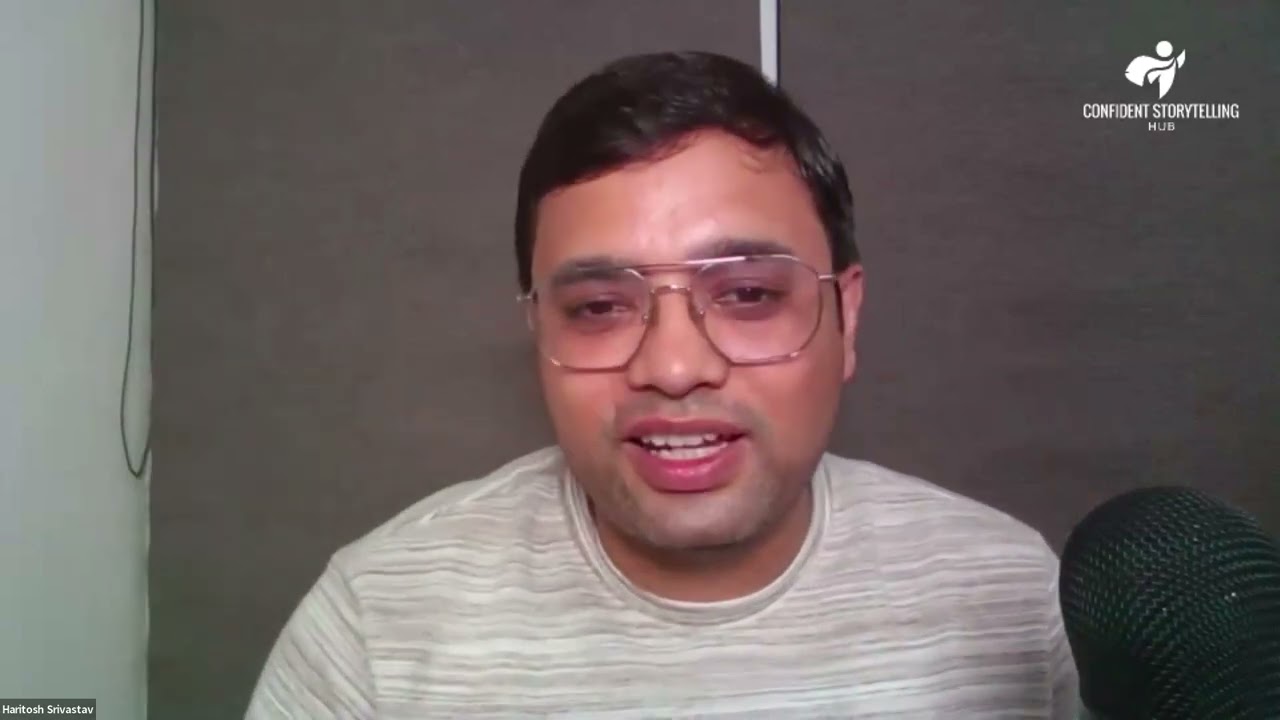
Storytelling coach Haritosh Srivastav shares ten lessons from leaving a senior IT job in the UK to start a business in India. He covers confidence, continuous learning, networking, flexible planning, and mindset, with practical tips like morning rituals and the importance of your close circle.
Chapters
Hi there, before we start this video, I just wanted to invite you for a special event. You see, this Sunday on 29th of October 2024, we are celebrating 100th mastermind session of Confident Storytelling Hub, and we have made this open for anyone and everyone to join. So if you are someone who's looking forward to learn more about what we do here Join us, join us for the celebration, join us for some special CSH talks, and you might also get some surprise gifts as well. So link will be in the description and in the pinned comment. Do register and let's get started with this video. The 10 lessons my power learning in the last 2 months when I was transitioning from the UK to India, there were so many things to do, there were so many activities, there was so much I had to, you know, wind up over there. I need to settle, I get— need to get a new place. And I also met a number of people, different kinds of people. We met also some community members. I met Prem when he was here, I met Dr. Alka, and I met so many other coaches. And also I had a lot of time to self-reflect. And when I was preparing for this session, I had this reflection that let me share some of the learnings which has helped me become what I am here. And I'm very sure that once you go through it, you will also have learning. And I'll try to keep bringing some stories out of this lesson and why I am doing that when I go. So I've got 10 lessons and probably 1 bonus lesson. So the— what is the first lesson that I learned is that confidence is key to achieving anything big in life. And why I say is that a lot of people, uh, when I met They were testing me. You, you would be interested to know why, why they were testing me, how they were testing me. So they got to know I was having a very high-paying job, uh, I was settled 17 years in IT industry. It's like, are you really sure you want to do this? Now I had two choices. One, I can say, yeah, I'm just thinking about, I'm gonna try the luck. But I chose the second option, which is that I was very confident. Even if I am feeling nervous I showed, I pretended that I'm very confident, I know what I'm talking about, I know how this is gonna work, I know what I'm gonna do. And what it helped me was kept those unwanted people, kept those nasty people away because they did not had something to feed upon. How many of you understand what I'm talking about, right? If you are underconfident, there are people who will try to get to your doubt, get to your suspicion and then bring more negativity out of that. So I remember I got a call from a friend, college friend, after 17 years. Like, we last time met in 2007, and the very first thing, why are you doing this? Are you sure this is gonna work? How you're gonna manage? Now, if I would have said, yeah, I'm just thinking about, I'll try it out, this person would have destroyed my day or weeks or maybe the whole month. But I was sure and said, you know, boss, I have prepared for it. I have done the work. I've been— this has been my dream for a couple of years now. I've been preparing for it for 8 months, so I know what I'm talking about. So I did not give that person any energy to actually bring any sense of doubt in my mind. And the lesson for all of you is, whatever you want to do in life Have that confidence. Confidence is the key. If you don't have the confidence, people will find it out and they will keep poking you. They will keep bringing, uh, just like Nare said that I am an aspiring coach. No, you are a coach. You have a community. You have been working. And I'm sorry if I'm bringing again and again, but there is a reason behind it. If you are a coach, even if you have one client Even if it is a free client, doesn't matter. You have to own your story and you have to tell it with confidence. That's the first thing. And that was my first lesson with all of you, that build confidence. And confidence is not something we are born with. Confidence is something that we earned by doing things which are beyond our comfort zone. One of the most uncomfortable thing is speaking to different people. And once you challenge, if you don't want to challenge with big challenge, start taking small challenge. Start talking to somebody who you haven't talked before, or do something you haven't done before. This will instill confidence in you. But start having confidence because this will help you achieve anything in life. Lesson number 2: you need to constantly upgrade. I loved when Avik was saying that he was going through certain programs. I am myself, and I know many of you personally that who are undergoing everything, because the fact of the matter is we never arrive. If any of you feel that there is gonna be a day when you will completely arrive, I have bad news. You will never arrive. But the journey is The growth is when you keep on learning, when you keep on trying. It could be technological things. For example, if you notice, there is a logo on the top. No, this way. Ah, okay. And that is because I am now using a new software instead of directly using my camera. I am learning to use a software called OBS to try out new things. So how you are trying out new things will help you. How do you network? How do you prepare, how do you present, how do you learn concept. If you're not doing that, if you're not growing, then you are actually declining. So I want all of you to take a moment to reflect upon what is it that you need to learn and what steps you can take. Not this year, we are already two-third into the year. Not this month, we are already almost 1/4 in the month, but in this week, if not today, what is it that you can take, the steps you can take to upgrade yourself? It could be any skill, it could be technical skill, it could be communication skills, storytelling skills. But if you're not upgrading, remember, you are degrading. So constantly think about How can you upgrade? How can you learn new things? I posted on social media a few days back. I met a guy, his name is Kiran Varma. He is on a quest to raise awareness for blood donation. And one of the things he said that for the last 15 years or 18 years, he has made sure that he is learning something every single day. And he is expressing gratitude every single day. And he said, not, not most of the time it's a big thing. It's— it could be like how this glass is made, how they build this design, or how do they create the new food cart. It could be big things, it could be small thing, but he has made sure that every day he is learning something new, and that has kept him growing. So I want you to also think about it. And that was very inspiring to hear from him. He has done 21,000 km walk just to raise blood awareness. He has a great story. I want you to think about how you can upgrade yourself, how you can learn something new that will make the next version of yourself. And that is my second learning for all of you, including myself. Now let's move on to the third. And how many of you are actually enjoying these learnings? Awesome, thank you. Number 3: Your network is your net worth. How many of you have heard this statement? Your network is your net worth, and you need to nourish your network. I work remotely. I have the privilege and honor to work remotely over Zoom. I don't really have to travel to many places, but in the last 2 months itself, I can say that I've at least gone out 10 times to meet different people on different, uh, places, including when I was in the UK to now I am in Noida. And wherever I get a chance, I met Prem. It was so amazing to meet in person Prem when he was here, and it was I, I think it was the universe conspiring us to meet because I just sent a hi and he said, yeah, I'm in Greater Noida. I'm like, wow, great. Um, I met, uh, some of you know Alma, she's a coach, so she came to Delhi. I got to meet her. Dr. Alka was there a few, few weeks back, I met her, and, and so many other people. And I want all of you to think about it that you are not your job, because especially people who are in corporate world think that they are their job. You are not, because your company may stop loving you anytime. And now, this might sound like a satire, but it is not. But the point is that if you are not building your network outside your comfort zone, then you, you are not tapping onto the potential that is available in the market. So look at how you can build network both online, on LinkedIn, on social media, but also in person. Where else can you go? Who else can you meet? There is going to be a caveat towards the end, uh, to that as well. So keep it in mind when I come towards the end of the lesson. There is another lesson that I want to share which is related to this one. Let's move on to the fourth one, that is you need to plan ahead but stay flexible. As they say, if you fail to plan, you plan to fail. And that is so true because when I was planning this journey, since last year itself I had planned, okay, I'm gonna put my paper on this day, I'm gonna come back to India. But over the period of time, not everything worked as I planned. But since I had made some plan, at least 80% of the things worked. As I planned. So what do you think is better, 0% or 80%, right? So I— this is my life lesson, not only for last couple of months but over the years, that if you plan but also be flexible because changes are inevitable, then you can go through it. You may not get the exact same thing, but you will be very close to that versus not having any plan. Whether you are planning to go for a promotion, whether you are planning to go for a new business, whether you are planning to have a wedding or anything else, you have to plan ahead and be flexible. Next is number 5: you are always telling a story to yourself. Make sure you are telling a good one. And we all have those monsters, those negative things that we tell. But the real journey, the real progress happens when you change the language. Instead of saying that, saying that I am failing, I am bad, you can always change the language, say I am learning. This is something new and I am out of my comfort zone. I'm very sure I'm getting a great experience out of that. When you tweak the story that you tell to yourself, it changes the whole outlook. There are essentially, there are 3 stories that happens. First story is what you tell to others. Second story is what others tell to you. But the most important story is what you are telling yourself. You may be at bottom low, but you may be telling very good stories, and that will ensure your growth, that yes, I am learning, I am growing. Or there have been— and I don't want to sound negative— but there have been so many situations where people who are at top, they go through depressions. You would have heard there was a survey done where Roughly 40 to 50% of CEOs have to take sleeping pills because they were not able to sleep peacefully. And that's because somewhere they are telling a story that I'm not capable, I'm not doing good. So I want you to think about a better story that you tell to yourself. I am growing, I am learning, I am doing things that I need to, and this is how it will work out. Awesome. Thank you, Naresh. Next one is number 6, and that is skill set. Again, related to the previous one, skill set without mindset leads to upset. So if you don't upgrade your mindset, just upgrading skill set, you may learn a few techniques, you may learn a few tools, but unless you have the right mindset, you will not know where to apply, you will not know how to apply it. So learn about skill set, but also learn about mindset. Also learn about how I can embrace the growth mindset. Like, one of the examples that I want to give, uh, one— and many of you are parents over here— is that whenever you are giving a congratulation message to your son or daughter, do not just praise them for their talent, praise them for the effort. Instead of saying that you are amazing, you are so capable, just tell that I appreciate the hard work that you put in, I appreciate the thought process that you put in, because this is how you put the seed of growth mindset in your kids as well. And this comes from a book called Mindset, one of the most recommended book I have read. And I would say Mindset by Dr. Carol Dweck. This is what she did the experiment on. So always work on your mindset, because if your mindset is at the right place, you will learn the skill set and you will keep learning for your life. But if your mindset is displaced, then you have— you, even if you learn, you may not apply, or you may not find it at the right time. The seventh one is, how you do anything is how you do everything. This comes again from a person named T. Harv Eker, who is known in the world for being the— by one of the best financial expert. And he runs a program called Millionaire Mind Intensive. I had the opportunity to attend that program in London. And this is the essence of everything, is how you do anything is how you do everything. You can do it good or you can do it bad. I'm just gonna leave it there for you to reflect upon. How are you doing things? Number 8: Focus is the currency in the 21st century. All of us have new gadgets new things to get distracted. But if you want to be wealthy, the best way is how can you focus on what is required. If you don't have focus, even if you have all the resources, you will always be distracted. And some other things that I try and I can share is that one other thing that you might want to work on is your morning rituals, because The way you set the day sets your day. So I like to use my mornings for doing certain rituals. For example, I go through writing some affirmation, going through sometimes meditation, not all the times, uh, having certain goal cards and other things which helps me grounded and also helps me on the path. So I want you to start researching about how You can have your own morning or evening rituals and also think about how you can make it distraction-free. So some of the days when I feel that I'm getting too distracted, I literally switch off my phone in the night when I go to sleep, and only when I've done these morning rituals I switch my phone on. Not all the times, but sometimes I do that, and I— but on those days when I do that, I feel that yeah, I am focused, I am making good progress. So that is something that you can also try. If you focus, work towards bringing focus, you can achieve so many things. Now let's go on to the second last one, which is nobody's coming. This is again comes from, uh, the best female motivational speaker named Mel Robbins, and she had this. And when I was writing this lesson, it came to me. Nobody is coming, which means that you need to take charge of your life. One of my very dear friend, Poorav, Poorav Bhatt, he said that you don't need to be the actor of your journey, you need to be the director of journey. So if you want to have your movie remembered, have your life remembered, you need to own the journey, which means that you need to take charge of your learning your earning, your quality time, everything. Nobody else is going to do that for you. You might take help, but the ownership of your lives lies with you. Nobody else is going— they— you may get help, you may get pointers, but at the end of the day, you need to take charge of doing anything in life. And the last one, which, which is why I was saying that when I say network is net worth, this one is related because this is coming again from Jim Rohn, the guru of Tony Robbins. He said that you are the average of top 5 people you spend your most time with. So I add to that, be very careful of who those people are. Are you with those people? And this is again a anecdote. Have you heard about the crab in a barrel anecdote? How many of you have heard about that? Okay, Naresh has heard. I think Prem has heard. Haritosh Srivastav has heard. Okay, nice. So the anecdote goes like that. There was this fisherman on the sea and he was trying to get a lot of crabs. So he was going and fishing and putting the crabs in the barrel, in the bucket. And he was doing that, and one passerby was going and said, hey man, why are you not putting a lid on this? The crab will come out and go away. And then the fisherman smiled and said, I think you don't know how crabs work. What happens is, if one of the crab is trying to get out of the barrel the— all the other crabs will hold their legs and put it back. I want you to think about who are those crabs in your life. I don't want you to completely disown them, but think about how you can get away from them to people who will add value to your life. And it— if it is not a living person, it could also be a book, it could also be a podcast, it could also be a video. But make sure you are taking charge of your life, you are spending time with the best people in the world possible, because this will elevate your lifestyle, your mindset, and your money thermostat, as they say, as well. How many of you found these 10 lessons useful? Before I share. I'll share bonus only if you find it, uh, helpful and, and interesting. All right, okay, so ready for the last one, the bonus one? Okay, so the bonus lesson is— and thank you, Flame— the bonus lesson is, which is a lot of time We get into that, I don't have this, I don't have that, I wish I had so much of money, I wish I had so many things. But you don't need full of resources. What you need is be resourceful. And there's a very desi term for that, and that is called learn the jugaad technology. You would have heard that term, right? It seems like a funny word, but It is very, very important because you are not going to get all the resources you want in your life. But how can you make use of the resources you already have? How can you tap on the communities you are already part of? How can you tap onto your network? How can you tap onto the technology pieces you already have? You may not have the best microphone, but at least you can have a microphone, or you can at least have your phone. You may not have the best story, but you have a story. How you can refine that? You may not have all the courses, but have you utilized all the courses that you already enrolled? How many of you got a bulb on moment with this? Awesome. So that, if you want to take a screenshot, feel free to take a screenshot. These are my top 10 plus 1 bonus lessons which I experienced in last 2 months. But I knew some of them already, but I experienced them and that has helped me to be here in front of you as an entrepreneur, as a full-time confident storytelling coach.









