How do Champions prepare Content [Live Class Replay] | Coach Haritosh Srivastav
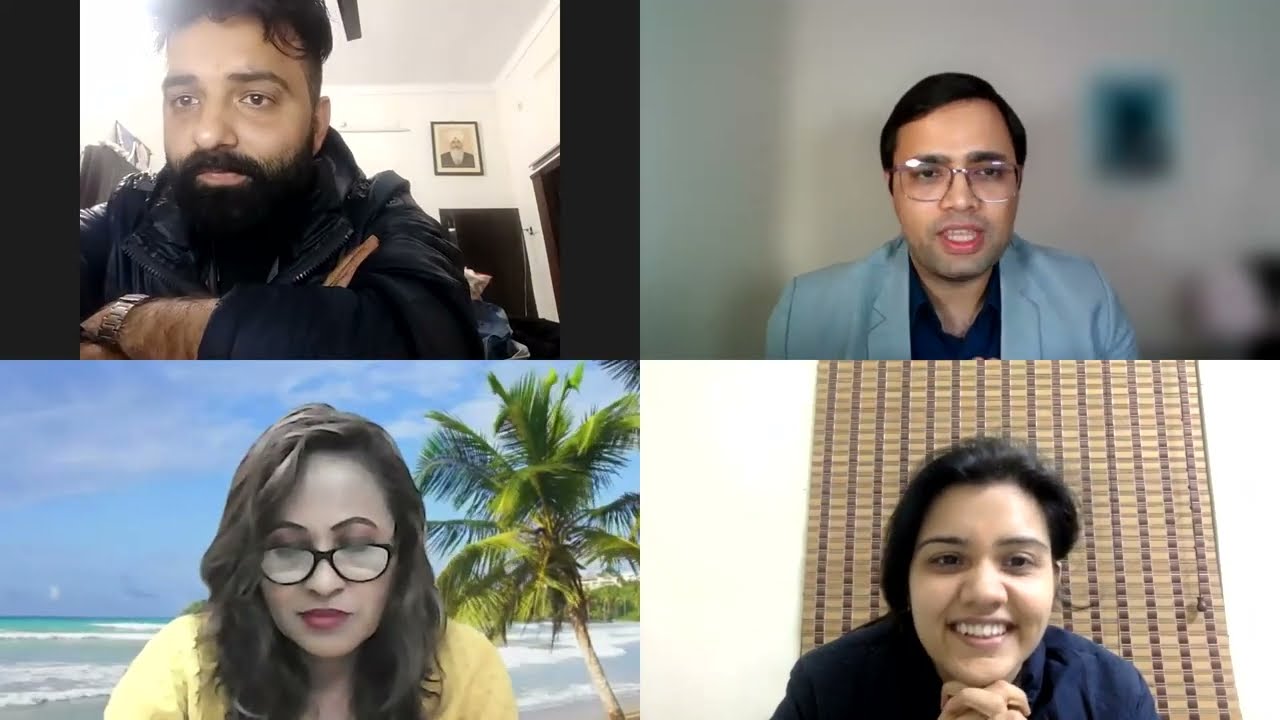
Coach Haritosh Srivastav walks through a five-step framework for building presentations: set one clear goal, brainstorm with mind-mapping, prioritize ideas, build in stories with characters and conflict, then rehearse and refine. Participants practice writing a two to four minute story using the techniques covered.
Chapters
All right, thank you so much everyone for joining for the second session of Public Speaking Masterclass. How are you doing?
We are doing very well, Haritosh. Thank you.
All right, great. I assume Dheeraj is also doing great, and one now who just dropped off will probably join back in a minute. But yeah, thank you.
Great.
So you know what I'm gonna do now? I'm gonna ask the status. So did you complete the assignment? Yes. Great, I hear yes from Pragya. Dheeraj, how about you?
Yes, yes, with flying colors.
Oh my God, I can see a lot of colors in the background flying. All right, uh, Vajnaji has also joined. I, I, she informed me that she has also done quite a number of stories. So how do we get started? Let's do, uh, one story each. So pick one of the stories that you have written down out of the 20-25 stories that I asked you, and let's go. Let's give it a couple of minutes or 2 to 3 minutes maximum. Hopefully that should suffice. So who wants to go first?
I would go last because my story can be long.
All right, okay. You want to go first?
I can go first.
Awesome.
Yeah, I didn't craft it in the way of story. I would like to give it a try. So, uh, you know, I Like Haritosh Srivastav shared in one of the previous sessions, like what, how, how he had fear of public speaking and when he got to know about it. So my fear started when I was very young, probably in school. So I wanted to— I, I was always amazed by, you know, magic shows and things with magic. So I wanted to be a magician. So in one of the fancy dress competitions, I became magician and I was ready with all the magic tricks and everything. So the, the moment I went to the stage, uh, what happened is— I don't know what happened— I saw people, people were facing towards me and, you know, with all the growling faces and everything, I became so scared that I forgot all the magic tricks I practiced and I was absolutely numb, unable to share whatever I wanted to share. And the principal had to come and drag me down from the stage so that more people can come and participate. So that was my story, how I was stopped. And I think I was in 4th or 5th class at that time. So that time I made a personal, uh, opinion about myself that I should not be vulnerable in front of public and I should not be, uh, in a situation which is risky. So probably I, I stopped taking the risk at that time.
That is the great story. All of us have some other horror stories related to public speaking, especially when it comes to— but no, it's great to know we all have that such background. So do you know where else can you apply this? Let's, let's take it to our next level where now we not only take the stories but also think about where can you apply this story. I believe can be applied when you are trying to inspire any of the young folks any other youngster. When you are, you know, doing a probably a class for public speaking, uh, you're all— you can also do it for your young associate who join you. It could be this story in itself can be used across multiple places, and that's what the purpose was behind these exercises, that you come up the story and one story can be used across multiple places based on the need. So great job, let's give a big round of applause to Priya. So, Vannaji, do you want to go next?
I will have to go next. In the year 1988, I was going to Kolkata with my brother for the purchasing of my daughter— my elder sister's wedding. So the flight was about to take off. At that time, uh, an ox just entered in the runway and the flight hit the ox and it had to make an emergency landing just near a, near a field. And I was so scared, means from before only I was very scared of flying. I just ran to the door and some boy, he was, one boy was trying to open the door and I, when the door was open, I jumped from there and I started running on that field. I thought this flight will blast. So I was running and when I saw back that my brother and no passengers got down from that flight. So When I came back there, all the passengers were— has to got down from the sleeper, and many passengers, they didn't know that in the sleeper they have to get down by sleeping, and they got hurt on their, uh, this waist, back, they got hurt, and in that marriage Everyone were appreciating me that I showed a bravery. It was my courage, but I knew that it is due to scared, due to worry, I jumped from the flight. But everyone were appreciating me in that wedding function.
That's all. Amazing. Now, now, how do you— how can you use this story across various One is that, no, sometimes it could be very humorous story as well, that at times we take steps which we think is, no, we are scared we have to do, but that becomes inspiration for so many. And that's how you can start your keynote or other places. It could also be used maybe where you're trying to say that, no, at times you should go with your gut, go with your instinct, because no, more or less generally guts gut feelings are right. So if you go there, maybe you will not repent. So it could be used. But yeah, great story, and I love these stories when I hear from the participants. So Dheeraj, now it's time for you to actually present your story. Now you can't escape.
Okay, I'm just noting down my time, like I wouldn't be taking more than 3 to 4 minutes. So yeah, let's start. So from the day you told us to think about 25 stories, so I started like thinking about like from where did I start. So coming from there, today I just shared around 15 to 16 stories over my Instagram account. So those stories are about like how I started my, my journey from education and landed up a job in TCS, like what was the background of that story. So first thing I learned from you, like audience first, like you should always be giving something to the audience. You should always be providing some value to the audience so that they can take out the point. So first, my motto was this thing in my mind, like, I have to present myself in a way that they can learn a lot from me. So I started like your book theme, like, small town, bigger dreams. So I started with that thing only. Like, I just mentioned in a story the way I started my school, that was a Hindi medium school. Second, in second story, I mentioned about like In class 7th, I jumped to an English medium basic school, basic English medium school, because that was the only school that was allowing me to in the next class. They were not asking me to repeat the same class because other schools were asking me to repeat a same year in the same class. Like, I jumped to class 7 from class 6 from my Hindi medium school. So they allowed me, and when I learned the basics of English, like when we have to use we have, we has, what we do not have to, what we have to use and what we do not have to use, So when I learned that, I was promoted as a, like, in a competitions. Like, I was allowed to participate in extempore speech competition, English writing competition, or whatever. So those things get me ended up being a head boy of that school. Like, I was a head boy. Like, it is called school captain in your some schools, and, and my school it was head boy. So I ended up being a head boy from class 1 to 11. I was a class topper. Okay, I was a school topper as well as class in 5th and class 10th. And from 1 to 11, I was a topper. And in class 12, because of these extracurricular activities— I was the head boy, I was handling some responsibilities— so I didn't get the first rank. And that ultimately led me to the quota because my AITP rank was very badly screwed up. So I ended up being in quota, and from quota I just studied very hard. The rank earlier I got was 4,08,000. The rank now I got was 23,000, all India rank, and state rank was from 40,000 to 229. So that got me into Pandhagar. Now the thing started like I was a studious student from class 1 to 11, then an extracurricular student, and now in college I was on my own, like I can be anything. Like there is a TVF picture series and it said that to be a RIBC So I was that only. So in the first semester, I had a very bad experience. Second semester, I met some cool seniors who promoted me on the stage. Like, one of these seniors is Aman Gaurya sir. So I would be telling about him in a brief. So he asked me to perform. Like, last time also I told about him. So when I first performed on stage, my fear was half vanished out. Like, I can perform, I can perform really well. The second year I was training my juniors to perform and I was preparing my team to perform the stage when Pragya Ma'am had left that college. Okay, so in second year we performed in many skits and one of those skits were about the childbirth, like whenever, whenever a girl is born. So it was about that. One minute left, one minute left. Okay, okay. So in the second year I was performing in that skit, like it was giving a message. So that was about when the time Gandhi Baba actually born, okay. So I was looking for a way where I can promote my knowledge of my Gyan on the social issues in my own funny way. So we performed a funny skit with, with a message. And what happened last was like, it is related to public speaking. So what happened last was like, I was in the same situation, like I was running behind the time, okay. The skit was has to be done on the 10 minutes and we were already, we had already taken 12 minutes or 30 minutes. So in the last, I have to perform everything, and I had created a lot of dialogues. So happened was like the daughter that we had raised from birth to marriage, she was being murdered by— she was murdered, or she just committed suicide after marriage because of these women issues. So what happened, like the girl was lying on the stage and I was so much into full of energy, and I just overacted. Like this much overacting I did was Because the villain of that skit, like his husband— her husband was the villain of the skit. He just came and, 'Why, let's move back.' And I was still there in the way, and that made me think about, 'No, I should have to control over this emotional part on the stage because these things can hamper my 13 minutes, 30 minutes performance.' Just like right now, I'm just taking my time to end this conversation here itself. Yeah, that is all.
Thank you, Dheeraj. You really took us to a roller coaster journey, and I think you gave us a full biography of you in 4 minutes, which is not easy to say. Uh, but I definitely— I think you can take actually parts of these, uh, the whole roller coaster, and actually individual parts can become— no, I could see at least 4-5 stories coming out of it. You don't One of the things that we'll probably discuss a bit today in suiting is you don't have to tell each and every detail about suiting. You have to tell sufficient detail so that as an audience I understand. And if you try to set up, it's called setup, and if you try to put everything in the setup, the audience tend to lose the interest. So you have to make sure that you pick one story and give enough details and then talk about, take through the emotions and then come back and then maybe share the story. Part of it. For example, the story about, uh, you over— over, uh, going overboard with all the things, that could be one story. Uh, story of you going through, you know, on top of the studies to going so low and then again reaching to a respectable state could be another story. So there are multiple stories within that. So that could be something that you can— but no, great, great story. Great job. I'm proud of all of you. Uh, great job. I'm so happy. No, you should be happy because 90% people, when they are given, uh, exercise and assignment, they come up with excuse that, no, I was busy, I was ill, I couldn't do that, I had this meeting, I had that call. But you guys did it, and you did it brilliantly. So give a good round of applause to yourself. It's very important to acknowledge the progress. So as I said earlier, uh, today we are going to discuss a very, very interesting topic. Which is how do champions prepare their content. Let me know if you can see the screen. Can one of you unmute and confirm?
Yes, we can see.
Do you see the full screen?
Yes, yes, we can see the full screen.
Okay, so the topic is how do champions prepare the content. We are gonna cover a lot today about before going to a presentation, before going to a keynote, before going to a speech. How can you make sure that you have enough content with you, enough stories with you, enough preparation done? So let's start off with a beautiful quote by a person called George Bernard Shaw, who was an Irish poet and has done a lot of things. But this is a very beautiful quote, that the single biggest problem in communication is the illusion that it has taken place. A lot of times we think that whatever we know, uh, the, the audience will also know the same, but Most of the time it is an illusion, and that is why we need to clarify what we are doing. So as I said, we are gonna have a content creation process. It's a 5-step process for any, the, uh, any of the things that you're gonna do. It could be a speech, it could be a keynote, and you can take this, you can take it for a, make it for a 5-minute speech, or you can also make it for a 2-day presentation, or, you know, or maybe, you know, multiple weeks. Seminars and things like that. How do you start? Step 1 is called discovery and goal setting. What is— what exactly is discovery and goal setting? It's basically one goal. Every speech, like I just pointed out to Dheeraj, right? Every speech, every topic that you're gonna— it has to have one goal, one action. What is that one thing that audience want to know? What is that one thing that you want them to do? Do you want them to hire you? Do you want them to endorse you? Do you want to get an increment? Do you want to be accepted as an interviewee? Do you want them to vote for something? What is that one intent? They also call it as, um, what is your central theme, right? So you need to have that beforehand before you go into, uh, you know, content creation process. And then next thing, sir, there are some techniques that you can use. For example, many times when I asked to— when I'm asked to give a keynote or any longer presentation, I said that I want to have a meeting beforehand so that I know what is the theme. And these are some of the techniques that you can do. So I have a meeting with organizers, and no, I— it is an— yesterday I gave a presentation in a company where I was talking about mentoring and how it can help. So I had a couple of meetings with the HR of the company and also the person who referenced me to actually understand that what is that they are looking for. Do they want to, uh, they want me to focus more on the mentors or they want me to focus more on the mentees? Uh, what is the age? So you need to know all of these. You can do interviews, you can do anonymous surveys as well to know exactly what they're looking for, because it is like when you don't know the end goal, you can go anywhere, right? So you need to know what is that you're looking for. If it is, for example, a speech, Toastmasters speech, you want to know what is the project that you're working on, what is that end goal of this particular speech. So when you know that, then you can apply these techniques to find out more and more details. So that is step 1, which is called discovery and goal setting. Let's move on to step 2. What is the step 2? The step 2 is one of my favorite steps to say, and that is called brainstorm. What exactly is brainstorm? Does anyone know what exactly is brainstorm?
Yeah, it actually means to explore the, like, whatever we can do with the brain, but like thinking part, maybe whatever we can add or something like we can Just like this example, content creation, like what all we can think about what we actually want to deliver. So that is something we brainstorm, I guess. I'm not sure.
Absolutely right. So basically brainstorm is, yep, going with the plain state and listing down whatever thing, uh, whatever you see in the screen, uh, I'm putting it. So what happened is in 20— I believe it was 2019. That I was asked to give a keynote in one of the Toastmasters districts, and the topic was improving the club culture or something. I had no idea what I'm gonna talk about, and I had about 3 to 4 weeks of time. The only thing that I did was I went to the market, brought a big chart paper, and pasted it on a wall. And then day in, day out, whenever for next a week or so, day in, day out, whenever I thought about anything that could affect the culture of the club, I started noting down. That's why you'll see different colors of pen on different writing. And if you're not able to read my writing, I don't— I see you should not worry about that because I sometimes I also don't understand my handwriting. But the intent is I came up with a clean slate. I put the central theme about what exactly I'm gonna do. And then started jotting down everything that I could remember at different point of time. And this is what I later know— I didn't know it's called mind mapping previously, but then I later got to know it's a very useful technique that you can use to actually generate idea. For example, uh, Priya is trying to be a product owner. She's been given a presentation to present her product. Now she can get a chart paper and put the name of the product or whatever, whatever is the theme or title of the particular presentation. And then she can start putting it, all the ideas over there. One thing to note here is no idea is a bad idea. At the time when you're trying to utilize your right brain, don't involve your left, left brain. What I mean by that is don't analyze that, no, is this idea good? Is this worth it? Is this— no, will that make sense? I think this is stupid. Don't worry at all. Whatever you feel like is related to topic, it's coming into mind, just start putting in there. The other, uh, the right-hand side that you see is when I started working on my book in 2020. It was lockdown. I thought, I'm gonna write my book, Small Town Bigger Dreams. Um, and I started noting down all the different instances that had happened. Uh, whatever story I could remember, I, I was betrayed by somebody. I didn't like somebody, or I, I appreciate— I love the appreciation, I felt grateful, whatever I remember, I started using this pasted notes and put on a particular wall of my house. And that's how this came into picture. So that is the same thing. You can also use software. There is a software called XMind, and there are other mind mapping software as well where you can do the same thing, where you can actually Put the central theme, and I'm gonna stop sharing for a second and share you the other, uh, other XMind file may open. Let me just see. Okay, so I'm sharing this tool called XMind, and you can see I actually did the 21 Days Live to my book launch, and that time I use this tool basically to start writing what will be that different days, who I'm gonna target, who will be my sessions, will I be doing a keynote session, will I be writing email. I started putting everything out. I didn't plan out that what will I say, but this kept evolving with time. So, so coming back to the point that we need to actually brainstorm. And when I'm— when we are brainstorming, we don't need to restrict and analyze that. Now, what, what is the idea that we're talking about? Is that making sense? Is it with respect to this directory or not? What would our audience think if I use this topic? Now at that point of time, we don't need to do— what we need to do is take out, just take a download from whatever is going in our mind and put it right there, then and there. So that is step number 2 on how can you, uh, do content creation. Now what's, what's Step number 3. The step number 3 is where you're gonna use the right side of the brain, which is called Analyze and Ask. So you have done the first part where you did the discovery and you find out what, what is that one thing that you're gonna talk about, what is the central theme. Now you did the brainstorming, you listed out all the ideas, whether it's pen, paper, chart paper, or or no software, anything. Now is the time to actually analyze and ask questions. And how do you do this? Number one is you can actually prioritize all the points that you have mentioned. So for example, if you have 100 points, you can actually prioritize that this is probably category 1, category 2, or no, you want to do 1, 2, 2, whatever you want, ABC, whatever the ranking mechanism you want to do, but you want to prioritize and rank those ideas. Then you want the— at this point you can actually eliminate as well something you thought was related but it's not making sense at this point of time. You can actually eliminate that, strike it out, or no, take it away. And the third thing is, which is very important, is the time boxing. What I mean by time boxing is if you have a 5-minute speech, you can't be talking 7 ideas, right? It has to be congruent with the time. If you have, say, 30 minutes of keynote, you know the central theme, you can probably incorporate 3 or 4 points related to this thing. You can probably have 2 to 3 or maximum 4 stories and then some transition and everything. But if you try to include 10 stories or 17 points in 30 minutes, it won't work. So you need to make sure that you time box your presentation in such a way that it is congruent and you won't have to either elongate, which means that you, you don't have anything left. You have a presentation of 30 minutes and you have material only for, say, 10 minutes, and now you are gasping for air, like, what should I do for next 20 minutes? And the other way around as well, that you are asked to speak for 5 minutes and you have material worth 1 hour, and now you are rushing through. The last thing that you want to do, and we're going to cover it in the next session is how to wow your audience. But the last thing that you want to do is rush through your material, because if you do that, people will not remember who was there, or they would say, okay, I, I remember the person who was there, but let's not invite him next time. So you don't want to rush through. So make sure that your material and your time is congruent. And typically, for it, it would be for a 5-minute thing, it would be one topic, one story. One thing. And, and then you can— for 30 minutes, it could be probably 3 to 4, but it should not be more than that. So let's do a mid-check in between. Any questions so far?
Yeah, so Haritosh Srivastav, like, by time boxing, I guess I presented the perfect example just a few minutes back. Like, in the end, towards the end, I was rushing through my content. Like what I had prepared. And I haven't reached the final, like from where I started, like I started with how I ended up being in TCS. So I ended up only with the second year content. I haven't passed the third year and final year. So exactly, I guess that is a perfect example.
Exactly. And good that you are able to recognize yourself rather than anybody else. When we self-recognize, it works well. So that is why I say it's— and that is why I pointed out also that no, you, you can have 4 or 5 stories during that time that you spoke and You don't need to tell a lot. What you need to do is tell something which your audience will remember. So that is why I say if it is 5 minutes, you can't be telling 5 different stories because that won't help. It is one story, one point. Typically that could be the ratio. Any other question from anyone? Is it making sense? Up, down?
Okay, great.
Let's, uh, move on. With, with whatever is the next step. So we have covered discovery and goal setting, we have covered brainstorming, analyze and ask, and there's a problem with the animation, but you see the next step which is called incorporate stories. Now, one thing that you should always, and that's one of the reason I ask people to actually start collecting that story in the story bank or story file, or different people call it different ways, is that once you know the theme, once you know the time, once you have identified different points, that's when you can use this story bank to actually incorporate the right stories. For example, your theme is about, uh, you know, how to overcome fear. Now that's when Vandana ji can go back to the story of when she took the plunge and, and went, went ahead, and then everybody followed her. That's when you take out that story, put it there, and it will work like a charm, right? So, so collecting story is one part of it, and then going through this process and trying to see which is that— in this, for example, in this presentation itself, the only reason I brought this particular mind mapping is that because I wanted to share that story of how I went through the book writing process, how I went through that keynote preparation. So that's how that— I had this material first and then I incorporated stories so that it becomes more impactful. So that's how you also need to do. You went through, you go through the process, and then at the step 4, you incorporate stories. That's why, and that's why they say facts tell, stories sell. If I keep on saying you, uh, there is so much of value in doing X and Y and all, versus I tell you that, no, I— if you remember the first story that I told about when in the conference room I kind of embarrassed myself, now you every time you think about me you probably will remember that, no, he has gone through that journey of, you know, being embarrassed to actually winning, uh, no awards in terms of speaking in various countries. So I can tell you, I've, I've given so many speeches, I've failed so many speeches, but when I tag a story along that, it becomes more easy for us. And the reason for that is our brains are actually wired to remember stories. Now, thousands and thousands of years back, we were programmed to hear stories, and that thing has still continued, just like the fear of public speaking has been there. No, if you still see all this, if you tell a small baby, no, I'm gonna do a PowerPoint presentation, they may not like. But if I— if you tell me and my daughter comes in like, can we have a story? And she gets excited, right? So whether you are a 4 or 5-year-old or whether you are 90-year-old, we are programmed to listen to stories, and especially the story which are impactful. That's the reason, no, we watch those series which I— we feel that, oh, that has got a brilliant story or brilliant plot, versus no, this one is boring. And what is the criteria? This one is impactful story versus this one is boring story. So that is why our brains are wired, and that is why you need to incorporate stories in your presentation. So, so important. Now we talked about, and I said I'm gonna cover a few things about story, so very brief about what can you do in the story. There are some basic elements. Number 1 is the setting. Before you go on to tell your story, you need to set up, provide setup. Where is that? How is it? Uh, was it 1994 or 2019? Morning, evening? It could be time, it could be place, it could be the people, it could be the location, but you need to provide a basic setup. Now this is where a lot of people actually, uh either don't do at all setup or do too much of setup. So either they will say, oh, they will right away go through with the story without providing a background, or they will tell so much of background that people is already, you know, turned off and they don't want to hear anything else. So this is where, uh, the balance is the key here. Second is characters. You need to have at least one, or preferably two or more characters in the story. Unless you have, for example, in the story, at different point of time there were different characters. He was a character throughout, but then he had the senior, he had Prigya also there, and then he has, you know, schools, some characters from school. So you need to have different characters identified and then also talk about their traits, like was it a very strict person or very, you know, a soft person? Was it a long person, short person? Are Few adjectives of the character will help audience visualize that what exactly you're talking about. So that's second. Third, dialogue. You need to have dialogue in your stories because if you just keep on narrating, it becomes boring. And if you want to bring more spice to your stories, you need to have dialogues, you need to have vocal variety. And the best way to incorporate vocal varieties through dialogue. So you need to have dialogue in your stories. They— there should not be any story without emotions. Uh, there are 7 definite emotions that we have, and the story should portray one of the emotion. It could be of happiness, enthusiasm, sadness, anger, frustration. Any of those emotions should be there. If there is emotionless story, uh, it's not gonna stick with your audience. It has to have a conflict, right? If it is just going— can you go and watch a movie where everything like, ek tarada ek tirani, dono marg khatam kahani? Will that entice you versus what happened? There is a conflict scene and you see, you know, opening of a movie scene, there is all blood around, there is one hero who's about to die and there is a villain and he's surrounded by all the villains. What is that? That That's a conflict. You know, this person is hero, but he's probably gonna die. What happens next? So that conflict, that hook should be there in your story to start off and maybe take it towards the end where you reach the climax and, and there's a protagonist which who wins typically. And then the last point is the resolution. What happened? If there was conflict, how did the conflict resolve? What was the done by characters, you can mention through dialogues, that was the reason that, no, this got resolved. And one thing which also includes in resolution is what is the takeaway for the audience, what is the lesson that they learn. So that also is part of resolution. So these are a few basic elements of a storytelling when we talk about incorporating stories. All good? Yes, Dheeraj.
Yeah, what is the— like, I just forgot about the setting part, the first point of this basic elements. What was that?
Setting is a setup, like, no, where exactly is this story? Like we say, now it was in 2008, I was one year in my corporate job. So that is all part of setup. I'm setting you up to go to a particular scene. Right, so it's, it's the information that you provide so that you take your audience to one particular scene. You don't want to take your audience to a full year of the scenes, right? You want to take the audience to a particular scene. So that is the setup, that it was a conference room, it was 2008, and I was getting ready to present. That's one scene, right? Uh, or for example, in case of Vandana, the flight was actually almost about to crash and I was worried. That's a scene, right? So you want to take that— it's like, uh, prelude to the actual conflict coming up. So you, you tend to provide that 2, 3, 4 line setup so that people are in tune with where they are going.
Okay, so that, that means the inception of that story, like from where we are going to start the story.
Exactly.
Yeah, I just want to ask one more. Yes, yes, we want to add one story in Every speeches, there should be a story. That story should be related to us or any other stories also we can put in that speech. And as a character, we will be there. I will be there as a character. Is it like that?
Yeah. So, uh, I said incorporate stories. I didn't say incorporate your stories because no, at times we, we have not gone through the journey. We know somebody else. For example, one of the story, my favorite story is from APJ Abdul Kalam. So when India was trying to launch the Polaris satellite launch vehicle, in the very first year India failed. And at times Satish Dhawan was his, Dr. Kalam's boss, and he said to Kalam, you stay inside, I'll go and handle media. And he went ahead and he handled media and he said, we are going to launch within a year. And next year they worked super hard and the whole team got motivated. Next year India actually successfully launched that Polar Satellite Launch Vehicle. And that year, Satish Dhawan did not go out. He actually said, Kalam, you go out there and handle the press. And the takeaway was that whenever you have a failure, as a leader, you want to lead your team from front and you want to bear the consequences. But whenever, whenever there is a success, you want your team to get the credit. You want them to actually be in limelight versus you yourself as a leader. So that is story. I was not there, no, none of you were there, but you can incorporate that story when you're talking about leadership, when you're talking about— when you go ahead. So incorporate stories. Best stories are when we incorporate our own stories because then we can really— we can go through all that same emotion. But if it is not in the context, because everything we are talking about is with respect to audience, if there's two— our stories are— there are no story of us which are in context and it is not making sense to put it, we can very well put stories of others as well. I hope that answers the question. All right, so that's step number 4 done: discovery, brainstorm, analyze and ask, incorporate, incorporate stories. Can you guess what would be the last step? Any guesses?
Takeaway from that story.
That is part of the stories. That is part of— we are talking about content creation, right? Okay, in the story you should have a takeaway. Summarize is again part of story. Okay, you're saying something. Kind of, yeah.
Finalize the content.
Yeah, getting really, really close.
Yeah, summing up, like, what all you need to present.
Okay, enough of guessing. It's the time to say refine and test, right? The great stories are actually not written, they are rewritten. What you want to do is go out there, practice the story, take the feedback, incorporate feedback, and then again practice. And you have to— it's a cycle. You have to keep refining and testing. And that is why it's the last step where you want to practice. And then, so one way is, for example, if you're part of an organization like Toastmasters or Dale Carnegie or other, you can go out there and practice. What is the other way? The other way is record and watch. Now when I say record and watch, a lot of people say, no, you know, I, I don't want to see myself 'in video, I don't like my own voice, I don't like my video.' Guess what? Others have to go, others have to see you, others have to go through that. So record. And I'm gonna tell you 4 ways actually when you record a speech to see the patterns. Number 1 is when you are giving a speech, you're recording it, record it straight away, which means that, no, you hear the audio, you see the video exactly the same way it is. Second way is, after that, once you do is you record— you see the video but turn off the audio, and that will give you the clue that are you having any distracting manners, are you feeling less confident or overconfident. You can analyze without even listening to audio. This will give you the clues. The third is you actually put your headphone on and put off the video. Don't watch, just listen to your audio. Listen to what are the kind of words that you're using. Are you repeating certain words? Are you using a lot of clutch words, or are you doing it perfectly? Or what else you could have done? So listen to your own voice, that will give you a lot of feedback. And the fourth and final way is you actually increase the speed of your video. So instead of going on 1x, you go 1.5x, 2x. What will happen is you will see your video in a very fast mode and you will definitely be able to identify what are the distractions I'm having, or no, I'm, I'm kind of focusing more on the left versus right, or I'm, I'm kind of, no, looking little timid or little covered, or I'm coming very vibrant, which probably is over the board. So you will be able to identify those patterns. Now remember, we are our worst critic. And you want to utilize that in a way that helps you. So if you want to record and watch, first of all, watch, then put your sound off and only see the video, then put your video off and only listen to audio, and then fast forward so that you can analyze and then take the feedback. And once you follow this process, your speeches will keep on becoming better and better and better. Okay. Any question on this? Okay, cool. Uh, we are doing actually little late on time, but let's move on. Now I'm gonna share a few tools, uh, for you to do content creation. So number one is called structure. Now I don't need to tell it again, and Toastmaster, we harp it again and again. But your, your story— your, sorry, your speech, your content should have a definite opening, which means that, no, you don't want to— the worst way to start a speech is, thank you so much for having me, or no, you know what, uh, please, this is my first time speaking outside, apologies. You don't want to do that. You're gonna, you're gonna crash your credibility in a microsecond. You want to start in a way that provides the hook to the audience. You want to start with the quote, you want to start with the starting statement, you want to start with a scene setup. That's perfect way. But you don't want to say, thank you so much, or no, Mr. X and Mr. Y and chairman or Toastmaster, whatever it is. You want to have a great start opening that momentum. Then you transition to— if you want to address audience, another thing— go on with your body, which is your content that you've created with the proper transition. And the end should not be again a thank you. The end should be a conclusion. And you want to end your speeches and your talk on a high note. What happens is, in a typical speech, the audience remembers your opening and your closing. They may or may not remember your, your body or in between. So you want to make sure your opening is grand and your conclusion is grander or much grand. So in between, yes, you need to keep it high, but those were the two places you need to keep yourself high, your energy high, and your audience motivated. That's the beauty of a structure, because they will anyways not remember. Do you remember everything that I say after this speech or after this session? You may or may not. You may find the video and look at, or you can look at the notes, but you will definitely remember that we started with people telling their stories, we'll end on something which is, you know, what is coming up in the next session. So you want to make sure that your opening and your conclusion is on a really high note so that your audience remember. Okay, now I'm gonna go through— even though I'm not a language expert, I picked up these things over the years. I'm gonna share some of this. You want to use some of these tools while you're writing. This is called anaphora. What is anaphora? When you want to, uh, start multiple sentences in the same way. Like in, in this example, you say, no, we shall fight in this, we shall fight, we shall fight. So when you do this, it gets really easy to register, right? Uh, Martin Luther King's— the speech that we heard last time, no, he said that, no, I have a dream X, I have a dream that, I have a dream that. So that, that keeps your audience engaged and like, okay, something else is coming with this particular phrase, right? So that's one. The reverse of this, or the other tool that is there, is called Epiphora, where you actually reverse— kind of reverse— you end on a particular phrase. For example, 'of the people,' 'by the people,' 'for the people.' So that's kind of epiphora because your ending of these phrases are being repeated and it kind of makes a pattern for our mind. The third tool that you want to use is called alliteration. What is alliteration? When you have the first letter being repeated. There's a lot of English examples, but if you remember, in Hindi we used to have Chandu ki chatane, Chandu ki chati, Chandi ki chamase, blah blah blah. It's all starting with one letter, cha, right? So you want to use that alliteration in your, in your content, in your speeches, in your talks, because that sticks with your audience, right? The reason they say stories that sick, because that is also alliteration of S and S. And now after this, uh, class, when you go back and look at different titles, you will start finding alliteration everywhere, because that's how people try to incite you. People want to know, uh, make you notice. So that's number 3. Number 4 is called metaphors. What is a metaphor? Basically, you try to describe a thing with another thing which is unrelated. For example, very famous is, you are apple of my eye. You don't literally become apple of somebody's eyes, right? But you are trying to compare two different objects in a way, right? You say, uh, it's boring like hell. Now, there is no hell that you see actually, but when you compare boring with hell, that's actually— you're putting a metaphor. Right? So you can also use metaphor when you are trying to compile your content, you are trying to create your content. And last of this, which is very important, is called Power of Three. What is the Power of Three? You actually keep 3 different kind of adjectives or, or things in, uh, in your story. For example, it's gonna be impactful, powerful, and everlasting. Now I said 3 it becomes easy for us to register in the mind. I can say 2 also, that probably may not go there, and if I say 4, it will be too much. Now Dheeraj is— has done stand-up comedy, he might know about it, that a lot of comedians, they actually set it up by using the first, second, and then they change it with the third, and that actually results into a humorous laughter, right? For example, I can say, uh, Haritosh Srivastav is, no, energetic and, uh, let's see, Haritosh Srivastav is energetic and bright and non-alcoholic. Now when I say the third one, which is opposite of the other two, there is a spur of, no, humor that is coming out. So you can use power of three, uh, in the regular way where you put three adjectives, three phrases. You can also use it for turning it into your magic of humor as well, where you take people, uh, 2 on a straight line and then change it to 3, which people are not expecting. And if you look at any of the comedians, they use it left, right, and, and a lot. Yeah, left, right, and center, as they say. Uh, you will try to analyze. That's how they, uh, engage their audience. They will take you to a journey and then they'll switch the lane. So that's the power of 3. So we have covered a lot Any question so far?
If I'm not wrong, like the power of 3 is something like 1, 2, and teen.
1, 2, and?
In simple words. 1, 2, and teen. In simple words.
Yeah, exactly. Exactly.
Someone started in English and suddenly jumped to another set of language. In simple words.
Correct, correct. So you set up the— for humor, there are two uses of power of three. One is where you simply use it, uh, for describing something, right? No, he's— the stories are powerful, impactful, and everlasting. So that's— you're going on a straight line, but it is still powerful. What you're telling about is the humor one, the other part where you actually take up like 1, 2, and you will expect the 3 should come. But you say one, two, and team. So that's— you actually change the line, and that's where the humor comes into. When does the humor come? When our minds are tricked into something, and that's when we realize, oh, I was tricked, and we start laughing. It's a deeper concept, and I do not claim to be the humor expert, but a lot of stand-up comedians, a lot of humorous speeches incorporate this power of three. Okay, so any question on— we covered a lot actually in terms of content creation. Uh, any questions so far?
Uh, if anyone do not have the question, doesn't have the question, then I have another question. The alliteration part, like, like what exactly would alliteration part would play a role in our story? Like if I am on a serious note, I am presenting something on a serious note in an office meeting And they're like, should or should not use the like in English or in Hindi, like whatever, like Pital ke pati leva, Pita Pila Pila.
Correct. See, these are tools you don't have to actually use it every time. It will depend on if you are making a presentation, for example, if you have a demo of the features, right? You have different demo of the features. Now you can either tell the name in alphabetical order, or somehow you bring that in the way that all of the name starts with C, and then you say— if you listen about every management, they say in a 4 Ps of management, 5 Cs of this, 6 Ls of this. What is that? It's all alliteration. Example of— even though they'll say, okay, 4 Ls is language, literature, literacy, whatever it is, No, it may or may not sometimes fit in also, but you will find that, that, no, they try to use that concept of alliteration there as well. So you can actually use it for term— a lot of speeches actually start with alliteration, right? No, stories that stick, or no, uh, yeah, a lot of, lot of, lot of these can be used even for making your titles as well. Alliteration title— the, the point here is for your audience to remember it easily, how best you can make it, make it for them to remember.
Okay, okay, so I got it. Like, uh, like last two on October I had the certification of Scaled Agile. See if you have heard about it. So I did the certification and there was like, it was like 3 I's of these, 3 P's of these, and 3 as a Now I can remember. Exactly.
So that's, that's how, that's where they incorporate alliteration, because that's easy. Now, now you can remember, okay, there were 3 I's. So first was integrity, second was increment, what was the 3? And then you'll try to remember everything with I, and then you find that. Yeah, yeah, exactly.
Innovation, improvement, whatever it was.
Innovation, improvement. Yeah, anyway, and that's how you should actually do that, right? That's how you should actually think about when you're going to present that, you know, what How can you bring it in the way that it comes from— in the form of alliteration, it comes in the form of group of 3, and it becomes impactful?
Yeah, that is nice.
Cool. Haritosh, can we— like, for written English also, are these the techniques, or are there anything extra as well?
Anything extra? Uh, I'm pretty sure there are so many extra. Uh, this is for written as well as oral. And what a lot of people do and do not do— at times I write my speeches, and that time now you can actually see these patterns coming, or you can incorporate patterns. But there are many more techniques. These are, these are some of the techniques. It's not the exhaustive list, and you can find if you go to Google and start writing Anaphora and metaphors, it will automatically start showing you 10 other things and you can search them.
Because I think developing written content is also now equally important, actually.
Yeah, so that is why I said that you need to have content. You— and there are different people do different things. Some people write word to word, some people write like I said earlier, you know, put the pointers and I know what I'm gonna talk about. I don't have this whole session written to me somewhere, and I'm not reading from script. The last thing that you want to do is read from script because then it will look like, you know, I'm a newspaper anchor from a very local channel who doesn't know what he's gonna say. So you don't want to read letter by letter, but you can actually keep the points. But if you're trying, for example, you're trying to write a white paper, you're trying to write an article, it's a good idea to look at, you know, where else can you incorporate some of these tools? And there are other tools as well.
Yeah, like for me, I, I'll say like I have to write small, small bits for LinkedIn because I think that is the only marketing strategies which lawyers can incorporate. We can't advertise and things like stuff. It's— we are barred by law to do so.
Okay, okay. Now that's a— then actually it's a great because I see a lot of people who actually put in LinkedIn article, they said that, no, 5 C's of vision, or no, 5 C's of visionary leadership. And then they'll take up one is could be courage, other could be commitment, other could be, you know, communication. And then you can, you know, elaborate on individual points. And also you can start doing that for your— if that helps your market, you can do that. Okay, cool. So we are coming towards the end now. It's very important that I give you some assignment and then we discuss about the next we are meeting. So what do you want to do next? So let's, let's do this. You went through the basics of storytelling today. Let's take from your bank itself, or if you want to incorporate any other story as well. Take one story for next time and try to incorporate as many elements as possible. I'll send it in the group's chat that, no, what are the different elements for a reminder. Try to do the same approach of 2 to 4 minutes. I'm saying 4 for Dheeraj, but yeah, 2 to 3 minutes. Dheeraj will get another 1-minute bonus. And take one story and try to incorporate all the elements and see how better we can make it. Sounds good.
Yeah, okay.
Elements means you will only provide the elements.
Yeah, yeah, it's there, right? So the elements are— I will put it in the chat— the elements are setup, the elements are character, emotion. So try to see in your story, can you bring some emotion? Can you bring some character? Can you bring some conflict? Can you have the resolution? So these are the different, uh, elements that you can incorporate your story. So So far you have been doing it unconsciously or missing out on unconsciously. Now what I want you to do is do it consciously. Then you see, okay, do I— you write the story and I think I'm missing the setup, now let me add a couple of lines for setup. But I don't really have any conflict, so let me have the conflict come up, or maybe choose other story where I have more conflict, things like that. So that when you consciously try to incorporate these points, that's where it becomes better and sticky.
Cool. Yes.
All right, Dheeraj admitting again. Okay, any other questions? Any other?
No. In any speech, is it necessary the story should be in the beginning or in the middle or in the anywhere?
The situation, wherever it fits well. There is no hard and fast rule. And, and if somebody say that it is a hard and fast rule, you should stay away from that person. There is no hard and fast rule. What, what is your intent? Like, what is that audience will find useful? That should be the prime thing. If you feel that your audience will get more value by starting with the story, start with that. If you feel that ending with the story, you take talk about a concept, but in the story with the application of the concept, that's also good. So you, you have to have that end goal in mind, that what will my audience think about and what, in what way it will be more beneficial to them. When you do that, you will get the answer. But if somebody says you have to have it in like story and then point and then story point, yeah, you don't have to. This is somebody's trying to create a clone of them, and you should not be that clone.
Sorry, my phone was switched off. Like, I was connected to the phone and it just got switched off. No, I hope I didn't miss anything important.
No, you missed the most important thing. I'm just kidding. Now we just talked about the assignment, uh, we are gonna have, uh, you're gonna have one story again, and this time, yeah. This time be conscious of all the different aspects of storytelling that we discussed. So look at, do you have setup, do you have conflict, do you have resolution, do you have characters, emotions, dialogue? And try to put it consciously so that it becomes even better. I'll put again those elements in the chat, in the group, so that you remember. So become a better storyteller this time. So that's the, that's the assignment for you. Cool. Okay, good. Uh, let me stop the recording, so









