In Conversation With Matthew Dicks @matthewjohndicks | Coach Haritosh Srivastav
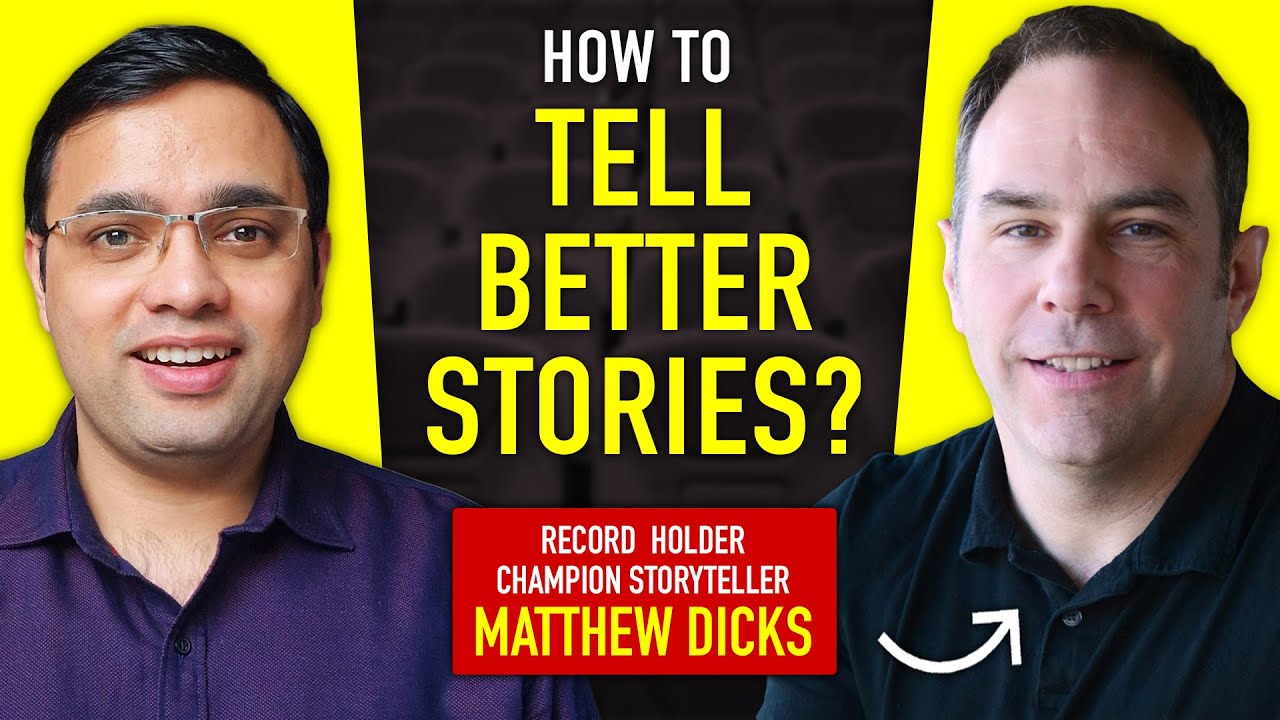
In this interview hosted by Coach Haritosh Srivastav, bestselling author and storytelling coach Matthew Dicks shares the origins of his storytelling career, from his first Moth Slam experience to becoming a consultant for Fortune‑100 companies. He emphasizes the power of saying “yes” to opportunities, explains why public‑speaking anxiety is normal, and describes the mental bandwidth required to speak without notes. Dicks outlines practical tools he teaches: a set of 25 humor strategies, the “First‑Last‑Best‑Worst” story‑collection exercise, and the daily “Homework for Life” habit of recording one story‑worthy moment each day. He also discusses time‑management tactics for using 10‑minute micro‑windows, offers advice for aspiring storytellers on practice, feedback, and self‑improvement, and answers audience questions about his most connecting story and how to grow into a master storyteller. The conversation concludes with information about his Storyworthy website, Facebook community, and upcoming courses.
Chapters
During World War I, there were men in the trenches wearing gas masks, bombs were exploding over their heads, and they were scribbling on little pieces of paper trying to write books and memoirs that they hoped to one day publish. You have 10 minutes while you're waiting for something to begin. What are you going to do with that time other than the phone? You know, and a lot of times it's, it's the idea that you don't need to be a completionist. You know, a lot of times people think if I can't do all of it, I'm not going to do any of it, which is crazy.
All right, we are rolling. Okay, thank you so much everyone for tuning in to another in conversation with. And for those of you who do not know, once in a while I get people I get inspired from, try to reach out to them so that I can bring them on my show and, and get connected. And one person, because I've been trying to learn a lot more about storytelling, so I, I got a hold— I don't know from where I got a hold on this book called Storyworthy, and which completely changed my perspective about storytelling. And I learned so much, and I attribute a lot to Matthew or Matt, who is here. And I thought, why not reach out to him and learn directly from him? So thank you so much, Matt. Thank you for being part of this interview.
I'm happy to be here. Thanks so much.
Awesome.
And let me give a very short introduction of Matt. Matt is, uh, I don't know, there's so many achievements you already have, but he's an international best-selling author of novels like Memoir of Imaginary Friends, Something Missing, etc., etc. I love non-fiction, and I know two, two of your best-selling books. One is Storyworthy, which I have, and the other one which I plan to have is Someday is Today. And we're going to talk a little bit about both of these books. Apart from that, his achievements are amazing. His novels have been translated into 25 languages Uh, he's winner of 2014 Dolly Gray Award. Uh, I think one of his biggest achievement is he's being on the Grand Slam. That's what you say, 36 times Moth Story Slam champion and 5-time Grand Slam champion. Uh, and he's a proud father, proud husband. So thank you so much, Matt.
So I'm glad to be here.
Awesome.
So let me start, uh, by asking you a question about, you know, the word started, the storytelling started. We want to know your story. I mean, I have read the book. I know your story about the first time you went to Moth Slam. I would love to hear from you for our viewers and listeners. What was the experience like and why did you choose to go there?
Oh, sure. Well, you know, it was sort of good fortune. My friends encouraged me to go. You know, The Moth is an international storytelling organization, true stories told live on stages without notes. And they started putting out a podcast. They'd air a couple stories every week in the beginning, and my friends were listening and I was listening. And, you know, I live a couple hours from New York City. They said, go to the city and compete in one of those competitions. They said, you've had the worst life of anyone we know, you'll have great stories to tell. You know, that's not true, and it's not a nice thing to say about your friend. But I've had one of these sort of unusual lives filled with, you know, strange misfortune, we will say. And so, um, so I said yes. I always say yes to what, uh, what people suggest I do, even if I don't want to. And so my thought was I was going to go to this storytelling competition, maybe stand on a stage, tell one story, and that'll be the end of it. And so, um, my wife got us tickets. We went to the Nuyorican Poets Cafe, which is a sort of a famous place in New York City. Uh, when I put my name in the hat that night, you know, there's about 20 names usually in the hat and only 10 get chosen to tell a story. And by the time I got there, I didn't want to do it anymore. You know, I thought, this is not— this is not something I want to do. So when I put my name in, I sort of was hoping that I would be one of the 10 not chosen. And we got through 9 names and my name had not been picked, and I was sort of already mentally driving home when my name came out 10th. And I couldn't believe it, you know. And at first I didn't move. I sat there at this little table and I didn't move because it occurred to me no one knows who I am. So if I just sit still and quiet, you know, eventually they're gonna have to pull a new name. But then my terrible wife, she kicked me under the table and, you know, she said, that's your name. And I said, I know, I don't want to do this anymore. And she said, we came all this way, you have a story in your head, go tell it. And, um, so I did. I took the stage and I hated every minute of that night until the moment I began speaking into the microphone. And that was it for me. I just— the first few words came out and I knew that this was a place that I wanted to be. So it was great. I won my first competition, which was great. That helps a lot when you have some instant success. And I just started going back to tell stories, you know. And today it's crazy because now I, I consult with Fortune 100 companies and I teach you know, CEOs how to deliver keynotes, and I help sales teams and marketing teams and priests and ministers and rabbis. I worked with a magician a couple weeks ago. I work with a landscape painter. You know, everyone needs storytelling. And, you know, it was not the plan. It was not my expectation to do any of these things. I thought I would tell one story and never again. So it's the power of saying yes to things, even though you don't really know what's going to come, you know, come out of it.
That's such an amazing thing, is that the power of saying yes. And I think I have a similar quote which I got and I really love, which is say yes and then figure it out. Because you might not be able to figure out how you are going to do something, but if you say yes, probably the window opens and you're like, okay, now that I've said yes, I put my name in the hat, I have to figure it out. So our minds start going into the direction of, okay, now there's no option of going back. The, the boats are burned. Now how do I tackle this? Amazing. So what is your advice for somebody who's like afraid of public speaking and just hates public speaking but have to do public speaking? And so tell me, what's your advice for those people?
Well, the first thing I tell them is that you're not a unicorn. Like everyone is afraid. Now admittedly, I am not. I'm, I am the unicorn who has never really been nervous on stage before. But every person who I work with, really famous seasoned performers, and, and everyone from, you know, CEOs of big tech companies that you interact with every day, they're all nervous about taking the stage. So it's so funny to me how people think that their nervousness is, you know, unusual or unique when really it's just normal. You know, it's hard to do what we do, which is stand on a stage and speak to people extemporaneously, or at least without any notes typically, you know, that there's a lot that goes into it. And you know, there's— we have a certain amount of mental bandwidth that we have working for us at any one time. And public speaking demands so much bandwidth from people, especially inexperienced people. So the ability to speak and remember and to monitor what you're saying and monitor the audience and react to what the audience is doing and then watch the audience and keep track of a time, you know, and do all of those things at the same time is really hard. And then pile on top of it, it's very rare in life that you're doing something and you can't sort of stop and collect yourself. You know, with most jobs and most things we do, if you sort of stumble or you get lost, you can sort of stop and just pull yourself together. But you can't do that in public speaking because when you stop to pull yourself together, it gets awkward for everybody. You have to keep going. So that's challenging. And then all of your mistakes are exposed. You know, when you make a mistake at your job, typically you know about it. Maybe your boss knows about it. Maybe a colleague knows about it. But you know, when I make a mistake on my job, 1,000 people in a theater know I have just screwed up. So of course you're nervous. But what I always say, what one of the characters in one of my novels says, is the right thing and the hard thing are almost always the same thing. So the reason we get on a stage and speak is because it's the hard thing to do. And few people do it, and therefore we can set ourselves apart as people who do something that most people cannot. And there's not many opportunities in life where you can do something and you can honestly say, I am one of the few people who were able to do this. And that a value that it brings to you, you know, I know people who work in companies and they're not good at their job, but they're good at public speaking. You know, I was in Brazil a few years ago and I was working with an engineering firm And the man explained to me that he now hires bad engineers who can write and speak well because he knows how to turn a bad engineer into a good engineer. He knows how to teach engineering. But he said, I can't find people who can go and, you know, go to a board of, you know, a board of governance to get a bridge permit approved, you know, and I can't find people who can just write decent emails that engage people or, you know, salespeople. So he's actually hiring people based upon their communication skills. And so when you can do it, it's a power beyond belief. That's just, it's what you should be doing.
Love, love that response. I mean, I would say, yeah, you are probably one of those few coaches who admittedly say that, yeah, it is hard because, you know, go out there and most of the coaches, yeah, it's not that hard. It's easy. You just keep trying, but it is hard. It is not easy, but you know, for with everything. And I say that public speaking is like going to gym. The more you go, the more you build muscle, and whatever is your hardest weight that you take becomes your, no, warming up exercise. Like if you're taking 5 kg is the most big weight, now it becomes your— it's just the starting. I want to go to 15, 20. So same with that, I love that. And yeah, I, I work in IT company and I know people who are damn good and very technical But even when it comes to speaking, presenting in front of management and customers and even their team, they really suck.
Yeah.
And even though they are way more talented, they don't get that recognition that they deserve, right? Just because they don't work on those presentation and communication skills.
Yeah, you're right. Because, you know, when I talked about that bandwidth, oftentimes when I work with people and they're just getting started, 100% of their bandwidth is sort of dedicated to what they have to say. And that starts to shrink. And so I was working with some doctors once at Yale New Haven Hospital, and I was explaining how when I'm telling a story, I'm actually also talking to myself and sort of talking to myself about how I'm doing and how the audience is reacting. Oftentimes I'm manipulating my speech, trying to change the order of things if they seem to be landing in certain ways. And this emergency room doc who was my friend, she said, there's no way you're talking to yourself while you're talking to us. And I said, you don't have to believe me, Kristen, but it really is true. And 2 years later, she phoned me and she said, I can't believe it. I was just speaking at a conference and I found myself talking to myself while I was talking to the audience. She said it took me 2 years. But that's what it is. Like you said, it's like going to the gym. If you do it enough, eventually that bandwidth shrinks and that affords you the opportunity to be able to do other things like I do. So I can change my talk and I can add jokes and I can pull things out that don't seem to be working. All of these things that we can do when we're not as nervous and we're more experienced and we understand what we're doing. So yeah, it is, it's like a, it's like going to the gym.
Absolutely. Love that. Love that. So one thing you touched about towards the end, which I, cause I honestly struggle a lot, which is bringing humor or, you know, uncovering humor. So how do you actually approach that or how do you do that?
Well, for me, you know, I've always just been funny. You know, it was mostly when I was, you know, young, I wanted to get the attention of girls. And so I discovered that when I make girls laugh, then they will look in my direction. And, you know, I discovered that if I share my most embarrassing, most foolish, most stupid moments, that often makes people laugh. And there's vulnerability in that, and there's actually a lot of strength in that, because it's weird that people think that sharing your failures is a sign of weakness. It's really a sign of strength. Only strong confident people can do that. But, you know, what I've done is I've taken sort of all the strategies that I already have, like, in me, you know, the humor strategies, the things I do to be funny. And I just, um, I've broken them out into, into strategies for people, you know. Now I have 25 humor strategies that I can offer people. And each one doesn't make you funny in your life, you know. You can't sort of go to a dinner party and suddenly be hilarious. But what you can do is when you're working on a story, when you're talking to about a presentation or even a marketing plan, I can teach you the strategies that can bring humor into it. You know, you can be funny in a prepared way, which is a good start. And then if you do that often enough, maybe you actually start to become funny in real life. But a lot of it is paying attention. So often I will be watching Saturday Night Live or a movie that's funny. And if I laugh, I often ask myself, why did I laugh? What did they do that caused me to laugh? And sometimes I find a new strategy. I go, oh, look, 2 minutes ago they did this, and then a minute ago they did this, and now they did this, and that's what produced the laugh. And so when you start to analyze what causes you to laugh, you will be able to find ways to make other people laugh. Or you just come to me and learn 25 strategies, which are pretty good.
They—
I'm an elementary school teacher, as you know, so yep, I'm very good at taking large complex processes and breaking them down into small repeatable parts. That's my talent, I think, and that's why I've been successful teaching storytelling because I can— I don't talk about things in grand terms. I really like small, simple strategies that you can practice over and over again. So, so you can get funny in your content, maybe not in your real life, but in your presentations you can.
Absolutely. I mean, yeah, anybody can learn to be funny. I mean, yeah, had I known this 20 years back, I would have got more girls. But yeah, I think now at this stage, yeah, I'm well settled. I have my wife and daughter. Probably I'll not venture into that, but definitely I love the way you said the analyze, because coming from the space of mindfulness, because a lot of time we do things we don't even notice. And I think even though it is got to do a lot of the spiritual thing and all, but even in the context of storytelling or public speaking, this comes really into thing like why did you laugh, or why there was some giggle happening, or why we didn't get the reaction that we are expecting. If we start analyzing, or When, when I'm talking to Matt, what did Matt say that, that really made me, you know, think about this? Analyzing these things, I think, really make us go to the, like, the next level of, uh, speaking and storytelling.
Yeah, it's very, very helpful. And you don't have to be special. Like, my 10-year-old son is very into, into this. We analyze movies all the time. You know, a movie will finish and we have long conversations about what was going on in that movie. My wife and daughter want nothing to do with it, and that's fine. They're just not interested in it.. But my son likes to be funny and he also just likes the structure of stories. So when you start paying attention to the way a movie is structured, a book, even a television show, you can start to learn a lot about storytelling through those, through those examples.
Awesome.
Awesome. I've read your book. I know you give some unusual ways to collect stories. The two, the two that really stays with me that I also tell my, you know, coachees and others to follow. One of them is the exercise that you asked to do, first, last, and best, worst. So you want to talk about that?
Sure. Yeah, this is an exercise that, God, I learned about maybe 10 years ago. You know, I sort of turned it into a game in my workshops and now something you can do. You know, it's predicated on the belief that oftentimes good stories lie in the first time we do something, the last time, the best time, and the worst time. So you just, you list that across essentially the top of the paper, first, last, best, worst. And then you find a topic that you want to deal with. And there's easy ones like kisses, always the first one I use in a workshop. So you're, you're thinking about your first kiss and your last kiss and your best kiss and your worst kiss. And you can have more than one if you've had a couple terrible kisses, you know, that, that's great. Those are good stories. So we do things like that. And then we work to things like friends and vacations. And pets and enemies and all of those things. But eventually what I really love to do is to get to the, to the strange things, the things you wouldn't expect, you know, the, like, as I look around the office where I'm sitting right now, like stapler, there's a stapler on my desk. I've never really done stapler before. So first, last, best, worst stapler, right? And I would be thinking, what's the first stapler I can ever remember in my life? And sometimes you can't, sometimes you leave it blank, right? And then I think about the last stapler, which was one I used just a little while ago in my classroom. There's not a story attached to that. And then I try to think, what's the best stapler? And suddenly I have an idea, not for a story, but I remember one Christmas getting a very small stapler in my stocking and thinking it was fantastic to have my first stapler, to have my own stapler. You know, as a kid we didn't have much. And then my worst stapler— oh, I just found a story. So, so I just found a story that I had not remembered for a very long time, but a time a student in my class put a staple right through his thumb, uh, and he wasn't crying yet because he was sort of in shock. He walked over to me, he was shaking with his thumb in front of him. And it was bleeding. And I saw the staple all the way through this thumb. His name was Matt, actually, too. And I said, oh, don't worry, Matt, kids do that all the time. And he said, really? I said, yeah, all the time. Don't worry about it. It's a strategy I learned as DJing weddings. When someone said, oh my gosh, this is terrible, I said, I don't want to happen. It happens all the time. Even if it never has happened before, you just say that. And I remember I took him to the nurse, this boy, and I made sure he walked into the nurse's office first. And I said, oh, Mrs. Mancuso, you know, that Matt has put a staple through his thumb, which happens all the time, right? And she was like, oh yes, it happens all the time. And, you know, we've never seen that, and the ambulance had to come. But it's a story about like keeping a kid calm, you know, it's not going to be like a moth story. But I had forgotten about that boy and the stapler until just now. So that's what that game does for you. It gets you remembering the past and finding stories that might be worth talking about.
Absolutely. And, and I'm gonna say this strategy is so contagious Because while you were telling your story about Sabre, it reminded me of my own story of a stapler where, no, I got a stapler, I was very excited, and just like that kid, I actually stapled on my thumb. I mean, I was in a state of shock, like, how can I staple my own thumb? How careless I can be? It took a few minutes to get it out. There was a little bit of blood and all, nothing worse happened, but it was a life lesson that, okay, you have to be careful with all the gears, all the things that you have. Amazing.
Amazing.
Well, stories beget stories, which is what I love. When you hear a story, it often causes you to think of at least one story from your life. And that's another great way to find stories is just invite others to be telling your stories.
Absolutely.
Absolutely. Love it. And one of my pastimes is when I'm driving or going other places, I love listening to these podcasts or audiobooks. And a lot of time while the podcast is going on or audiobook, the person is speaking, I will remember my own story or this relates to my own story or something like that happens. I'm like, yeah, I don't have any pen and paper to note it down, but I'll try to recall that. That's amazing.
Yeah. Yeah. All the time.
Awesome. So next strategy, which I really loved, is you have given homework to the world.
Oh yes.
And that too, homework for life. So you want to give that homework to the listener and viewers over here?
Yeah, sure. It's, I think it's the most important thing I teach, quite honestly. You know, everyone wants to tell a better story and I understand that, but I often think the person with the most stories to tell is probably the best storyteller, and you just want a vast amount of content to deal with. You want lots of stories so that no matter what your situation is, you're able to, you're able to jump in and share something entertaining. So, you know, when I was telling stories first in New York, I had a list. I made a list of all the stories I would tell, and that list started getting short, and I started to get nervous. I didn't want to be one of those, one of those guys who told the same story every night. And so I'm sort of in a panic to like look for more stories. I gave myself this homework for life first. I'm an elementary school teacher, so I'm inclined to, you know, solve problems with homework. So all I did was, you know, you say to yourself at the end of every night, what is the most story-worthy moment that happened on this day? Even if nothing really happened, even if you had the most boring day of your life, still, what was it? The real prompt I use, the one I don't talk about in the book, but this is really what I think. I say to myself, if someone kidnapped my wife and children and said, you can't have them back until you tell us a story about something that took place over the course of this day, What would the story be? So whatever that story is, you know, whatever that moment is, I write it down. I don't write the whole thing down because that's crazy. I like small repeatable things. So on an Excel spreadsheet, I have a date column and I stretch the B column across the stage, across the page. And in that simple screen length, I write down my story, what happened to me that day. And my goal was to find maybe one new story per month, 12 new stories over the course of the year. I would have been thrilled if that had happened, but instead, like, miracles happened. I discovered that our lives are filled with stories all the time. Things happen to us, people say things to us, and we see things for the first time. We feel things, we change, and we let these moments go, which is really tragic. You know, we, we experience a multitude of things that are worth sharing, and then we just walk by them like they're worth nothing. You know, we'll play here, let's play a terrible game for you and your audience. So if you're in the audience, take your age, whatever it is, I'm 50. And subtract 12. We'll do 12 today. So for me, it's 38, right? So whatever your age is, subtract 12. In that year of your life, my 38th year, ask yourself, whatever your year is, how much can you remember from that year? You know, what could you tell from that year? You know, unless you had a baby or a big move or maybe changed a job, a lot of times people can't remember anything. I've been in workshops where people start to cry because they realize they can't remember a single thing from, from 14 years ago or 9 years ago or 12 years ago. And it's not because they didn't have a good year. You know, it's not because things didn't happen. They went all the way around the sun. Really extraordinary things happened. People said things and did things and they saw things. But the problem is we just allow those things to go away. And that's why time flies for so many people. That's why it feels like time is rushing away from us, because we're not marking time, because we're not putting a post in every day saying, here's what this day was and here's what this day was. And so, you know, my kids are 10 and 14 now, and I started Homework for Life right about when my daughter was born. And I'll tell you, they feel 10 and 14. They don't feel like they're growing up too quickly because I'm marking their— the days of their lives. So, so often they're in my Homework for Life. So we have to take note of these things, we have to notice them. And then what will happen— and it happens to tens of thousands of people all over the world who are doing this with me now— you'll discover that your life really is filled with stories. So in the beginning, if we look at my early Homework for Life, like the Homework for Life in my book I have like 1 or 2 or 3 items on a day, but oftentimes in the beginning it was 1 item. Now I average 6 items on a day, 6 items that I'm listing. Now, not all of them are stage-worthy, you know, not the kinds of stories I want to get on a stage, but it's when a kid says an extraordinary thing to me, or my wife says something beautiful or terrible to me, or I see something for the first time. And sometimes they combine and make stories, you know, sometimes I find patterns in my life. All of these amazing things can happen. And then this other thing can happen, which will happen to you and everybody else who does it. Suddenly you'll crack open as you start to see your life through the lens of storytelling and that narrative storytelling structure. Suddenly the things you have left behind, those memories that you've forgotten, they're going to come back. And I put those in my homework for life too. I mark them as memories and put them in just like the moment we just had with Matt, that my former student Matt with his staple through the thumb, that's going to go in my homework for life today. I'm going to mark it as a memory and say, that's what happened. I'm going to write down the little red stapler that I got in the, in the Christmas stocking because I haven't thought about that in a long time. It might never be a story, but it's something I tell my kids about. It's something I tell my wife about, you know, and it's going to be something meaningful to me. And every time we reach back and find a memory, our lives start to feel a little more complete and a little more full, and time feels a little more easy on us than it does right now for most people. So it's, it's important. It's the most important thing you can do for yourself. You have to do it every day, even on the days when you're bored and you feel like you got nothing going on. Those are the best days to do it because that's when you're really building the muscle, right? If you have like, I have 8 items for my homework for life on my wedding day, I think big deal. Of course you can tell stories about your wedding day or the day my child was born, the first time I went to the new job. Of course there's stories on those days. It's on the normal days that we build the muscle. And we start to see the things that we're not seeing now. So it is the most important thing you can do. I have a TED Talk on it called Homework for Life. I talk a lot more about it there. You can just go Google the phrase Homework for Life. It'll come right up for you. Of all the things I teach, it is the most important thing that you can be doing for yourself.
Absolutely.
And for my audience, I'm going to put the link of your TED Talk. It's absolutely must watch for anyone. Amazing the way you do the TED Talk and the way you tell how you should all do the The Homework, that was really inspiring. So I'm going to put all the link and your website link as well in the show notes.
So you're doing Homework for Life, I assume?
I was doing and I'm actually preaching that. I was trying to search where did I put the book. I think it's right here. I've got one book. Yeah, I'm going to be a little bit honest here. I've not done in last few weeks, but yes, I I absolutely love Homework for Life, and I also tell other people to refer the book and also do the homework because it's very, very important. And like, no, I was so happy to see one of my mentees, she actually started doing this homework, and you would be amazed to know she actually had close to 300 of her own stories. And I love that.
Yeah.
And she went on to actually choose 121 stories out of that. And and created an amazing book out of that. Like, wow, amazing. So it's all kudos to you.
That's great. I'm really glad. Well, it was her who did that work. You have to think of it like brushing your teeth. If you wouldn't skip brushing your teeth, you don't skip homework for life. Yeah, it takes 5 minutes. It's nothing.
It's nothing. I think amazing. So my next question to you is, which is very interesting, because when I go through your profile, you've done so many things. You are elementary school teacher, you are storyteller, you are a coach, you are marketing and storytelling consultant, you are a blogger, you are a wedding DJ, you are a minister, you are a lot of skill and so many other things. How do you do all of that?
Well, that's why I wrote Someday is Today, my, you know, the follow-up to Storyworthy. It's the question I get asked most often, which is how you do all the things that you do. And oftentimes I would think if you have 11 hours, I can help you. But otherwise I can only offer you tiny little strategies that may or may not help you. But ultimately, You know, a lot of it is about making sure you maximize the time that you have. Our lives are filled with, with 10 minutes here and 6 minutes there and 14 minutes there, and we just waste them. You know, we have these terrible things in our pockets called phones. And what happens is the moment that you don't have something to do, the phone comes out and you start looking at it. And oftentimes what you look at causes you to feel worse about yourself as you're looking at it. It doesn't make you happy. But that's what we do. And so, you know, one of the strategies I offer in that book, Someday Is Today, is make a list of everything you can do in 10 minutes, you know, and have that list in the center of your mind so that when you have 10 minutes in between a meeting or you have 10 minutes while you're waiting for something to begin, what are you going to do with that time other than the phone? You know, and a lot of times it's, it's the idea that you don't need to be a completionist. You know, a lot of times people think if I can't do all of it, I'm not going to do any of it, which is crazy. So like in 10 minutes I can fold half a load of laundry, which I will, because that means I don't have to fold that half of laundry later on. And that's going to recover that time for me. Right. So I'm always looking at like a little thing that I can get done as a novelist. I go, I say to myself, well, I can probably write 12 good sentences right now, or I can review the last 3 paragraphs that I wrote and see if they need to be revised. And so often I meet writers who say, well, I can only work from like 10 to 2. I really like to have a latte, and I like to be sitting with some smooth jazz. And I always say, you know, during World War I, there were men in the trenches wearing gas masks, bombs were exploding over their heads, and they were scribbling on little pieces of paper trying to write books and memoirs that they hope to one day publish. And you need Starbucks and smooth jazz and a latte. Like, so it's just the idea that, you know, we can't ever find the perfect time, so we have to use the time that we have. My book goes into, um, tons of strategies that I use to maximize my time and also to preserve your spirit. It's really easy to get down when you're not doing well, and so taking care of yourself, taking care of your mind is really important, and finding ways to build momentum. All of those things are critical. So it's all answered in that book. Um, again, if you want to give me like 11 hours, we can go through step by step, but the book's great. The book will really help you.
I'm gonna order that right away. I'm gonna order after this and definitely recommend all of this. And I love that. No, I think two of the things which really stops us from making progress is the completionist and the perfectionist. Like, we want to complete everything and we want to make it perfect. I think those two things really stop us from reaching to our potential. And like, yeah, we can do a lot of things. And I read it, I got it from somewhere. I think it was Dan Lok or somebody who said, Don't be perfectionist, be progressionist. You're making little tiny bit of progress every time that you have something. And, and yeah, I mean, you have a meeting, somebody says, oh, I'm going to be 5 minutes late, can you do something in that 5 minutes? Or yeah, you, you finish your work 10 minutes early, can you do that 10 minutes? Or just crawl, love that.
Yeah, or even, you know, I always remind people, there's people who sort of think I'm a workaholic. You know, the list you just gave of all the jobs I have, they think, God, they only, they the guy, all he does is work. But, you know, for those 10 minutes, sometimes it's wrestling with my son, or sitting with my daughter and having a conversation, or hanging out with my wife, petting my cat. You know, there's lots of things that I do that are centered on family and friends and, you know, hobbies. You know, I'm a big golfer. I'm a terrible golfer, but I love to golf. You know, oftentimes one of the things listed on that 10-minute thing is I can practice my swing wherever I am. I can practice all the things that my coaches told me to practice. So oftentimes people go, what are you doing? You know, because I'm sort of like twisting around and I say, I'm practicing a golf swing right now. But that's better than taking my phone out of my pocket and staring at something that's going to make me feel bad. So, you know, you find the things that are important to you and you fill your life with those things.
Love it, love it. So Matt, Matt, I know you were coming and I did put on my WhatsApp that, no, if you had an opportunity to ask a question to one of the leading storytellers, what would that be? So I got couple of questions from my audience. I'm going to attribute to them and I'm going to ask the question. So one person, his name is Akshay. He asked the question, which story helped you connect the most with your audience? And the second part of his question was, which audience inspired you to form another story?
Huh. Well, I would say the story that's probably connected me with people the most is probably just a story that's called This Is Going to Suck. It's the the story of— well, it's a story of me going through a windshield of a car and actually dying on the side of the road and being brought back to life by paramedics. But really, it's the story about being let down by my parents and being picked up by my family. My family being my friends, my friends sort of become my family at the end of the story. But you know, that's probably connected the most because it's been played the most. It gets played a lot on the radio and people have heard it a lot. You know, I don't think there's one story in particular that sort of is more connective to an audience than another. I think it's just the fact that that one gets heard a lot. And I think probably the more universal a story can be, the more powerful and connecting it can be. And, you know, the idea of being let down by people you love, who love you, or you think love you, and then being picked up by other people is something that, you know, people understand. In terms of an audience inspiring me, well, I guess back in Brazil again, I was, um, I was doing a talk with about 1,000 teenagers in a school. And I, you know, they knew all about me. And I told some stories. And, you know, finally, we came to the question and answer part. And the first question I got was from a young lady. She said, you write books, you tell stories, you're standing on stages, you do a podcast, like you're doing all these things. Why are you like putting yourself out there so much? Like, why are you doing all that you do? And no one had really ever asked me that question before. And I said, I said, I think it's because I'm trying to get the attention of a mother who never really gave me enough attention and has now passed away, and a father who left at 7 and never came back. And then the room got really quiet.
And I said, I think I'm having one of those Homework for Life moments right now. Like, we're all experiencing it. I suddenly understand something about my life. That I did not understand a moment before based upon the fact that someone just asked me a question. And that's become, you know, the heart of several stories, the sudden awareness that I am putting words into the world in a variety of ways for a number of reasons. You know, my fear of— my ever-present fear of death has a lot to do with it too. But it does have to do with sort of seeking recognition and attention that I did not get as a child. I suspect that In Brazil that day, that answer was probably very true. And so that audience inspired me in a way I've never been inspired before.
Awesome. Thank you so much for sharing. I literally had goosebumps moments when you said that. And yeah, literally it's a very, very deep question and the way you answered, amazing. Thank you for sharing that.
Thank you.
Another question that I got from Taiba and she asked, How do you grow into a master storyteller?
Well, I guess it's practice more than anything, you know. I think you have to stand in front of people. I think we all sound great in our heads. And we all sound great in the shower. You know, and we all sound great when we walk around the house and we're talking to ourselves. But the only time you really know whether you're good or not is when you're standing in front of strangers. The problem with storytelling is we tell 99.999% of all the stories of our lives to people who love us.
And so they smile, and they treat us kindly, even when the stories we tell are bad or poorly crafted. And so we don't really ever get solid feedback on whether we're doing well or not. So you need to find an opportunity to be able to speak to people who don't know you and can react to you in the moment, you know, and you can hear it, you know, right away when you're telling a story, when you meant to surprise them, you know, if you surprise them, and when you may try to make them laugh, you know, if they laughed and If you're trying to make them cry, you know if they're crying or at least getting so quiet that they, you know, are holding back the tears. So you have to make sure you're doing that. And that's how I started. I, you know, I got lucky. I went to New York, I told a story in front of a whole bunch of people, they loved it. And then I said, I want to do that again, you know. And, you know, through that process I started to figure out what's really working and, you know, what doesn't work. And, and then listening to people competing against me, I listen to them and think, well, I like what he just did. I hate what she just did. That was a mistake over there. Right. But you've got to put yourself out there. If you're just telling stories to yourself, if you're just writing them on a page, you're just never going to know if you're any good. You've got to get the feedback.
Love it. Love it. And what I can read between the lines that you said is whether you are a coach, whether you are at the pinnacle, you always have to be a learner, always learning from different storytellers, finding out what they could have done better. Taking the feedback, honest feedback, and then working on it. Amazing. Thank you so much. Now, uh, Matt, my next question, and this is not from audience but just came out of my mind, is, uh, what has been one of the most hilarious or embarrassing experience you had with, you know, when you were speaking or telling a story, if you could remember?
Wow, the most embarrassing moment I've ever had while telling a story. There haven't really been many. I'm trying to think of any that I've been sort of embarrassed. I mean, I guess there's been some crazy moments. I guess the craziest moment I ever had was I was performing at the Moth Ball, which is a big fundraiser in New York City for The Moth, and I told a 90-second version of a story, actually 90-second version of that car accident story on stage. That's what I had to do. And David Blaine, the magician, was in the audience that night, and I didn't know who he was. I knew who David Blaine was, but I didn't recognize him. And so someone from The Moth came and said, "Someone wants to talk to you. Could you please come back to the stage for us?" So I left my wife. My wife was dancing with me, and she said, "Oh, just go talk to the person, and I'll go to the bathroom." And so when I came to the stage, I was standing next to David Blaine. I didn't know it was David Blaine. I thought it was just a man who wanted to talk to me. And I said, so have you ever told a story before? And he said, well, no, but I've, um, held my breath for 17 minutes, and I told a TED Talk about how I manage that. And then I said, are you David Blaine? And he said, yes, I thought you knew. And I didn't. Um, and so he wanted to record my story into his phone. He wanted me to retell the story so he could have it on his phone, which I did. And then he did a magic trick for me in return, and, uh, I could not believe of what he did. Like, he did a magic trick and there was a New Yorker reporter standing next to me at the time and we were both terrified when he was done the trick because it was like, he must be a wizard because what he did was impossible. And yeah, it was really— I turned to the woman, the reporter, and like, she was white and so was I. We just could not believe what he had just done. And I said, I think he's made a deal with the devil. I think he's actually a magician. So he gave me his business card, which I actually still have on my desk here. It's a, it's a, it's the King of Hearts, and his information is all woven into the King of Hearts. So, um, so that was probably one of the craziest things that's ever happened to me with storytelling. But I've had lots of those moments where you meet someone who's famous. I met Dr. Ruth, you know, in a green room once, and I introduced myself and we had a few minutes, so she said, tell me about your sex life. And so we had a 20-minute talk on sex. That was an interesting moment for me. So we've had those kinds of moments. I had a man once ask me in Boston, I told a story on stage and he came came up to me, and you know, I believe in saying yes to almost everything. I believe saying yes to everything. He came up to me and he said, in Cambridge, which is, you know, right outside of Boston, I produce a storytelling show, but you have to stand on the stage naked to tell the story. Uh, and he said, would you be willing to do that? And I said no. You know, I said, I'm an elementary school teacher, I don't think I should be standing naked on a stage. But truthfully, I don't know if I could stand naked on a stage like that and just tell a story. But that one hangs on me as like, like I regret it because it's the one no I can really think of. And my wife's glad. She's like, I would not have let you do that anyway. Um, but you know what, after this—
yeah, after this, stay. So I don't know you.
Yeah, exactly. So, so that was weird. That was one of those moments I kind of regret saying no to because I don't like saying no. I hate it. And that's the one I can think about a lot and think, and think it probably wouldn't have been as bad as I thought it would would have been. So, so those are a few.
No, that's, that's pretty plenty and pretty awesome. Thank you. My last question to you is, if you had an opportunity, you have only 2 minutes, let's say, and you have a teenager who wants to make a difference to the world, what would your message be for them?
Well, I think so often when I'm Working with young people, and I work with teenagers too. I'm a 5th grade teacher here, so I teach 10-year-olds, but I work with teenagers in the summer at writing camps and things like that, storytelling camps. You know, I think that wanting to improve the world and change the world and make it a better place is an extraordinary and wonderful desire, you know, and I think it absolutely should be pursued. But what I find oftentimes is I often tell young people, I think you have to work on yourself first, that it's very hard to make a difference in the world if you are not sort of all put together, you know. If you're— if you've got real problems with communication or interpersonal relationships or confidence or, or learning, like you just— you're not a very good writer and you can't read very well, I understand you want to change the world, but like You got to be able to, you got to be able to function like a human being, you know, or, or your hygiene is just terrible. Like, I know you want to change the world, but your hygiene is a disaster. So, you know, I think the best way to start affecting the world is to make sure that you are well equipped to fix the world and change the world. So if you're young, you know, if you're 30, I say you're probably where you're going to be. You're probably not going to get much better. Go ahead and see what you can do. But when you're 14, when you're 15, when you're 16, I would say do a lot of focus on improving yourself, making yourself the sharpest, best possible weapon against the evils of the world so that when it's time, when it's your time, it's probably not your time at 14. There's not a lot of 14-year-olds who have really changed the world, but there are a lot of 26-year-olds who have really made a difference. There's even a lot of 23-year-olds, I think, but not at 14. So at 14, a little less on the "I'm going to change the world" and a little bit more on the "I'm going to get myself ready to change the to the world I think would be useful. Awesome, awesome.
Thank you so much. That was so profound. So Matt, tell us about how people can reach out to you. And I know you recently launched a new course on storytelling. Please feel free to share.
Yeah, I did. Yes. If they go to, if you go to storyworthymd.com, you know, storyworthy with my initials md.com, it's a new website that my team and I have launched. There's lots of resources. For you to learn about storytelling. If you go to my Facebook group, Storyworthy Storytelling for Business and Professionals, I actually do free live workshops there about every other week. So you can go there and just watch my workshops. I teach about humor and stakes and suspense and strategies like that all the time. I have a new product you can, you know, you can purchase a product where you can get sort of like 9 hours of storytelling teaching from me via video. And I have new products coming out next month, so If you go to the website, you can see everything I have to offer that, and there's a ton of free content. So you can join me there and start your pursuit of storytelling excellence.
Awesome. Awesome. Thank you so much. And I can definitely vouch that if you learn from Matt, if you learn from some of the world's best storytellers, you are going to become a better and, you know, master storyteller. Thank you so much, Matt. As I can only say, I'm really grateful that you said yes. It was just a LinkedIn chat, but you agreed. And I know it's a Friday evening, almost your end of the week.
So really appreciate, really grateful and looking forward to have more conversation in future as well.
That's great. Thanks so much. I really appreciate it too.
Thank you.









