In Conversation with Transformation Leader & Author Chad Malone
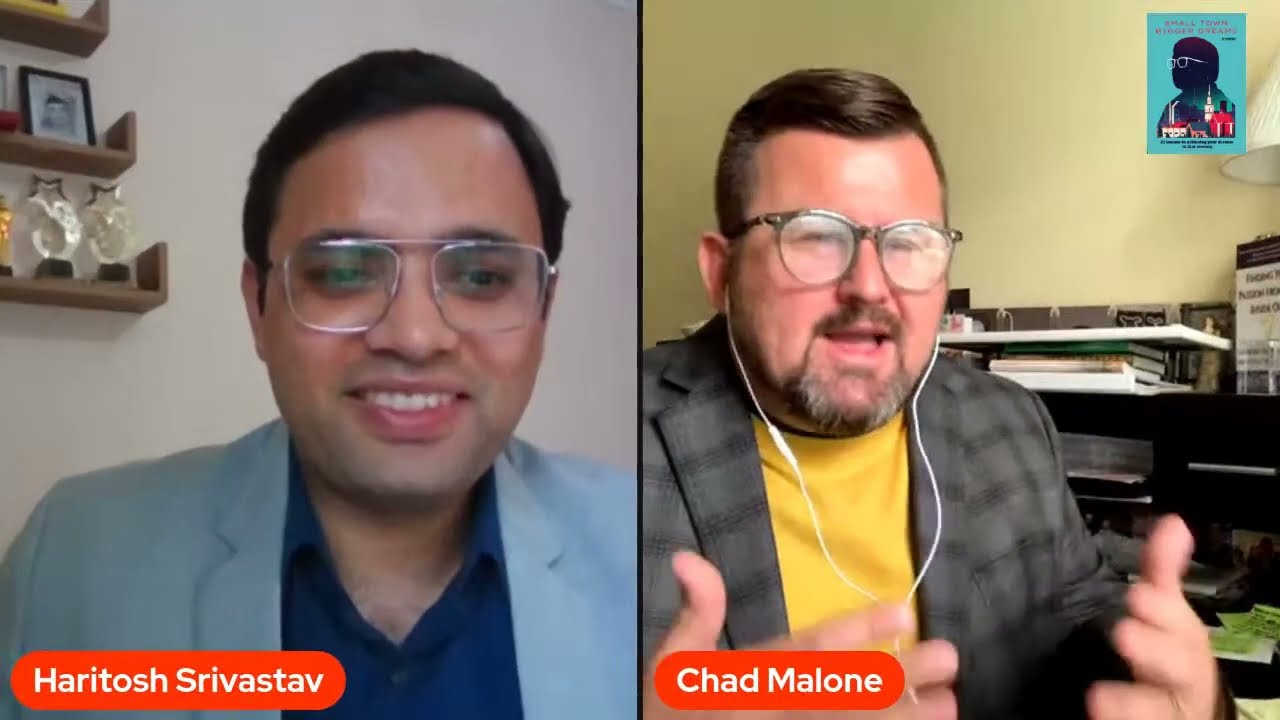
Haritosh Srivastav interviews author Chad Maloney about his book Finding Your Passion from the Inside Out: 7 Strategies to Get You from Here to There. They cover his background in education and healthcare, the writing process, and core advice on values alignment, vulnerability, and mentorship.
Chapters
Hi everyone, happy Friday! Good day from wherever you are joining this live. We are currently live on Facebook, LinkedIn, as well as on my YouTube channel. If you are here, you're watching it live, feel free to put it in the chat that you are here and also put it from where you are joining us. Today is a very special day because I've got somebody who I know for a couple of years at least and He's such an amazing personality, as you would have seen already from the images and poster. He is none other than Chad Maloney. Chad Maloney is an author, he's a communicator, he's a podcast host. His passion is your transformation. So let's put a round of applause for Chad. Thank you so much for coming over. To the podcast. And let me just add right here.
Thank you so much, Haritosh Srivastav, for allowing me the opportunity and privilege to be here. It's great to be with you and your people.
Lovely. I'm so excited for this particular interview and for a very valid reason. If you're joining us live, feel free to put it in a comment if you have any questions specific to Chad or about his upcoming book, you can put it in the question. And if time permits, we'll try to take one or two audience questions as well. So Chad, let's get started. I know a little bit about your story. I know bits and pieces, but I want to know from you, what is your story? What is your background?
So my background is in education and healthcare. I will say that I have always found myself In any position I've ever held, I've always tried to find myself in a learning, teaching-type role. And even if that role was not part of my job description, I always tried to talk to my supervisors and the people that were in charge of me. And I basically said, "Hey, you know, I'm really passionate about learning and development. And if there's anything that I could do to try to be part of that in some way, I definitely made that effort every, every opportunity that I had. But like I said, to answer your question, I, for the most part, healthcare has been a big part of my life as far as working career, but then also to higher education.
Very nice. Amazing, amazing. So Chad, let's get started with the interview. Why this book? You are publishing a book, and for the audience, let me share the book title. The book name is called Finding Your Passion from Inside Out: 7 Strategies to Get You from Here to There. So, so how did this idea of book came to your mind? And why you wrote this book?
Well, the thing is, the book is, it's just one of those things. For me, it has always been inside of me, you know, from the earliest of ages that I can remember. I've always been passionate about people and wanting the best for people and wanting to see people have a better life. And so it was just one of those things. It was kind of a, uh, it was a challenging book to read, to say the least, but it was also a very important book to read because I do believe that everybody has personal growth potential. And it's just one of those things we got to focus on growing. And again, I mean, that's the whole, the whole goal is to find that passion and, and get it out of us and take it to the next level.
Wow, that's an interesting perspective. Now, a lot of time people have No, book suddenly starts speaking to them. It's like, no, some, some, something happens that say, okay, now I do need to have the book written because I, it's something which is just speaking inside from me. So did you also had any such moment that like, yeah, now is the right time for me to publish the book?
Well, uh, Haritosh Srivastav, for me, you know, it's like I've got like ideas like of as far as writing other books as well. But, you know, it's kind of one of those things for me. I am a jotter is what I call it. I just, I jot, you know, I don't necessarily sit and just decide that I'm going to just one day write a manuscript. I just, I jot, you know, and then sometimes I'll look back at some of those jots, you know, especially when you're teaching, you know, lessons on leadership or on communications. And then sometimes you just got to go back and look and say, okay, well, this piece goes here, this goes here, and then you just kind of put that puzzle of, of a book together. And that's just kind of how it, how it worked for me. I know for some people it doesn't work that way. They've got to write the manuscript from A to Z all at one time, and that's, you know, that's fine. But for me, that, that just never worked that way. And so there was, again, you know, the original question you asked me about, you know, with the book. It's just there's parts of it in this book that took me time in my life to be able to just get those ideas. And so it's just one of those things. I just feel like it's been in me from the very beginning of time, or my life at least. So it's just one of those things where now's the time.
Absolutely, I love that. And so tell us a little bit about your book writing journey. Like, I know people who are voracious writers, they need to write every day, as you said, and they need to set a schedule. When I was writing my book, I set a schedule that, okay, every morning at this particular time, at this particular place, I'm gonna sit for 30 minutes at least for next 4 weeks. And that's how the book came out of me. It was not easy for day one to start writing, but slowly it became easy. So how was your book writing journey per se?
So for me, I write every day. I read every day. I write every day. And it's one of those things I've actually got it in my calendar. You know, these things that basically we all live by our phones. I've actually got it in my calendar every day that I'm going to read you know, for a certain amount of time. And then I'm also going to say that I'm going to write, you know, for a certain amount of time. But again, like I said, if you could actually see the entirety of my desk, there is literally Post-it notes all over my desk of just ideas. Also, too, I mean, the use of technology anymore is just fantastic. And so I've got outlines for days on like 5 other books that I'm actually currently working on. Don't know when they'll come out. Because again, you know, the way that I write is I just kind of jot, but it's just one of those things for me. I just continually try to write something every single day. And then also, you know, read as well and develop myself.
Very nice. Very nice. Amazing. So, and yeah, this is interesting, because putting it on your calendar and I do love the concept of putting things on calendar. I mean, I must admit at one point of time I was very, uh, yeah, I was not the person who would really appreciate that, but now having to juggle between so many things and taking that pain out of my mind that, okay, remembering what is it to be done and what all our tasks are there. I love using calendars, using the to-do lists, and really helps. So let's move on. And my next question to you is about, typically when we write book, we have one ideal reader in mind, right? No, this is the book is for this particular person. Everybody else may get this book, but this is the one person or having certain trait that this book is targeting for. So for your book that you're targeting, who are the ideal reader to say?
So that's interesting because I get asked that question a lot about like, what is your niche? And you know, for me, this is my niche. My niche is people. I absolutely love people. I love seeing people be everything they possibly set out to be. And that's just kind of where I'm at, you know, in life is that I just really want to love people where they're at. And then help them to get where they want to be. And it's just one of those things. And I, again, I think that's just a foundational, um, in my life is because, you know, I grew up in a family of, you know, 5 kids and, and then, you know, my parents and all of that. And so it was one of those things, there was always— I'm the middle kid, so there's a lot of give and take with me. So I just had to learn to, to just love people. And it's just one of those things. I mean, I know there's only one of me in the entire billions of the, the world, but I know that I can be the best version of myself, and that's just to, to love people. So to answer your question, I mean, you know, in a nutshell, it's just, it's just people. You know, people are either growing or they're dying, and if they're dying for too long, they're dead, right? And so we're put on this earth to grow. And so it's just one of those things. I know some people love processes, some people love, you know, they're passionate about things or whatever the case may be. I'm just passionate about people. And I just love, you know, culture. I love everything about people.
Absolutely. I can quite be a testament to that because we work together on the the summit a few months back, and I could feel that the kind of energy that you bring, the kind of positivity, the kind of motivation that you bring, and whether it's the start of the planning, whether it's the final day of the summit, and every day throughout, you have been constantly motivating because yes, running a summit or conference is a big thing. It takes a lot of energy. But when you have such people who are really motivating you at every step, helping you and guiding you. That's really helpful. So I can totally say that, yeah, you are definitely a people person. And yes, I love processes, but everybody is unique. I think one of the key is that knowing who you are, because yeah, a lot of us are living, but are we really living or are we really growing? I think the question should be, are we really growing or not? And if we not, we need to have certain Thought process is there.
Agreed.
Yeah. So let's talk about since you have come to this episode of In Conversation with This Will, this is live on multiple platform. It also go on podcast in other places. If I ask Chad that, okay, you have written a book, but if you have to give, let's say, 5 minutes, I give you 5 minutes for 1 to 2 critical lessons for anyone. Who's coming on watching this interview, what would that lesson be?
So in, in my book, I'll just give you guys some nuggets that, you know, I talked about in the book is, and again, I talked about strategies, I don't talk about chapters. A lot of books have chapters, but this book, I want to be a resource that can really take people from, you know, where they're at to where they want to be. You know, again, I've always found myself being that bridge builder, right? So, I think a couple nuggets that you can get out of there, like I'll give you the first example. Strategy number 1 is about what do you value? I have so many people that say, "Chad, I have a goal to do this or I have a goal to do that." And those are fantastic. Goals are great. But then, I ask the very next question and I follow it up with this. I say, "What do you value?" And the thing is, sometimes their goals and their values don't match. So if they don't, if they don't match, you're going to get stuck in life. So if you really want to know and you really want to grow and you really want to find your passion from the inside out, you have to know what you value. And when those goals and those values do match, sky's the limit, right? You can really do just about anything. You can take it to the next level. Another nugget in there, Haritosh Srivastav, should I talk about is vulnerability. Where are you vulnerable? I know that some people are probably going to shut the— this time off now because they don't like talking about that word. Because vulnerability is one of those words that's kind of like taboo, like stay away, like get away from me, that kind of thing. But I'm a firm believer that vulnerability can really take not only the individual, but it can take a work team to the next level. Because vulnerability is, you know, is being transparent. And a lot of times in life that we don't want to be that transparent. You know, we just kind of want to, you know, stay behind. It kind of reminds me of— what's the guy's name? I can't remember the name of the show, but He basically, the, the one of the guys just kind of kept coming up over the fence. Tom Allen is the name of the show. But it's just one of those things people kind of get so they kind of get comfortable and they want to look over, you know, and then they, they kind of retreat and go back. But the thing is, full vulnerability and transparency is it's a beautiful thing. And so, and I guess another third nugget that I would say is calm down and enjoy the journey. I know for me personally, there were so many times in my life, Haritosh Srivastav, I always was ready to cross the finish line. I saw that it was coming. I was almost there, kept pushing for it. And then I get there and it's like, okay, what's next? And the thing is, I quit learning to try to get to the finish line. And I really started saying, you know what? My finish line is whenever there's no more life in me, right? So, I've got to continue progressing on this journey every single day. So, you know, those are 3 things that I really focus a lot on the book. Again, what do you value? Where are you vulnerable? And then, understand that your life is a journey. It's not a race. It's a journey. And I think those things there are very, very key in finding your passion. From the inside out.
Wow, I love that insight. And really are talking about vulnerability, talking about, are you really living your passion, talking about why not having a competition with anyone else, but understanding that this life is a journey. And everybody is unique, everybody's journey is unique. You can't be comparing apples with oranges. Similarly, you can't be comparing one's journey, Haritosh Srivastav's journey with Chad's, or Chad's journey with anyone else. This is beautiful. I do have a follow-up question. And this question is because a lot of people, when it comes to vulnerability, they feel like, no, what if I'm vulnerable? I'll be, I'll be sharing all my secrets. And what, what if people know? So what is your message for people who you think are a little skeptical about being vulnerable?
So I think vulnerability is one of those things where you can choose what to say and what not to say. Mhm. You, I mean, there's going to be some times that there's— I mean, like, if I don't know how to do something, I can be vulnerable in that moment and say, you know what, I really don't know how to do that. And that's okay, right? Because how do I get better if I can't be true to myself? You know, and that's another, you know, I'll just go ahead and throw that out there. That's another one of my nuggets is being true to yourself. How do you be true to yourself? You have to be willing to say, you know what, I can't do that. I don't know how to do that. I mean, one thing that you can do, Haritosh Srivastav, that way better than I can, and it's like I want to say, I want to pick up the phone and call you and say, hey, I need your help. Technology, I can use it maybe this much, but I know there's so much more to grow in that, in that space. But for me to be vulnerable and say, you know what, I really don't know how to do that. It doesn't only help the person that you're talking to, it helps yourself because vulnerability is key. And again, see, there's other things in life that we could, you know, dive into, you know, relationship problems, whatever the case may be. It's willing to say, you know what, I don't have all the answers and that's okay. And again, when you're trying to find who you are in your personal journey, and trying to find that passion, you got to be willing to say, you know what, I have no clue. I have no clue how to do that. But the thing is, when you find that clue, sky's the limit, right? So you just got to be willing to be vulnerable. And even just in the workplace, it's okay to be that way. Because if you want your team to be successful, and you want to take your team to the next level, You got to uncover, you got to uncover those things at times.
Love it, love it. And if I may say, my two key takeaway out of that beautiful thing that you talk about vulnerability is number one is knowing that, yeah, being vulnerable is not a sign of weakness. If you say I do not know, that doesn't mean that you are less than anyone, or you are deprived of something. It's a sign of actually your strength because you cannot know everything in this whole universe. And when you say, yeah, I do not know this, uh, that shows that, yeah, you have that courage, you have that honesty that you can share. And number 2 things which I think you indirectly alluded is it's not a permanent condition. So for example, you do not know how to use Zoom, that doesn't mean you will never learn how to use Zoom or you— I do not know how to write a book. I do not know how to talk. I do not know how to interact. That is not a permanent condition. So being vulnerable is, is temporary also, more or less, and you can always come out of it, go, go from one state to another and change that. So love that.
Yep. And I just think being vulnerable, you know, I mean, that's just again, one strategy in the book, but being vulnerable, it adds a lot of value. A lot of value and just in life in general.
Absolutely. I love that. So Chad, we are coming towards the end of the conversation. I really loved all the insight that you provided. But I tell all my guests who come to these shows is the— what is your, yeah, 1 to 2 message for anyone? And most of the audience of these podcasts and, and people who watch my, my shows are mostly the young people who are in their, like, late teens or early 20s. So what is your message for them?
So my thing is, is, you know, get out and explore, you know, really get out and explore everything that life has to offer. Obviously, you know, I mean, there's some things that you don't want to explore, you know, the bad things of life, but it's just one of those things where a lot of times you just have to go out and see what's out there. I know a lot of times— I mean, I'm, you know, I'm the only one in my family that has graduated from college, and I don't say that to say, oh, go Chad. It's just, that's just the way, you know, it, it, it's fell for me. But it's just one of those things, I look back on life and I see, you know, people like my older brother, you know, that very, very successful entrepreneur. And, you know, college wasn't in his, in his, you know, parameters, if you will, and in his focus. And then I've got, you know, a younger sister and a younger brother that, you know, one's in education and then the other one's, you know, um, in the automotive, automotive, you know, industry. So it's just one of those things where, like, for me, I just had to learn that You know, just go explore, you know, again, find that passion. Again, if you, if you take that passion, it can manifest itself on the outside in way greater ways that maybe sometimes a college education will not suffice. And so I think that's, that's key is I, and I tell people all the time, get in, get a mentor, find somebody that can really push you. And, you know, I've, I've had the privilege of having a mentor now since 2009. That's a long time ago, but he's continued. Yeah, but he's continually just push, push, push. And then my big thing is this, and I'll say this to anybody that's listening, is ask questions. When you ask questions, I about things, whether it be something that you think that you might be passionate about or something you are passionate about. Ask questions, because when you ask questions, the teacher will appear, and then you will figure it out and all of that. So basically, in a nutshell, what I'm trying to say is, yeah, higher education is important, but it's not the only way to get to where you want to be. You know, if it means picking up this book that you can see behind me, Finding Your Passion from the Inside Out, go for it. But again, just make sure that one, you're being true to yourself, first and foremost. And so that's, that's, that's my, my spill, if you will.
Wow, awesome. That was amazing. So find your passion and try to explore yourself if you're in early 20s. It's not end of the world, it's not end of the life. So you have the whole world for you to explore, find out what really goes with your ethos, pathos, and logos, as they say. And then most importantly, ask questions. Asking questions again is a sign of strength. The more you ask questions, the more you will have better understanding. So thank you so much, Haritosh Srivastav. It was an amazing conversation as always. Really loved all the insights. And yeah, tell us, uh, where can people get the book and how can they order the book?
So you can actually get it from my publisher's website, Penit Publications. Uh, you can go there, penitpublications.com. Um, and you can also go to amazon.com. You know, they pretty much rule the, rule the world, if you will. So you can, you know, go to Amazon, and I think maybe Haritosh Srivastav could probably possibly put that in the the chat, and then people can, you know, go directly there and, and get that picked up. If you—
and I will also put the website address so that people can go and buy. Go, guys, go and buy that. I can guarantee that this has got a lot of insight, a lot of things that you can take and apply it regardless of where you are, regardless of at what stage of your life. So really, really excited about this book from Chad. All the best, and, and let us know how is it doing.
So it's, it's, it's actually already went international, which is amazing.
So yeah, I saw some posts. Do you want to tell us about— yeah, I think it went to Kenya or something.
So it went to Kenya. Yep, there was an individual that reached out to me and said, hey, I really want to be part of this with you, and can you please get me a copy over here to Kenya? And so we, we made that happen. So pretty, pretty excited. I've not, you know, really had conversations as far as, you know, reach yet with my my publisher, but I have a feeling down deep in my gut that it's probably went other places as well.
Awesome. Awesome. And I'm looking forward to get a copy for myself. And I'm really looking forward to reading the book. So all the best.
Thank you. And I just know this though, Haritosh Srivastav, if we can end like this, I know that if it can change one person's life, it can change their home. And then that home can change the community. And then that community can literally change the world. And again, that's why I tell everybody, you know, whenever I conclude in anything that I do, my passion is truly your transformation.
Ladies and gentlemen, that was Chad Maloney. Your transformation is Chad's passion. We can clearly see. Thank you so much to everyone who watched this live. Go and check out his book. I'm going to again, once again show the book. Finding Your Passion from the Inside Out: 7 Strategies to Get You from Here to There, authored by Chad DiMalone. We had the author himself today. So until next time, as I say all the time, keep learning, keep growing, and keep going out of your comfort zone. This is Haritosh Srivastav. I'm gonna see you maybe in another interview pretty soon. Otherwise, if you have not yet joined, you can join 51 Days Storytelling Challenge, which I'm doing every day, coming up with a story live on Facebook and other places. Thank you so much, and I wish you a great, great weekend. Take care, stay safe, stay blessed.









