Interview with Public Speaking Expert Simon Bucknall
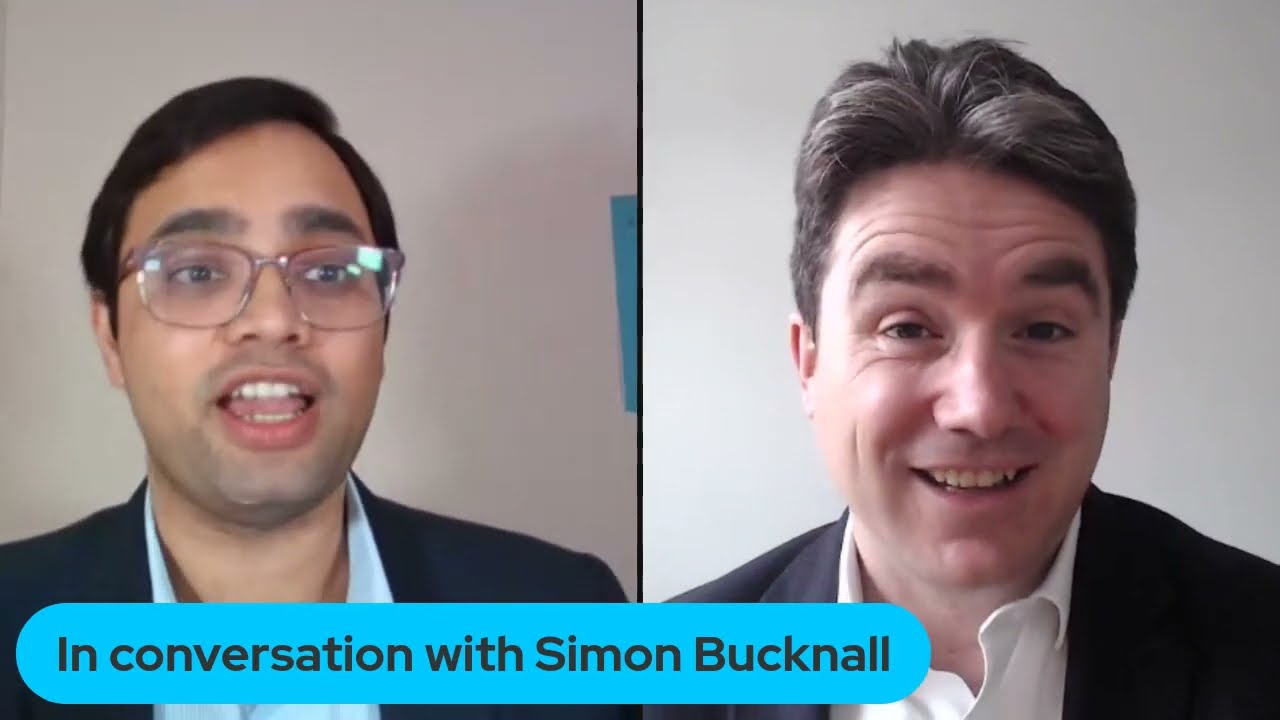
Simon Bucknell, 2017 World Championship of Public Speaking runner-up, shares how he overcame speaking anxiety through Toastmasters and reached the Vancouver finals. He calls storytelling "data with a soul" and warns that novice speakers often focus on themselves instead of moving their audience to change.
Chapters
Hello everyone, I hope you are having a great Thursday, and I certainly am because I am in with another interview. Another interview, as you can see in that I am having a conversation with someone who is a public speaking expert. He's inspiring leader, award-winning speaker, a coach, author, master class coordinator, And most importantly, he's the second-place winner in the 2017 World Champion of Public Speaking. Yes, you guessed it right. No points for guessing. It is Simon Bucknell. Simon, thank you so much for agreeing to do this. Welcome to this interview.
Absolute pleasure. Great to be here, Haritosh Srivastav.
Yeah, you have been really, really gracious with all the time changes that I proposed and all the things. So really, really thank you for that. Now I know a bit about your journey and some of the people who are watching or who will watch know, but I would like to hear from you how did it all started in terms of your public speaking journey and what all kind of things you have done.
Well, for me, like so many people, I think public speaking started off as something that I found difficult. It was never something I hated. Some people of course do really, really hate the thought of ever standing up and I'd done a little bit of drama, a little bit of debating at school and at university, but I never pursued it that seriously. And then in my first job, a couple of things happened that were really important. The first was I made a mess of my first phone call in my first job. Instead of saying, hello, John, have I caught you at a convenient moment? I said, hello, James, where have you caught yourself? Just through the sheer anxiety and stress of getting it wrong. So that was a bit of a wake-up call. And then at my leaving drinks from that job back in May 2001, I hadn't realized I might have to give a speech, but I was asked to, and I had a complete panic and my face went red and my heart was pounding and all those sort of classic symptoms of panic, really. And I now realize, of course, it's actually adrenaline. But it was a really, really horrible experience for me, even though I was with colleagues, I was with people that I'd been working with for a couple of years.. And I remember very, very clearly saying to myself, this is awful. There must be a way to get better at this. There must be a way to improve. And so sure enough, I did a bit of research and I found a public speaking club, and that's how I joined a Toastmasters club. I spent a bit of time away, so when I returned to London, I joined a Toastmasters club in 2004. And for me, that's where my public speaking journey really started.
Amazing, amazing. And I would love to hear about your journey to the World Championship of Public Speaking 2017. So how did all that happen?
Well, it wasn't something I planned, let's put it that way. One of the best decisions I made very early in just the first few months of my being a member of the Toastmasters club that I mentioned, it's called, well, London Corinthians and then London Cardinals, in those very early months of 2004 was to go to the as it was then, the District 71 Conference, which was the Britain and Ireland Conference. And at that event, I got to see— I just literally booked it 3 days' notice. I'd never been to Ireland before. I got possibly the last B&B slot in Limerick, over in the west of Ireland. I can still remember staying with Mrs. Birmingham, who kindly made a room available for me. Anyway, so I went to the conference, and I'd never been to anything like that before. And I saw all these speakers light up the stage, and they weren't celebrities. And they weren't, you know, they hadn't scaled Everest or been prime ministers or whatever. It was a real eye-opener for me. And of course, central to that was my experience of being an audience member for the speech contest, the winner of which, Eric Rainey, that year went on to represent Britain and Ireland in the World Championship semi-finals over in the US. And I just thought, wow, that's just really inspiring for me to see perfectly ordinary people who had really developed some skills and achieve big impact with audiences. So that was in 2004. And then it wasn't until probably a year or two later, I think it was in 2006, that I'd been a member of a club then for a couple of years, and I decided to enter the competition. And I thought, wouldn't it be great to do well at club level? And my speech, it just kept winning. And so that's how it came about, really. And I ended up competing in Washington, DC, in the world semifinals of 2006.
Amazing, amazing. And I do follow your post on LinkedIn. I— and those are some— and people who do not follow Simon, please go ahead and follow. He posts every day some amazing posts, some amazing, amazing videos, some amazing insights. So what I want you to actually talk about is— and one of the very amusing posts that I found was something related to the dress code that you posted about on the dress code on the World Championship stage. So what is that story all about? Very funny one.
Yeah, that was one of my big lessons. So I first competed at world level in 2006 in Washington. I was in the semis. I didn't get through to the world final. The following year, went through to the semis again in Phoenix, Arizona, came second in the world semi, just missed the world final. And it wasn't until a number of years later that I finally made it into the final in Vancouver in 2017. And wonderful experience just to even be in the final, to be honest, because you've got— anyone in Toastmasters who's been to the convention will know you've got an audience of about 2,500 people and a big live stream. Historically, in the World Final, it had typically been run in the morning. And I'd noticed over the years on the videos I'd watched, as well as being at the convention, they would have lots of flags on the stage. They'd have flags of all the participating countries in the convention, which is a huge number of countries. That have Toastmasters clubs. So it was almost like a United Nations of speaking. So loads and loads of very, very bright, colorful background. And without even thinking about it, a classic male thing to do, I thought, well, I'll just wear the normal sort of dark suit, white shirt and so on. And in Vancouver, it was a bit different. And I only really clocked this afterwards when I watched the video, the film of the final. It was done in the evening, and secondly, there were no flags, and it was done with a black backdrop, an enormous black curtain, and it looked pretty serious, to be honest. It was a bit funeralesque. Ironically, one of the other speakers in the final, John Andrew, gave a talk based on his experience as an undertaker, which kind of fit quite well, I think, with the rather somber background. Anyway, so when I watched it back, I just thought, oh, if only I'd worn a white suit or something. It would lit things up a bit, but it was a real lesson for me of every detail matters. And I'm not saying in any way affected people's performance or how I did, but just as a viewer, I thought I would rethink actually how I dressed for that given what I saw on screen.
Right. That's amazing. Because if you are trying to be a world champion, if you are at the world stage representing top 10 best speakers in the world, you have to know every detail. Every minute details matter. And your story reminds me of Aaron Beverley, who wore an Indian suit, which was amazing because now that was something innovative, never done before. And probably that helped him win the World Championship. Maybe.
Yeah, absolutely. It's really striking. Just these little things make a big difference, and as does something as seemingly small as just the speech title, for example, can make a real— that was another thing I learned actually from the contest experience. I had a good title for my— well, a title I was happy with, at least for the semifinal, which was To Be Perfectly Honest. That was the title of the speech. But for the world final, you have to give a different speech in the final from what you give in the semifinal. So every speaker is given— and of course, what people will typically do is put their best speeches into the semi because you've got to be in it to win it, if you like. But I just didn't give enough thought really to coming up with a strong title for my speech, and I think it's one of those, it's just one of many things that can make a difference. I have to say, by the way, hands down one of the best and certainly entertaining speech titles I've ever heard was put together by Cole McInnes, a friend of mine, a member of Cardinal's Toastmasters Club for a number of years, and he won the humorous competition for Britain and Ireland back in 2007 with a speech entitled Statistically, 100% of divorces started with marriage. He's got laughter before he even took the stage. It was stunning. It was— and it's a brilliant speech as well. That's brilliant. Yeah. And of course, I suppose it's also in my mind because Aaron Beverley, of course, famously had a very, very unusual speech title, didn't he? Which you might like to play back to us, actually, Haritosh Srivastav.
Yeah. That's like 50 words or something.
Right.
That's amazing. So let's get into a little bit of serious because we had so much fun together. But the reason I've asked you that, because I want my audience to learn something from you. So let's get into something of importance, which is over the years you have coached so many people, mentored so many people. What has been the classical mistakes that people do want to One or two classical mistakes that novice presenters who— somebody who's starting this public speaking thing, that they do.
I think for speakers, especially if they are at the less experienced end of the spectrum, maybe they're feeling a bit nervous, they're maybe early in their career and so on, hands down the classic— this isn't so much a mistake, but hurdles to overcome is this, that Speaking is about the audience, it's not about the speaker. And quite understandably, especially as I say, early in one's speaking career, whether it's just as part of one's job or it's— I don't necessarily mean as a professional speaker— it's easy to end up worrying more about the speaker. Am I going to get this right? Am I going to look good? Am I going to remember this? Have I got it? And there's all these things which are more interesting and relevant for the speaker than for the audience. And in the end, it is all about the audience, which I know people listening to this may well have heard before. But it's just so important and I find myself continually having to relearn that lesson. And it's like fitness. It takes constant reinforcement to think, right, in the end, what matters here? It's actually the needs and interests of the audience, at least if you're wanting to be of value to that audience. So I think that's one. I think a second for speakers that are much more experienced and perhaps have got that idea, they know that it's about the audience and they're comfortable. They've got lots of hours under their belt on stage. I'd say particularly thinking about my work in the workplace, the biggest challenge or hurdle is to actually drive change as a result of what one's saying. In other words, it's easy for people to just get sucked into, I'm going to say this, this, and this. Here are my key points. This is what I need to cover. And they prepare stuff, and it may be perfectly good stuff. It might even be true. But if it doesn't trigger meaningful change, really engage and shift the way in which people in the audience are thinking and feeling and behaving, then it's a complete waste of time. And I think professionally speaking, by which I mean small p, small s, professionally speaking, that's a classic because no change in the workplace. And I've worked with very, very senior leaders for whom that's been their key challenge. It's been, yeah, I can speak, I can put I put stuff together, I know my stuff and don't know, but I'm not getting the results that I need yet, or I'm not getting results in the way that I want yet. I need to really win hearts and minds. How do I do that? And so that's why it's such an important challenge, I think, especially for people in leadership roles.
Amazing, amazing. Love both of the things that you mentioned. It's not about you, it's about the audience. And are you able to make the change? Versus just putting it out there. One of the other aspects in public speaking is, which is now the buzzword all over the world, is storytelling. So I want to know your perspective of what do you think about storytelling in business, in, in general speaking, and also what are some of the tips that people can start using right away, uh, one or two tips that you want to give to the audience.
Well, I love Brené Brown's comment, and if you haven't seen, uh, listeners, if you're listening to this and you haven't seen Brené Brown's The Power of Vulnerability TEDx talk, very famous TEDx talk that put her on the map beyond the worlds of academia, I think it's fair to say. I love her description of storytelling. She calls it data with a soul, which I think is a lovely way to think about it because, um, what it suggests is that it's complementary to rational evidence. A good story It brings things to life. It's emotive, it's evocative. And as you say, Haritosh Srivastav, it's become very in vogue in recent years, partly inspired, I think, by the impact of TED. And some people say, oh yes, there's a story, so it must be a TED Talk, as if somehow storytelling is a TED thing. The reality, of course, is that storytelling as a technique for spoken communication is as old as the hills. Abraham Lincoln wrote about this extensively, the importance of storytelling in his upbringing, for example, Lyndon Johnson as well. And so it's just that TED has latched on to that, recognized that storytelling is so powerful. And I think it's relevant for the tale one tells of one's organization, of one's life, professional value. And I suppose one of the things that comes to my mind is that tip from Bill Gove, one of the leading lights of the professional speaking world in the United States in the 20th century, who said, when asked for his top tip on public speaking, said, "Make a point, tell a story, or tell a story to make a point." And it's just gold. And yet I still meet all sorts of folk in the professional world, whether it's in financial services or technology or in engineering or entrepreneurship, who, yes, struggle to to recognize the value of stories, and sometimes also, and certainly they will struggle to then bring those stories to life in the most compelling way possible.
Absolutely, I love that perspective. I see a lot of people actually struggle when they are talking about story. They think that the story has to be big, sensational, and something more. I had a couple of stories since this morning, and I thought maybe I can share that. Now my my daughter, which wakes up every day. She had to be woken up because she needs to go to school. Woke up today because she had some dress-up to be done, and she's gonna become the mighty girl. And, and we saw that, and it was like, what a transformation! Because when you have some excitement inside, you do things that you don't normally do. And that, that was like first story. And the second story since this morning is that I, I got a chance to sit in Tesla for the very first time. Which I have done. I booked a cab because I was late for the high school. So I booked a cab and I caught a Tesla and I was like, wow, this must be a story. So it doesn't have to be that big thing that you go to mountain with one of the legs cut down. It has to be these simple, practical and daily life things that can also become really inspirational stories as well.
Absolutely right. Absolutely right. I think it was Lance Miller, the 2005 world champion, who said, find the extraordinary in the ordinary. And I think that is so true. Stand-up comedians are a brilliant case study for this, by the way. When you look at certainly here in the UK, and again, listeners may be familiar with Michael McIntyre, for example, who's become hugely successful not just in the UK but also internationally as well. And as a comedian, he draws on very, very everyday stuff. I mean, getting dressed, getting the children out the house, and he just has that ability to— or that skill, actually, I should say, of really noticing in life what's going on. And you're so right, Haritosh Srivastav. There are things going on every day that we can draw on and use. And it's a mistake to think that it has to be some big drama. Sometimes the most compelling insights can come from very everyday experiences. I think of, is it Presian who won the championship? I mentioned the championship a lot just because it's in my mind, given the setup for this conversation. But he won the championship some years ago with a speech centered on changing and He was changing a car tire.
Right. I remember that speech. Yeah. I think it's 2012. He won the World Championship.
Sounds right. Yeah, 2012. Absolutely. And I think it's very inspiring to remind oneself of that because here's what I found over the years with people, say, with executives, whether it's C-suite or entrepreneurs, refugees, MBAs, academics, all sorts. Here's what we do as human beings. I've found myself included. We consistently underestimate the true value of our own personal experience. We, we, we take it for granted and we, we forget what it's like to not have had that experience. And, and even if we do recognize that we've had the experience, people often— well, no one will be interested in that, that's boring. My— I've worked with school children, for example, have literally flat said to me, so my life's boring. No, it isn't. Yes, it is. No, it isn't. Yes, it is. And yeah, the story of one particular girl who literally was doing that, no, it didn't— came up with a speech and a story that I then used in my talk at TEDxLondon on Royal Festival Hall. And she started out thinking her life's boring. There is gold in our experience, but we have to go digging for it.
Absolutely love it. I think the art— that is why it's called an art, because you have to have that skill to actually bring those stories and bring the insight and then put it in your presentation. The girl whose life was boring actually became part of this conversation. She might not be even aware.
Almost certainly not. And certainly if I think about the stories that I've used, certainly any stories that predate 2008, which is when I left my job 2 weeks before Lehman went bust in GFC. It was an interesting time to go independent as a speaker and coach. But any story, any experience that I'd had before, certainly 2008, at the time I had that experience, I never would have thought I would ever use in a speech, including the leaving drinks and the phone call that I mentioned earlier for my first job in headhunting. When those experiences happened, I was not thinking, you know, I might use those in a conversation online on LinkedIn Live and Facebook Live, you know, 20, 25, or 20-plus years later. Never even occurred to me. But we can get ahead of the game by noting these things proactively.
Absolutely. So do you recommend having a story bank or story file?
I think so. I think it's great to do that. Absolutely. Well, as an example, actually, no, there's a version of mine.
Yeah, I can see that.
Pad of A3. There's 5 boxes on each. Each box is a different— I've given them just a series of headings. One is, for example, what have we got here? So here, this is early years, and each of those is a bullet point with a different story. So we've got RRA, risk of scripting, Toastmasters, speaking without notes, Jonathan Lee's advice. It's literally just a phrase to remind me of the story. I think it's just so valuable. I mean, I'm not saying absolutely everything religiously has to be captured. I've got some things on a desktop Word file as well, but I think getting into the habit of noticing David Jones, a fellow Toastmaster and friend, very, very, very skilled and effective impromptu speaker in particular, and also has experience as a semi-professional stand-up comedian. He ran some night classes which I attended some years ago on stand-up comedy, and I remember him saying the difference between an average comedian and an outstanding comedian is a notebook and a pen. I think the same could be said of speakers. It's that it's that getting into that habit of noticing not just stories, of course, but insights, ideas. I find myself tapping into my phone and sending myself an email often if I'm out and about, for example. I certainly don't go on the bus carrying that with me. But absolutely. So you start to just get into the habit of logging things. And it's extraordinary how much you can capture just by paying attention. But it does need to be long because otherwise chances are it'll get forgotten.
Truly, truly. And the reason I remember the story from the morning is I put it on my phone and texted myself because I was like, this is great, but I'm probably gonna forget in 2 hours, so I need to do that. And on the point of the story bank, I just finished this book, Storyworthy, by Matthew Dicks. Amazing, amazing book on stories. And he says, I'm giving you an assignment for life. That every night when you go to bed, take out 5 minutes and write down the stories of the day, because you will forget tomorrow what has happened today. But if you note it down, you will remember every time you refer and you'll get some brilliant story. I love that.
Absolutely right. Absolutely right. I mentioned earlier that the speech that I developed that got me into the world final in Vancouver in 2017, to be perfectly honest, was the title. The message of the speech was, to be perfectly honest, you don't have to be perfect, you just have to be honest. And it's quite a fun little play on words. But, and that speech was developed over 6 months. Everything about the speech changed apart from the core message and title and then one of the stories in the speech. But it went through a lot of change over that 6 months. I'd been thinking about honesty and that whole theme of being honest with other people or with yourself, literally honest, or what, for a long, long time. And I couldn't figure out a way to make it work because I don't want to sound stand up and say you've got to tell the truth, because of course we don't. We, we lie all the time, often with very good intentions. But it took a long time for me to realize that actually this was about self-honesty, being honest with yourself. And I thought, yeah, yeah, you don't have to be perfect. The idea for that line came to me— I was on a treadmill in a gym. Here's the point. I was literally working— this is pre-COVID, you can tell— on a treadmill, and I was running away thinking about this stuff, and I had to stop the treadmill, get off, and then write in you don't have to be perfect, you just have to be honest and log it. Because otherwise I thought I'll forget, I'll forget.
Yeah, exactly, exactly. I, I, I can so much relate with the trade wheel because every day I go and I have this noise cancellation, I'll be listening to some podcast, I'll like, this is amazing, I, I need to note it down. So I'll be sending text or note it down somewhere because pretty sure after 5 minutes I'm gonna forget that and I might not get that for next few days or might not get it ever back. So love it.
Yes. Yes. It's fun. I think it's entirely aside from speech craft. I think it's just a lovely thing to do, to log things, to notice things in one's life. I think, was it Tony Robbins that said, if a life's worth living, it's worth recording? And he wasn't talking about speech development. He was just talking about noticing how much we gain, how much we learn, both good things and not so good things, of course. It's a bit like when climbing a mountain. I'm a very keen hill walker and you plot away and every single step might feel quite tough, especially if it's steep. But then after you've done that for a few hours, you look back and you think, my goodness me, I've come a long way. And it feels a little bit like that when we reflect on all these things that we've got. Was it Michael Palin, the former Monty Python and then big television presenter for travel programs, which I love, by the way, if you haven't seen his Michael Palin travel programs around the world. Highly recommend them. But there was a program recently where they interviewed him to reflect on all of these journeys he's done all over the world, around the world in 80 days, from pole to pole and so on. And he said, I'm going to get some of my journals out, which I haven't opened for a long time. And they showed his shelf and it was just wall to wall of journals of just notes he'd taken. I mean, I'm nothing like as disciplined as that, but I thought, wow, that must be an amazing thing to have done. And to be able to look back on. Imagine the richness of material he's got there.
Amazing. Love that, love that. Amazing. So that actually leads— so I know I'm really loving this whole conversation, really getting so many insights, and I know you have a limited time, so let's get towards probably the last or maybe the second last question. Uh, you also mentioned earlier you are a public speaking expert, you are a public speaking coach, and What do you think is the importance of coaching and mentoring in general and also specifically in public speaking?
Well, I'm reminded of a comment by, I think it was W. Mitchell, inspirational speaker who referenced Tiger Woods. And when he said this, it was at the time that Tiger Woods was absolutely at the top of his success as a golfer and he was just winning everything in sight. It was a few years ago now. And he simply said, W. Mitchell simply said, Tiger Woods has a coach. Is there anyone in this room who doesn't need a coach? And that was to an audience of professional speakers. So I think that partly that— I think we all live in our own goldfish bowl in a sense, in that it's impossible for us to see ourselves as others do. We just can't. By definition, I can't see a speech in the same way that someone else can. I do my best, but I can never really get that because I'm in my own head. And that's true of any other, any number of other aspects of one's life. So of course what a good coach will bring is a fresh view, an external perspective and so on, as well as, one hopes, especially if it is functionally specific coaching like speaking, an individual who has really had meaningful experience in that field. And so what I found over the years, especially when I'm working with folk in the in the working world, and particularly if they are at a very senior level, is they'll say, well, yeah, actually, I really want you to give me some advice, just give me some direction. Because I know there is a school of thought in coaching that says I should always be enabling, it should always be questioning, help the client get to the answer themselves. And obviously there's tremendous value in that, but that is only one tool in the toolbox. I think I know for sure there are times when clients look me in the eye and they said, look, just what's your best advice based on your experience? And you can give people a really compelling shortcut. So I think in those sorts of ways, I think coaching could be hugely valuable. And I've certainly benefited hugely from individuals who have coached me, mentored me over sometimes very short, compressed periods of time and sometimes over much longer periods of time. It's been formative. Formative.
Totally echo what you said. I mean, like you, whatever I've done, I think coaches, mentors have been a great help, a great source of inspiration for all of us. So thank you so much, Simon. It was amazing, amazing listening to you and learning so many insights. I don't know how you remember all these quotes. That's another talent we need to learn from you. And I wish I can get something from you on that. Who are the people you're looking forward to work with and how can they approach you? How can they reach you?
Yeah, well, one of the biggest joys of my work is that I continue to work with a very, very broad range of people. First of all, I do work with people in corporate life. I work with entrepreneurs. I'm working with a couple of best men right now for weddings. So all sorts. And I love that. I'm going to a school up in Leicestershire in 2 or 3 weeks' time and so on. So that's the first thing. And a lot of my work is one-to-one. If people are interested, then two ways in which to connect. One is through my website, simonbucknell.com. And on there, the contact form can reach me. And there's various pieces of information there in terms of different options for how we could work together if that's something that's of interest. Alternatively, LinkedIn. I'm active on LinkedIn, as you mentioned earlier, Haritosh Srivastav. So do connect with me, follow me on LinkedIn, because I am posting at the moment. I am posting daily, literally daily. I made that commitment on the 1st of January this year, and I'm really enjoying that process because it's forcing me to notice what I'm thinking each day and to post something, and that's a short article or short video. So find me on LinkedIn, would love to connect with you there.
Thank you so much, Simon. So please follow Simon on LinkedIn. As he already said, I've been really, really enjoying his post and insights and learning, and I had a lot more questions, but I know you have limited time. I have limited time, so maybe for next time. But thank you so much once again. And as I say every time to all the audience, keep learning, keep growing, and keep going out of your comfort zone. This is Haritosh Srivastav, and I hope to see you in another interview in future. Take care and have a great week ahead.









