Speak with Confidence: Overcoming Nervousness Like a Pro
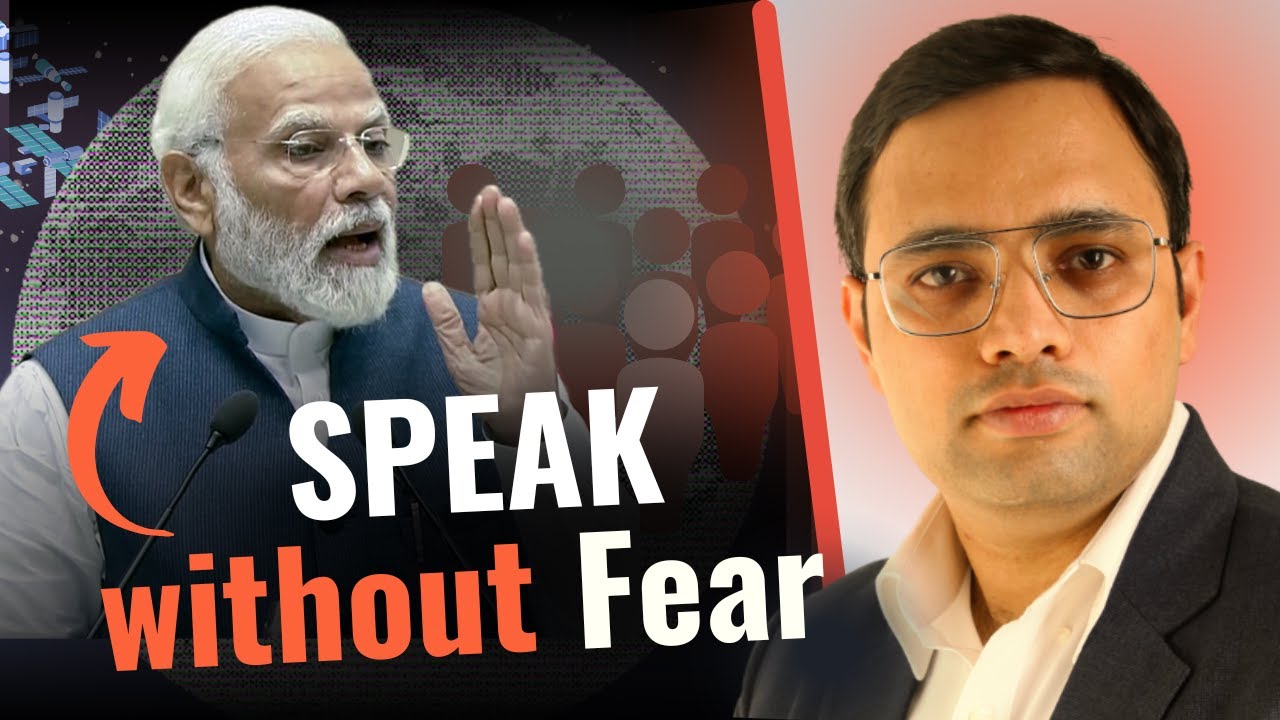
Coach Haritosh Srivastav shares five strategies to manage public-speaking anxiety: reframe nervousness as excitement, prepare thoroughly, use visualization and positive self-talk, practice a 4-6-5 breathing exercise, and join communities like Toastmasters for regular feedback.
Chapters
Kya aap ke bhi heart pad hande hone lagte hai, jab baan kaapne lagti hai, dimag mein aji wajib se kya latain, jab baat aati hai ki aap ko lower ke samne present karna hai, ko audience ko face karna hai, agar aapke sab bhi hota hai, toh ye video bahut diya da powerful hai, kyunki iss video mein, main aap ko batane walon, aisee paach powerful strategies disco use karte hai, aap apne public speaking ke fear ko control kar sakte hai. So stay tuned till the end! 2008 mein corporate me almost ek saal karib hoge tha mujhe kaam karte hui aur ek din mera manager nikah ki Haritosh why don't you do this next week presentation? I remember that time I had all kind of emotions going forward but I couldn't say no. So I can still remember that day, jab woh bahaut di parasa meeting room tha, 40-50 sloag gaye bethi the, and I was speaking so fast ki maine ek ghandega presentation pandra minute mein kadam karte ya. It was the most, most terrible presentation ever, but I learned from that mistake. And mera purpose is video ko banane ka hai, takki aap bhi woh strategy seekh sakke, woh chijhe chance sakke, takki aapki saathi kabina hoto. Let's get started. What are those 5 strategies that you can use to improve, to manage your fear of public speaking? Let's get started. Number 1: Nervousness hona is a good thing. Now when I say this, a lot of people will say nervous hona good thing kyu hai? A little bit of nervousness is actually good. Kyo ki yeh prove hot chuka hai through scientific research, ki when you are a little bit nervous it actually improves your performance. Actually, productivity, and also you perform better in that sense. So, you need to understand is that nervousness is not a bad thing. What's bad is excess of anything. For example, that is also— that can also lead it you to having overconfidence, having lackluster attitude, which is not good. Or agar bahut jyada nervous hai, that is also not good because then it affects your performance. So first of all, if you understand, a little bit of nervousness is a good thing. I always say that— I think I heard it from Mel Robbins first time— when you're getting all these butterflies in your stomach or hand, legs shaking, you can change that from saying I am feeling fearful to saying I am feeling excited because physiologically dono ka body pe jo reaction hota hai woh same hota hai. So either you can say I am feeling fearful, mujhe bhot dar lag raha hai, or you can say I am very excited, I can feel that in my body. When you change that, your mindset eventually changes. So the first thing is understand nervousness is not a bad thing if it is in control and work accordingly. Number 2, preparation. Yes, I know when it comes to preparation, lot of us have lot of material. Research, content. But are you actually practicing public speaking? Usko stage practice kar rahe ho, feedback le rahe ho. It is very, very important. Even when it comes to content, do you know your content in and out? Ya sir, you know, you're just going through surface level. If you really want to have confidence, you need to have expertise. You need to know in and out. If you have any doubt, you should know that. Now I'm not trying to discourage you not to speak or anything, but I'm trying to tell you how do you earn the confidence. It is not to say that you shouldn't try speaking. You don't do anything unless you know everything in the world. But whatever topic you are speaking on, at least get some clarity, research about it, go a little bit deeper. Don't be at surface level. The second thing. Number 3, and this is where we are coming to the practical aspect, and that is, as they say, everything is built twice. Once in someone's mind and second time in the physical world, it gets manifested. So when it comes to public speaking, fear ko dur karna hai, kya sabse acha tari ka hai, you start visualizing, you start having positive self-talk. Now there are a lot of techniques and I'm not getting into it. Maybe I'll create a separate video, kiyaam visualization kaise karte hai, but create your own script, kiyaam ko visualization kaise karte hai. In my workshop, I do often this exercise where I ask people to close their eyes and imagine Imagine having a perfect day, you delivering the perfect talk, perfect reaction, perfect response, and how it is impacting your career, impacting your money, impacting your relationships. Now once you start visualizing and start having a positive self-talk, it starts manifesting. So I'll tell you a very simple thing and you can do it on your phone as well. Just record If it was your perfect talk, what is it going to be? So what is going to happen before that? What is going to happen during that? And what is going to happen after that? Just record in your own voice and listen to it every single day. This is going to multiply your confidence by X number of times. So do that. I am going to really recommend that you do that. Make a voice record of your own voice telling what happened great before the actual meeting, before the actual presentation, what happened during, which was great and what happened afterwards. When you start visualizing, this is going to really start showing up in your— as they say, manifest. Let's talk about the fourth technique. One of the things where we tend to ignore when we are nervous is we tend to ignore our breathing. We're not relaxed and we take something called shallow breathing. And that's where our nervousness also increases. So how do you improve that? You can do the reverse engineering. Nervous nahi hona hai. You have to work on your breathing part. It's a very simple exercise. I think I heard it first from Jay Shetty in his podcast, and you can try that. I have tried it multiple times. So apart from doing meditation and other things, this is one simple exercise. You're gonna do that. We're gonna breathe in for 4, we are gonna hold there for 6, and then breathe out for another 4 to 6. So let's say breathe out for 5. So 4, 6, 5, 6. 5. So breathe in for 4. 1, 2, 3, 4. Hold it for 6. 1, 2, 3, 4, 5, 6. And now breathe out for 5. 1, 2, 3, 4, 5. Now when you do this practice for 5 to 6 times is going to send signal to your body that, yeah, I am in a relaxed state, I'm not feeling nervous, I am excited, I am happy, I am positive. And if you do this exercise, this breathing exercise, for a few times, going to really change your mindset. You know, mindset is everything. So that's the fourth aspect that you can do even before a meeting. So you have 10 minutes before the meeting, 5 minutes before the meeting, you can simply do this 2-3 rounds and it can have a great impact on your physiology and you'll feel much better and, and more excited. Excited and less nervous. Aye baad karte hain, paachhwa aap sabse important, having practice and feedback. Hum, we talked about practice, but I am talking about how do you go beyond doing one-to-one practice. I would highly recommend that you join a community. There are so many communities. Toastmasters is one. You can also, if you are a storyteller, you can definitely try MOT Storytelling. It's an amazing community, MOT Story Slam. You can also join our Confident Storytelling Hub. We allow our members to come every week to practice and share their stories, get feedback, and any such. These are just some examples of groups. When you become part of a community or group, you can practice and you can get a lot of feedback. The feedback could be a lot of positive feedback, which gives you a lot of confidence, but also a lot of feedback which can help you grow, which can help you improve further. So I hope you will take all these 5 strategies in account. So number 1, understanding that nervousness is a good thing. It's not a bad thing. If you are a little nervous, ya apka performance better kardi tha hai. Number 2 is the preparation, knowing your content, knowing your stuff in and out, and so much so that kya karat mein teen majhe bhi koi hota hai, you should be able to talk about that. Number 3, using this visualization and positive self-talk to prime yourself, to make sure that you are in the right state even much before you start. Number 4, working on your breathing part, relaxation techniques, breathing techniques, to keep your breathing in check whenever you're going to present. And number 5, joining a community, practicing, and getting feedback, both positive as well as growing, grow-ons as they say, basically fine-tune to basically chisel your talk so that next time when you have to prepare, you are much more confident, you are much more relaxed. I hope you like these techniques, these strategies which we mentioned in the video. Comment karge bataega ki aapke liye konsi ye technique eye-opening thi jo aapko bata nahi thi, konsi aap pehle use kare. I would to hear your comments. And as every time, as I say, until next time, keep learning, keep growing, and keep going out of your comfort zone. This is Coach Haritosh Srivastav. I am going to talk to you in the next video. Take care.









