Tigressandbutterfly - Inspirational Interview Narmadha Kamalakannan
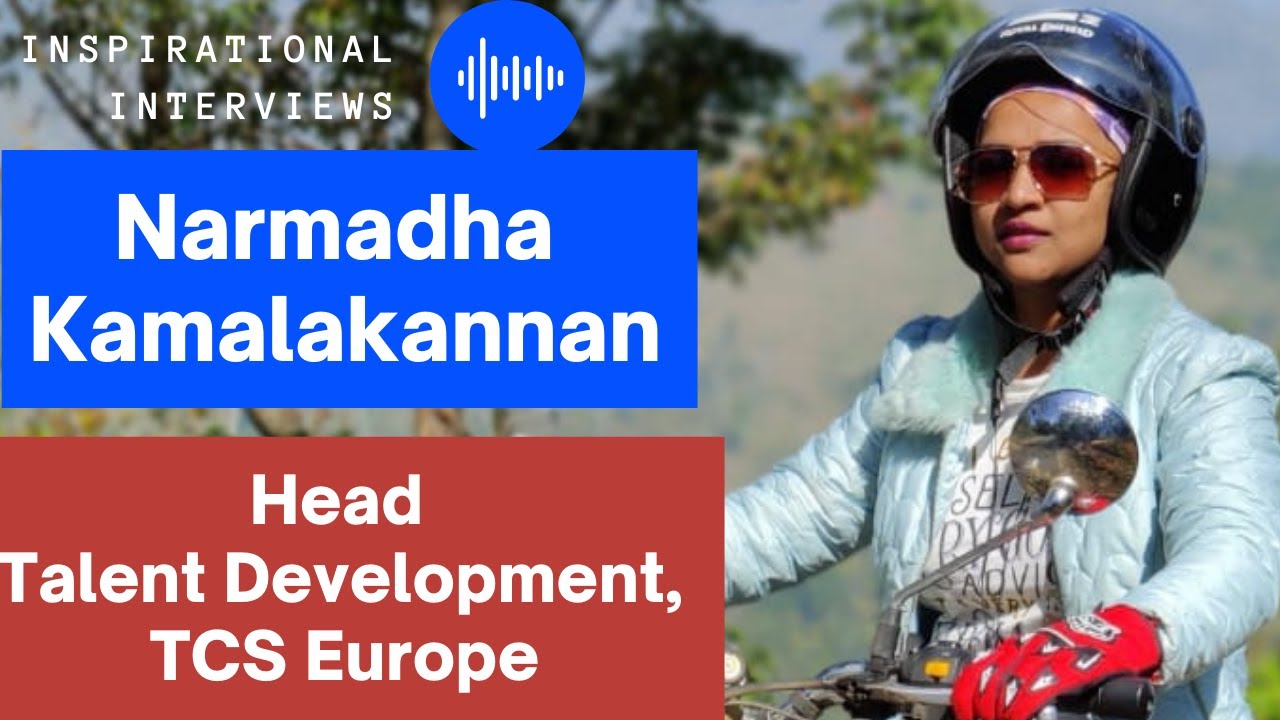
In this episode of the Inspirational Interview series, host Haritosh Srivastav talks with Narmada Kamalakannan, a small‑town Tamil Nadu native who has built a multifaceted career as an author, blogger, and mother of two. Narmada recounts her early life in an orthodox family, the pressure to achieve top academic scores, and a pivotal college‑placement mix‑up that left her publicly embarrassed before eventually securing a job at TCS. She explains the philosophy behind her Tigress & Butterfly brand – combining the strength of a tigress with the warmth and freedom of a butterfly – and describes the blog’s community, photo‑story challenges, and the volume of content produced. Narmada also outlines her two published books, Get Ready, Lady (supporting women returning to work after a break) and Get Ready, Love (a research‑based exploration of marriage), and shares her review of Haritosh’s book Small Town Bigger Dreams, praising it as a “booster shot” for small‑town aspirants. She offers concrete advice to young professionals and working women: focus on what you can do, curate your information environment, and learn from failures without obsessing over “fail fast.” Finally, she provides contact details – the Tigress & Butterfly website, Instagram, Facebook, and email – inviting listeners to connect for motivation and positivity.
Chapters
Towards the end, after 20 minutes, they said, hey, not you, I see you're screaming out, you're not selected, it's the other nomada. And when the whole world tells you what you cannot do, realize what you can do, and then believe who comes and says, buddy, these are things that you can do. All you need to do is channelize these things rightly. How, uh, instead of being rebellious, we can still be logical at the same time become open-minded for the betterment of society. So my journey began when this small-town girl started focusing on what I can do amidst the big list of what I cannot do. The minute you think that what are the things that you can do, that's where the journey begins for anybody.
Good morning, afternoon, evening, people watching this interview or listening it on the podcast. My name is Haritosh Srivastav and I am back with another episode of Inspirational Interview. And today I have a special guest, uh, the person I've been connected only a few weeks, uh, but it seems like we've been connected for years and we have done so much of conversation, so much of likings, you know, in together. Uh, so help me welcome Narmada Kamalakandan. I hope I pronounce it correct. Welcome, Narmada ma'am. How are you doing?
I'm doing fantastic, especially charged up after reading your book. And congratulations, Haritosh Srivastav, on the publishing of your book.
Thank you.
Super cool and very meaningful.
Thank you so much. Thank you so much. And we'll talk about a little bit about my book. Yeah, but let's first ask me about your journey. I know you started from a small town and have been to different places, and it will be really helpful for our listeners and viewers to know about your journey, from where you started and what all things you have done over the years.
Okay, all right. So where the journey begin, uh, the journey is still on, definitely. And let me do a little reverse order there. The journey currently I'm in, I, I think I can introduce myself as an author of two books, and I'm working on my third book also. A blogger, I think expressing out what, uh, what gives positivity to others, that's something that's my passion. And of course, the mother of two kids, and you know, being, being this being surrounded by the beautiful family here. That's me today. And if I have to talk about the journey, then I have to show you where it all begins or began. So I'm going to show you where it all began.
Yeah, absolutely looking forward to.
So this is what you can see as the small town girl with bigger dreams who is in her journey. And you can see a lot of, uh, apparently the construction is still on everywhere. So this is the place where— so this is the place where me as a schoolgirl was running around, playing around, was not knowing how deep life is. I am from a small town in Tamil Nadu, and I come from a very orthodox and superstitious family. So I have to admit that part certainly. So there are— in fact, the reason why we chose this timing to do the session is also because there's a lot of things to do, you know, for me on a Saturday before I sign up for anything on my personal side or an interest. So doesn't matter where the journey leads, this is the big— but giving You know, the more and more challenges I faced, especially during the early part of my life, the childhood, everything became— I had two choices to look at. Either am I going to be this small-town girl who's going to fall under, "You cannot do this." In fact, for the first 10, 15 years in my life, I've been hearing what we cannot do. Because you're just from this place, because of the gender, because of the family. There's a lot of things that will put the confidence down. And the beauty is, the minute you think that what are the things that you can do, that's where the journey begins for anybody. So my journey began, uh, when this small town girl started focusing on what I can do amidst the big list of what I cannot do.
Amazing, amazing. Yeah, and as I say, once a small-towner, always a small-towner. Regardless of where you go, you have that, that thing, the connection with your place. Absolutely. And another thing that I got hold of is the mindset, and I'm a big fan of Carol Dweck and her book Mindset, which talks about whether you have a fixed mindset versus a growth mindset. And it all starts with whether I don't have it or I can learn and grow out of it. Thank you. Now let's go a little bit deeper. I know you touched a bit surface on that, that it is from a small town, you are a girl, and all those stereotypes. But I want to know one or two specific instances where you had a sort of difficulty or challenges And because I personally believe that, believe that, no, behind success there are a lot of failures, a lot of setbacks, and that helps us to push forward for success. Uh, so I want to know one or two instances where you had sort of failure or setbacks, and then how did you come out of it? What were the learnings out of that?
Okay. So, um, me thinking is not to think what are the challenges, it is to filter out one or two among the hundreds that I have in the list. Talking, okay, before coming into, you know, the professional side or the Mrs. Narmada's challenges, Miss Narmada certainly had challenges. So when I was studying, as of course, you know, the, the whole, uh, target was to become this first rank student in the school. And every time, you know, one very good thing is the innocence of childhood We don't get discriminated by parents, and my parents always wanted to— me wanted me to get first rank. So, and they're maths experts, both my mother and father. So 99 out of 100 is also treated like a failed, uh, mark in maths. 100 is the only mark that they compromise on. Oh my God, I've been always pushed. Yeah, so there's nothing less than number one kind of, you know, rules. That, uh, my parents had. And it was, you know, the education where I came in. But what was very surprising, or this actual challenge, you know, that threw me, is when I was in college and I did not get placed in the first 2 companies, uh, I had the interview. And it was all in the final round. And, uh, you know, the first 2 rounds, um, went really well. And the final round, it was very, very hopeful that I'm going to get selected. And what happened was, there was apparently another Narmada in the college. And in the auditorium, they announced, okay, Narmada is selected. And you know how college life is. Immediately my friends lifted me up and, you know, we were celebrating. I called my parents, I said I got selected, everything. And towards the end, after 20 minutes, they said, hey, not you. I see you're screaming out. You're not selected, it's the other Narmada. And it was like, oh my God, it was like— and I have to call back and my mom is not letting me. It was a landline call, you know. I sound very old, but going back to those days, there was no cell phone. So I have to go back to the landline, and that by the time I called my mom, they have called everyone on their landlines. They've got sweets telling that my daughter is selected. And that was something, you know, It was something that I could not come out of. So I had to say, can you hear me? I am not selected. And they thought I'm a big-time prankist. So I, I keep pranking my parents and lot of, you know, April Fools. So they actually thought that I'm pranking them back after I got the job. But I have to literally shout and tell them, please listen to this, I have not selected. So that was a, that was a beautiful challenge that shaped me who I am. For the next 3 months— after 3 months, I got selected in TCS, and then happily ever after in TCS. That's, you know, the good story. But those 3 months from that incident till I got placed in TCS, I think the, the most serious part of my life was there. I was super determined. Nothing could shake me. You know, it can be a fancy birthday party of my best friend, it can be anything that can distract you, or You as a college kid, nothing can, you know, ever shake. I, I was able to find my inner strength and resilience because all I had is either to give up or this. And because the college graduation was ending and my dad is apparently the eldest member of the family, you know, the whole group, and his only daughter— unfortunately, that's how they always title, unfortunately doesn't have a son— and, you know, my wedding is also the most awaited in the family. So they said, just wait, if she doesn't get placed in any, any company, okay, my son is there, my son is there. And there were like 10 to 12 options where, you know, I was like, you imagine yourself with all these, you know, options. So it was such a pressure for me after failure, understanding. And, and there's another side where every weekend I am taken to religious places doing some pujas because apparently my stars were working out, and until I get placed in TCS, that was a super challenge. It molded— it made me find my inner strength. So I see that's a story worth sharing today.
Definitely, definitely. And not exactly in that manner, but yeah, I could also correlate because I was also not placed in the very first company in my college, uh, when I was doing my engineering graduation. And yeah, I know the pain that when you— when your friends or people know, you feel like they're not up to your level and they get placed and you don't, uh, you start doubting yourself. But yeah, at times if you take it constructively, you can definitely become a better person. So thank you for sharing that.
For sure.
So let's, uh, mold a little bit towards, uh, your creative works. I know you have a big blog on Tigress and Butterfly. First of all, I, I really like the name, so I want to know the story behind the name and also what kind of blogs and other things that you do on that.
Okay, so, so Tiger and Butterfly is not just me. Anybody who believes in the, you know, finding the tiger in you and the butterfly in you, anybody would like to channelize everything positively, all of them, you know, fall into the club of Tiger and Butterfly. I already have a team where there are 5 to 6 more of them who have started penning down their thoughts also in my website. So it's no more my website. We, you know, are forming a club of people who like to do, you know, positivity while everybody have our challenges. So Tigris, it's about the strength, it's about being bold, being strong. It's also about, you know, it's not very easy to actually be strong. It's very easy to say. So when, when you face such moments which we just shared. So when we face situations which lower our confidence, where we feel we are weak, it can be physically, mentally, emotionally, socially, and then still you discover that you're strong, you're bold, and you can step forward. That's the tigress. So, and butterfly, butterfly is certainly a very, very warm being. And I like to, you know, also reflect upon the— so I don't want to be a rebellious tigress all my life fighting for things. So the butterfly in me, the more I discover, help me balance both the strong and softer sides that's needed for the society. So, and you cannot tame a butterfly into your pet zone. You cannot put it in a nest or something. And most beautiful part here is, as long as there's a butterfly coming near you, on your shoulders, around you, you look at it, it gives you warmth. It doesn't stay long, it likes to keep moving. So that is also something I've learned, that letting one person go, or letting it go, giving each other the space— let it be work relationships, personal relationships, or social relationships— the more you give space to others and keep flying That's the butterfly, uh, warmth, you know, which will be, uh, get received by the other person.
Amazing, amazing. So, so basically, as I understand, it's kind of a blog site. What exactly is that?
So, uh, Tigers and Butterflies is a blog site. You're right, uh, we, like I said, uh, there are close to 300 blogs now. Uh, the first 200+ were completely done by me. And sometimes we also do theme-based blogs there. One is photo story. So the challenge is always open, anybody who wants to send any kind of photo. So I've received a pickle jar, I've received an elephant photo, I've received a digital art. So any photo and we write a story about it. So that's the photo story challenge. And a lot of social-based things, you know, how Instead of being rebellious, we can still be logical, at the same time become open-minded for the betterment of society. It's basically the better world and not to crib around the problems that are happening today. So as, as I said, positivity is the mantra, and there will be a lot of work around positivity. The interviews or the articles which are also related to both of my books are in the same website. So my first book, Get Ready, Lady, it's for women who are restarting their career after the break, and typically it is maternity leave, at least in India. Uh, Get Ready, Love is my second book. Certainly the most complex science than, you know, any science that we know is the marriage. So, uh, I, I did one year of research speaking to various folks understanding about different dimensions of marriage and 20 attributes which are needed, they're captured as 20 chapters of my book. So that's where I also really loved how the 21 parts of your book were very beautifully thought through and they were individual nuggets also.
Thank you. Thank you. I think, yeah, I'm really looking forward to at least get the second book for sure. I need to learn more about the relationship management. But yeah, thank you so much for sharing. And you actually alluded to my next question, which is that I think you were one of the first ones who read through the whole Kindle version. The paperback is still in progress, but yeah, you went through the Kindle version and you also posted a review of the book. Now I want to hear from your own words, what did you feel both as a reader and also as an author? How would you like to, you know, give a critical review if you me about the Small Town Bigger Dreams, the book.
Okay, so if you noticed, uh, the, the whole review revolved around, uh, Kitu, Kitana, who was also the neighborhood school kid. And our actual conversation where I gifted her your book, you know, after— don't miss this, Kitu— that way. I wanted to pull her into the interview today, but you know, it is her tuition time and, you know, there, there are online classes happening for her to prepare for whatever exam it is, so I couldn't catch her in. So first of all, um, I think going back to me as a school kid or a college kid, uh, especially when life was so much of a pressure saying that you cannot do this, all these things, your book is a, is a friend who comes and says, buddy, these are things that you can do. All you need to do is channelize these things rightly. And every time, you know, uh, the challenges of a small town, uh, kid entering a corporate world or any other world is that we somehow get into the comparative zone. So we start comparing if I'm good enough to a kid who was from a city. Yeah. During my college, I always— I was not able to understand the jokes that the Chennai kids used to share. And I'll always be thinking, what? Is there a double meaning? And they'll be like, hey, you're from a small down. And you know, it's almost a funny way of bullying as well. So a lot of instances where it pulls us down, it creates that inferiority complex. Your book is certainly— it's like the booster shot that's needed. Yeah. And every time I think if a college student or somebody who is in a corporate with 1, 2 years of experience wondering I remember Rupa, who was from my batch, and the first time a client pinged her at work, she just switched off her system and she was like, she was trembling. She came and told that, I can't believe, I don't know what to do. Why is the client pinging me directly? I'm not even, I don't know if I'll speak right. And we all had to give her water. While it sounds very funny to people who don't understand this world, you certainly, you know, have brought the essence of these elements of the small town challenges. And these are booster doses where it can be in the handbag or in your— under your pillow. It's like every time, every day when you have smaller challenges, every chapter of your book is going to be, you know, very enlightening. And like I mentioned in my review, uh, your chapter about Edwise is something I really, uh, like. Apparently, I'm also talking about not to give free advice and why is it so. And that, the whole way of articulating it through your experiences was fantastic. I think you have given two examples and both I could relate a lot. So fantastic. And your book is certainly a booster course for them.
Thank you so much, man. And just for the record, I did not pay Navodha ma'am for this book review.
No, of course. I think, uh, when you sent me that you have published your book and this is the link, I did not even respond. I gave a thumbs up on the WhatsApp message and I thought, let me finish reading it. Let me actually do a— if, if it is really good, you know, let me write about it or put an Amazon review. Because it was very inspirational, you know, uh, I actually wrote a blog about it and sent you the blog. I, I don't think you even, um, you know, expected me to write two lines. We never— like, we both, uh, acknowledge we know each other for hardly a few weeks now.
Yep, yep, yep. Yeah, that was a very, very pleasant surprise. I did not expect anything like that. Okay, uh, so let's talk a little bit because, because I think you work with a lot of young professionals and working women. And a lot of time they have certain challenges. So now I want to know, uh, for anyone who's young professional, working woman, or anyone who aspires to do big in life, what are your top 2 to 3 tips that you want to give to them?
So the first one goes back to my journey, uh, Haritosh Srivastav. What I learned is when the whole world tells you what you cannot do, realize what you can do and then believe. You know, the articles from Tigers and Butterflies, your book. Certainly there are a lot of us who have reached, who have done it, and, you know, take it as a source of inspiration or motivation to keep up the journey. But the power is within self. So each of them, please realize what you can do. Surround yourself with the right circle, or surround yourself with the right information. Because today, if every social media, you know, when we, uh, log in, there are plenty of things to distract us from what we want to do.
Absolutely.
So I had to literally write down what are the things that I want to focus on, especially when, you know, you have so much— what should I do on Insta, what should I do on Twitter? Okay, there's an option not to do anything in some of the media also. So your social life, what you follow where— whom you surround with, that's very important. So that's point number 2. Number 3 is, um, always try to see what you can learn from failures. And, um, there is a terminology called fail fast, but, um, one of my friends recently gave me a new perception saying that don't keep telling kids to fail fast. Their focus is not to achieve— their focus becomes failing and learning from it. So that part really struck the chord because I was also telling the same thing all around. So it's okay, you can succeed. So it's about doing, it's not about victory or lose— losing. But whatever we need to learn out of it is extremely important. I think Now, uh, I, I can also say the first 30, 35 years of my life, I've learned how to speak up, how to share my views, how to get involved. And now I'm also focusing on where to be silent, where to, you know, ignore. And life will teach you its own lessons. All you need to do is believe life and go for it. So those are my 3, 4 points to the young professionals. And to women, working women, just believe that we're all, you know, not— in both ways, don't think that you're a very special gender, or don't think that, you know, there is a stereotype and you're not as good as the other gender. We're all human beings and there is space for everyone. Just explore your inner strength and appreciate the differences that God has given us. That's it.
Truly, truly. Thank you so much. It was an absolute pleasure to have you. I'm, I'm pretty sure there were a lot of learning nuggets for all our audience and all the people who will hear this on the podcast. Now, before you leave, uh, if people want to really connect with you, uh, what are the different channels? What are the website? What are the email? If you want to, uh, how can people connect with you?
So, uh, Tigress and Butterfly is the website, and that's the same social media channel— channels also. There's an Insta page, Facebook page. Uh, Facebook page is where we keep publishing daily theme-based blogs. And the email ID is again tigressandbutterfly@gmail.com. And, um, for, for what you can reach us when you need a bit of motivation, when you need to explore positivity. Then you need to also find your passion. These are things that, you know, we keep connecting with our audience. And, um, that's it. Let's all, uh, be nice to each other and live and make the world a better place.
Thank you. Make the world a better place. Thank you so much, Rabada ma'am. And I'm pretty sure you would have liked this interview. And if you like, please leave a comment. What were your best learning out of this interview? I have had So many learnings. Uh, please write it on the comments. I'm looking forward to it. And until next time, as I say, always keep learning, keep growing, and keep going out of your comfort zone. This is Haritosh Srivastav, and I'll be back with another episode of Inspirational Interviews.









