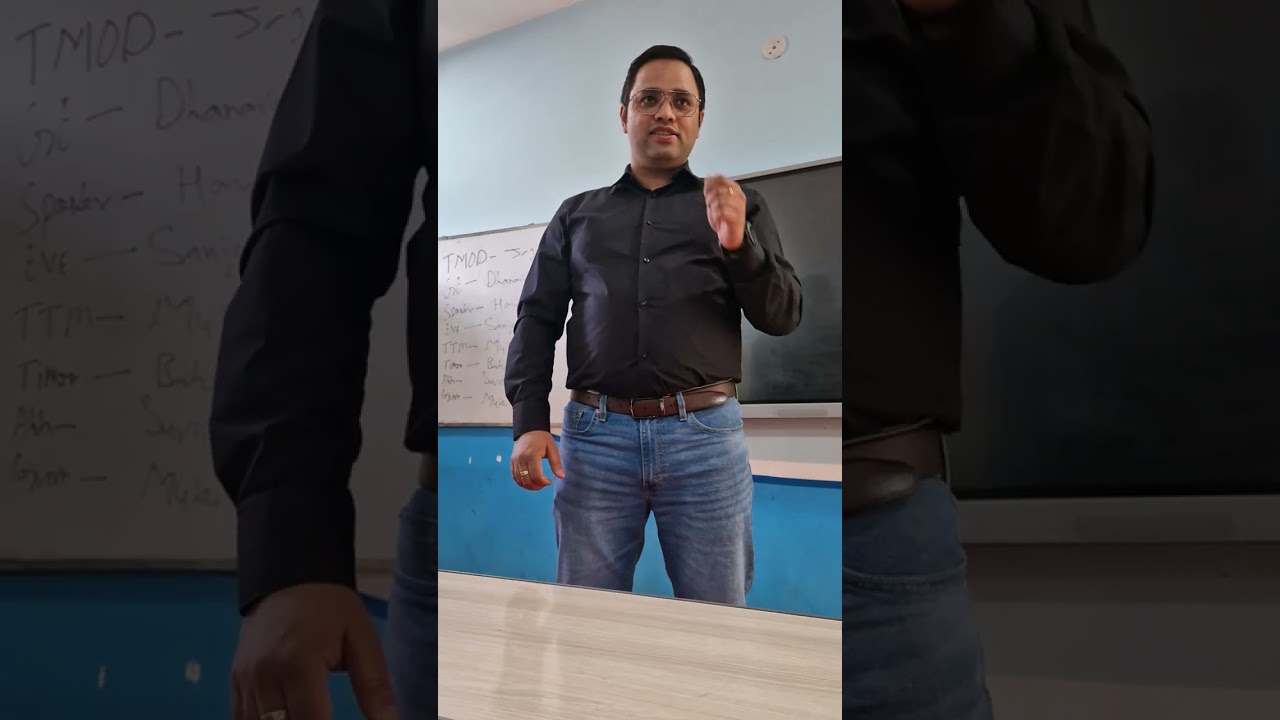
In this Toastmasters speech, Haritosh Srivastav explores the relationship between crisis and leadership, presenting two illustrative stories to convey two core leadership traits for crisis management. He begins by defining a crisis as a negative, out‑of‑control situation that demands contribution and pressure, and links it directly to the need for leadership. The first story recounts the 1979 Indian Space Research Organisation (ISRO) launch failure of the first Satellite Launch Vehicle. Project director Dr. A.P.J. Abdul Kalam faced a computer warning minutes before launch, proceeded, and the rocket failed. When media demanded answers, senior leader Dr. Satish Dhawan took personal responsibility, shielding Kalam, and promised a comeback within a year. The team worked tirelessly, and in July 1980 the launch succeeded. Dhawan again took the media spotlight, allowing Kalam and the team to receive credit. The lesson: in a crisis, a leader should stand at the front, facing difficulty; in success, the leader should step back and let the team claim recognition. The second, personal story describes a 2016 escalation at India’s largest IT services firm. Haritosh contrasts a former abusive project manager—who shouted and insulted—with a supportive manager who, during a crisis, asked constructive questions and empowered the team. He reflects that true leaders use their title to elevate others rather than intimidate. The speech concludes with a call for leaders to empower and inspire their teams in both big and small crises.
Chapters
deliver the speech with a good confidence. So I'll say that, uh, we are having the gratitude, the first speech. So welcome, and over to you, Toastmaster Haritosh Srivastav. Toastmaster of the Day, fellow Toastmasters, what is that idea come when the word crisis I say the word crisis, what does that come to your mind? Something negative, something bad. Something negative, yes. Any other? Situation which seems to be out of control, it requires lot of contribution, maybe it's kind of pressure you are facing. Yes, absolutely. Unfavorable situations which requires— with crisis, one more word which I want to bring is the leadership. Because whenever there is a crisis, there is a need of leadership. And in today's speech, I want to share with you two traits of a great leader when it comes to crisis management. And I will be doing that in the form of two stories. One is a very famous story, another one is a personal story. So in 1979, Indian Space Research Organization was planning to launch his first satellite launch vehicle. Before that, India had never done that. It was their very first project. They had spent hundreds of crores and the project launch day was coming. Dr. A.P.J. Abdul Kalam was the project director and Dr. Satish Dhawan was the head of the Indian Space Research Organization. And as the day coming— was coming close, they were getting nervous and the actual day of the launch came. And 10 minutes before the launch, the computer started showing a warning. So Abdul Kalam went to his team member and said, there's a warning. And said, it's all right, Dr. Kalam, we have checked everything, our calculations are correct, it's going to be perfectly fine. Dr. Kalam went with the gut feeling of his team member, and in 10 minutes The rocket was launched, the first satellite launch vehicle of India, and it went up and up, but in 10 minutes it went onto Bay of Bengal. The project failed miserably. And there was this conference room where all the media from all the world was sitting there, and there was this Dr. Abdul Kalam. He was there to face the media, to all the questions, the heating questions. At that time, Dr. Satish Dhawan came and said, 'You stay here, I am going to address the media now.' He went to the media and said that, 'I take the personal responsibility of this failure, and I want to promise you all that in one year we would be there.' He went back to the team, restarted working. They worked day in, day out, months, weeks, and exactly in one year, in July 1980, once again the project was launched, and this time it was a success. India was able to put the first satellite into orbit. Grand success! Everybody was celebrating, and again This was the time to address the media. The whole world media was out there. And when Dr. Kalam came to Dr. Satish Dhawan, let's go to the face media, he said, I will stay here, you go and talk to the media. What's the lesson? The lesson is that whenever there is a crisis, it is the job of the leader to be at the front, to face the difficulty. But when there is success, achievement, recognition, the leader should step back and let the team get all the credit, all the recognition. I believe we see the other way around a lot today, and that is the first lesson I wanted to share. The second one, which is more of a personal one, This is back in 2016. I was working for India's largest IT services company, and we had one project manager who had the quality of probably all the bad leaders, you can say. He was shouting in front of everyone. He was finding every single opportunity to insult people. So I was working with him for about a year, and then I got the opportunity to fly to US. And there was this big escalation. Something happened with the project. There was a big problem and there was a big escalation. Now I'm coming from that background that if you make a small mistake, you are gonna be scolded, you're gonna be insulted. I was very— I was trembling like a leaf. Something bad is going to happen. And I messaged my manager that something like that has come up. I said, okay, let's meet tomorrow. We went to a conference call next day, and in the morning he said, okay, tell me how can we rectify this? How can we make sure that whatever we promised, we are doing it? We are doing it correctly, providing value to the customer. And I was missing something. I was missing the shouting. I was missing the scolding, I was missing the insult. And that's when I realized the real leaders are not the one who are abusing their title. The real leaders are the one who are using the title to elevate their team members. So whether it's a big crisis, whether it's a small situation, I want you to think about how you as a leader can empower your team, can inspire your team, and can make it an example. That's for all. Thank you so much.