Unlocking the Power of Organization | Confident Storytelling Hub
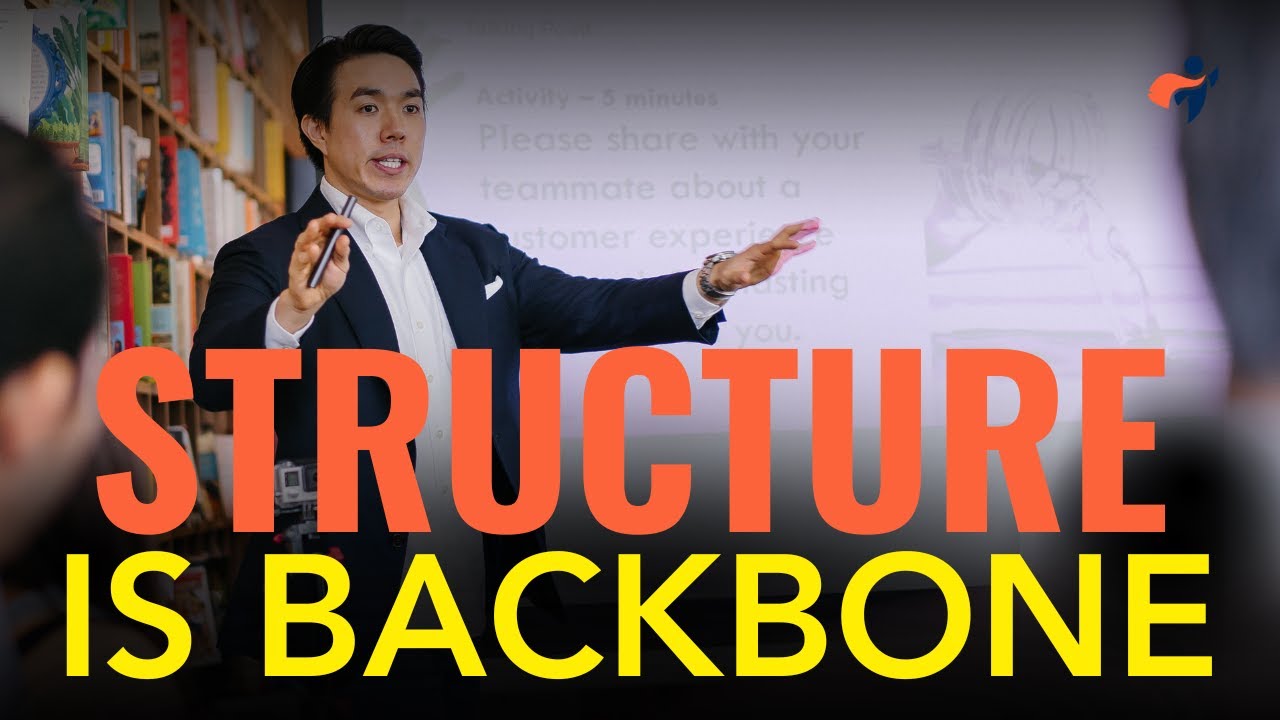
In this community workshop, Haritosh Srivastav guides participants through the fundamentals of building a powerful public‑speaking structure. He likens a speech to a bridge, emphasizing a solid foundation (opening), strong frame (body), and a secure closure. He presents multiple proven frameworks—What‑So‑What‑Now‑What, Dale Carnegie’s Tell‑Them‑What‑Tell‑Them‑What‑You‑Just‑Told, Facts‑Argue‑Appeal, Wrong‑Remedy‑Action, and Secure‑Interest—each illustrated with concrete examples. He introduces the concept of a "foundational phrase" repeated three times to cement a core idea. The session then dives into opening tactics (personal stories, props, rhetorical questions, strategic silence, startling facts), transition devices (bridging language, enumerated points, cause‑effect cues), and closing strategies (summaries, surprise elements, calls to action). Haritosh stresses that openings and closings are the most memorable parts of a talk. He urges participants to practice regularly, offering bi‑monthly practice sessions, feedback loops, and the sharing of slide decks. Community members share their reflections, request the materials, and discuss future plans for courses, challenges, and certifications. The overall message is that structured, rehearsed storytelling, supported by community practice, transforms a speaker from impromptu to impactful.
Chapters
Slide. Yeah, awesome. So as you can see, if you are going through a bridge, what you see is the structure. And even if the bridge is 50 feet, 100 feet high, what is more important is how deep is the foundation, how strong is the frame, how strong is the structure. So if you are trying to build your reputation as a public speaker, if you're trying to have yours— have your story stand out, you need to think in terms of structure. Now, the speaker— and this is a very funny thing, uh, but yet very, very, uh, practical as well— that speaker who starts nowhere usually gets nowhere. So you, whenever you're speaking, you need to have a structure which is an opening, a few transition, and also a strong closure. One of my mentor, he says that a good structure doesn't freeze you, instead frees you. Very good play of the word, but it's still very, very tactical and very interesting. So what is a typical structure when it comes to whether it's a speech, whether it's a story, is you need to have an opening, you need to have body, and you need to have conclusion. So I wanted to bring some more structures that I have researched and you can apply based on different contexts. For example, there is a structure model which is called What, So What, Now What. What does that mean is what is it that you want to talk about? And so what is, what is the impact of that particular thing that you're talking about? And the third is now what, which is also called as call to action. So for example, if I say public speaking is one skill which is most dreaded, yet it is very, very important, that is probably what. And so what would be when I tell you that, no, do you know around 90% of the people have some or other fear of public speaking? And if you don't work on it, you're probably going to be left behind. And that is going to be the now what, where I'm giving you a call to action, where I'm— asking you to do something. So that's another alternate structure that you can apply. The next structure is what are you going to say, say, and what you said. So this is coming again from Dale Carnegie's school of thinking, where he says that if you have a speech, you have a talk, you say, okay, tell them what I'm going to tell them, tell them, and tell them what you just told. So you tell them, okay, I'm going to tell you about, uh, what is it that we are not— we were not going to cover in this mastermind session. And then I covered those points and then say, okay, so today we discussed about this and this and this in the mastermind session. That's another structure which allows you to structure your talks. The third one is about facts, argue, and appeal for action. This is very good when you are into a debate and those kind of, uh, aspect where you, you are given a viewpoint to express. So you tell a fact and then you present it from both the side, and then you tell them what is it that you stand for, what is it that you appeal them to do. Another model is show what is wrong, show how to remedy, and appeal for action. Then there are another model is secure interest, which is you give a hook to people and then win the confidence. Now, this is one concept called foundational phrase, and I know Sharon also uses same— something similar, which is that you need to have a common phrase, a phrase that you are repeating at least 3 times in your talks. Because when you do, there is a magic about 3 times. When you do something 3 times, it gets registered in your audience's mind. So whenever you're talking about an idea, try to find one small phrase which can be called a foundational phrase. For example, let's say we need, uh, the world needs storytellers. Now, if I'm using this phrase, I can go on different aspects about why is storytelling so important, and then again repeat the phrase, and then I can go to a different dimension. Talk about where, what are the different examples and people who have used storytelling for their career betterment. Then I come back to the same point, the world needs storytellers. And then at the end, I give a call to action and then again come back to the same foundational phrase, the world needs storytellers. So whenever you are structuring your talk, think about what could be the one big idea, one foundational phrase that you can use in your talks and You can use it multiple times so that by the end of your talk, your audience remembers, if nothing else, that particular foundational phrase. Now, um, this is another critical part is how do you open? And we have done few sessions earlier, uh, but I just wanted to repeat that, no, opening of your talk is so, so important. Uh, Your audience usually will remember the way you open and the way you close. It's very unlikely they will remember everything else that you say. So you have to focus on how powerfully you open and how captivating your closer is. If you can just do these two things, regardless of what is inside your different points, if your opening and your closer is powerful, your audience is going to be amazed at your delivery. So always remember that you have to focus on the opening and the closer. And let's talk about some of the wrong ways to open. So, good morning, I'm so-and-so, it's my pleasure to talk to you today about blah blah blah. Boring, right? Or this is, this is my favorite. This, like, whenever somebody says, I'm like, okay, don't do this. I'm so sorry, I haven't actually prepared for this Mastermind. Sorry, um, session. I'm like, first of all, you shouldn't tell me if you're not prepared. I should judge. But when you tell this, I'm so sorry, I'm not prepared, you're actually insulting your audience. I'm being totally blunt and honest. If you tell them that I'm so sorry, I'm not prepared, even if you're not prepared, you're actually telling that boss you are wasting your time, this guy is not good for, not worth your time. So don't ever do that. Don't ever say I'm sorry. Or another very interesting thing is, yeah, this is such an amazing weather outside here in UK where 6 months it rains. How are you feeling? Not interested. Nobody wants to know what is the weather here or weather in Mumbai or weather in Chennai. Cut to the chase. What could be the right ways to open your talks? One is we are storytellers, we love talking about story. So having a compelling story, just jump right into a story. It was 1994, I was on the roof in a small town. And, and, and I, when I saw those aeroplanes and the white smoke coming out of those, I looked at my sister and say, you see the smoke that comes out of when the aeroplane flies? And you know what, I will be traveling in those aeroplanes one day. And then both of us laughed because we thought this is what This is a big joke. Now, 25 years later, now when I travel in those international flights, I still remember those days. Now that is one of the opening of a lot of keynote that I've done. What it does is it actually takes you right into a scene. So when you use a compelling story, it's one of the best ways to open your talk. You can also use props. A lot of people have very efficient props. I know one of our members, I think, uh, Simaji— Simaji uses the props so amazing. I mean, I've never attended her session, but I keep seeing her updates on Facebook and I'm like, so captivating. I would love to attend her session or actually ask her to come and take a session here in the community. The way she uses the prop is an inspiration for all of us. So if you have a thought about any prop, that's the best way to use. Instead of you talking, if the prop talks, nothing better than that. Then having some rhetorical question. How many of you want to become better at speaking? How many of you want to have an impact on the number of people? How many of you want to become the mentor you never had? When you ask those rhetorical questions, that's a Best— one of the best ways to open. Next one is having silence and pause. There's this, uh, big coach, uh, very famous in India, and he— I think he recently put it on his YouTube channel, and he went on a stage and he was just smiling and silent for roughly a minute. Now you might think, oh, 1 minute is not big. But if you are asked to speak and you keep quiet for 1 minute, that is a big time. 60 seconds is such a huge time. And he was just silent, just smiling, looking at different parts of the audience, different sections of the audience. And then he talked about the importance of having right pause and what are the different ways to open. So even silence and pause can be used in a very good way. The next one is some startling facts and figures. So pretty much self-evident. Now let's move on to transition. Very, very important point. How do you move from one point to another? How do you move from your opening to your next point? How do you move from your first key point to second key point? A lot of time people move very awkwardly, and if something that we all need to work upon is working on the transition. I'm going to share some of the examples. I'm going to be little fast, but if you— any of you need those, I will be more than happy to share the slides, uh, take it and use it for your next presentation. So some of the transition is, as they say, is the bridge between two key points and between similar you can always say likewise, similarly. Instead of just stating one fact and another, you can say likewise, this is what. If you have contrasting ideas, you can say however. No, we, we love to go there, however the weather is not conducive. On the other hand, on the contrary— that's another transition type. Then elaborate. When you have to elaborate a point, you can use moreover, in addition, furthermore, Then you can— one of the best ways is to actually say, I'm going to share 3 facts with you today when it comes to storytelling. Number 1 is there was a study done in New York about insignificant objects which showed that when you employ a story, it increases the value of an article by 2,700%. Number 2, there was another survey done which says that when you— the typical retention is 5 to 10%. But when you employ storytelling, it can go on to 65 to 70%. And the third and the final one is it has been proven that if you want to keep somebody awake in your session, use storytelling and pauses. This was the third point. So when I say first, second, third, the audience sees a mental structure of what you're going through, what they're going to talk about. So that's a very, uh, good way to transition between different, uh, different statements, different points. Then you have show cause, supporting examples. So that's very, very important to have transition. And the last one, which is, as you can see, the background, the closing. The show is about to end. You want to have an impact. You don't just want to say Patricia Fripp, she is, uh, one of the— she's the first women president of National Speakers Association in the US, and she says, 'Your last words linger.' Even in this phrase, if you look at the last word, 'linger,' it has such an impact. 'Your last words linger.' Even the quote is written in such a beautiful way. So what is the wrong way to do is, 'Thank you so much, that's all I have. Let's have a Q&A,' or 'Feel free to email or call me.' Those are the wrong ways. But what could be the best way? Give a summary of what you talked about. Give an illustration. Sometimes people bring a surprise element to the end. Have a story. And the best one is have a call to action. So those, I think, are the points when it comes to having structure in your talk. When you are having these tools in your hand or in your arsenal, When you think from the perspective of how do I gonna open, what are the points that I want to use, how I'm gonna transition, and what is going to be my captivating closure, this is where your impact is going to be multifold. So always think about structure. A lot of time people think that I would go impromptu, but if you want to become an impactful speaker, you have to do your due diligence, which is you have to work on your content, you have to bring structure, you have to practice and deliver and get feedback and then get better. As they say, our best, uh, a great story is not delivered or written, it is rewritten and redelivered. So that was today's topic. I thought it is very, very important at the outset of 2023 When we are getting into this journey of becoming a better speaker, we go through some of the basics of how do you structure your talks, how do you go through that. Now, social media salivation, I'm gonna keep it over here. Uh, I know I've been talking a lot. I'm gonna take probably a minute to stop and ask for any feedback. Anyone have any suggestions? We discussed a lot of things. Any Any insight anybody wants to share, please go ahead.
Hi, good evening.
Hi, how are you?
I'm good, how are you? Happy New Year to everyone.
Happy New Year.
Although somewhere or other ways we have, you know, learned it somewhere, I do not know, but just because it is not structured in our mind, we are not planned enough to speak around, so we do not speak anything like this. So, uh, we would like to have it, uh, you know, kept with us for, you know, future reference. Or if we use it, I believe this is one of the, you know, best thing we can do. For myself, if I speak, I'll be doing my best presentations out of this structure only. It would be very helpful to me. Thank you so much.
Thank you, Brijesh. I will share the slides. That's all for the communities, nothing personal. So I will share all of it with all of you guys. But yeah, Let's— I think what you said is very, very important is, no, we all know a lot of things. I'm not saying that these are all my material I've invented. I've also learned and studied and gone through the courses, workshop, uh, but we also need to be reminded of all the things, all the, all the concept, all the practicals. And the second important part of all of this is, which you also said, that no, we need to practice. We all know so many things, but we also We only practice a few things only. So I am going to actually invite you and everybody to actually participate. The reason we are going to have two sessions on practice every month is the same, that we want everybody to come here and practice and get feedback. Maybe you don't think, you don't think that you need structure, but when you, somebody else points out that, okay, you didn't work on your opening, maybe the way you were transitioning could have been much better in this way. Or maybe you need to have this kind of power closure that will open some balls in our mind, right? So that's why it's very important to practice. So thank you for sharing that. Monica Ji, any thoughts on you? And you have a beautiful dog, I see.
Well, I think so.
It's been— I would simply say it's a new year, new resolutions, and, um, Someday, yes, we would really look forward for, uh, somewhere as a community, uh, develop something new.
Absolutely.
And more of an innovation. And, uh, but of course, since it's a teamwork and we might, uh, I would say there is really a milestone altogether to work upon. So that's what I can say.
Absolutely, absolutely.
Awesome, awesome.
I also want to acknowledge a few people who generally don't join, but I think because of the timing they are able to join. So, Avik, welcome. I think— I don't know whether it's your first session or second session. How did you find the session and what is your feedback?
Yeah, absolutely. I think this is my second session. Yes, you are right. On the weekdays I tried to join, but because of the work pressures and traveling, I couldn't make it possible. But I think Sunday sessions will be really helpful and try to join and continue the sessions. I think today's session was very much informative. As someone said rightly, like, we know, we knew a few things in a scattered manner, but today's sessions helped us to, you know, frame it in a more organized and structured way. Probably in this way, if we try to do some rehearsal internally at home, probably, and coming into the platform and Participating in this kind of, you know, this kind of sessions probably can help to get feedback and improve upon.
Absolutely, absolutely. Do sign up for all the— I mean, this is a very close community, so don't worry too much about all the technicalities and background or language. Somebody really pointed out, Sherin, thank you for pointing it out. Yeah, don't worry about too much of that. Hindi and English I can understand. For other languages, I, I can guess, I may be wrong, uh, but yeah, let's, let's practice. Let's make storytelling beyond the language barrier of language. Let's work on becoming a better speaker, which doesn't really involve story— I mean, doesn't involve only one language. We need storytellers in every language in the world. Awesome. Uh, Rohit, I see you also have joined today. So, uh, tell us your feedback. Is it your first time, second time? How many times have you joined the session before? Are you able to unmute?
Yeah, yes, yes, I am joined first time actually. Actually I registered last year but first time I'm joined this session.
Wow, welcome! Let's give a big round of applause to Rohit. You made a milestone, you are on the right track. So in 2023 I hope to see you more. I would love to see you on camera if you are able to come, otherwise that's fine as well.
Yeah, yeah.
Oh, great. Good to see. So what's your feedback? How did you find the session and what other kind of topics you want us to cover?
No, nothing. Actually, I attended the first session. It is very useful actually. After that, I am unable to attend due to my work, uh, pressure like that. But right now I'm attending again.
I want to attend.
Awesome, awesome. It would be good. I think this, this time is working for many people, so I'm happy to have this in session. Uh, who else? Ruchi, how did you find the session? What's your feedback? All right, I think maybe she's not able to— okay, thank you, Ruchi. Uh, Rajesh ji, how was your experience? I know you joined in between.
Hello, Haritosh Srivastav. Yes, I had a great experience in terms of like, I always wish to learn the best way to present yourself in the storytelling. Though I have not just last time also, you said that you should come and present your story, but yes, this time I will definitely, you know, enroll and I'll go for it because I also wanted to know where I need to improve and how I can be a a good storyteller. Thank you so much.
Absolutely, do it next week itself. Don't wait too much.
Yes, yes, I, I'll do it.
Awesome, awesome. All right, uh, Vandana ji, if you are able to unmute and share your feedback as well. All right, I think she—
I—
she informed me she is also in another meeting, so I'll probably let her go. Ashwani, our longtime member, you have done so much for the community. So what was your experience like?
Hi, Haritosh Srivastav. Hello, everyone. Yes, I really like the way you present the things and looking forward for the same this year as well. I try to learn whatever I can learn from these sessions and always try to do my best and try to learn the new things from the new team members as well. So welcome everyone to the board. This is really a great thing, and I hope it will help you to gain the success and learn whatever you want to learn. Let's continue this journey and wish you all the best. Thank you so much.
Thank you, Ashani. Thank you. We would love to see your face sometime. I think we have not seen it in a year or so. So we'd love to see you whenever your camera starts working. Thank you, Haritosh Srivastav, for opening the camera. If those of you who are able to come on camera, I'll probably take a screenshot. We need to work on marketing, so I'll take a screenshot and I'll post it on our Facebook group and other places. Thank you for doing that.
Haritosh Srivastav, I just wanted to ask one thing. There are not many slides, I think. I just wanted to ask you, have you covered those things previously? Can you get inside the app?
So I will share the slides. I mean, this is a whole workshop presentation I did a few months back, which is about public speaking. I'm happy to share all the slides that you want. This is also part of a course, so which is what I was talking about. Maybe because most of you have joined through storytelling course, and what we want to do is go, uh, go away from course-based to community-based. Which is where we want to cover on different aspects. One is of course the courses, but also about these community session. We want to have more challenges and I have— we have some plans for more challenges, more certification, more those kind of session collaboration within the community and outside the community as well. So what I'm going to do is next, in next couple of months, whatever courses I have at the, at this level, I'm gonna make it available to every one of you in the community. So that now we have courses on public speaking, we have courses on storytelling and all the other aspects that we have covered, corporate communication, things like that. We'll make it available to the community for our Level 1 members, and then we'll go on to do next level things. So that is why things are changing in 2023 for better for all of us. And just hold on and wait, wait and watch, I would say. For this slide that I used, I will share it in the group. And over email also, if you— anybody needs, I will share all the slides. You can use it, and best would be to come and practice in the sessions.









