What happened when I talked to a a Public Speaking Coach |Conversation with Akshat Shrivastava
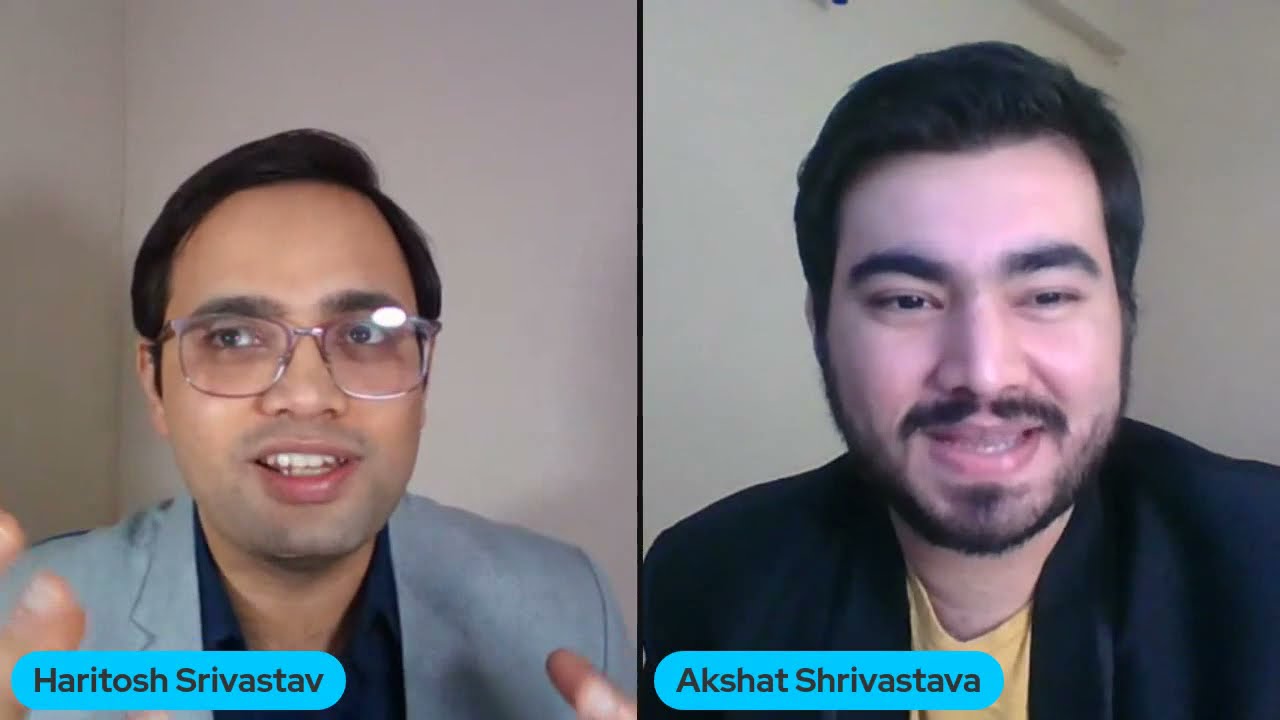
In this live interview, public speaking coach Haritosh Srivastav welcomes fellow communication expert Akshat Shrivastava to discuss common misconceptions, impromptu speaking challenges, and practical preparation methods for effective presentations. They debunk the myth that one must start speaking publicly at a young age, emphasizing that anyone can begin at any time. Both share personal anecdotes about awkward table‑topic moments and outline strategies—such as audience analysis, purpose identification, and a five‑step content creation process (discovery, brainstorming, analytical prioritization, story integration, practice)—that guide the development of keynote speeches and training sessions. The conversation delves into storytelling fundamentals, highlighting characters, plot, conflict, perspective, hooks, and resolutions, and stresses the importance of authenticity and aligning personal branding on‑stage and off‑stage. They conclude with concise advice for aspiring speakers: start immediately, focus on the audience’s needs, and overcome self‑consciousness by shifting attention away from oneself. Contact information for Akshat is provided, and the hosts encourage viewers to engage further.
Chapters
Hello everyone, happy Friday. I'm Haritosh Srivastav, public speaking coach, certified mentor, a bestseller author, and also IT portfolio manager in TCS. And this is the kind of life that I love because it's going to be somebody very, very special coming out today. And we're going to have some candid conversation with that person. So before I call on him, I'm going to give a small introduction about him. He is a communication and public speaking coach. He helps professionals communicate with confidence, clarity, and impact. He has helped more than 5,000 people across India and coached professionals from multiple organizations including TCS, Infosys, Boeing, Wipro, etc. He is passionate about personal growth, leadership, communication, and public speaking. And when he's not delivering training, he loves to come to such interviews, podcasts, and other places to talk about public speaking, which I'm also passionate about. So please help me welcome Akshat Srivastav, who's gonna be with me shortly. And here he is. Uh, thank you so much, Akshat, for joining and accepting the invite.
Thank you so much for inviting me, Haritosh. I'm so excited to be here.
Great, great. So I did give a small intro about you before you came into the interview, but Anything else you want to talk about what you do in your job? Job? Okay. What do you actually do about and how do you help individuals?
I think you've been very kind with my introduction, Haritosh Srivastav. You were phenomenal out there and I think you've said everything. So everything that's on my profile, I think you said it pretty well. Thank you for such a kind introduction.
Thank you so much. Thank you. Glad to be here with you. Now, since we both are passionate about public speaking, I thought the conversation and agenda of this gonna be something related to public speaking. And to be honest, one of the things that we— a lot of people dread about is impromptu speaking. So I thought, let's go impromptu in this and let's see what kind of things we both can bring up on the table. And anyone who's watching this interview live or on Facebook or on LinkedIn, feel free to post your comments or question on, and we'll see what we can take it up. So Akshat, I'll start off with you asking that now, when you think about public speaking, what is that one common misbelief, myth that you've heard across over and over again?
I think there are many, Haritosh, but if there is one I have to talk about is a lot of us believe that if we did not start speaking in public at a very early age, it's too late. And I've seen this happening with even 20-25-year-olds, and they say, I've never participated in public speaking when I was in school, so I don't know if I can really do it right now. So I think that's a very big misconception, a belief that's not really true. In fact, I started my public speaking when I was in school, when I was in college. But in reality, I learned actual public speaking after I came into job. That's when I joined Toastmasters Club. That's where I started. So if you, if you ask me one thing that people misbelieve about public speaking, it's that, that there is a time to start. In fact, there is no time to start. You can start whenever you want.
Love it, love it. I would just add on to that, the best time to start learning about and practicing public speaking is now. Now is the time to actually practice that and learn about public speaking. And if I have to add that to that, I think one of the misconceptions, again, as I feel, is that, no, people think that the great speakers are having a special DNA or they are born great speakers. But as you and me both know, it's a process. It is indeed a process. About public speaking. And we— anybody can go through the public speaking and become a great public speaker. There is no special DNA, special injection, special, uh, yeah, you don't have to go out of the Earth experience to become a public speaker, great public speaker. Anybody can become that. Great, great.
Absolutely, Haritosh Srivastav. Absolutely.
So my next question, our next topic of discussion would be that, no, We're talking about impromptu speaking, and have you ever had any awkward question, awkward impromptu experience with you that you still remember?
So I have many. I've had many. In fact, the first time I actually started impromptu speaking— so when I started speaking in public, it was always prepared. I was hosting events, I was doing presentations. But my real experience with impromptu speaking happened in Toastmasters when they invited me for something called Table Topics. And that for the first time I absolutely went blank. I had no idea what to talk about. But I realized that in impromptu speaking, if you follow just certain strategies, you can always speak in any kind of situation. Right now, if you ask me, for most of such conversations for which I used to prepare earlier, I now go impromptu. Because when I speak impromptu, it comes right from within. I don't have to prepare any answer. So whatever I'm speaking, it's very natural. So I think that's one of the strong aspects of speaking impromptu— everything comes out very authentically. So yes, I have had very awkward situations before where I went blank, where I couldn't think of anything, where I wanted to speak about something but I spoke about something else. So yes, I think you would have had such experiences as well. What about you, Haritosh Srivastav?
Yeah, yeah, totally agree. And whenever you think about those deadly table topics, yeah, that's something everybody's fearful. I have had my own experience where I'm like, oh, what happened to me? Suddenly my hands are trembling, my legs are shaking. Like, what happened to me? And the reason was I got something which I had absolutely no clue about what I'm going to say. And like you said, the magic is whenever you are done with that, you feel like, ah, I could have done something else. Now you start getting all those kind of weird ideas. I could have talked about that. It's so easy to sit in the audience and say, oh, he's not talking about that. But when you go up there, stand there, that's when the whole world comes to you and looking at that. Great point. And I think I love your point that you said, you have to be authentic and you have to know—
That's very true. And the best ideas come to you after you've gotten down from the stage.
Absolutely. Absolutely. Like, ah, yeah, yeah. And, and yeah, we all, we all judge ourselves more than others, and we all get that. Great. Uh, now another aspect of public speaking is, uh, about having this prepared talk. And whenever you're asked to give a speech, what is the process that you follow? For example, if I, if somebody asks you that, actually, I want you to come and train people about public speaking in 2 or 3 weeks' time, What is that process that you, you know, go through to prepare? I'm pretty sure you, you prepare something. You don't just go impromptu in such training. So how do you prepare for such scenarios?
So for keynote speeches and for sessions, I definitely prepare. I never go impromptu. For such conversations, I go impromptu. So there are many, many different strategies that can be followed. One strategy that I follow is something that I've devised for myself. So what really happens is when you start speaking in public, over time you come up with your own strategies. You just start finding out what works for you. So I'll tell you step by step what I really do. So whenever I'm invited to deliver a keynote speech or a session somewhere, the first thing I do is I always try to understand the audience. Who am I going to speak to? If I'm going to— whether I'm going to speak to a bunch of college kids or am I speaking to professionals. So what really happens is when you understand your audience better, you know what kind of content needs to be delivered. So if I'm talking to teenagers, I'll be talking about something like Avengers, Harry Potter, what— something that they can relate to. If I'm talking to someone who is 6 years old, I might talk about Baagban. I think that's what they will relate to. So something like that, it helps me curate the right stories. So first step is always understanding the audience. Second step would be understanding the purpose. Now Haritosh Srivastav, you would understand that any speech on the planet falls into one of the four categories: to inform, to persuade, to entertain, or to inspire. So I try to understand what do I want to do with this audience. So that, that is the second step. And once these two steps are clear, only then and then I go and prepare the content. What about you, Haritosh Srivastav? How do you go about it?
Amazing, amazing. And I can find so many similarities in what you said, actually. What I follow is again a similar 5-step process for content creation, as I say in my trainings as well. And the first step is discovery, which is where you discover who's gonna be in your audience, who's gonna listen to or watch this keynote or watch this speech or something, and who's the— what is the prime objective at that. So that's the step 1, that for me as well. And then step 2 is where I go about brainstorming. So I, my personal process is I probably, if I have 2-3 weeks to prepare, I get a big chart paper and I use the left side or right side, whatever, the creative side of brain. I forget which side is that, but creative side of brain to list down all the particular things that I can think about, not involving the other analytical side of the brain. I'll list down all the ideas that I can think about that particular topic. And once I'm done to that, that's when I involve the other side of the brain, analytical side. Where I'll list down, I'll prioritize, I'll timebox, I'll eliminate a few things, and that's when I'll start incorporating stories, and then we'll do the practice and other things. So that's my 5-step process that I do whenever I'm doing that. But love that.
That's phenomenal. I think that is the beauty of speaking in public. The more experience you gain, you devise your own strategies, you find out your own style. And I think more of public speaking is about finding your own style. What do you think?
Exactly, exactly. I think I can't agree more to that. I think it's, it's all about finding yourself. I think the true public speakers are those who are able to be authentic on the self, so that when they go off stage, you can say it is the same person who was speaking. And if you are having split personality, like now when you hear somebody who's speaking at vibrant, energetic, and then they get out like, ah, what happened to him. Uh, that's where you fail as a public speaker. You have to be authentic. So totally ugly.
Now one thing which I think this relates—
yeah, yeah, go ahead, go ahead.
I'm sorry, I think, uh, no, no, no.
So one another thing, this is not planned, this is completely impromptu because we all are talking to each other. So go ahead, actually, you were having some point and then I'll come back.
I think, I think Haritosh, there is some delay from the internet because I'm hearing your voice after I start speaking.
So, okay, no worries, no worries, I'll keep quiet.
No, no, no, that's not what I mean, of course. So Haritosh, this actually reminded me of a joke where since you talked about how person— a person needs to be exactly the way he's on stage, or the person needs to be on stage exactly the person who is He is behind the stage. So that reminds me of a personal branding joke, because recently there is a lot of talk on LinkedIn, especially regarding personal branding. So a lot of people who do a pretty— who do pretty good personal branding on LinkedIn, but when you meet them in public, they're entirely different people.
Oh yeah, have you felt that? Absolutely.
So I always tell people, I always tell people, LinkedIn personal branding, real life Yeah, true, true.
It's about personal branding in real life versus LinkedIn and other platforms. It's not only— I, I have seen that not only on LinkedIn, I've seen it in all across all the social media. It's LinkedIn, Facebook, Instagram. Everybody is posting the pictures of their big breaks, their big holidays, their big breaks, but nobody's talking about their failures, their frustration, their their encounters that they don't want to talk about. So, but that, that doesn't bring the real authentic self of them in public. So great, great. Now I wanted to talk about one thing which both of us said in our processes— stories. I guess I'm a big fan of storytelling, and as I understand, you also love, uh, the whole concept of storytelling. So what is your thought about, no, how can somebody become storyteller, and what are some of the components, parts, and tips, spices, whatever you want to call, they can use to make their stories effective?
So one thing would be always speaking from experience. Now, Haritosh Srivastav, if you tell me to speak about Statue of Liberty, I don't know a lot of facts about it. I just know that it's in New York, it was built somewhere, I think, after the American independence. I don't know a lot of facts about it. But you know, I can always tell a story around it. Something like this: when I was 10 years old, that's when I heard about Statue of Liberty for the first time, and that's when I decided that one day I'm gonna go to New York, get a picture there, come back and show it to my friends. I am right now almost 31. I have never been to New York, but I've been to Statue of Unity, and I think that gives me immense pride to be there as well. So if you just see, I just told a story. I can go on and on and on and on. So the thing about telling stories is when you speak from experience, you don't have to create fake stories, first of all. And you don't need a lot of information to tell stories. You don't need a lot of— you don't need to be an expert in something to talk of, to talk about your personal experience. And I think that's the beauty of personal stories, especially talking about the components of stories. There are many, many different components. I would talk about few. First would be the characters. True. Who are the prime characters in the story? In a— in case of a personal story, the prime character is you. That's the main character. And if you're introducing other characters in the story, like your parents, friends, somewhere in your personal experience. Apart from that, there's a plot, the context in which the entire story is based. Then there is some kind of conflict. If you would see Haritosh Srivastav The best of the movies that we like, the best of stories like Harry Potter, Lord of the Rings, there is always some kind of conflict. True. And I think that conflict keeps up the curiosity of the audience. It's such an important part of a story. So 3, I would talk about characters, plot, conflict. These are the main. Apart from that, you can add a little bit of more and, you know, make it more spicier. What are your thoughts on it, Haritosh Srivastav?
No, I love that. I love that. I think character conflicts, plot, everything is so important in that. I think I was yesterday, I started watching a movie, Atrangi, and it's not the only movie I'm gonna talk about, but it started with the plot where Sara Ali Khan is being chased by 4 people and then she suddenly goes to railway station and started throwing glasses and all. And that's like, this is what a story has to be. I don't— I have not seen the full movie. I don't know what it was, but a grand opening, an opening which can actually make you curious is what's going on? Why, why is she running? Why is there are people behind her? Why is she throwing stuff around? That makes you curious. And I think having that curiosity part and right from the start, versus no, half of the story gone and then you bring up this curiosity your audience might be sleeping by then. So you, you have to bring that curiosity part at the very start, within a few seconds of your story. Uh, that will keep the hook and that will keep your audience glued to work till the end. And also having the proper resolution. I've also seen a lot of story where there is a big conflict, there is something big happening, uh, but the resolution is like, yeah, they lived happily ever after. And like, I, I feel dissatisfied in those stories. You have to have a proper resolution. You need to have something which worked for them, something, some lesson out of that. So that's very, uh, very good. I also abide by the first point that you said about, no, personal story. Uh, I got this book called Storyworthy. I think I have that here. Yeah, so I was reading that today morning itself, and Matthew Dixie, he's a 6-time Grand Slam, uh, Story Slam winner, Mod Story Slam winner. He says that, no, it has to be your story, number one. Otherwise, you can always say about your side of the story. So it could be the story about Akshata, how I invited Akshata to this and how he's coming. And but I can always tell my side of story that why I thought about Akshata and how did he respond and how did we are doing this live. And maybe I'll talk about it later. So I can always talk about my side of story even if it is not my story. And that in itself can become a very compelling and very interesting story because I'm, I'm coming from my own emotion. I'm coming from my own experience in that sense as well.
Absolutely. Have you heard of a book called Shiva Triology by Amish Tripathi?
I've heard the name Amish Tripathi a lot.
Yeah, so he has also written another book that's Ramchandra series, and in that book he has taught— he has told Ramayana from 3 different perspectives: from Ram's perspective, Sita's perspective, and Ravana's perspective. So 3 books all coming at the point, their stories and their perspectives. So I think that's what makes a story very interesting, different perspectives. Like you said, you can always tell your perspective of the story, right?
Right. And if you think about some of the movies, that's what they are. They'll start with somebody, somebody's perspective, and then in the midway they will change to somebody else's perspective and it will become all the more interesting, like, wow. I didn't think about that. Great.
It will take up the conflict.
Yeah, let's take up the conflict to the peak. Yeah, amazing, amazing. So, uh, it's been great, uh, talking to you, Akshad, and we'll be talking about probably 15, oh, 20 minutes or so. Uh, so if I have to ask you, what is that one advice that, you know, you as a public speaking coach wants to give any aspiring speaker what would that be?
I think the first advice would be to start as soon as you can, because what I have observed is as we grow in our age, if you don't overcome your certain fears, it becomes a mental block. So earlier I clear those blocks, the better. Because I remember when I was in college, I used to think I should have started back in school. When I was— I've made— I've met people who were in job, they said that I should have started back in college. People who are 30, they think I should have started back at 22 probably. So this is how it always keeps on going. So I think the first advice would be to start as soon as possible. The second was— would be that what I have personally felt, that public speaking isn't just about speaking in public. It actually brings a lot of transformative effect in a person's personality, how you think, how you do everything. Like, for personally, for me, it has given me freedom. It has given me freedom, it has given me confidence. So it's not just about my career, it's not just about growing in my career, it's about growing as a person. So second advice would be to start. The first would be to start as soon as possible, second would be of course to start. So I think that makes it just one advice, to go ahead and do it.
Amazing, amazing.
What about you, Haritosh Srivastav? What would be your advice? No, thank you.
Uh, thank you, Akshat, for asking that. I, I think it's similar to what you said. No, uh, start and start as soon as you can. I would say if you still have a lot of, uh, jitters, if you still feel very conscious about speaking, change— think of changing the focus. Uh, you are not speaking about you. The purpose of public speaking is not to talk and boast about yourself. The purpose of speaking is to help the audience. And if you can take that perspective, like, what is the objective? What is that one thing that you want your audience to do after you speak? What is that one thing that you want them to think about? When you remember that, that can tremendously help you overcome all these kind of fears, all this kind of self-doubt that happens. So remember that it's not about you, it's about the audience.
Absolutely, absolutely, Haritosh.
I agree. Thank you so much, Akshat. So tell us, how can people reach out to you if they want to hire you, if they want to talk to you more about, or they want to have you in these interviews and podcasts? How they— how can they reach out to you?
So you can reach out to my— to me on my website, www.akshatshrivastav.in, or find me on LinkedIn. So I'm mostly active on LinkedIn. If you drop me a message high chances I'll be able to see it probably in a day or two because I keep getting a lot of messages. So yes, I'll be able to see it and I think that would be the way to go about it.
Thank you so much, Akshat. It was an incredible honor and pleasure to have you learn from you and have this candid conversation. So looking forward to having many more such conversation in future.
I think you're very humble, Haritosh Srivastav. Such a phenomenal speaker like you saying that you got to learn something from me. That's very humble of you, and it was pleasure to be here. I absolutely love this conversation, and thank you for inviting me, Haritosh Srivastav. Looking forward for more such conversations.
Thank you so much. So that was Akshat Srivastav, a public speaking coach who loves to help people, who loves to empower individuals become a better public speaker. So do check out his profile and do check out what kind of amazing work Akshat is doing and and please connect with him if you need that. By the way, before I go, I just wanted to wish you in advance, for people especially in India, Republic Day is coming. Happy Republic Day in advance. Take care, stay safe, and there's something very exciting coming up very soon. If you want to know more about that, please put a comment called interested in the chat, and I'll reach out to you with more details. Until then, as I say every time, Keep learning, keep growing, and keep going out of your comfort zone. This is Haritosh Srivastav, and I'll see you in my next live. Take care.









