COLLEGE ADMISSIONS MASTERCLASS Week 1 Video 3- Mountain Exercise
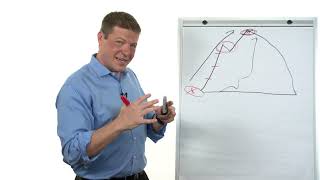
A.I. Counselor walks through the mountain exercise, a reflective tool that helps students and parents identify their goals and paths for college admissions. The exercise focuses on personal growth and standing out in applications.
Chapters
All right, welcome back. This is the third video in week number one of our college admissions masterclass. And if you're in our legacy class, you know that this is the one thing that I harp on all the time. We talk about this about every single week, and that's the mountain exercise. Okay? So if you've done this before, I recommend doing it again. I actually do this exercise about once a quarter. I used to do it more than that, but about once a quarter. It's a good one to do. A lot of people get a lot out of it. Students and parents. So students and parents, you may want to do this process together or maybe in separate rooms, but ultimately come back, watch this video again and again and again and try to marinate on the questions and what they mean for you. Okay? So just to recap the first video, we talked about the five success secrets of high achieving students. Remember what they are. Plan, urgency, consistency, energy or enthusiasm and expectancy. And you approach those five habits with a growth mindset and a grit mindset. Okay? So there's your underlying foundation of how I want you to approach this course and, and approach your college admissions process. Okay, now we're going to do the exercise that brings all of that home for you. Okay? This is called the mountain exercise. And then at the end of this video, we're going to talk about the opening statement. And if you've read the book, you know what both of these are. But I'm going into a deep dive for you today because I think it's really, really important. So the story I tell about this is, is a story that really hits home for me. And I know it hits home for any father that's out there. A couple years ago, I was out front in my front yard with my then 6 year old son and he was wanting to play soccer. He'd gotten really big into soccer and he wanted to play to practice with me. And I said, hold on, Finnegan, I have a very important call. If you get the ball, I'll take the call and we'll do the ball. You know, I'll kick the ball together. I thought I was father of the year, right? I can multitask, Phone in one hand, kick the ball. And the beautiful thing about soccer, unlike baseball or football, you don't actually really have to look at where you're going. You just generally kick the ball and it rolls over to where you want to go and the person can kick it back to you. It's kind of like horseshoes, but with a round ball, I guess so there I was, Father of the Year on a conference call with one of my clients. This time, I was a very active attorney. I'm on the call, and I'm kicking the ball back and forth with my son. And finally the call ends. I get down, put my phone down, and my son Finnegan comes up to me and says, dad, Dad, I got to tell you what happened at school. And at that time, a call comes in, and I said, finnegan, hold on. I got to take this call. It's on my schedule. I got to take it. And I put the phone back up, and I kick the ball towards him, and the ball doesn't come back. And I turn to him, and I can see his eyes are welling up. And he looks up at me, and he says, dad, how do I get on your schedule? Wow. Right? As a dad, that's a knife through the heart. And I hung up the phone, and I said, you know, I gotta go. And it struck home for me that I had worked my way up this mountain that I thought I should have been. I was at the summit of what I perceived to be my legal career, and I realized I was missing out on things that were really important to me, that I was climbing, for me, the wrong mountain. It was soon after that I made the decision to do what I'm doing now, right, to help out students and other people climb the right mountain. That's the story I always tell, and it hits home every time I tell it, and I hope that it maybe shines a light in some of your areas where you may not be currently on the right mountain. So let me draw the mountain. Excuse my drawing skills here, but when I think of a mountain, I always think of the Alps. We have. We have some mountains up wherever we live, but they're nothing like this. So this is a mountain. And one of the things I always ask people to do is, as I tell that story, is I always end with the question, what mountain do you want to climb? Right? For me, being at the top of what I perceive the top of the legal mountain, as a lawyer arguing cases before different courts and working on cases at the Supreme Court, I thought was important, ultimately wasn't right. So, first off, in order to understand what mountain do you want to climb, you first have to ask yourself, why do you want to climb that mountain? So if your idea is to get to the top of this mountain, why do you want to get there? So what's going to propel you forward? What is that driving force that ultimately is going to make you want to climb this mountain. Is it money? Is it significance? Is it an idea that you're going to be giving back to other people, a level of contribution? What is going to be that driving force that's going to make you want to weather this storm and weather this climb to get to the very top? And how are you going to do that? So ultimately, how are you going to find your way up? Right? There's different ways up the mountain. How are you going to find out your way to the top of that summit? There's different ways, right? So you have to ask yourself if this is the right mountain I want to climb, and I know why I want to climb it, and how are you going to get to the top? It's the what, why, how questions you have to start off with on this exercise. And then you must ask yourself, what is that summit? Because otherwise you're going to spend your life climbing, climbing, climbing, climbing, climbing, climbing, and no end in sight, and you lead to what's called burnout. So you have to identify what that summit is for you and what that summit is for the particular mountain you want to climb. And how are you going to know that you've ultimately reached that summit. So before you start climbing that mountain, you have to identify what the endpoint, goal, summit, is going to be for you. And as the saying goes, you start with the end in mind. So you identified where is that endpoint going to be for you, and what does it look like, and how are you going to know that you've reached it? The other question you must ask is where are you today? So where is this starting point for you? If you want to end up here, you have to ask yourself where you are now, because the only way you're going to get to here is by knowing where you are today, right? So by asking yourself and being honest where you are today, where you want to go, is ultimately going to help you understand the right path forward, right? These are the questions that you must ask yourself on the front end. The other thing you must ask is what obstacles are going to be in the way. So as you stand here today, looking up at the summit, there is not a ski lift, usually there is not an escalator. Usually there's always something that's going to impede your way. And the best thing you could do now is try to identify where those things are, okay? So, to use my earlier example, although the wrong mountain for me, I. I wanted to reach the summit of what I perceived to be my mountain, which was a legal Career. And I knew that I had to pass the bar exam. That was my obstacle. That wasn't a fun one, but I knew that to be my obstacle. And I knew that on the front end. The other thing that you need to identify are what are the different milestones, the mile markers up this mountain, that you can identify on the front end? Because if your sole focus is on the summit and on the obstacles, there's nothing in there that's going to keep you going on a daily basis, that these little winds up the space of the mountain are going to keep you going, and these little winds along the way are going to keep your energy, enthusiasm going whenever you reach through the rough times and the hard times, that these are the things that ultimately are going to push you forward many times more than the summit itself. So identifying where those milestones are, those mile markers are on the front end is going to give you something to shoot for that's more manageable and it's closer to your current vision. If things are too far out or too outside of your reach, your mind's going to think that this is achievable for you. So by setting these mile markers now, you say, I can sprint to this mile marker. My sole focus is getting to this mile marker. And then once you get here, what's my next one? Boom. Recognizing that ultimately it's leading you here. But your sole focus in the short term is in reaching these milestones. But you need to identify what those milestones are on the front end. And in order to get to these milestones, we talked about it in the previous videos. It's a matter of doing something consistently. So the question that you must ask are, what are the daily steps that I can take that ultimately are going to lead me up here? So now that you have identified where your milestones are, your mile markers are, what are the incremental little steps you can take on a daily basis that when done consistently with urgency and with energy, ultimately will lead you to that next milestone and will ultimately lead you to the summit, where you want to go again, as much as possible, you want to try to identify those on the front end, recognizing that when you get to the next mile marker, the milestone, you. You can readjust and change what those daily steps are to get you to the next mile marker. But it's very important on the front end to identify what you can do on a daily basis that's gonna lead you to the next level of success for you, the next mile marker. And then you wanna do what's the Most important thing, and we talked about it in the very first video, and it's something that a lot of people don't do. They think they know how to work their way up the mountain, right? They've read stories about other people doing it, so they recognize that it's possible. But what they don't do is they don't reach out for help, that they don't reach out for people who've already been here, who've been to the top. Right? That someone who's been here knows where the obstacles are, they know what the daily steps are, and they know what the milestones are that the person should keep in mind. But for a lot of people, oftentimes men, we approach life thinking that we know how to get there. We don't need help to get there. Don't do that. It saves you a tremendous amount of time if you do it the right way. And that's allowing somebody to guide you through the steps that allows you to avoid the obstacles when possible. That helps define the steps for you and the milestones and perhaps most importantly, hold you accountable to doing those things. It's that level of accountability, that accountability partner of someone who's been there that makes you successful and do it in a right way. And the right accountability partner, the right person is going to ask these questions on the front end. Well, why do you want to reach here? And what you'll find is that sometimes you're not going to find someone who's been here, right? That you may not find someone who's been to the top, but. But you'll find someone who's done it in another area and they can try to help you out as much as possible up the way. But if at all possible, if you can find that person who's been through this road, has avoided the obstacles and has reached the summit and is willing to mentor you and show you the way sometimes differently than other people have done, that person is the person you want to reach out to. And then the last thing, and that's what I'm doing now, is trying to help others. So how can you help other people up the mountain that you might be starting here? There's other people starting here that by reaching down and helping them up, living a life of contribution, you can help other people up the mountain. If you have my book handy, open up to the first pages and you'll see a quote that's very on point about that. The success is not defined by how high you climb, but by how many people you bring with you. That a life of contribution and service is always going to bring you a life of meaning, and it's going to make you happier. Just trust me on that. If you haven't realized that in life, it's going to hit you. It's going to hit you like a ton of bricks. It did for me, and I think it has for a lot of people at different points in their life. So, again, finding that mentor and then turning around and doing it for somebody else, help somebody else up that mountain and make sure that it's the right mountain for them. Okay, this is the mountain exercise. Do it before you do anything else, before you think about the sat, the act, your essay, the teacher recommendations, all the stuff we cover in legacy class does not matter. It does not matter until you do this exercise, until you ask yourself, what mountain do I want to climb? Why do I want to climb it? How am I going to get there? What is the summit for me? How do I define it? What are the obstacles along the way? What are the daily steps I need to take in order to get to the summit? Who can help me up the mountain? And who can I help up the mountain? Until you work through those questions that we go through all the time, you're going to find yourself frustrated. And at the end of the day, you're going to hit a point in this college admissions process where you're going to lose your way, and you're going to find yourself buffeted by the winds of other people's opinions, and you're going to find yourself in a college where you're miserable for four years on a career path that you're going to hate. So do this exercise. The three to four hours of true deep thinking and marinating about these questions could save you years. Okay. Can't ever stress this enough. I know my legacy class students are like, all right, enough mountain exercise. Do it. It's the most important thing for you. Which leads into. And this flows in nicely from the mountain exercise, actually. After you've done this process of identifying who you are in essence, and who you want to be and how you're going to get there, you then have a better idea of how you want to present to the world and in the microcosm of this course, how you want to present to a college, how you want some stranger at a college behind a wooden wall who's looking at a million applications, how you want to be perceived by that person, and how you want to stand out. And as we get through this course, you're going to hear me say that phrase a lot. How do you want to stand out? How do you want to be perceived? And I'm going to push you and I'm going to try to make sure that you don't follow the same path that too many other people have. It's very easy to get stuck climbing the wrong mountain, going to the wrong university, doing the wrong things. Because what we're told by counselors, by teachers and our friends is that we should do it this way, that so and so did it this way, so you must do it this way. And what we know is that's a recipe for disaster. So what we try to do throughout every single video is ask you the question, how are you going to stand out? And the numbers for the selective colleges in America are not friendly, right? And this is the reason why we do this course. If you have dreams of going to a selective college or even the best college for you, you got to find a way to stand out. And for what we call the silver spoons, the children of alumni, the children of donors, people who inherit their admissions pass because their parents attended that college, this exercise may not be important for them, right? Their standards of getting in are quite a bit lower. The acceptance rates for some of these students at elite colleges are 40 to 50%. For other students, like I was right, rural Kentucky is now under 1%. If you don't have some kind of admission hook, if you're not a child of an alum, if you're not a child of a big donor, if you're not an international student, if you're in a different, if you're not one of these part of these different categories, your chances of getting in now are under 1%. And that's a statistic that was given to me by a very high ranking person at an Ivy League institution. That that's the reality that we're facing and that everyone else is now fighting over that 1%. That applicant pool is left with that 1% to fight over. And what we're seeing is those who can afford it are paying private admission consultants to craft their message and to package that student in a way that supposedly is going to make them more likely to be accepted. I'm here fighting that back for you guys. I'm here to try to make you guys stand out and show you how you can persuade admissions committees to let you in. And the way to do that is by what we're talking about today, you don't follow the path of other people, right? You don't do what other people are Doing. You do your thing and you live your life, and you do it with passion and you persuade through your life story. And we're going to talk about how to do that through your college application process, throughout the application process. But the first way to do that is by after doing your mountain exercise, coming up with what I call your opening statement. And if you've read my book, Breaking Into College, you know that the opening statement is kind of the cornerstone of the entire program, that the opening statement comes from my old world and somewhat current world as a lawyer. In the courtroom, when you approach a jury or a judge, you start the trial off with what's called the opening statement. Start off, it sounds something like this. Ladies and gentlemen of the jury, in this case, I'm going to prove that X, Y, and Z. The X, Y, and Z is the evidence that you have that backs up the story that you're trying to tell. Same thing applies in the college admissions process. The cornerstone of how I encourage students to approach this is very similar to how I approach it in my legal world. And I do that because it works. It's about persuading. It's through persuading, through stories. So the first thing that we try to do is identify the opening statement for you in other areas. It's called your elevator pitch. In the business world, the succinct summary of who you are through the lens of standing out. How do you summarize who you are in a way that differentiates you from other people? After doing this exercise, hopefully you have a better understanding of who you are, who you want to be, and how you want to portray it to the world. And what we do is we take that exercise and boil it down into what's called the opening statement. So the first thing we start with is, what is something unique about you? This can be a number of different things. Is there something about your story that's unusual? Is there something unusual about the success you've had in high school? Olympic gold medalist, someone who's overcome a childhood of abuse? Something that's different. How are you different from other people? So think about yourself. What is something unique about you? And I know your point that you're thinking about right now, but, Jeb, there's nothing unique about me. I worked with a student recently in which she said I was burdened with a boring life. And the more I teased out that and I asked her questions, she had anything but a boring life. Even in the mundane, what we perceive to be mundane, there's beauty in that. So trying to Figure out exactly what makes you different. What makes you unique is an exercise you should go through. And sometimes you should involve family, friends, teachers. Ask them, so, what do you think is unique about me? What do you think is unique about my story or my experience or how I present to the world? What do you think about me that differentiates me from everybody else? We are all different. Trying to identify what that difference is is the first thing that you need to do. The second thing you want to do is academics. What about your academics? That's unique. Are you really, really good at chemistry? Are you really, really good at English? Do you. Are you excelling at some level, even under a microscope? Try to identify something in your academics where you excel. I worked with one student recently. She had a 2.3 GPA. 2.3 GPA. But when you looked at her transcript, you saw a trend in the things like arts, videography, digital media. These are classes where she loved. She actually went to these classes. Her GPA was well over 3.0. And when you look at that in isolation, you start saying, why? Why are your grades so much better here? She goes, oh, well, that's what I like doing. So now she's going to college to study videography. She wants to be the next Travis Shields. She has this love and passion of creating, not studying mathematics, but putting her artwork out there to the world. And she was able to secure a spot at a great art school because her focus in her academics wasn't her overall gpa. Her was her particular area within arts. So finding something within your GPA or your overall transcript that you could focus attention on. Yes, my overall GPA may not be high, but did you see my GPA here? So, for example, I told you my story from College. Remember my GPA, 1.7 after my freshman year. So what do you think my story was to law schools? My story was, yes, I had a 1.7 GPA freshman year. But if you ignore my freshman year because that was a time of growth and transition and just focus on my sophomore, junior and senior year, look at the upward trend. This is where I found myself and this is where I found my passion. Look at my GPA here. And that GPA was high enough to get me acceptance letters from the top law schools in the country. So focusing the attention of the admissions committees where you want them, that puts you in the best light. I call this the spotlight and spin. Spotlight what you want them to talk about or you feel like you have a strength, and then spin it in a way that makes you A positive student for that school. Yes, I may. I might be horrible in biology, but at this art school, they don't care. They care that you are good at arts, you show a passion for arts, and your grades reflect that. So where do you want to go? What mountain do you want to climb? Do you want to go to art school? And you have a low gpa, but you're really good in your GPA on your arts classes, you'll find a way in. It's just a matter of spotlighting and then spinning and telling that story appropriately. So the next point, you want to talk about your opening statement outside the classroom, your extracurricular activities. These are your school activities or work experiences. These are your leadership opportunities, your volunteer work, anything you do outside the class, Anything. So for some students who are working after school because they have to to support their single mother who's raising eight kids, the fact that you are doing something outside of work that other kids aren't, you're working 20 to 30 hours a week at 17 to help supply money that helps keep your family afloat, is a story of persistence that sets you apart from other people. Don't discount your stories just because you're not class president. It's anything you do outside the classroom should be something you think about. Whether you want to put it in your application or not is something you need to think about. What is everything you do besides sleep in the waking hours between going to class and then going to bed? What happens then, including the weekends, that you can try to spotlight and think about whether or not that something reflects the mountain that you ultimately want to climb? The other thing you want to talk about, at least in this exercise, is what do others say about you? If you ask your friends, and some colleges do in the form of peer recommendation letters, if you had to ask your friends, what do others thank goodness for spell check say about you? What would they say if you said if you went to your friends? Give me your list of your top five friends, your top five enemies. And I had a chance to ask each of them, what makes this person different? What would they say? And the interesting thing you'll find is even your five enemies will come up with things that are oftentimes consistent with what your five friends will say. They may word it in different ways, but ultimately the story is going to be the same because how you present to the world is picked up by others. So trying to figure out what others say about you, and this includes family, friends, teachers, counselors, gives you some idea about how you're presenting to the world and whether or not that's consistent with how you want to present to the world? So what do others say about you? And then the last thing we want to ask about is what are your future plans? Okay, what is that summit? What is that summit for you? Recognizing that right now you're at a point where you may not know your future plans. For a lot of you, you're juniors or seniors in college, and the thought of future plans is what you're going to be doing this weekend. So the thought about career plans is sometimes foreign for you. I understand that. But as you stand or sit today, what are your thoughts about your future? You have some thoughts about it. Remember my art student, what are your thoughts right now as it comes to mind about where you see yourself and try to think about that? So what you end up with is a five sentence opening statement. And this is an opening statement that is not shared with anybody. But, Jeb, you maybe go through this exercise and I don't share it with anybody. Yes, this exercise is for you. It's an extension of the mountain exercise. And this becomes the filter by which you do everything else through your college admissions application process. This is how you want to view yourself, present yourself to the world. And every time you think of who's going to be the person who's going to write my teach recommendation, is that someone who's going to corroborate what I'm trying to get across in my opening statement? If so, that's a person? Does your essay ring true to what you're trying to make, the point you're trying to raise in your opening statement? This in many ways becomes the filter in court. When we pull our opening statement out and we read it to the jury, everything that happens after that better be consistent with that opening statement or we lose credibility in front of the jury. So that opening statement checks us as lawyers and it checks you as students to make sure that you're putting forward a coherent, cohesive application to the colleges. So again, five sentences. Number one, something unique about me is X in the academics, in the classroom, I excel in arts, as evidenced by outside the classroom. I am unique in that X. Others would say Y about me. In the future, I hope to do Z consistent, coherent statement about what mountain you want to climb and how you want to perceive yourself and present yourself to the world is what this exercise is all about. This becomes the filter as you go forward. Okay, that's it for week one. Next week we're going to talk about what you know about college and why it's all all wrong. So next week, make sure you climb back in to the saddle again next week as we dive into some of the nitty gritty and put this opening statement to work, to put forward a coherent, cohesive, persuasive college application that gets you into the college where you want to go.










