COLLEGE ADMISSIONS MASTERCLASS Week 5 Video 3- "Difference Maker" Exercise
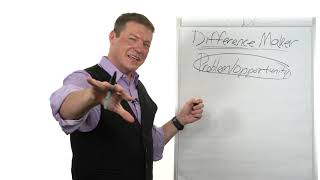
A.I. Counselor presents the "Difference Maker" exercise to help students shift from seeking personal significance to contributing to their communities—an approach framed as attractive to college admissions. The video uses a case study (Paul) who combined passions for working with kids and computers to create an after-school program, Tech Kids, and outlines practical steps: identify a problem/opportunity, make a plan (resources, space), act with urgency and consistency, bring energy/expectancy, and communicate the impact to colleges. The speaker emphasizes aligning activities with one’s opening statement and choosing schools that value the same mission.
Chapters
Welcome back. This is the last video of the week. It is the Difference Maker exercise. Okay? We ended off last time talking about trying to encourage people to make this shift from doing things for significance to doing things for contribution. For many reasons, but also because by doing this, by contributing to others, the campuses, the schools are more likely to accept you because they want contributors, not those who are just there for significance. And the way that we do that is by the Difference Maker exercise. And I want you to remember Paul's story, okay? Remember, Paul was involved in a bunch of different activities over here. He was feeling very burned out and stressed out to the point where he was thinking that, you know, he was spiraling out of control and he felt like his grades were suffering because of it. And what I encouraged him to do was to try to reduce some of those activities. And what we did was I talked to him about where were his passions. And I said, well, you know, you're involved in a bunch of different activities, but you know, what ones excite you? Which ones are the activities that you really get excited about? And he's like, oh, that's easy. What are they? He goes, I love working with kids after school. He's like, I help out this after school program. And he's like, when I'm there, he's like, it's like, I'm a kid again. Like, I get to hang out with kids and play with kids. Like, I just play. It's like I can forget all my struggles, everything that's going on at the high school, and I get to be a kid again. He's like, that's awesome. He's like, I love doing that. I'm like, okay, now that's good. So, you know, what else are you involved in? He's like, well, what I like to do also is he's like, I like to work on computers. It's kind of the opposite. Allows me kind of get away and focus on computers. He's like, I'm always kind of like tinkering around with different programs. That's kind of like my two things. He's like, you, I love kids and I love computers. He's like, all the other stuff, he's like, ugh. He's like, it's just stuff I have to do. I said, well, what if you didn't have to do those things? No, no, Joe, I have to do those, you see, because I have to do this activity because it shows that I'm good and that I'm athletic. I have to do this activity because it shows That I love foreign languages and I have to do this activity because I have to show up for my parents at this particular time on this other activity. And I'm like, what if you didn't have to do those? Setting aside what you think you have to do, what if you didn't have to do those other things? He said, I don't know. I don't know what I'd have to do. I mean, I'd be left with hanging out with the kids, playing with them and working on my computer. I don't know. I said, you know what, it's late, it was a Sunday. How about you think about that and then tomorrow why don't we huddle back up and we'll talk about it some more. The next morning I was hit with rapid fire text messages. Just one after another from Paul. I figured it out. I can work on this after school program where I teach kids how to work on computers. It'll be called Tech Kids. And then the next message was, I can't wait to get started. Just bam, bam, bam, bam, bam. The energy flowing from the t text messages was something I hadn't seen from him in years. This was like, wow. This light bulb moment went on that if I don't have to do all these other things, then I can focus on these things. And that, you know, that we had lived in this community where technology really wasn't part of the everyday language and it certainly wasn't part of the everyday language for the children in our community. So he saw it as a problem that he could help address and it allowed him to be a kid again, to hang out with kids, to teach kids, to have fun with kids and ultimately to bring life back into his life. So what did he do? Right? So now he's found how he can contribute. So how is he going to do it? So ultimately what he did was he found somebody to offer up space rent free where they can have an after school program where he could teach kids. And he got businesses within the community to donate computers. And this program is now up and running in the San Francisco area. And what it does is it helps kids learn how to use computers and they do it in after school activity and it's fun for them. And Paul, heading into his senior year has a consistent storyline of how he's contributed, given back to others and how he loves computers and teaching. And he has this dream of becoming a college professor teaching computers. Opening statement consistent through a storyline. And he lived his life through high school not at a level of depression, but As a level of contribution and giving back to others, impact for others. He became what's called a difference maker. So the questions on the difference maker exercise, and that's what I'll talk to you now about, is thinking about Paul and I tell you these stories to try to help you identify how other people have done it. Right? They think about a problem first. So the first thing on the difference maker exercise is you first need to identify the problem. Right? Difference maker. How can you be a difference maker? Doesn't have to be something big, can be something quite small. It's identifying where is there a problem? Okay, is there some issue within your community? Is there some problem at your school? Is there some opportunity that's available that you can improve upon? People always say, you know, it's hard to think of new opportunities or new things to improve upon. You know, how am I supposed to think of something new? And I always think of this story. I don't know if it's true that Steven Spielberg, when he decided to come out with Jaws, went to film producers and said, I have this idea. It's Moby Dick, the story of Moby Dick, but with a shark. Right? So taking an idea and evolving it into a new area is oftentimes how you can take an opportunity and bring it to life. Thinking about how something works in some other area and bringing it to your school, seeing how something works at your parents work and bringing it to your school to try to make your school better, more efficient, more receptive to, to people is a great way to do it. You don't have to come up with something brand new. It can just be a variation on something you see playing out in other areas of your life or in your family. So thinking about some problem or some opportunity, however big or small, and then trying to take your place and saying, all right, what can I do about it? Okay, remember, success secret number one. What is my plan for addressing that problem or issue? Do I need resources? Member Paul Do I need a space where I can house computers, where people can meet for after school activities? If so, who do I go to? So it's a matter of first coming out. Here's the problem. What is my plan for addressing that problem? It could be small. It could be small. It could be, here's a problem. Here's a student that's not feeling part of the university or part of our campus. My plan is to start a community or a club where people get to interact. Think of Jess Story. There's some problem. You're addressing it through A plan. And through your plan, you're identifying what opportunities and resources do you have available to make that come to reality so you can solve the problem. And then once you have the plan, it's the next two steps of the success secrets. Do you remember what they are? You then approach your plan with urgency, especially for my seniors don't have a lot of time. You got to get your plan in action now and doing it with consistency, okay? So if you got a plan to solve a problem, you then need to approach it with urgency and consistency. And what that means is scheduling it. Okay? Paul wasn't able to focus his attention on computers and children and certainly wasn't possible for him to start tech kids until he was able to make it consistent, a consistent part of his life. And that meant getting rid of things on his schedule that allowed him to make it consistent part of his life. Okay? So once he had a plan, he then was able to approach it with urgency and consistency and ultimately fulfill his plan and solve a problem. The other thing you must do, of course, are the last two things in the energy or enthusiasm, and also with a level of expectancy that it will play out for you. Okay? See how everything kind of fits together. So if you're left with, again, a problem that you identify, put together a plan, approach it with urgency. Do it consistently by getting rid of the things that don't matter to you that are not consistent with your storyline, as evidenced by your statement, opening statement, and then putting energy and enthusiasm behind it and recognizing that if you do this, you ultimately will reach a result that you expect. And this result is something that you tell the world about, right? And this is the part the children, very small children, have a hard time with because we tell them not to brag. But when high schoolers get to this point, they don't want to talk about it for a different reason, that they feel like it's not cool to talk about your success. But I'm telling you, at this point in your senior year, you have to become an advocate for yourself, that colleges need to know who you are and you need to demonstrate it. And don't worry about being perceived as a braggart or that not being cool. At this point, it's all about showing up for yourself and showing how you've shown up for others. And you do that through your application and wherever you are in the timeline of your high school career, you can do this step. And it could be something small or it can be something big, but you have to do something to show that you're somebody that makes a difference and that you contribute to the community in which you live in. Does that make sense? So go through these steps. It all starts, of course, with the opening statement, identifying who you are and then identifying a problem that's consistent with that, with the end of the day, recognizing that it's something that you want to tell the world about and be proud about, and that's going to find its way onto your application in the form of extracurricular activities that are consistent with your statement or their opening statement. The last thing you want to do, and we talked about this before, is identifying the schools that are going to care about this, that if you're doing activities that are meaningful to you and schools aren't going to care about them, it's not the right school for you. And then at the end of the day, if this calculus doesn't work out for you and the school doesn't care about it, then that school should not be on your list. Okay? You want to find a school that's consistent and recognizes the mission that you're on and your mission jives with their mission. And it'll lead to it a successful four years, and it'll be meaningful for you. It'll set you on a good path. Okay. All these things flow together. And on the next. Next week, we're going to talk about how to bring all this together to submit your application to a school where it's going to be received and ultimately where you're going to see success. That's going to happen next week. In next week's video.










