
“Bank-Funded Dreams: Credit, Mindset & the Wealth Game with Dub Washington”
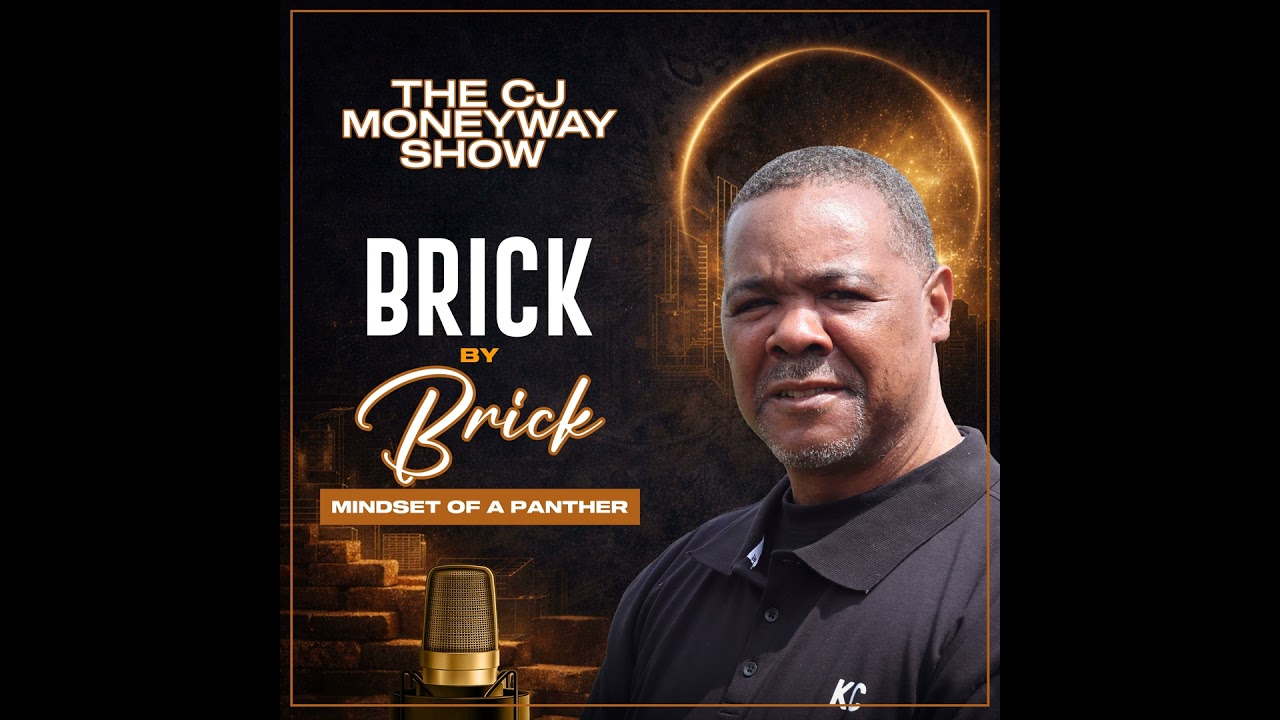
In this CJ Moneyway Show episode, host CJ Moneyway interviews credit and funding strategist Kenneth "Dub" Washington. The conversation covers Dub’s personal origin story, the common misconceptions about credit, and how to shift the mindset from using credit only for emergencies to leveraging it as a wealth‑building tool. Dub explains the structure of a fundable credit profile, including the importance of multiple credit accounts, “comparables” from tier‑1 banks, and the use of 0% APR periods, pledge/secured loans, and bank‑to‑bank relationship building to multiply borrowing power. He outlines a realistic 6‑12‑month timeline to become funding‑ready, discusses strategies for accessing capital from both traditional banks and alternative lenders, and emphasizes the need for a repayment plan. The interview also delves into the spiritual and motivational aspects of financial freedom, the value of teaching others (coaching, mentorship, community building), and the role of faith and purpose in wealth creation. Throughout, the episode includes several ad reads (MyFICO, Carvana, Omaha Steaks, OrderlyMeds) and promotional plugs for CJ Moneyway Media and Dub’s coaching programs.
Chapters
Ready to buy a car, a home, or just want to take control of your money? Your FICO score matters, and 90% of top lenders use it to make decisions. Check your FICO score for free today without hurting your credit score. Visit myfico.com/free or download the MyFICO app today. MyFICO gives you the score lenders use most, plus credit reports and real-time alerts to help keep you on top of your credit. Visit myfico.com/free and take the mystery out of your FICO score.
Hey sweetie, your mother showed me this Carvana thing for selling the car.
I'm gonna give it a try.
Wish me luck.
Me again. I put in the license plate. It gave me an offer. Unbelievable. Okay, I accepted the offer. They're picking it up Tuesday from the driveway. I haven't even left my chair.
It's done.
The car is gone. I'm holding a check. Anyway, Carvana, give it a whirl.
Love ya. So good, you'll want to leave a voicemail about it. Sell your car today on Carvana. Pickup fees may apply.
Welcome back to the CJ Moneyway Show.
We don't just talk success, we break it down brick by brick.
My guest today is Dub Washington, a credit and funding strategist teaching folks how to build wealth without spending their own money. Let's get into the real playbook.
Playbook, playbook, playbook, playbook.
What's up, my good people? Welcome to the CJ Moneyway Show with your boy CJ Moneyway. Today, man, I got a special guest on here. I got my man Kenneth Dub Washington, the credit guru, on here, man, to drop some game, some knowledge on us, man. What's up, Dub? Welcome to the show, dawg.
Man, I appreciate you for having me on the amazing platform, man. I'm just ready to come in and make sure the people eat, you know what I'm saying? That's my slogan, is everybody eat. So I'm ready to feed the people today.
Oh man, let's go ahead, man. Let's show them how to build it brick by brick, man, because boy trying to learn some of this game too. So let me ask you, Dub, man, let's jump right into strategy. Before we jump into strategy, give us the origin story, man. What made you become the person teaching people how to fund themselves?
Man, it's just truly wanting more for myself. And you know, whenever we come from small towns, we typically adopt the mindset of the environment. So one of the things that made me want to change was like, just most of the people that I was around, like, you know, just working in the warehouse. You see what I'm saying? On the weekends, we gonna sit back, we gonna chill, we gonna sit up under the shade tree in South Carolina. And then, you know, that was, I would say, success to work 5 days to have 2 days off. And then I just was exposed to more. I often got this phrase right here that I say to a lot of people is, you know, exposure awakens an appetite for something that you didn't know exists. Because we're often not exposed to things, we don't even think that it's realistic to obtain, so on and so forth. So I was just, you know, small town in South Carolina, just, you know, normal everyday life. And then I just started seeing things. And I thought that, listen, if that person can do it, I know that I'm capable of doing it. And then, you know, kind of the breaking point, or the straw that broke the camel's back, you know, like the old folks say, was me having to leave my wife when she got pregnant with my second son, and me being away for 9, 10 hours a day. And barely making ends meet. I knew that it had to be more to life than just doing that. So that's kind of like what woke me up to it. And then I got exposed to financial literacy, leveraging the credit, and truly having time freedom. And that was the turning point for me, just like, listen, I got to go all in on this, leveraging that credit.
Oh man, so I got to hear about it, man. But I know what you're talking about. Small town. I'm from Gary, Indiana, the home of the late great Michael Jackson. So like you say, going to work every, you know, say every day just to get 2 days off. Kicking it in the hood, then turn around doing the same thing, and then robbing Peter to pay Paul, you know what I'm saying? Back in the day they had these payday loans, you know, come on, whatever, that was killing you with 600% interest rates, you know, but you needed $400, so you going in there, I gotta get it, I gotta pay $1,200 back, well, you, I need that $400 right now, man. So hey man, so give us this game, man, so we don't have to get in that situation, uh, Dub. So let me ask you this, bro, What's the biggest misconception people have about credit and how does that keep them broke?
So it's the mindset around it, and it is only using credit for emergency purposes, right? Versus using it as a leverage tool. Like, you got to look at your money, also known as credit, in ways that could get you better financially. And one of the things that most people think is like whenever they go and get access to this money that they don't have to pay it back. I can't tell you how many people that I've helped.
And then they—
we get them access to $50,000, $75,000, upwards of, you know, multiple six figures. And what happened is, they never develop a strategy to pay it back. It's good whenever you want to get it. And even if you have an idea that you want to do whenever you obtain the capital, but more importantly is what's the strategy on paying it back? Because nobody ever talks about that. They say, hey, I want to jump into real estate. Well, you're telling me what you want to do with the money. But in the instance that it doesn't go your way, or, you know, you have a negative ROI, then how are you going to replace what you just borrowed? And that's what a lot of people get into is like, okay, it's easy to get it. But they don't realize that it's harder to pay it back. So that would probably be the one of the reasons why, you know, I think people in our community don't truly leverage it because they don't fully understand it.
On top of that, man, let me ask you this, man. Give us some game on this. So what is the mindset that you gotta have? Like you saying, to pay it back, you know what I'm saying? Do you gotta build out a strategy plan before you get into this? So say like, if I'm coming to you for some advice, I better come with my plan, you know what I'm saying? Like, okay, this is how I'm gonna pay it back. This is how I'm gonna do that. And give us a little knowledge on that.
That's a great insight right there. What I tell people is this: I can help you go and get access to the capital, and I will never tell you to invest in this particular industry, whether it's real estate, the stock market, no matter what it is, my strategy is telling you, once we get access to this capital, I want you to go and start building relationships with other banks. So essentially what this looks like is I borrow $20,000 from Wells Fargo. I then— whether I get it on a personal loan, I get on a business credit card, no matter what— immediately before I jump into real estate or trading stocks or investing into mentorship, I'm going to develop a strategy to say, hey, I want to take this $10,000, $20,000, $30,000, and I want to go and build another relationship with another bank with their money. So now, based on what I put in that institution, they are now willing to lend to me. So I would tell you to kind of reverse engineer and kind of look at it from that scope versus saying, okay, I got $20,000, I have to put it into this vehicle to get me where I want to go. Not necessarily understanding, like, you know, regardless, the 0% APR phase is going to run out, and/or you got to pay the money back at some point in time. The best way to mitigate that risk is for you to say, okay, I took the money you gave me, and then I'm going to be with Bank of America, so they're willing to give me money. So in the instance that I can't pay you back, I now have a safety net to pay you back the original, and then I can kind of kick the can further down the road until I get that timing to where I start recouping my investment.
So let me ask you this, man, because, you know, I've talked to a couple people that's doing what you do, but, you know, you dub, you know what I'm saying? So let me ask you this, because my one guy, he was telling me, like, it's different banks for different things. Like, you got a bank where you can go maybe get your cars leased, or you got a bank where maybe, you know, say, like, Bank of America, like you were saying, may be better for this avenue, and this bank for this avenue. You say every bank that don't work the same, you know what I'm saying? But you can stack it up because they provide different opportunities. So what's your take on that?
That is 1 million percent true. And it's even going deeper than that is even because the bank offers a particular form of funding, that don't necessarily mean that you should try to go and obtain that funding from that institution. And this is a great example. Navy Federal has a business credit card, but it doesn't offer you 0%. APR. So for the viewers, if you don't know what a 0% APR is, it's a time frame of where you can have purchases and/or balance transfers and you don't pay any interest on that purchase. So if you go out and get a $20,000 limit, if you max the credit card out, you don't have to pay any interest for 6 months, 12 months, 18 months. Now whenever we get to business credit, it's not reporting to our personal side, so we want to leverage those 0% APR phases whenever we can. And like I say, Navy Federal has a business credit card, but it doesn't offer 0% APR. They're more of a personal lending type of institution. Now Bank of America, you know, they offer personal and business. So depending on which way you want to go, you can leverage Bank of America for multiple, but it's all depending on your strategy. And most people truly never have a strategy. Whenever we are, let's just say $10,000. You know, you got to have a strategy with all of your money. Those are literally foot soldiers that you're putting to work to generate you more freedom, whether it's financial freedom or time freedom. So I would just tell people, just understand that more than anything else is the strategy and where you're going and what you're asking for can dictate your overall journey and where you're going.
Mm. Thanks, bro. Thanks for clearing that up a little bit. Navy Federal, see, because I didn't even know Navy Federal. Their business accounts and stuff like that. So let me ask you this, man. You emphasize structure over shortcuts.
Mm-hmm.
What must be in place before someone can even qualify for real funding?
So there's two different types of funding. That's a great question, CJ. It's two different types of funding. There's the traditional route where we go to Bank of America, we go to Wells Fargo, Chase, American Express, and then you have the alternative route depending on what you want to do and where your profile is at, that's going to determine the strategy that you take. So typically, people come in with, let's just say, mid-tier credit scores, you know, 650 and below. What typically happens, they're in a rush to get access to the capital. So you spoke about payday loans. And then in the business world, these are called merchant cash advances. You can go and access $200,000, $300,000 with as low as a 620 credit score, but the interest is going to be crazy on it. What I teach is the traditional route to where you don't have to go alternative. So I'm saying, so that's the alternative route. Whenever we go the traditional route, it takes a lot longer. But once you get it structured that one time, meaning having a decently properly structured profile, you know, I would tell you to go that route because you get access to 0% funding. The name of the game is being able to leverage extended 0% APR phases to put you in position. Imagine what you could do with your brand, or for any of your viewers that has a personal brand and/or business. If I gave you access to a quarter million dollars at 0% interest for an entire year, you're not hustling to jump into plays. And just like I spoke on previously, is like being able to access that capital at no interest, you can now go and build other banking relationships. So outside of strategy, your personal profile must be structured correctly. That's to say, you know, a 680+ credit score, you need at least 3 or 4 different credit card accounts with a $5,000 to $10,000 limit on it. Because no bank wants to be that first bank to issue you a high-limit credit card if you haven't proven yourself already. So I would say just structuring your profile, great comparables. Whenever I say comparables, this is not RentReporters, Rental Karma that a lot of people push. Because whenever the underwriters are looking at the type of accounts on your profile, typically what happens is they're judging you off of that. Just like we were talking ahead of time, like about sports. I tell people to look at their profile as your strength of schedule. If you have Credit Karma, I mean, Rental Karma, you have Kovo, Best Egg, these type of accounts on your profile, that's the equivalent of you playing, you know, Division II teams and having an undefeated record. So the strength of schedule often equates to your profile. So adding great comparables on your profile is very important.
So when you say that, great comparable, so what are some of the cards that you said that some people that we need to have on our profile?
I would say any tier 1 and tier 2 banks. So these are nationally recognized banks and/or credit unions. So the Navy Federals, the American Express, Wells Fargo, Discover, Capital One, All of these are fairly decent comparables, right? And then there's different tiers based on the accounts that you put. But then as you move lower, the lower the comparable, the higher the interest rate. That's how most people should look at it. Because you can go with a low credit score and go get an upgrade credit card for $25,000, $30,000. But they're not going to be treated the same as if you go out and get a Bank of America credit card for that same $20,000 or $30,000.
So like you say, it's like your resume, you know what I'm saying? Absolutely. You put it on your resume. You got Harvard, Well, Harvard, although they, you know, saying doing some stuff right now, but if you got something like that, you know what I'm saying, then we talking you in the major league opposed to, uh, Bethune-Cookman somewhere like I might have went or whatever.
See what I'm saying?
Yeah, I got you, I got you. So let me ask you this, Doug, what makes a credit profile fundable in the eyes of a bank, other bank?
Exactly, that's— and we segmenting right into it perfectly— is the overall structure of it. Like, what accounts do you have on there? You see what I'm saying? You want a mixture of accounts on your profile. You don't just want credit cards, you want a mixture. So you want credit cards, you want lines of credit, you want loans, secured loans. That's a play that a lot of people misinterpret and don't really run it the correct way. But let's just say right now, um, a lot of people either have gotten their taxes back or are about to get their taxes back. Before you go out and try to invest anywhere, let's go ahead and add at least 2 or 3 comparables on your profile to where we can take your tax money. And then if you got, let's just say $5,000, you could then take that $5,000 to banks like PenFed or credit unions like PenFed, credit unions like Navy Federal, DCU, right? And then what you can do is what they call a pledge loan, meaning there's a shared secured loan. You put $5,000 into the savings account, take out a loan against it, they release the money back to you, and then you pay it back down about 90%. So once you put it in your savings account, they withdraw it, put a hold on it, release it back, and then you have a secured loan for $5,000. Now what you do is pay off $4,900 of it, and then they once again, they release it back to your savings account. Now it shows on your profile that you have a $4,900 payment on a $5,000 loan, and the duration of this loan may be extended for 2 years. So in the banker's eyes, it looks like you have access to liquidity. And once again, we just maneuvering our way through the system to make our profiles look better.
Man, boy, you dropping some gems on us, man. I'm gonna have to go back through this and listen myself. Or, come on, you know what, I'm gonna do one better. I'm gonna sign up for the, for the Dub class, man. I gotta learn this, man. I need it. I need to know it, man. So let me ask you this, Dub, man. How long does it realistically take someone to get their profile funding ready?
So it depends on the individual. So if they're coming from credit repair, and they're trying to, you know, get things removed off of their credit report, then really nobody, and technically nobody should be giving you a timeframe on saying, hey, we can get you cleaned up in 6 months. Oftentimes, if they do that, they're not doing it ethically, right? So they, you know, it's methods out there. And I'm pretty sure you see it, you probably hear about it in the industry. Like, you know, I'm just gonna speak all the way transparent, there's certain methods that you use to get everything wiped off of your credit report. But it's consequences behind that. So, you know, people were going through and doing the, you know, the sex trafficking thing and saying they were a victim of that and getting everything removed. But what happens is you have, you know, it's consequential whenever you do things like that versus doing the traditional route and leveraging consumer law and factual disputing and getting things removed that way. It takes a lot longer, but you've done it the correct way. So how to properly get in position or the timeframe rather, it can vary anywhere from 6 to 12 months. That's what I tell people, because even once you come out of credit repair and get the negative items removed off of your credit, you still got to go through a phase of building with the institution. So your deposit relationship, they got to know, like, and trust you. You see what I'm saying? And once you date the bank, as we call it in our industry, it's like we got to date the bank. You got to go in, you know, let them see you making direct deposits, W-2s, so on and so forth. And then they trust you more because the banks want to see what they call staying power. The more you look like you're going to stay with them, the more money they're willing to give to you. So we just leverage this to our benefit. And we'll go in just like I said with the pledge loan, go in, make deposits into the institution, be with you for at least 90 days. And then we ask you for a business credit card or a personal credit card after we have already made you trust us a little bit. So it's going to vary depending on the viewer's situation, but it could be anywhere from 6 to 12 months before they fully ready to get true funding, and that's the 0% APR funding.
Let me ask you this, uh, real quick, you know, because you was talking about banks and people with credit like 650 or 620 or whatever. I fall in like the 670-something range myself because I got something on there that took— I was at like 700-something, I got something that took me all the way down. But you were saying about the comparables, so what are some of the banks, man, that's a little more easier to get a credit line or credit card from, you know what I'm saying, with not a high credit score?
Got you. So Discover is a great one. Capital One is always great for people. I don't necessarily recommend it, but you can get your foot in the door. And once again, I'm always speaking from my strategy. I tell people it's more than one way to skin a cat, fam. You see what I'm saying? So I'm just giving you the strategy that worked for me. There is multiple ways, and I'm not saying mine is fully right for you. Once again, credit is evergreen. It's so many different ways to, you know, get things removed, to build out. But to kind of answer your question directly, you got the Upgrade, you got Upstart, you got Best Egg, SoFi, LightStream. A lot of these institutions are giving access to people with as low as a 620 credit score and, you know, upwards of $50,000 to $75,000. And, you know, once again, if you got to get your foot in the door, leverage that to get into other institutions. So you get $50,000, maybe at 25%. Well, listen, we're gonna have to just digest that one and leverage it by going to other institutions that give you access to 0%. So this is only a short duration or your Kickstarter as you go through. But those are some of the ones that I know a lot of people go to, to get access, you know, anywhere from $10,000 to $20,000, just right off the rip.
I like that. He said get you— sometimes you do just gotta get your foot in the door, you know, sometimes all you need to do Get some skin in the game, man. Get some skin in the game. Let me ask you this, man. It might be a little repetitive. I might have asked you, we probably touched on it a little bit, but let me ask you this, man. What specific strategies do you use to pull capital at 0%? And are there certain banks or funding products people should target first?
Yeah, so me, how I strategize and I build my funding sequences, I like 0% for at least 12 months. So I call it auditing the bank. Only go to institutions that, you know, specialize in the type of funding that you want to go to. Here's another sports analogy, because I know a lot of your viewers on here like sports as well. If you have seen Shaq at the 3-point line, you're running to get the rebound. If you see Steph Curry at the 3-point line, you need 3 people closing out on him to try to block the shot. So it's just knowing which institution to go to and asking for which product. So I specialize mine into the 0% interest for 12 months. But you got to understand which ones are going to offer that. And then from seeing which ones offer that, you got to know certain ones are going to have risk mitigation, they're going to have documentation requirements. So we go to banks and/or credit unions that where we can leverage stated income. Stated income is a term to where we basically tell the bank what we are projected to make in the next year or so. So certain banks don't need no documentation. Hey, if you say that you're projected to make, you know, $500,000, $300,000, they'll lend to you off of that. But other institutions are, you know, more documentation heavy to where they may ask you for 6 months bank statements. But imagine this, if you have already went out and you built the relationship with the bank ahead of time with the capital that we got originally, So that's why my strategy come in is taking money from one institution, building a deposit relationship with another institution. So in the form of you about to ask me for documents, if my business hasn't generated it, I've took the money from Wells Fargo and put it into Bank of America. Now Bank of America is lending to me based off of the money that I got from Wells Fargo, all because they think that my business is making that. And then you just kicking the can further down the road and leveraging this strategy. Because it goes from 1 bank to 2 banks, 2 banks to 4 banks, 4 to 6. And you'll look up and you'd be like, bro, I started off with $10,000, 0% interest for, let's just say, 1 year. $10,000 at multiple different institutions can get you access to at least $60,000. You see what I'm saying? So you just leverage that and build it out along the way versus, oh, I got $10,000, I'm ready to invest. No, let's invest into the relationships with the other banks, so they want to lend us money. My thing is this right here. I say I make the banks compete to lend you money.
Man, I like that. Let me ask you this, man, because this is real interesting. Earlier you said that, you know, just in the hood in South Carolina, under the tree, whatever, y'all kicking it, but you 9 to 5 going to work and you had your kids or whatever. After the second child, you said, man, you know what, it got to be something better than this. So just let me ask you this, Dub. When you got to that point, man, where you start seeing this money flowing in and seeing how this concept works, see, you know what I'm saying, man, I could do this, man. How did that feel, man? You know what I'm saying? What was the motivating factor that just kept you going on with this?
It's really the time freedom. A lot of people have an interesting concept of money. When people say time is money, in a sense that's true, but we know that Both of them are made up, right? Nobody really know the value of money and the value of time. So both of them being made up. So how can you, let's just say, leverage each opportunity, whether it is the money, and like I say, we leverage it by building deposit relationships, or the time? What do I mean by the time part? Now, as the money started coming in, and I'm coaching people, I'm like, how can I buy more time? And a lot of people say, bro, it's only 24 hours in a day. And ever since I heard this concept, it has never left my brain. And you gonna look at time completely different. Some people say, how many hours in a day? Say 24 hours, right? Most people can agree to that. And then the next one would be saying, depending on the person. Nah, bro, we all got 24 hours. Like, there's nobody has extra time. I said, well, if I can go to YouTube, and I can showcase my knowledge or come on a podcast and showcase my knowledge, and then we get 100,000 views, and we got that, but let's just say within a month's timeframe. If we put it up for 30-minute podcast, we got 100,000 views, and it condensed it to one month, but we got how much time? Because each eyeball that seen us, we just increased our time. So if I get, for example, 1,000 views on a 1-hour video, that is 100,000 hours right now. If I get that in a day, my day wasn't 24 hours, it was 100,000.
Mm-hmm. So that's definitely a good way to look at it.
Yeah. So like, if I can increase my time to where people consume me, because it was still 30 minutes or an hour that they watched me. For our video, 100,000 views, you just watch for 100,000 hours. So what I mean, and really what I want to dive into, was just like trying to buy more time in the form of freedom. So once that money started coming in, I'm like, bro, how can I leverage it? Not to necessarily make more money, but to just get more time to do what I want to do, which is, you know, chilling with my 3 kids and being able to travel and do all of these things. Because at the end of the day, those are things that truly matter.
Mm-hmm. Yeah, I feel you, man. That's what I'm trying to get positioned myself. Like today, when I get off the call with you, as soon as I get off, I gotta go to my boy basketball game, you know?
Yeah.
I want to have more time to do that because it's times that I had to miss games, you know? He in high school now, so I would love to be there for the rest, you know what I'm saying? It's sophomore to senior year. But I got to position myself like you say, you know what I'm saying, to be able to create more time to do that. I still work a 9 to 5, you know.
Yeah, we gonna get you right though. After we get you with some strategies, man, we gonna listen. That's gonna be— you gonna be like, bro, I'm gonna keep the 9 to 5. That's gonna pay for the little expenses that we got, man.
But I feel you, man. I'm gonna hold you to that, Dub. I'm gonna hold you to that, man. And so let me ask you this, Dub, man. Once a person get the funding, What's the smartest way to deploy it, man?
It gotta be the deposit relationships, 100%. I know we kind of spoke on that, but I want to go deeper into it and truly let people understand, like, the power of the relationships that you build with capital that's not yours. Because at the end of the day, we leverage credit, which is made up, right? It's all manipulated from our credit score, which is creditworthiness, which is showing people that we can pay back you know, large amounts of capital. If you can trust me with $10,000 and I do right with it, if I come back to you after paying you that $10,000, you're going to be willing to give me $20,000, $30,000. So structure strategy is going to be the number one thing how I would tell people to deploy that capital. Now, if you have a specific skill set in trading stocks and you are very great at that, by all means, then go and do it. Just understand risk management associated with it. And you got to understand that part. But I always tell people, listen, you can never lose by going to deposit money that's not yours that you borrowed from one institution and put it into another institution so they want to lend you more money off of money that wasn't yours in the first place.
Yeah, yeah.
Like, it only makes sense.
I've been able to do this.
Like, I started off, my first credit card was $1,000, right? But then I built that $1,000 out to $6,000. And then as other institutions see me get access to larger lines, They said, okay, we seen he went from $1,000 to $6,000 on the Amex card. Now they want to give me $6,000. You see what I'm saying? And as I got more access to the capital, I would take the money off of the credit cards. And then I would take that money and go put it— cash deposits into another bank that hasn't gave me any money yet. So now they're like, bro, you just made a $5,000 deposit into our institution. And then you've been doing it consistently over the course of 90 days. Well, we want to give you 10, $15,000 on the credit card because we see that you could do it. They give me the $10,000, $15,000 on the credit card. Now I take my money out and pay the original bank back and ask them for more money. And then they just gave me $15,000.
Mm, man, that's a heck of a strategy, man. You right. Yeah, I need to learn this, man. Let me ask you this, man. Why do you focus on teaching the strategy, not just fixing the scores you was talking about earlier?
Yeah, man, because I want to kind of put in play a group of individuals or a group of people who are forward thinkers, because it's people in the space. And just in case the viewers don't know, there's nothing wrong with the business model. If somebody can provide a service and you agree to the terms, by all means, take it, agree to it, see what I'm saying. But people are charging anywhere from 10 to 20% to get people access to capital in the space. And I think in our community, it's really not setting people up for it. Because truth be told, most of us already don't have a strategy. So you mean to tell me if I get you access to $100,000, I then got to pay you a 10% fee, which is a funding fee, and then in the hole $10,000, and I haven't done anything with the money. Now, what happens is you in a hole already. So even if you were to just make your money back, you lost $10,000. So I focus on teaching it because I say everybody eats. If I teach this to you, and then you able to teach it to your son, and then your son is able to teach it to, you know, other family members. Now we got a whole community of people who understand how banking works. And too often in our community, we haven't had this. We was always accustomed to buy here, pay here, you know, payday loans, all of these different things. Whenever the money was right there, we just didn't know how to leverage the system. So me coming back and pouring into the community this information, it doesn't take anything away from me. Because once again, it's made up. We all had 700 credit scores, everybody can access the capital. You get 5 people around you with a 700+ credit score, and all y'all can go and get $250,000. That's over a million dollars that y'all can come into a partnership on or start a business with. And then you can get some single-family homes and then start building out, you know, net worth within the family like we used to have. We don't, we don't got that no more because everybody's competing with each other. Whenever it's truly easier to leverage the banks, come into partnership together, and let's just all buy this real estate. Let's all start this business or whatever the case may be.
You know what? And I like that, man, because you brought up a key point too in that. And I appreciate people like yourself too that, that sharing the knowledge, you know what I'm saying? Like, you can go ahead and do whatever you doing. You already, you know, you made it and you know how to work the system, but to come back and to help others do it, man, that's the key. And I think, you know, even with some people that might be in my area or whatever, they may have the knowledge and the know-how, but they don't share, you know what I'm saying? You know, they don't share like the everybody got to eat mantra, you know, like, hey man, that's like me, you know, I want us all to eat because it ain't, you know, I look at drug dealers back in the day, you know, we fight, no, everybody can eat, man, you know what I'm saying? Whatever, whatever. That's what them boys from Atlanta was doing. I ain't gonna say no name, but, uh, you know, but blowing money fast, you know what I'm saying? Everybody eat, you know, and that's just the game, man. So I appreciate what you're doing because like you say, I can pass it down to certain family members or certain friends, man. We all can sit here eating this thing and drive some Porsches and get some real estate and things of that nature, man, like you was mentioning, man. So I appreciate you, bro. Let me ask you this, man. Why is Coaching Done For You Services the best option when it comes to long-term financial freedom.
So you're talking about in the form of like the coaching services, providing value, providing information to the people. Yeah. Like they say, like if you teach a man how to fish, he can eat forever. You see what I'm saying? So whenever we learn this system and kind of piggybacking off of what I said just a second ago was like, I love to teach. I feel like it has become my purpose and my passion to truly give because I have not always been this way. I was always under the mentality like, listen, man, somebody else got it, they taking from me. And then whenever I discovered this whole credit community and credit situation, it's like, hold up, man, these boys out here making this money up, they printing the money out, and they giving it to business owners, all because they understand the tax code. So like a lot of people look at, you know, I'm a big reader, as you can see behind me, like a lot of people think that's like a painting or something like that. These are real books. And I— and you go in and you try to when you learn something, implement it right away. So that's kind of like what started it for me was like, I would go and learn something. I'm like, man, listen, I know how many people has never picked up a book since they left college, or even left high school, or even since they were teenagers. And I'm like, man, if I can come and just drop one gem a day to somebody to help their financial situation, their financial mindset, no matter what it could be, then I felt like that's me pouring back, and then I'll get my blessing on the back end. You see what I'm saying? So I think the coaching thing is not even about the money for me, or being, let's just say, helping other people get into 100% financial freedom. I kind of work on the mindset, spirituality, all these different things. Because, man, we know what happened to people that win the lottery. If you're gonna hit the lottery tomorrow for $100 million, statistically, 90% of you are going to be broke in 5 years. So we develop a different mindset around even like how we think about life. And you know, a great resource, and then we're gonna kind of, you know, I'm getting out, we're gonna get to the money. This is, we want to go to certain websites. And then it's a website you can go to, it's called— I mean, I can't remember the resource, I may have to drop it in the comments for the people. But you can literally go and see how many people has been born, how many people has died today. And you got to think, there's an average of about 25,000 to 30,000 people that die every single day. So whenever you take that mindset and kind of— ready to buy a car, a home, or just want to take control of your money? Your FICO score matters, and 90% of top lenders use it to make decisions. Check your FICO score for free today without hurting your credit score. Visit myfico.com/free or download the My FICO app today. myFICO gives you the score lenders use most, plus credit reports and real-time alerts to help keep you on top of your credit. Visit myfico.com/free and take the mystery out of your FICO score.
Mom, can you tell me a story? Sure. Once upon a time, a mom needed a new car. Was she brave? She was tired, mostly. But she went to carvana.com and found a great car at a great price. No secret treasure map required. Did you have to fight a dragon? Nope, she bought it 100% online. From her bed, actually.
Was it scary?
Honey, it was as unscary as car buying could be.
Did the car have a sunroof?
It did, actually. Okay, good story. Car buying you'll want to tell stories about. Buy your car today on Carvana. Delivery fees may apply. Quality proteins aren't just for special occasions. With Omaha Steaks, you get unbeatable flavor and value delivered right to your door. They have an unmatched selection of perfectly portioned proteins, including USDA-certified tender steaks, burgers, chicken, pork, seafood, and more, all flash frozen at their moment of peak quality, then quickly delivered to your door in a dependable cooler. So a great dinner is just minutes away, from Taco Tuesday to a weekend feast. Omaha Steaks practically invented meat delivery, and they've been perfecting the art of premium proteins for over 100 years. With their 100% satisfaction guarantee, you can order with complete confidence. Taste the Omaha Steaks difference. A better, more convenient way to buy proteins. Start getting flavorful proteins delivered today. Visit omahasteaks.com and get $35 off with promo code AUDIO at checkout. That's omahasteaks.com, code AUDIO. Terms apply, see site for details.
I stepped on things, you like, bruh, I gotta really get to it. So the coaching service for me has been just pouring back into my people and truly seeing somebody say, listen, man, I don't got to pay for travel no more, all because I understand how to leverage my credit card reward points. I don't even have to get the credit card to use it. I can just get a credit card for the benefits. So whenever we're traveling, you can pay, let's just say, $600 a year. But every time you go to the airport, you're traveling with your family, you don't got to pay for food. You see what I'm saying? So just holding certain credit cards and just spreading this information to the people has been I think a blessing for me, even though I'm giving back.
I like that, man. This episode is brought to you by CJ Moneyway Media, where podcast ideas become platforms. Through the Moneyway Lab Masterclass, CJ shares real lessons from the lab for creators building their voices brick by brick. From powerful Guest conversations, storytelling that inspires growth. CJ Moneyway Media is about one thing, building legacy through stories. Learn more at CJMoneyway.com.
Music style, music store.
Credit is the new leverage, baby. I'm telling you, man. And so let me ask you this, man. How do your clients shift their mindset after working with you?
Oh man, this is a great question, man. They become a completely different person in the form of, man, spirituality, leadership, financial literacy, all things that we discuss in my mentorship because I have a, I have a $99 school group, so only $99 a month where we teach everything from liquidation of credit cards, business credit, personal credit, how to remove things off your credit, Instead of having to pay a credit repair company, you can just pay $99 a month and learn how to do it yourself. And you can start your own credit repair business from learning how to delete things off of your credit from my community. But the primary way on how they learn to think, because that's kind of like in the message in a bottle I'm getting to, they learn how to think for themselves and not necessarily think like a consumer. Because at the end of the day, we are walking corporations, like each one of us can have multiple businesses under us. You know, CJ Moneyway is a brand. It's not a name, it is a brand. And then whenever you can leverage your likeness, your branding, you get access to partnership deals. So really what they learn to operate at is carrying themselves like a brand, like your name should be an LLC, like everybody should see you as a business, everyone inside your household should have an LLC, multiple LLCs, so we can leverage each one of those to go and get access to capital. So it's a complete mindset shift. You know, once they come and join me for, I would say, within the first month.
I like that, man. You just— that spiritual thing too, because you just confirmed something. I was talking to my mentor coach today and he said, CJ, because we trying to build, you know, my speaking platform and things of that nature. And so he was like, CJ, you got to consider yourself a brand. You are a brand, you know what I'm saying? You just hit that on it. So you a brand, man, you know, with your podcast and this and that. He said, you got to look at your He had me write it down. He said, you a brand, man. So you just confirmed that. CJ, start thinking of yourself as a brand, man.
As a— I like it, man.
So let me ask you this, man, as I'm getting ready to wind down. Dub, man, I really appreciate you coming on, man. So let me ask you this, because you've been talking about faith and everything, and I know that's the alignment. How does faith factor into your financial journey and business model?
Bro, this good. We getting spicy now. We getting to it. It has been the number one thing, man, because And I often speak— well, I have recently started speaking about it a lot. It's like my faith journey was, man, I prayed for a lot of things, and I was able to obtain financial success. And what I found out along that journey, once I reached the end of it, was you can be blessed with everything that you're praying for, and you still feel empty. So I would pray for, you know, large sums of money, you see what I'm saying? $50,000 days, $100,000 weeks, things like that. You would pray for it and then you obtain it. But then what happens is you start worshiping the money. And sometimes you will be used in certain ways that don't necessarily benefit you on how you think it would benefit you. So I had to learn that myself. It was like going through, it was like, listen, you're praying for this money, but— and I'm blessing you with it, but the blessing is not intended for you. It's to show people that it can be done coming from your past and coming from what you come from.. So you got to be able to pour that back into the people. So faith has been a major thing. And then just operating out of, you know, just truly knowing that we operate out of abundance, because there's only certain characteristics that come from the higher power, and there's certain characteristics that come from a lower power. Both have power. The Lord got power, Satan got power. And you got to determine which one is getting your attention the most. Because whenever we look at things and say, you know, I'm operating out of lack, I'm operating out of scarcity. You letting the devil dictate how you move in your life versus saying, listen, man, I know everything gonna be taken care of. So, man, I'm just operating in alignment. I'm coming back to pour into the people. It's not even for the money. It's to truly operate in my gift and be a good steward of what he has blessed me with. So that's what I meant. Now, on my faith journey is like, listen, man, anytime I can come and just bless the people and, you know, of course, shed light on financial literacy, but tying it into the faith Man, those are two of the probably most important things that you can kind of get in order in life, with faith being the first important.
It got to be the first important. You know, you was talking about that because that's what I build myself off of. Plus, you know, some of the things I like to talk about as well, because what's in you gonna come out of you, you know what I'm saying?
Come on.
And, uh, I'm working on this book series, podcast, like what we doing. I'm taking, you know, trying to take podcasts and make them into a couple of chapters, maybe about 10 episodes, and making a book. I talked to the publishing lady a couple weeks ago, and I also do soundtracks with them, right, as an audiobook. But I want to do something different, not just the audiobook, but, you know, with some sound to it. And I did one called Cast the Net. And with that one, I remember when I was talking to my father Thursday before he passed— he passed away on a Sunday— I was talking to him that Thursday, and I read the chapter where it was talking about the fishermen. They was on the boat. Come on. And, um, Peter, they was sitting up there fishing all night. And they didn't catch nothing. And Jesus came and told him to turn to casting on the other side. Come on. And so, you know, they was a little doubtful, whatever, like, well, look, man, we've been out here fishing all night, we ain't caught nothing on this side, what's gonna make us catch something on that side? And so say that they cast the net and they began getting so much, so many fish that the boat began sinking, where they had to call the men on the shore to come and help them release some of the pressure off. And so I told my old man, I say, one thing that I got from that, you know, dealing with— spirit was dealing with me with— is that a lot of us would rather drown with all that we have than to give to other people. You know what I'm saying?
Like, listen, I got us, man. We talking. So I'm gonna add a different insight. That's good right there. And also insight is this, that oftentimes a helpful voice can come from an unfamiliar source. Because at the time they fishermen. Jesus came up and told them, man, cast it on the other side. They listen, man, look, bro, I do this. Like, I hear what you saying, but this is how I feed my family. You coming in, I, I seen your miracles, I seen what you done did, I heard about you. Yeah, but imagine if they would have said, man, you don't know what you talking about. So certain things and blessings often come from unfamiliar voices, unfamiliar faces. So be willing to listen to anybody. I'm not judgmental for, you know, some people can look at you and they can size you up by certain things. I'm like, listen, man, a blessing can come from anything. A blessing can come from you stumping your toe. A blessing can come from many things in life. But we often look over blessings in disguise as triumphs and tribulations. So never look at it. But I like what you said, though, bro.
I like that too, you know what I'm saying? Because it say be careful how you entertain strangers. Because they may have entertained angels unaware. Now, it was a book I wrote in 2015, right? And so people will ask me when I go on different podcast shows or whatever, like, CJ, well, what made you write this book? And one story in particular, one chapter in particular that I really like, uh, Dub, man, I know I ain't trying to get off subject, but you know, we talking words. And so one is the donkey. When Balaam was on the donkey and the death angel was at the end of the road, right? And he was gonna kill Balaam because he was disobedient to the word of God. And the donkey saw the angel, and they say that the donkey went off the road and fell, you know what I'm saying? And Balaam started beating him and talking to him or whatever. But what got me was it say that the donkey started talking. I said, wait a minute, this was back in, in the day, this is the Old Testament, you know what I'm saying? This ain't the donkey with Eddie Murphy now. I was amazed where the donkey was talking, right? And so we know what a donkey is. We, you know, some people call a donkey an ass. And so when they asked me, Dub, like, well, you know, what was the terminology to that? That's what you said. In that particular chapter, I was the ass, you know what I'm saying? Because sometimes people don't want to listen to the ass, but the ass can actually save your life. Because the death angel came to Balaam and said, he said, had he not saw me I would have killed you. I was gonna kill you. So you don't know, but because people may look at Corey like, you know, oh, that's Corey from, you know what I'm saying, Marshalltown, and this, nah, whatever, whatever. But he may have been saying something that can actually save your life. You may not be there right now, but it's a road, bro, you know what I'm saying, where that death angel is waiting, and that word got to you, but you refused to listen to.
That's good, bro.
I love this thing, man. I like it when I can chop it up with brothers where we can talk about certain things, you know what I'm saying? Because sure, as you doing and I'm doing, you know, as far as mentoring, you know, master classes, things like that, man, there's so much, man, that we can do out here in this world once I learn how to leverage up, leverage this thing up, man.
We got to get you right, bro. We got to get that personal branding, man. We got to get some trademarking going on. We're gonna get you access to my cool little $150 real quick, 0% interest. Yeah, then we gonna play, then we gonna show you how to truly leverage the banks, and then we can bring the viewers on, and then we can help them get access to it because we got banking partners. We partner with different bankers inside these institutions that help you. So yeah, man, we gonna turn the viewers up.
Oh man, hey, hey, I'm with you, man. I'm with you. I only got a couple more questions for you, bro. Let me ask you this, man. What's the spiritual cost of not learning how to manage or access money, man.
The Lord said, be fruitful and multiply. That's a spiritual cause. It's not even— I think it's— you can't even count it because since we here and then we done open it up, let's really let the viewers really see this real conversation. Is whenever the businessman left the people with different talents, the parable of the talents.
I love that one.
You see what I'm saying? So what are you doing with the talents that's given to you? No matter how much you got, the person with one should pay no attention to the other person with two. The person with two shouldn't pay attention to the other person with five. What typically happens is we say, my blessings is not as big as Cory's, my blessings is not as big as Dove's, so I can only do so much. But what if the true test is you being able to properly steward your financial situation right now? Because if you can't manage $100,000, you can't manage a million. If you can't manage a million, you can't manage $100 million. So the spiritual cost in that is not truly being obedient to your blessings, which he has trusted you with, because he— it's not even for us. Sometimes he allow us to see certain things for ourselves, but certain other times he needs us to prove it to ourselves. You see what I'm saying? So listen, we asking for a million dollars. But you mean to tell me that you're struggling with consumerism? Every time a new pair of J's come out, you got to get them new J's. You can't miss out on a few pair. Every time whatever comes, you got to consume yourself with certain things versus saying, you know what, man, I got to make sure I can figure out a way to multiply this money. And that's kind of like what I tie into The concept of me making the banks compete to lend you money is because they are lending us $10,000, but we are being fruitful and multiplying it with access to more. That's the primary focus of everything that I teach, you know, as we unfolding biblically.
Yeah, I like that. And let me add something to that, because you add about the two that multiply— one got so many, he went and multiplied his, and the other say, yeah, I went multiplying, you know, he gave him more. But it was a third one. And that's what y'all cats need to quit doing out here, man. If you did, you need to go back and do this and say that he buried his in the earth, which— come on— meaning that he buried his talents in the earth. How many of us have buried our talents in the earth and then complain about the very thing that God sent us forth with? Complain about, oh, I ain't got this, as you said earlier, about lack. Oh, I got lack. Well, you got lack because you buried your talents in the earth, bro. That thing that you was doing when you was 16— I was a good drawer, I could write, I can do this and that— but you put it to the side because it wasn't feasible then, you know what I'm saying? You wasn't getting no money, but that's a talent that God gave you, you know what I'm saying? So if you buried that talent, you need to go pick it back up right now, you know what I'm saying? Because that's where your talents and your purpose lies in, man. A lot of people don't know, when you bury your talent, you burying your purpose. Come on, we live our purpose, bro, you know what I'm saying? That's the whole reason we were sent here, for a purpose, you know what I'm saying? And he said every— Dub, he said Corey, Dub, your wife, my wife, your kid— he sent us all for a purpose, and that's for his purpose, man. So I just wanted to add on to that.
That's good. Yeah, that's— we flowing now. Like you said, he did do that, he buried it, and then he was disappointed because He said we must be fruitful and multiply. So if you don't properly manage or properly steward your finances, and if you go and look and you break down a lot of things in the Bible, I'm not saying it's all about the money, but it could be directly correlated to cattle, land, so on and so forth. He wants us to be abundant and multiply. So stop letting the devil get majority of your ear and you focusing on lack and focus on the abundance and realize that the same power that was implanted in the Lord is implanted in you. It's impossible for you to fail. You see what I'm saying? It may look like failure to us in the flesh, but in truth and reality, that situation or that door was supposed to close because it allowed another door to open. You was walking through these doors while it was open. If that door was open and not closed, you would have missed a left turn where you truly found your purpose or you truly found, you know, a better blessing in a sense.
Mm. We here, bro. We here. You want to know why we here, Doug? I'mma tell you why we here. Because that door you talking about— oh, I love the doors. That door, see, like, like now, preparation, man. Preparation is everything. You got to prepare before you get there, because if you don't prepare, it's just like a test. If you don't prepare before you get there, you get to the door, now the door open, but I wasn't ready to go through. So now I wasn't ready, and so now I'm still in the same position that I was, that I was in, because I wasn't— because I hadn't prepared myself to go through that door, you know what I'm saying? So now I, I lost years, you know what I'm saying? Like the, like the children of Israel walking around for 40 years. I lost years because I wasn't ready, you know what I'm saying? Until you realize that you better be start being ready and start preparing yourself for some things before it actually happened. See, we want to wait till things happen, like church. I want to wait till I get myself right, you know what I'm saying? You ain't gonna never get yourself right. He say come as you are. He said that I didn't come for those who are well, I came for those who are sick. I'm sick, bro, you know what I'm saying? I need them all the time, man, you know what I'm saying. So hey, yeah, we, we went there on y'all, man.
But listen, it's needed, it's needed, because whoever meant to catch it gonna catch it. They gonna say, listen, man, this was the best thing.
Hey, hey, he said appointed times for a certain reason at a certain time, man, for people to meet at a certain time. So, man, let me ask you this, man. How do you help people realign their relationship with wealth?
It's just, it's a new mindset. And just understanding how to properly leverage credit, how to, you know, put yourself in a better financial position. Sometimes credit is not necessarily to just generate you more money, right? Sometimes I tell people, like, if you can figure out how to make your credit pay for certain things where you don't got to pay for it. Whenever I started my journey, just being able to afford Pampers was a hassle for me. Right, because I was working in a warehouse, shipping and receiving supervisor, barely able to make it. I fixed my credit. And then based on the reward points that I was getting from spending on groceries that I was going to pay for anyway, I was then able to say, you know what, because we bought groceries, now the reward points now pay for the Pampers or pay for, you know, it could be your light bill, your water bill, whatever that, you know, the case is for you. But it's just developing a new financial mindset. And this is what I always have One of the books I always recommend for my mentees and any other viewers are the book called Money Mammoth, right? And then it talks about— because the woolly mammoth is extinct— what ideas are you holding on to about money, about credit that is extinct? Certain things were passed down to us in our community. And that was what was applicable in, let's just say, 1988, whenever I was born, that was applicable in 1978, that was applicable in 1968. But things are changing. So you got to be able to adapt with the timing, you got to be able to be versatile in how you maneuver with the credit. So it's just truly understanding how you should maneuver, how you should operate, and being in the right environment. Sometimes just you getting access to me, whenever you join my mentorship, is not enough. You may need access to other people or community, as we talked about environment when we first came on. It's like your environment plays, if not the most important role, a key role around you. So when you can get around other people who are developing business plans, who are fixing their credit, who are talking about real estate investments, listen, the information gonna be there. I'm gonna always provide you with that information. But now you can get an accountability partner where y'all can sit down and review notes together and hold each other accountable to get to that next level. Because when you got somebody that's on you, and they're like, listen, hey, Corey, I need you to get up, or you said you're gonna get up at 7:30, you say we're gonna go on a mile run this morning. Bro, where you at? That's better than actually watching a course on how to get up at 7:30 AM and go running. You see what I'm saying? So just having those group of people around you, and I'm trying to cultivate that environment. We going for 1,000 mentees in top of my high ticket. But, you know, we're trying to just cultivate a whole community of forward thinkers and people that are, you know, trying to go to that next level.
Man, that's what's up, dawg. Dang, man, 1988, man, you was a little baby, man. I was damn near graduating from high school, but I tell you, I was going into high school, man, when you I was born, man. So give it my age, but it's all good though, man. It's all good. And so, uh, the man in closing, man, where can people go to learn more about working with you or have access to your coaching, bro?
First and foremost, I want everybody to do this: text CLASS, C-L-A-S-S, to 864-721- 8750. Once again, that number is 864-721-8750. I offer a free biweekly masterclass to where I go really in depth on how to repair your credit, how to get a 700+ FICO, how to structure your business so you look lendable on paper, and then my 3-5-90 method to where I teach you how to go to 3 to 5 banks every 90 days asking for capital and multiply the availability of credit that you're getting. I have a $99 school group, right? You can text school to that same exact number, the 864-721-8750. $99 a month school, you get access to pre-recorded modules, and then you get a one-time a month call with me to just ask me all questions. We do about 3.5 hours each month of just rapid-fire Q&A. And then for the people that's really ready to go to that next level, I have a $2,000 mentorship course, one-time fee, lifetime access. And then you get access to me 2 times a month. And then I bring on other speakers to teach you how to get into real estate, Airbnb, the exotic car rentals. It's a multitude of things. We have over 70+ modules, boat and jet ski rentals, billboard marketing, the list don't stop. But yeah, those are my paid programs. But once again, I tell you, follow me on all social media platforms. @DougWashington. Um, go check out my YouTube because I drop a lot of free game on there. My Instagram as well. Um, for the people that just want to get their feet wet, you know, you got to know I can trust me. I tell you everything I say with a grain of salt. Go run the free plays first, go get you some money, and then come and invest with me. So I'm gonna give you the money up front, then you come and invest with me, we take you up even more, man.
Y'all heard that? He say come invest with him, man. He'll take you, he gonna take you to a whole nother level. That's my man Doug. Hey Doug, man, Any last thing, man, that you would like to give us, man, before we get out of here?
Man, I'm gonna end this with Deuteronomy 8:18, my favorite Bible verse, man. It is he who gives you ability to create wealth. In that, please don't forget, he is the one who gives you that ability. But listen, man, that's what I want to leave the people with. And my name is Doug Washington. I do two things. First and foremost, I ensure that everybody eats. And secondly, I make the banks compete to lend you money, family.
Mm, he make the banks compete to lend you money, man. Where have you heard that at, man? Only right here on the CJ Moneyway Show with my man Kenneth Dub Washington. Hey, this your boy CJ Moneyway. Until the next time, man, we out of here. Peace. You've been listening to the CJ Moneyway Show with real stories, real lessons, yeah, and real perspective come together. Remember, Remember, move with patience, move with purpose. That is the mindset of a Panther. Until next time, keep building your legacy brick by brick by brick by brick.
Music style.
When people turn to telehealth for weight loss, they're looking for real support. That's why more people are choosing OrderlyMeds.com. OrderlyMeds connects you with real doctors and access to proven GLP-1 medications like Semaglutide. Lutide and terzepatide. No guessing, just a more supportive experience, and all shipped directly to your door in discreet packaging. Do your research, ask questions, then visit orderlymeds.com/podcast for an exclusive offer. That's orderlymeds.com/podcast. Individual results may vary. Not medical advice. Eligibility required. See site for details.
Quality proteins aren't just for special occasions. With Omaha Steaks, you get mouthwatering proteins delivered right to your door, individually packaged and portioned, so a great dinner is just minutes away. From Taco Tuesday to a weekend feast, taste the Omaha Steaks difference. Start getting flavorful proteins delivered today. Visit omahasteaks.com and get $35 off with promo code AUDIO at checkout. That's omahasteaks.com, code AUDIO. Terms apply. See site for details.
If you like the show, please take a moment to rate, review, and subscribe. It really does help the show to grow. Thank you for listening.
More from Corwin


Pressure-Proof Leadership: Claire Hayek on Neuroscience, Resilience & Leading Under Pressure

Healing With Fire: Zulma Williams on Trauma, Cancer, Depression & Finding Your Voice

The Economy of the Heart: How Love and Leadership Build Profitable Cultures | Hanna Bauer

The Doorman Nobody Valued: Wes on Storytelling, Corporate Blind Spots, and Building Brotherhood o...

Art for Your Sanity: How Creativity Helps You Survive Chaos — with Susan Hensley

Becoming Better: Ryan Gottfredson on Why Success Requires More Than Doing More

Mission Control OS™ Demo | Governance-First AI Executive Operating System | OpenAI Build Week

From Frustration to Confidence: The Dyslexia Professor’s Blueprint for Struggling Readers

Built in the Pit: Chris Duffin on Resilience, Accountability, and the Discipline to Rise

Cyber Thrillers, AI & the Future of Technology with Charles V. Breakfield & Rox Burkey