
Dr. Toper Taylor on Quantum Physics, Intention & Human Performance
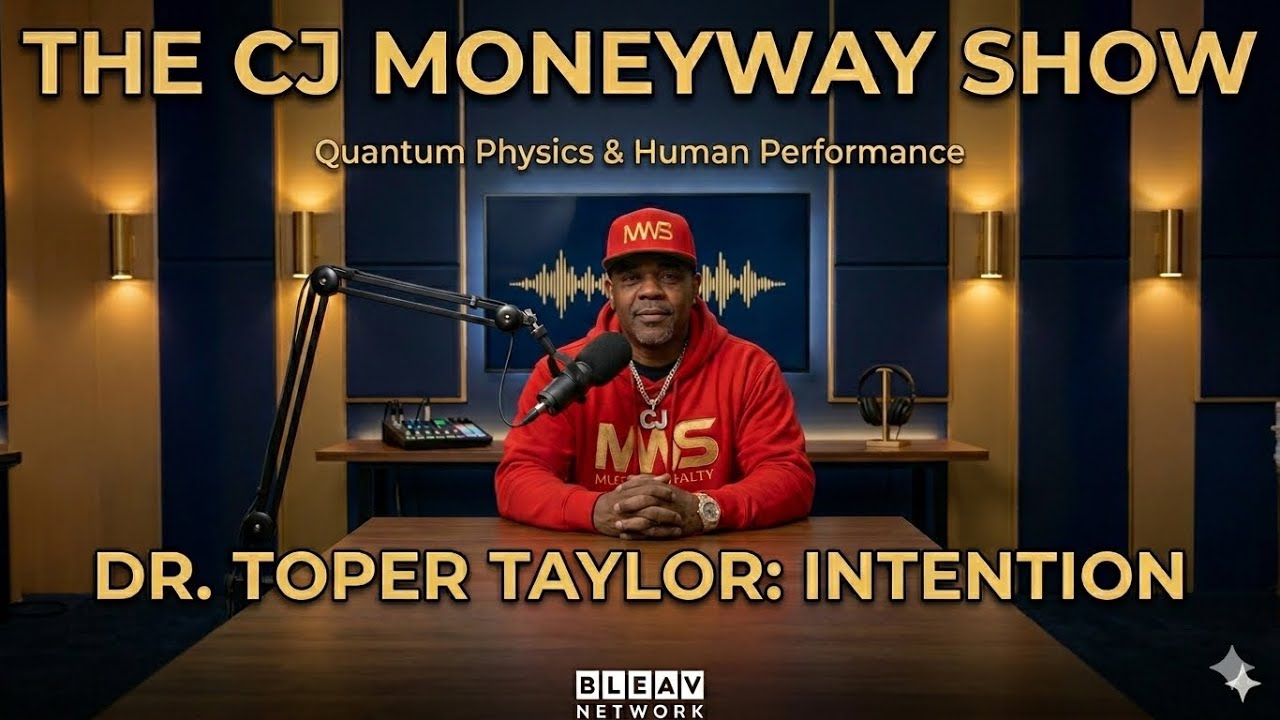
Dr. Topher Taylor discusses quantum physics and intention, sharing experiments where focused intention improved apple-seed growth, animal behavior, and a USC swim team's performance. He argues that thoughts are energetic signals that can influence physical reality, and that practicing 10-minute daily intention sessions could shift outcomes in sports, business, and society.
Chapters
The Bleacher Report app is your destination for sports. Right now, the NBA is heating up, March Madness is here, and MLB is almost back. Every day there's a new headline, a new highlight, a new moment you've got to see for yourself. That's why I stay locked in with the Bleacher Report app. For me, it's about staying connected to my sports. I can follow the teams I care about, get real-time scores, breaking news, and highlights all in one place. Download the Bleacher Report app today so you never miss a moment.
The sun shining, birds are singing, and all feels right in the world.
Until the season changes and suddenly you lose your motivation to get out of bed. In fact, 1 in 5 people experience some form of depression no matter the season or time of year.
At the American Psychiatric Association Foundation, our vision is to build a mentally healthy nation for all because we want you to live your best life and be your best you all year round.
Please visit mentallyhealthynation.org to learn more.
Sana, sana, sana isn't accidental, it's intentional. Powered by CJ Moneyway Entertainment and the Believe Network. On this episode of the CJ Moneyway Show, CJ sits down with Dr. Topper Taylor author of the Human Performance Intention Experiment. Attention, focus, intention, shape the outcome, control the execution. Because distraction drains power, but direction builds results. This conversation explores how disciplined attention creates elite performance in business and leadership. And then, like, tap in.
What's up, my good people? Welcome to the CJ Moneyway Show. You already know we bring you powerful conversations that shift mindsets and spark breakthroughs. Today we're diving into a groundbreaking conversation about how your thoughts can actually shape your reality. I'm joined today by Dr. Topher Taylor, author of The Human Performance Intention Experiment, where he bridges science and personal development to explain how your intentions might directly impact your success and your physical performance. We're talking about quantum physics, the power of focus, and practical ways to train your mind to elevate your life. Hey, welcome to the show, Doc.
How are you? Nice to be here. Appreciate it. I'm looking forward to this.
I, I think anybody with a Lakers poster behind— hey, me and Doc was talking behind stage, so we had some things in common. He's from LA, but he's a big Trojan fan, so therefore he's a big Chicago Bears fan. And so people that know me from Indiana, from Gary, all my friends, family, they already know I am not a big Bears fan. But since Doc putting his stamp on— since Doc put his stamp on We'll see, man. We'll see. Hey, hey, so Doc, let me ask you, you take a really scientific approach to the concept of intention. What inspired you to explore this connection between quantum physics and human performance?
Well, I've been a business guy most of my life in the entertainment and media space. And so the power of media, especially entertainment, I made a lot of kids television shows, things like Arthur the Aardvark on public television, Franklin the Turtle on Nickelodeon, Roly Poly Oli on the Disney Channel, and many, many more. The power of media to connect all of us around the world is a beautiful thing. You know, if you make a television show, Franklin the Turtle was on Nickelodeon, turtle kind of representing a 7-year-old kid and going through life and experiencing things for the first time, going to school, you know, trying out for a soccer team, stuff like that. As I traveled around the world, you know, this television series aired in probably 150 countries. As I traveled around the world, I never forget walking out of a restaurant in France for lunch in Paris. And the little boy that was walking behind me with his mom said, we got to go home in French. You know, we got to go home. I want to watch Franklin the Turtle. I'll never forget that. Right. You know, we're all connected. And so what quantum physics does now as a researcher and a doctor of public policy planning and development, You know, what quantum physics tells us is that we're all connected energetically and particulate. Everything in the universe is made of energy and particles. And if you think about everything starting from the Big Bang, in essence, we all came from one particular point in time. And therefore, one can really get their head around the fact that we're all connected energetically and atomically. And so if that's the case and our minds are part of this connected universe, And if a thought is an electronic blip that we create in our consciousness, then isn't it possible that we can send much as the way a television station, if you will, with its antenna would send a broadcast, let's say ABC Network, you know, they put it out in the air. You have an antenna on your house or you have an antenna on your cell phone, right? And it grabs the signal, pulls it in, and then, you know, we exchange information, we exchange energy, we exchange codes, if you will. So isn't it possible then that with our minds and the power of intention that we can't send intention to other people that would potentially influence or impact their energy, their particles, You know, I think that's where it came from. That's where it came from.
So Doc, let me ask you, man, I ain't had this on the question. I didn't know that you was in the media like that, traveling all around the world and did all these shows, because that's very fascinating. So let me ask you, between being in media and entertainment, where did the shift come from, or was it always there? Was you always in the doctor space with the scientific things, or was it just a shift at some point in your life?
Well, no, look, I think one of our core kind of raison d'être as a human being is to learn. And I've always said, you know, when I stop learning, it's time to move on to another world or another place. I call myself an insatiable curiositist. I believe curiosity is one of the great values that we can have as people. And so, you know, I'm always learning, I'm always exploring. And I think this concept of starting with the power of storytelling in the, in the case of television and film to impact people all over the world, because we all have shared experiences, love, loss, you know, anger, passion, etc. We all have a shared human experience. And, you know, it may have started when I had dinner with a doctor of Astronomy, and a scientist who spends his entire life at night going to look through a telescope, right, into the stars. And his goal is to find life somewhere else other than Earth. And he's been doing this now for 50 years. He's a published novelist, an expert in his field, and he hasn't found life. Okay, so can you imagine this? You're dedicating your whole life to studying the stars and planets, and specifically with a dream of finding life off this planet. And, you know, he's looked for hundreds of millions of miles around us. Nothing. And if you think of that, and you think of that, and you think of the beauty and elegance of what we have on Earth, and the fact that this precious little ball in the sky is all the life that we know exists in this moment in time, I don't doubt that there may be life somewhere out there in the universe. I'm not saying that at all. But in this moment in time, in our knowledge base, this is it, right? So we gotta take care of it. We've gotta take care of it. And it is, you know, this system that we live in, this organism that we live in called Earth. We're connected to the land, the water, the air, the trees, ourselves, et cetera. Et cetera. And the beauty is trying to figure out, okay, so if we're living together, how do we do it in a way that not only creates sustainability for humankind, but also empowers us to be the best we can possibly be? And that's kind of where kind of intention fits in. I'll tell you another thing. So my mom was an Episcopal priest, my brother Episcopal priest. And so there was a lot of spirituality in my family growing up. And I, being kind of a scientist, was skeptical around their belief systems. You have to have faith, of course, if you are a believer in a particular religion. But I always questioned scientifically, if you will, kind of the origin story of various religions. And so, as I grew older and continued to explore my faith or my spirituality, I also became fascinated by quantum physics, which suggests that we're all interconnected and suggests specifically in the area of quantum physics that there's a phenomena called entanglement that 3 guys in 2023, 3 physicists, theoretical physicists in 2023 won the Nobel Prize for Physics in. And entanglement refers to being able to influence a particle right here in front of you and having another particle on the other side of the earth or the universe for that matter, be influenced at the exact same time without regard to time and distance. So entanglement now is being used in a variety of different capacities in our daily lives, from lasers to understanding how our mind works, quantum computing, et cetera, et cetera. But the philosophical notion of saying, hmm, this is interesting. So for hundreds of years, when people would go to let's say church or temple or synagogue, and they would pray, that prayer is a thought, that prayer is an intention. I want to help my insert sick mother, my sick neighbor. I want them to heal. I want them to get better. That's an intention, right? And over the years, you know, since kind of Charles Darwin came around with this theory of the evolution of man, the reality, the science behind religion and prayer kind of was almost dismissed or kind of disregarded. Now, science through quantum physics is kind of coming back to this possibility that, hey, wait a second, you know, is it possible that our thoughts can actually influence other people? And I'll pause there. Because I've got some great stories to tell you in a minute that relate to this.
I want you to keep going, Doc. That was interesting. Entanglement. Yeah, yeah, right.
So it's really interesting. So I'm going to tell you the first kind of basic concept of energy, thought influencing a particle. So this was kind of— there have been hundreds of these studies done. The first ones that I read about were in the 1970s. Let's talk about a shaman for a moment. So, a shaman is an energist by definition. They're generally historically been healers, medicine people before there were formal medical doctors, but they exist today and they deal in energy. And so, they heal you through their command of energy. Now, we can be skeptical about the potential power of a shaman, but so were some scientists. And some scientists at various places like Yale and McGill College and Stanford and whatnot, you can walk into an energy regulator, kind of like a phone booth that measures the amount of energy that's coming off of a human being. You and I could walk in that booth and we'd see like a little orange-red kind of line or field kind of coming off us, maybe an inch wide, right? And that's the energy we're exuding. When I'm talking to you right now, I'm exuding energy. And if I start running while I'm talking to you, I'm exuding more energy, right? And when I send an intention to you, meaning heal you, the energy level increases. And that can be illustrated scientifically if you're standing in one of these energy booths right now. If a shaman gets in there, If a shaman gets in there, his energy level isn't an inch wide, it's 6, 7, 8, 9 inches wide just from the moment he walks in. And when he sends an intention, his energy level increases 100x. And that's because he's practiced. And we can get practice too. We can increase our potency of an intention with practice. It's the same thing as like running a marathon, right? I couldn't run a marathon tomorrow, no way.. But in the next year, if I tried every day, I could run a marathon. And then, by the way, I'm probably never going to win the marathon because there's some people who are just naturally gifted at running that are always going to run faster than me. The same thing with a shaman, right? Some people are born with an ability to manipulate energy more than others, but that doesn't mean we can't get better ourselves at being intention senders. Okay. Now, now we've got that. So let me go back to the original experiment. So the original experiment is the shaman took seeds, let's say from an apple seeds, okay? And he intended those apple seeds while holding them in his hand to grow faster and produce more fruit, okay? He planted those in the ground and not too far away, seeds from the same batch without the shaman were planted in the ground and the trees grew in both places. Well, guess what? The seeds that were empowered by the shaman grew faster and produced more apples. Okay. Now fast forward two decades, talking around 2000, 2005, when entanglement became more and more of an accepted phenomenon that exists in quantum physics. Now the shaman is in, let's say, Illinois, and the person holding the seeds is in Melbourne, Australia. So now we're talking about entanglement. The shaman sends his intention, same intention, grow faster, be more productive, to the seeds that he's not holding anymore, but rather is on the other side of the earth. Those seeds are planted, and sure enough, the seeds that were empowered by the shaman on the other side of the earth those trees grew faster and were more productive. So how does that happen? Well, it happens because of quantum physics entanglement and our ability to influence others. And so that's like an early experiment. You know, I think what's interesting, if we keep going down this road, the one that fascinated me was an experiment done in France by René Piocq. And what he did, and I'm going to use this kind of frame that I'm in right now on this podcast to give an example. What he did was so cool. So he took one of those vacuum cleaner robots, kind of one of those circular robots, you know, that—
Yeah, yeah, yeah.
You don't have to move it yourself. It kind of works. And he programmed that robot in a rectangle like this frame that I'm in to go backwards and forwards and up and down in the exact same increment across this rectangular area perfectly, and it did it 2,000 times. It went up, down, north, south, east, west, the exact same amount of time. Then what he did— and he put a candle, by the way, on top of this robot, okay? Then what he did is he got a dozen baby chicks that were still in the eggs, they were ready to be hatched, and he put them to one side of this area. In a cage, born into night. So when they were born, it was dark. It was a dark room, you know, that this area was in a dark room, okay? And the chicks were born, and this, this robot with the candle on top was moving back and forth and up and down. And as the robot with the candle approached the baby chicks, right, the baby chicks liked the light. Whether they liked the heat or the light, etc., they kind of cooed and were very happy. And as the robot moved away from the chicks, the chicks went crazy. They were like frustrated that the light was going away, that the heat was going away. And wouldn't you know it, even after 2,000 times this robot perfectly went up and down and north and south and east and west, that with the chicks there begging for it to stay near them, the robot stayed near the chicks almost 70% of the time.
Mm.
So how can this simple organism, a simple organism, far less complex than a human being, a baby chick, have an impact on a physical thing, on matter? Well, we saw it with the seed. Now we're seeing it with a computer, a robot.
Mm-hmm.
What else can happen here? So this piqued my curiosity.. And what I did was I reached out to the University of Southern California in the athletic department. And of course, we got NCAA compliance. And at the time, it was Pac-12 compliance. Then I found a coach who believed in positive thought. She was the head coach of the men and women's swim team at the University of Southern California. And, you know, we explained the experiment. We were going to take a shaman, and we're going to take an electronic intention device created by a guy by the name of Bill Tiller, Dr. Bill Tiller. He was a Stanford professor that in the latter part of his career, when he retired from Stanford, focused on energetic sciences. And he created this electronic device that sent intentions 24 hours a day, 7 days. So we have 2 sources. We're going to send positive intentions from a shaman and electronic intention device to the USC men and women's swim team. And we did this from the start of the season when they came early to practice, all the way through the season to their championship, you know, Pac-12 championship, NCAA championship, etc. Now mind you, these athletes are at the top of their field. Many of them competed last summer in the Olympics. And wouldn't you know it, we proved statistically that there was a significant improvement in their performance year over year and with a control group comparatively to both men and women swim team, to the point where the women finished in the top 10 of all women swimmers in the United States, the men finished in the top 20 of all swim teams in the U.S. for the both times, for the first time in 20 years, and the coach won Coach of the Year, uh, in the Pac-12. So this is exciting.
Yeah, yeah.
The Bleacher Report app is your destination for sports. Right now, the NBA is heating up, March Madness is here, and MLB is almost back. Every day there's a new headline, a new highlight, a new moment you've got to see for yourself. That's why I stay locked in with the Bleacher Report app. For me, it's about staying connected to my sports. I can follow the teams I care about, get real-time scores, breaking news, and highlights all in one place. Download the Bleacher Report app today so you never miss a moment.
Finding great candidates to hire can be like, well, trying to find a needle in a haystack. Sure, you can post your job to some job board, but then all you can do is hope the right person comes along, which is why you should try ZipRecruiter for free at ziprecruiter.com/zip. ZipRecruiter doesn't depend on candidates finding you, it finds them for you. Its powerful technology identifies people with the right experience experience and actively invites them to apply to your job. You get qualified candidates fast. So while other companies might deliver a lot of hay, ZipRecruiter finds you what you're looking for. The needle in the haystack.
See why 4 out of 5 employers who post a job on ZipRecruiter get a quality candidate within the first day.
ZipRecruiter, the smartest way to hire.
And right now you can try ZipRecruiter for free.
That's right, free. At ziprecruiter.com/zip.
That's ziprecruiter.com/zip.
Ziprecruiter.com/zip.
Hi, this is Alex Kanshrewitz. I'm the host of Big Technology Podcast, a longtime reporter and an on-air contributor to CNBC. And if you're like me, you're trying to figure out how artificial intelligence is changing the business world and our lives. So each week on Big Technology, I bring on key actors from companies building AI tech and outsiders trying to influence it, asking where this is all going. They come from places like NVIDIA, Microsoft, Amazon, and plenty more. So if you want to be smart with your wallet, your career choices, in meetings with your colleagues, and at dinner parties, listen to Big Technology Podcast wherever you get your podcasts. Good night.
Check out the movement. Family, real quick, lean in. If you're listening to this right now, then you already know The Money Way ain't just a podcast, it's a movement. So make sure you tap into everything we building. Yeah, yeah, it's a Money Way moving music, new tracks dropping every every week. It's the CJ Moneyway Show. Global ranked, purpose-driven voices, moneyway mindset, daily inspiration, real talk, no fluff. You can find it all right now on Instagram, YouTube, and everywhere you stream. Just search @simoneyway. That's what purpose lives. That's where the next level starts. And that's what we leveling up together. Now let's get back to the show.
Yeah, I mean, especially you really got me with the shaman and the seeds, right? Oh, and how you can plant a seed from the other side of the earth, you know, like the shaman is over here on this side and then, you know, as you illustrated because you're a Bears fan, uh, not necessarily Bears fan, Kate Williams, uh, Williams fan, so you brought up Illinois and, uh, that was fascinating to me because It had me thinking because I have another podcast that I also do and it's called Planting Seeds with CJ. Yeah, yeah, yeah. So you're making me think about it. You know, you're on one side, like you say, we on the podcast and things of that nature. So you're on one side of the world where you're trying to reach, you know, saying other people with your words as far as, you know, planting seeds or whatever. I mean, I look at it too, even what you're doing. In your profession and the things that you have been doing. Like you say, with the young man when you was in France and he was behind you and want to go home and watch one of the shows that you was a part of, that, you know, we plant seeds. So it was a seed planting out a little boy. He won't go home every day and watch that cartoon every day at that same time. So I think a lot of us in this space that we do, all we are doing are planting seeds because we don't know if somebody's going to take what we are saying or what we're providing. Or not, you know, some do and some grow and some don't. And you know, it is what it is. We don't know. But yeah, I like that concept.
So let me, let me, let me— you reminded me of a couple things when we talk about the Chicago Bears, for the sake of conversation. So for those of us who love sports, let's say football for the sake of conversation, we know that if you're gonna bet on sports, that home field advantage is worth about 3 points, right? You know, I mean, if you have a home field So as a scientist, as a curiositist, I have to ask, well, why is that? So why is it— why is home field advantage worth 3? Let's think about it. The football's the same size, the field is the same size, the goalposts are the same size, the yardage markers are the same. So what is it? Is it just familiarity with the grass, the lawn? No. What I would argue, based on my research, is that in fact it's home field advantage because everyone in that stadium, or a majority of people in that stadium and in the community around the stadium, are rooting for the Bears to win.
Yeah.
And that's positive energy. That's intention being sent from tens of thousands, if not hundreds of thousands, if not millions of people in that moment from televisions all over the country from Bears fans to say, I want Bears to win. And that has a statistical impact that Las Vegas has deemed to be 3 points.
Mm-hmm.
Right. Very interesting. So now let's talk about another thing you mentioned. We are, all of us, planting seeds. You're right. In fact, let's dive into that a little bit. The average human being has between 60 and 85 1,000 thoughts per day. Per day. A quick thought, you know, I want a cup of coffee, you know, do I put milk in my coffee or not today? Oh, you know, you know, whatever it is, right? 85% of those thoughts are negative. 85% of those thoughts— I'm too fat, I'm too old, you know, oh my gosh, I'm coming up to a traffic light, am I going to hit that pedestrian? Whatever it is, you know, it's a— it's shocking. And When I first read this, I said, "Oh, come on. I'm an optimist. I believe in life that the glass is half full. I'm gonna write stuff down." So, over 3 days, I wrote down my thoughts. Wouldn't you know it? It's true. A lot of them are really negative. Now, if we are antennae, if we are walking antennae all connected to each other, why would we choose to broadcast 80,000 a day thoughts and 85% of those are negative. Why would we want to broadcast 65,000 negative thoughts and only 15,000, you know, positive thoughts? We have to take control of our thoughts and be very present to what we're thinking about and shift that energy from negative to positive. And as we shift our thinking to positive thinking, it's amazing what happens. We then become the seed that has been imbued with positive thought, and we will grow faster and we will produce more than someone who is not blessed with positive thought.
Now, I really, really like that. You got me thinking, Doc. You got me thinking. I like that. I like that. Hey, so Doc, You know, man, you said a mouthful, man. You gave us a lot of nuggets. I just only have a few more things for you, man, then I'll let you get on to your busy day and root for these Caleb Williams Bears, man. I don't think I—
Right on, baby.
But so, Doc, let me ask you, uh, looking at the bigger picture, how do you see science of intention shaping industries like business, education, or even sports events?
Well, so I actually believe based on the results of the study that I did that athletes along with their training, their nutrition, their coaching, et cetera, can benefit from the power of positive intention. Let's talk about intention just for a second. It's not, I wanna win. Ironically, that was never the intention we sent to the swimmers at USC.
Mm-hmm.
What we did before we started sending intention is we sat down with the coaches and we said, okay, look, what are the attributes of swimming excellence? If you were going to win the Olympic gold, what's the difference between that person that swims every day for 6 hours a day and probably has since they were 9 years old? Yeah. And the next person. Like who's at that same level? Well, you know, there are some interesting subtleties. So let's just talk about those for a moment. So one of them is being able to hold your breath while you're swimming, you know, competitively, right? Two is being able to swim underwater longer, because while you're underwater and you see those shots, right, of a swimmer that comes to the end of the pool and then turns himself or herself underwater upside down and then kind of like a— they call it a dolphin stroke, kind of continues to swim underwater. Well, underwater there's less friction than there is on the top of the water where there's waves that are hitting, right? So if a swimmer can, A, hold their breath longer, swim underwater longer, and that requires being calm, not panicking, but being calm in the moment, right? Those three attributes can actually enable a swimmer to increase their performance. And so when we think about intention, it was never to win. It was to be the best swimmer they could be by being able to hold their breath longer, being able to be present and calm, and being able to swim underwater longer, among a few other things. So when we think about how intention can impact our lives, we need to think about how, like, You know, the person who sits back and says, well, I want $1 million, that's like saying I want to win the race.
Hmm.
But that's not fair. What we need to do is we need to sit down and say, okay, well, what's behind that? What's behind that $1 million? Well, you know, I hope I can find a job I love. I hope my work can contribute to the results of that company that enables it to thrive and be successful. I hope my ideas can contribute and be innovative to expand the business acumen of that company. There are many things that one can intend for, right, versus just the end result. And what's interesting about the power of intention is we saw a very popular culture kind of shift of awareness in intention with the book and the movie The Secret. I'm sure you're familiar with it. This concept of manifesting your dreams. I want to find love. I want to find a great job. And what The Secret opened the door to, this is 30 years ago, but The Secret opened the door to was this possibility, this possibility that we can manifest the lives we want. And that's true, that we are in control of our lives, that we are the actors that create the play in which we're living. And therefore, we are powerful human beings that are living in an organism that's all interconnected, and our thoughts impact, uh, our lives and those people's around us.
Doc, man, I'm telling you, you know what, sometimes I could talk out to people, but with you, I can't even do it, man. You so much— I just appreciate these nuggets you throwing at us, man. So Let me ask you real quick. Yeah. If people start applying these principles as you were talking about, what kind of shift do you think we'll see in society as a whole?
So, you know, I do think that we would see a society that is more filled with compassion for the other person. I think that for our environment and people around us, and I think that we would realize that we're all one, one organism, right? It's not that there are, you know, those people over there or those people on that continent or they don't speak my language. None of that matters. You know, does a dandelion speak to a lemon tree? Well, not really, but they coexist, right, in this beautiful way. And so I really think that there's two critical pieces here. One, we're all connected, and therefore our very thoughts impact other people. But two, that when we take the time to intend not only for ourselves but for the betterment of another person, that good things will come our way. And I think that that's a powerful thought for all of us to hold on to and try and practice.
Yeah, practice that. Share, and good things will come to you, man.
That's exactly right.
You know, right? So Doc, like I said, I appreciate you. Giving is living, for real, for real. Hey, so Doc, I got this new game that I've been playing on the CJ Moneyway Show for about the last month or so. Everybody kind of like it, you know, so I'll continue doing it. It's called Quick Fire Round. I'm gonna ask you a question and say the first thing that comes to your mind.
Okay.
All right, let's go. What's one book that inspired you on your journey?
You know, I loved Willy Wonka and the Chocolate Factory by Roald Dahl, because think about it this way, Charlie, the boy who came from humble means, set an intention, which was he wanted to get the golden ticket. And guess what? He did.
Did they make a movie out of that book?
Yes, they did.
Okay, I thought it sounded familiar. Okay, Doc. One practical daily habit to strengthen mental focus.
Taking 10 minutes out of your day to sit in a room in your house or outside your house where there is not a lot of electronics, so you're not sitting next to your cell phone or your television or your laptop, but where you have a comfortable, calm place where you can meditate for a moment. Now, Meditation is very different than intention. Meditation is clearing your mind of thoughts, whereas intention is filling your mind with a singular thought, right? And focusing on that thought to become true. And so at first, it's nice to relax by meditating and trying to clear your mind. And then it's a powerful ongoing experience to potentially write down an intention and say it from your heart and soul every day for no more than 10 minutes, and you'll be surprised at the results that come into your life.
That's a good practice right there, Doc. Kind of like that one. Hey, so Doc, let me ask you a scientific fact about the brain that still blows your mind.
Well, you know, the one of the most debated areas in science right now is human consciousness. So since the dawn of time, we've always thought that our consciousness is in here, in our brains. But now science is considering that consciousness is ever-present. It's all around us, right? And when we're born, we download, kind of like we do with our laptops from the cloud, we download information that becomes us.. And as we live our lives, we're uploading information and downloading information, contributing to the universe, and the universe is contributing to us. And this notion of consciousness being ever-present and in all things is something to me that blows my mind. And I can't wait to see how that scientifically plays out.
I like that because now you're talking like Moms and Brother in the spiritual realm. That's right. That's right. He is omnipresent in all places at all times. Always around. And so, uh, let me ask you that. What's the biggest mistake people make when trying to improve performance?
Well, I think we've really got to try and eliminate negative thoughts. You've got to try and eliminate negative energy. You know, all of us have experienced, you know, let's say we're having a good day, we have a good night's sleep, we have our delicious cup of coffee in the morning, maybe we're even humming our favorite song, and we go to the office or a friend's house where we walk into a room and we feel negative energy. We feel like there's been an argument there before or something crazy happened. There's like, whoa, what am I feeling right now? Right? So this notion of thinking positively and wanting the best for other people and believing that the glass is half full of water versus half empty is, I think, a significant way to live our lives, to rid ourselves of kind of Negative juju.
I like that. Negative juju. Get rid of the juju, everybody. Get rid of the juju. Last question, Doc. One message you hope every reader takes away from your book.
Well, you know, that science and spirituality are kind of interconnected here and that we have an obligation. If all of our thoughts are impacting everyone around us and we know that, with certainty, then why would we be accepting anything other than kind of a wildly successful life and world where everybody gets along? We're at a moment in time on Earth right now where there's a lot of cantankerous animosity. And I think what we've seen historically is right before a fundamental shift in the way people think about the world and the universe spiritually and everything else, right before a significant shift, there's a lot of tumult. And I'm hoping that the tumult we're seeing now is because people are not quite ready to shed the old way of thinking. And as we enter this new kind of millennium, this new generation, I'm hoping that we can all embrace the concept that, hey, you know, we are one.
We are one. That's what I'm talking about. We are one. Old school. Old school. 70s song, uh, Doc. I know you was in the '70s, man. That's what I'm talking about. So, uh, Dr. Topper, man, I appreciate you coming on. This has been a next level conversation and the power, intention, and the science behind human performance. I know our listeners are going to be thinking differently after this one. For everyone tuning in, if you want to dive deeper into this game-changing concept, Go grab a copy of the Human Performance Intention Experience and connect with Dr. Topper. Find out more about him at where, Doc? Where can we find you at on social media and your websites?
Well, you know, I've got a website called intentionsnetwork.com and you can check me out there and I look forward to hearing from you.
Mm, okay, Doc, make sure you drop me all your links, man, so I can put them in the show notes so people can connect with you and get this game that you got for them, man. And I ain't talking about Caleb Williams' game either. And you all, all already know, if this episode gave you value, share it with someone who needs to hear it. Subscribe to the CJ Moneyway Show, leave a review, and keep tuning in for more powerful, life-changing conversations. Until next time, keep pushing forward, keep planting seeds, and stay empowered. Catch you on the next episode of the CJ Moneyway Show. It's your boy CJ Moneyway with my man Dr. Taylor. Hey, we out of here. Peace.
Before you go, let me leave you with this. Every story shared get here. It's a reminder that your story matters too. Keep your faith sharp, keep your focus steady, keep your vision clear. And if this episode gave you wisdom, hope, or a push forward, share it with somebody you love. Tap in with me on all platforms. Edge money way and stay locked into the movement because God's not done writing your chapter. This is the CJ Moneyway Show. Brick by brick.
And always Moneyway.
The Bleacher Report app is your destination for sports. Right now, the NBA is heating up, March Madness is here, and MLB is almost back. Every day there's a new headline, a new highlight, a new moment you've got to see for yourself. That's why I stay locked in with the Bleacher Report app. For me, it's about staying connected to my sports. I can follow the teams I care about, get real-time scores, breaking news, and highlights all in one place. Download the Bleacher Report app today so you never miss a moment.
Warning: the following ZipRecruiter radio spot you are about to hear is going to be filled with F-words.
When you're hiring, we at ZipRecruiter know you can feel frustrated, forlorn even, like your efforts are futile and you can spend a fortune trying to find fabulous people only to get flooded with candidates who are just fine.
Fuck!
Fortunately, ZipRecruiter figured out how to fix all that. And right now, you can try ZipRecruiter for free at ZipRecruiter.com/zip. With ZipRecruiter, you can forget your frustrations because we find the right people for your roles fast, which is our absolute favorite F-word. In fact, 4 out of 5 employers who post on ZipRecruiter get a quality candidate within from the first day.
Fantastic.
So whether you need to hire 4, 40, or 400 people, get ready to meet first-rate talent. Just go to ziprecruiter.com/zip to try ZipRecruiter for free. Don't forget, that's ziprecruiter.com/zip. Finally, that's ziprecruiter.com/zip.
If you like the show, please take a moment to rate, review, and subscribe. It really does help the show to grow.
Thank you for listening.
What separates dreamers from industry leaders? Your Brand Amplified uncovers the answer. I'm your host, Annika Jackson, and I have authentic, in-depth conversations with proven entrepreneurs and business experts, some sharing the exact strategies that grew their brands, others revealing the personal stories behind their success. From digital marketing tactics to mindset shifts that change everything, they're real conversations that bridge aspiration and achievement. Find Your Brand Amplified on Apple Podcasts, Spotify, or wherever you listen to podcasts.
More from Corwin


Pressure-Proof Leadership: Claire Hayek on Neuroscience, Resilience & Leading Under Pressure

Healing With Fire: Zulma Williams on Trauma, Cancer, Depression & Finding Your Voice

The Economy of the Heart: How Love and Leadership Build Profitable Cultures | Hanna Bauer

The Doorman Nobody Valued: Wes on Storytelling, Corporate Blind Spots, and Building Brotherhood o...

Art for Your Sanity: How Creativity Helps You Survive Chaos — with Susan Hensley

Becoming Better: Ryan Gottfredson on Why Success Requires More Than Doing More

Mission Control OS™ Demo | Governance-First AI Executive Operating System | OpenAI Build Week

From Frustration to Confidence: The Dyslexia Professor’s Blueprint for Struggling Readers

Built in the Pit: Chris Duffin on Resilience, Accountability, and the Discipline to Rise

Cyber Thrillers, AI & the Future of Technology with Charles V. Breakfield & Rox Burkey