
Invisible Rules: Ujwal Arkalgud on Seeing the Hidden Game of Success
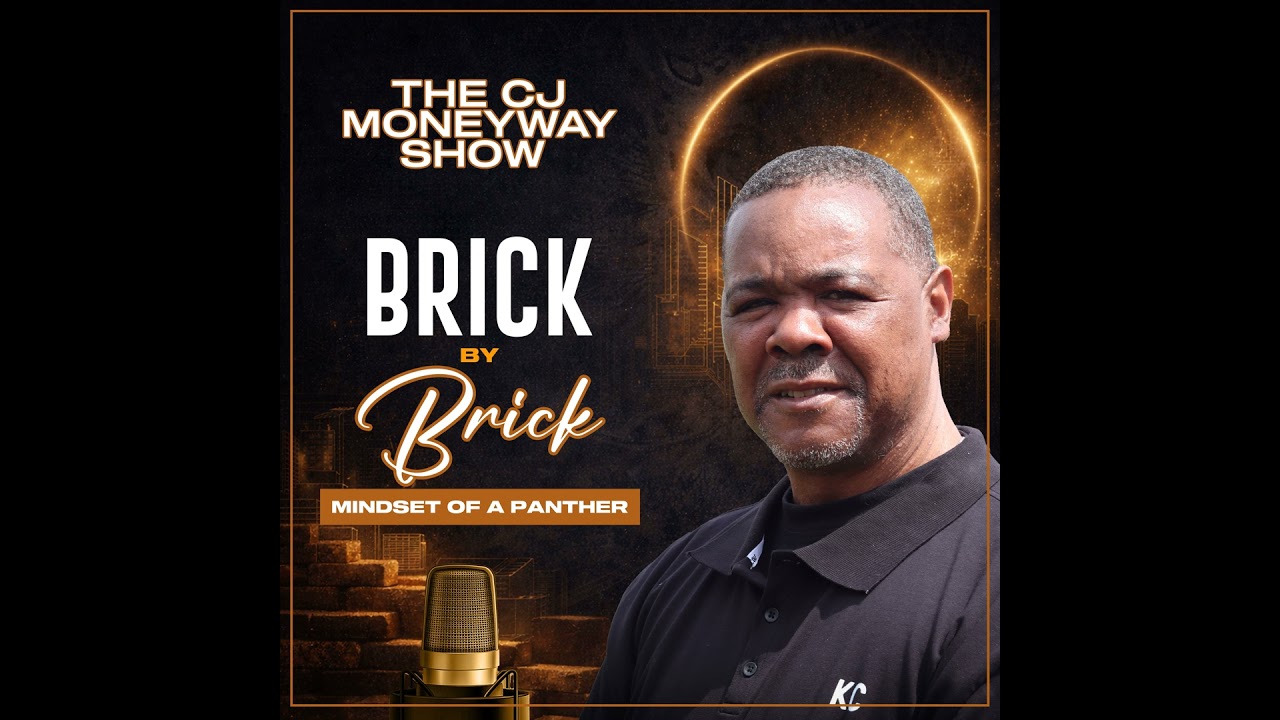
Ujwal Arkalgud built Motivebase into an eight-figure exit by mastering what he calls the invisible game: the subtle cues and language that signal credibility. His formula: start with a counter-intuitive claim, back it with evidence. He sacrificed $5M in revenue to pivot from services to technology, and now helps founders map their credibility blueprint through Creds.ai and his book Invisible Rules.
Chapters
No spring DIY project is complete without a cleanup plan. Now, whether you're tackling a garage overhaul, prepping before painting, cleaning up the workshop, or getting the deck and patio ready for warmer days, Simple Green All-Purpose Cleaner has you covered. This powerhouse cuts through dirt, oil, grease, and grime, and it's US EPA Safer Choice certified. Strong enough for your toughest cleaning jobs, safer for your home. One cleaner for every project. Visit simplegreen.com.
Welcome to CJ Moneyway Media, a storytelling platform built brick by brick where conversations become lessons and experiences become perspective. This is the mindset of a panther. Panther. Moving with patience, discipline, and purpose. From podcasts to books to media storytelling, CJ Moneyway brings voices, journeys, and real conversations to the forefront. You're now listening to the CJ Moneyway Show. What's up, my good people? Welcome to the CJ Moneyway Show, where hustle meets legacy and we build success brick by brick through authentic stories. Today's guests see the world differently, not through trends, but through truth. Yousef is a cultural tech entrepreneur who went from being an immigrant founder in Canada with no network to selling his company Motibase for an 8-figure exit. Now as managing partner at Investment Ark and author of the upcoming book Invisible Rules, he helps founders uncover those hidden patterns of success that most people never see. We're talking about decoding belief system, mastering credibility, and turning struggle into a strategy. Because when you understand the rules of the game, you can finally start rewriting your own story. Hey, what's up, Usain, man? How you doing today, bro?
Really good, CJ. Thanks for having me.
Oh man, appreciate you taking the time out your busy schedule, man, to come on the CJ Moneyway Show. My man Rain all the way from Toronto, Canada. So you know, it is what it is. But Usain, man, start with this, man. Let's start with what most people overlook— the outside. How did coming from India to Canada shape the way that you saw the invisible rules of business?
Yeah, I think what I'm about to describe is probably a very common struggle for a lot of people, especially people who want to become entrepreneurs or they want to start a business. You know, you often think you don't have the money, you don't have the right credentials, maybe you don't have the right certifications or you didn't go to the right universities or whatever it might be. There's always a reason that you're going to hold yourself back, and there's many of them. You don't have connections. So obviously, moving to Canada, I didn't know anybody. And like a lot of people, struggled to get through university and racked up a ton of debt and wanted to get myself out of it and start a company. But the impending fear was that unlike a lot of other people that I went to business school with, most of them came from either money or they had parents who worked in the industry. And so when school's over, everybody gets jobs like that. And there I am struggling to even get an interview. First of all, different sounding name. Now, 20 years hence, things are much easier, but 20 years ago, it was rough. And I would do all kinds of experiments. Like, I would send exactly my resume, just change my name to, like, Troy or something, and I'd get a response back for an interview. And so what do you do in a situation like that? And I realized that all the advice you see is of people working harder. Everybody will say, oh, hustle harder, work harder. And to me, that wasn't solving the problem, right? I could work as hard as imaginable, but I was still not getting anywhere until I realized that I wasn't leveraging my own strengths and my own unique background in cultural anthropology. Because I have this deep passion for social cultural anthropology. I'm fascinated by why human beings think the way they do, how they make decisions, what makes us trust one person but not the other, what makes us think somebody's credible. I started to ask questions around, okay, what will make me credible? And realized that a lot of it has to do with the way you present information, the language you use, the way you package it up. And it's different in different industries. It's not the same across the board. So when you start asking these questions of, hey, what will make me credible? What will help me earn attention? Can I actually engineer my own credibility? To get myself in the right room at the right time, things started to change for me. And suddenly I went from having no interviews to getting a great job in advertising, started to pay off my debt, and then sort of honed that methodology to eventually start my business. But that kind of became the central thesis for everything I did after, because I just realized you can't play this same game that everybody else is playing. When you don't have their resources. So you have to play a different game and you have to play a game that's significantly smarter. Otherwise, you're just going to burn yourself out or you're just going to feel dejected all the time and feel like the world has it for you, right? And you're not going to ever get anywhere.
Man, I know that feeling, man. Hey, but you, man, you said something that was interesting with the cultural thing that you say that you study. You said that, how can you tell if somebody is telling the truth? Or somebody's telling a lie, man? Come on, drop that nugget on us, man. Well, through your expertise and the things that you've experienced, how could you describe that to us? How can I know when somebody just straight up lying to me?
So the formula, the credibility formula, is that when somebody is telling us something that is counter to what we intuitively believe, So I'll give you a sort of a silly example, right? Somebody you meet says, hey, the sky is actually not blue. It has no color, right? And you go, okay, I don't believe that. What do you mean? And then they might go into the physics of it and describe, I don't know, refraction or whatever, and explain how colors separate and why it looks blue. But that first instinctual reaction that human beings have, it has to It comes when somebody says something counter to your intuitive knowledge. So, the formula is if you want to be credible in front of somebody else, you begin by making a statement that is counter to what they naturally or organically believe right now. So, I'll give you an example. Let's say you're selling project management software and everybody believes that good project management is about efficiency. And I say, actually, you know, the best project management softwares help you build a company culture that transforms how people work and collaborate with each other, and it actually creates a more cohesive unit. I'm going to go, hang on a minute, that's not how I thought about project management. Tell me more. So that's the first step. Once you do that, then you got to back it up with, with actual evidence, right? So if I can't back it up, then I'm just full of you know what. But if I back it up, now I've got the other person on the hook. The other person believes me and thinks I'm credible. And now the conversation or the sales conversation can begin. But anytime I'm training a salesperson or trying to see why an entrepreneur might be struggling to grow their business, the first thing I do is I look at how they pitch. And the number one problem I find is people have no idea what makes them credible. They don't tend to spend any time thinking about that. They just do the usual stuff, right? Which is, this is my product, these are the features, these are the benefits, please buy, right?
Yeah, I like that.
And so I think this is where the moment you start just thinking a bit deeper and asking the why question, you know, it's kind of the world opens up and you realize this is cool because, and this is sort of a really important thing is that for me, the big aha came when I realized that if you want to succeed as an entrepreneur, your job is to not just solve a problem, right? Everybody says, yeah, find a need, solve a problem, find a need, solve a problem. That's not enough. You have to help a customer make sense of their world. That's your job. Help a customer make sense of their world. Like recently, I was grocery shopping and I asked the guy at the counter because he looked really buff like he was working out. So, I asked him, "Hey, what whey protein powder should I buy?" And, we got talking and he had so much knowledge. And then, I asked him, "Hey, I'm actually looking for a personal trainer. Do you do that?" He was like, "Oh, I don't have any certifications. I didn't go to school for this." And, he started giving me all these reasons why he's not qualified. And, I was like, Dude, your body is your qualification. Have you looked at you? You are ripped to shreds, my man. Tell me what you're doing. Teach me. Right? And so the thing that he hasn't realized is all he had to do in that moment is say, okay, I am clearly struggling to make sense of a part of my world, which is how do I connect the dots between what I eat and how I work out and what my body wants to feel like and look like?
Right?
So I have some goals in my head, and his job is to just help me make sense of that world for me. The moment he does that, I trust him, I hire him, he's my personal trainer, he builds his business, and suddenly he has 30 clients, and, you know, he's no longer working at the grocery store. My point is people don't think about this, right? They don't realize actually it's not just solving a need, it's about helping make sense of the customer's world, a small part of their world.
I like that, man. So let me ask you, the guy at the store, man, the bodybuilding dude, did he take your advice, man, to start his own bodybuilding?
He did, actually. He did, because I gave him my phone number and told him, if you really want to pitch me, send me a text. And he did send me a text, and we met up for coffee, and he actually pitched. And I have my first training session with him next week. So I'm looking forward to it.
That's cool, man. That's cool. Maybe you can go to Toronto Blue Jays, man, and start hitting a cleanup batter, man, because they need some.
That's right.
They need some back. Hey, so let me ask you, you, man, you said that success isn't always about who works the hardest, but who understands the hidden systems. What are some of those systems most people miss?
There's sort of two games being played. I'll just explain it this way because I think it'll give your listeners a bit of an aha. Which is we all know the visible game. The visible game is, let's say you're applying for a job, you're starting a business, pitching a customer. The visible game is, oh, how big is your business? What are your credentials? What university or what college did you go to? Where did you work before? Tell me your qualifications. That's the visible game, right? And so when you start winning, you play the usual game. Hey, look at all these companies that buy from me, or I have 5,000 customers and they give me 5-star ratings or whatever. Right? That's the visible game. The problem is that actually, that's not why people buy. And that visible game is also a chicken and an egg scenario. Because most entrepreneurs, when they're starting out, they don't have 5-star ratings, they don't have logos, they don't have 5,000 customers. So it's kind of a chicken and egg, right? So how do you get started until you can play the visible game? That brings me to the invisible part of the game. So what's the invisible game? The invisible game is you start asking, what are the credentials? What is the language? What is the way in which information should be packaged up or kind of showcased? You start asking these types of questions that automatically make somebody assume you know what you're doing or you know what you're saying. And every industry has certain things, right? Like going back to my personal training example, there's certain language that he can use in that moment that instantly tells me, oh, this guy knows what he's talking about, right? Or he has to look a certain way, obviously, that automatically tells me he knows what he's doing. Or when he emails me his package and his pricing, it has to be structured a certain way that automatically tells me, okay, I can trust this guy. And so you have to figure out what is the invisible part of the game in your industry. And people will often say, how do I figure that out? It's actually very easy. Just look at the established players in the industry and look at what they're doing and look at the subtle ways in which they talk, they present themselves, they structure information, the way they sell, the way they price. All of that is part of the invisible game. You take that and then you figure out what parts of the invisible game can I really, really own because of my own unique background, my own unique experiences, right? So, for example, this personal trainer might say, okay, like he told me that all through high school and university days, he was extremely skinny and he actually had a weight problem the other way. He couldn't put on muscle mass. He couldn't figure out how to build strength until he figured out that actually the magic was all in nutrition. And then once he figured that out, he started reading all these books and then started to learn about the connection between nutrition and strength building or whatever. So he tells me this story, right? So once you figure out what the invisible part of the game is, you can then figure out what is or what aspects of your own personal story connect to that, because everybody has something interesting in their personal journey that connects to what they're doing, what they're trying to sell. It doesn't have to be traditional credentials or traditional experience or how much money you make or how much revenue your company has. This is the core focus of my upcoming book, is to help people learn about the invisible game, hence I call it Invisible Rules, and then to give them the tools so that they can start figuring out what are those invisible rules in my industry and how can I master them so that with very little resources I can build a business that I'm really proud of.
Man, you got a lot of knowledge, man. I'll put it like that. Uh, you say, man, you, you dropping some nuggets on us today, man. So let me ask you, man, when you first launched, you know, the Motivational Base, you didn't have a Silicon Valley network, as you were saying earlier. It's just a vision.
Yeah.
What gave you the confidence to compete in a world that wasn't built, as we talked about earlier, for you, somebody that didn't have all the resources and things of that nature?
Yeah, I mean, to be honest, I had zero confidence, and every day I thought I was going to fail, but I didn't show it.
Right.
So first and foremost, I didn't have confidence until it started to work, but I just did the work. Right. So every day I thought about the invisible game, and I thought about how I can master it. So I'll give you one example. So Motivebase was a research company, and we were doing research for large companies like Target, General Mills and all these guys. And I realized very quickly that when people don't know you, you can't go and sell $100,000 worth of research to a large company. They have to build trust and they have to already feel like they know a bit of who you are and what you do. And so the first year I focused on small businesses that needed a little bit of research help. And so we scraped by, you know, getting $5,000 here, $10,000 here, doing whatever projects we could just to pay the bills and get through. But the same year, I went to every major conference and I spoke. I found myself speaking gigs. I went to networking events, and all I did was focus on one aspect of the invisible game that I knew I could win at, right? And it was all about— because we were doing research to help these companies understand what truly motivates their customers. So it's all about motivation and nobody else was doing that. And that was my core focus. And because I'd done my homework, I knew that I had to present it in a certain way that automatically signals to my buyer that I know what I'm doing. So everything, you know, the way the presentation was put together, the language I used, the way I talked about it, the way I told my own story. About how I fell in love with anthropology and how I got into this business. Everything was specifically catered to just that focus on building credibility. So, by the end of year 1, while we were scraping by with small and medium businesses, suddenly we got a call from the head of innovation at Target. We get a call from the head of innovation of General Mills because they saw us speak at a conference or what have you. You know, I had a drink with somebody. And boom, the moment you get your one big client, everybody else then wants to work with you. And then it goes from there. But it was really, it was not confidence, it was just doing the diligent work of saying, I know I'm going to work smarter than everybody else. I'm going to use this approach to just hack my way into the right rooms.
So let me ask you, man, because you said it earlier, I think I said it in the introduction. So you and your partner built this company, man, you know, Motivace, uh, based to inspire people and things of that nature. You started off small, like you said, you scraping, and, you know, then you got the call from Target. But you also sold this company, man, you know what I'm saying? Yeah, a 8-figure exit, man. So how was that, man? How did that all come together?
So, you know, by sort of, uh, year 4, year 5, we knew we had a business on our hands. We had built a technology-based business. Back when I started building it in 2015, AI wasn't as developed as it is now, right?
So it's—
we built an AI business, but it still took us a while to build it. Now I could probably build that business in half the time just because technology's evolved so much. But as time went on, we realized that we had a potential business that could be sold, and so our entire focus became on making sure that we could build a business in a way that it would continue to not just survive, but thrive even after we left. Because when somebody wants to buy you, they have to see that when the founder leaves, the business is not going to crumble. So we talked about credibility earlier. In the early days, it was all about my credibility, right? Because I was speaking and doing everything. But as the business started to grow, we started to build credibility in the brand of the business itself. So that once if I existed or not, it wouldn't matter. The customers would continue to work with Motivebase even after it was acquired. And so that was a good 2, 3 years of work as we continued to grow the business and build the technology. And then when the time came, we put the business on the market. We went to an investment banking firm and they helped us put the business on the market, you know, to sort of start the process of selling it basically.
Okay, okay. And so, you know, and then you started another business. So tell us about, uh, ChrisAI.com, man, and what's your company do with this?
Yeah, after selling my business, I took a sabbatical in the south of France with my family and did absolutely nothing for a little while. And then started to write a book because during that time I was bored. And so I was calling up all these incubators and saying, hey, if you have founders who need help, I have time. I'm happy to help. And so I started having all these conversations with all these founders and started to realize that the problems are still the same, right? Everybody still struggles with credibility. People don't know what about their story makes them credible. People don't know what about their story makes them attention-worthy. And so they do the same stuff. They try to email prospects, they try to make phone calls, cold calls. They don't get responses, they feel dejected. And so I realized that the way I had built my business, that I had a methodology, and that methodology could turn into a book, which was Invisible Rules. And then eventually that methodology could also become my next startup. So that's kind of how it was born. It came out of taking a sabbatical and just advising. I advised about 35 different founders and through the process started helping them and realized that the way I had built my business, I could now translate that and help teach other people. To build their business the same way. So Creds.ai is really focused on that. It's focused on helping entrepreneurs figure out their own credibility blueprint, right? Figure out what about their own journey, their own story makes them credible specifically in the eyes of the types of people they're trying to reach, whether they're trying to get attention from a journalist or they're trying to pitch CJ to get on his podcast or whatever else, right? Or prospect, right, to get attention. I want to teach people the invisible game. I want them to play the game smarter. They don't have to, you know, if they want to, that's fine. But they don't have to hustle 80 hours a week to win. You don't have to. There's a smarter way. So that's my entire focus.
I like it, man, because I want to know the invisible rules, man. I want to play the game smarter, die harder, man. So before I go anywhere further, tell us, where can we find, you know what I'm saying, your business? What can we information. Where can we find you at?
Yeah, I'm on Instagram, my first name dot last name, Uchwal.arkalgad. Please feel free to check me out there. You can also go to credsai.com. And then if you're interested in the book, it comes out in March, April next year. You can check out invisible-rules.com. Yeah, I'm really excited to hear from folks and I do actually respond. A lot of entrepreneurs message me on Instagram asking me for advice, and I do actually respond because it does give me a lot of joy in giving back to the community. So yeah, if anybody's looking for some assistance, just wants to ask questions, this, that, I'm around.
Okay. So let me ask you, man, before I do that, you say you got programs on this trendai.com, there's programs and things of that nature.
Exactly. People can subscribe and use the tool. It's an AI-powered tool, so people can simply subscribe and in 10 minutes unlock their own unique credibility story and use it to write emails that will actually get them attention. It'll even coach them so that when they're on calls, they do the calls better and they're just not just blabbering about what they do, but rather talking about what they believe and connecting with the prospect at a deeper level.
Okay, man, I like it. I'm gonna check it out myself, man, because I want to know my credible— my credibility story, man. I mean, because you're always learning, you know, you're always trying to do things better, man. Like I tell people, I listen to all you guys. Everybody that I bring on here, man, I listen, man, because I'm putting tools in my toolbox, you know, because you guys got a lot of knowledge, man, a lot of, a lot of stuff. That's why I enjoy talking to you all. So let me ask you, man, Your company decoded human beliefs using Reddit and big data years before AI became a buzzword. Like you say, you started one company in 2015. I hadn't even heard of AI back then. Let me ask, so what did that teach you about human behavior?
So, I mean, the cool thing was with my last company, we were completely focused on studying how human beings build and give meaning to ideas. That was the entire focus. And the first thing I discovered is that the way we give meaning is very much dependent on the context within which we exist. So I'll give you an example. Let's say you're in the market to buy a car and you're interested in buying a car. You might tell your buddies, hey, this is the reason why I'm buying a car. And whenever, as human beings, we talk about why we're doing something, we always make it sound logical because we don't want to look like a fool or we don't want to sound cuckoo. And so we make everything sound logical. Oh, yeah, I want this car because, I don't know, it has good gas mileage or it's really powerful or it looks cool and I want to drive this. But the reality is that actually there's so much more going on underneath the surface because we assign so much meaning to things. Right. So actually, the reality might be that— I'm not saying this is true, but we may assume that, I don't know, Ford is not so hot anymore. I don't know, because people who are really hustling and working hard and trying to do interesting things, they don't drive Fords, they drive Teslas. I'm making it up. I'm not saying this is true, but we might have this in our heads. Right. And because we've given meaning to one type of vehicle over the other. And so then what happens is we try to logically justify a decision because we've already given meaning to an idea. And this is how human beings work. We first give meaning to something, which means 99% of the decision is already made. And same goes, by the way, to trusting somebody or wanting to work with somebody or wanting to collaborate or start something new or buy something, it doesn't matter what you're doing. 99% of the decisions made based on the meaning we give something. And then the last 1% is a little bit of logic because we don't want to sound crazy when we're talking about something. And so that was the big thing I learned, hands down. Doesn't matter who you are, how rich or how poor, it's always the same, right? So that desire to give meaning to the world, that's something we all share in common. Doesn't matter where you come from or what your political beliefs are or whatever it is. Right. And so my entire focus in my career is how can I manage to shape or perhaps influence a little bit of how my customers give meaning to my business or to me? See what I mean? So that's my entire focus is how do I shape or control a little bit of how people give meaning to the businesses I'm running. Because if I have a little bit of control there, and if I can influence that, then I've— If a job's worth doing, it's worth doing right. The same goes for cleaning. Simple Green All-Purpose Cleaner delivers powerful, concentrated performance across multiple surfaces, from tools and equipment to floors, workspaces, and more. It's strong enough for serious cleaning, yet formulated to work without harsh chemicals that demand heavy protective gear. Get the job done right. Safer, stronger, smarter. That's the power of Simple Green. Learn more at simplegreen.com. Much better chance of succeeding cuz people are gonna wanna work with me and buy from me and so on.
Mm-hmm. This episode is brought to you by CJ Moneyway Media, where podcast ideas become platforms. Through the Moneyway Lab Masterclass, CJ shares real lessons from the lab for creators building their voices brick by brick. From powerful guest conversations, storytelling that inspires growth, CJ Moneyway Media is about one thing: building legacy through stories. Learn more at CJMoneyway.com. Music style, music store. I like it, man. I like the Tesla and the Ford too. And for the ladies listening, that's just like, uh, the Birkin bag and the Dooney and Bourke, you know what I'm saying? I want to do me a bird no more. I want the Birkin bag. Why? Because it costs the most, you know? So yeah, I get it. I'm getting it, man. I get it. So let me ask you, uh, you say, man Let's talk failure for a moment. Yeah. What was a painful lesson you had to learn the hard way that later became one of your invisible rules?
I think the— I mean, there are so many painful lessons. The most painful was that I started the business selling services initially. So, we were selling basically research services and it was really profitable and I'd already scaled it. To more than, I think it was almost $5 million a year. And so it was a small team and I was taking home a nice paycheck and I was very happy with it. Right. I didn't need to do anything different. But what I very quickly realized that was missing is that the problem is that when I was selling a service, I was just doing a little bit better of what other people could do. Right. So I was solving a problem that many people were solving, and I was doing it a tad bit better. That's it. The problem with that is that I'm still not achieving the goal of helping the customer make sense of their world a little bit better. I'm just helping them solve a problem. I'm not helping them make sense of their world. So in this case, we were doing market research. So these large companies, they want to know What are their customers into? What do they want to buy? Right? So I was just doing market research for them. And so I very quickly realized if I had to truly graduate to the next level, which is build a business that helps these customers make sense of their world, then I needed to build a technology that would help them understand how trends are changing their business. That kind of became— instead of just doing market research, So, you know, General Mills would say, hey, help us understand why do people care about a certain type of diet, or why do people care about probiotics or whatever. But the big unlock for me was I was just solving a problem they had until I really started to help them make sense of their world. And their world is consumer trends are changing like crazy now, especially with social media. New trends are cropping up all the time. How do we know what to invest in, what to build? How do we know we're not going to lose money on our products. That was their problem, right? And they couldn't make sense of the world of trends. And so that was the graduation moment for us. So after, you know, in the fourth year of our business, we were already making more than, I think, $4.5 or $5 million. And we had to make the very difficult decision of killing the services business to start the technology business because we had cash to invest in and build the technology. And it was really challenging, CJ, because year 5, we started with revenue zero. So we went from $5 million to nothing because we just stopped selling services and had to build a technology business from scratch all over again and scale it all over again. But the thing is, if I hadn't done that, I wouldn't have been able to sell the business, and I wouldn't have a business that is continuing to thrive even after I've exited it, because I wasn't helping the customer make sense of their world. That's the big shift, right? So, and I tell this to every entrepreneur now, that if you've had some success, and I meet a lot of people who've had some success, but they want to take it to the next level, and I always ask them, are you helping the customer make sense of small part of their world? If the answer is no, that's your next level. That's how you level up your business. Because when you do that, the customer becomes obsessed with your product. They don't want anything else. And that's the sort of the next level where not only does your business scale faster, you can also then sell it faster as well. To me, that was the scariest moment of our business because we had to give everything up in order to start afresh. But it was also the most powerful. And now in hindsight, obviously I would have built it differently now knowing what I know. But you kind of have to go through the difficult moments the first time around.
Yeah, learn the trials and tribulations. Hey, you say, man, I'm gonna be honest, man, there's no knock on anybody, but some of the things you said today, and I've talked to people that have AI companies, I've talked to CEOs and things of that nature, people that sold their companies, you know, they tell you about how you gotta have all your paperwork right and everything. Like you say, you gotta be running like a well-oiled machine for somebody to come in the back. They don't want to come in and work, they want to come in with something that's already working. Right, exactly. And it's just gonna generate the money. But man, the things that you saying about, you know, making the customer, you know what I'm saying, making sense of their world and things of that nature, I've never heard that before, you know what I'm saying. That to me takes this conversation and, you know what I'm saying, the belief on reaching out and making the, you know, like the best experience for the customer, man. That's taking this to a whole nother level because I hadn't heard, you know, I talked to a lot of people but I haven't heard it. In that sense, man. So I like the way you put this together, man. I really do. So let me ask you, you say, man, you know, so let's talk about your book for a second. In your book, you talk about the danger of following traditional success paths. Yeah. What invisible rule do you wish every entrepreneur understood sooner?
The biggest one is that their own desires or their own goals are not necessarily their own. They're a mixture, or they're a result of what the world expects of them and what they expect of themselves. As human beings, we dream based on what we think the world expects of us and what we think we can achieve within that expectation. So, for example, in my situation as an immigrant with student debt after my graduation, the world expects me to get a well-paying job at a large company, grind it out, pay my debt down, have a family, usual path, right? And so my expectations of what my career was going to be like and what my life was going to be like was very much shaped by that idea.. But it wasn't until I started to realize that, why am I limiting my own dreams? And why am I limiting it based on what everybody else expects me to do in this situation? Right. So I think that's the biggest thing that I think a lot of entrepreneurs struggle with. They've done the hard part of deciding to start a business, let's say. But what they don't realize is what they think they should do once they start the business is still so dictated by what the world expects of them. Like the classic example in tech is every founder starts their business and goes to VCs and tries to raise money. And I know so many founders, CJ, who have a great product. They just won't go and sell it to customers. They just keep pitching VCs and getting VCs to give them chump change or say no to them. And they're just kind of doing this boondoggle instead of actually going and selling to customers and building revenue and building leverage in their business and doing all the things that you should be doing because you just kind of get into a rut. You think the world expects me to do this and this is what I need to do. So for me, it's always about thinking about expectations, right? What do you expect of yourself and how much of that is a result of what the world expects of you? If you can distinguish the two, it'll make a huge difference in how you define your goals today, this week, next month, next year. And that itself makes a huge difference in motivating you to do the things you've always wanted to.
I like it, man. So you say, man, I only got a couple more questions for you, man. Like I said, you've been dropping some nuggets here on the CJ Moneyways Show today, man. I appreciate it. So let me ask you, man, this is your company and we touched on it in a sense. AI is reshaping credibility. Yeah. How can entrepreneurs use it to build trust instead of losing?
It's a fantastic question. The biggest concern right now is entrepreneurs are using AI to drive efficiency and volume. And I can't tell you the number of, you know, even past customers of mine that I talk to that'll tell me that their inboxes are now flooded because people are using AI to do email sequencing and cold calling and everything in between. The problem is everybody sounds the same. Every email starts the same way, has the same structure. Even if you think you've got something unique, AI just naturally makes everybody just sound the same. And so when you use AI to play the volume game, you just end up sounding like everybody else, in fact, worsening your chances of success. I'm not poo-pooing AI here. I'm a huge proponent of it. I've built my last company in AI, building my next company. The point is how to use AI. Use AI as a thought partner, not as some sort of volume play partner, efficiency partner. When you use AI as a thought partner, it starts to help you let your own unique magic shine through. You have to let your own humanity shine through. So for example, for my book, which is coming out in April, I had to go get endorsements.. And I made a list of 10 people that I really admire in the entrepreneurship landscape that I wanted endorsements from. But these people don't know me, and I'm a first-time author. And I was like, how am I going to get through to them? They probably get thousands of people emailing them every day. And so I used the Credibility Method and leveraged AI to figure out what will make me uniquely credible and interesting in the eyes of these people and sent them really personalized, thoughtful messages. I got responses in the first round from 3 out of the 10 who agreed, then 3 more, and then 1 more. And eventually I've ended up with 7 out of the 10 have given me endorsements. The remaining 3 who didn't, they still responded to me and said, sorry, I can't for whatever reason, but now they know who I am. And I'm in touch with them. In fact, the funniest CJ was one person messaged me saying, I'm so happy you didn't use AI because your humanity shined through. And I was kind of giggling to myself because I did use AI. But you know, that's the magic, right? You gotta use AI as a thought partner. You know, let your unique magic shine through. If you're not able to do that, you're not going to get anywhere.
You know what, it's funny that you said it. That's why I laughed because for the last month and a half. I was taking a— somebody got to this AI, they did a course, I put it that way. Matter of fact, yesterday was the last day when you get your certificate and things of that nature. And what you just said, the thought part in the process, you know what I'm saying, or whatever, it's just so many levels to AI, you know. If you don't really understand, like, we can do it, man, but we gotta, you know, saying, like, seek out people like you, like Christopher that was training the class, man, people that's really deep into this, because it's just so much that AI do that, you know. It's like, it's amazing, man. Like, the first day we went to class, I'm like, man, hey, I could do all of this, you know what I'm saying? Like, like you say, stuff in your emails and do that. But like I said, last week was— he brought the thought partner, uh, slides out or whatever, and I just threw that into my chat yesterday or day before, like, hey man, you know, I need you to just be my thought partner, my co-founder, you know what I'm saying? Things of that nature. And so, yeah, so I'm glad you brought that up. So, uh, so let me ask you, you said, man, this is my last question for you, man. You're big on turning personal struggles into scalable wins. What's your blueprint for doing that step by step?
I think the core of the blueprint is to figure out what aspect of your personal struggle is relevant to the business you're building and relevant to the customers you want to have. Because there's always some aspect of your personal struggle that's relevant to people, and you just have to figure out how to make it relevant. So I'll give you an example. A buddy of mine struggles with bipolar disease, right? But he can't just get the sympathy vote, you know what I mean? And go on calls with customers and say, hey, I'm bipolar. That doesn't work. Instead, what he did was figure out, okay, what aspect of dealing with bipolar disease gives me certain skills that now makes me uniquely fit to be a founder and to run the type of business I want to run. Because the moment he unlocked that, he was not only able to convince a VC firm to invest in his company, but that became a huge part of his story of how he's building his technology, because he has resiliency, he's able to handle so much pain and struggle in his personal life and bring that resiliency into how he's going to build the business. And the discipline he's developed translates into discipline and how he's going to grow the business, blah, blah, blah. Right. So I think the blueprint is, if you think you're going to get brownie points because you had struggle, unfortunately, you're not going to. Right. Nobody gives you brownie points. Even people who've had the same struggle that you've had won't give you brownie points.
Yeah.
The only way to do it is figure out what aspect of dealing with your struggle translates into what you're now trying to do as you build your business, as you build the technology, or whatever it is that you do to help customers. That's what will connect with people. People will not give you sympathy for your struggle, but people will empathize with your ability to deal with the struggle and will really admire how you manage the struggle and will maybe even deeply respect you for then turning that into fuel for starting something or doing something unique. Right. So there's kind of, there's stages to that.
Say different levels to this, man. I get it. You, hey, so you say, man, I appreciate you, man, coming on the show today, man, dropping all these nuggets for us. Use AI as a thought partner. You know, if you ain't heard nothing else today, take advice from my man. You say use AI the way that it's supposed to be used at different levels to this. Hey, you say, man, before we get out of here, man, was what I've been asking the guests. Just give us one thing, man, that's on your heart, man, that you would like to say and leave the audience with today, man.
I think the biggest thing is if you've ever thought about starting a business and you feel like you don't have the right credentials or the right backing, or you don't know the right people, or you don't have enough money. My one hope through all the content I put out, the work I do, through the book I'm writing, is to give you just that little bit of motivation. And more importantly, not just motivation, to give you the tools where you feel like you can still do it, where you feel like you know what to do and how to approach it. That's the one thing I want to leave people with is, you know, there's so many people that just are on the cusp of wanting to take that leap of faith. They just don't know how to go about it. And that's my goal with everything I'm doing is to give people the tools to outsmart the system, if you will.
I appreciate you, man. Keep on doing what you're doing, man, and give us these tools, man, to help us out. What a masterclass my man Yusef gave us today, man. He reminded us that the real game isn't played on the surface, it's played in the systems, the patterns, and the belief we don't even see. If this conversation shifted your perspective, share with someone who's ready to move differently. Big thanks to our network Believe, our partners PodMatch, and all the platforms that make the CJ Moneyway Show home of authentic voices. Keep building your legacy brick by brick, mindset by mindset. I'm your host CJ Moneyway, and this is how we do it on the CJ Moneyway Show with my man Yousef all the way from Toronto, Canada. We out of here. Peace. You've been listening to the CJ Moneyway Show with real stories, real lessons, yeah, and real your perspective come together. Remember, move with patience, move with purpose. That is the mindset of a Panther. Until next time, keep building your legacy brick by brick by brick by brick. Music style.
Are you trying to get weight loss support through telehealth but it feels overwhelming and rushed? Check out orderlymeds.com now. Orderlymeds.com was built to be different. Here you connect with real doctors who take the time to understand your goals, review your eligibility, and guide you through a plan that's right for you. Orderly Meds provides access to proven GLP-1 medications like semaglutide and tirzepatide, including both name brand options and personalized compound versions when appropriate. So you have choices backed by clinical oversight, not guesswork. It's a simpler, more supportive telehealth experience designed around people people who want clarity, care, and confidence in their weight loss journey. And your medication is delivered directly to your home in discreet packaging, so your experience stays private from start to finish. Do your research, ask the right questions, then visit orderlymeds.com/podcast for an exclusive offer. Again, that's orderlymeds.com/podcast. Individual results may vary. Not medical advice. Eligibility required. See site for details.
If you like the show, please take a moment to rate, review, and subscribe. It really does help the show to grow. Thank you for listening.
More from Corwin


Pressure-Proof Leadership: Claire Hayek on Neuroscience, Resilience & Leading Under Pressure

Healing With Fire: Zulma Williams on Trauma, Cancer, Depression & Finding Your Voice

The Economy of the Heart: How Love and Leadership Build Profitable Cultures | Hanna Bauer

The Doorman Nobody Valued: Wes on Storytelling, Corporate Blind Spots, and Building Brotherhood o...

Art for Your Sanity: How Creativity Helps You Survive Chaos — with Susan Hensley

Becoming Better: Ryan Gottfredson on Why Success Requires More Than Doing More

Mission Control OS™ Demo | Governance-First AI Executive Operating System | OpenAI Build Week

From Frustration to Confidence: The Dyslexia Professor’s Blueprint for Struggling Readers

Built in the Pit: Chris Duffin on Resilience, Accountability, and the Discipline to Rise

Cyber Thrillers, AI & the Future of Technology with Charles V. Breakfield & Rox Burkey