
Prince George on Mastering Media: From Radio Royalty to Comic Book Star
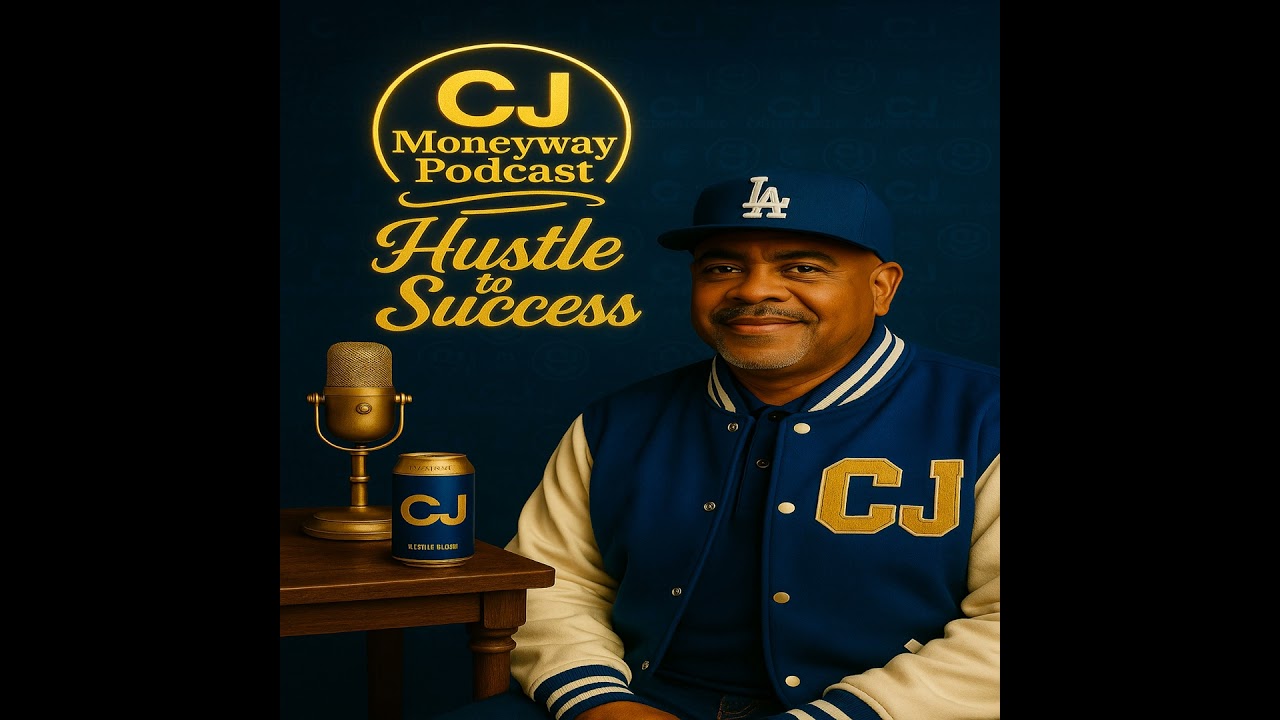
Prince George built a media empire across comics, music, and TV, starting with his character Bugsy in Warzone Comics and expanding into a five-issue series, movies, and video games. He released a rap album as Baby G through Walmart and calls his sound "rap-rock Renaissance." His advice to creators: stay consistent, persistent, and trust your gifts.
Chapters
Welcome to the CJ Moneyway Show podcast, the podcast show where we unlock potential one dream at a time. Today we have another guest whose journey is truly worth hearing. Sit back, relax, and enjoy the Moneyway experience.
What's up, my good people? Welcome to the CJ Moneyway Show. In association with Believe Network, the podcast that brings you stories behind success. Today we're turning up the energy with a multi-talented guest who's conquered every corner of the entertainment world. He's a radio host, TV personality, actor, rapper, and he's even a bestselling author. You know him as the number one prince of the airways, Prince George. From hosting shows to starring in the upcoming comic book role, Prince George is a true powerhouse of creativity Comedy and Hustle. Prince George, welcome to the show, bro.
Thank you, brother.
I appreciate you taking the time out your busy schedule, man, to come on the show. So George, man, let's start with your story, man. Tell us a little bit about yourself and your background and what led you into the world of entertainment.
What led me to entertainment is that I've been doing this stuff since I was 14 years old, if not before. My mentor had a show entitled The King Show, and I was introduced to film in that way. But I was always into comics, always into comics since a kid, grew up with them, created them, drew them, drew characters, wrote stories, this and that or whatever. And the same brand that I rap, Warzone Comics, we had forever, like since we were kids. Just when we got old enough and got legal age and turned it into an actual business, which has been around for like over 20 years now. And the character that we're doing right now is called Bugsy.
Bugsy.
The character's Bugsy, but the movie part— yeah, which is based off of a comic book series called Bugsy comic books, uh, 1 through 5.
Yeah, hold on to that thought. I got some questions about Bugsy myself. Hey, so tell us, man, when did you first realize that this was for you, man, if this was what you wanted to do with your life?
You know when your parents ask you when you're growing up as a kid from small and ask you what did you want to do when you grow up? You know, it goes from wanting to be a comic book artist to like an artist, you know, see their name in lights and stuff. And it's just materialized. You put it in the universe and it just find ways to find you. As long as you consistent and patient, it'll find you.
So man, I was also reading something about your alter ego with this book that you was talking about, you know what I'm saying? So your alter ego, Baby G, you know, you got to explain that to us, man. What's behind the story of Baby G, man? And how is your alter ego Baby G different than Prince George?
Baby G is more of the rapper side of me. Like, at the same time I got into comics and games and things of that nature, I was a part of two groups. I was a part of a group called Modesty with a brother-in-law of mine and two friends who were in junior high school and high school. And then as we got into high school, when Modesty broke up, a couple friends started a rap crew called NAAO, and I ended up joining it. So like, but as with the group, with both groups, I was like a songwriter who helped write some of the songs or helped put together from the project itself. And so I just wanted— with that, you know how when you're growing up you find a name? Well, technically my name, uh, Baby G, it's— it used to stand for, uh, Biblically Awakened, Biblically Yearning, Greatness originally. But that's what it generally would stand for. That's what Baby G— it was acronym for that for the most part. But then over the years When friends would call you Baby G, they didn't, you know, it was too long for people to pronounce, so we just shortened it to, uh, Baby G.
Oh, so based on Baby G, you know, you was a rapper. So name one of your hits, man, one of your rap songs that was out there, man, back in the day, or that you got going.
Um, no, album that's in, um, that's available in Walmart, it's, uh, the Baby G album, and comprised of 8 songs. And it touches on a lot of different topics. They have a lot of spirituality, lifestyle, you know, just different experiences and things you go through as you learn and you grow and stuff. So we just picked a few songs that we tend to like to put them together as an album. And we invented our own music genre called rap rock Renaissance.
Hmm, man, that's cool, man. That's cool. You got a lot of stuff going on, G. So man, you've worn many hats in the entertainment industry, including that of an actor. Tell us about some of the roles you played, and out of all the creative projects you've been involved in, what's your favorite project that you actually did, man, that you could say, man, you know?
I've done a lot. I've done a lot of acting on the King's show, TV and movies on his show. I've done art shows and all kinds of stuff on my show. I was a part of, uh, my protégé Vicky, her show, Vicky, The Vicky Show, and also just a couple other shows. And I feel like I like a lot of it. I think realistically, currently, I like the project we're working on called Bugsy to be coming a lot, a lot. It's, uh, was one of the first characters we created from Warzone Comics. He's Black, but he has to mix with other stuff too. He's part duck, part human, and Black, so it's kind of cool.
Yeah, I see you kind of perked up, man, when you start talking about this character Bugsy. So speaking of acting, I know you stepping into this superhero role with a new character, Uncapped Crusader, in your upcoming comic book. Tell us more about this character and what drew you to this role, and what can fans expect from this comic?
Um, well, in 2005, we as The company, uh, worked on comics, and, uh, our company, uh, Trinity Vision Entertainment, embarked on— we created the first version of the project called Jujutsu Kaisen: Buzzy Original, which got us looked at by the movie and music industry at large and stuff. And we decided to revamp it because it wasn't long enough for our taste. Recently, we decided to rewrite it, add the sequels and prequels to it. Basically, we went back to the drawing board with the project and based it off the comic book it's inspired by. So like when I say Bugsy Comic Books 1 through 5, that's the title of the series itself because like the Bugsy Comic is the first issue, first issue, first book of the series. So we've been— each, each— there are 5 books in the series and each book has their own perspective movie and actual video game that goes along with it. An audiobook. So, I mean, I got inspired by this character. You're looking back then, to be honest, there wasn't a lot of characters back then when you— when we were younger, a lot of African-American characters or minority characters, period. And if they were, there wasn't that many that was getting played as far as, um, that looked like us, right? Like, you might have got like 3 Blade movies. You got 3 Blade movies. You got a Steel movie, which was by Shaquille O'Neal. Now, it was a cool movie. And then you had, like, you know, you got Storm with X-Men, but she didn't have an independent movie. So you only had a few characters that were minority characters that had screen time in theirs. So we just created our own character to embark on and start messing around with. And initially it started with us just messing around with between our— between friends. You know how you pass notes back and forth between, uh, friends and you pass notes between, um, friends passing notes? Instead, we used to pass comic strips. We used to draw comic strips and pass notes and ask questions and for shits and giggles, and it grew into an actual passion, man.
So that's cool. I like the concept. Like you say, you know, trying to build something, you just working with something that stuck, that gives an example of us. Now you got Black Lightning. I kind of like that too. So you have more of the Black Panther, you know what I'm saying? But back in this time in 2005, as you say, when y'all came up with this character, at that time it wasn't a lot of superheroes out there reflecting us. So that's kind of cool what you guys came across, man. And I wish you great success and have multiple, multiple comic books to come out, man. So George, man, let's turn the, uh, page on this, man. So besides being a rapper and an actor, you're also a writer, man. So in addition to acting and music, you're also a best-selling author. So tell us about your writing journey and what inspired you to start writing and what events in your life, uh, led you to creating a bestseller.
Well, back in junior high, I had a mentor. I have two mentors. One is a writer and the other one is a producer. And initially the writing part was inspired by the idea of, you know, again, like you go back to, you're always writing stuff, trying to develop stories, or you just tend to keep doing stuff for generically, like, you know, doing stuff for school. We was doing stuff for school and he was writing a story and I ran into a mentor of mine who's a publisher and he took a look at a story that I was writing at the moment and him and a few other people, adults, were like amazed at the writing itself. And at first I didn't think about being a writer originally. I was just technically doing it like again for shits and giggles, you know, when you're technically writing stuff and then At first, I didn't think I had anything to write about. You know, when you're young, you didn't feel like you have enough life lived to have something to write about. But as you get older and you start producing, when I started producing the Prince George Show and the Number One Prince of Airways, you have to have content for the shows themselves. And most of my stuff was ad-libbed. So most of my shows ad-libbed out of my brain. So you have to write out of your brain and produce shows every week or every day and stuff like that. My writing came organically and it just grew and grew and grew. And then I started writing, then I started writing other projects, like I started writing music.
But when you think about businesses that are selling through the roof like Alo or Skims, sure, you think about a great product, a cool brand, and brilliant marketing. But an often overlooked secret is actually the business business behind the business, making selling— and for shoppers, buying— simple. For millions of businesses, that business is Shopify. Nobody does selling better than Shopify. With Shop Pay, that boosts conversions up to 50%, meaning way less carts are going abandoned and way more sales happening. So if you're into growing your business, your commerce platform better be ready to sell whatever your customers are scrolling or strolling on the web, in your store, in their feed, and everywhere in between. Businesses that sell more sell on Shopify. Upgrade your business and get the same checkout Skins uses. Sign up for your $1 per month trial period at shopify.com/westwood1, all lowercase. Go to shopify.com/westwood1 to upgrade your selling today. shopify.com/westwood1.
Writing TV shows, writing commercials, and, and all like a lot of the commercials you hear On radio, the podcast, I wrote, like, helped write them or stuff. So it just out of necessity, it started out of fun and it became a necessity and just became just something you technically do every day.
Yeah, and I know exactly what you're talking about because I wrote a book too back in 2015 that I had published or whatnot, man. So it's just that creative, you know, just sitting down every day and As you say, as life experiences, you gain that in life, it gives you more content to just think about certain things, you know what I'm saying? And like, wow, you know, and then the writing part of it, you know, just thinking of different things and different characters. That's how I got my name CJ Moneyway. I got that from actually writing a book, CJ Moneyway.
That's dope. But like I said, one of the books I'm writing right now is called Banking on the Billionaire's Mind. And basically it's because, you know, when you— you could probably attest to this— it's like, you know, when you start out in the podcast or you start out in business in general, right, people give you— it's a— you get— everybody named Mama and Left Toe have a seminar on ideas of what they can tell you you should be able to do with business, right? Some of it you can use and some of it doesn't fit you. And you have a different path that you've taken to get where you are. And so you technically learn, like, to learn, like, okay, you start documenting all the roads you took to get to where you currently are. Like, the road you took, like, it may not have been the, the rock road somebody else took to get to where you are, right? But it's the road you have to go through. And so some of those books are just because Some of the books are inspirational, some of them are just funny in all in generality, but sometimes you just want people to be able to— you wish that people would have told you along the way, like especially when it comes to business or life in general. You want people to tell you like, yo, you should have did this, you should have took that left there instead of taking that right and went around the corner and had to come all the way back around. You're like, damn, I don't know, I'd have been, I'd have been like way up the road, right? So you kind of be like, that's the kind of road you kind of be like, damn, okay, well, you know what, maybe if I can have someone else not make that same mistake I did. Although I ended up here and it was great, but sheesh, I had to go through the bushes, I had to go through the trees and bushes and all the snakes and stuff first.
Yeah, I know exactly what you mean. That's why I'm doing another podcast called Planting Seeds with CJ, because I want to be that guy that you talking about, hey, make a right here, don't go left. I'm telling you, you go left, man, you making a wrong turn right there, you know what I'm saying? So I want to be that guy, man, and try to help people, especially men, not take that wrong step, man. They have to go all the way around because sometimes you don't make it out, man. If we go biblically, you know, uh, the children of Israel walked around the desert for 40 years and never made it out of there, man. And so Sometimes in life, we walk around in life, man, in circles and ain't going nowhere, you know what I'm saying? Like, and then we can die in that same spot that we walking in, man. So that's one to grow on. So let me ask you, George, man, you mentioned this earlier, you know, you said content for your podcast, then your TV show, and then, uh, then the writing journey. So let me ask you, man, What is the process like of writing a book, or what is the difference from writing a book and creating content for your other platforms that you have? Or is it a difference?
I think realistically, just being inspired. I mean, because like, uh, writing a book, I think for me, it comes from the idea of things I've been through, the things I've seen, things that, that I want to technically do, right? And that just technically inspires endless amount of information. But like writing content, one piece of content, like for instance, like I did, like I said, this show called The Prince George Show, and I'm writing this sitcom called The Prince Sitcom, like basically a Black sitcom, sort of like, and it was inspired when I was technically doing one show, when I was doing one show and I technically decided to do something, it was inspired by other people. Like, you know, when you're around other people. Like, for instance, I could be— I was around other people, and I was kind of like, damn, this would be dope if we did this. Like, we don't see this on TV as much, or we don't see this on TV as much as we need to, or whatever the case is. And so it just inspires you to create something that you, like, you want to watch, or you feel like everybody else wants— maybe want to watch one day or something, or be a part of, or Build stuff that you can help other people.
Yeah, yeah. Like you said, it depends on what the people like. But you know, you said something that was key. You said something that I would want to watch, you know. And I never forget when I was in the process of writing my book, my first book, my father told me, he said, look at it, man. He said, it don't matter if don't nobody else read your book, as long as you did something for yourself. You know, you set out, you accomplish the goal for yourself. He said, that's all that really matters, you know? And whatever comes in play after that comes in play. 'Cause whether we doing a TV show or whether we doing a podcast, we don't know if somebody gonna listen to it or not. You know what I'm saying? Like, I don't know if somebody gonna listen to my podcast. It's just something that you just, you say, you know what, I'ma do it. And if people listen, cool. If they don't, then hopefully they'll start listening at some point. And so that's the same way with our writing too, you know, like hopefully somebody buy the book at some point.
Well, the TV show, The Prince George Show and The Emperor's New Day, came based off the idea, you know how when you have to go and promote your other projects, not how you was talking about how you wrote books, right? And normally after you write a book, you got to go off and promote your book and pay money to promote this or do this and do that or whatever the case. And the opportunity came when I was in the process of helping someone else do a show, a TV show. And I was offered a show, I was offered the TV show because I was— the work I was doing behind the scenes. And when I got the TV show, I started using the TV show to drive people towards Warzone Comics or drive people to projects we were working on. And helping other people drove me to do something else. So I tend to try to use vehicle to help other people, but also use it to expand our brand or expand our platform. People to know what we're doing, who we are, what we're doing, and where we're going to technically be and stuff. And try to help other people in the process too.
Yeah.
So it cuts down on the idea of— not that you don't spend money, but it cuts down the idea of how much money you spend out and you can put back into your brand.
Yeah, and building a brand, man, you know, man, it requires a lot of work, you know, a lot of dedication, you know what I'm saying, to do what you're doing because everything ain't glitz and gold and glitter, you know. It's like, hey, sometimes people, they gonna like it, sometimes people not gonna like it, but it's all the determination and the fortitude that you have to move forward. If you know that you got a good thing with the Prince George Show and then the comic books and this and that, Hey, as long as I feel like it's a good product that I'm putting out there, man, I'ma go for what I know, and may God bless me in the process of doing it. Hey, George, man, you said something earlier, and we kind of talked about it a little bit more. You said that, I wish I knew this in the industry, you know what I'm saying, before I got smacked and had to learn the hard way, you know, about going through this and going through that. So you worked at a lot of major media corporations, including Comcast and Warner Brothers. Tell us, man, what was your time like at these big companies, man?
For me, it was kind of a— it was a great experience, actually. I learned how to produce, write while I was producing, learn how to use cameras, lights, editing, different things. But you know, you just sit down and you observe. Like, you be in a place. It wasn't something, to be honest, it wasn't something I set out to technically accomplish right away. Again, it was trying to help someone else perfect their show and in the process of being, just being in the right place at the right time, being eager to learn. It was basically a contract agreement between myself and my mentor because my mentor initially had a show and he needed help on his show. So I was there to help him. And because I got kind of good at producing and directing and the other facets, I ended up coming up, started doing my own show, and in turn became an intern at one of the studios. And it became— it was real cool. I liked it. I didn't— I can't say that I hated it at all.
I mean, you know, lessons, man. When you working at big corporations like that, man, that's some people's dreams, you know. And for you to be at two of them major ones, Comcast, you know, everybody.
But this is the thing, I didn't get paid for it. I didn't get paid money working there. I got paid in the experience to lead me to have money, uh, for— and got me prepared for like working on products like Bugsy Becoming. It got me prepared to do like shows like the Prince George Show. It prepared me to tend to do, uh, the a radio show called Number 2 J-Way, my podcast. So it didn't give me money at the time. So you still have to technically have a way to make money. See, that's the difference. A lot of people, you know how they say, you may have to give away a talent or two in order to get something in return? That was my, or how they're saying is, you gotta pay your dues. Right? Me doing that was kind of paying my dues into what I'm paying into my future, that I would stuff I wanted to technically do, the stuff I want to do now and stuff.
Right?
Yeah. Which I didn't, like, again, I didn't plan on doing it, but it was one of the best experiences I got from it, to be honest. And some of the same crew members that were like crew members that were, or worked on my show back then, are still friends to this day.
So that was the payment. That was your salary, man. Like you said, it was a stepping stone. It was great learning experience. I had to go through one front and not get paid for it, but it paid for itself later on down the line because, you know, a lot of us, if I ain't getting paid for doing some work, bro, I'm walking away from this thing. You know what I'm saying? Baby got— baby need diapers. Wife needs some shoes or a purse, you know, hey, you gotta go out there and do something. So I commend your fortitude, man, of hanging in there and, you know what I'm saying, doing what you had to do, man, because now it's all paying off for you.
But it also adds to the resume. So when you look at the resume and be like, oh, you did this and you did this and you did this, and I'm like, yeah, I did all of that plus some. But like the idea, some of it was volunteer and other stuff that I can technically get and make money. So yeah, it was, it was a cool experience. I did it for like for several years and I was really happy with it actually, what came out of it.
Yeah, I bet you was, man. So, Pres, man, I only got one more question for you, maybe two, and then I'm gonna let you go, man. And I think I already know the answer to this, but I'm gonna ask you anyway. From hosting radio shows to creating comic book characters You know, you done it all, bruh. So out of all the experiences across different media platforms that you've been on, which one has been the most fulfilling and why?
I like them all for all different reasons, to be honest. Comic books is my passion and it's my gift. So that in itself is something that, you know, that's something you can't, like, replace. Itself is burnt in you. Music, it was a heredity. I got it from my mother. My mother also writes music, or she used to write music when I was little. So music, it was hereditary that I technically learned how to write and stuff like that, or whatever the case. As far as production, mentor, you know, when you around mentors, when you're around them, you technically either they become like you or you become like them. And I learned how to produce being around my mentor, which to me I felt like helped me be a better storyteller later, like in a sense. Me being in production and doing music helped my comic book flourish a lot more than what it probably would have been before, or my stories would have been before. So that to me, I feel like they go hand in hand, to be honest.
One talent multiplied other talents. That's life. Once you use one talent in your life, that talent will multiply other talents that will multiply other talents.
Well, yes and no. Well, Mike, there's a difference. My comic book stuff, art stuff, is my gift. You know, biblically it talks about gifts, how God gives you gifts, and everybody have a specific gift. Right? But it ain't until you— production, I think, is really a talent that I learned along the way. Art wasn't something I learned from a formal school. It was built into who I was as a person. But production, it was something I learned along the way. Animation is something I learned along the way. So those are talents. Those two are talents. But Because I learned how to produce and things of that nature, it helped my gift flourish. Yeah, you wouldn't be talking to me if I didn't tend to be like how to produce. I'll be a great artist, you may see it on social media, you may see a great art on social media, right? But because I learned, took the time to learn how to write or learn how to produce or learn how to do other things is what led me to technically eventually today talk to you about it.
One thing produces the other. You said that you went along the way and you found this out, and you went along the way and you found that out, but that was a gift and a talent already there. It just needed to be exposed, and you got in the right place for it to come out and flourish. That helped you along the path with your comic books and everything else that you're doing, and the —was nothing by mistake. You was born with this. Sometimes we just got to tap into some things and we don't know it. Just like you say, biblically, Joseph was in the dungeon, right? He was in the dungeon. Yeah. It wasn't until he was in the dungeon where he began interpreting dreams. He had a dream in the beginning, uh, uh, Genesis 37. It never said that he interpreted dreams, but when he got to a place where he was supposed to be That dream became a whole different gift into interpreting dreams that got him to where he was going. You feel what I'm saying? And so that's how God does. We have to be in some places at times, and it's an ordained time that we supposed to be there to learn what we need at that time to get to what he had already showed us. He already had the promise, you feel? Yeah, pretty much. I agree. I agree with that. So, so George, man, you know, it's been an incredible conversation, man. I enjoyed talking to you. Uh, you shared a lot of insight into your journey from your early days in entertainment to your current creative projects. So before we wrap up, man, is there any advice that you would give someone out there listening who's looking to break into the entertainment world but doesn't know where to start?
I think I would tell anybody, don't give up. Be consistent. Do it every day. Like, people may not see what you do every day, but one day, if you're consistent and use the gift that God's given you, it'll technically pay for itself. It may not seem like it's working. It may not seem like you're getting all the notoriety or fame or the money that you want right now, 'cause, and, or, and stuff. But trust me, you're consistent, persistent, you do it every day, and don't worry about who likes you, who like it. As long as you're persistent and you do right by yourself, do right by God, ultimately, or whoever you believe in, and the people that you interact with, intended to be paid for itself and pay off.
Yeah, I like that. Hey, so Prince George, man, I forgot to ask you before, you know, in the middle of the conversation, where can we find you at on social media and how can we follow these projects that you got going on and your comic books most of all?
Well, you can find us on social media, on all social media platforms under Warzone Comics. If you wanted to get Boys and Comic Books 1-5. It's in Walmart, Barnes Noble, it's in Kindle, it's all over, it's all in different stores. It's coming to libraries real, real soon. Prince George show, we have a trailer right now up on Amazon Prime Video, and we're adding new shows currently. Uh, we have a podcast, No Say Waves, which is on Apple Podcasts and all the place you can get your, your podcast itself. And we have a lot more projects. We have 3 brands, at least 3 brands in Walmart. We have, uh, Warzone Comics, Trinity Ridge Entertainment, and also Warzone Records, which is in Walmart. So if you want to get any of those products, that's where you can find it. We also have a web page that we're currently rebuilding right now, so it's down currently, but we have a website called warzonecomics.com where everything you want from us is on, and we just linked into deal right now with, uh, Uber Eats merchants. So if you want to buy stuff off our webpage when it comes back up online, you can buy it and we'll have it delivered straight to you. That's cool.
So when you get your website back up, man, and you know everything, I'm gonna send you my email address through PodMatch. I'm gonna send you my email address, man. Make sure you send me all these links. So that I can put them in the show notes, man, so people can watch the Prince George Show, man, and get into this comic book character Bugsy that you got going on, man. So I thank you for joining us today, Prince George, man, and I thank everyone for listening. Be sure to check out Prince George's upcoming projects. We'll have all the links in the show notes. Until next time, this is the CJ Moneyway Show, the podcast that brings you stories behind the success Stay tuned and be blessed.
Peace. Thank you for listening to the CJ Moneyway Show. Don't forget to share this episode with your friends, leave a comment, and drop a review. Be sure to tune in every Tuesday and Friday for more inspiring journeys. Who knows, your story might be next.
More from Corwin


Pressure-Proof Leadership: Claire Hayek on Neuroscience, Resilience & Leading Under Pressure

Healing With Fire: Zulma Williams on Trauma, Cancer, Depression & Finding Your Voice

The Economy of the Heart: How Love and Leadership Build Profitable Cultures | Hanna Bauer

The Doorman Nobody Valued: Wes on Storytelling, Corporate Blind Spots, and Building Brotherhood o...

Art for Your Sanity: How Creativity Helps You Survive Chaos — with Susan Hensley

Becoming Better: Ryan Gottfredson on Why Success Requires More Than Doing More

Mission Control OS™ Demo | Governance-First AI Executive Operating System | OpenAI Build Week

From Frustration to Confidence: The Dyslexia Professor’s Blueprint for Struggling Readers

Built in the Pit: Chris Duffin on Resilience, Accountability, and the Discipline to Rise

Cyber Thrillers, AI & the Future of Technology with Charles V. Breakfield & Rox Burkey