
“Publishing Success Starts Here: Terry Whalin on the 10 Myths Every Aspiring Author Must Break”
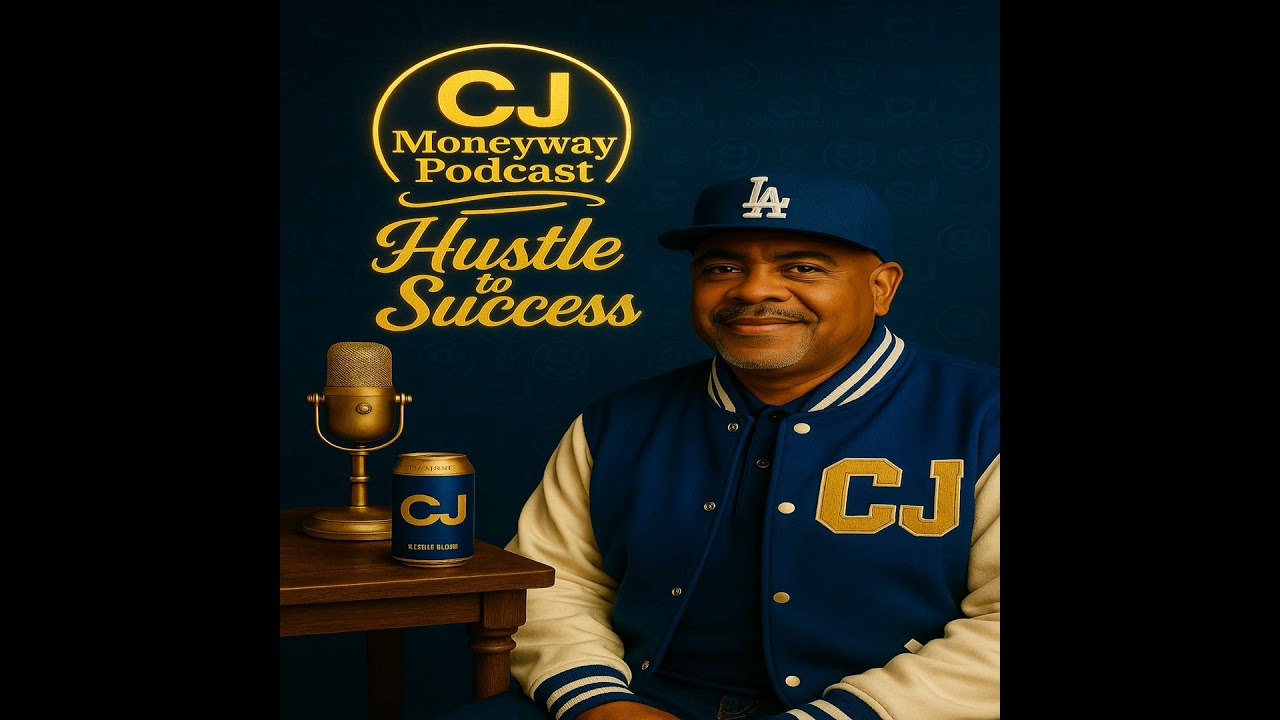
In this CJ Moneyway Show episode, veteran author, editor, and publishing executive Terry Whalin discusses his career, the pivotal moment that taught him to take 100% responsibility for his own success, and the practical strategies he distilled into his book 10 Publishing Myths. He explains how the "Rule of Five"—doing five promotional activities every day—helped the Chicken Soup for the Soul authors sell a million copies, and he expands the concept with a Myth‑Buster Action (MBA) for each myth. Whalin debunks common misconceptions such as the belief that writing a book will automatically generate substantial income, and he warns authors to vet publishers for scams. He breaks down the three main publishing pathways—traditional (with an agent), self‑publishing, and independent publishing (exemplified by Morgan James)—outlining pros, cons, and cost considerations. The conversation emphasizes building owned platforms (websites, newsletters, blogs) over "rented" social‑media channels, identifying a precise target reader, and treating a book proposal as a business plan. Persistence, handling rejection, and leveraging podcasts, media appearances, and low‑price bonus funnels are highlighted as essential tactics. Whalin also shares promotional URLs (publishingoffer.com, terrilinks.com/11thmyth, bookproposals.ws) and his motivation for maintaining a prolific blog of over 1,700 entries. The episode is interspersed with sponsor reads for Shopify, Talkspace, and Progressive.
Chapters
When you think about businesses that are selling through the roof, like Alo or Skincee, sure, you think about a great product, a cool brand, and brilliant marketing. But an often overlooked secret is actually the businesses behind the business, making selling, and for shoppers, buying, simple. For millions of businesses, that business is Shopify. Nobody does selling better than Shopify. With Shop Pay, that boosts conversions up to 50%, meaning way less carts are going abandoned and way more sales happening. So if you're into growing Business, your commerce platform better be ready to sell whatever your customers are scrolling or strolling on the web, in your store, in their feed, and everywhere in between. Businesses that sell more sell on Shopify. Upgrade your business and get the same checkout Skins uses. Sign up for your $1 per month trial period at shopify.com/westwood1, all lowercase. Go to shopify.com/westwood1 to upgrade your selling today. shopify.com/westwood1 This podcast is sponsored by Talkspace.
You know when you're really stressed, or not feeling so great about your life, or about yourself? Talking to someone who understands can really help. But who is that person? How do you find them? Where do you even start? Talkspace. Talkspace makes it easy to get the support you need. With Talkspace, you can go online, answer a few questions about your preferences, and be matched with a therapist. And because you'll meet your therapist online, you don't have to take time off work or arrange childcare. You'll meet on your schedule, wherever you feel most at ease. If you're depressed, stressed, struggling with a relationship, or if you want some counseling for you and your partner, or just need a little extra one-on-one support, Talkspace is here for you. Plus, Talkspace works with most major insurers, and most insured members have a $0 copay. No insurance? No problem. Now get $80 off of your first month with promo code SPACE80 when you go to Talkspace.com. Match with a licensed therapist today at Talkspace.com. Save $80 with code SPACE80 at Talkspace.com.
Welcome to the CJ Moneyway Show podcast, the podcast show where we unlock potential one dream at a time. Today we have another guest whose journey is truly worth hearing. Sit back, relax, and enjoy the Moneyway experience.
What's up, my good people? Welcome to the CJ Moneyway Show. In association with Believe Network, where we bring you powerful stories and insight from leaders, creatives, and changemakers who are shaping the world in unique ways. I'm your host, CJ Moneyway, and today's episode is a must-listen for anyone who's ever dreamed of writing a book or breaking into the world of publishing. Our guest today is Terry Weldon. A seasoned editor, author of more than 60 books, and writer for over 50 magazines, Terry has helped hundreds of authors navigate the often confusing world of publishing. And his latest book, 10 Publishing Myths: Insights Every Author Needs to Succeed, is packed with practical advice for aspiring writers. Terry, welcome to the CJ Moneyway Show. We're excited to learn from your wealth of experiences today, man.
CJ, it's wonderful to be here with you. I love the opportunity.
Oh man, thank you, Terry. So Terry, you've been publishing in the publishing industry for decades. Can you tell us about your wake-up moment as an author and what happened and how did it change your approach to writing and publishing?
Yeah, no, that's a great question. I started writing for magazines and then I wrote a little children's book in 1992. It was my first children's book. Came out called When I Grow Up I Can Go Anywhere for Jesus that I did for David C. Cook. And then I started writing books for other people and biographies and all kinds of things. I actually learned how to write a book proposal, and two different times in my life I've gotten six-figure advances from publishers for those books, which is pretty amazing. I have long stories about what happened with those books, but My wake-up moment really happened in 2007. Mark Victor Hansen, co-author on the Chicken Soup for the Soul books, invited me to come to Los Angeles. I was living in Scottsdale, Arizona. I had a little literary agency back then that I was running. I came out to Mega Book Marketing University in Los Angeles and took pitches from writers during that conference. And but I sat there, CJ, with everybody else. There were about 400 people that were there. And at that point in my life, I'd written about 50 books for traditional publishers. So they were paying me advances. They were making the books, they were getting the books in the bookstore. They were good-looking books, all that kind of thing. But when you write books, what happens is like once a year or quarterly, maybe the publisher will send you a statement financial statement about how your books are doing. All of mine were in the minus category. I wasn't making any money on these books, and I really couldn't understand why that was happening like that. They were good-looking books. I kept writing them, getting them out there. And during this event, about halfway through, it was almost like I woke up and understood what my issue was. They had a lot of different speakers. One of the speakers at this conference was Jack Canfield. Now, the other co-author on the Chicken Soup for the Soul books, now Jack has written this book called The Success Principles that's out there, and it's a best-selling book, The Success Principles. The very first success principle says that I will take 100% responsibility for my own success. Now, none of us want to take 100% responsibility. We want somebody else to do it. We want our publisher, our editor, our marketing person, Please, somebody other than us. But I understood as I listened to him how little I was doing to tell people about my own book. I mean, sure, I had a TerryWhalen.com website, but I was doing nothing else really to be telling people. I wasn't doing radio or podcasting or blogging or just all the myriad different kinds of things I do. So I decided during that conference to take 100% responsibility for my own success. No matter what my publisher did, I was going to be doing something to be telling people about my book. My situation turned around and I started selling books. I've been blogging every week, CJ, since 2004. Now I have 1,700 entries in my blog. That's a lot of articles that I've written. About a year ago, I found an article saying that I was one of the top 27 content producers out there along with Seth Godin and Ryan Holiday and Jeff Goins, people like that. Suddenly, they had Terry Whalen's name in there. It's because of the volume of material that I have and that I've put out there, and I do it faithfully. Every week, I got my blog already written for next week, for example. So I really learned that I had to be doing something and something consistently. Even the co-authors Jack Canfield and Mark Victor Hansen, people forget that it took them quite a while to even find a publisher for those Chicken Soup for the Soul books. I mean, they were rejected like 160 times. They couldn't find anybody to publish those books. They finally found a little publisher in Florida that would publish their books. And they told their publisher they were going to sell a million books in the first year. And the publisher laughed at them because they never sold a million copies of anything at that point. They just thought that was ridiculous.
Yeah.
It took those guys a year and a half to sell a million books. They practiced what they called the rule of five. They got up every day and did five things to be telling people about their book. They did a podcast, a radio show, a book signing, a newspaper article, a television show, all the different things, but they did 5 different things every day to tell people about their book. It took them a year and a half, CJ, to sell their first million copies. And now that series of books is one of the most successful that's out there in the English language. I mean, sure, we sell more copies of the Bible every year than Chicken Soup for the Soul, but It's right up there with the best-selling titles that are out there.
Wow, that's a lot of books, man. You know what I'm saying? For somebody, like you said, I like the humble beginnings of it from getting rejected 165 times and then finding a small publisher in Florida that had belief that maybe this book can do something. Just to open up the door and give them an avenue for it to do what it's doing. So there's 165 publishers kicking they self in the butt because they could have been the one that brought that book to prominence. So that's pretty cool, man.
They are. I meet agents and editors that tell me that they were one of those people that rejected that book.
Yeah, just take the foot out, kick yourself in the butt. So Terry, man, you've worked with hundreds of authors. What's one of the biggest misconceptions you see authors have when it comes to their expectations for their books?
Yeah, one of the biggest ones, and that's why I put this in the first chapter, is that almost every author believes that they will make a lot of money writing their book.
Mm-hmm.
And sure, that may happen, but what I find, the publishing process, CJ, a lot of it is outside of anything that I personally can control. Depending on what kind of way you publish and all that kind of stuff, you can control a lot of it or you can control almost none of it. I mean, if you go with a traditional publisher, they pick the title, they choose the COVID they get it out there, they do all that kind of stuff. And you may or may not have a say as far as what happens with that. So what I always encourage authors to do is really take a careful look at who it is that's going to publish your book. Because there are some people that are crooks out there, you know, that'll— sure, they'll take your money, but that doesn't mean they're really going to help you be able to sell books at the end of the day. So one of the best things, practical things that I encourage people to do, use that Google that we all have, you know. So type the publisher's name along with the word complaints or scam See what comes up. Sure, every publisher has people that don't like them. I mean, even at Morgan James Publishing where I work, we have some complaints out there. That doesn't mean they're true, or that doesn't mean— because people can say anything they want to online and it's out there forever. If you have pages and pages of complaints about somebody, that should make you sort of take a second look that No, I probably shouldn't be publishing with these people.
Yeah, so you said something that made me think about something that I'm doing on another podcast. Your truth, you know, we all have our truths. As you were saying with the complaints, we all have our truths, but that don't mean that it's the truth, you know what I'm saying? Like, you believe what you believe and that's fine, but that don't mean it is the actual truth because it's always 2 sides to the story and then 3 sides to the story. Yo' side, they' side, and then the truth. And so sometimes, you know, say you never know. So I like that, man. So Terry, you brought this up. You said this is what you wrote in the chapter of your book. Let's get to it, man. Let's talk about your book, 10 Publishing Myths. What inspired you to write it and what do you hope readers would take away from it? I like the COVID Nice cover.
Yeah, I wrote this book, CJ, because I really want authors to understand that while a lot of the publishing process is outside of things that they can control, there are a number of active things that they can do as an author to— like I was talking about taking 100% responsibility for your own success. That's one thing that's practical that you can do. As I wrote this book, I really tried to help authors see that there are things that they can do. I mean, I'll talk with authors and they'll tell me, "Well, I have a big YouTube channel," or "I build my presence on Facebook or LinkedIn or X." That's all fine and good, but in the business, we call those platforms rented platforms. I don't control YouTube. I could knowingly or unknowingly violate their rights or their agreements and I could get kicked off of that thing suddenly. I always advise people to build their platform on things that they can control. I mean, we control our own website. We control our own blog. We control our own newsletter. Do it on those kinds of things that you can really do something about, and nobody can take that away from you at the end of the day. It's something that you can proactively do to be telling people about your book. Every chapter of this book, too, I built in something called an MBA. I called it a Myth Buster Action to really help people see that there— sure, there is something practical. What they can do to bust through that particular myth that's in that chapter.
Hmm, I like that, man. You know, one thing you said, and a guy that was mentoring me in the podcasting thing, in this podcasting, he said too that Facebook, YouTube, Instagram, things like that, it's really not for podcasters, you know what I'm saying? Like, you don't go on Say like Terry's looking at, you know, he's about to go to bed, it's 9:30, you're winding down to go to bed, you strolling through Facebook or you strolling through Instagram, and then you sit there and say, oh, Corey got a podcast out, an episode out today, let me sit back and listen to this hour podcast. No, you're not gonna do that when you trying to go to bed. And I guess the same way with the books, you know, who's gonna be like, oh, okay, let me read, you know, saying this 20-chapter book. Before I go to bed, or 5 chapters. It just, you know, it just don't happen like that.
Well, but social media really is important. It's not that you sell a lot of books through social media, but that exposure that you're getting on social media really is important. That's part of the reasons publishers want to see your numbers and see what you're doing in that area. You know, one of the things we've learned, CJ, is that somebody has to see your book or podcast or hear about it probably 7, 8, 9 times before they really do something about it. Part of what you're doing in that posting about your book, and you don't want to post messages like, "Buy my book," and that kind of thing. You really want to tell them about the benefits, why in the world they should be interested in your book. But as you do that over and over, suddenly they're going to say, oh, that Tin Publishing Mist book, I ought to get that. Maybe that's something I ought to read.
Yeah, I agree with you. You know, social media does— like, I post, I put posts out every day. Not actual posts, but you know, like, what, I video clips and things like that. Because like you say, the more and more somebody sees something, or you keep putting it in their face, they might start taking notice. Like, wait a minute, Terry got How many books out? 60. Now if this man got 60 books to his credit, I need to at least read one of them because he just ain't right just to be right. And that's pretty cool in itself too, man. So Terry, man, let me ask you, man, you cover a lot of myths in the book. One of the first myths you mentioned is my book would make a lot of money. You just talked about that. Why do you think this is such a common misconception? Amongst authors?
Well, they just— people just believe that, uh, maybe they believe the sales pitch of somebody else, and maybe they just, they believe almost like the, uh, the, the movie Field of Dreams, you know, if they, if they build it, they will come. Well, not necessarily. You can build the fanciest website, you can spend you know, $20,000 to publish your book with somebody, that doesn't mean that it's going to sell. So, so look for those ways out there that you can, uh, get your book out there. I mean, this, this podcast thing we're doing, this, this is a great way. People listen to podcasts all, all the time, whether they're working out or driving to work or all, all different kinds of ways throughout the day. So Use those types of things that are out there as vehicles to be telling people about you and your book at the end of the day.
Yeah, and that's important. You know, like I had somebody come on the other day, you know, and they said— this is a matter of fact, it was a young lady I was interviewing— and she said, this is one of the best ways to get out there now through podcasting, because just like you and I, we're both sitting at home. You at home, I'm at home. It ain't like we gotta travel and go here and there, and you still getting the exposure about, you know, saying what you doing. So this is a good vehicle that I think more and more people are tending into, and like you say, listening to, to get ideas and to get things from other people, especially from podcasters that they trust. You know, like, okay, if I trust CJ Moneyway, Oh, he got Terry Wellen on the show. Oh, he wrote this book, 10 Myths. Oh, let me check that out. If they trust me enough, then they gonna trust me to trust you. So it's a trickle-down effect. So it's a win-win for both of us.
Absolutely, that's one of the great things about this. And you know, CJ, I've set up a special site for people to be able to get my book. Sure, they can buy it at any bookstore. I mean, we sell this book at Target even, for example. They can go to target.com and get this book. Book, but I've set up a special site that if they go to publishingoffer.com, they can go— publishingoffer.com— they can go over there and they get this book for only $10 including the shipping, along with over $200 worth of bonuses that I send them for this book. So, you know, I try to make it easy for people to be able to get the book, consume the information, and really figure out how their book can be successful out there.
And, you know, uh, by someone that I thank you for sending me the book, and I, and I have started reading it. And one thing I noticed in your books, in each chapter you include something called a Myth Buster Action, MBA. Can you explain what that is and how it helped readers to take practical steps towards success?
Yeah, no, absolutely. Every chapter has this MythBuster action, which is something that they can actually do. I mean, so much of the publishing process is outside of anything that an author can control, but there are things you can control, and that's really what I tried to emphasize in this MythBuster actions, that practical everyday things that those of us that are writers out there can do.
When you think about businesses that are selling through the roof like Alo or Skims, sure, you think about a great product, a cool brand, and brilliant marketing. But an often overlooked secret is actually the businesses behind the business making selling, and for shoppers, buying, simple. For millions of businesses, that business is Shopify. Nobody does selling better than Shopify with Shop Pay that boosts conversions up to 50%, meaning way less carts are going abandoned and way more sales happening. So if you're into growing your business, your commerce platform better be ready to sell whatever your customers are scrolling or strolling on the web, in your store, in their feed, and everywhere in between. Businesses that sell more sell on Shopify. Upgrade your business and get the same checkout Skins uses. Sign up for your $1 per month trial period. At shopify.com/westwood1, all lowercase. Go to shopify.com/westwood1 to upgrade your selling today. shopify.com/westwood1.
This episode is brought to you by Progressive Insurance. You chose to hit play on this podcast today. Smart choice. Progressive loves to help people make smart choices. That's why they offer a tool called called Auto Quote Explorer that allows you to compare your Progressive car insurance quote with rates from other companies. So you save time on the research and can enjoy savings when you choose the best rate for you. Give it a try after this episode at progressive.com. Progressive Casualty Insurance Company and affiliates. Not available in all states or situations.
Prices vary based on how you You bye.
This podcast is sponsored by Talkspace. You know when you're really stressed or not feeling so great about your life or about yourself? Talking to someone who understands can really help. But who is that person? How do you find them? Where do you even start? Talkspace. Talkspace makes it easy to get the support you need. With Talkspace, you can go online, answer a few questions about your preferences, and be matched with a therapist. And because you'll meet your therapist online, you don't have to take time off work or arrange childcare. You'll meet on your schedule, wherever you feel most at ease. If you're depressed, stressed, struggling with a relationship, or if you want some counseling for you and your partner, or just need a little extra one-on-one support, Talkspace is here for you. Plus, Talkspace works with most major insurers, and most insured members have a $0 copay. No insurance? No problem. Now get $80 off of your first month with promo code SPACE80 when you go to Talkspace.com. Match with a licensed therapist today at Talkspace.com. Save $80 with code SPACE80 at Talkspace.com.
Whether you're just getting started or whether you've been published a lot.
Mm. So Terry, you had the 10 myths that you talked about. You've also written an 11th myth that didn't make it into the book. Can you share what that myth is and where listeners can find it?
Thanks, CJ. Yeah, Alice Kreider, who's an acquisitions editor at David C. Cook, When she sent me back her endorsement, she said to me, "Terry, you're missing the 11th myth." I'm like, "Okay, Alice. What's the 11th myth?" She said, "The 11th myth should be that if I send my book to Oprah, she'll book me on her show." I'm like, "Well, yeah, that's a pretty good myth, Alice," because those of us inside of publishing realize that Oprah Winfrey still has a big warehouse in Chicago where people have sent her stuff and she organizes all that. And then once or twice a year, she just gives it all away. So if you want your book to be in that stack of stuff that Oprah gives away, sure, you can send your book to Oprah. But what I decided to do was to write that 11th myth chapter which I did, and I give that away to people. People can get that by going to terrilinks.com, plural, terrilinks.com/11thmyth, 1-1-T-H myth. That'll take you to a place where you just put your name and email address in, and then you'll get that 11th myth from me because I want people to have it. I want people to really figure out this whole publishing situation and how in the world they can do something to be successful with their book.
I think that's pretty cool. And if you didn't catch it, we will have this website that you can go get your free copy of The 11th Myth in the show notes. So Terry, you say that authors often have the greatest passion for their books, but that alone isn't enough to make it successful, as you mentioned earlier. What practical actions can authors take to help ensure their book reaches the right audience?
Well, there's a lot of different things that people can do to reach, reach the right audience. But one of the basic things you have to do is you have to identify who is your reader. Now, people will pitch me books all the time and they'll say, my book's for everybody. Well, That's not true. No book is for everybody. What kind of person is your book for? What do they look like? Where do they work? Do they have kids? Think about that person and be real specific. Maybe you have several levels of who that audience is. Okay, where are those readers? How are you going to reach those people? They listen to podcasts, they read magazines, they read the newspaper. Where can you reach them? What is the best way to reach them? Really think about those kinds of things. What's your plan? What's your plan as an author to really be able to reach them? A lot of people don't realize this, but I believe that every book, even if you self-publish, you should do what they call it— we call it in the business, we call it a book proposal. That's basically your business plan. It helps you identify who your audience is, what you're going to do, why in the world they should be interested in the book, what are the competition, some things like that. People can get that book proposal guideline. For me, I wrote a book years ago as a frustrated acquisitions editor. I wrote it to try to help get better submissions called Book Proposals That Sell: 21 Secrets to Speed Your Success. Now people can get that book from the ebook version of that book for me for free if they go to bookproposals.ws. That shows you the COVID There's a big button that says free book. You can get it for whatever kind of version you want, the ebook version of your book. Now why do you think, CJ, I would give away the ebook version of my book? Well, I give it away because one of the things we've learned at Morgan James is that if you get that ebook version of my book, Proposals That Sell, and start to read that ebook version, there's a high probability that you're gonna turn and buy the print copy of the book. So you don't lose anything as an author by giving away ebook version of your book, you're actually driving print book sales by doing that. You know, when the ebooks came out, CJ, we all thought that ebooks were going to take over print and print books were going to disappear. Well, that, that's not true. That's not what's happening out there. I mean, Marcus Duhay, who just stepped down from being the CEO of Penguin Random House, the biggest publisher in the world, he said that their statistics worldwide is that it's 80% print and 20% ebook. So it's not that ebook's going to take over the world here. Our printed books are not going to disappear. They're going to be around forever here. We can rest assured about that.
Me so that we can have a collection. Like, you got— I could— you— I got collections upstairs. I love when you guys send me a book, you know, and I can put it in my collection. Like, hey, I interviewed Terry. Well, this man got over 50 books out there in the market, man, which I think is very impressive. Hey, so Terry, man, you say, um, writers, type of writers You said that one of the most important attributes for success is persistence. Why is it persistence so critical in the publishing world?
Well, yeah, persistence really is an important quality. A lot of these people, I find, these writers who send their stuff out, they get rejected 3 or 4 times and they figure, well, Nobody wanted my book out there. Well, look at the persistence that this Chicken Soup for the Soul guys had, 160 times. And what they did with each other— I mean, getting rejected is hard. None of us like to hear no, but it happens a lot in the publishing world. And what Jack Canfield and Mark Victor Hansen did with each other when they got a rejection, they said, okay, Next is what they said to each other. They said that word next. I mean, that's a hopeful word when you really think about that. It's like, well, this one didn't work, where's the next one? And so that means they're not going to stick that thing back in their drawer, but they're going to wrap it back up and send it out to somebody else so that that person can have the opportunity to publish that book. And it does, it takes some persistence sometimes to find that right fit and that right person, but I believe they're out there. I know they're out there. You just have to really work at it to get it to the right person.
You know, like you said, don't none of us like rejection. You know, sometimes we hate looking at comments or what somebody said, what they had to say. About your book or whatever, podcast, but we got to take constructive criticism at times. I want to go back just a second. You said something in the last segment about knowing who your audience are, and it made me think because even in podcasting, it tells you it's like a niche. You got to have a niche. Who is your target audience? And it actually tells you to have an avatar. Create an avatar and act as if you're talking to that avatar, you know what I'm saying, as if they are a podcast listener. What do you think that they would want to hear, you know, in the demographics? And what do you think, you know what I'm saying, that they want to come from you? And so in ways, writing and doing what we doing, it all parallel, you know what I'm saying, comes together at some point because it's some of the same methods that you have to use. To do.
Absolutely.
So Terry, publishing has changed, and you being a publisher working for a major publishing company, publishing have changed over the years with more options available than ever before. Can you break down some of the main publishing options for aspiring authors and the pros and cons of each?
Yeah, there's basically 3 areas I would say that, that people can go. You, you can go the traditional route I've done that a lot. I think that's a great way to go. Uh, in order to get a traditional route, often, uh, you have to work with— get a literary agent. So you have to find an agent that will take you on. Then that agent helps you with your book proposal, and then they, they market that proposal to publishers. The publisher then pays you in advance on the book, uh, will work with you on the production and everything in the book. They'll get the book out there into the bookstore. Maybe they'll help you a little bit on the marketing. You know, it's, it's different for every publisher, but I, I tell every author it's going to be 80% up to them because I try to be realistic that sure, we're going to do our part to get the book out there in the bookstore, but they actually have to be doing something so that book moves out of that bookstore into people's hands and they buy it at the end of the day. Traditional is one way you can go. Then at the other end of the spectrum, there's self-publishing. Self-publishing has gotten better, I would say, CJ, over the years. I mean, some of these self-published books look pretty good. Now, there's also some that don't look very good, that are garbage, that have a poor cover, have a poor title. They're done poorly. So, you know, be careful, you know, who you work with. And I, I've met people that have spent, you know, $10,000, $15,000, $20,000 on their self-published book. So, you know, be cautious. Think about that stuff before you actually pull the trigger and do that kind of thing. But sure, there are people out there on the self-publishing side to be happy to take your money and and make a book for you. Now, that doesn't mean they're going to sell the book at the end of the day, but they'll be happy to make one for you. Then there's the middle ground, which I call independent publishing. That's really where Morgan James, that I work for, falls more into that middle category. We've had 29 New York Times bestsellers, over 200 Wall Street Journal bestsellers.. We've been around 20 years. We've produced over 6,000 titles. We do about 200 books a year. And so we do sell books into the brick-and-mortar bookstores as well as on the online bookstores and all that. So take a careful look at these companies and figure out which one is the way for you. Explore everything is what I tell people to do, and then find the one that makes the most sense for them to go with that person.
I like the way that you broke it down because you, like you say, like even with— is for one, it's hard for the average person to find a book agent, or like you say, or, you know, somebody that's gonna go out there to get in traditional books unless you got something that's just sometimes a name, I guess, you know, whatever. And a lot of people like myself, I published off of Amazon, you know, I did my book on Amazon, published off Amazon. 'Cause I didn't know no other way. I didn't have the money to spend to find a traditional agent. I didn't think nobody really wanted it. And I'm so with you, when you said it earlier, it made me laugh. Some people think they write a book and you going to make some money. I didn't. Not net, except for the books that I bought that they give you from the beginning. I sold them to family and friends and some I gave away. But other than that, that book been on the shelf for 10 years now.
Why?
Just my 10-year anniversary. Mm-mm.
Well, TJ, we try to teach our authors at Morgan James to avoid that word, Amazon, because I mean, let's think about it here. You know, bookstore owners, librarians, they believe that Amazon has destroyed their business, right or wrong out there. Now Amazon is a big customer of Morgan James. But they're only 24% of our overall business. So the way I look at it is, if you publish with Amazon, you're missing 76% of what we do for the book out there. So I always encourage authors, sure, sell your book on Amazon, but also sell it at independent bookstores, at BarnesandNoble.com. I mean, we sell our books at Target, for example. Share the love is what we call it when you really encourage people to go in different directions to buy your book. Don't tell people that you had an Amazon bestseller because the retailers don't really care about that. Now, if you had a bestseller, they would be interested in that. They don't care that you have, uh, 50 Amazon reviews for your book, but they would care that you have 50 reviews. So just, just take that word out when you're, when you're talking to people, and that'll, that'll help you.
Uh, you know what, you're the second person I interviewed. Another lady owned a publishing company, and, you know, we were talking about publishing and things of that nature. Say, once you go on Amazon, then you kind of lock yourself out of all the other, you know what I'm saying, bookstores, like, like say Barnes Noble. And she started naming off all these different things. And so she said you don't want to lock yourself out of the other, you know, something like what you were saying, you know, you want to get into these other bookstores and, and, you know, um, you know, those that, you know, like private bookstores, bookstores in the neighborhood and Target and things of that nature. So, you know, you're the second person that told me that, so next time I'm gonna think about that long and hard. So, uh, Terry, man, let you go in a minute, man. I just got a couple more questions for you, and this one was about you, and we talked about it earlier. I just want you to, you know, expound on it a little bit more. Your blog, The Writing Life, has over 1,700 entries. You say you already got one already ready for next week. 1,700 entries and is recognized, as you said earlier as well, as one of the top 27 content resources for writers. What keeps you motivated to continue sharing insights with the writing community?
Well, yes, CJ, I, um, I started this little blog basically to, um, as a tool for, for me to document the experiences that I have, good and bad, as a writer. So I have a ton of these things that still are different that I write. And I think it's a way that I can help other people as well as encourage them. I mean, they say there's over 600 million blogs out there. So there's a lot of blogs. But if you're consistent and really work at it, your blog can rise to the top. I believe we live in a world of abundance out there, is the way I look at it, CJ. And so you can either see it's a world of scarcity, you know, it's like, oh, who would buy my stuff? Or you can see it as a world of abundance. And I really look at our world as having a lot of abundance and a lot of possibility. We just need to, when the door comes along, open it up and run through it, seize that opportunity.
And I like that. I just interviewed somebody right before you, and I told him this is something that I've been telling some friends and family members over the course of the year, is that you prepare yourself now. You prepare yourself so when that door does open, you'll be ready to go through it. If I'm not preparing myself to go through the door when it opens, then I'm still standing at the same door that I was at. So always be in preparation because you never know when the moment might come or when the moment might happen. So I'm preparing now. I may not see the door being open, but when that door do open, I'm going to make sure that I'm ready to go through it, you know, opposed to not being ready to go through it when for the door that I'm waiting to be open.
That's fantastic.
So Terry, man, I just got one more question for you. What's up next for you? Any new books or projects in the works that our listeners should know about?
Oh yeah, I'm still writing, still finding books for authors at Morgan James. I had an author sign his contract today for another book. So yeah, I'm still actively working at this book stuff. I'm going to be speaking at some writers conferences. One in March, one in April, one in May. So, you know, people can keep track of where I am. I hope they'll show up at a writers conference because, you know, who you know is almost as important as what you know. So go meet a bunch of people and make those connections. That's another important part of this business.
Networking. Yeah, I've been on that. So Terry, you know, I mean, I thank you for, you know, for coming on and joining us on the show today. Your book, 10 Publishing Mills is a fantastic resource for authors, and we're grateful you could share some of your wisdom with us today. So before we go, I mean, you told us that already, I'm not gonna even worry about it. So Terry, provide us— you gave us a lot of links, those to go get free books, get the free offer. So where else can we find you at? Where can we find you on social media? What's your social media handles?
Oh, you can find me at TerryWhalen.com. You can find me on X, Twitter, I have 175,000 followers over there. You can find me on LinkedIn, Terry Whalen. I have 19,500 connections on LinkedIn. All those different places are different ways. People say that I'm one of the most accessible people in publishing. I mean, a lot of these agents and editors, you may send stuff to them, CJ, but do you get an answer back? It's the question. I'm one of the people that actually respond to my email and my phone calls because I want to help people. I want them to be successful with what they're doing. And so I, I really hope they will go to publishingoffer.com and, you know, pick up 10 Publishing Myths.
You heard it right here. Listen to the man who, if you doing numbers like I was just doing the numbers, has over 200 50-something thousand followers between his platforms, if not more, because he didn't mention YouTube and things of that nature. So follow my man Terry Weller, man, wherever he's at. He says very accessible. Hey, again, thank you, Terry, for being on the CJ Moneyway Show. And to our listeners, thank you for tuning in. If you found value in today's episode, please leave us a review, subscribe, and share it with someone who might benefit from Terry's insight. Make sure to visit publishing author— me, offer.com, where you can get Terry's book for only $10, including shipping, along with over $200 in free bonuses. Until next time, stay motivated, stay persistent, and keep working towards your dreams. This is your boy CJ Moneyway signing off. We outta here. Peace.
Thank you for listening to the CJ Moneyway Show. Don't forget to share this episode with your friends, leave a comment, and drop a review. Be sure to tune in every Tuesday and Friday for more inspiring journeys. Who knows? Your story might be next.
More from Corwin


Pressure-Proof Leadership: Claire Hayek on Neuroscience, Resilience & Leading Under Pressure

Healing With Fire: Zulma Williams on Trauma, Cancer, Depression & Finding Your Voice

The Economy of the Heart: How Love and Leadership Build Profitable Cultures | Hanna Bauer

The Doorman Nobody Valued: Wes on Storytelling, Corporate Blind Spots, and Building Brotherhood o...

Art for Your Sanity: How Creativity Helps You Survive Chaos — with Susan Hensley

Becoming Better: Ryan Gottfredson on Why Success Requires More Than Doing More

Mission Control OS™ Demo | Governance-First AI Executive Operating System | OpenAI Build Week

From Frustration to Confidence: The Dyslexia Professor’s Blueprint for Struggling Readers

Built in the Pit: Chris Duffin on Resilience, Accountability, and the Discipline to Rise

Cyber Thrillers, AI & the Future of Technology with Charles V. Breakfield & Rox Burkey