Canada Is Broken: A Brampton Builder Says It On Camera | Jeff Lal Uncut
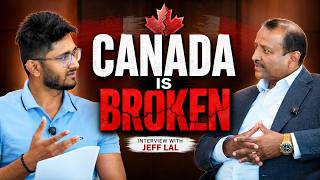
Jeff Lal, a Brampton builder and immigrant from Fiji, talks about building businesses from janitorial services to construction and LED lighting, navigating real estate in Brampton, and what he sees broken in Canada. He covers hiring, cash flow, government grants like SaveOnEnergy, and advice for newcomers starting businesses.
Chapters
Now, dangerous question. Why enter politics now? And rather than, if I'm immigrant, how can I have a Canadian experience?
We are into multiple businesses. We're into gas station business, we are in the motel business, we are into construction development business, and the franchise, franchisee business. I built 3 temples.
What is the one thing that person watching right now can build in the life that no one can take away from them? And how do you manage the bad times? So let's, for example, I think you might have seen almost 3-4 recessions so far. So how do you manage yourself and the business in the recession time? Do you see currently any gap that someone can still get into it and get really wealthy in the real estate also?
You are the ones who are going to lose your property if you cannot afford it. I will not agree with any of the real estate agents out there. I lost a lot of money. Real estate investment is the best investment that you can ever make. A lot of the new agents, they have this— they just came in the market, they have no experience at all.
I hired first employee, it was not good. And then I decided I will do everything by myself. If someone wants to start their small business and they are doing everything by themselves, When do they make a call like, I want to hire a first-time person?
Look at the history from 1989 up to today. I have never worked for anybody. Nothing can stop you from who you can become, from minister to a prime minister. Your mind can conceive and believe it's an achievement. Jeff Law's journey started in Canada as a janitor. Canada is the most easiest country to get into. People with fake documents, uh, they're coming here, they're flooding Canada. That's the reason what the government— now the government is walking backwards. The leader has changed, but is the party still the same? Now they're backwards. They're sending all the immigrants back, all the students they're sending back home because they're not extending their work permits. They're sending them home.
Tell one biggest mistake that maybe you want to undo.
Don't be picky, don't be a chooser and a beggar.
So if someone wants to, let's say, replica your success, go to China or imports from somewhere, build a business like yours. I see a lot of restaurants are not doing particularly well. When is the off switch? When they decide I should close this business, it's not for me. So why we are not building more houses? Like, what is exactly stopping us? For example, there is a draw for, let's say, a plumber.
Yes.
So now everyone is becoming plumbing plumber, but they don't know the actual work.
Don't let people create fake documents for you, do fake things for you because they want to sell your home.
So there is a government grant to make the home or a business more efficient.
Did we create more jobs in Brampton? No, we didn't. Did anything new happen in Brampton? No, it didn't happen. So where this big gap of 700,000 came in 2 years?
So today's conversation is not about endorsing a political party. Or attacking anyone, okay? It's about the personal journey, successful entrepreneurship, and what makes someone start their political career from the entrepreneurship. Forget about the campaign posters and the company logo. Who is really Jeff?
Who is really Jeff Lal? It's a very, uh, good question when somebody wants to interview and ask me who the person really is. And I guess it's very important to know who the person himself is. Jeff Lal came all the way from Fiji Islands in 1985 as a student, right? I did my studies here in, in Brampton at Chinkuzi Secondary School and at Sheridan College and Seneca College. I did my high schooling in Fiji as well, and when I got here, then they put me straight into high school again, which is Chinkuzi Secondary School. The journey of Jeff Lal from Fiji Grown up in a middle-class family, farmer's son. My, my dad was a very successful businessman and very politically connected in Fiji Islands as well. And with his success, I guess I had the ambition of myself when coming into Canada of being a successful businessman. And Jeff Lal has always been leadership. I always had that in me. I always had the charisma of becoming a leader, not a follower, and that I've always been doing that. And it was hard work. It wasn't easy schooling and working at the same time. Jeff Law's journey started in Canada as a janitor.
Okay.
I was proud to say that every interview, everywhere that I go, I say that My first job in Canada was as a janitor, and I have— I'm not ashamed to say that. The reason being that because the journey of a student coming from Fiji Islands and the starting as a janitorial work, um, that has taught me. And I was proud to, to say that, and I'm still proud to say that that has taught me so much and made me strong that I was not feeling shy of what I was doing.
Right. So, uh, so anyone watching right now, tell if someone is struggling right now in the initial days, for example, they are immigrant into this country right now, right, such as you came, how can they grow a massive empire, or how can they achieve a success in this country? They have no connection, they have no contacts, they are new to the system.
Absolutely. I see the first of all, any immigrant coming in in this country, or a student coming in, I have hired, and we have a lot of students working for us in our businesses, and, uh, several businesses. But I find in today's generation, compared to me, who I was and who I am today, we are brought up a bit differently from the generation today. The children, the students coming out here today, they are very hesitant to do hard work. And some communities you'll find they are hard workers, but in certain communities they are not willing to do hard work. I am going to tell— my message is very clear to them that when you leave your country, the reason you're leaving your country, you're coming to Canada, which is called the land of opportunity, right? You— there is nothing can stop you from who you can become, from minister to a prime minister to a doctor to a dentist to a farmer, anything that you can become. What your mind can conceive and believe, it can achieve.
So you believe in law of attraction?
100%. Because I think if you make up your mind that you're coming in this country, there must be a reason.
100%, right?
We all say back home that people are coming here to make themselves better. And if the parents are bringing the kids— I brought my children in this country to be better for them. Am I correct?
Correct.
So this is what it is that Don't hesitate to take any opportunity that comes across you. Don't say no, don't be picky, don't be picky, don't be a chooser and a beggar. Anything that comes across, take any opportunity that comes with you.
So no opportunity is small?
Doesn't matter if it's big or small, take that, run with that. And once you are getting your feet wet in the field then automatically it comes to you that maybe this is the right thing for me, or that is the right thing. But if from the beginning, if you keep saying no and don't want to do, and you're just being picky on what you want to do, you'll never be successful in life. When I came in this country, if I, if, if I wouldn't have struggled to be a janitor cleaning toilets, mopping the floors I won't be here today where I am today.
Makes sense, makes sense. What was the turning point in your career that really, uh, make it from like survival businessman to a massive scale, uh, really good businessman, right?
So the, um, after getting the bit of experience of the cleaning business, uh, cleaning experience of how to clean and how to mop floors, I started my first business was a cleaning business called Northwest Janitorial Services. I used to clean, if you know, company called Midas Muffler Shop. I used to, I started with one small company and I built a massive janitorial company, cleaning shopping malls to businesses, doctor's office, dentist office, tire shops, mechanic shops. I did that for 3 years of very hard struggling. I used to get blisters on my hands after mopping. The floors from 4:00, 5:00 PM till like 3:00 in the morning. It was very tough. It was a struggle. And then opportunity came to me again while doing janitorial work was for a grocery store. In 1989, I opened up my own business called Jeff's International Supermarket.
Right.
A West Indian grocery store back in 1989 at Highway 10 and Beauvais in White Rose Plaza. It was a very successful business. From there, I grew to a second location at Jane and Lawrence, second branch of Jeff's International Supermarket. Started building contacts, relations. I started importing myself.
What do you mean by importing?
Importing all the fruits, vegetables, and seafood. From the West Indies, from Guyana, Trinidad, and Barbados, and Dominican Republic. I ran that very successfully for another 6 years, and as the market demand grew, I guess more and more, um, immigrants were coming in the country, more and more stores started opening up, and the competition was getting tough, and What I did was I diverted myself from the grocery store into financing business.
Okay, the third business now.
The third business. Now, again, I could have said, no, this is not the right business for me. I could have just left that or could go start looking for a job. But again, from— look at the history from 1989 up to today, I have never worked for anybody. Jeff's International Supermarket made me a hero in the West Indian community, bringing fresh fish, vegetables from Guyana, from Trinidad, Barbados. Made me a hero in this community, and I started— I became a star basically when nobody was importing all this back in those days. 1996, after losing my dad, I got a little disturbed and I stopped the grocery store business. And my dad used to be part of me in the business and I stopped that. And 1998, something clicked again. Met with another friend from the West Indian community who got me into financing business.
Financing business.
So I started arranging loans and mortgages for people.
Correct.
And in 1998, I bought my own building up at Devon Road, 139 Devon Road. We bought our own unit and I started doing mortgage and financing and I became a superhero again in the business when people used to say that if Jeff Lal cannot do your mortgage or loan, nobody can do it. So that's how successful that business grew. So struggle has always been there. I've been very persistent. Of what I was doing, right? I never gave up in life.
And when did you start Janko?
So there's more before Janko. Okay. So 1999, after into financing, then I go into construction development business. Then I started Jaipur Development Group.
Okay.
In Jaipur Development Group, I started building plazas. The opportunity came from through another friend and while I was in financing business, so I arranged some financing for him. I did mortgages for him, and he says, why don't you come into construction development, right? So I started that in 1999. So 1999 to 2006, I built multiple condo retail plazas— Jaipur Bazaar, Jaipur World Plaza, Jaipur Crisis Center, Jabal Burj Waqf Center. So I built all these what we call condo retail units, right? We built the plaza, buy the land, we do construction from right from ground up, put the building up, and then we started selling them as condo units.
So that— so one more question here. So at that point, and today's real estate market, like where do you see— I know there is a difference, but do you see currently any gap that someone can still get into it and get really wealthy in the real estate also?
100%. The market has changed drastically from those days to what we used to build. Um, the price of land compared to what it is today and what it was those days, like 10 times more, um, per acre. If you— those days we used to pay, back in '99, '98, we used to pay $400,000, $500,000 per acre. Today the market, same properties we're looking at, between $6 to $7 million per acre. The construction cost back those days used to be $50 to $60 per square foot. Now the construction cost is $300 to $400 per square foot, right? So yes, the market has changed. As things changes, the community keep growing, the more and more immigrants coming in, people— the price has changed, it has drastically changed. 100%, there is still opportunity for people Real estate investment is the best investment that you can ever make. But you got to know the market, when to buy and when to sell. If you don't know the market of buying and selling, if you don't know, for example, we are in technical recession as we are called, right? If you don't know how to buy in this time, then don't. Get some professional advice and people who knows where the business for a long time. I know myself if I'm going to do any purchases, if I'm going to do any sales, I know the time or which property is the right one to buy or to sell. Real estate is the right investment for anybody out there who wants to invest. There's nothing better than real estate investment. Uh, it doesn't matter during recession or not in recession.
So here is my question. So the funny thing I also experience, so when we go to someone to buy the real estate, we usually look up to the realtor and then they usually sell you the wrong house for the commission. There is a lot of incident happening. So what do you recommend? People should basically take advice from who? That their interest should not be there, basically. For example, realtor would not be the ideal scenario to ask.
I will not agree with any of the real estate agents out there. 100% there for the commissions. They will try to push the sales because it's for them is the commission. If you find the right real estate agent will not make you go and spend or the agent— when you see sold over asking price, some of these real estate agents, they make competitions amongst themselves. Yeah, they inflate the value. If you look at today's market, Brampton homes, we are paying during COVID What happened today? It's a bubble market. Market is crashed. The realistic value of the properties here in Brampton is the regular townhomes are selling for a million dollars.
That's crazy.
Wasn't crazy?
Yeah.
What is the actual value of these homes? Is nothing more than $600,000 to $700,000 for a condo.
Yeah, townhouse.
Okay, right. So the agents, they give wrong advice. A lot of the new agents, they have this— this came in the market, they have no experience at all. They just get the license and they do one sales, they see this chunk of money coming to them, $10,000, $20,000 in commission, they think this is the business for them. But are they the expert? No, they are not.
So if someone wants to buy their, for example, first home, or someone wants to buy a first business unit, right, what do you recommend based on your builder experience? Like, should they finalize the area first? Should they finalize— like, what should be the practical steps?
Well, what we call is location, location, location.
Location matters, right?
That's number one. This location is very important. Now again, you got to look at the affordability. If you can afford home in a certain area, do investment. Some people, they look at the distance from their workplace to their home, home, right? The location again where they're, uh, they want to be located at. But I will say to all the first-time home buyers, anybody who's going to buy properties, don't overstretch yourself. If your budget allows you only for that, don't compete with your friends, families, or your neighbors. What your pocket allows you, only do what it allows you to do.
Correct.
Don't let the real estate agent make fraud documents and things to get you the property which you cannot afford. Don't depend on tenants that you'll have. You'll— oh, I'm gonna put extra room in here, I'm gonna have tenants to do that, right? That's not what you call real estate investment.
So your advice would be find a really good location, pay a decent down payment. I think that would be the part.
And then, yeah.
You have to have the full capacity to pay the recurring mortgage even without the rental income.
That's right. If the rental— don't ever count that, oh, I'm gonna rent one room, I'm gonna get the surplus income. If your income doesn't cover your expenses, don't get into it. Don't let the agents fool you. Oh, you can make room, you can make the basement this way, we can create this to create extra space and income. Don't get fooled by that.
Makes sense.
As we all know, the problems that we are having with the tenants, it's a crisis out there with the tenants. The people are having their houses or the rooms rent or the basement rent. You cannot get the tenant out. They're having a major problem. And my guys, my friends out there, take my advice. What your pocket can stretch you onto, only buy properties to that. Don't let people create fake documents for you, do fake things for you because they want to sell your home. That's very important, um, because it's you who are in liability. You're the one on the hook.
Correct.
You are the ones who are going to lose your property if you cannot afford it.
And you will lose the down payment, down payment, everything. Yeah, credit score also.
Exactly. Your credit, your credit is gone. Lawsuits after you, the banks are after you, the lawyers are after you, CMHC is after you. Like, these are some of the things that people should know.
And do you recommend— so in your opinion, do you think pre-construction units are better to invest into, or ready-made resale is better?
You see, again, like, if you look at today's market, people should know first something, okay? The land value where the builder is building, you should analyze the market. Is this the real price of this property here?
And is there any practical way to judge? For example, let's, let's talk about this Brampton area, right? So Brampton is actually big. Let's talk about Brampton East. How do you decide what is the fair? Because See, if it is a balloon, every price is high. So how do you determine whether this is in the balloon or not balloon?
If you realistically look at them, look at the previous history, they look at the sales, previous sales, or the history of the home, what the homes are selling for. If the home was sold 6 months ago, let's, let's assume 2 years ago was sold for $800,000 and today is selling for $1.5 billion, where is the $700,000 gap came from? Yeah. Did we create more jobs in Brampton? No, we didn't. Did anything new happen in Brampton? No, it didn't happen. So where this big gap of 700,000 came in 2 years?
It was mainly, I think, demand and supply.
But demand and supply is one thing, right? Now demand-supply again will not bring that gap.
I think the main problem here is a lot of newcomers are into this country. This is a country of immigration and they don't know yet the financial system, housing market, and they get influenced by The realtors, yes.
Yeah, and people that say that, oh, you know what, this is good, or that is good. But again, you got to do your market, do a thorough search in the market, the area, check the property history. Ask the agent before you start buying, ask the agent. A lot of these agents, they cannot even do the searches what the property was sold 2 years ago. If an experienced agent, ask them the questions, ask them the right question. My dear friend agent, can you tell me what this property was sold for 2 years ago?
Yeah, right.
Check other properties in the neighborhood, what it was sold for 2 years ago, a few years back, and what has extra done in the area. But I am saying this balloon market was created during COVID What has happened? COVID— nothing has happened.
People bought online.
Exactly, that's exactly what— and every street we used to go to, you say sold $200,000, $300,000 over asking price. And same homes has depreciated the value of the $2 million homes. Now they're selling for $1.2, $1.3 million.
Yeah, so it's there, right? Okay, so, uh, let's talk about your Genco company building. So after the building experience, uh, how did you start at Genco? Or like, what motivated you to start the Genco?
Well, before Genco, let's talk about Bharat Mata Mandir. Yeah, the temple that I built in the plaza. I built 3 temples, um, in every plaza, which is Bharat Mata Mandir, which is at Gore Road, Gore, and '37. When I made my first trip to India in the year 2000, I came, I took an oath to build a Hindu temple, a place of worship, and I did that in the plaza where I built, and that I've given to the community, and it's been running since year 2005 till today. I'm still the president of the temple, and the other two temples I built for the community was the Jaipur Crisis Center. Two Hindu temples I built up there. Then I took over, did the management for another temple up on Markham Road in Scarborough, the Ranga Temple. I did the management and did improvements to the temple and all that for next 2 and a half years. I did that and changed the management and gave it to somebody else. Genco came across in 2009.
Hmm.
After the recession of 2008, I went to Africa doing some gold mining.
Okay, so this is the fifth thing you are doing?
Yes, so gold mining. Uh, I went to Africa in Ghana. I was there for about 3 months, back and forth traveling, trying to do gold mining, but it was very difficult to go on a third world country to do gold mining when you don't know people. And it was, it was a big mess. I lost a lot of money. Um, then the opportunity came across. As a matter of fact, my friend who you've just seen recently, who came to give me some food here, so he was the one He works at OPG plant and he came across, says, Jeff, have you heard about LED? I used to own a restaurant in Mac Plaza and he came to me, says, do you know about LED? I said, what is LED?
At that time it was a new thing.
It was new. This is now we're talking about in 2009. LED was coming in the market, just started basically because the chip, LED chip itself was made in the US, but US never took back to the market, to the field, or to start making the product itself. He came up with the idea, says, you know what, these are the halogen bulbs over the counter. This is— it produces a lot of heat. Let's see how it does. So he says, can we go to Home Depot now and let's go and change these bulbs? LED just came in the market, and you try this. I said, what is LED? What is the meaning of LED? Light emitting diode. I said, okay. So we went, myself and him, just quickly went to Home Depot, paid about $20 for each small light bulbs, came and installed it, looked great. And there was another friend with him. He says, well, I have contact in China where you can buy these lights from.
So you can buy the LED chip?
No, the LED, the finished product itself.
Finished product itself.
Okay. So with my friend's idea and his friend, and I started making contact. And next month after, I flew to China. I made a contact with the factory. I flew to China in 2000— it was 2009, 2010 beginning. I went to China and started negotiating with the factories. I visited several factories during my trip of 2 weeks. I went to about 5 different factories. LED was just coming in the market, and I thought this was a great opportunity for me to, from my builder experience that I know about everything about building and from construction development now into electrical field, I said this would be a great opportunity for me to do that. I went and did some purchases, I bought some lights, got it shipped by air freight, and I brought in the market. People was started talking about, I started putting ads on Kijiji back those days. And people are saying these are all Chinese products, must be crap. Yeah, then I used to say, but the Home Depot product I bought is made in China also. Yeah, so people were still scared those days about Chinese product, even though we have everything that comes with 90% from China. I wasn't given the opportunity for it, but I started. I didn't give up. I was keep struggling. I will go and deliver 5 lights. If you call me, because my phone number used to be my same phone number that I have today, is the same phone number I had back those days. If you call me, I and I'll come deliver 5 light bulbs to your house.
So personalized delivery.
Yes, I used to do that. And I— and then in 2010, around April, I started my first unit. I took up on Devon Road, 72 Devon Road, which we still have present from that to today. I got a 1,400 square feet unit. Then I started bringing more and more shipment. People started trusting me. We used to have a lot of issues with the product at the beginning because products used to just give up within 6 months, year. We used to have a lot of issues with the factories. We keep improving and improving. And today that you can see Genco, we have 4 major brands which we call Genco, Easytown, Lai LED, and Greenlight. These are our 4 major brands that we carry today.
So why— I have a question. Why do we have 4 different brands instead of one? Different market positioning?
Absolutely. So exactly, that's what it is. Genco, we have 16 franchise locations all across Canada, being Nine Abacus as our head office. Easytown Electrical Supply, we and Lyle LED and Greenlight, these products we make and distribute to the other electrical distributors.
Okay.
So because they will not buy Genco product, being we have so many retail locations, and they will not buy Genco product, but they're buying Easytown, Lyle LED, or Greenlight.
But they wouldn't know it's the same company.
Yes, they know, but the consumers, they don't know that, right? Because we don't have retail outlet for the other 3 brands.
Okay, makes sense. So it's one of them is like basically franchise for the franchise retail sale, one of them is the wholesale.
Wholesale, exactly, wholesale aspect of the business. From there we have expanded the business. We grew from 1,400 square feet to 10,000 square feet up on Devon Road, and we have 16 franchise locations all across Canada. And then we bought this building here, um, 4 years ago. And now we have grown our sales, we multiplied maybe 10 times over with the business growth that we have done. And we keep growing. And now we are buying another building, uh, growing again Genco. So I'm thinking to bring our Genco business to over $100 million sales in the next 3 years.
That's the target?
That's the target.
Okay, so two questions here. So if someone wants to, let's say, replica your success, so can they go to the China? And so basically, I think LED market is right now saturated.
Yes.
Okay, so what other industry do you see that still has a potential? So for example, in the 2009 or 10, when it was a new beginning, you tapped into the correct market, right? So what do you see right now based on your experience? What is the correct market that someone can go to China or imports from somewhere and build a business like yours?
You see, you got to look at the market. It was a niche market. What is the demand in the market? Um, right now, 100% LED is saturated, but we keep growing and growing because I have made myself as one of the prominent name in the community, in, in this sector, in this field. And, um, we have established ourselves, and people trying to compete with us and It's too difficult to compete with Genco at this moment because I know what I'm doing and I know exactly what is, what is the demand in the, in the field, in this sector here in the lighting industry. And I have been improving and keep improving and keep adding and adding more and more products. You got to have a lot of cash flow to do this, number one. If you don't have that, it's very difficult to compete or enter and to penetrate into this market, not, not into LED.
So for example, some other industry you see right now, there is a potential Maybe you are not doing because you are so—
well, if I'm going to tell you on the TV that what is there to do, maybe my ideas I'm going to spit out which I'm not going to do that.
Okay, yes. Okay, tell one gold idea that you are not, you're not doing anyways, right? If you are too busy, you're not— if you are not doing that idea, you can tell one gold idea.
You see, what you're going to do is you got to do the market research. I think solar market, solar industry is very good right now. The solar market again, which is related to LED, um, that is a demanding market. That's something that which we are planning expanding a lot as well now. But you got to study the market, see what the demand is. There's so many things you can do out of China. I cannot name one or two, but there's many, many things that you can bring out of China and do things from China because China is a happening country. Even though we try to bring stuff out of India and the quality-wise of the, especially in this lighting industry, is not there. The finished products are not there out of India. But again, you got to see exactly what demand is, what the market needs, and what your background is, your expertise, and then just follow it. Yes.
Okay. And tell, tell one mistake that you made in all your whole career. I, I know you might have made a lot of mistakes, but then tell one biggest mistake that maybe you want to undo, or maybe that someone is making right now can stop right now in the business.
100%. You know what, don't follow others. If you see the guys have opened— he's very successful restaurant, he's a very successful banquet hall, I'm gonna do the same. Don't do that. If that is not your field, that is not your career, don't— you know, you don't know anything about that, don't look at others. People think on the other side of the grass is very green.
Green.
Don't do that. Don't follow others. Be a leader. Don't be a follower.
But here is— I get confused also in this one. Sometimes you want to model successful people because they have done it. There is a potential that you can also do it. So where do you draw the line in this one?
How you draw the line is— I think you should look into it more deep. If you think this is the right field for you, only then you do it. You gotta— if you're doing something, you gotta enjoy doing it. You have to, you have to have passion for it. If you don't have passion of doing something, you just want to do something for sake of just doing it, yeah, you will stop after 6 months. You'll stop 6 months.
Yeah.
For me, Genco is my baby. I have passion for it. I'm up here sometimes, I'm at work before 8 o'clock, 8 o'clock in the morning. I have passion. I enjoy every single day. Doing this, going out there, meeting with people, going out there. When I see, I tell people, you know what, I'm out here today to brighten your life.
Yeah, that's, that's correct.
Without the light, your life is in dark. So every business I go to, I said, I'm going to make sure that I'm going to brighten your life today.
Yeah. And one more thing I have noticed, you can tell more, more about to the viewers. So there is a government grant for the, to make the home or a business more efficient. Can you tell more, like, what is this?
No, it's not about a residential, it's all about a commercial. So the— there's a government grant which is going on right now called Save on Energy Program by ISO. Um, that program is for commercial, industrial, and for businesses. That's one of the best things that the provincial government has done to help small businesses, uh, to cut the electricity cost and to reduce the kilowattage on the plants itself, because we supply to US And our demand with the industrial uses are so high. So the provincial government has come up with this program. We go out there, we do an audit, or we go and advise people or to make suggestions to them that we can reduce, that we can take this fixture out, we can save you about 30 to 40% of energy cost on your hydro bill. So that has been going very well for us. We've been very successful in doing that. We are Number 1 on Ontario list. Uh, Genco is number 1 on Ontario list doing the SaveOnEnergy. We're helping many, many, many small businesses out there.
So when you say industry, does it cover like restaurant, conventional, everything?
Everything that is, um, retail locations, commercial, industrial, warehouses, anything. Doctor's office, dentist, except residential.
Except residential? Yes. Okay. And what is the grant? So for example, if you— let's take an example. Someone has a restaurant. What is the grant component, or what is they are looking like, what are the cost saving benefit analysis?
In a restaurant, I think you will see the savings because restaurant, a lot of restaurants, they don't have too many lights. But a huge cost savings would be, uh, you will see doctors, dentist office, because they have a lot of lights. Warehouses, massive warehouses, buildings, um, garage, workshop place, industrial buildings, you will see there'll be cost savings of anywhere between 30 to 40% on the hydro bill. Restaurant will not be a huge saving because they don't have too many lights. Right, the lights are very— because all the lights, just the bulbs are there. And again, there will be some difference in the light, in the hydro bill, utility bill. You'll see maybe on the restaurants would be about 10 to 15% cost unless the restaurant has a lot of lights, a lot of lights, then we change them all into LED, then you'll see about 30 to 40% savings.
Makes sense.
Okay.
And you are— so how many employees right now you have across all the businesses?
All across Janko, we have 100 employees at the moment.
Okay, so we're not going that big. Let's start with the small. If someone wants to start their small business and they are doing everything by themselves, when do they make a call like, I want to hire a first employee? And when they hire the first employee, what should they take care about? Because I also did the same thing. I hired first employee, it was not good, and then I decided I will do everything by myself. So how do you manage this?
You have to start— I used to be the same way. Like what you just said, you have to start delegating. That's very important. If you start delegating to others, you got to hire the people, you got to pay the right staff to have the right staff so you can start delegating so you don't take all the workload on yourself. I used to even do that myself. Now we have an in-house bookkeeper, we have a CPA, we have on board our lawyers, uh, we have on board our warehouse managers, we have all different levels of the staff that we have created. But again, it's about when you're hiring, hire the people in that same field. They have the knowledge. You got to pay a premium price nowadays in today's market. You have to pay premiums to keep the employees, and that's exactly what Genco is doing.
Okay, so you would suggest that hire a good paying employee rather than hire on a basic level someone has no experience?
Exactly. So if you want to expand in the business, um, you have to hire somebody who has a bit of experience if you want to expand. If you want to starting a new business, they want to train somebody because you are learning and you want to train somebody else at the same time, it's going to be different.
Both are learning.
Both are learning in the business.
Yeah, okay, makes sense. And how do you create a team leader? So for example, you have 100 employees, I'm sure you are not managing all of them day to day, right? So you have a team leader under yourself.
That's right.
So how do you create team leader and how all the staffs are motivated to do the day-to-day tasks?
This is especially a team leader has to be a motivational person. He, in order for you, I go in the warehouse myself. I work with my employees in the warehouse myself as well. And I don't never go and as a boss, I always go as a worker with them. Okay. I work with them. I will even lift boxes, just be with them for a few minutes. I help them and they see that you are also, I'm still as a normal person, hands-on, hands-on everything. So exactly, that's what I do. But I will, The, your manager, whoever you have in the warehouse or in the retail position, that manager has to be a person that who can work with people, right? Not work against people. Okay, that's very important. So that person is the, got to be the right person for you who can make the teamwork.
Teamwork is very important for someone who is building a name right now in Canada. What should be they afraid of more, like losing money, relevance, or reputation?
I'm not building my name in Canada anymore. I built Canada for 40 years since I came in this country. People like us, we have built Canada. I'm not here to build my name. I'm here to build and help others build.
Okay.
What we had, what we have achieved over the years, I am giving my experience, my expertise, sharing my knowledge, and helping with my franchises. We are into multiple businesses. We're into gas station business, we are in the motel business, we are into construction development business, and the franchise— franchising business. Now I'm always there to help others to build. If you are always being a helpful person, there will never be a downfall for your business. I built Genco Foundation so strong, so solid, that I don't have any fear of it falling down. Only thing that can happen is if I'm not in this world, if my son can manage and the team can manage and can still go 50 years, generations to come.
Correct, correct. What is the one thing that person watching right now can build in the life that no one can take away from them? Trust.
Trust. Build trust with people. You gotta remember, in life, this is not a hit-and-run business. I have built myself, as you said, name in the community. I built it because I, I have earned that trust in the community. People see who I am today. Don't lose your trust with people. Don't cheat people.
So play long-term game, don't play a short-term game.
It's a long-term game. That's what it is. You don't want to go and hit that block of wall that you cannot cross. So always be fair in life. Don't lose your trust. Don't lose your dignity. And always be there when good time or bad time comes. Don't run or hide when the bad times are there.
And how do you manage the bad times? So let's, for example, I think you might have seen almost 3-4 recessions so far. So how do you manage yourself and the business in the recession times?
The worst was in 1998, the worst recession. We are still in recession. Um, how to cut cost in the business? You don't want to lose your employees at the same time. There's a lot of ways of cutting expenses in the businesses. For example, keeping the employees, but how do you still keep the employees and still keep them happy? Cutting down the hours, but there's some other incentive should be there to make sure you don't lose the workers. Business expenses, what other things new you can do and create in business, in being in business itself, and keep creating something new in business so you can innovate something. We have seen a lot of people out there. When I go, I see people are suffering in business. People are really losing businesses, or they can't afford to pay rent, they can't afford to pay their own personal expenses, the mortgage, mortgages. But we are there and we are trying to help small businesses as much as we can in our own capacity of helping with the lighting industry that we can. Yeah, lighting cost.
Makes sense. Okay, now dangerous question. Okay, you spent almost, I think, 40 years in the business, growing business, building them. Why enter politics now? And rather than— okay, so I will repeat again. You, uh, you almost spent 40 years building your different, different businesses. So why enter politics now? Rather than being influential from outside?
Um, I, I did run for the federal, uh, 2024 for the, um, for the federal member of parliament in Brampton East. It wasn't— I wasn't looking for a job, I wasn't looking for name, I was looking for fame, and I was going out there to go and really to serve the community. What the people has given me, and I wanted to give back something to society and to the community. And that was the reason that I was running. And I've always been saying in, in my speeches everywhere that I'm not looking for a job, I'm not looking for name, I'm not looking for fame. That's what I've always been saying. And up to today is the same thing. But I'm not entering into politics. Maybe I will. I've been, I've been getting a lot of calls, a lot of people that are coming to my office asking me for my advice, for my suggestions. What they should do, what they shouldn't do, which is the right, um, position to go in. Is it now the municipal election is coming, or it was a— as a mayor or a councillor or city councillor, regional councillor. But right now what I did myself was I have powdered my hands nice and dry and sitting on the side to see exactly what is happening. Okay, so but myself personally right now I have no interest in going into any municipal election at the moment.
Okay, I think the election is in October.
October, exactly.
Okay, so you have— you, you were a builder developer also for the real estate, right? And there are a lot of people that came throughout the COVID period and afterwards also, right? And there is a housing market shortage. So why we are not building more houses? Like, what is exactly stopping us?
You see, if you, if you can grab, uh, go back and see my video I did with Y Media back in 2024, that building affordable homes, why we don't have that, why the government are not building any homes. Now they have released, after Liberal government being in power, that now they have announced that they're building more homes. The government should have been looking this way. We are bringing more immigrants than what the country can take care of. Canada, we don't have the infrastructure to have these many immigrants. That's the reason what the government— now the government is walking backwards. The leader has changed, but is the party still the same? Now they're walking backwards. They're sending all the immigrants back, all the students are sending back home because they're not extending their work permits. They're sending them home. They should have thought about it. We don't need general laborers in this country. What is required? We need professionals in this country. Doctors, nurses. This is what our country is suffering of right now. Our healthcare system is suffering. The housing industry is suffering. We have to bring plumbers. We have to bring the tradesmen, electricians. Those are the kind of people we need to bring in this country. We don't need to bring refugees, asylums. We don't need— what we are bringing, taxpayers like us are paying them to look after them.
So I think I have this idea. I don't know how practical is it, is this. So a lot of people also do scam in this one. So for example, there is a draw for, let's say, a plumber.
Yes.
So now everyone is becoming plumber, but they don't know the actual work. So should we not have something practical, like we build some, let's say, plumber would be—
I think some kind of school we need to have.
We have to take a test before they get a PR.
Absolutely. Because you see, a lot of fraudulent immigration guys are sitting all over the world to create all these fake documents, and that's the reason the country is suffering today, because all this Immigration guys who are there to create the fake documents. You, for example, you are not even an engineer. You haven't been to school. You're just a farmer's son, and all of a sudden they made up a file so thick of showing all the documents that you're an engineer and you're coming into this country. Hmm. And then when you come here, you can't even speak English. And when you're going out there looking for a job, what happens? You don't get a job, and then it becomes a burden again to the country. Hmm. So this is exactly what is happening. The— we don't have the proper institute or the schools built for the training. As you said, if they come from, from the airport, I think they should be— if they're saying that they're a plumber, they're certified electrician, they should be going to the college to get it trained to make sure that they're who they are, who they're claiming they are. But it's not happening. And that's the reason that we have this problem in this country, that we are bringing in all these people with fake documents. They're coming here, they're flooding Canada. Canada is the most easiest country to get into. That's what people think.
But here, here is the— I agree on this point, there are a lot of people doing this, but there are some genuine people also who has a degree. So last, last to last week, I met a friend who is MBBS. He has a gold some achievement in India also. He came to Canada and he is not even get a basic thing because his degree is not converted to Canadian, right? So how can we make it faster? Because he's qualified.
You see, guys like them, they should let them work. If, if it is, uh, for example, if it's electrician, they should be working with another company with electrician to, to make sure they get their apprenticeship or their, their license more faster. Even for the doctors, if they're practicing as a doctor or a pharmacist, they should be working in the field. They should be given chance. To work with the doctors.
But the existing system actually needs Canadian experience. So for example, I also initially when I came, I applied to 2-3 jobs, right? They asked me same thing. Not 2-3, I said more than 50 jobs. They all the same, they all the same, same thing. I need Canadian experience. And if I'm immigrant, how can I have a Canadian experience?
That's what I'm saying. The government has to change the system. They should allow that if you're, if you're claiming is a doctor or a dentist, they should let you work with another practice. That's something needs to change in the system.
There has to be some ecosystem that existing doctors can easily hire.
Yes, outsider, outside doctors, and they can do this training or something has to— this system got to come in place. Okay, that's the healthcare system. They have to— the minister got to come up with something like that where, uh, if a chiropractor comes from any part of the world, they can work with another chiropractor. To gain that experience. Now after working with that, then they take— now they work in the practical field for 1 year or 6 months, then they take the course. Now they can— they are certified person to work.
Makes sense. Okay, and I see one more. I need your opinion on this one. So for example, I'm a CPA, I practice and I see a lot of clients. So what I'm seeing is there are major few industries in Canada right now, service-based. So for example, trucking industry, immigration industry, Then there is mortgage agents, then there is real estate agents, accountants, and lawyers. These are the main service providers. There are of course manufacturing, but I don't see them like well established in Canada because of the cost of labor. So immigration, it's on the back foot right now because we are not inviting new people. Real estate is not going well. Because of the real estate is not going well, mortgage is also not going. Trucking industry is directly hit by the tariff and the food cost.
That's right.
And they are left with the accountant and lawyer. So if no one is buying the house and closing the deals and people are going down, this also get affected. Yes. So don't you think we should have a manufacturing or some kind? Because manufacturing, I don't think it's practical because there is a minimum wage you have to pay.
Yes.
You have to import the machinery. There is a hard cost for the labor, right? So what should be the right solution? Like, how do— how can we bring manufacturing here?
Canada has always been a service industry. We, we are basically— we have the services, we don't have the product. We don't have, um, the government keeps announcing that we are opening this sector. We were supposed to get the, uh, the EV car coming out here shortly. We were supposed to get one in Chrysler. That didn't happen. Now they start up in Windsor. The government is not working towards the manufacturing sector. They still focus— now currently Prime Minister went in and then he EV cars coming from China while we could have started our own factory, create our own brand. But I guess the government is not injecting enough money into the manufacturing sector, which they should really look into it. Otherwise, we will not have any manufacturing sector left at all. We should have our own schools. There should be a lot of training school centers for the, for the plumbers, for the electrical field. For the IT guys, for the bricklayers. There should be proper school opened up in here. The government should be opening up the proper schools so they can have— we create our own workers, ecosystem that we have the workers, so we don't have to depend on the workers from outside. But the government has to really invest a lot of money doing this thing to start opening up all these institutions, the schools. As we have in Brampton, just open up a med center. Medical Centre in Brampton. But again, we don't know how efficient that will work. And this is very important that the federal government is ignoring while we are focusing on the other part of the world and ignoring our own country, which is very important. That I think it's gonna be a clear message. Like I said in the past about the incentive, why would a builder build if there's no incentive for a, for a builder? So I said in my speech in 2024 more, or they should either waive the development charges or reduce the development charges so the builder will have incentive to build new homes, affordable homes.
And what are the development charges right now?
Development charges are— we're looking at about $80,000 to $100,000 for the development charges. So each builder, when they're building a subdivision, it costs them millions of dollars in development charges. So the government has reduced it to 50% now. So then the builders will, you know, start making new homes, start building, start doing construction. If I owned 100 acres of land, if the incentive is not there for me from the federal government itself, why would I go and build?
But right now I think they added one more incentive, that is the— they're giving the federal HST rebate for the final amount.
HST rebate is for up to $1 million, that is for the new purchases that somebody is doing. But that is again, is a rebate, is for the home buyers, right? But it's not for the incentive for the builders. Builders have to have some huge incentive for them has to be there. There should be a price capped on certain things. The government should monitor the, the pricing as well. When they give an incentive to a builder on the development charges, they're getting a break on that. They should monitor and try to keep the cost, and they should have the hands-on— the CMA should have the hands-on on the cost of the project or the homes that the builders are selling.
Let's come back to the small businesses. If someone starts a small business and the small business is not doing particularly well. I see a lot of restaurants are not doing particularly well. Like, how are they motivated to do the next business? Or like, when is the off switch? When they decide, I should close this business, it's not for me, I should open a new? And how do they get a courage?
You see, if you go into restaurant sector of the business, number one is the service, which is very important. I, I go to so many restaurants and I always see the service is It's horrible. It's terrible. Forget about the food part of it. Maybe some restaurant, the food is good, but the service is terrible.
Service means when you go, waiter is there.
When the waiter is there, they should have some, some policies, some guidelines set with the employees. Not when the employees are on their phone and the employees are doing things on their own and the owners are not following. Owners are not keeping an eye on them. Sometimes they will bring you the plate, but the napkin is not missing till you call them for the napkin. Sometimes they bring you the plate, but the forks and knives are missing. So again, these are small, small things that really makes a big difference in the— for people to be successful in business. A lot of franchises, if you go and you see now, nowadays even Tim Hortons makes a big mistake. They give you wrong coffee.
Yeah, it happens.
It always happens. So the industry itself is changing so fast. I guess the cost is there. I guess people not hiring people. They cannot afford. Their rent is going so high.
And so what should— so if someone is in this situation, let's say 6 months into the business, they are all almost in into the business and now they cannot go out also easily, you got to make sure that you have cash flow for 1 year before starting.
Before starting, you got to look at— you got to work with the projection, work with the accountant, very important. Work with accountant, have a— don't imagine numbers that you're not realistic, work with realistic These are— this is what actually the rent cost is. This is what the income will be there for the first 6 months. There'll be no money coming in. Do you have enough cash flow to survive for the 1 year being in business? If you don't have that kind of cash flow of your own, don't depend on banks and money because again, you're walking into debt.
Hmm.
If you don't have enough of your own cash flow, don't start a business if you don't have— you can't support a business for 1 year. That is very important.
Makes sense. I got 3-4 questions for the political thing, but now you said you are not in it. I'm changing it to business side.
It's never know, the opportunity comes. So political, we'll see. I didn't say no to it 100%, but this provincial, um, uh, so this is a municipal election. I have no interest in it. But I will be helping the candidates. I gotta watch and see the candidates who are really working hard, who are working for the community, who are really working to build something, and who has experience, who has the knowledge of what they're doing. Um, some— somebody like that, those kind of candidates that I will be supporting this, um, in this election coming up.
Okay, so thank you so much for being honest with me. Thank you so much.
Thank you so much. Thank you.
More from Cpa




Ask yourself 3 questions:1. At what age you want to retire? 2. how much money do you need ?